
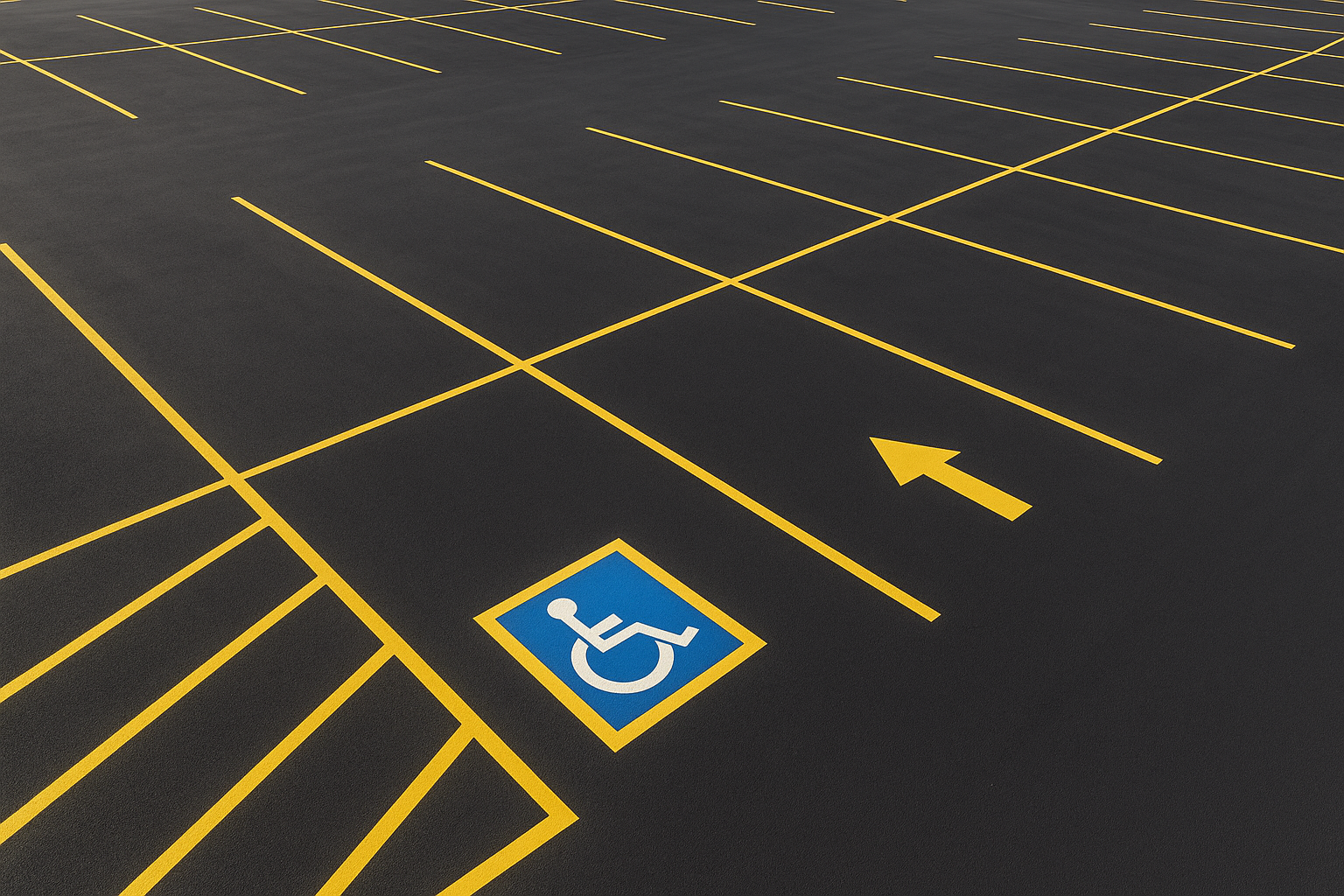
Line design for parking lots determines how vehicles move, park, and exit a property while keeping pedestrians safe and the site legally compliant. Whether you manage a retail center in Plano or a school lot in Denton, the way stalls, drive aisles, fire lanes, and ADA-compliant handicap spaces (parking areas designed for accessibility) are arranged affects daily traffic flow, parking capacity, and liability exposure. For example, a poorly planned layout can create bottlenecks, safety hazards, and code violations that cost property owners time and money. In this guide, we’ll break down the principles, standards, and practical steps behind effective parking lot line layout.
Quick answer: Line design for parking lots is the process of planning and painting stall lines, drive aisles, fire lanes, ADA spaces, and directional arrows to maximize safety, traffic flow, and code compliance. Local fire codes and ADA guidelines govern stall dimensions, spacing, and required signage.
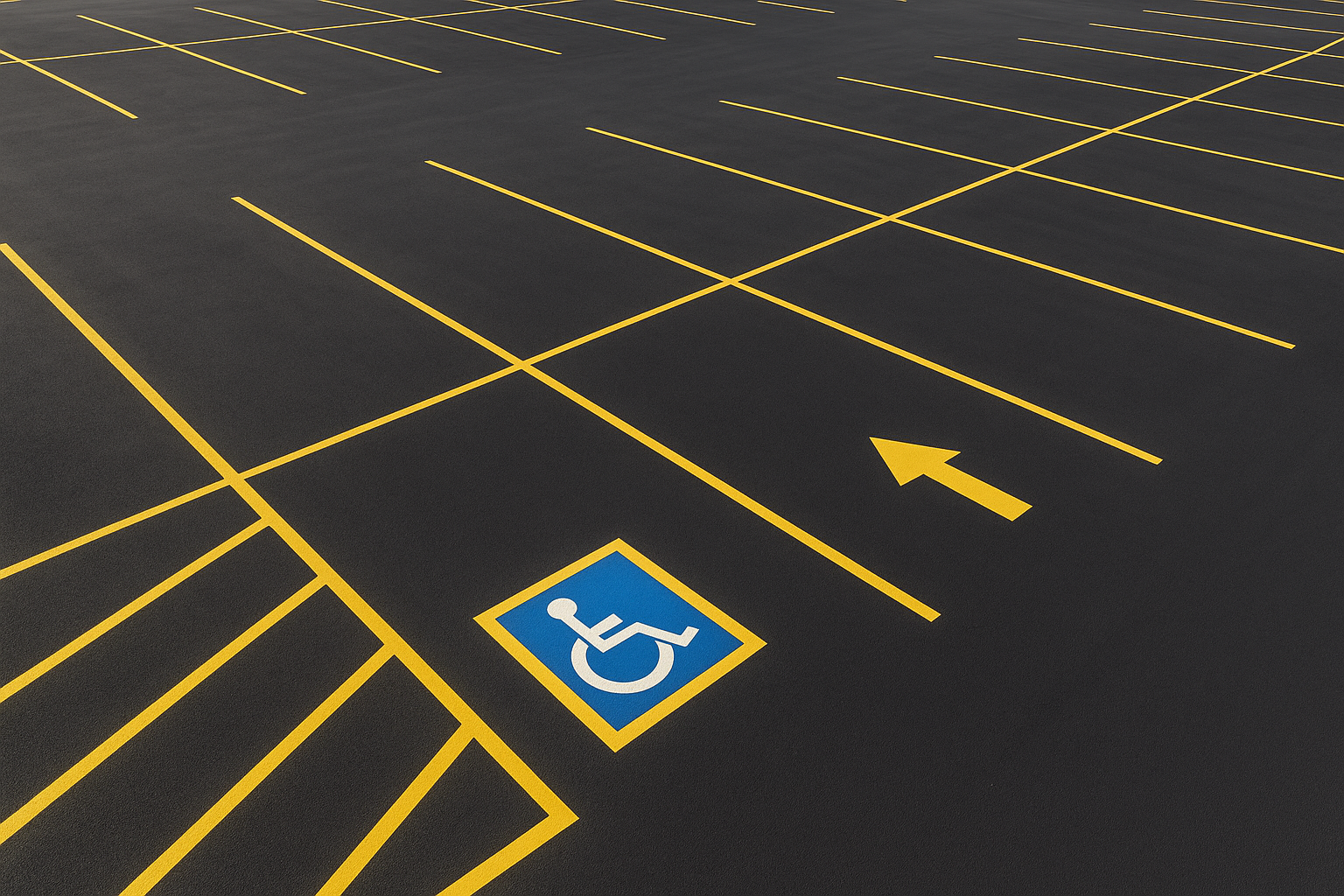
Clear, evenly spaced lines are the foundation of good line design for parking lots.
What Is Line Design for Parking Lots?
Line design for parking lots refers to the strategic layout of painted lines, symbols, and markings that organize how a paved parking lot functions. This includes parking stalls, drive lanes, crosswalks, fire lanes, loading zones, and accessibility markings.
Beyond simply painting lines, effective design accounts for traffic circulation, sightlines, and the number of stalls needed to meet local zoning requirements. For instance, municipalities often set minimum parking ratios based on building square footage or occupancy type. As a result, property owners must balance maximizing stall count with maintaining safe, navigable aisles.
Furthermore, line design plays a direct role in liability. Poorly marked fire lanes or unclear ADA stalls can result in fines, failed inspections, or even lawsuits if an accident occurs. Consequently, many property managers turn to professionals to ensure every marking meets current code, as explained in our complete parking lot layout planning guide.
Why Parking Lot Striping Layout Matters for Safety and Capacity
A well-planned parking lot striping layout does more than look tidy — it directly impacts safety and revenue. Clear stall lines, arrows, and stop bars, guided by standards similar to the Federal Highway Administration’s Manual on Uniform Traffic Control Devices, reduce confusion and help drivers anticipate pedestrian movement.
In addition, an efficient layout can increase usable parking capacity by roughly 10 to 15 percent simply by optimizing stall angles and aisle widths. For example, switching from 90-degree parking to a 60-degree angled layout can improve traffic flow in tight lots, though it may reduce total stall count slightly.
Similarly, well-defined fire lanes and loading zones prevent blocked access for emergency vehicles, a common code violation local fire marshals watch for during inspections. To keep these benefits long-term, durable line striping resists fading from Texas heat and heavy traffic, protecting your investment for years.
Key Elements of a Parking Lot Marking Plan
An effective parking lot marking plan includes several standardized components, each serving a specific function.
Standard Stall Dimensions
Most commercial stalls measure 9 feet wide by 18 feet long, though compact spaces may be slightly smaller. Meanwhile, accessible stalls require additional width and an adjacent access aisle per ADA guidelines.
Drive Aisles and Traffic Flow
Two-way aisles typically need at least 24 feet of clearance, while one-way aisles can be narrower. For guidance on aisle widths and stall angles, see our parking lot layout design planning guide.
Directional Arrows and Signage
Painted arrows guide traffic and reduce head-on conflicts in tight lots. Our guide to navigational arrows for parking lots covers placement best practices in detail.
ADA-Compliant Accessible Stalls
Every commercial lot must include a minimum number of accessible stalls based on total stall count, per the ADA (a federal civil rights law protecting people with disabilities). Learn more in our article on ensuring your parking lot is ADA compliant.
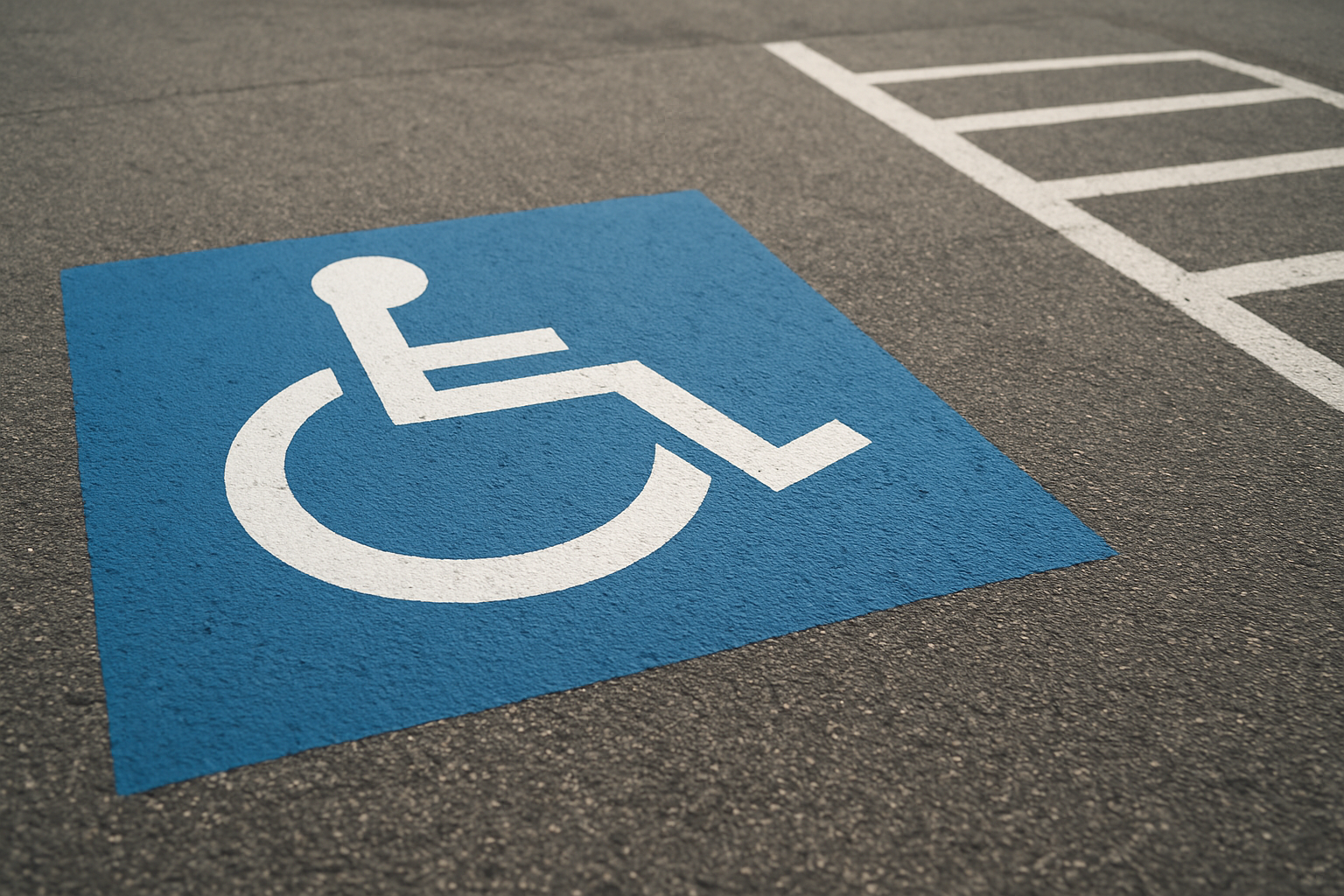
ADA-compliant stalls are a non-negotiable part of any parking lot marking plan.
Step-by-Step Process for Planning Parking Lot Line Layout
Designing or refreshing a parking lot layout involves more than grabbing a paint sprayer. Follow this step-by-step process for reliable, code-compliant results.
- Assess the existing lot and code requirements. Measure the total paved area, review local zoning and fire codes, and note existing utilities or drainage that could affect stall placement.
- Calculate required stall counts and ADA ratios. Determine how many standard, compact, and accessible stalls are needed based on the building’s occupancy and municipal parking ratio requirements.
- Draft a layout plan with aisle widths and stall angles. Choose between 90-degree, 60-degree, or angled parking based on lot shape, then confirm aisle widths meet fire and building code minimums.
- Mark fire lanes, loading zones, and ADA stalls first. These non-negotiable safety elements should be placed before general striping begins to avoid layout conflicts and costly rework later.
- Apply layout lines using a chalk or laser guide. Professional crews typically snap chalk lines or use laser-guided striping machines to ensure straight, evenly spaced markings across the lot.
- Paint stalls, arrows, and text markings. Use durable traffic paint rated for outdoor use, applying two coats where needed for visibility, reflectivity, and long-term durability.
- Inspect and get final code sign-off. Walk the finished lot to confirm all markings meet ADA, fire code, and local requirements before opening it to regular traffic.
Following this sequence helps avoid costly rework and ensures the finished parking lot line layout passes inspection on the first try.
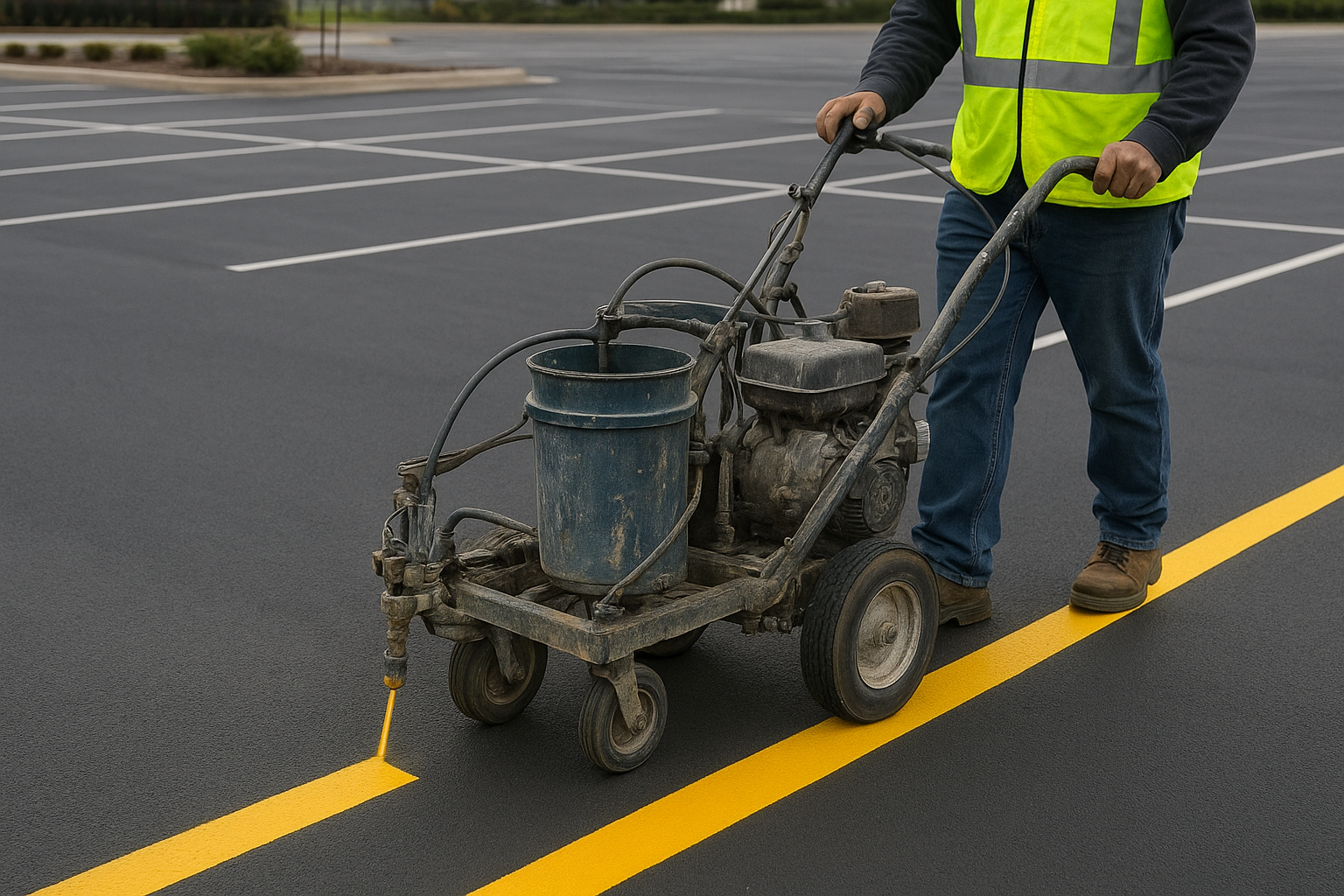
Professional equipment ensures straight, evenly spaced results during parking lot striping.
ADA Compliance and Fire Lanes in Parking Lot Line Design
ADA compliance remains one of the most scrutinized aspects of parking lot line design. Federal law requires a minimum number of accessible stalls based on total lot size, along with van-accessible spaces featuring wider access aisles.
According to the U.S. Department of Justice ADA guidelines, facilities with 1 to 25 total stalls must provide at least one accessible stall, with the ratio increasing as lot size grows. In contrast, fire lane requirements come from local fire codes rather than federal law, so specifications vary between Denton, Plano, and surrounding municipalities.
Above all, fire lanes must remain unobstructed at all times. They are typically marked with red curb paint or red lines along with lettering that reads “Fire Lane – No Parking.” Our detailed breakdown on how to ensure ADA compliance covers signage, stall dimensions, and inspection tips in greater depth.
Common Mistakes in Parking Lot Striping Design
Even experienced property managers can overlook details that undermine a parking lot’s line design. Below are frequent mistakes worth avoiding.
Undersized stalls and aisles: Cramming in extra stalls by shrinking dimensions below code minimums often backfires, leading to complaints and potential liability. Ignoring faded markings: Sun exposure and heavy traffic wear down paint, and faded lines can void ADA compliance if symbols become illegible. Skipping professional layout planning: DIY striping without proper measurements often results in uneven rows or code violations that require costly rework.
Neglecting fire lane visibility: Fire lanes painted with low-quality paint fade quickly, which can delay emergency response and trigger citations. Forgetting directional arrows: Without clear arrows, drivers may travel against traffic flow in one-way aisles, increasing collision risk. Avoiding these mistakes starts with working from a clear, code-informed plan rather than guessing at proportions.
How Much Does Parking Lot Striping Cost?
Parking lot striping costs vary based on lot size, layout complexity, and paint type. Commercial striping projects in North Texas commonly range from a few hundred dollars for small lots to several thousand for large retail or municipal properties.
Standard latex traffic paint costs less upfront but typically lasts 1 to 2 years, while more durable materials like epoxy or thermoplastic can last 3 to 5 years despite a higher initial cost. As a result, many property owners choose durable materials to reduce long-term maintenance expenses, as outlined in our article on the benefits of long-lasting line striping.
Because pricing depends heavily on site-specific factors, requesting a free quote from a local provider like stripespls.com is the most accurate way to budget for a project.
Frequently Asked Questions About Line Design for Parking Lots
What is line design for parking lots?
Line design for parking lots is the process of planning and painting stall lines, drive aisles, fire lanes, and ADA markings to maximize safety and code compliance. It typically follows local fire codes and ADA guidelines for stall dimensions and spacing.
How do I start designing a parking lot layout?
Start by measuring the lot and reviewing local zoning, fire, and ADA requirements before drafting a stall and aisle plan. From there, mark fire lanes and accessible stalls first, then complete general striping.
What are standard parking stall dimensions?
Most standard commercial stalls measure 9 feet wide by 18 feet long, though compact stalls can be slightly smaller. Accessible stalls require additional width plus an adjacent access aisle per ADA guidelines.
How wide should drive aisles be in a parking lot?
Two-way drive aisles typically need at least 24 feet of clearance, while one-way aisles can often be narrower. Exact requirements vary by municipality, so checking local code is essential.
How much does parking lot striping cost?
Parking lot striping costs vary based on lot size, paint type, and layout complexity, ranging from a few hundred to several thousand dollars. Requesting a free quote from a local provider is the most accurate way to estimate cost.
How long does parking lot line striping take to complete?
Most commercial lots can be striped in a single day, though larger properties or complex layouts may take two to three days. Weather and paint drying time can also affect the schedule.
What type of paint is used for parking lot lines?
Common options include water-based latex traffic paint, epoxy, and thermoplastic, each offering different durability levels. Latex paint is budget-friendly but typically lasts one to two years, while epoxy and thermoplastic last longer.
How often should a parking lot be restriped?
Most parking lots need restriping every one to three years, depending on paint type, traffic volume, and weather exposure. Faded or hard-to-see lines are a clear sign it’s time for a refresh.
What’s the difference between parking lot striping and parking lot marking?
Striping usually refers specifically to painted stall and aisle lines, while marking is a broader term that includes arrows, text, symbols, and curb painting. Both fall under the umbrella of overall line design for parking lots.
Do all commercial parking lots need ADA-compliant markings?
Yes, nearly all commercial and public parking lots in the U.S. must include a minimum number of ADA-compliant accessible stalls based on total lot size. Requirements include stall width, access aisles, and proper signage.
What is fire lane marking and why is it required?
Fire lane marking designates areas that must remain clear for emergency vehicle access, typically shown with red paint and “Fire Lane – No Parking” lettering. Local fire codes require these markings to ensure quick emergency response.
What are common mistakes in parking lot line layout?
Common mistakes include undersized stalls, faded markings, skipped professional planning, and missing directional arrows. These issues can create safety hazards and code violations if left unaddressed.
Can I stripe a parking lot myself, or should I hire a professional?
While small touch-ups may be DIY-friendly, most commercial properties benefit from hiring a professional striping company familiar with local codes and equipment. Professional crews ensure accurate measurements, durable paint application, and code compliance.
Final Thoughts on Line Design for Parking Lots
Ultimately, line design for parking lots shapes safety, accessibility, and daily functionality for every property it serves. From ADA-compliant stalls to fire lane markings and directional arrows, each element works together to create a lot that’s easy to navigate and compliant with current codes. Whether you’re planning a new layout or refreshing faded lines, working from a clear plan — and partnering with an experienced striping team — helps avoid costly mistakes and keeps your property inspection-ready. Property owners throughout Denton, Plano, and the greater North Texas region can request a free striping quote to get started on a safer, more organized parking lot today.


