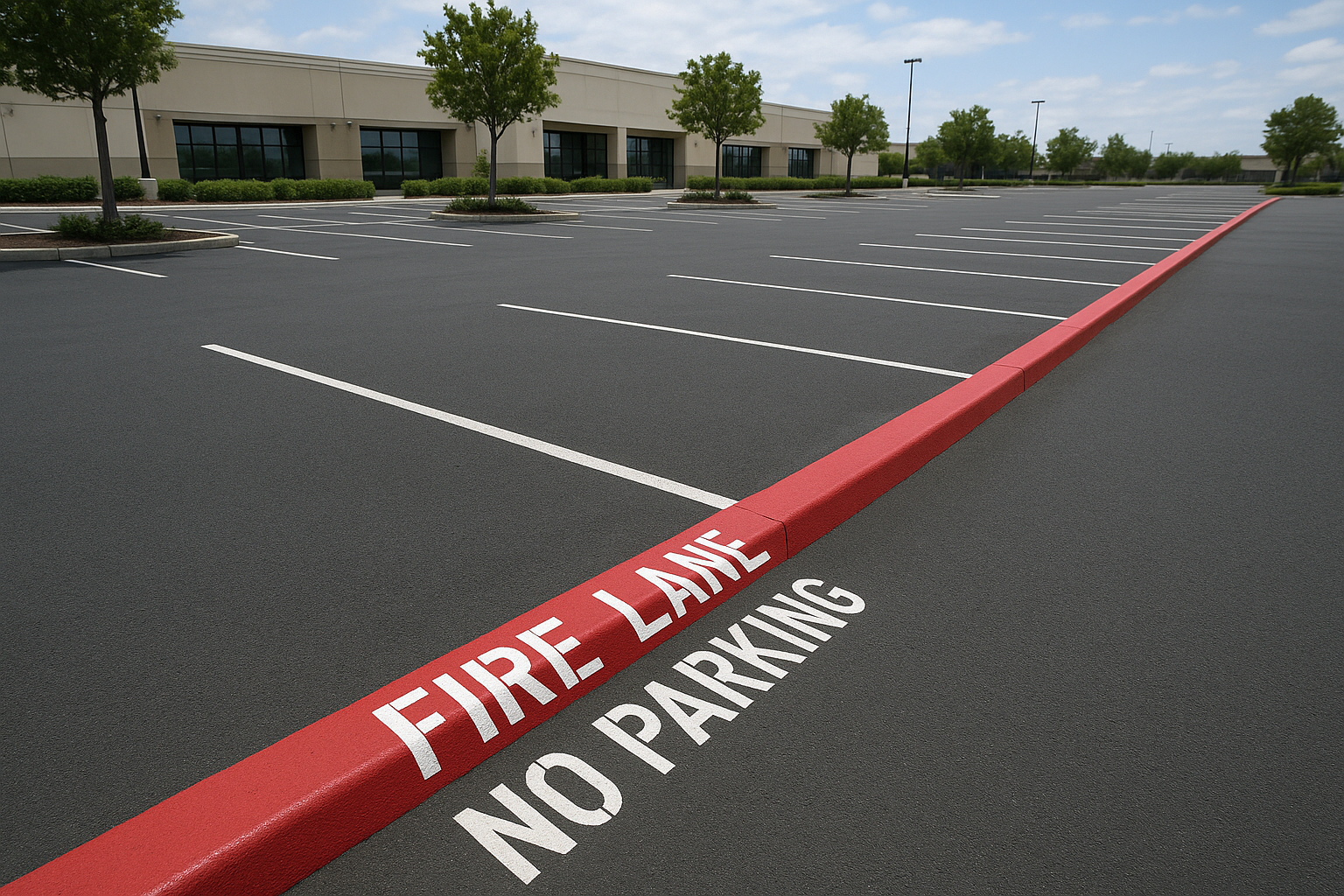
Fire lane compliance marking is the process of painting, measuring, and signing emergency vehicle access routes so they meet local and national fire code standards. For property owners in Denton, Plano, and across North Texas, getting these markings right is not optional — it directly affects safety inspections, insurance standing, and how quickly first responders can reach a building during an emergency.
Direct answer: Fire lane compliance marking involves painting curbs or pavement red with white “FIRE LANE NO PARKING” lettering, maintaining minimum lane widths (often 20 feet in Texas), and pairing markings with proper signage so emergency vehicles always have unobstructed access.
Because fire codes differ slightly by city, however, property owners often assume a single national standard applies everywhere. In reality, Denton and Plano each enforce their own specific measurements and signage rules on top of broader Texas fire code guidance. This guide breaks down what fire lane marking actually requires, why it matters, and how to keep a property inspection-ready year-round.
What Is Fire Lane Compliance Marking?
Fire lane compliance marking is the practice of designating and maintaining emergency access lanes so they satisfy fire code requirements. In short, it means painting curbs red, adding white lettering, and confirming the lane stays wide enough for fire trucks and ambulances.
Specifically, these lanes must remain completely clear of parked vehicles, dumpsters, and other obstructions at all times. Because emergency response time is measured in seconds, even a partially blocked lane can create serious safety risks. As a result, most municipalities treat fire lane violations as a priority code enforcement issue rather than a minor infraction.
Why Fire Lane Marking Matters for Texas Properties
Fire lane marking matters because it directly affects how quickly emergency crews can respond to a fire, medical event, or evacuation. In particular, retail centers, schools, and healthcare facilities face higher liability if access routes are blocked or unclear.
In addition, non-compliant properties risk citations, fines, and repeat inspections from the local fire marshal. Consequently, many property managers schedule proactive restriping rather than waiting for a failed inspection notice. According to the National Fire Protection Association, clear emergency access is one of the most frequently cited factors in reducing response-related property loss.
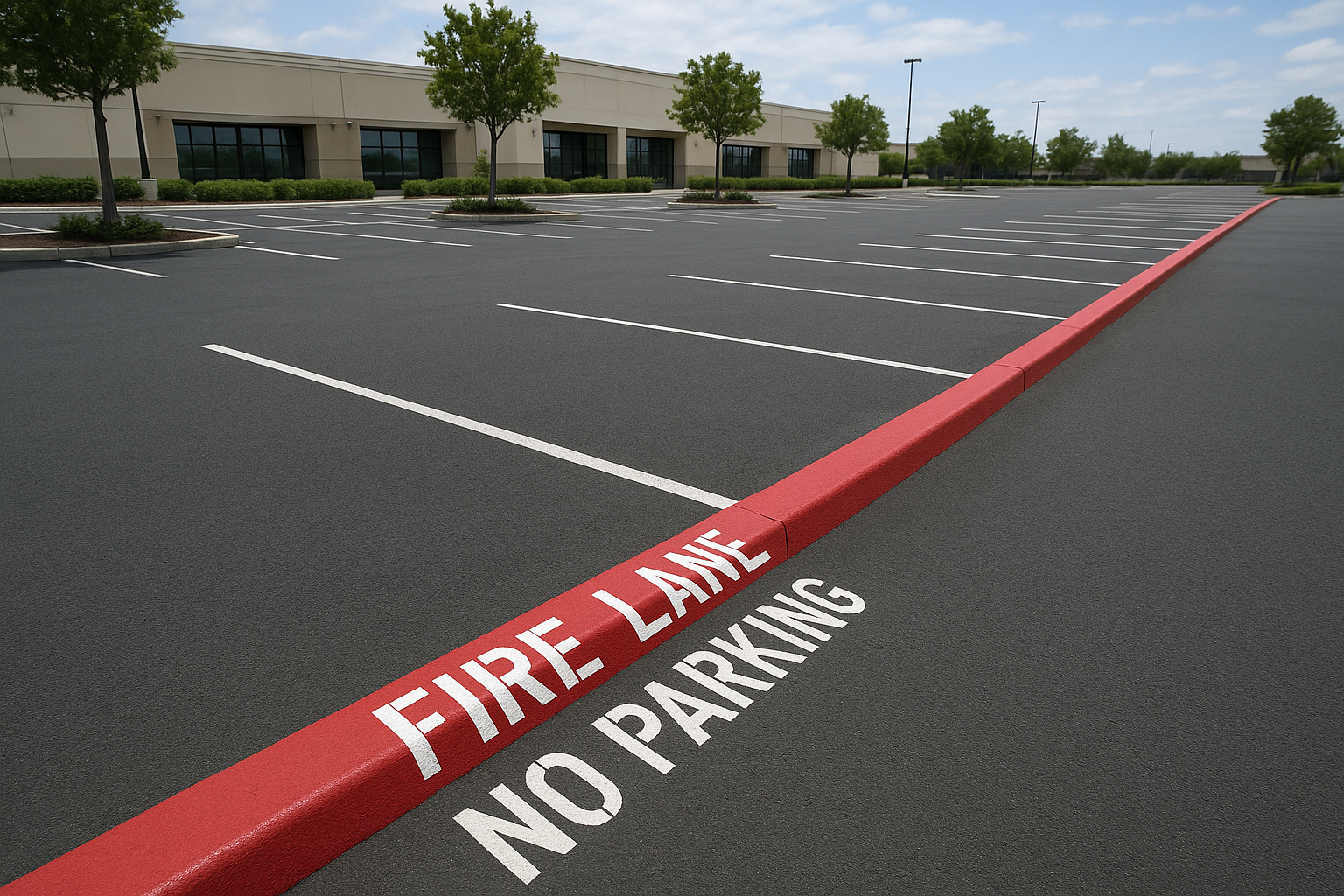
Clear, freshly painted curbs are the visible sign of proper fire lane compliance marking.
Texas Fire Lane Regulations and Requirements
Texas fire lane regulations generally follow the International Fire Code, which most cities adopt with local amendments. Typically, this means a minimum lane width of 20 feet, red curb paint, and white lettering no smaller than a specified height, often around 3 to 4 inches per letter.
However, cities like Denton and Plano may adjust width or signage requirements based on building height, occupancy type, or road access. Therefore, property owners should never assume one city’s standard automatically applies elsewhere. For a full breakdown of state-level rules, this guide on fire lane marking rules in Texas covers the specifics city by city.
Required Colors and Dimensions for Fire Lane Striping
Fire lane striping almost always uses red paint for the curb or pavement edge, paired with white block lettering. Above all, the lettering must remain legible from a driving vehicle, which is why letter height and stroke width are strictly specified.
Similarly, the painted stripe or curb marking should run continuously along the entire designated lane, not just at the entrance or exit points. For a deeper look at exact measurements, the complete compliance guide outlines dimension charts by lane type.
How to Achieve Fire Lane Compliance Marking in 5 Steps
Achieving fire lane compliance marking does not have to be complicated when the process is broken into clear steps. Below is the sequence most professional striping crews follow.
- Review local fire code requirements. Contact the local fire marshal or city planning office to confirm exact width, color, and lettering rules for that specific jurisdiction.
- Conduct a site assessment. Walk the property to identify existing fire lanes, faded markings, and any new access routes needing designation.
- Measure and mark lane boundaries. Use measuring tools and chalk lines to lay out accurate dimensions before any paint touches the surface.
- Apply approved red paint and lettering. Apply commercial-grade red traffic paint followed by white block lettering that clearly states the fire lane designation.
- Schedule regular inspections and repainting. Set a recurring reminder to inspect markings every six to twelve months and repaint promptly when fading appears.
Consequently, following this sequence helps avoid the most common inspection failures: incomplete lettering, incorrect width, and missing signage. For properties needing hands-on help, the team behind fire lane marking services handles every step from measurement to final paint application.
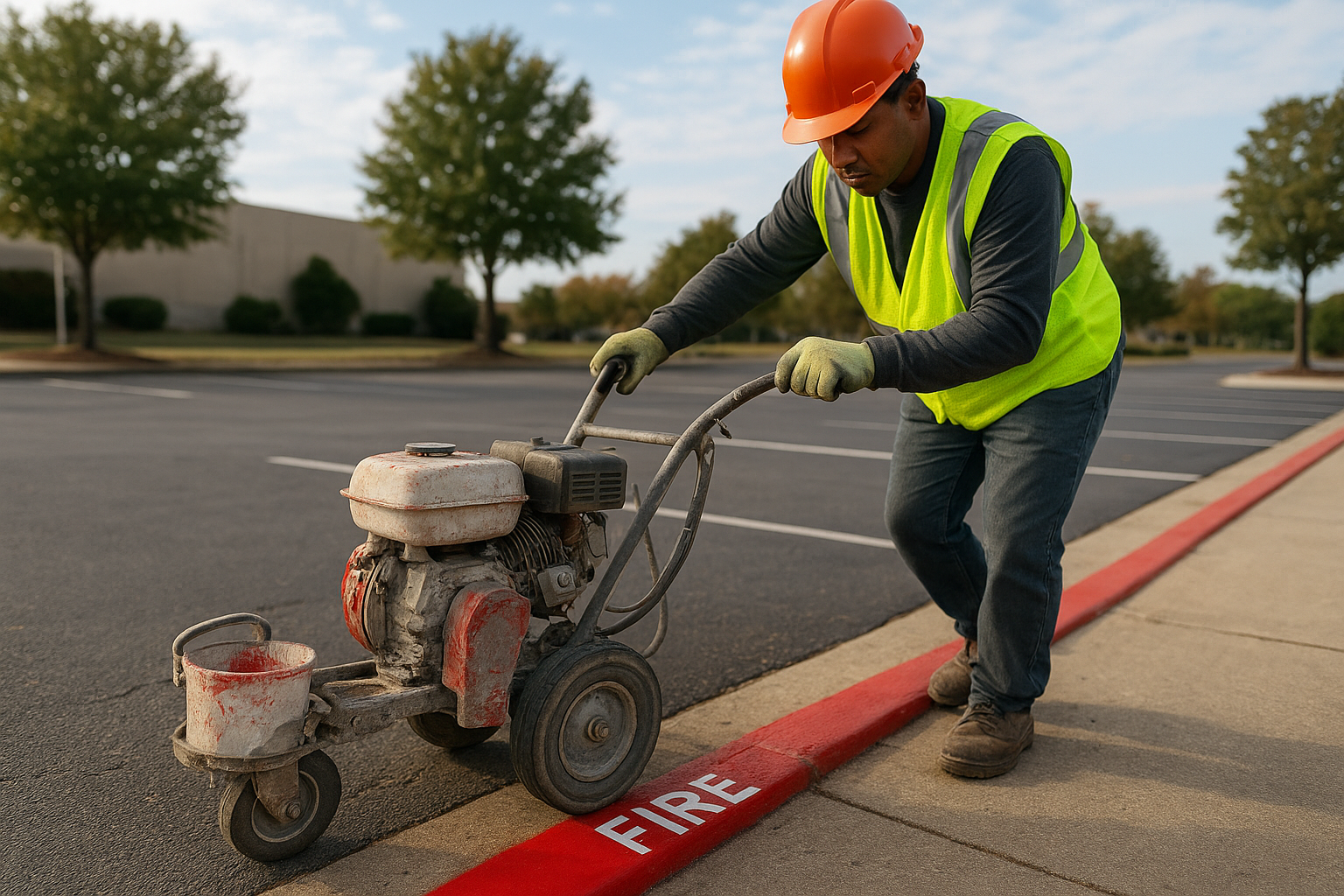
Professional crews follow strict measurements to keep fire lane compliance marking consistent across a property.
Common Mistakes That Violate Fire Lane Compliance
Even well-maintained properties can slip out of compliance for surprisingly simple reasons. For example, faded paint is the single most common cause of a failed inspection, since faded red can look closer to pink or gray after a few Texas summers.
In addition, incorrect lane width is a frequent problem, particularly on older properties that were striped before current code updates. Missing or damaged signage, blocked lanes due to landscaping overgrowth, and inconsistent lettering size round out the most cited violations. Notably, one industry estimate suggests that roughly 1 in 5 commercial properties fail their first fire lane inspection due to fading alone, which underscores why proactive maintenance matters.
Choosing a Professional Fire Lane Marking Company
Choosing a professional fire lane marking company matters because DIY paint jobs often fail to meet exact code specifications. Specifically, commercial-grade traffic paint is formulated to resist UV fading and vehicle wear far better than standard exterior paint.
Property managers throughout Denton and Plano can work with StripesPls, a locally operated striping company that handles fire lane designation, ADA-compliant stall markings, and full parking lot restriping. Similarly, businesses in the broader Dallas area can review this Dallas-area compliance solutions guide for region-specific expectations. For a broader look at how striping ties into overall property safety, this parking lot striping compliance guide is a useful companion resource.
It is also worth noting that ADA accessibility markings follow a separate but related standard. Property owners handling both fire lane and accessibility compliance in the same project should confirm each meets the guidance published by ADA.gov, since the requirements differ from fire code rules even though both affect parking lot layout.
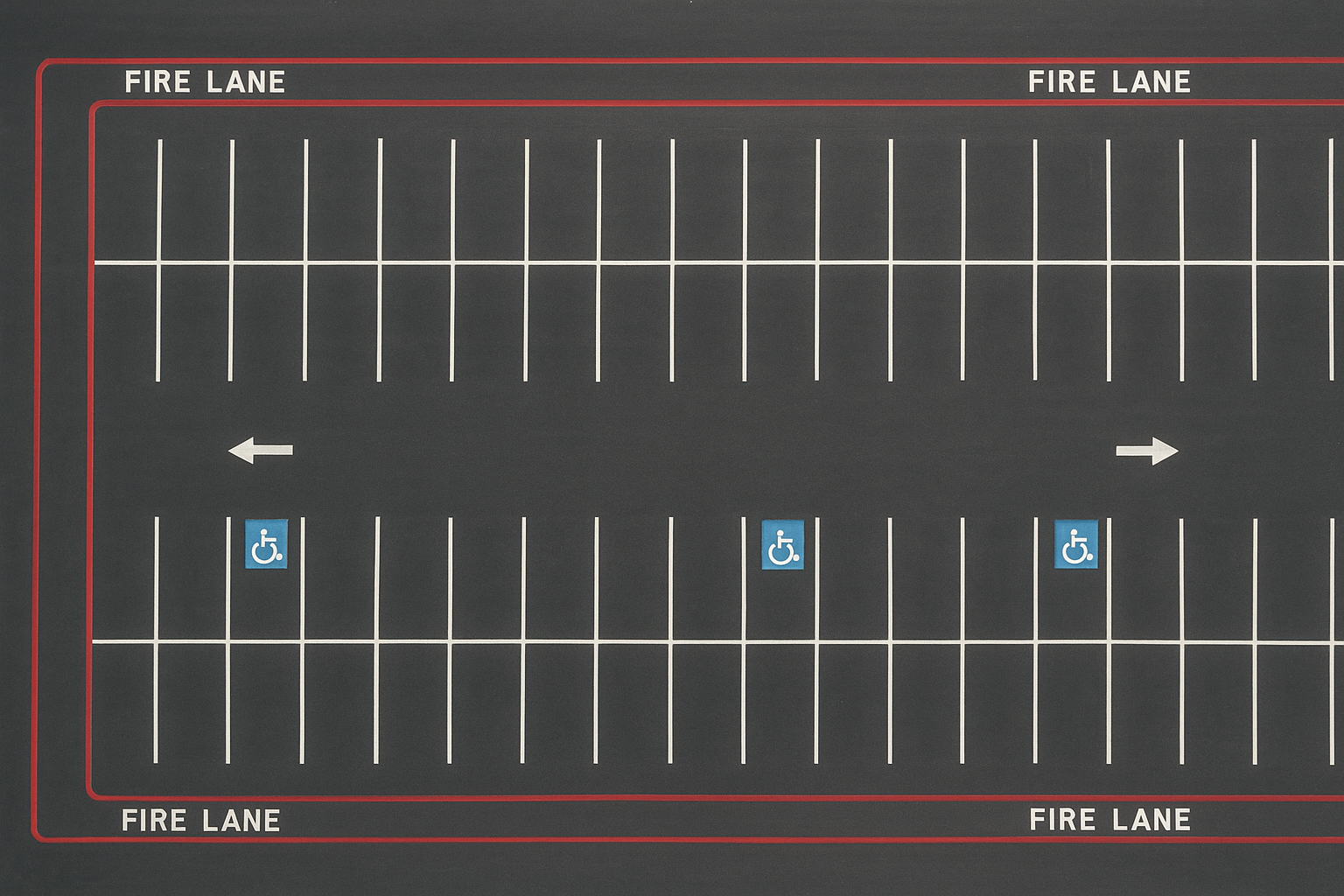
A well-marked lot combines fire lane compliance marking with ADA-compliant stall painting.
Frequently Asked Questions About Fire Lane Compliance Marking
What is fire lane compliance marking?
Fire lane compliance marking is the process of painting curbs, pavement, and signage in designated fire access routes so they meet local and national fire code standards. It typically involves red paint, white lettering, and specific dimensions that keep emergency vehicles unobstructed.
Why do commercial properties need fire lane markings?
Commercial properties need fire lane markings so emergency responders can reach buildings quickly during a crisis. Without clear markings, fire trucks and ambulances may be blocked, which can delay life-saving response times.
What color should fire lanes be painted?
Fire lanes are almost always painted red with white block lettering that reads FIRE LANE NO PARKING. This color scheme is standard across Texas municipalities and matches national fire code guidance.
How wide must a fire lane be in Texas?
Most Texas cities require a minimum fire lane width of 20 feet, though some municipalities require more depending on building height and access needs. Property owners should always confirm exact measurements with their local fire marshal.
Who enforces fire lane compliance?
Local fire marshals and municipal fire departments typically enforce fire lane compliance during inspections. Non-compliant properties can receive citations, fines, or repeat inspection requirements until markings are corrected.
How much does fire lane marking cost?
Costs vary based on lot size, lane length, and current condition of existing markings, but most commercial fire lane projects range from a few hundred to a few thousand dollars. Requesting a free quote is the most accurate way to estimate pricing for a specific property.
How often should fire lane markings be repainted?
Fire lane markings should generally be repainted every one to two years, though heavy traffic, weather, and sun exposure can cause faster fading. Regular inspections help property owners catch fading before it becomes a compliance issue.
What happens if a property fails a fire lane inspection?
A failed inspection usually results in a written notice requiring corrections within a set timeframe, often 30 days. Continued non-compliance can lead to fines or, in rare cases, occupancy restrictions.
Can property owners paint their own fire lanes?
Technically yes, but DIY painting often fails inspection due to incorrect dimensions, lettering size, or paint durability. Professional striping crews understand local fire code specifics and use commercial-grade paint built to last.
What is the difference between fire lane marking and ADA parking marking?
Fire lane marking designates emergency vehicle access routes using red paint, while ADA parking marking identifies accessible stalls using blue paint and the international symbol of accessibility. Both are required separately and follow different regulatory standards.
How long does fire lane striping take to complete?
Most fire lane striping projects for a standard commercial lot are completed within a single day, including surface prep and paint curing time. Larger properties or multi-building complexes may take slightly longer.
What materials are used for fire lane markings?
Most contractors use durable water-based or solvent-based traffic paint designed for outdoor pavement and curb surfaces. This paint resists UV fading, rain, and vehicle traffic better than standard exterior paint.
Do fire lanes need signage in addition to painted curbs?
Many municipalities require both painted curb markings and posted signage stating the fire lane designation and towing information. Local fire codes vary, so it is best to confirm exact signage requirements with the local authority.
What is the most common mistake in fire lane compliance?
The most common mistake is allowing markings to fade until they become nearly invisible, which can trigger inspection failures. Incorrect lane width and missing signage are also frequent compliance errors.
How can a property manager verify fire lane compliance?
Property managers can request a copy of the local fire code, schedule a walkthrough with a professional striping company, or contact the fire marshal’s office for a compliance checklist. Comparing current markings against those standards quickly reveals any gaps.
Final Thoughts on Fire Lane Compliance Marking
In summary, fire lane compliance marking protects both property owners and the people who visit their buildings every day. From red curb paint to correct lane width and clear signage, each detail plays a role in keeping emergency access open when it matters most.
Ultimately, staying compliant is easier with routine inspections and a trusted striping partner. Property owners in Denton, Plano, and across North Texas can request a free quote at stripespls.com to get fire lane compliance marking handled correctly the first time. You can also learn more about general fire lane rules through resources like Wikipedia’s overview of fire lanes for additional background.


