
Commercial parking lot marking is the process of painting lines, symbols, and signage on a business property’s pavement to organize traffic, define parking stalls, and meet safety codes. For property managers and business owners across Denton and Plano, TX, this work directly affects how customers move through a lot, how many vehicles can park safely, and whether a facility passes an accessibility inspection. In addition, fresh markings signal that a property is well maintained, which matters to tenants, shoppers, and municipal inspectors alike. This guide explains what commercial parking lot marking includes, why it matters, and how to plan a project that keeps a property compliant and safe.
Quick answer: Commercial parking lot marking covers striping, ADA stall marking, fire lane designation, and directional signage that keeps parking lots safe, organized, and code-compliant. Most commercial properties need this work refreshed every 18 to 24 months to stay legible and legally compliant.

Fresh commercial parking lot marking improves traffic flow and helps properties stay ADA compliant.
What Is Commercial Parking Lot Marking?
Commercial parking lot marking is the practice of painting stalls, drive lanes, ADA symbols, and fire lanes on business, retail, healthcare, and municipal properties. It combines striping, stenciling, and signage to control how vehicles and pedestrians move through a site.
Beyond simple lines, a complete project often includes directional arrows, stop bars, crosswalks, curb painting, and stenciled text such as “NO PARKING” or “FIRE LANE.” Consequently, a well-planned layout can maximize the number of usable stalls without sacrificing safe drive-aisle widths. Property owners in the Denton and Plano area who need a full layout redesign, rather than a simple repaint, can review a detailed parking lot striping service overview before scheduling a site visit.
Some property owners also research automated alternatives to hand-striping. If that applies, comparing automated parking marking systems and better alternatives can help clarify which method fits a specific lot’s traffic volume and budget.
Why Parking Lot Line Striping Matters for Business Properties
Clear parking lot line striping does more than look tidy. It reduces confusion at busy entrances, helps drivers find stalls quickly, and lowers the chance of fender-benders in tight aisles. In particular, well-marked drive lanes give pedestrians a predictable path, which matters for schools, healthcare facilities, and retail centers with heavy foot traffic.
Research from the Federal Highway Administration’s traffic control device guidance shows that consistent, high-visibility pavement markings reduce driver confusion and support safer navigation in shared traffic spaces. As a result, properties with faded or missing lines are more likely to see near-misses, complaints, and even liability claims after an incident.
Furthermore, a freshly marked lot creates a strong first impression. Retail centers and office parks in particular rely on clean, organized parking to signal professionalism before a visitor ever reaches the front door.
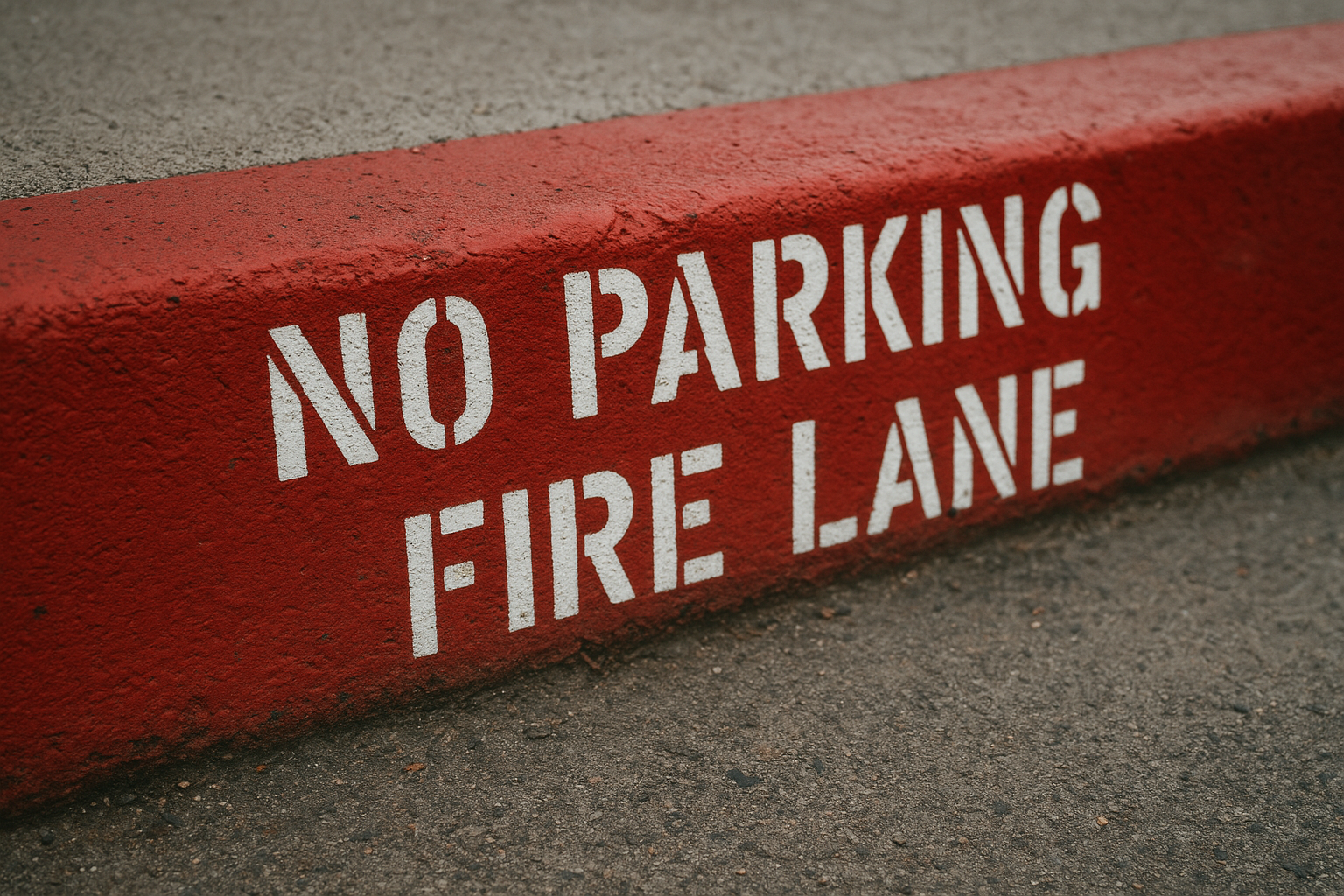
Accurate fire lane marking keeps emergency access routes clear on commercial properties.
ADA Compliance and Handicap Stall Marking Requirements
ADA compliance, short for the Americans with Disabilities Act’s accessibility standards, sets minimum requirements for how many accessible stalls a commercial lot must provide. Generally, at least one in every six accessible spaces must be van-accessible, and the exact stall count scales with total parking capacity.
According to ADA.gov, accessible stalls also need proper width, adjacent access aisles, and visible signage with the international symbol of accessibility. Because these rules apply to nearly every commercial and public-facing property, skipping this step can expose an owner to complaints or fines. For a deeper breakdown of code requirements, the safety and compliance striping guide covers stall dimensions and signage placement in more detail.
Similarly, van-accessible stalls need extra width or an adjacent access aisle wide enough for a wheelchair lift to deploy safely. Skipping this detail is one of the most common compliance mistakes property owners make.
Fire Lane Marking and Emergency Access Rules
Fire lane marking designates routes that must stay clear for emergency vehicles at all times. Local fire marshals typically require red curb paint or red striping paired with stenciled text reading “NO PARKING FIRE LANE,” and enforcement varies by city.
Because fire lanes are inspected separately from general parking areas, faded or missing markings can trigger citations even if the rest of the lot looks fine. Therefore, property owners in North Texas should schedule inspections alongside routine striping maintenance rather than waiting for a violation notice.
Step-by-Step Parking Lot Striping Process
Most professional crews follow a similar sequence when handling a commercial parking lot marking project. Understanding each step helps property owners plan around business hours and avoid surprises.
- Inspect and measure the lot to confirm ADA stall counts and note any pavement repairs needed before painting.
- Clean the surface thoroughly with sweeping and pressure washing so paint bonds properly to the pavement.
- Lay out the design with temporary chalk lines, marking stalls, aisles, fire lanes, and ADA locations for review.
- Apply striping paint and stencils using calibrated machines for straight lines and consistent symbol sizing.
- Allow the paint to cure fully before reopening the lot to vehicle traffic, typically 30 minutes to a few hours.
Above all, accurate measurements at the start of the project prevent costly rework later. Crews serving the greater DFW region often complete standard-size lots within a single business day; for larger campuses, the DFW parking lot striping service page outlines typical timelines for multi-day projects.
Cost Factors for Restriping a Commercial Lot
Restriping costs vary based on lot size, paint type, and how much stenciling is required. Standard water-based striping generally runs a modest per-linear-foot rate, while thermoplastic markings cost more upfront but last considerably longer under heavy traffic.
In addition, ADA symbols, fire lane text, and directional arrows are often priced per unit rather than by length, since they require stencils and extra setup time. As a result, a lot that needs a full layout redesign will typically cost more than a simple line refresh on an existing layout.
Property owners can request an itemized estimate before work begins so there are no surprises once the project is complete. Getting a written quote also makes it easier to compare contractors on an apples-to-apples basis.

A calibrated striping machine helps crews deliver even, durable commercial parking lot marking lines.
Choosing a Parking Lot Marking Contractor in Denton and Plano
Not every striping crew has the same level of experience with ADA layouts and fire code enforcement. Consequently, it helps to choose a contractor that regularly works with property managers, retail centers, schools, and healthcare facilities in the local area.
A locally operated team serving the Denton and Plano region, such as the crew at stripespls.com, can provide new lot layouts, restriping for faded markings, ADA-compliant handicap stalls, and fire lane designation tailored to each property’s specific needs. Requesting a free quote before committing to a project allows owners to compare pricing, timelines, and scope side by side.
Ultimately, a reliable contractor should be able to explain code requirements clearly, provide a written scope of work, and stand behind the durability of the paint used on the project.
Frequently Asked Questions About Commercial Parking Lot Marking
What is commercial parking lot marking?
Commercial parking lot marking is the process of painting stalls, ADA symbols, fire lanes, and directional arrows on a business property’s pavement. It organizes traffic flow and helps a property meet local and federal safety codes.
How much does commercial parking lot marking cost?
Most commercial lots cost between $0.10 and $0.35 per linear foot for standard striping, though pricing depends on lot size, paint type, and how much stall layout work is needed. ADA symbols and stenciled signage typically add a flat per-unit fee.
How long does commercial parking lot marking take?
A typical retail or office lot can be striped in one day, while larger properties may take two to three days. Cure time before reopening usually adds 30 minutes to a few hours depending on paint type and weather.
How often should a parking lot be restriped?
Most commercial properties need restriping every 18 to 24 months, though high-traffic lots may fade faster. Faded lines are a common code violation, so an annual inspection helps catch problems early.
What paint is used for commercial parking lot marking?
Water-based traffic paint and durable acrylic formulas are the most common choices because they resist fading and hold up under vehicle traffic. Thermoplastic markings offer longer life for very high-traffic areas but cost more upfront.
Is ADA-compliant striping required for all commercial properties?
Yes, nearly all commercial and public-facing properties in the United States must provide a minimum number of accessible parking stalls under the ADA. The exact count depends on the total number of parking spaces on the property.
What’s the difference between parking lot striping and parking lot marking?
Striping usually refers specifically to painted stall and lane lines, while marking is a broader term that includes striping plus stenciled symbols, fire lane text, arrows, and curb painting. In practice, most contractors use the terms interchangeably.
What are common mistakes in commercial parking lot marking projects?
Common mistakes include using non-reflective paint, skipping ADA measurements, and painting over a dirty or cracked surface. These errors shorten the life of the markings and can create compliance issues.
Do fire lanes need special markings?
Yes, fire lanes typically require red curb paint or red striping paired with stenciled text such as “NO PARKING FIRE LANE.” Local fire marshals often inspect these markings, so accuracy matters for compliance.
Can parking lot marking be done in cold or rainy weather?
Most traffic paints need a dry surface and temperatures above 50 degrees Fahrenheit to cure properly. Scheduling around clear, mild weather windows helps the markings bond correctly and last longer.
How do I choose a contractor for commercial parking lot marking?
Look for a contractor with local experience, proper layout equipment, and a clear understanding of ADA and fire code requirements. Checking references from similar commercial properties helps confirm reliability before booking a project.
Final Thoughts on Keeping a Lot Compliant
In summary, commercial parking lot marking touches nearly every part of a property’s safety, accessibility, and first impression. From ADA-compliant handicap stalls to fire lane designation and directional signage, each element plays a role in keeping traffic organized and visitors safe. Because pavement markings naturally fade under sun and traffic, regular inspections and timely restriping protect both compliance and curb appeal.
For property managers, business owners, and municipal organizations throughout the Denton and Plano area, working with an experienced local team makes the process straightforward from the first measurement to the final coat of paint. Requesting a free quote is often the simplest way to get a clear picture of scope, timeline, and cost before committing to a project.


