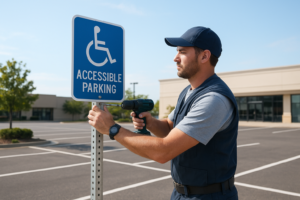
Commercial property parking lot maintenance is the ongoing process of inspecting, cleaning, repairing, and re-marking parking areas so they stay safe, functional, and code-compliant year-round. For property managers and business owners across North Texas, a well-maintained lot protects vehicles, keeps pedestrians safe, and helps a property meet accessibility and fire-code requirements. In particular, this guide walks through what a solid maintenance plan looks like, how often striping needs refreshing, and which mistakes to avoid.
Quick Answer
Commercial property parking lot maintenance combines routine cleaning, crack repair, drainage checks, and periodic restriping to keep a lot safe, ADA-compliant, and visually organized. Most properties should follow a set inspection and restriping schedule rather than waiting for visible damage.
What Is Commercial Property Parking Lot Maintenance?
Commercial property parking lot maintenance is the combination of routine cleaning, pavement repair, drainage upkeep, and line striping that keeps a parking area safe and legally compliant. Above all, it protects the asphalt investment, since resurfacing a lot costs significantly more than routine care. Asphalt, a durable petroleum-based paving material, naturally degrades under sun and traffic, which is why consistent surface upkeep matters so much.
In practice, this means scheduling inspections, patching cracks before they widen, and repainting faded stripes and ADA symbols on a predictable cycle. Consequently, properties that follow this rhythm avoid the sudden, costly repairs that come from years of deferred care.
Why Parking Lot Upkeep Matters for Property Owners
Parking lot upkeep matters because it directly affects safety, first impressions, and legal exposure. A cracked or faded lot signals neglect to customers and tenants, which can quietly hurt leasing rates and foot traffic. Furthermore, unclear lane markings and worn stop bars increase the risk of fender-benders and pedestrian accidents on private property.
There is also a financial case for staying ahead of repairs. Pavement preservation research cited by transportation agencies suggests that every $1 spent on preventive maintenance can save roughly $6 to $10 in future rehabilitation costs. As a result, a modest annual maintenance budget usually costs far less than a full-lot resurfacing project a few years down the road. In addition, well-marked fire lanes and accessible spaces help properties stay in good standing with local fire marshals and code inspectors.

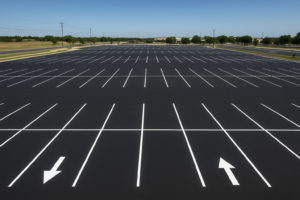
Consistent restriping is one of the most visible parts of commercial property parking lot maintenance.
Key Components of a Parking Lot Maintenance Plan
A well-rounded parking lot maintenance plan covers more than just paint. Specifically, it should address pavement condition, accessibility markings, fire safety, and drainage as connected parts of the same system.
Line Striping and Pavement Markings
Line striping defines parking stalls, drive lanes, and directional flow. Over time, sun exposure and tire friction wear this paint down, which is why most lots need a refresh on a recurring basis. Clear markings also reduce confusion during busy periods, such as school pickup lines or retail sales events, when traffic flow matters most.
ADA Compliance and Accessibility Markings
ADA compliance refers to meeting the accessibility standards set under the Americans with Disabilities Act, a federal civil rights law. Accessible stalls, van-accessible aisles, and proper signage must follow specific dimensions and placement rules outlined by the U.S. Department of Justice’s ADA standards. Because these rules apply to nearly all commercial properties open to the public, staying current on accessibility markings is not optional. For a deeper look at property-specific compliance needs, StripesPLS outlines its full range of striping and compliance services for Texas properties.
Fire Lane Marking and Safety Signage
A fire lane is a designated route kept clear so emergency vehicles can respond quickly. Local fire codes, often based on standards from the National Fire Protection Association, typically require red curb paint paired with white “FIRE LANE, NO PARKING” lettering. Consequently, faded or missing fire lane markings can trigger code violations during routine inspections, even if the lane itself remains physically clear.
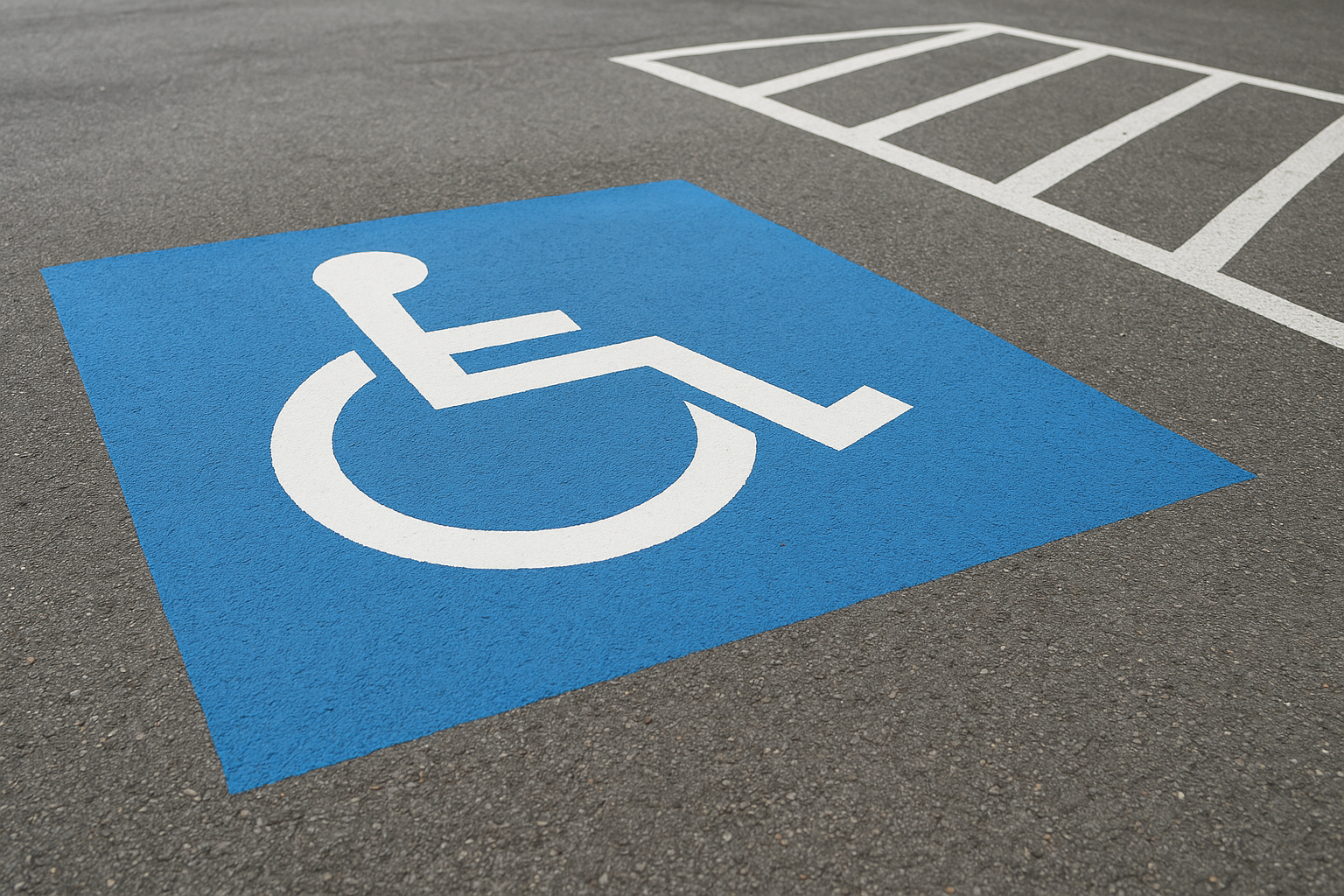
Accurate ADA markings are a required piece of any parking lot maintenance plan.
Step-by-Step Process for Maintaining a Commercial Parking Lot
Although every property is different, most successful maintenance programs follow the same general sequence. Below is a practical process property managers can use as a starting checklist.
- Inspect the entire lot. Walk or drive the full lot to note cracks, potholes, drainage problems, and faded striping before deciding what to prioritize.
- Clean and clear debris. Sweep the surface, remove sediment near curbs and drains, and clear blocked water routes so pavement damage does not accelerate.
- Repair pavement damage. Seal small cracks and patch potholes promptly, since minor damage left untreated typically spreads and becomes far costlier to fix.
- Restripe and remark the lot. Apply fresh stall lines, ADA symbols, directional arrows, and fire lane markings with durable traffic paint for lasting visibility.
- Schedule ongoing inspections. Set a recurring reminder, usually every six to twelve months, to catch new wear before it turns into a bigger problem.
For a more detailed breakdown tailored to North Texas properties, see these best practices for maintaining a commercial parking lot.
How Often Should Commercial Parking Lots Be Restriped?
Most commercial lots need fresh striping every 12 to 18 months, although high-traffic properties may require it annually. Texas heat and UV exposure tend to fade paint faster than in milder climates, so properties in Denton and Plano often fall on the shorter end of that range.
That said, traffic volume, paint quality, and sealcoating frequency all influence how long stripes actually last. For instance, a retail center with constant vehicle turnover will likely see faster wear than a low-traffic office park. Similarly, lots that receive regular sealcoating tend to hold their paint noticeably longer between restriping cycles.
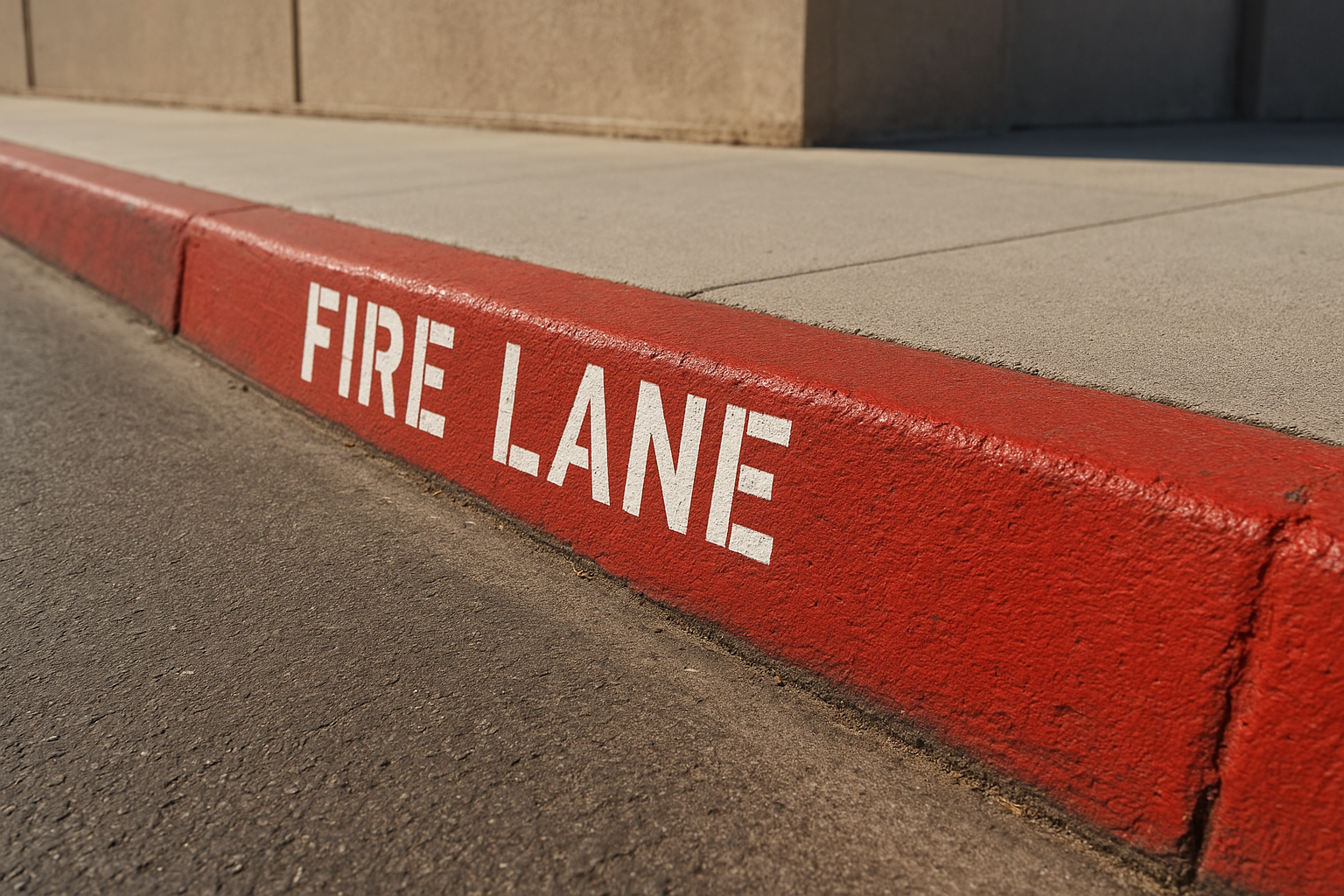
Fire lane markings need periodic touch-ups as part of routine parking lot maintenance.
Common Parking Lot Maintenance Mistakes to Avoid
Even well-intentioned property managers slip into a few predictable habits that shorten pavement life. Recognizing these early can save significant money down the road.
- Ignoring small cracks until they widen into potholes.
- Waiting until stripes are nearly invisible before repainting.
- Placing ADA-accessible stalls in the wrong location or dimension.
- Skipping fire lane reinspections between scheduled visits.
- Choosing low-cost paint that fades within a few months.
In contrast, properties that build these checks into a regular calendar rarely face the emergency repairs or compliance violations that catch other owners off guard.
Choosing a Professional Parking Lot Maintenance Company in Texas
Selecting the right maintenance partner matters just as much as the schedule itself. A qualified contractor should understand local fire codes, current ADA standards, and the specific wear patterns caused by Texas weather.
StripesPLS, a full-service parking lot marking company based in Texas, specializes in professional striping, ADA compliance solutions, and fire lane marking for commercial and residential properties throughout the Denton and Plano areas. The team serves property managers, retail centers, schools, healthcare facilities, and municipal organizations across greater North Texas, handling everything from new lot layouts to full restriping projects. Property managers dealing with ongoing lot issues can also learn more about who can help property managers with parking lot issues before choosing a vendor.
Businesses specifically in the Plano area can review professional line marking services in Plano, TX to see how local expertise applies to their property. Prospective clients throughout the service area can request a free quote directly through StripesPLS to compare pricing and scope before committing to a project.
Frequently Asked Questions About Commercial Property Parking Lot Maintenance
What is commercial property parking lot maintenance?
Commercial property parking lot maintenance is the routine cleaning, pavement repair, drainage care, and line striping performed to keep a parking area safe, functional, and code-compliant. It typically follows a recurring schedule rather than a one-time fix.
How often should a commercial parking lot be restriped?
Most commercial lots need fresh striping every 12 to 18 months, though high-traffic properties may need it annually. Texas sun and heavy traffic tend to fade paint faster than in milder climates.
Why is ADA compliance important for parking lots?
ADA compliance ensures accessible parking spaces, van-accessible aisles, and signage meet federal accessibility standards. Non-compliant lots risk fines, lawsuits, and excluding customers or employees with disabilities.
What is a fire lane and why does it need marking?
A fire lane is a designated access route kept clear for emergency vehicles. Local fire codes typically require red curb paint and clear signage so it stays unobstructed at all times.
How much does parking lot line striping typically cost?
Pricing varies by lot size, layout complexity, and paint type, but most commercial properties pay based on square footage or per stall. Getting a free quote is the most reliable way to know exact costs.
What causes parking lot lines to fade quickly?
UV exposure, heavy vehicle traffic, harsh cleaning chemicals, and low-quality paint all speed up fading. Regular sealcoating can also help protect newly applied stripes.
Can parking lot maintenance be done during winter months?
Striping requires dry pavement and moderate temperatures, so scheduling is usually easier in warmer months. In North Texas, mild winters often still allow for maintenance work on suitable days.
What is the difference between sealcoating and striping?
Sealcoating protects the asphalt surface from water, oil, and UV damage, while striping paints the lines, symbols, and lane markings on top of the pavement. Both work together as part of a full maintenance plan.
How long does it take to restripe a commercial parking lot?
Most standard-sized commercial lots can be restriped in a single day, depending on layout complexity and paint drying time. Larger properties may need a phased schedule to avoid closing the whole lot at once.
What are common mistakes in parking lot maintenance?
Common mistakes include ignoring small cracks, placing ADA symbols incorrectly, skipping fire lane inspections, and waiting until stripes are nearly invisible before repainting. Each of these can lead to bigger repair costs or code violations.
Who is responsible for parking lot maintenance in a commercial lease?
Responsibility depends on the lease terms, but property owners or managers are usually accountable for common-area upkeep, including parking lots. Tenants in triple-net leases may share costs through CAM fees.
How can property managers extend the life of a parking lot?
Scheduling regular inspections, sealing cracks promptly, keeping drains clear, and restriping on a consistent cycle all extend pavement life. Preventive care is consistently cheaper than full-lot replacement.
What paint or tools are used for professional line striping?
Professionals typically use durable traffic paint applied with striping machines and stencils for symbols like ADA markings and arrows. This equipment produces sharper, longer-lasting lines than DIY rollers or spray cans.
Conclusion
In summary, commercial property parking lot maintenance is not a one-time task but an ongoing cycle of inspection, repair, and remarking that protects both people and pavement. From ADA-compliant stalls to fire lane visibility, each piece plays a role in keeping a property safe and code-compliant. Ultimately, property managers who build maintenance into a regular schedule tend to spend less over time and avoid the compliance headaches that come with neglect. For properties throughout Denton, Plano, and the greater North Texas region, StripesPLS offers the striping, ADA compliance, and fire lane marking expertise needed to keep a parking lot organized, safe, and ready for daily use.