
North Texas parking lot safety markings are the painted lines, arrows, symbols, and curb colors that guide drivers and pedestrians safely across a commercial property. Because Dallas-Fort Worth parking lots see heavy daily traffic, clear markings help prevent collisions, support accessibility, and keep fire lanes open for emergency vehicles. In this guide, we will explain what these markings include, why they matter for compliance, and how property owners across Denton, Plano, and the greater DFW metroplex can keep their lots safe and organized year-round.
What Are North Texas Parking Lot Safety Markings?
North Texas parking lot safety markings is the term for all painted or thermoplastic markings that organize traffic flow, parking stalls, accessible spaces, and fire lanes on a commercial lot. These include parking space lines, directional arrows, ADA-compliant accessible markings, curb paint, and warehouse floor striping. Together, they reduce confusion, support compliance, and lower the risk of accidents.
In practice, these markings act as a silent traffic controller. Drivers rely on them to know where to park, which way to drive, and where emergency vehicles need unobstructed access. Therefore, a lot with faded or missing lines can quickly become disorganized, which frustrates visitors and increases the chance of a fender-bender. For a deeper look at specific solutions, this overview of traffic marking solutions that improve safety covers additional options property managers often overlook.
Why Commercial Properties Need Clear Pavement Markings
Visibility matters above all when it comes to parking lot safety. According to the National Safety Council, parking lots and garages account for a meaningful share of all vehicle crashes each year, which highlights why clear lines and signage are not just cosmetic. For example, a lot with worn stall lines often leads to drivers parking at odd angles, which reduces usable spaces and increases the odds of a collision.
In addition to safety, clear markings support smoother traffic flow during busy hours. Retail centers, schools, and multi-tenant developments in particular benefit from well-defined lanes because they reduce bottlenecks near entrances. Similarly, office properties and industrial sites rely on directional arrows to prevent head-on conflicts in narrow drive aisles. As a result, consistent pavement marking maintenance is one of the simplest ways a property can lower liability exposure while improving the day-to-day visitor experience.
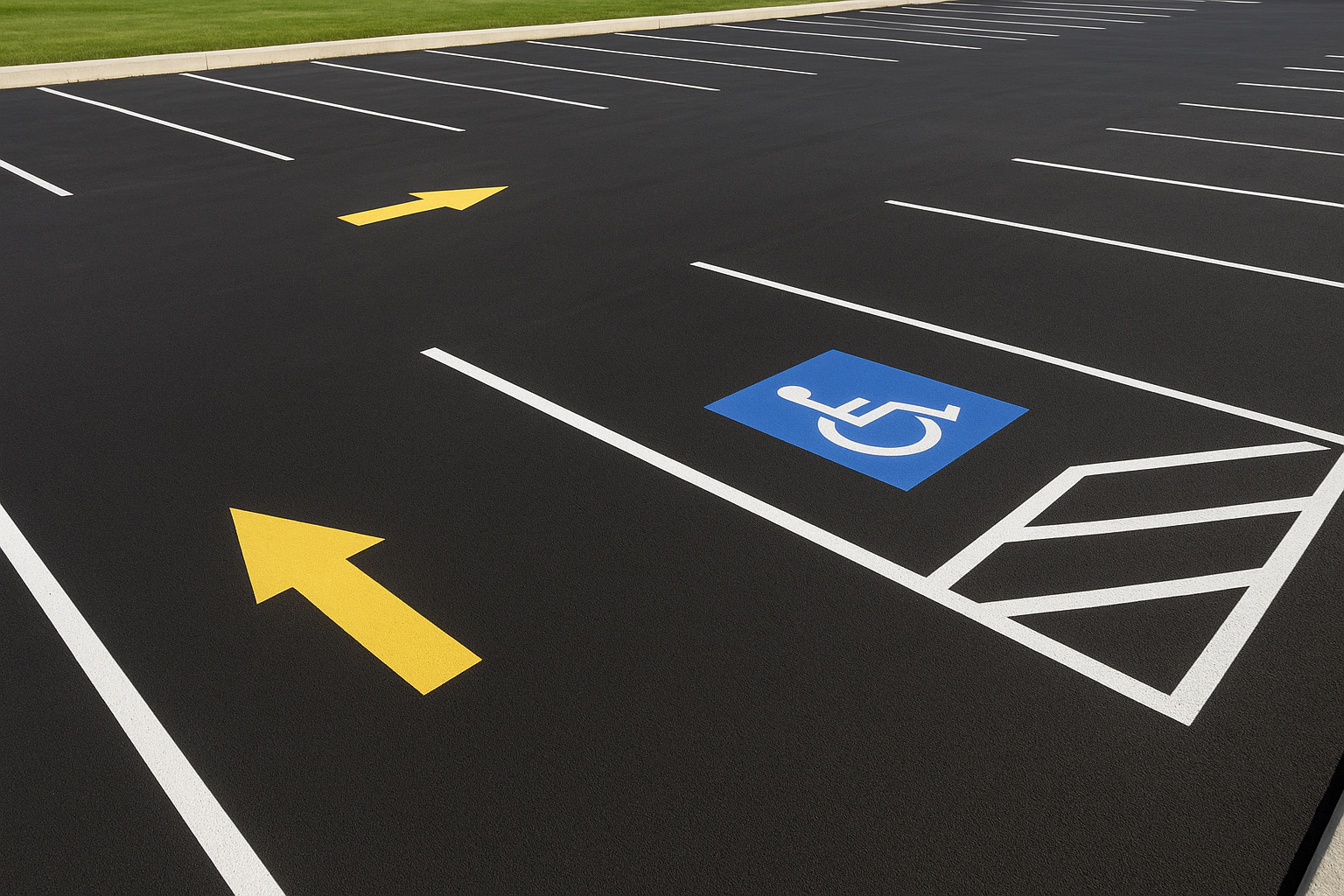
Fresh north Texas parking lot safety markings improve visibility for drivers and pedestrians alike.
Common Types of North Texas Parking Lot Pavement Markings
Commercial properties typically need several categories of markings working together. Specifically, the most common types include:
- Parking stall lines that define individual spaces and maximize lot capacity.
- Directional arrows that guide one-way traffic flow and reduce head-on conflicts.
- Accessible parking markings and access aisles that meet ADA requirements.
- Fire lane markings, usually painted red, that keep emergency routes clear.
- Curb painting for visibility, loading zones, and no-parking areas.
- Warehouse floor markings that organize pallet storage, walkways, and equipment paths indoors.
Furthermore, specialty stencils such as “Visitor,” “Reserved,” or “No Parking” text help clarify site rules without requiring additional signage. For a full breakdown of pricing and planning, this line painting cost and compliance guide walks through how these elements factor into a project estimate.
Texas and Federal Standards for Parking Lot Markings
Compliance is not optional when it comes to accessible parking and fire lanes. The Americans with Disabilities Act, often referenced simply as the ADA, sets minimum requirements for accessible space dimensions, access aisles, and signage, and the official ADA.gov resource outlines these standards in detail. In addition, the Manual on Uniform Traffic Control Devices, maintained by the Federal Highway Administration, establishes color and shape standards for pavement markings nationwide, which you can review directly through the MUTCD site.
Texas properties must also account for state-level accessibility rules enforced through the Texas Department of Licensing and Regulation, available at tdlr.texas.gov. Consequently, working with a contractor familiar with both federal and Texas-specific requirements helps avoid costly corrections later. This recent summary of latest lane marking requirements in Texas is a helpful starting point for property teams reviewing their current layout.
How Professional Crews Apply Parking Lot Safety Markings
Above all, a consistent process produces the cleanest, longest-lasting results. Most professional striping projects follow these steps:
- Site Review and Measurement Audit: The crew inspects existing pavement, measures lot dimensions, and documents ADA space requirements, fire lane locations, and visible wear to establish an accurate baseline for the project.
- Layout Planning: Using the site measurements, planners design or confirm a layout that maximizes usable stalls while meeting fire lane clearance and accessible parking placement rules required locally.
- Surface Preparation: Before any paint is applied, crews sweep, blow off, or pressure wash the pavement to remove debris, oil residue, and loose material so new lines adhere properly and last longer.
- Application of Markings: Technicians apply striping paint or thermoplastic material according to the planned layout, including stall lines, directional arrows, accessible symbols, curb paint, and warehouse floor markings as needed.
- Final Inspection and Maintenance Planning: After the markings cure, the crew performs a final walkthrough to confirm visibility and compliance, then recommends a maintenance timeline to keep markings crisp throughout the year.
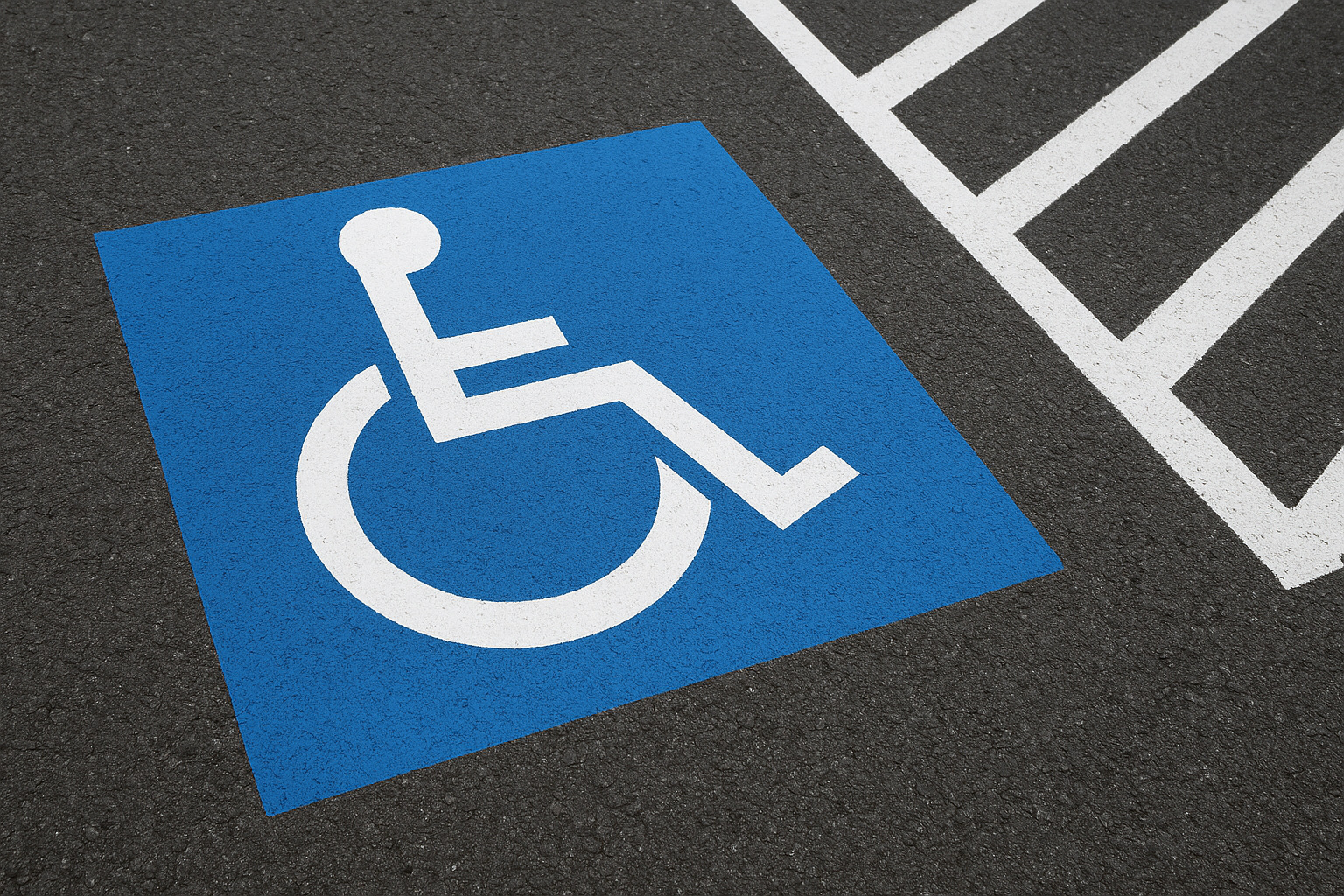
Accessible parking markings are a core part of any compliant pavement marking plan.
Signs Your Parking Lot Needs Restriping
Over time, sun exposure, heavy traffic, and weather cause even quality paint to fade. As a result, property managers should watch for a few warning signs. In particular, look for lines that are difficult to see from a distance, especially at dusk or in low light. Similarly, if fire lane paint has faded to the point where it blends with surrounding pavement, that is a clear signal restriping is overdue.
Other common indicators include peeling curb paint, inconsistent stall widths from patch repairs, and accessible symbols that have worn down to bare asphalt. Consequently, scheduling restriping before markings disappear completely is far easier than trying to recreate a layout from scratch. This detailed professional lot striping guide offers more detail on timing restriping around weather and traffic patterns in North Texas.
Choosing a Parking Lot Striping Company in Dallas-Fort Worth
When selecting a contractor, property owners should look for precise planning, dependable scheduling, and clear communication throughout the project. Stripes Parking Lot Services, Inc., known as Stripes PLS, provides striping, restriping, and pavement marking services for commercial properties across Denton, Plano, and the greater Dallas-Fort Worth area. Its process covers site review, layout planning, application, a final check, and ongoing upkeep, which mirrors the steps outlined earlier in this guide.
For properties specifically within the DFW corridor, this overview of DFW parking lot striping services details the range of layouts, fire lane work, and specialty markings available. Property teams ready to move forward can request a free quote from Stripes PLS or call (940) 566-3054 to discuss a site visit.

A trained crew applying commercial pavement markings for improved safety and compliance.
Frequently Asked Questions About North Texas Parking Lot Safety Markings
What are north texas parking lot safety markings?
North Texas parking lot safety markings are the painted lines, symbols, arrows, and curb colors used to organize traffic, mark accessible spaces, and keep fire lanes clear on commercial properties. They help drivers and pedestrians navigate a lot safely while supporting local compliance requirements.
How much does parking lot striping cost in Dallas-Fort Worth?
Cost varies based on lot size, the number of stalls, and whether specialty markings like fire lanes or ADA symbols are included. Most commercial properties should request a site-specific quote, since pricing depends heavily on layout complexity and current pavement condition.
How often should a commercial parking lot be restriped?
Most commercial lots in North Texas benefit from restriping every 18 to 24 months, though heavy traffic or intense sun exposure can shorten that window. Restriping before lines disappear entirely helps maintain safety and avoids confusion for drivers.
What is the required width for ADA accessible parking spaces in Texas?
Federal ADA standards generally require accessible spaces to be at least 96 inches wide with an adjacent access aisle, though van-accessible spaces need wider aisles. A qualified striping contractor can confirm exact measurements based on current Texas Accessibility Standards.
Why are fire lane markings important for commercial properties?
Fire lane markings keep emergency access routes clear so first responders can reach a building quickly during an incident. Without visible red curb paint or signage, vehicles may block these lanes, creating serious safety and liability risks.
What type of paint is used for parking lot striping?
Most contractors use water-based traffic paint or thermoplastic material designed for exterior pavement. Thermoplastic lasts longer than standard paint but costs more upfront, so the right choice depends on traffic volume and budget.
How long does a typical striping project take?
A standard commercial lot can usually be restriped within one business day, depending on size and weather conditions. Larger properties or those adding new layouts may require additional time for planning and curing.
What is the difference between painted markings and thermoplastic markings?
Painted markings are applied as a liquid coating and generally cost less, while thermoplastic markings are heat-applied and bond more deeply into the pavement surface. As a result, thermoplastic markings typically resist wear longer under heavy traffic.
Do parking lots need an access aisle next to accessible spaces?
Yes, accessible parking spaces must include an adjacent access aisle that allows safe entry and exit for wheelchairs and mobility devices. This aisle must also be clearly marked, usually with diagonal striping.
What mistakes should property owners avoid with parking lot markings?
Common mistakes include letting lines fade completely before restriping, placing accessible spaces incorrectly, and skipping fire lane markings altogether. These issues can create safety hazards and expose a property to compliance complaints.
Can faded markings create liability issues for property owners?
Faded or missing markings can contribute to accidents, blocked emergency access, or accessibility complaints, all of which may expose a property owner to liability. Keeping markings current is a practical way to reduce that risk.
What areas does Stripes PLS serve for parking lot striping?
Stripes PLS serves commercial properties in Denton, Plano, and the greater Dallas-Fort Worth metroplex. Property owners in these areas can request a quote for new layouts, restriping, or specialty markings.
Final Thoughts
In summary, north texas parking lot safety markings play a practical role in keeping commercial properties organized, accessible, and safe for everyone who visits. From accessible parking spaces to fire lanes and directional arrows, each marking type serves a specific purpose, and together they reduce confusion and liability. Therefore, regular inspection and timely restriping should be part of every property’s maintenance plan. Property owners and facilities teams across Denton, Plano, and the broader DFW metroplex who need an updated layout or a restriping project can reach out to Stripes PLS at (940) 566-3054 or ken.stripes@gmail.com to request a quote.


