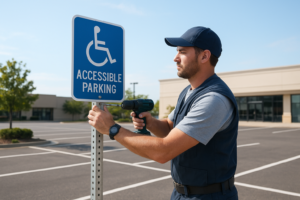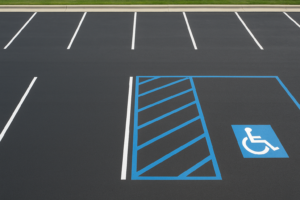
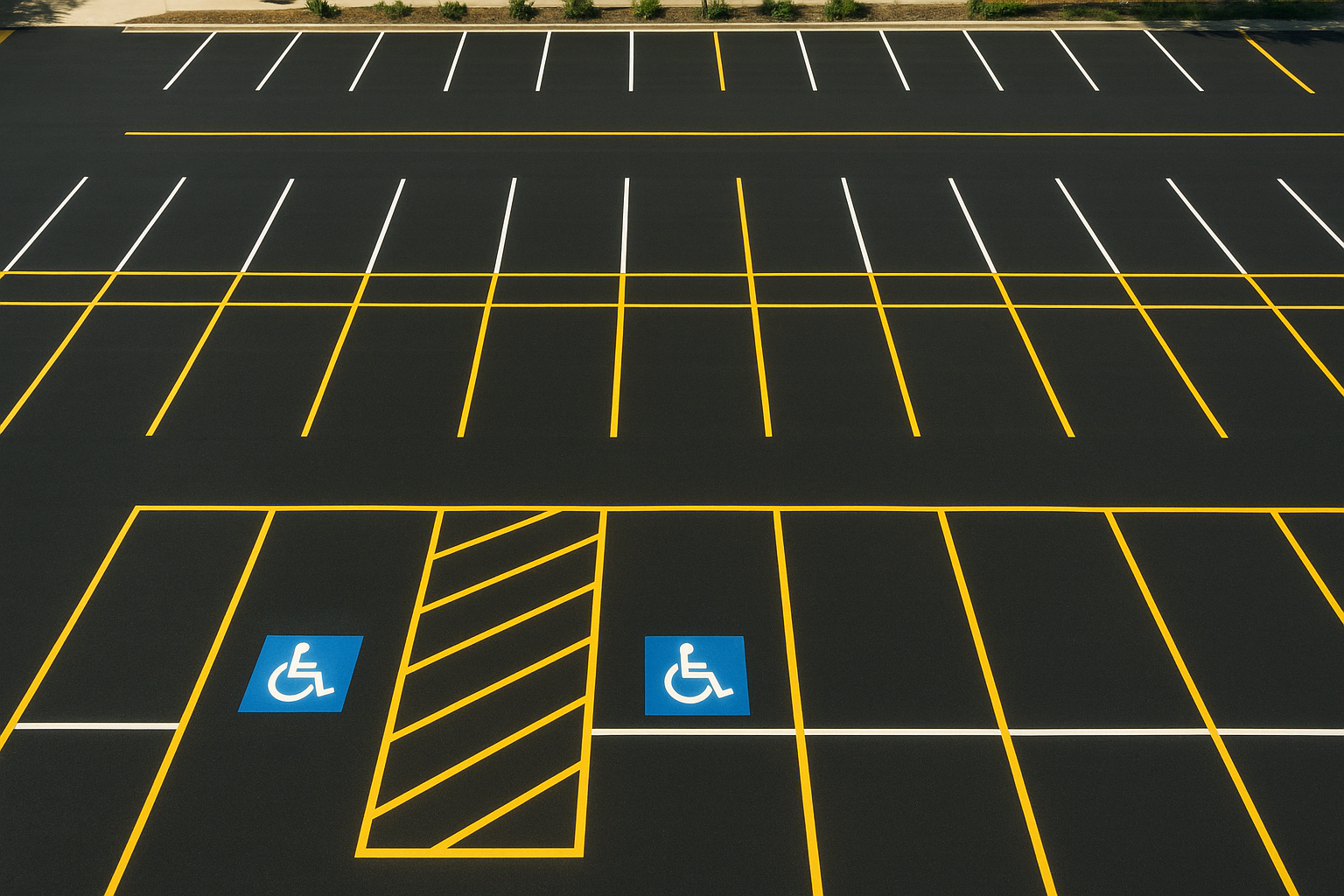
Code compliant parking facilities are parking lots and structures that meet current ADA compliance guide, fire safety codes, and municipal striping ordinances. For property owners across Denton and Plano, Texas, keeping code compliant parking facilities isn’t optional — it’s a legal requirement that protects visitors, avoids fines, and keeps insurance coverage intact. However, faded stripes, missing fire lane markings, and outdated ADA signage can quietly turn a once-compliant lot into a liability. This guide explains what compliance actually requires, why it matters, and how professional striping keeps your property on the right side of the law.
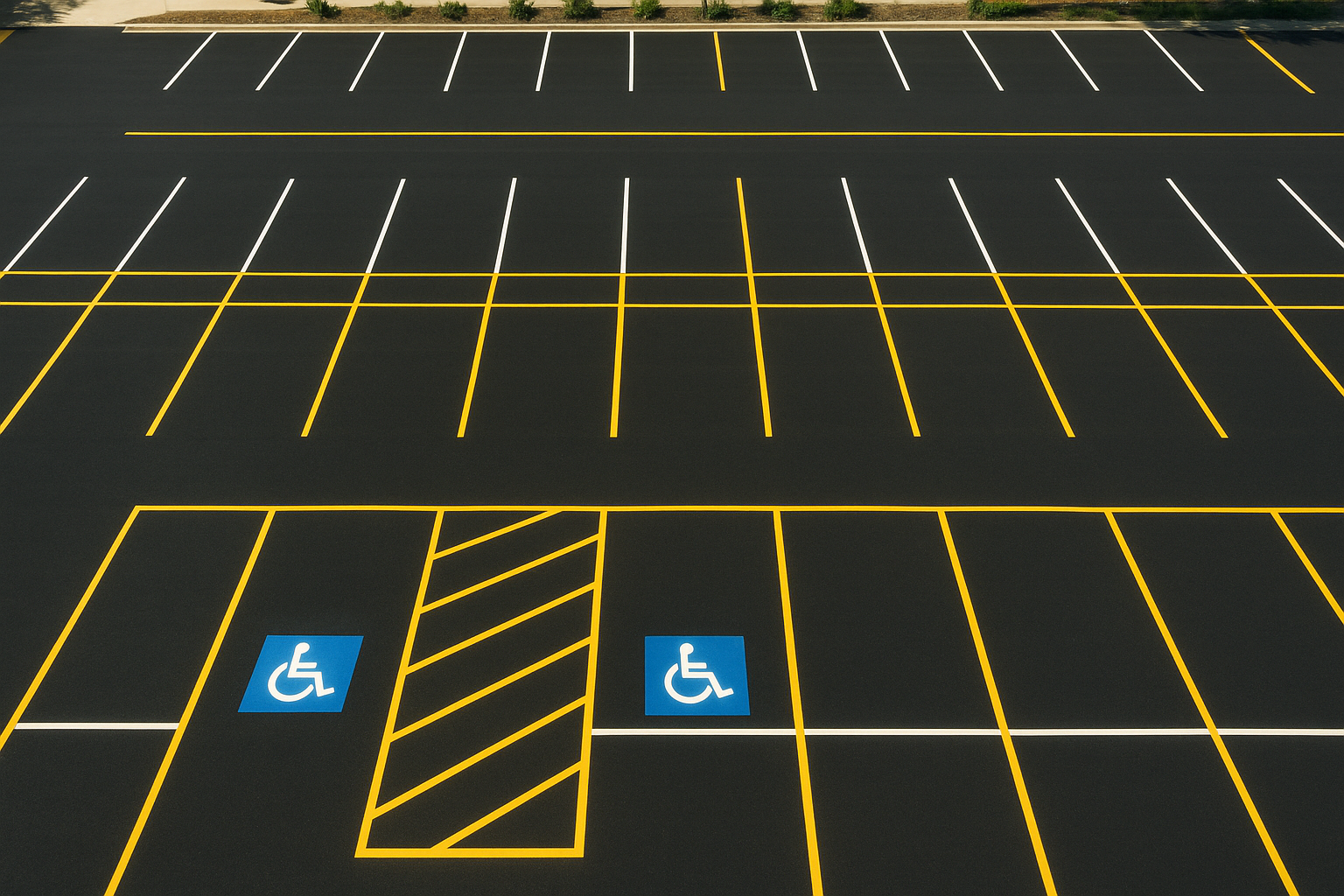
Clean, well-marked striping is the foundation of code compliant parking facilities.
What Are Code Compliant Parking Facilities?
Code compliant parking facilities are lots that satisfy federal ADA accessibility rules, local fire codes, and municipal zoning ordinances governing striping, signage, and stall dimensions. In practice, that means correctly sized accessible stalls, van-accessible spaces, legible fire lane markings, and directional arrows that meet visibility standards.
Compliance is not a one-time achievement. Line markings fade under Texas heat, regulations get updated, and lots require periodic inspection to stay current. Specifically, the ADA.gov guidelines set the accessibility baseline, while local fire marshals and city codes add requirements for lane widths and signage. As a result, a lot that was compliant five years ago may no longer meet today’s standards.
For a deeper breakdown of accessibility rules specifically, see this complete guide to ADA parking lot compliance, which walks through stall counts, signage, and access aisle requirements in detail.
Why ADA Compliant Parking Lots Matter for Texas Properties
Above all, ADA compliant parking lots protect people with disabilities from unsafe or inaccessible conditions. In addition, they protect property owners from costly legal exposure. According to industry ADA Title III litigation tracking, thousands of accessibility-related lawsuits are filed in federal courts each year, and parking lot violations are consistently among the most cited issues.
Consequently, retail centers, healthcare facilities, and schools throughout North Texas face real financial risk when accessible stalls, signage, or access aisles fall short of code. Furthermore, insurance carriers may deny liability claims tied to accidents in a non-compliant lot. For property managers overseeing multiple sites, the ADA compliance markings service page outlines exactly which elements typically need attention first.
Similarly, the U.S. Access Board publishes the technical specifications inspectors use when reviewing accessible parking design, making it a useful reference for property owners preparing for an audit.
Fire Lane Marking: A Core Piece of Parking Lot Code Compliance
Fire lane marking is just as critical to parking lot code compliance as ADA striping, yet it’s often overlooked until an inspection flags it. Fire lane striping guide explains width, paint, and lettering standards. Fire lanes must generally stay clear of parked vehicles at all times so emergency vehicles can reach a building without delay. Typically, this means red curb or pavement paint paired with bold white “FIRE LANE — NO PARKING” lettering.
In particular, lane width and placement rules vary by municipality, so a lot compliant in one North Texas city may need adjustments in another. Therefore, checking with the local fire marshal before repainting is a smart first step. Organizations such as the National Fire Protection Association publish general life-safety standards that many local fire codes reference directly.
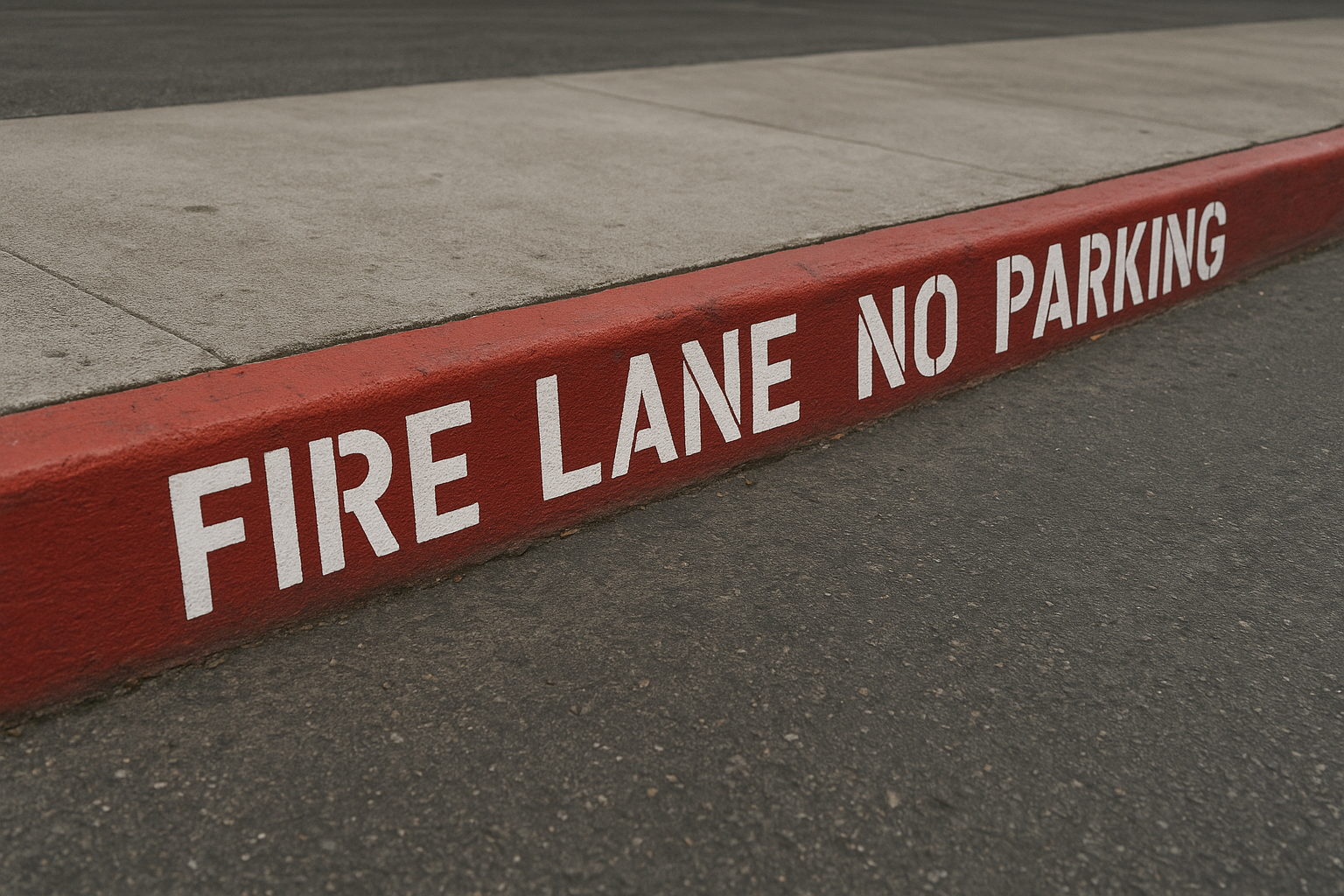
Properly painted fire lanes are a non-negotiable part of code compliant parking facilities.
How to Achieve Code Compliant Parking Lot Striping
Bringing an existing lot into compliance follows a fairly predictable process. Below is the compliance process most Texas properties follow when correcting or upgrading their markings.
- Audit the current layout. Walk the lot and note faded lines, missing signs, and undersized accessible stalls.
- Review local code requirements. Confirm current ADA rules and fire marshal standards, since they can differ by city.
- Calculate required accessible stalls. Base the count on total parking spaces using the ADA sliding scale.
- Plan the striping layout. Map stalls, access aisles, arrows, and fire lane zones before any paint goes down.
- Apply durable striping and signage. Use professional traffic paint or epoxy rated for Texas heat and UV exposure.
- Schedule periodic re-inspection. Check visibility and code updates at least once a year going forward.
For properties needing bay-specific layout adjustments, the parking bay marking services in Denton and Plano page details how layout redesigns are handled for retail centers and multi-tenant properties.
Common Mistakes That Break Parking Lot Compliance
Even well-maintained properties slip out of compliance for predictable reasons. Recognizing these patterns early can prevent a failed inspection later.
- Faded or partially visible striping that no longer meets legibility standards.
- Accessible stalls that are too narrow or missing a van-accessible option.
- Fire lanes without red paint, lettering, or adequate width.
- Skipping re-inspection after a remodel, expansion, or layout change.
- Assuming compliance is permanent once markings are first installed.
Notably, many of these issues are inexpensive to fix when caught early, but they can become costly once a complaint or citation is filed. Owners uncertain about their current status can review this step-by-step ADA compliance checklist to self-assess before calling in a professional crew.
How Municipalities Enforce Parking Lot Code Compliance
Local governments typically enforce parking lot code compliance through a mix of routine inspections, permit reviews, and complaint-driven investigations. In most North Texas cities, fire marshals handle fire lane enforcement while planning or code compliance departments oversee ADA and zoning-related markings.
As a result, violations discovered during a permit renewal or occupancy inspection can trigger mandatory corrections on a set deadline. For a closer look at how this process works locally, this breakdown of how municipalities ensure parking lot compliance explains what inspectors typically check and how quickly properties must respond.
Choosing the Right Team for Code Compliant Parking Facilities
Ultimately, maintaining code compliant parking facilities long-term comes down to working with a crew that understands both paint durability and code detail. StripesPls, based in Texas, focuses specifically on professional striping, ADA compliance solutions, and fire lane marking for commercial and residential properties throughout the Denton and Plano areas. Author: StripesPls. Last updated: 2026-08-11.
Because the team serves property managers, retail centers, schools, healthcare facilities, and municipal organizations across North Texas, projects range from full new lot layouts to simple restriping of faded markings. Property owners can request a free quote directly through stripespls.com to get a customized plan for their specific site.
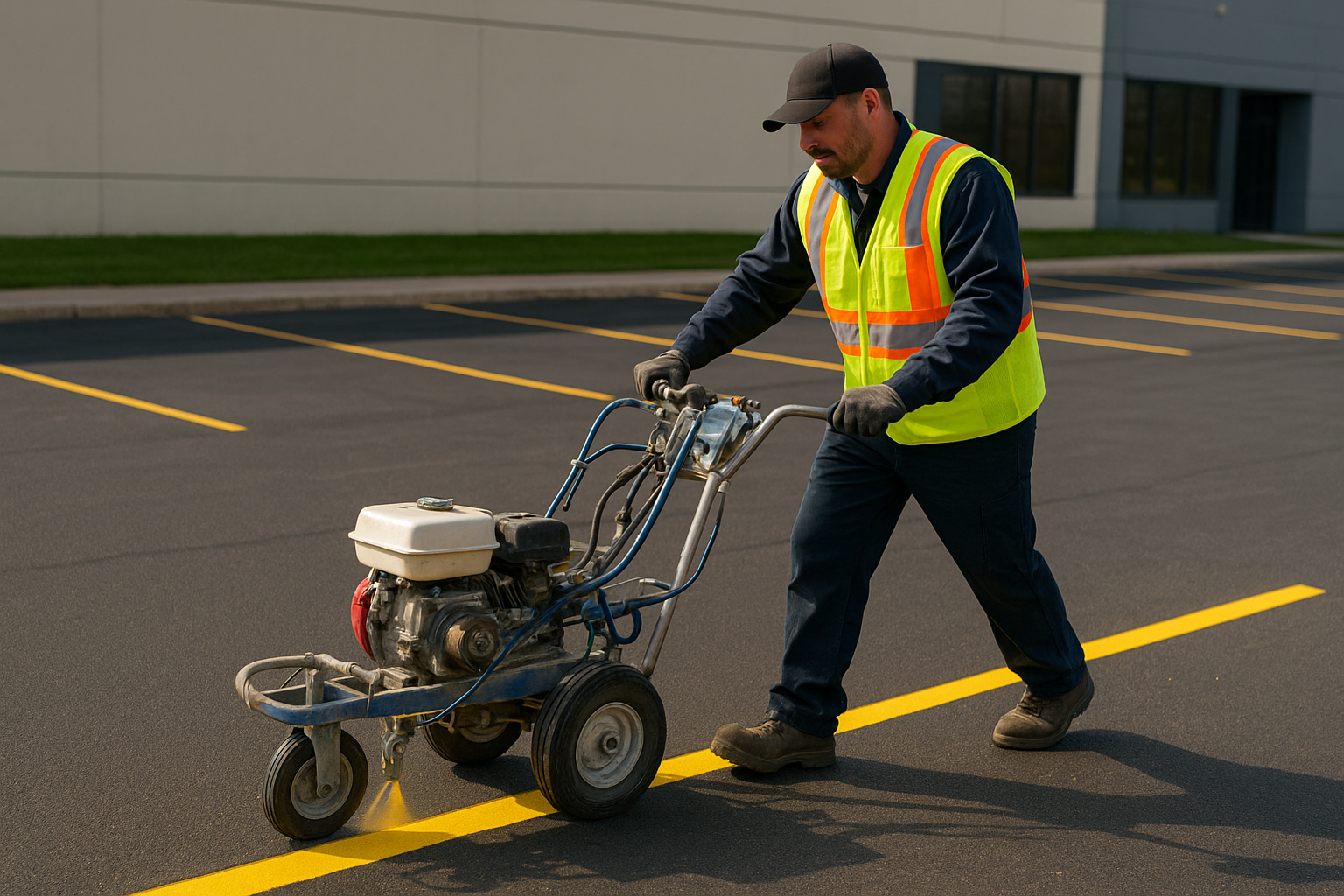
Professional crews help properties maintain code compliant parking facilities year after year.
Frequently Asked Questions About Code Compliant Parking Facilities
What is a code compliant parking facility?
A code compliant parking facility is a lot or structure that meets ADA accessibility rules, local fire codes, and municipal striping and signage ordinances. This includes properly sized accessible stalls, van-accessible spaces, and clearly marked fire lanes.
How often should parking lot striping be repainted?
Most commercial parking lots need restriping every 18 to 24 months, though high-traffic Texas lots may fade sooner due to sun exposure. Faded lines are one of the most common reasons a lot falls out of compliance; review our striping and signage solutions for regional recommendations.
What is the minimum number of ADA parking spaces required?
The number of required accessible spaces follows a sliding scale based on total parking count under ADA design standards. For example, a lot with 26 to 50 spaces typically needs at least two accessible stalls, one of which must be van-accessible.
How wide should a fire lane be?
Fire lanes generally must be at least 20 feet wide to allow emergency vehicle access, though local fire marshals may require more. Local fire codes always take precedence over general guidelines.
Why do fire lanes need to be painted red with white lettering?
Red paint with white “FIRE LANE NO PARKING” lettering creates high visibility so drivers immediately recognize restricted zones. This standardized marking helps emergency crews reach buildings quickly during a crisis.
How much does parking lot striping cost in Texas?
Pricing varies by lot size, layout complexity, and paint type, but most Texas properties pay a per-stall or per-square-foot rate. For more detail on typical costs see our parking lot striping cost page. Requesting a free quote is the most accurate way to budget for code compliant parking facilities.
What happens if a parking lot fails an ADA inspection?
A failed inspection can trigger fines, mandatory corrections on a deadline, or civil litigation from affected visitors. In addition, insurance claims tied to accessibility incidents may be denied if the lot was non-compliant at the time.
How long does parking lot restriping take?
Most restriping projects for a standard commercial lot take one day, though larger properties may need two. Paint curing time typically adds a few hours before the lot can reopen to traffic; see our parking lot striping guide for timing and material details.
What’s the difference between van-accessible and standard accessible stalls?
Van-accessible stalls require a wider access aisle, typically 8 feet, to accommodate wheelchair lifts, while standard accessible stalls use a narrower aisle. Both must connect to an accessible route free of curbs or steps.
Who enforces parking lot compliance in Texas?
Enforcement typically comes from local fire marshals for fire lanes and city or county code officials for ADA and zoning requirements. Municipalities may also conduct periodic inspections tied to permits or occupancy renewals.
What are common mistakes that cause parking lot non-compliance?
Common mistakes include faded or missing striping, incorrect accessible stall dimensions, and fire lanes without proper red paint or signage. Overlooking periodic re-inspection after new construction or layout changes is another frequent issue.
Can faded striping cause liability issues for property owners?
Yes, faded striping can create liability by causing accidents, blocking emergency access, or violating ADA accessibility standards. Courts and inspectors generally treat unreadable markings the same as missing markings.
Do residential properties need code compliant parking facilities too?
Multi-family residential properties, HOAs, and apartment complexes with shared parking are typically required to meet ADA and fire code standards as well. Single-family driveways are generally exempt, but shared community lots are not.
How often should a parking lot compliance audit be done?
An annual visual inspection combined with a professional compliance review every two to three years is a reasonable best practice. Properties in high-traffic Texas climates may benefit from more frequent checks due to faster paint wear.
What paint is used for durable parking lot striping?
Most professional striping companies use water-based traffic paint or longer-lasting epoxy coatings depending on traffic volume and climate. Epoxy generally holds up better under intense Texas heat and UV exposure.
Final Thoughts on Code Compliant Parking Facilities
In summary, code compliant parking facilities protect both visitors and property owners by combining accurate ADA striping, properly marked fire lanes, and up-to-date signage. Because codes evolve and paint fades, compliance requires ongoing attention rather than a single project. Therefore, scheduling regular audits and working with an experienced striping crew is the most reliable way to keep a lot safe, organized, and legally sound. Property owners in Denton, Plano, and the surrounding North Texas region can start that process by requesting a free quote through StripesPls today.