
Eco-friendly parking lot paint has moved from a niche request to the standard choice for property owners who want durable line striping without a heavy environmental footprint. Also known as low-VOC or water-based striping paint, this coating still delivers the crisp, high-visibility lines your lot needs for safety and ADA compliance. In fact, commercial properties across Denton and Plano, TX increasingly request sustainable striping as part of routine maintenance. Below, you will find a complete breakdown of what makes eco-friendly parking lot paint different, how professional crews apply it, what it costs, which certifications actually matter, and how to keep it looking sharp for years. Unlike shorter overviews elsewhere online, this guide answers every practical question a property manager, facilities director, or contractor might ask before the next restriping project.
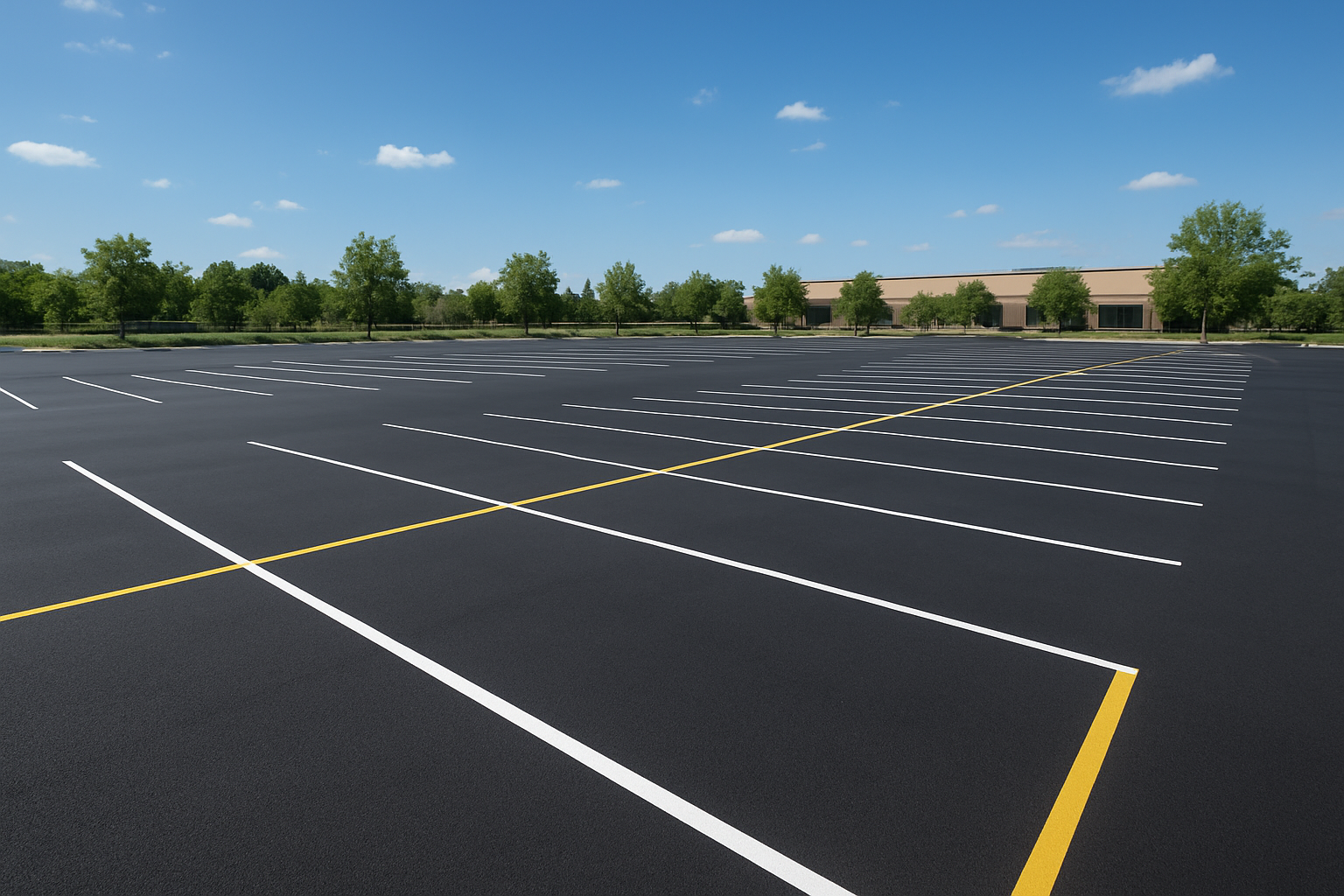
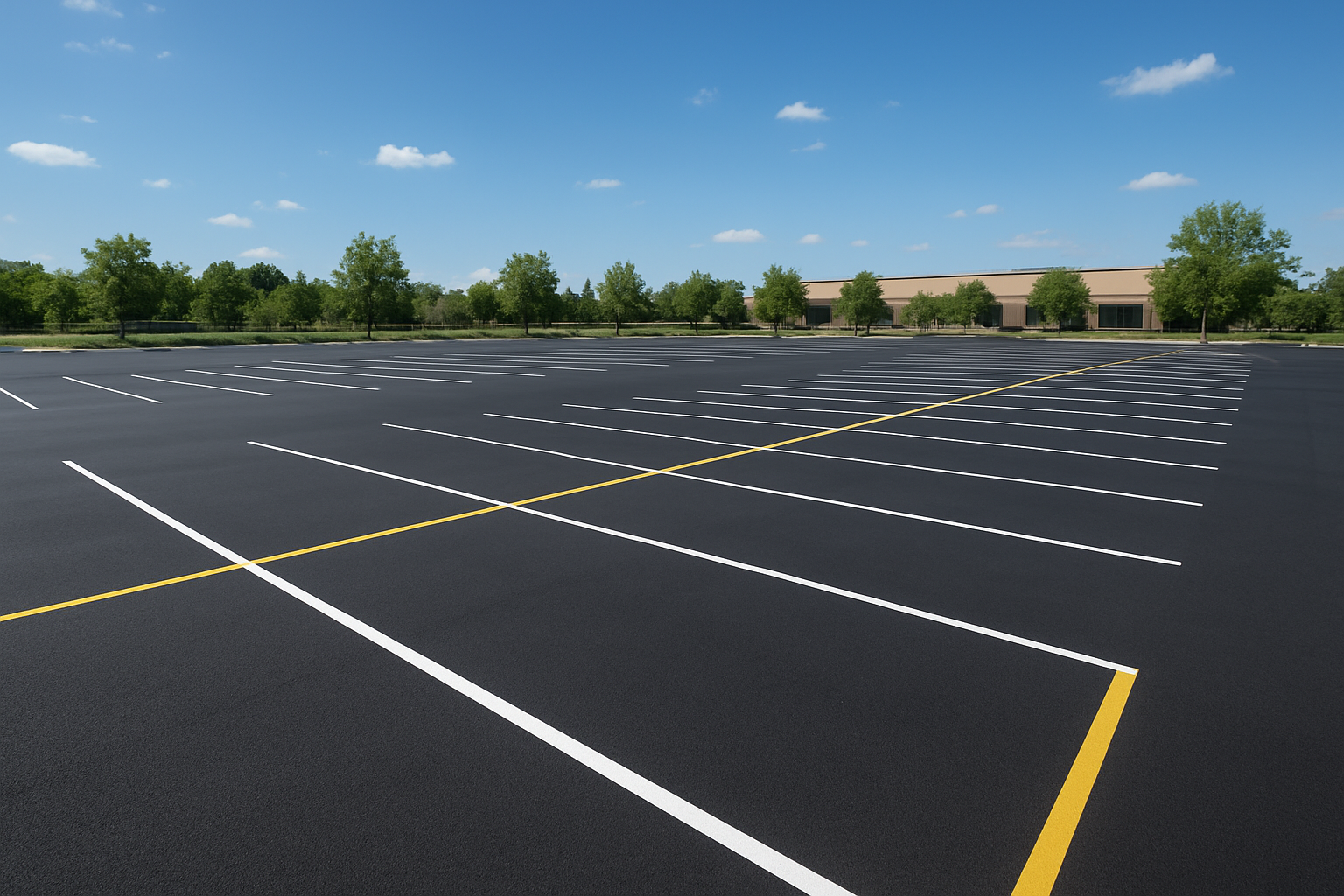
A freshly completed lot striped with eco-friendly parking lot paint, showing crisp, high-visibility lines.
What Is Eco-Friendly Parking Lot Paint?
Eco-friendly parking lot paint is a water-based or low-VOC coating formulated to reduce harmful air emissions and stormwater runoff while still providing durable, high-visibility line striping for parking stalls, fire lanes, and ADA-compliant markings.
Unlike traditional solvent-based traffic paint, which relies on petroleum-based carriers, this coating uses water as its primary base. As a result, it releases far fewer volatile organic compounds (VOCs), which are chemical compounds that evaporate easily and can affect air quality. Because the formula dries through evaporation rather than chemical curing, crews often see quicker turnaround times between application and reopening the lot to traffic. In addition, the reduced solvent content means less flammability risk during storage and transport, which many facilities managers appreciate when scheduling large multi-lot projects.
Waterborne Chemistry: Why It Matters
Most eco-friendly parking lot paint formulas rely on acrylic resin suspended in water rather than mineral spirits. Consequently, the paint film forms as water evaporates, leaving behind a flexible, UV-stable acrylic layer that resists cracking. This is similar in principle to how water-based house paints have largely replaced oil-based versions over the past two decades. For property owners, the practical upshot is straightforward: fewer fumes on site, a safer jobsite for crews, and comparable line visibility once the coating cures.
Why More Property Owners Choose Eco-Friendly Parking Lot Paint
Property managers, schools, and healthcare facilities are increasingly choosing sustainable parking lot striping for a few practical reasons. First, it supports internal sustainability goals without sacrificing the look or durability of the finished lines. Second, it reduces exposure to strong fumes for workers and nearby pedestrians during application. Finally, many local jurisdictions are tightening emissions rules, so switching now helps properties stay ahead of future regulations rather than scrambling to comply later.
By the numbers: According to the U.S. Environmental Protection Agency, switching from solvent-based coatings to water-based, low-VOC alternatives can reduce volatile emissions by as much as 80 percent, helping properties meet increasingly strict air quality standards.
Environmental and Health Benefits of Low-VOC Striping Paint
Low-VOC striping paint benefits more than just the atmosphere. Because it produces less odor and fewer airborne particles, it is more comfortable for crews working close to occupied buildings like retail centers or hospitals. Additionally, water-based formulas typically generate less hazardous runoff, which matters for properties located near storm drains or natural waterways. You can learn more about VOCs and their environmental impact on Wikipedia’s overview of volatile organic compounds.
Certifications and Regulatory Standards to Look For
Not every product labeled “eco-friendly” actually meets a verified standard. Therefore, it helps to know what to ask a contractor or supplier before a project begins. Look for coatings that carry a Green Seal GS-11 certification, which independently verifies low-VOC performance for paints and coatings. In addition, many manufacturers formulate to comply with the South Coast Air Quality Management District’s Rule 1113, one of the strictest VOC limits in the country and a benchmark many other regions now reference. Above all, ask your striping contractor for the paint’s technical data sheet — a legitimate eco-friendly product will list its VOC content in grams per liter, typically well under 100 g/L compared to 250-350 g/L for conventional solvent paint.
Types of Eco-Friendly Parking Lot Paint
Not all sustainable striping products are the same, and choosing the right type depends on your surface, traffic volume, and budget. Below are the three most common options a contractor may recommend.
- Water-based acrylic latex: The most common eco-friendly option, offering fast drying, low odor, and strong color retention for standard parking stalls and general markings.
- Water-based epoxy: A tougher formula suited for high-traffic drive lanes and loading zones, since the epoxy binder resists abrasion better than standard acrylic while still keeping VOC levels low.
- Low-VOC alkyd hybrid: A middle-ground formula for properties that need extra durability in extreme heat, such as unshaded lots across North Texas summers, without reverting to a full solvent-based product.
Consequently, a knowledgeable contractor will match the formula to the specific area of the lot rather than applying a single product everywhere. Fire lanes, for example, often benefit from the tougher water-based epoxy, while standard stall lines perform well with standard acrylic.
How Eco-Friendly Line Striping Is Applied Step by Step
Applying eco-friendly line striping correctly requires more than just a fresh can of paint. Here is the general process a professional crew follows:
- Our technicians inspect the entire parking lot surface for cracks, potholes, oil stains, and drainage issues that could affect paint adhesion or longevity.
- The crew pressure-washes the asphalt or concrete surface and repairs any damaged areas so the eco-friendly parking lot paint bonds properly and lasts longer.
- Using laser-guided measuring tools, the team lays out parking stalls, fire lanes, and ADA-compliant handicap spaces according to local code requirements.
- A striping machine applies the low-VOC, water-based coating in even, consistent lines while minimizing overspray and reducing airborne emissions.
- The finished markings cure for the manufacturer-recommended time before the lot reopens, and a final walkthrough confirms every line meets visibility and compliance standards. For a deeper walkthrough, see our Guidelines for Fire Lane Marking in Texas: Complete Compliance Guide.
Weather also plays a bigger role than most property owners expect. Because water-based formulas cure through evaporation, high humidity or overnight dew can slow drying, while direct summer heat can cause the paint to skin over too quickly. Therefore, experienced crews schedule striping during moderate morning temperatures whenever possible, particularly during Texas summers. For a closer look at how a full striping project comes together, our parking lot striping services page walks through the process in more detail.
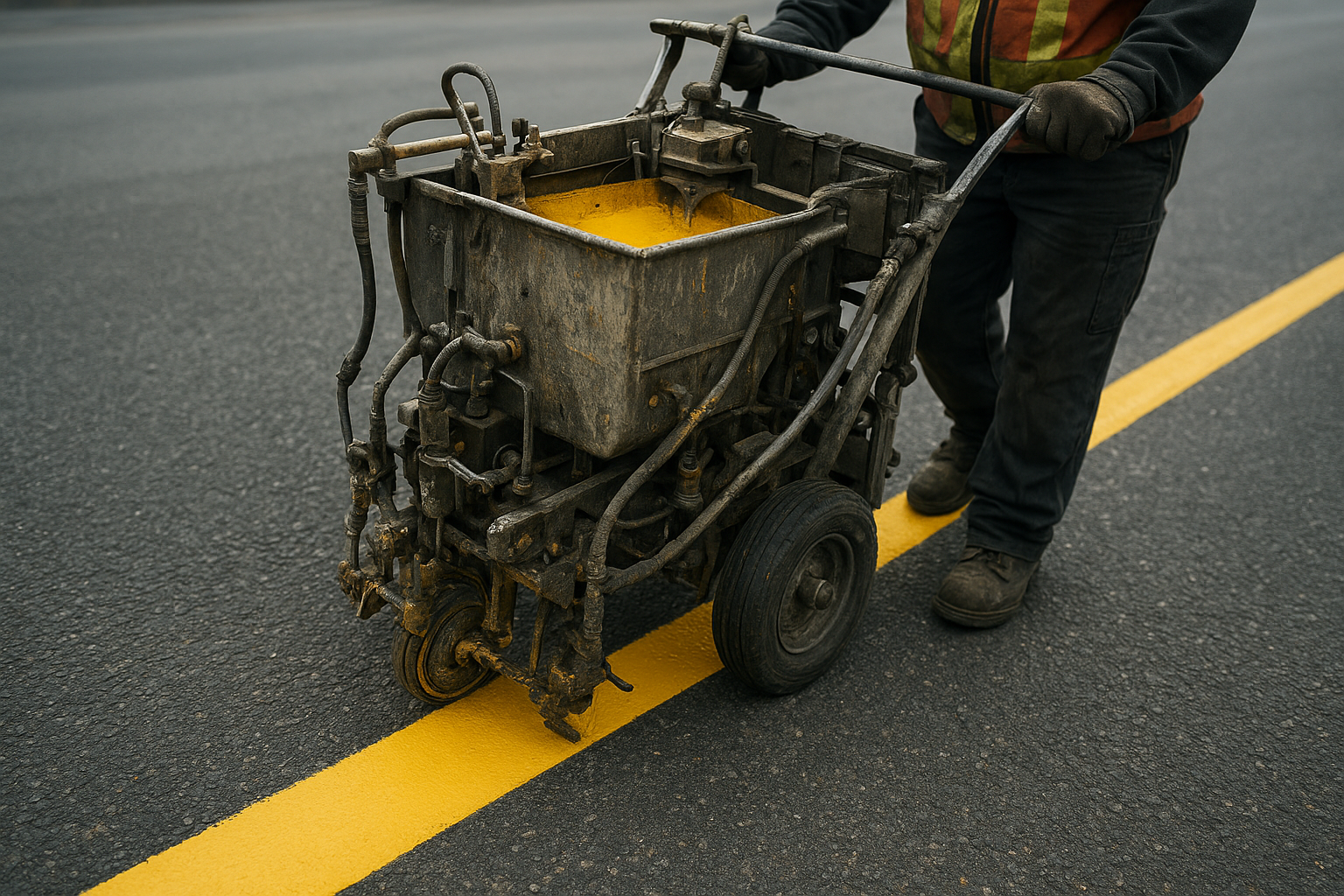
A striping machine applies low-VOC coating in a single, even pass across the pavement.
Eco-Friendly Paint vs. Traditional Striping Paint
Choosing between eco-friendly and traditional striping paint often comes down to priorities like emissions, cost, and cure time. The table below compares the two side by side, including a few details that shorter comparisons tend to skip.
| Feature | Eco-Friendly Paint | Traditional Solvent Paint |
|---|---|---|
| VOC Emissions | Low (often under 100 g/L) | High (250-350 g/L) |
| Drying Time | 30-60 minutes | 45-90 minutes |
| Odor | Minimal | Strong |
| Typical Lifespan | 12-18 months | 12-18 months |
| Ideal Application Temperature | 50-90°F | 40-95°F |
| Stormwater Impact | Lower runoff toxicity | Higher runoff concern |
Cost and Durability of Green Parking Lot Striping
Green parking lot striping is generally priced similarly to conventional paint, though costs vary by manufacturer, region, and project size. For regional cost breakdowns and per-lot estimates, see <a href="https://stripespls.com/how-much-does-commercial-parking-lot-striping-cost-in-texas">commercial parking lot striping cost</a>. Since durability depends heavily on proper surface prep and traffic volume rather than the formula itself, working with an experienced crew matters more than the paint type alone. Consequently, property owners rarely see a meaningful trade-off in longevity when choosing the eco-friendly option. For a full pricing breakdown by lot size, see our detailed cost breakdown for parking lot line painting, and for compliance-related cost factors, our parking lot line painting guide covering cost and compliance is a helpful companion resource.
If you are evaluating vendors for your property, our guide on what to look for in a reliable striping service covers the key questions to ask before signing a contract, from insurance coverage to warranty terms.
Climate Considerations for Texas Parking Lots
North Texas presents a unique challenge for any coating, and eco-friendly parking lot paint is no exception. Intense summer heat can cause the surface of the pavement to exceed 140°F, which shortens the working window before the paint skins over. In contrast, spring and fall mornings typically offer the ideal 50-90°F range needed for even curing. Similarly, sudden thunderstorms common in the region can wash away freshly applied lines if timing is not carefully managed. For this reason, scheduling with a local crew familiar with Denton and Plano weather patterns often makes the difference between a durable finish and an early repaint.
How to Maintain Eco-Friendly Parking Lot Markings
Maintaining eco-friendly parking lot markings starts with routine inspections. Sweep debris and oil buildup regularly, since grime accelerates fading. In addition, address cracks and potholes quickly so water does not seep beneath the paint and cause premature peeling. For a full maintenance checklist, see our article on maintaining parking lot striping. It’s also worth understanding the benefit of long-lasting line striping before deciding how often to budget for a refresh.
Most lots benefit from a refresh every 12 to 18 months, though high-traffic retail centers or schools may need it sooner. Our resource on how often to refresh parking lot markings breaks this down by property type.
Finding a Reliable Team for Sustainable Striping Services in Denton & Plano
Selecting the right contractor matters just as much as the paint itself. A qualified crew understands local ADA requirements, referenced in detail by the U.S. Department of Justice’s ADA Standards for Accessible Design, and applies coatings correctly the first time. Locally, our team specializes in professional striping, ADA compliance, and fire lane marking for commercial and residential properties across the Denton and Plano areas. Whether you need a full relayout or a simple restripe, you can review our professional parking lot striping services in Denton, TX or request a free quote directly through stripespls.com.
Frequently Asked Questions About Eco-Friendly Parking Lot Paint
What is eco-friendly parking lot paint made of?
Eco-friendly parking lot paint is typically a water-based acrylic or latex coating that replaces the petroleum-based solvents found in traditional traffic paint. It contains far lower levels of VOCs, which makes it safer to apply and better for surrounding air quality.
How is eco-friendly parking lot paint different from regular striping paint?
The main difference is the base formula: eco-friendly paint uses water as its carrier instead of solvents. This results in lower emissions, faster drying, and less odor, while still providing bright, durable lines.
Does eco-friendly parking lot paint last as long as traditional paint?
Modern low-VOC formulations perform comparably to solvent-based paints when applied correctly by a professional crew. Lifespan depends more on traffic volume, surface prep, and climate than on the paint’s eco-friendly formula.
How much does eco-friendly parking lot paint cost?
Pricing is generally similar to traditional striping paint, though it can run slightly higher depending on the manufacturer and region. Most property owners find the environmental and health benefits worth the modest difference.
Is eco-friendly parking lot paint required by law?
Some states and municipalities have adopted VOC emission limits that effectively require low-VOC coatings for commercial applications. Even where it is not mandatory, many properties choose it voluntarily to meet sustainability goals.
How long does eco-friendly parking lot paint take to dry?
Water-based eco-friendly paint often dries faster than solvent-based alternatives, typically within 30 to 60 minutes in favorable weather. Full cure time before heavy traffic can still take up to 24 hours.
Can eco-friendly parking lot paint be used on both asphalt and concrete?
Yes, eco-friendly parking lot paint adheres well to both asphalt and concrete surfaces when the surface is properly cleaned and prepped. A professional crew will adjust application techniques slightly depending on surface porosity.
What are common mistakes when applying eco-friendly parking lot paint?
Common mistakes include skipping surface cleaning, applying paint in poor weather, and using inconsistent line thickness. Hiring an experienced striping company helps avoid these issues and ensures compliant, even markings.
How often should eco-friendly parking lot markings be refreshed?
Most commercial lots benefit from restriping every 12 to 18 months, though high-traffic areas may need it sooner. Regular inspections help property owners catch fading before it becomes a safety or compliance issue.
Is eco-friendly parking lot paint safe for the environment?
Eco-friendly parking lot paint reduces air pollution and stormwater contamination compared to solvent-based products. It breaks down with fewer harmful byproducts, making it a better choice for properties near waterways or sensitive ecosystems.
What colors are available for eco-friendly parking lot paint?
Eco-friendly striping paint comes in the same standard colors as traditional paint, including white, yellow, blue, and red. Blue is commonly reserved for ADA-compliant handicap markings, while red typically designates fire lanes.
What certifications or standards indicate a truly eco-friendly parking lot paint?
Look for Green Seal GS-11 certification and compliance with strict VOC limits such as South Coast AQMD Rule 1113. A technical data sheet listing VOC content in grams per liter is the clearest proof of a genuinely low-emission formula.
What types of eco-friendly parking lot paint are available?
The three most common types are water-based acrylic latex, water-based epoxy for high-traffic areas, and low-VOC alkyd hybrids for extreme heat conditions. A contractor typically matches the formula to each specific area of the lot.
Why should I hire a professional for eco-friendly parking lot paint application?
Professionals understand proper surface prep, layout spacing, and local code requirements that DIY applications often miss. This ensures the eco-friendly parking lot paint lasts longer and keeps the property compliant and safe.
Final Thoughts
In summary, eco-friendly parking lot paint offers a practical way to reduce environmental impact without compromising on visibility, durability, or ADA compliance. From lower VOC emissions to faster drying times and verified certifications like Green Seal GS-11, the benefits make it an increasingly popular choice for property managers, schools, and healthcare facilities across North Texas. If your lot is due for a refresh, reach out through stripespls.com to request a free quote and see how sustainable striping can work for your property.


