
Commercial property parking solutions are the combination of striping, signage, and layout planning that keep a parking lot safe, organized, and compliant with accessibility law. For property managers, retail centers, and healthcare facilities across North Texas, getting these details right protects both visitors and the bottom line. This guide walks through what these services include, why compliance matters, and how a professional crew turns a faded lot into a clear, efficient space.
What Are Commercial Property Parking Solutions?
Commercial property parking solutions are the professional services used to design, mark, and maintain parking areas for businesses, schools, and municipal buildings. In short, they cover everything from initial layout planning to the painted lines drivers see every day. As a result, a well-executed plan directly affects how smoothly traffic moves and how safe pedestrians feel.
Specifically, this work includes standard stall striping, handicap-accessible markings, fire lane painting, curb numbering, and directional arrows. In addition, many properties need custom layout redesigns when traffic patterns change or when a lot is expanded. For a deeper look at tailored layouts, this Texas ADA striping guide breaks down how each element fits together.
Furthermore, these services are not one-size-fits-all. A retail center with heavy weekend traffic has different needs than a small medical office. Therefore, most reputable providers start with an on-site assessment before recommending a plan, which is covered in more detail later in this article.

Clean, freshly painted stall lines are the visible result of professional commercial property parking solutions.
Why ADA Compliant Markings Matter for Every Lot
ADA compliance is one of the most important pieces of any parking lot project. Under federal guidelines from the Americans with Disabilities Act, commercial properties must provide a specific number of accessible stalls based on total parking capacity, along with van-accessible spaces and properly sloped access aisles. Consequently, skipping this step can expose a business to complaints, fines, and costly retrofits.
The U.S. Access Board publishes detailed technical requirements covering stall dimensions, signage height, and surface slope. Because these rules change based on lot size and use type, it helps to work with a crew that already understands local code. StripesPls maintains a dedicated ADA compliance markings service built specifically around these standards.
In particular, healthcare facilities and municipal buildings tend to face the strictest scrutiny, since they serve a higher volume of visitors with mobility needs. Similarly, retail centers benefit from clear accessible markings because they reduce confusion at busy entrances and lower liability exposure for property managers.
Fire Lane Marking and Safety Requirements
Fire lanes exist so emergency vehicles can reach a building without delay. According to fire code standards published by the National Fire Protection Association, these lanes must remain painted, signed, and completely clear of parked vehicles at all times. Local fire marshals in Denton and Plano generally inspect these areas as part of routine property checks.
Typically, fire lanes are marked with red curb paint and white lettering that reads “Fire Lane – No Parking.” However, exact wording and paint color can vary slightly by municipality, so it’s worth confirming local requirements before a repaint. For properties needing a broader marking package alongside fire lanes, this parking bay marking service in Denton and Plano covers both in a single visit.
Above all, faded fire lane markings are a common violation that property managers overlook. As a result, scheduling regular inspections alongside striping maintenance helps avoid last-minute fines during official reviews.
The Striping Process: A Step-by-Step Overview
Every reliable striping project follows a similar sequence, regardless of property size. Below is the typical process a professional crew uses to deliver dependable commercial property parking solutions from start to finish.
- Site assessment: A technician measures the lot, counts required stalls, and reviews current markings, drainage, and traffic flow before recommending any changes.
- Layout design: The team drafts a plan that fits ADA-compliant stalls, fire lanes, and directional arrows while maximizing usable parking space.
- Surface preparation: Crews sweep and clean the asphalt, removing debris and old flaking paint so new lines adhere properly.
- Layout marking: Chalk lines or string layouts are measured and placed to match the approved design before any paint touches the ground.
- Painting and curing: Technicians apply durable traffic paint in even coats, then allow proper curing time before reopening the lot to traffic.
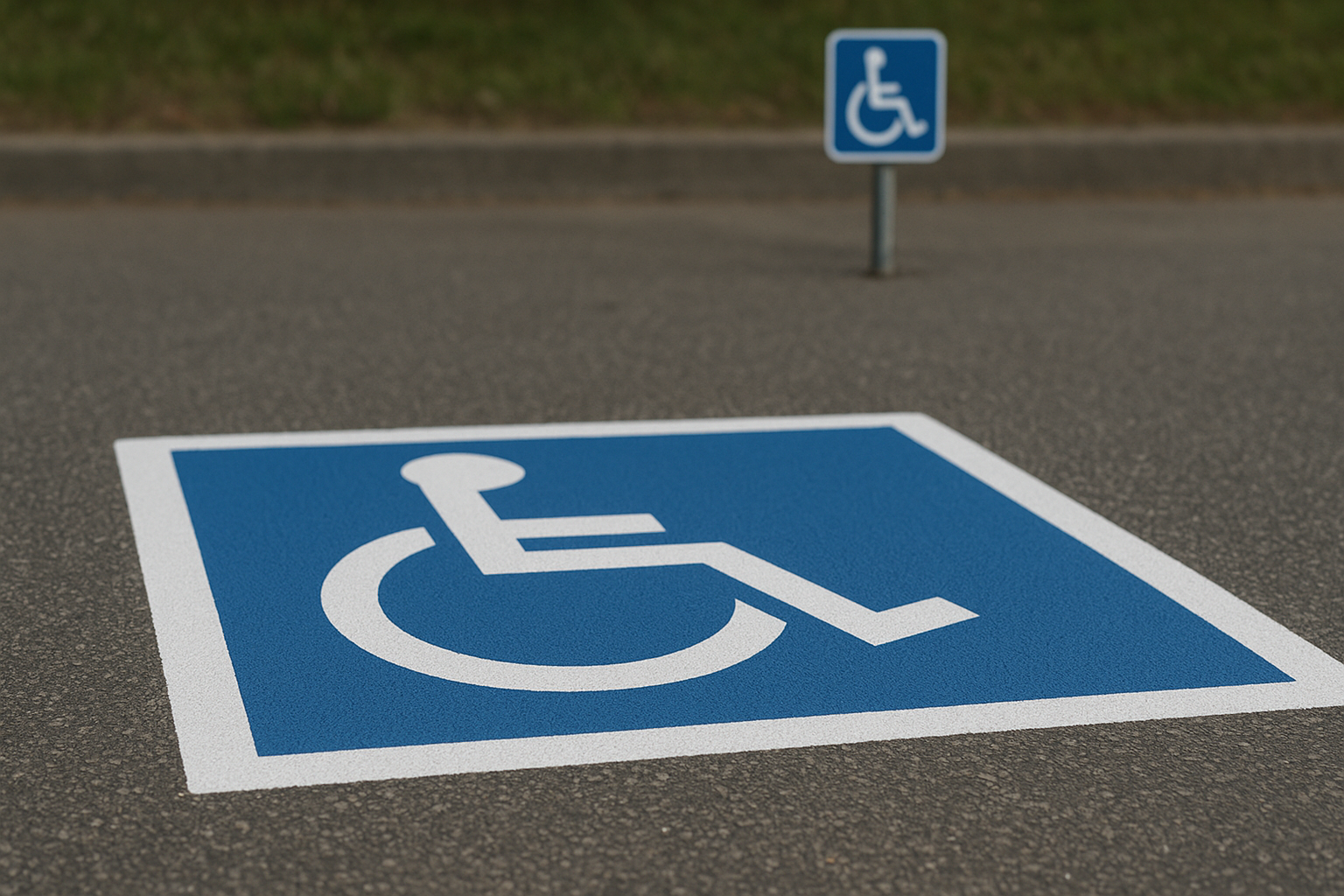
Accurate ADA symbol placement is a core part of accessible commercial property parking solutions.
Customized Layouts for Different Property Types
Not every parking lot serves the same purpose, so a good layout plan reflects the property it’s built for. Schools, for instance, often need drop-off zones and pedestrian crosswalks in addition to standard stalls. Meanwhile, retail centers benefit from wider aisles near entrances to reduce congestion during peak shopping hours.
Healthcare facilities, on the other hand, usually require a higher ratio of accessible stalls placed close to building entrances. Similarly, municipal properties often need clearly marked visitor, staff, and fleet vehicle zones. Because these needs vary so widely, property owners often ask how to get customized parking solutions for their business rather than settling for a generic template.
Ultimately, a layout designed around actual traffic patterns tends to reduce congestion, minimize fender-benders, and make better use of existing square footage. In fact, restriping alone can sometimes reveal several stalls that were previously wasted due to poor spacing.
Choosing the Right Provider for Commercial Property Parking Solutions
Selecting a provider comes down to experience, local code knowledge, and consistency. A crew that regularly handles ADA compliance work, for example, is less likely to make measurement errors that lead to failed inspections. Likewise, a company familiar with Denton and Plano municipal requirements can move faster through permitting or inspection steps.
StripesPls, based in North Texas, works directly with property managers, schools, and healthcare facilities to deliver striping, ADA markings, and fire lane designation tailored to each site. Property owners considering a refresh can visit stripespls.com to request a free quote and schedule a site visit.
Before hiring, it’s worth asking a potential contractor about paint durability, project turnaround time, and whether they carry insurance for commercial work. These questions help avoid surprises once the crew is on-site and painting begins.
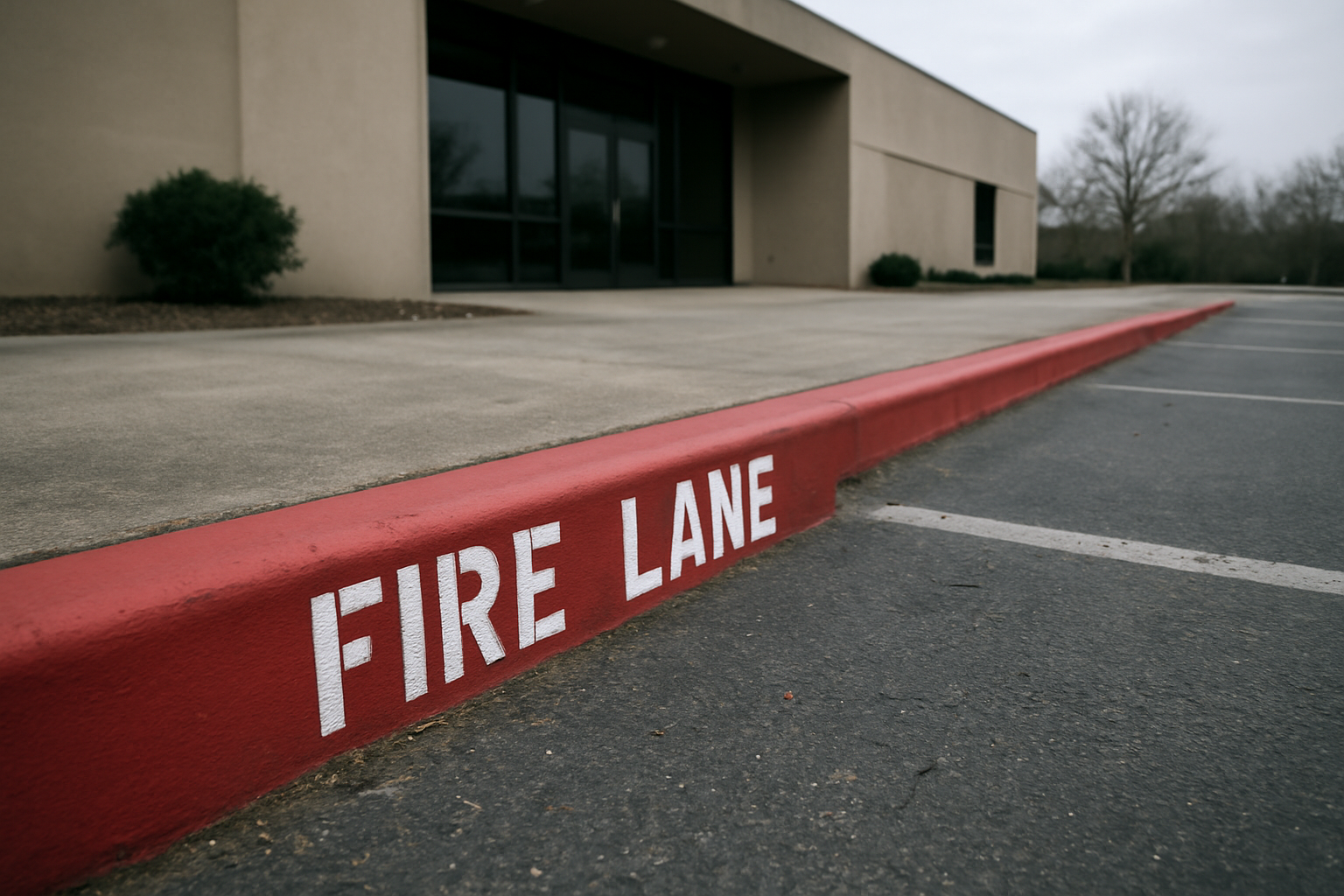
Clearly painted fire lanes keep emergency access open at commercial properties.
Frequently Asked Questions
What is included in commercial property parking solutions?
Commercial property parking solutions typically include line striping, ADA-compliant stall markings, fire lane designation, directional arrows, and parking lot layout design. Together, these services keep a lot organized, safe, and legally compliant.
How do commercial property parking solutions improve ADA compliance?
Professional crews measure and paint handicap stalls, access aisles, and van-accessible spaces according to ADA guidelines. This reduces liability and helps property owners avoid compliance violations.
Why is fire lane marking important for commercial properties?
Fire lane marking keeps emergency access routes clear at all times, which most municipal fire codes require. Blocked fire lanes can delay emergency response and lead to fines.
How much does professional line striping cost for a commercial parking lot?
Costs vary based on lot size, stall count, and whether a new layout or simple restriping is needed. Most commercial projects range from a few hundred to several thousand dollars, and a free on-site quote gives the most accurate number.
How long does it take to restripe a commercial parking lot?
A typical restriping project takes one to two days depending on lot size and weather. Larger properties with multiple sections may need a phased schedule to avoid closing the whole lot at once.
What is the difference between parking lot striping and parking lot sealing?
Striping applies painted lines and stalls, while sealcoating protects the asphalt surface from water and UV damage. Many owners schedule sealcoating first and striping right after for the best results.
How often should a commercial parking lot be restriped?
Most commercial lots need restriping every 12 to 24 months, depending on traffic volume and climate exposure. Faded lines should be refreshed promptly since they affect safety and curb appeal.
What are common mistakes property owners make with parking lot markings?
Common mistakes include using non-reflective paint, ignoring ADA slope and spacing rules, and waiting until lines completely disappear before repainting. These errors often lead to compliance issues or repeat costs.
Can commercial property parking solutions increase parking capacity?
Yes, a redesigned layout can often add several usable stalls by optimizing angles, aisle widths, and unused corners. This is especially valuable for retail centers and healthcare facilities with high parking demand.
What paint or materials are used for durable parking lot markings?
Most contractors use water-based traffic paint or thermoplastic material rated for outdoor durability and UV resistance. The right choice depends on traffic volume, climate, and how long the markings need to last.
Do commercial properties need ADA-compliant handicap stalls even in small lots?
Yes, ADA requirements apply based on total stall count, so even small commercial lots must include a proportional number of accessible spaces. Skipping this step can expose property owners to legal complaints.
How do I get a free quote for commercial property parking solutions in Denton or Plano?
Property owners in the Denton and Plano area can request a free quote directly through stripespls.com by describing their lot size and needs. A team member typically follows up to schedule a site visit and provide pricing.
Final Takeaways
In summary, commercial property parking solutions bring together striping, ADA compliance, and fire lane marking to keep a lot safe, organized, and legally sound. Whether a property needs a full layout redesign or a simple restripe, addressing these details consistently protects both visitors and the business itself. For property managers and business owners throughout Denton and Plano, working with a local team that understands these requirements makes the process straightforward from the first site visit to the final coat of paint.


