Customized parking solutions Texas is exactly what property owners in Denton, Plano, and across North Texas start searching for the moment a generic striping template fails to match their lot’s shape, traffic flow, or ADA (Americans with Disabilities Act) obligations. Rather than stamping the same cookie-cutter layout onto every property, a truly customized approach studies the site first and builds the plan around it. Below, we go further than the typical striping overview: this guide covers layout design, ADA compliance, fire lanes, materials, real cost ranges, maintenance schedules, and even how modern parking guidance technology fits into a fully tailored plan. By the end, you will know exactly what to request, what to expect, and how to pick a provider who gets it right the first time.
Quick answer: Customized parking solutions Texas refers to site-specific striping, ADA-compliant stall layouts, fire lane marking, and (increasingly) guidance signage designed around a property’s exact dimensions, traffic patterns, and local code requirements — instead of a generic template applied to every lot. Property owners in Denton and Plano typically get these plans from local contractors who walk the site in person before drafting a design.
Customized Parking Solutions Texas: What the Term Really Means
At its core, a customized parking solution starts with a professional site assessment rather than a pre-made template. A contractor measures the lot, studies existing traffic patterns, and reviews any prior markings before drawing a single line.
This matters because every property serves a different purpose. For example, a retail center needs wide travel lanes and clear directional arrows so shoppers flow smoothly during peak hours. A school, however, prioritizes dedicated pickup and drop-off zones to keep children safe. Similarly, a hospital lot usually needs extra ADA-compliant stalls positioned as close to entrances as possible. Consequently, no two customized parking lot designs look exactly alike, even when the properties sit a few miles apart in Denton or Plano.
In short, “customized” is not a marketing label — it is a design methodology. It means the striping crew works backward from your property’s specific traffic, code, and safety needs, rather than forward from a generic parking template.
Why Generic Striping Templates Fail Texas Properties
Generic striping often overlooks code changes, drainage issues, or updated ADA ratios that only a site-specific plan catches. In addition, poorly planned layouts waste valuable parking capacity and create real liability risks for property owners.
The Hidden Costs of a One-Size-Fits-All Parking Lot
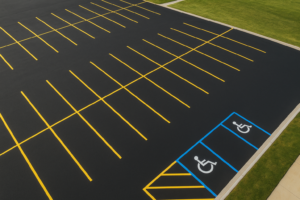
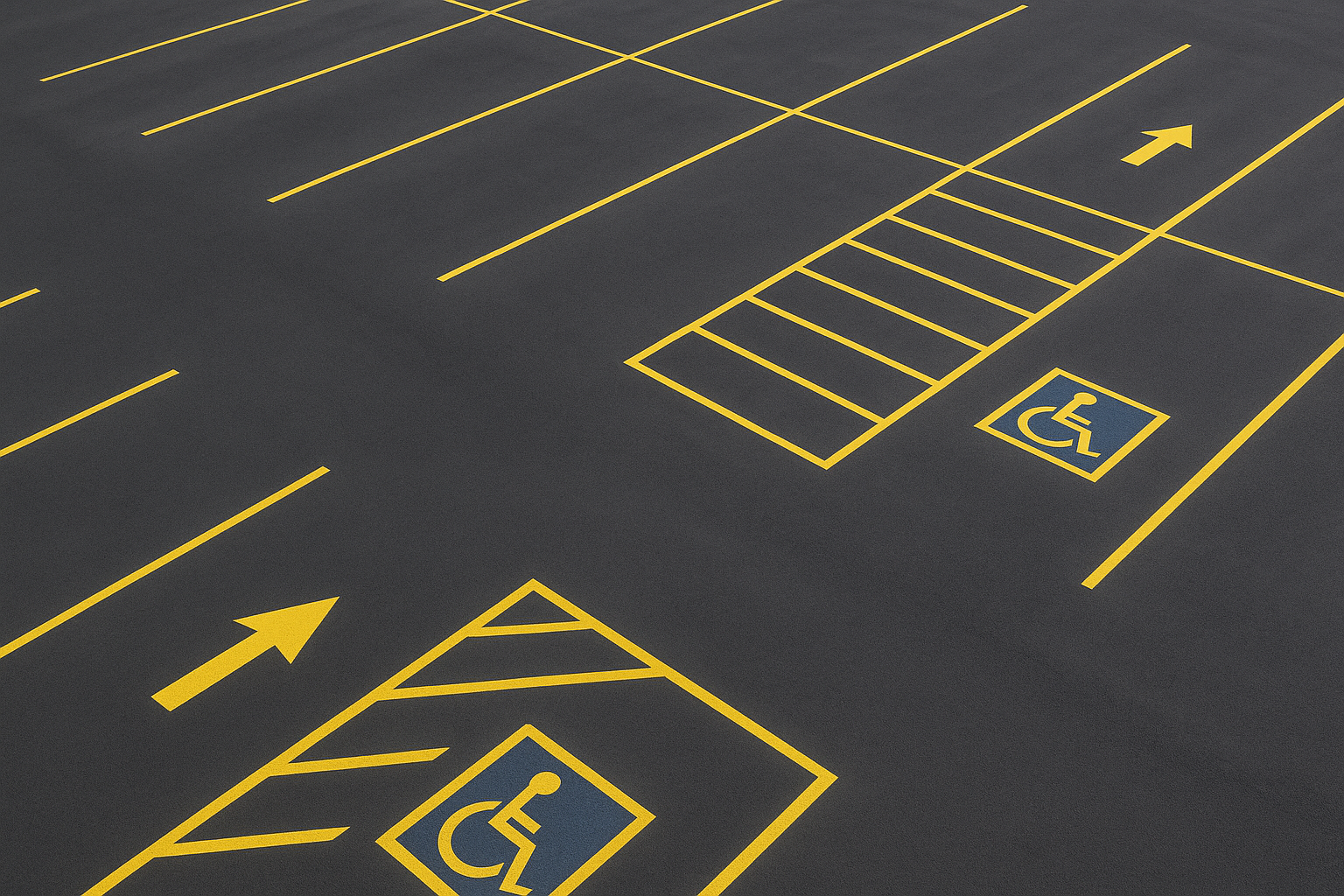
A tailored plan helps property managers squeeze more usable value out of every available square foot. Specifically, it can increase compliant handicap stalls, sharpen fire lane visibility, and reduce driver confusion during busy hours. As a result, businesses that switch to a customized approach typically see fewer complaints, fewer code violations, and a measurably safer lot for both employees and customers. Property owners ready to move forward can request customized parking solutions for their business before their next inspection cycle arrives.
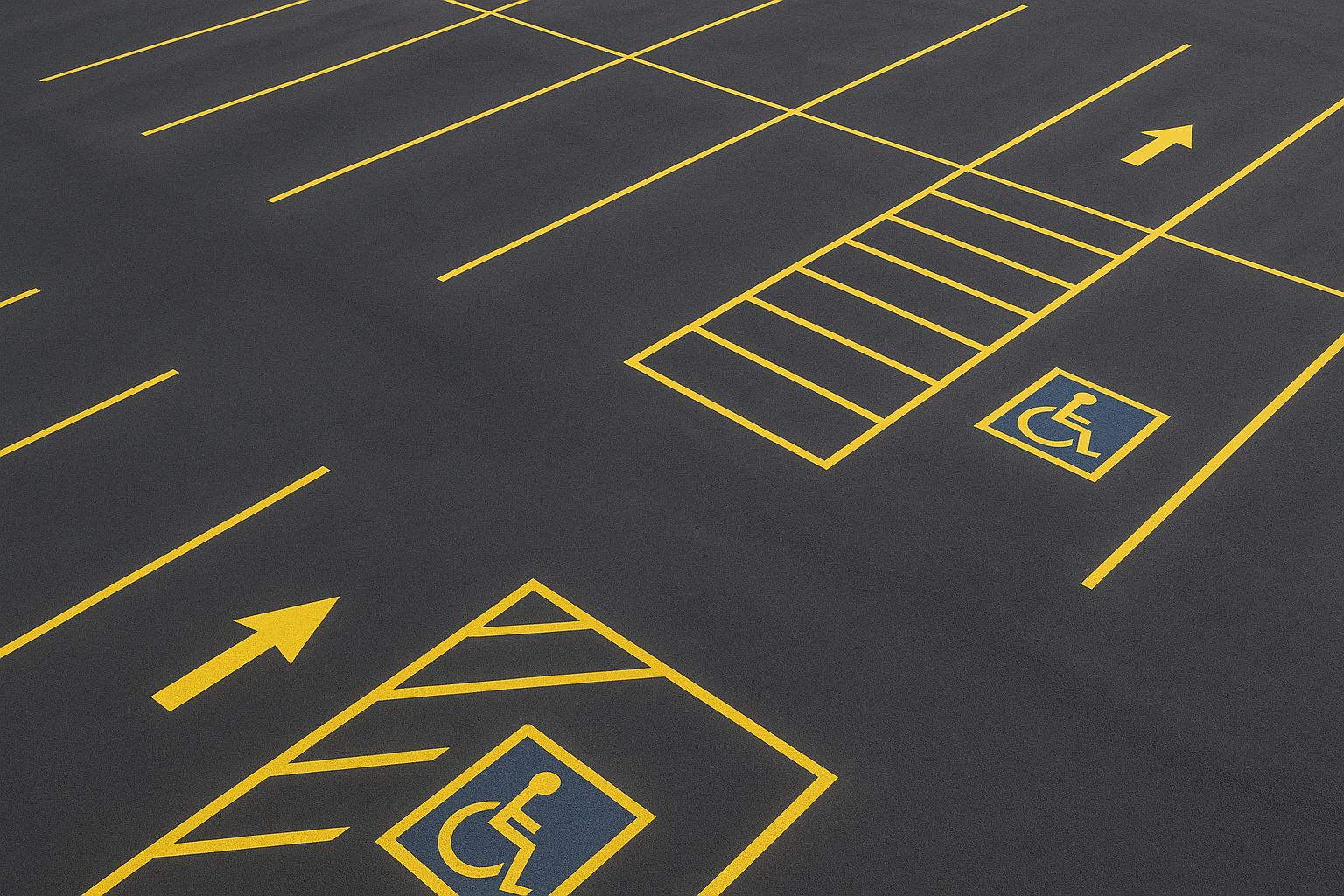
A newly completed layout reflecting customized parking solutions Texas property managers request for busy commercial lots.
Core Elements of Every Customized Parking Solution in Texas
Every tailored parking lot solution includes several core elements, each adjusted to fit the property’s needs. Above all, these components must function as one cohesive system rather than a collection of unrelated additions.
- ADA-compliant accessible stalls and van-accessible spaces sized to current federal and Texas code
- Fire lane marking and curb painting for unobstructed emergency vehicle access
- Directional arrows and lane dividers that manage one-way and two-way traffic flow
- Wheel stops and pedestrian safety features positioned for maximum visibility
- Custom signage placement coordinated directly with the striping layout
- Optional parking guidance technology, such as sensors or space-count displays, layered on top of the striped layout
For a closer look at how these pieces come together in practice, this professional line marking services overview breaks down each option in detail.
ADA Compliance and Custom Parking Lot Design in Denton and Plano
ADA compliance is one of the most important pieces of any custom parking lot design. According to the U.S. Department of Justice’s ADA guidelines, federal rules require at least one van-accessible space for roughly every six accessible stalls provided. However, exact stall counts and spacing can shift based on total parking capacity and local Texas code amendments.
Van-Accessible Stalls and Ratios Explained
In practical terms, a 60-stall lot typically needs a minimum of three accessible spaces, and at least one of those must be van-accessible with extra aisle width. Therefore, a contractor must calculate this ratio before finalizing any layout, not after.
Texas-Specific Code Overlays in Denton and Plano
Working with a contractor familiar with both federal ADA standards and North Texas municipal requirements is essential. For instance, Denton and Plano properties may face additional inspection steps tied to occupancy type, particularly for healthcare facilities and schools. In contrast, a small retail lot may only need a handful of compliant stalls to meet the threshold. State-level accessibility standards are further outlined by the Texas Department of Licensing and Regulation, which reviews accessibility compliance for many commercial buildings statewide. Learn more about specialized ADA compliant striping services available across the region.

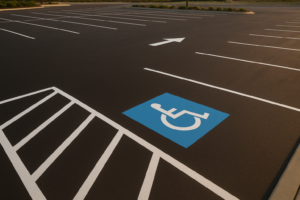
Precise ADA stall placement is a core part of any custom parking lot design.
Beyond Paint: How Parking Guidance Systems Fit Into a Customized Plan
Striping is the foundation, but larger properties increasingly layer digital parking guidance technology on top of it. In particular, sensor-based systems and LED indicators can turn a well-striped lot into a fully guided one.
Sensor-Based Space Counters and LED Indicators
Ultrasonic or camera-based sensors mounted above each stall detect occupancy in real time and feed that data to overhead LED lights or entrance displays. As a result, drivers see green or red indicators long before they reach a full row, which cuts down on wasted circling and idling. However, these systems only work well when they are mounted on a layout that already accounts for lane width, sightlines, and stall spacing — which is exactly what a customized striping plan provides first.
Digital Wayfinding Signage vs Painted Directional Arrows
Digital wayfinding signs can display real-time available-space counts by zone, while painted directional arrows remain the reliable, low-maintenance backbone of traffic flow. Consequently, most Texas properties benefit most from combining both: durable painted markings for everyday guidance, plus optional sensor displays for high-traffic zones like hospitals, stadiums, or large retail centers. This layered approach is what separates a genuinely customized parking solution from either a basic restripe or a stand-alone technology install.

Precision equipment ensures straight, durable lines during every striping project — the physical foundation any guidance technology depends on.
Step-by-Step: How Customized Parking Lot Striping Works
It helps to understand the general process from start to finish. Most projects follow the same core sequence, even though the details shift for every property.
- Site Assessment and Consultation: A licensed technician visits the property to measure the lot, review existing markings, and note drainage or surface issues that could affect the new layout.
- Custom Layout Design: The team drafts a striping plan that incorporates ADA-compliant stalls, fire lanes, and directional flow tailored specifically to the property’s traffic patterns and daily use.
- Surface Preparation: Crews clean the pavement, remove or grind out faded lines, and repair minor cracks so the new striping adheres properly and lasts longer.
- Precision Striping Application: Using professional-grade equipment, the crew applies durable, reflective paint in straight, evenly spaced lines according to the approved layout, following standards similar to the Federal Highway Administration’s Manual on Uniform Traffic Control Devices, the federal reference for road and lot markings.
- Final Inspection and Compliance Documentation: The completed project is inspected against ADA and local fire code requirements, and the contractor provides documentation for the property’s records.
Meanwhile, property owners who want a deeper breakdown of local requirements can review this expert line marking guide for Texas properties. You can also see examples of finished projects directly at stripespls.com.
What Does Customized Parking Lot Striping Cost in Texas?
Pricing varies widely because every customized plan is different, but property owners generally want a ballpark range before requesting a quote. Below is a general breakdown based on typical commercial lot sizes.
These figures are general estimates only. Therefore, the most reliable way to know your exact cost is a free, on-site quote that accounts for your lot’s current condition, required ADA stall count, and fire lane length.
Materials and Durability: Choosing Paint That Survives Texas Heat
Most contractors use water-based traffic paint or durable epoxy coatings designed to withstand Texas heat, intense UV exposure, and heavy vehicle traffic. Reflective additives are sometimes included for improved nighttime visibility, which is particularly useful near fire lanes and pedestrian crossings.
Epoxy coatings generally last longer than standard traffic paint, though they cost more upfront. In contrast, water-based paint is faster to apply and dries quicker, which suits properties that cannot close their lot for long. Above all, the right material choice depends on your traffic volume, budget, and how soon you need the lot reopened.
Fire Lanes, Drainage, and Traffic Flow: The Engineering Side of Custom Design
Fire lane placement and width can be adjusted based on building access points, emergency vehicle routes, and local fire marshal requirements. This flexibility is one of the most common reasons property owners choose a customized plan over a generic one.
In addition, drainage patterns influence where lines can realistically go. Specifically, a low spot that collects standing water after Texas storms may need re-graded striping so vehicles avoid parking in puddles. Similarly, traffic flow simulations help contractors decide where one-way lanes reduce congestion versus where two-way access works better. For general background on how pavement markings function as a traffic-control tool, see this overview of road surface marking standards.
Property-Type Playbook: Retail, Healthcare, Schools, and Municipal Lots
Retail centers typically need wide lanes, clear directional arrows, and enough compliant stalls near entrances to handle weekend traffic surges. Healthcare facilities, on the other hand, usually require a higher ratio of ADA stalls positioned as close to the entrance as physically possible, since patient mobility varies widely.
Schools often need dedicated pickup and drop-off zones separated from general parking, while municipal lots may follow additional local code requirements beyond standard ADA rules. Consequently, a customized plan accounts for each of these use cases individually rather than applying the same layout everywhere.
Choosing the Right Provider for Bespoke Parking Solutions
Selecting a contractor for bespoke parking solutions requires more than comparing quotes. Property managers should look closely at licensing, insurance, experience with ADA projects, and reviews from similar property types.
Contractor Vetting Checklist
- Ask for a written scope of work detailing paint type, layout dimensions, and expected timeline
- Confirm the contractor will walk the site with you before finalizing any design
- Request proof of licensing, insurance, and prior ADA-compliant project experience
- Discuss ongoing maintenance plans, such as periodic restriping, upfront to avoid faded lines later
- Check whether the provider can integrate guidance signage or sensors if you plan to add them later
These habits are covered further in this guide to best practices for maintaining a commercial parking lot. Consequently, building a relationship with one reliable provider often costs less over time than repeatedly comparing new bids each year.
Maintenance Schedule: Keeping Your Customized Parking Solution Compliant
Most lots benefit from restriping every 18 to 24 months, particularly in high-traffic Texas climates where UV exposure fades paint faster than in milder regions. However, ADA stalls and fire lanes often need touch-ups sooner since faded compliance markings carry higher risk than faded standard lines.
Therefore, schedule a quick visual inspection every six months. If paint has faded more than 50 percent on any ADA symbol, fire lane curb, or directional arrow, prioritize touch-up work immediately rather than waiting for the full restripe cycle.
Frequently Asked Questions About Customized Parking Solutions Texas
What are customized parking solutions in Texas?
Customized parking solutions in Texas usually include ADA-compliant striping, fire lane marking, and directional arrows designed around a property’s specific lot layout and traffic flow. These plans differ from generic striping because they account for the property’s exact code requirements and daily use.
How much does customized parking lot striping cost in Texas?
Pricing varies based on lot size, existing condition, and the number of ADA stalls or fire lanes required, but most commercial projects range from a few hundred to several thousand dollars. Getting a free, on-site quote remains the most reliable way to know your exact cost.
How long does a customized restriping project take?
Most restriping projects for small to mid-size commercial lots are completed within one to two days. Larger properties, or those requiring extensive surface repair, may take longer to finish.
What is the difference between standard striping and customized parking solutions?
Standard striping applies a generic template to any lot, while customized parking solutions are designed around a property’s specific traffic patterns, code requirements, and layout. As a result, customized plans often improve both safety and parking capacity.
Why does ADA compliance matter for a customized parking lot design?
ADA compliance ensures people with disabilities have safe, accessible parking and pathways, and it protects property owners from potential fines or complaints. Federal guidelines outline exact stall counts, widths, and signage requirements that a customized design must meet.
How often should parking lot lines be repainted in Texas?
Most parking lots need restriping every 18 to 24 months, though high-traffic properties may need it more frequently because of intense Texas sun exposure. Faded lines can create confusion and safety hazards, so regular inspections help catch wear early.
What mistakes should property owners avoid when planning a parking lot layout?
Common mistakes include ignoring updated ADA ratios, spacing stalls too tightly, and failing to mark fire lanes clearly. Skipping a professional site assessment often leads to costly corrections later on.
Can fire lane markings be customized for different property types?
Yes, fire lane placement and width can be adjusted based on building access points, emergency vehicle routes, and local fire marshal requirements. This is one of the most common reasons property owners choose a customized plan over a generic one.
What materials hold up best for parking lot striping in Texas heat?
Most contractors use water-based traffic paint or durable epoxy coatings designed to withstand Texas heat, UV exposure, and heavy traffic. Reflective additives are sometimes included for improved nighttime visibility.
Do schools and municipal properties need different striping requirements?
Yes, schools often need dedicated pickup and drop-off zones, while municipal lots may follow additional local code requirements beyond standard ADA rules. A customized plan accounts for these specific use cases from the start.
Do customized parking solutions in Texas include parking guidance systems or sensors?
They can. Many larger Texas properties layer sensor-based space counters or LED indicator signage on top of a customized striping plan, particularly at hospitals, stadiums, and large retail centers where real-time occupancy data reduces circling and congestion.
What permits or inspections are required for parking lot striping in Denton or Plano?
Requirements vary by occupancy type and project scope, so it is best to confirm directly with the local building or fire department before work begins. Healthcare facilities and schools often face additional inspection steps compared to standard retail properties.
How do I request a free quote for customized parking solutions in Texas?
Property owners can request a free quote directly through a local striping company’s website by providing basic property details and photos. Most companies follow up with an on-site visit before finalizing a plan.
What factors influence the design of a customized parking lot layout?
Key factors include lot dimensions, expected traffic volume, ADA stall ratios, fire lane placement, and drainage patterns. Property type, such as retail, healthcare, or school, also shapes the final design.
Final Thoughts on Customized Parking Solutions for Texas Properties
In summary, customized parking solutions Texas property owners choose are about far more than paint on pavement. They combine ADA compliance, fire lane safety, drainage-aware design, and — increasingly — smart guidance technology to create a parking facility that works as hard as the business it supports. Whether you manage a retail center in Plano, a healthcare campus, or a school in Denton, a tailored striping plan can improve safety, maximize capacity, and keep your property code-compliant for years to come. To get started, request a free quote through stripespls.com and see how a genuinely customized approach compares to a one-size-fits-all restripe.