Texas pavement striping is the process commercial property owners across the state depend on to keep parking lots safe, organized, and fully compliant with state and federal law. From retail plazas in Plano to hospital campuses in Denton, crisp painted or thermoplastic lines guide traffic, define parking stalls, and mark the accessible spaces that Texas code requires. However, faded, mismatched, or poorly installed markings can quietly turn a well-run property into a liability risk. This guide covers everything Page B and other competing resources leave out — pricing breakdowns, material science, regional climate factors, property-type-specific advice, and a full FAQ — so you never need to search further for answers about Texas pavement striping.
Quick Answer: Texas pavement striping is the application of painted or thermoplastic lines on parking lots and roadways to organize traffic, designate stalls, and satisfy ADA and fire code requirements. Most commercial lots in Texas need restriping every 12 to 24 months to stay compliant, visible, and safe, though heat, UV exposure, and traffic volume can shorten that window considerably.
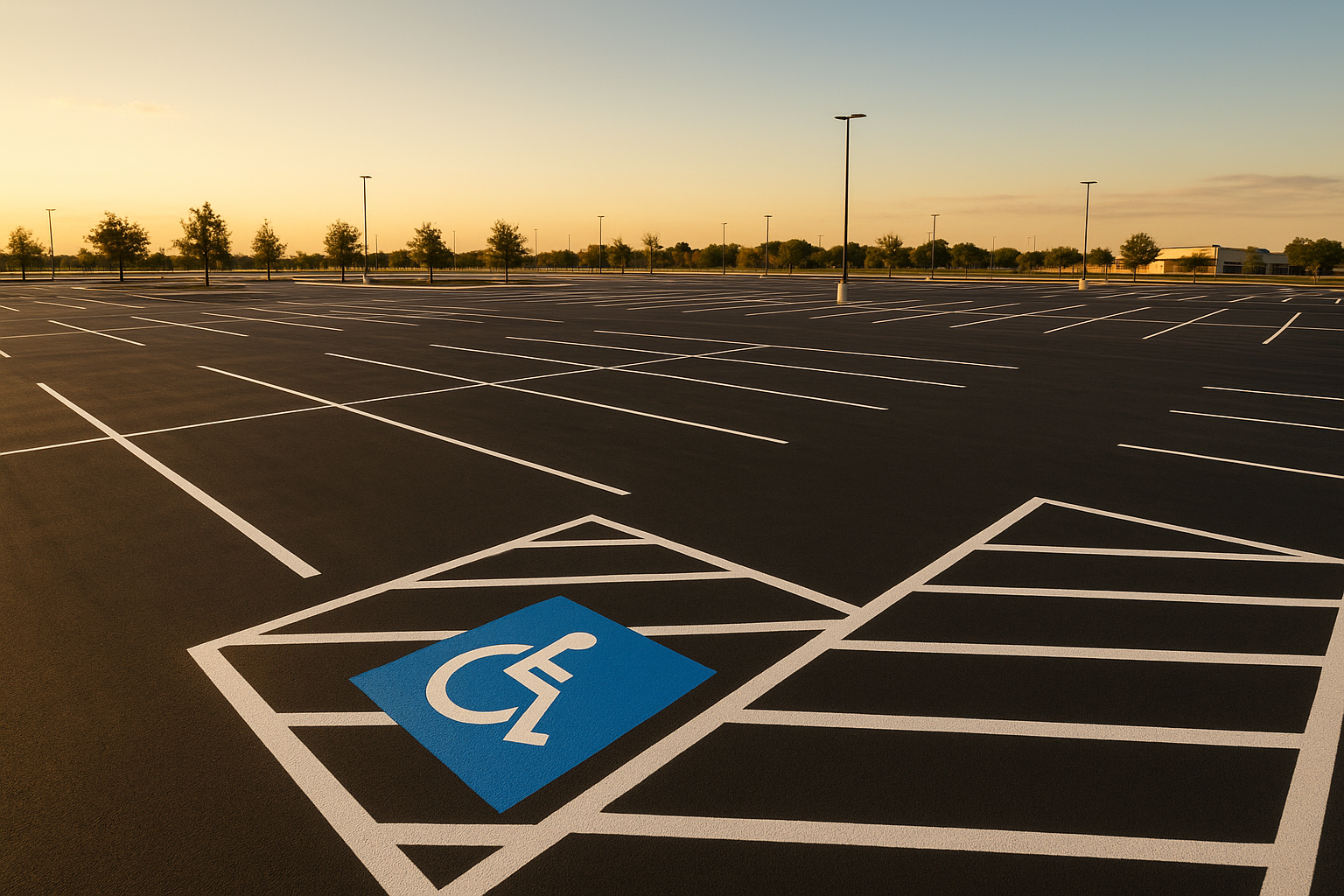
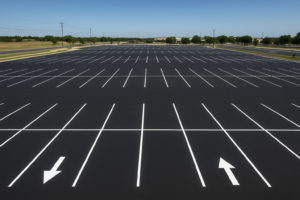
Freshly applied Texas pavement striping helps organize traffic and maximize usable parking capacity.
What Is Texas Pavement Striping, Exactly?
Texas pavement striping refers to the painted or thermoplastic lines, arrows, symbols, and letters applied to asphalt or concrete surfaces to control traffic and define usable space. Specifically, it includes standard parking stalls, directional arrows, crosswalks, ADA-accessible spaces, loading zones, and fire lane boundaries. Property managers, retail centers, schools, churches, and healthcare facilities across North Texas all depend on this work to keep their lots functional, safe, and code-compliant year-round.
Beyond simple curb appeal, striping directly affects safety outcomes. For example, clearly marked pedestrian paths and stop bars reduce the odds of collisions in busy lots, especially during peak retail hours. Consequently, many Texas municipalities require updated striping as part of routine property inspections, particularly for commercial and multi-family developments seeking occupancy renewals.
In practical terms, this means striping is not a one-time cosmetic project — it is an ongoing compliance and safety obligation. Therefore, understanding the full scope of what “striping” actually covers helps property owners budget correctly and avoid surprise violations.
Why Professional Parking Lot Line Marking Matters
Professional parking lot line marking does far more than make a property look tidy. Above all, it protects drivers and pedestrians by creating predictable, easy-to-follow traffic patterns. Faded or missing lines often lead to confusion, minor fender benders, and in some cases, injury claims filed directly against property owners.
In addition, well-maintained markings maximize usable parking capacity. A properly measured layout can fit noticeably more vehicles into the same footprint than a haphazard one, which matters enormously for busy retail centers and medical facilities operating near full capacity. Similarly, clear directional arrows and fire lane markings help emergency vehicles move through a property quickly during a crisis, which can be the difference between a manageable incident and a much larger one.
As a result, investing in quality striping consistently pays off through fewer liability issues, smoother customer flow, and a more professional first impression. For a closer look at how proper layout design improves circulation, this traffic flow optimization guide breaks down specific layout strategies property owners can request. Readers managing larger commercial sites may also want this traffic marking and striping guide for Texas lots, which expands on signage pairing and lane design.
ADA Compliance and Fire Lane Requirements in Texas
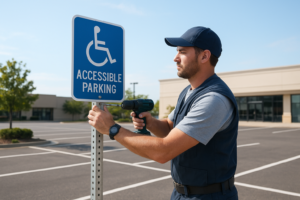
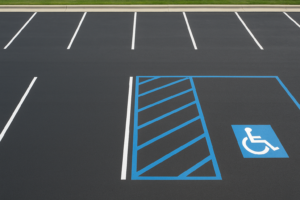
Texas commercial properties must meet Americans with Disabilities Act (ADA) standards, a federal civil rights law that sets specific rules for accessible stall dimensions, quantity, and signage based on total parking lot size. According to ADA.gov, noncompliance can result in fines and legal exposure for property owners, so accurate layout planning from the very first site visit is essential rather than optional.
Fire lanes present a separate but equally important compliance requirement. Local fire marshals typically require red curb paint or striping paired with visible “No Parking – Fire Lane” signage. In many jurisdictions, striping and signage specifications also follow guidance from the Manual on Uniform Traffic Control Devices (MUTCD), the federal standard maintained by the Federal Highway Administration for marking colors, widths, and placement. Therefore, coordinating ADA standards, MUTCD guidance, and local fire codes during a single striping project prevents costly rework later.
Property owners exploring accessible layout requirements in more depth can review this ADA striping guide for Texas-specific stall counts, van-accessible spacing, and signage height rules.
The Texas Pavement Striping Process, Step by Step
Understanding the process helps property owners know exactly what to expect from a professional crew, and it removes the guesswork that leads to scheduling frustration. Specifically, most Texas pavement striping projects follow these five stages:
- Site Assessment and Layout Planning: A crew evaluates lot size, existing traffic patterns, and ADA requirements to design a layout that maximizes parking capacity while meeting local code and fire marshal expectations.
- Surface Cleaning and Preparation: The pavement is swept, pressure washed, and cleared of debris, oil residue, or old markings so new paint or thermoplastic material adheres properly and lasts as long as possible.
- Layout Measurement and Chalk-Lining: Technicians measure and mark the approved layout with chalk lines or laser guides, ensuring stall widths, fire lanes, and ADA stalls align precisely with the finalized design plan.
- Application of Paint or Thermoplastic Markings: Crews apply traffic paint or heat-applied thermoplastic material along the marked layout using specialized striping machines for clean, consistent, durable lines that meet code width requirements.
- Curing, Inspection, and Final Walkthrough: The markings are left to cure fully, then inspected for accuracy and compliance before the property owner receives a documented final walkthrough and project sign-off.
Most projects are completed within a single day for standard-sized lots, though larger properties or complex multi-phase layouts may take longer to sequence around business hours. For a deeper breakdown of layout planning and signage pairing, see this striping and signage solutions overview.
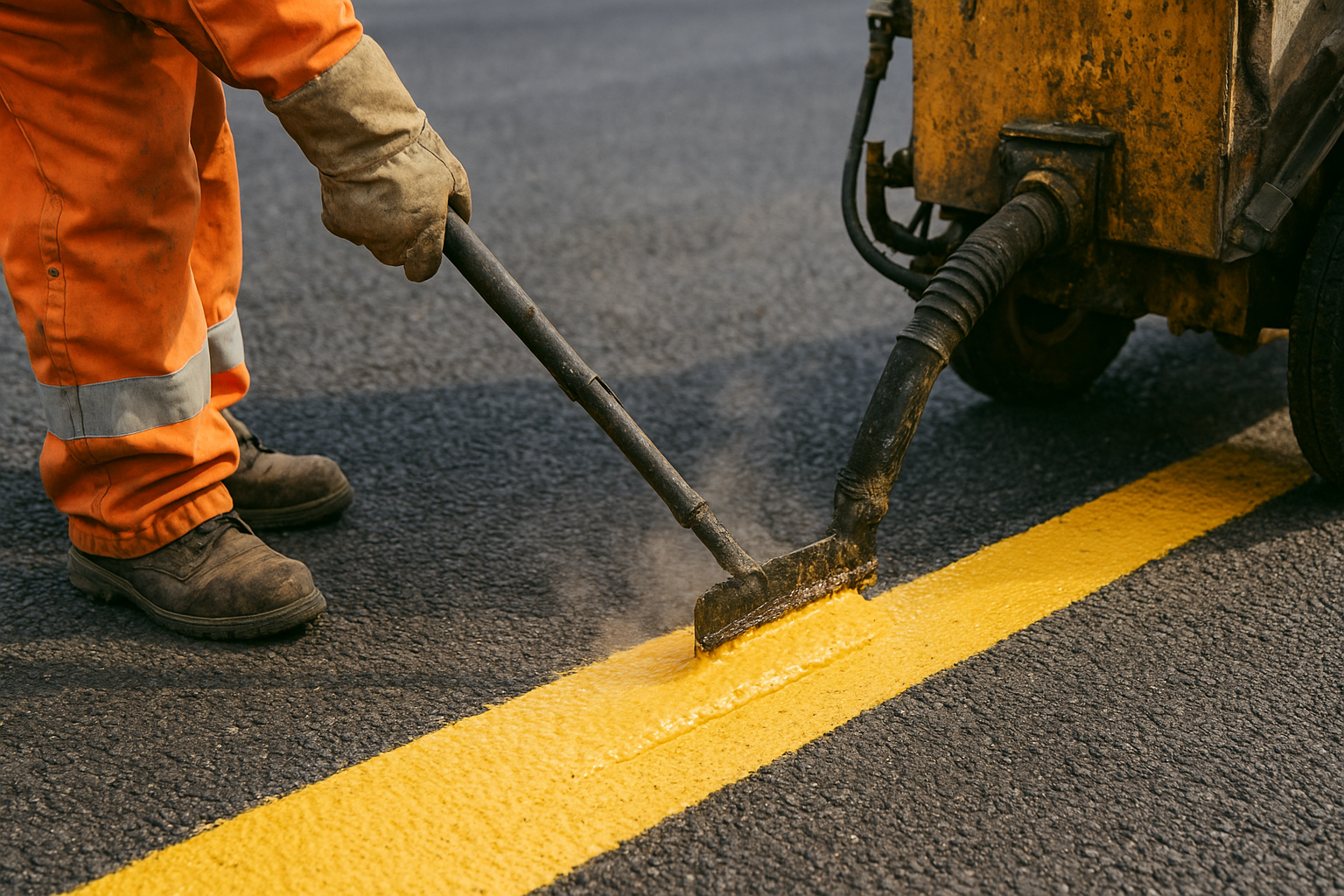
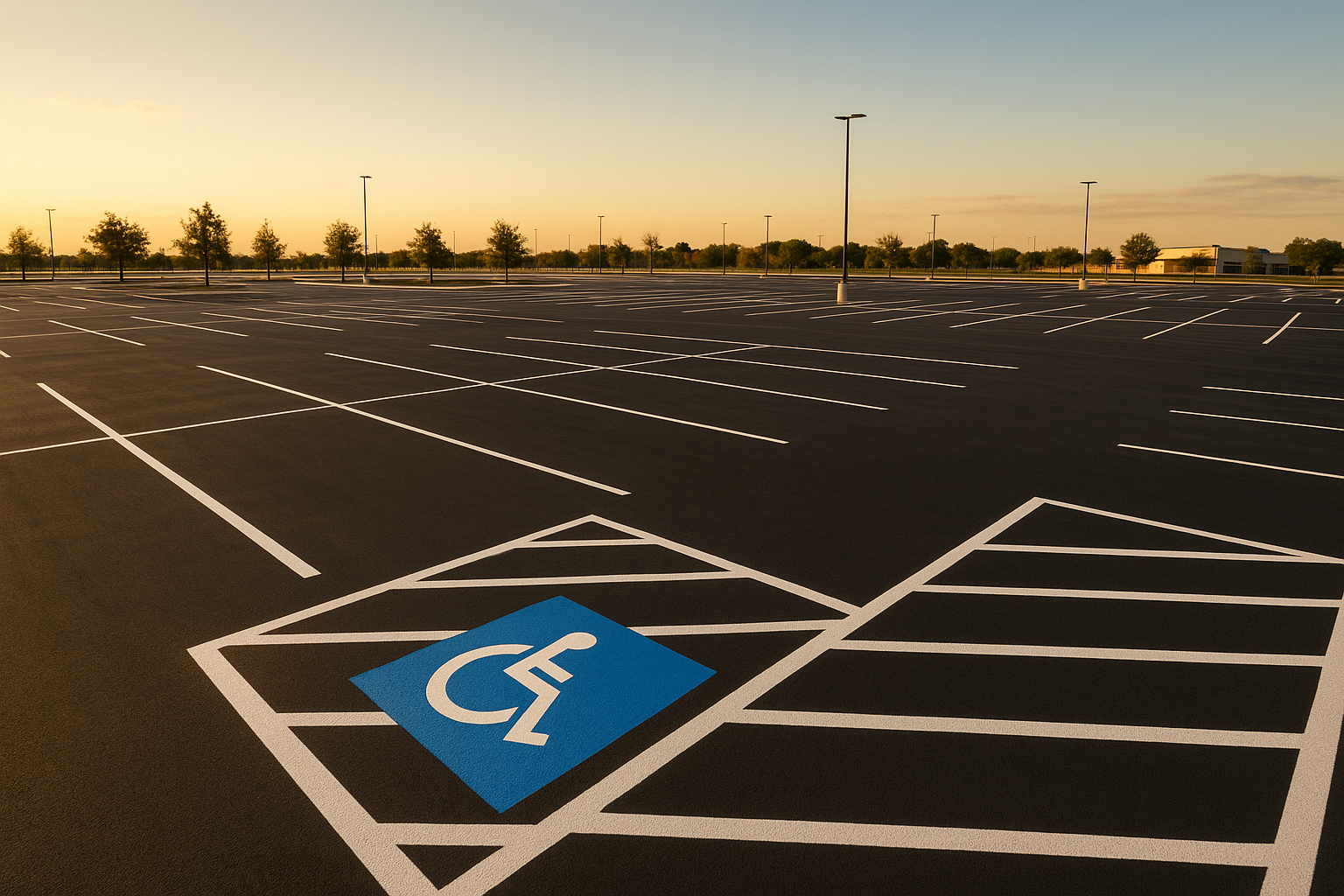
Thermoplastic materials create long-lasting fire lane and high-traffic markings that resist Texas heat. For a deeper walkthrough, see our Lane Markings Texas: Complete Striping & Compliance Guide.
Thermoplastic vs. Paint: Choosing the Right Marking Material
Choosing between paint and thermoplastic striping depends on budget, traffic volume, and how long the markings need to last. Standard acrylic traffic paint is more affordable and dries quickly, which makes it a practical choice for typical parking stalls with moderate, everyday traffic.
In contrast, thermoplastic material costs more upfront but bonds directly into the pavement surface, resulting in markings that resist wear far longer than paint alone. Consequently, many property owners choose thermoplastic for fire lanes, crosswalks, and heavily trafficked drive lanes where durability matters most. This overview of road surface marking from Wikipedia explains the material science behind both options in additional detail, including how reflective glass beads improve nighttime visibility.
Readers interested in a full material comparison, including cost-per-linear-foot ranges, can also review this thermoplastic striping and decals guide. Above all, the right choice comes down to matching material durability to actual traffic exposure rather than defaulting to the cheapest option available.
Epoxy and Specialty Coatings
Some Texas properties also use epoxy-based coatings for symbols, handicap logos, and high-visibility crosswalks. These coatings sit between paint and thermoplastic in both cost and lifespan. Therefore, an experienced contractor will typically recommend a blended approach — thermoplastic for fire lanes and heavy-traffic lanes, standard paint for general stalls, and epoxy for high-visibility accent markings.
How Much Does Texas Pavement Striping Cost?
Pricing for Texas pavement striping varies based on lot size, material choice, and layout complexity. Standard paint striping tends to cost less per linear foot, while thermoplastic applications and specialty ADA markings carry a higher price due to material and labor requirements.
For instance, a small retail lot with a simple layout will cost significantly less than a large multi-building complex requiring extensive fire lane marking and accessible stalls. Similarly, projects that require full removal of old markings before restriping typically add labor time and cost. Therefore, requesting a detailed, site-specific quote remains the most reliable way to budget accurately, rather than relying on generic per-square-foot averages found online.
Property owners who want to understand what a fair quote actually looks like — including line items, common upsells, and red flags — should compare options using this pavement striping quotes guide for Texas properties before signing any contract. Property owners in Denton and Plano can request a free quote through stripespls.com to get exact, site-specific pricing.
Texas Climate and Seasonal Considerations for Striping
Texas heat and UV exposure play a much bigger role in striping longevity than most property owners realize. Specifically, intense summer sun accelerates paint fading, while sudden temperature swings between winter cold fronts and warm afternoons can affect how well material bonds to the surface during application.
Spring and fall generally offer the most predictable curing conditions because temperatures stay moderate and rainfall is less frequent. However, professional crews with proper equipment can work efficiently throughout most of the year given the region’s generally mild winter climate. In contrast, attempting striping during sudden rain events or extreme heat spikes without an experienced crew often produces uneven lines that fail early.
As a result, scheduling with a contractor who actively monitors weather windows — rather than working on a fixed calendar regardless of conditions — directly improves how long your markings last before the next restriping cycle.
Striping Solutions by Property Type
Not every Texas property has the same striping needs. Therefore, matching the layout, material, and compliance approach to the specific property type produces better long-term results than a one-size-fits-all plan.
Retail and Shopping Center Lots
Retail lots typically see the heaviest daily traffic and the widest variation in vehicle sizes, from compact cars to delivery trucks. Consequently, retail properties benefit from wider drive lanes, clearly marked loading zones, and high-durability thermoplastic near entrances. This retail parking lot striping guide for Texas property owners covers layout strategies specific to shopping centers and strip malls.
Residential and Multi-Family Properties
Apartment complexes, HOAs, and gated communities face different priorities, including resident-assigned parking, guest spaces, and fire lane access for emergency vehicles between buildings. For property managers overseeing these sites, this striping services guide for residential properties in Texas outlines how layouts differ from commercial lots.
Schools, Healthcare, and Municipal Sites
Schools and healthcare campuses often require additional markings, including bus loading zones, drop-off lanes, and expanded ADA stall counts due to higher visitor volume. In these settings, above all, visibility and clear wayfinding reduce confusion during peak arrival and dismissal times.
Common Mistakes to Avoid With Parking Lot Markings
Many property owners unintentionally create safety and compliance risks by cutting corners on striping projects. For example, ignoring faded lines until they become nearly invisible increases the odds of accidents and driver confusion. Similarly, skipping proper ADA stall counts can trigger fines during routine inspections.
Another common mistake involves selecting the lowest-cost paint without considering Texas heat and UV exposure, which can cause premature fading within just a few months. As a result, what seemed like a budget-friendly choice ends up costing more in early re-striping fees. Working with an experienced contractor who understands local codes, MUTCD standards, and Texas climate conditions helps avoid these pitfalls from the very first project.
Finally, some owners skip a written scope of work entirely, which leads to disputes over what was actually included. Therefore, always confirm material type, stall counts, and warranty terms in writing before work begins.
Choosing a Texas Pavement Striping Contractor
Selecting the right contractor for a Texas pavement striping project makes a measurable difference in the final result. Above all, look for a company with documented experience on properties similar to yours, whether that’s a retail center, school, apartment community, or municipal lot.
Furthermore, a reliable contractor should be transparent about ADA requirements, provide a clear written quote, and carry proper liability insurance. Checking references and past project photos also helps confirm quality craftsmanship before work begins. For property owners across Denton and Plano, this expert line marking guide offers additional criteria to evaluate before hiring a crew.
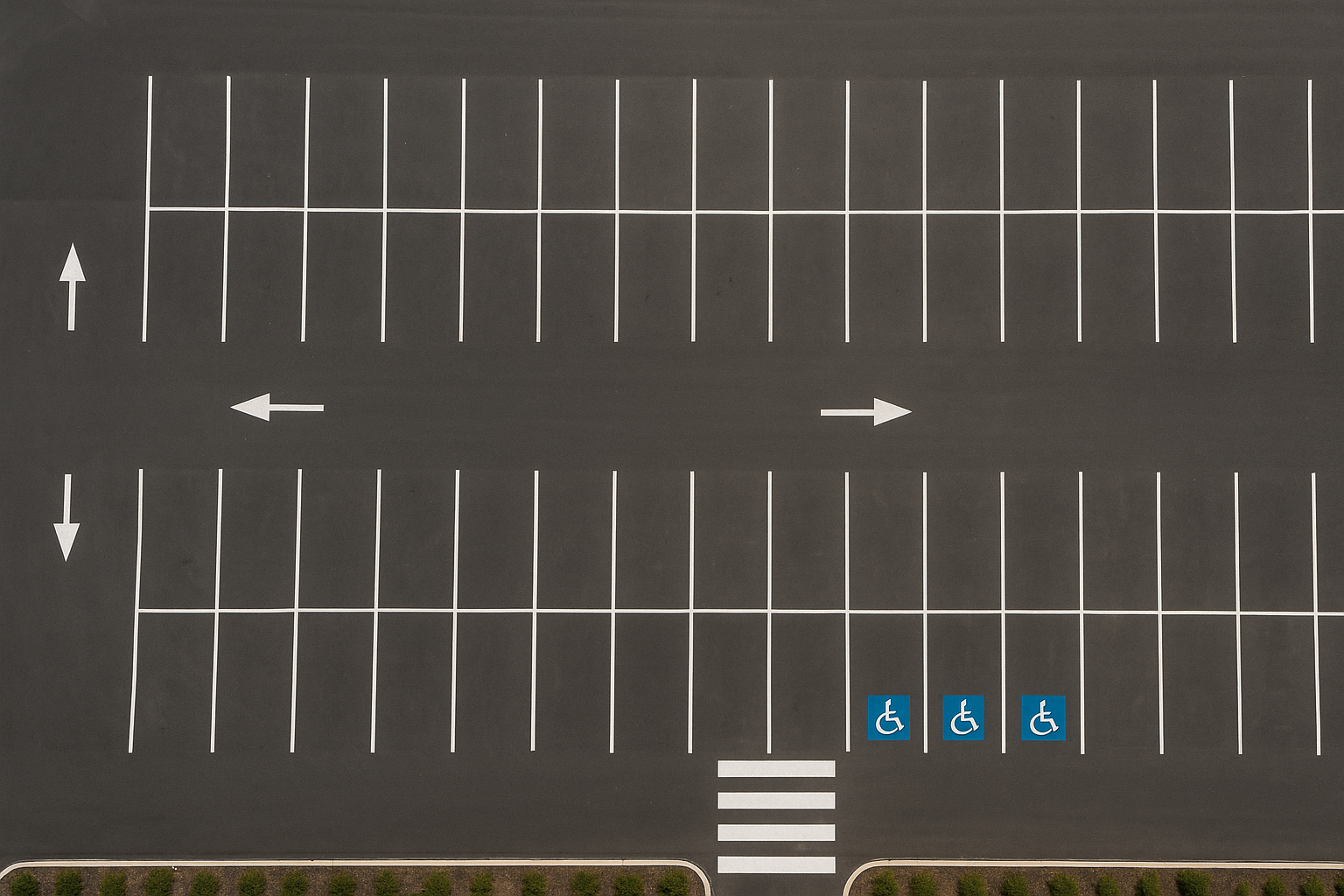
A well-planned layout improves traffic flow and safety across the entire property.
Maintenance Schedule and Restriping Timeline
Knowing when to restripe prevents both safety gaps and unnecessary spending on premature projects. In general, most Texas properties fall into one of these maintenance windows:
- High-traffic retail or medical lots: restripe every 12 months due to constant vehicle wear and heavy sun exposure.
- Standard commercial and office lots: restripe every 18 to 24 months under typical traffic conditions.
- Residential and low-traffic sites: restripe every 24 to 36 months, with spot touch-ups as needed.
- Fire lanes and ADA stalls: inspect annually regardless of overall lot condition, since these markings carry the highest compliance risk.
Consequently, building a simple annual inspection habit — even a quick visual walkthrough — helps property owners catch fading before it becomes a liability issue.
Frequently Asked Questions About Texas Pavement Striping
What is Texas pavement striping?
Texas pavement striping is the application of painted or thermoplastic lines and symbols on parking lots and roadways to organize traffic flow, mark parking stalls, and meet state and federal safety codes. It covers everything from standard parking lines to ADA-compliant accessible stalls and fire lane markings.
How much does parking lot striping cost in Texas?
Costs typically range based on linear footage, material choice, and layout complexity. A site visit is the most reliable way to get an accurate, project-specific quote rather than relying on generic averages.
How long does pavement striping take to dry?
Standard traffic paint usually dries to the touch within 30 minutes and cures fully within a few hours under warm, dry conditions. Thermoplastic markings cool and harden even faster, often becoming traffic-ready in under 10 minutes.
How often should parking lot lines be restriped?
Most commercial lots need restriping every 12 to 24 months, depending on traffic volume and sun exposure. High-traffic retail centers or healthcare facilities may need touch-ups more frequently.
What paint is used for Texas pavement striping?
Most contractors use water-based acrylic traffic paint because it dries quickly and resists fading in Texas heat. Thermoplastic material is also common for high-durability applications like fire lanes.
Is ADA-compliant striping required by law in Texas?
Yes, commercial properties must provide accessible parking stalls that meet Americans with Disabilities Act standards based on total lot size. Noncompliance can lead to fines and legal liability for property owners.
What is the difference between paint and thermoplastic striping?
Paint striping is more affordable and faster to apply, making it ideal for standard parking stalls. Thermoplastic striping costs more upfront but lasts significantly longer, which makes it better suited for high-traffic zones.
Can pavement striping be done in winter or rain?
Striping requires a dry, clean surface and moderate temperatures to cure properly, so rain and cold snaps can delay projects. Fortunately, Texas winters are typically mild enough that scheduling flexibility is rarely an issue.
What are common mistakes property owners make with parking lot markings?
Common mistakes include ignoring faded lines, skipping ADA stall requirements, and choosing the cheapest paint without considering durability. These shortcuts often lead to safety hazards and higher long-term costs.
How do I choose a reliable striping contractor in Texas?
Look for a contractor with local experience, clear ADA knowledge, and references from similar commercial properties. Requesting a detailed written quote and confirming insurance coverage also helps avoid problems.
Do fire lanes need special markings?
Yes, fire lanes typically require red curb paint or striping combined with clearly visible signage stating that parking is prohibited. Local fire marshals often set specific requirements, so confirming codes beforehand is important.
What is the best time of year for pavement striping in Texas?
Spring and fall generally offer ideal conditions because temperatures are moderate and rain is less frequent. However, most professional crews can work efficiently throughout the year given the region’s generally warm climate.
Does striping affect how many vehicles a Texas lot can hold?
Yes, a properly measured layout can noticeably increase usable parking capacity compared to a worn or informal layout. In particular, correcting stall angles and lane widths often recovers spaces that were previously wasted.
Can I get quotes from multiple striping companies before choosing one?
Yes, and doing so is strongly recommended before committing to a contractor. Comparing at least two or three written quotes helps property owners spot unusually low bids that may skip compliance steps or use lower-grade materials.
Final Thoughts on Texas Pavement Striping
Ultimately, Texas pavement striping plays a critical role in keeping commercial properties safe, organized, and compliant with ADA and fire code regulations. Whether a property needs a full layout redesign or a simple refresh of faded lines, working with an experienced local crew ensures durable results that hold up against Texas heat and heavy traffic. Property owners throughout Denton, Plano, and the greater North Texas region can request a free quote at stripespls.com to get started on a compliant, well-marked parking lot, or browse the stripespls.com blog for more property-specific striping guides.