
Traffic flow optimization striping is the strategic use of painted lines, arrows, and symbols to guide vehicles safely and efficiently through a parking lot or commercial property. When it’s done correctly, this striping reduces congestion, prevents accidents, and helps drivers find parking spaces without confusion. For property owners across Denton and Plano, TX, well-planned striping is one of the most cost-effective ways to improve both safety and curb appeal. In this guide, we’ll break down what traffic flow optimization striping involves, why it matters, and how to plan a project that keeps your lot running smoothly.
In short, traffic flow optimization striping uses directional arrows, lane lines, stop bars, and clearly marked stalls to control how vehicles move through a lot, reducing bottlenecks and improving safety for drivers and pedestrians alike.

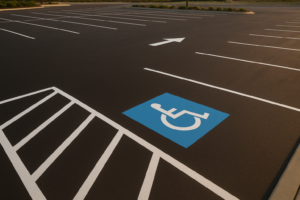
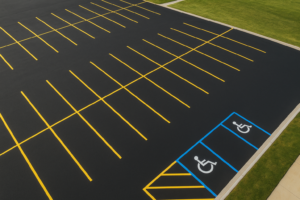
Traffic flow optimization striping guides vehicles safely through entrances, exits, and parking rows.
What Is Traffic Flow Optimization Striping?
Traffic flow optimization striping is the process of designing and painting pavement markings that direct vehicle movement in the most efficient, safest pattern possible. It typically includes directional arrows, entrance and exit lane markings, stop bars, and clearly defined parking stalls. Unlike basic restriping, which simply repaints existing lines, optimization striping often involves rethinking the entire layout.
For example, a striping contractor may analyze how vehicles currently enter and exit a lot, then redesign the pattern to eliminate crossover points. Consequently, drivers experience fewer near-misses and less confusion, particularly during peak hours at retail centers or schools. To see a more detailed breakdown of this process, you can review the advantages of professional parking lot striping.
Why Parking Lot Traffic Flow Matters
Poor traffic flow does more than frustrate drivers; it creates genuine safety risks. According to the National Safety Council, parking lots and garages account for a significant share of reported vehicle collisions in the United States each year, many of which involve pedestrians. Therefore, a lot without clear directional guidance puts both drivers and foot traffic at risk.
In addition to safety, smooth traffic flow affects how customers perceive a business. A confusing, cluttered lot can discourage repeat visits, while an organized one signals professionalism. Similarly, healthcare facilities and schools benefit from optimized striping because it reduces stress during drop-off and pick-up times. As a result, investing in proper design pays off in both safety and reputation.
Key Elements of Effective Parking Lot Line Striping
Effective line striping relies on several core components working together. Directional arrows tell drivers which way to travel through each aisle, while stop bars mark where vehicles must yield before merging into a drive lane. Meanwhile, clearly painted stall lines prevent double-parking and wasted space.
Pedestrian crosswalks are another critical element, especially near building entrances. Above all, consistency matters: mixed arrow styles or faded lines confuse drivers rather than guiding them. For a closer look at how these details translate into real results, see how line striping can improve traffic flow in parking lots.

Precise application ensures every directional arrow supports safer, more predictable traffic patterns.
How to Plan a Traffic Flow Optimization Striping Project
Planning a successful project involves more than picking paint colors. Specifically, the following steps help property owners avoid costly mistakes and design a layout that truly works for their site.
- Conduct a site assessment. Walk the property to evaluate current traffic patterns, entrance and exit points, and any existing bottlenecks or confusing areas that need improvement.
- Design the striping layout. Work with a professional striping company to draft a plan that shows directional flow, stall counts, ADA-compliant spaces, and fire lane placement.
- Select durable striping materials. Choose between water-based paint and thermoplastic markings based on your climate, traffic volume, and how long you need the lines to last.
- Apply markings according to code. Ensure all lines, arrows, and symbols follow Manual on Uniform Traffic Control Devices standards and local ADA requirements during installation.
- Schedule ongoing maintenance. Plan for periodic inspections and restriping every 18 to 24 months so faded lines do not undermine the traffic flow improvements you invested in.
You can review official pavement marking guidance from the Federal Highway Administration for additional technical standards.
Common Mistakes That Disrupt Parking Lot Traffic Patterns
Even well-intentioned striping projects can go wrong. Inconsistent arrow direction is one of the most frequent issues, often left over from previous layouts that no longer match current traffic needs. Undersized stalls are another common problem, forcing drivers to park at awkward angles that block adjacent spaces.
Furthermore, many property owners overlook pedestrian pathways entirely, which increases the risk of accidents near building entrances. In contrast, a lot that has been recently refreshed through professional restriping typically shows far fewer of these design flaws, since outdated patterns get corrected during the process.
ADA Compliance and Fire Lane Marking Considerations
ADA compliance, which refers to meeting the accessibility standards set by the Americans with Disabilities Act, is a non-negotiable part of any striping project. Handicap stalls must meet specific width and access aisle requirements, and van-accessible spaces need additional clearance. You can find full accessibility standards on the official ADA.gov website.
Fire lane marking is equally important, since these red-painted zones must remain clear for emergency vehicle access at all times. Municipal fire codes often dictate exact lettering size and lane width. For a complete breakdown of these requirements, see this safety and compliance guide for parking lot striping.
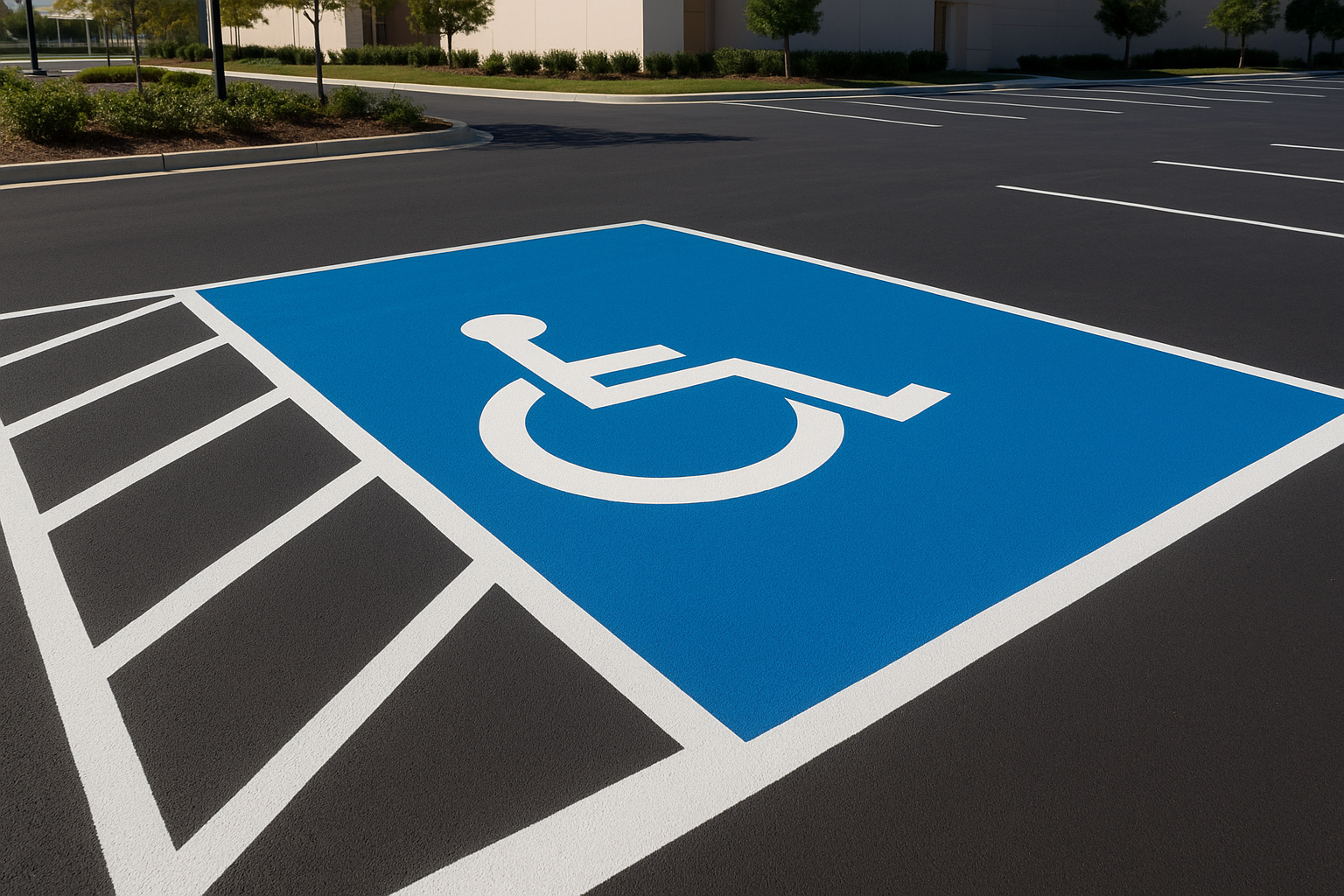
ADA-compliant stall markings are a core part of any traffic flow optimization striping plan.
Signs Your Parking Lot Needs Restriping
Faded or peeling lines are the most obvious warning sign, but they are not the only one. If tenants, customers, or employees frequently report confusion about where to park or which direction to drive, that is a clear indicator the current layout is no longer working. Likewise, an increase in minor fender-benders within the lot often points to unclear traffic patterns.
Above all, if it has been more than two years since the last professional service, it is worth scheduling an inspection. Long-lasting materials can extend the time between projects, and understanding the benefit of long-lasting line striping can help property owners plan their maintenance budget more effectively.
Choosing a Professional Striping Company in Denton and Plano, TX
Selecting the right contractor makes a measurable difference in how well a striping project performs over time. A qualified team should understand local fire codes, ADA requirements, and the practical realities of North Texas weather, which can be tough on pavement markings. Property managers, retail centers, schools, and healthcare facilities throughout Denton and Plano typically benefit most from a locally operated crew that already knows regional compliance standards.
StripesPls specializes in professional striping, ADA compliance solutions, and fire lane marking for commercial and residential properties across the greater North Texas region. Whether a property needs a brand-new layout or a full restripe of faded markings, requesting a free quote through stripespls.com is a straightforward first step. For more general background on how parking facilities are designed, the Wikipedia entry on parking lots offers useful context.
Frequently Asked Questions About Traffic Flow Optimization Striping
What is traffic flow optimization striping?
Traffic flow optimization striping is the practice of painting directional arrows, lane lines, and stall markings to guide vehicles safely and efficiently through a parking lot. It reduces congestion, prevents accidents, and helps drivers navigate a property with confidence.
How does parking lot striping improve traffic flow?
Striping improves traffic flow by clearly separating entrance and exit lanes, marking one-way paths, and preventing vehicles from crossing into oncoming traffic. As a result, drivers spend less time searching for spaces and fewer conflicts occur between vehicles.
Why is ADA-compliant striping important?
ADA-compliant striping ensures accessible parking stalls, access aisles, and van-accessible spaces meet federal size and placement requirements. Failing to comply can result in fines and legal liability for property owners.
How much does traffic flow optimization striping cost?
Costs vary based on lot size, number of stalls, and material type, but most commercial projects range from a few hundred to several thousand dollars. Requesting a free quote from a local striping company is the most accurate way to budget.
How long does a striping project take to complete?
Most standard parking lots can be striped within a single day, though larger or more complex layouts may take two to three days. Weather and paint drying time also affect the overall schedule.
What paint works best for parking lot striping in Texas heat?
Water-based traffic paint and thermoplastic markings both hold up well in Texas heat, though thermoplastic generally lasts longer under intense sun and heavy traffic. A professional contractor can recommend the right material for your specific lot conditions.
How often should a parking lot be restriped?
Most commercial lots need restriping every 18 to 24 months, though high-traffic properties may require it sooner. Faded lines are a clear sign that restriping should be scheduled soon.
What is the difference between fire lane marking and standard striping?
Fire lane marking uses red paint and lettering to designate areas that must remain clear for emergency vehicle access, while standard striping organizes general parking and traffic patterns. Both are essential for a safe, code-compliant property.
What are common mistakes in parking lot layout design?
Common mistakes include inconsistent arrow direction, undersized stalls, missing ADA spaces, and ignoring pedestrian pathways. These errors create confusion and can lead to accidents or compliance violations.
Can striping actually increase parking capacity?
Yes, a well-designed striping plan can increase usable stalls by optimizing angles, aisle widths, and layout efficiency. In many cases, properties gain additional parking spaces simply by re-planning the striping layout.
Do municipal codes require specific striping standards?
Many cities and counties follow standards based on the Manual on Uniform Traffic Control Devices and local fire codes for lane widths, colors, and signage. Property owners should confirm requirements with their local jurisdiction before a project begins.
How do I choose a professional striping contractor near Denton and Plano?
Look for a contractor with local experience, proper equipment, and knowledge of ADA and fire code requirements. Checking reviews and requesting a free quote helps confirm the company understands traffic flow optimization striping for your specific property type.
Final Thoughts
Traffic flow optimization striping is far more than a cosmetic update; it is a practical investment in safety, capacity, and compliance. From directional arrows and stop bars to ADA-compliant stalls and fire lane markings, every element plays a role in how smoothly a property functions day to day. Consequently, property managers, schools, healthcare facilities, and retail centers throughout Denton and Plano benefit from working with a contractor who understands both local codes and best design practices. Whether your lot needs a full redesign or a simple refresh, prioritizing traffic flow optimization striping now can prevent accidents, reduce complaints, and keep your property running efficiently for years to come.