Lane markings Texas drivers and property owners rely on every single day do far more than divide pavement into tidy little boxes. In fact, these painted lines, symbols, and red curbs direct traffic, protect pedestrians, and keep commercial properties across Denton, Plano, and the wider Dallas-Fort Worth metro compliant with strict federal and state codes. Whether a lot needs a full restripe, a handful of new fire lane markings, or a complete rethink of its layout, understanding how these markings actually work is the first step toward a safer, better-organized, and legally protected property.
Quick answer: Lane markings Texas properties are required to have include ADA-compliant handicap stalls with access aisles, red fire lane curbs stenciled "FIRE LANE – NO PARKING," directional arrows, standard parking stall lines, and — where the lot connects to a public roadway — striping that follows federal MUTCD (Manual on Uniform Traffic Control Devices) color and placement standards. Professional restriping every 18 to 24 months keeps all of these markings visible, legible, and legally compliant.
Lane Markings Texas Property Owners Need to Understand
Lane markings Texas is the umbrella term for the painted lines, symbols, and text that organize traffic and define parking areas across the state’s commercial, municipal, and residential properties. These markings range from standard parking stall lines to ADA-compliant accessible spaces, red-curb fire lanes, and the arrows and words that guide drivers through a lot. Because Texas cities enforce their own blend of state, local, and fire code requirements, property owners in Denton and Plano especially benefit from working with a striping partner who already knows the regional rules inside and out.
For a deeper breakdown of the equipment, paint types, and layout standards used across the state, this road marking services guide for Texas properties covers the technical side in more detail. Similarly, the traffic marking and striping guide for Texas lots walks through how traffic flow patterns influence layout decisions before a single drop of paint is applied.
Why retail parking lot striping matters for North Texas Businesses
Faded or missing lines create confusion, and confusion leads to accidents, wasted parking capacity, and unhappy visitors. Similarly, a poorly marked lot can expose property owners to real liability if an accessible space or fire lane isn’t clearly identified. As a result, regular parking lot striping is less of a cosmetic upgrade and more of an operational necessity for retail centers, schools, apartment communities, and healthcare facilities alike.
According to the U.S. Access Board, accessible parking design standards are enforced nationwide under the Americans with Disabilities Act, which means Texas properties must meet these baseline federal rules in addition to any local ordinance. In contrast, plain traffic-flow striping — arrows, stop bars, and stall lines — is governed more by municipal codes and, on roads that connect to a lot, by the federal MUTCD.
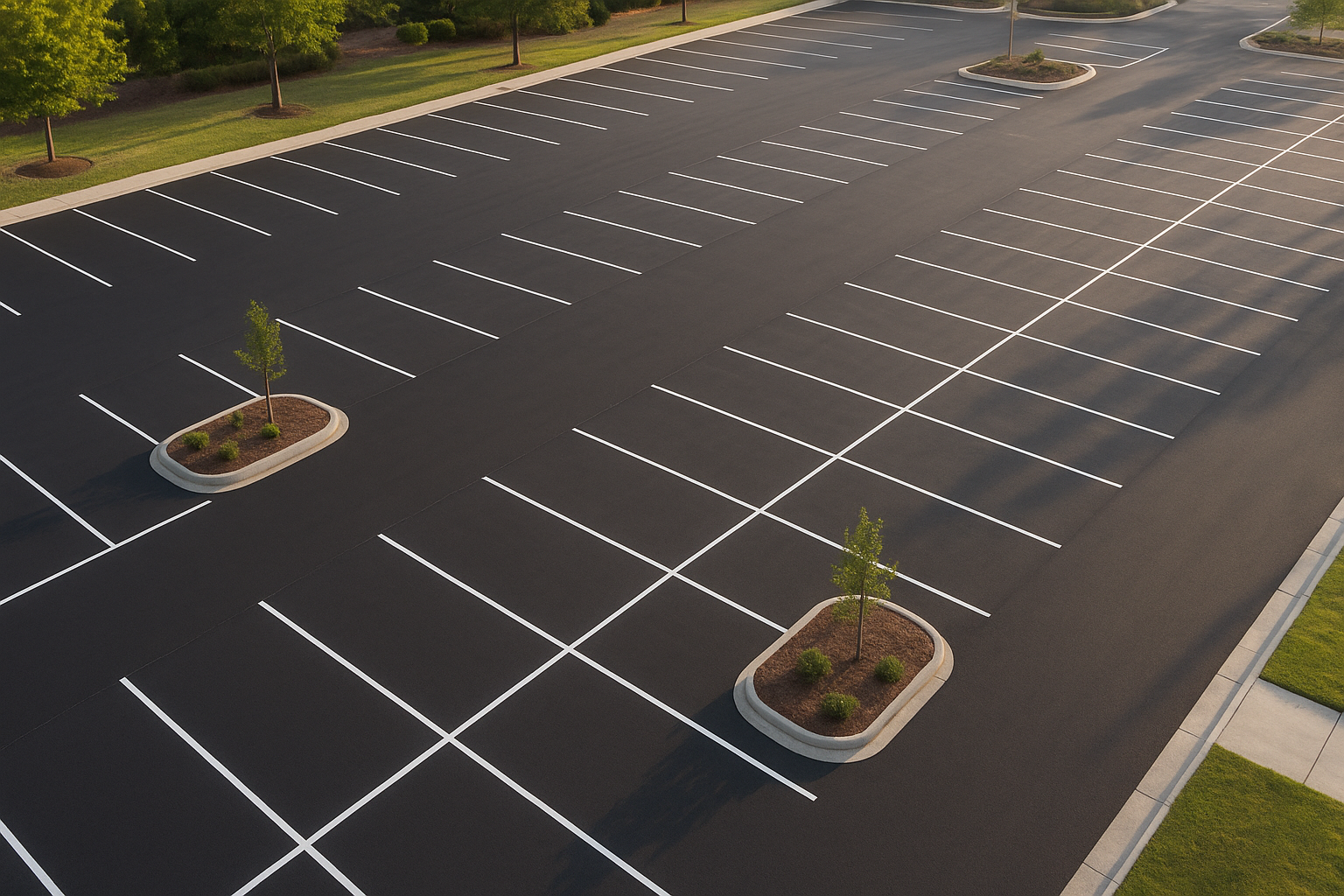
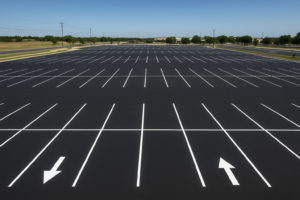
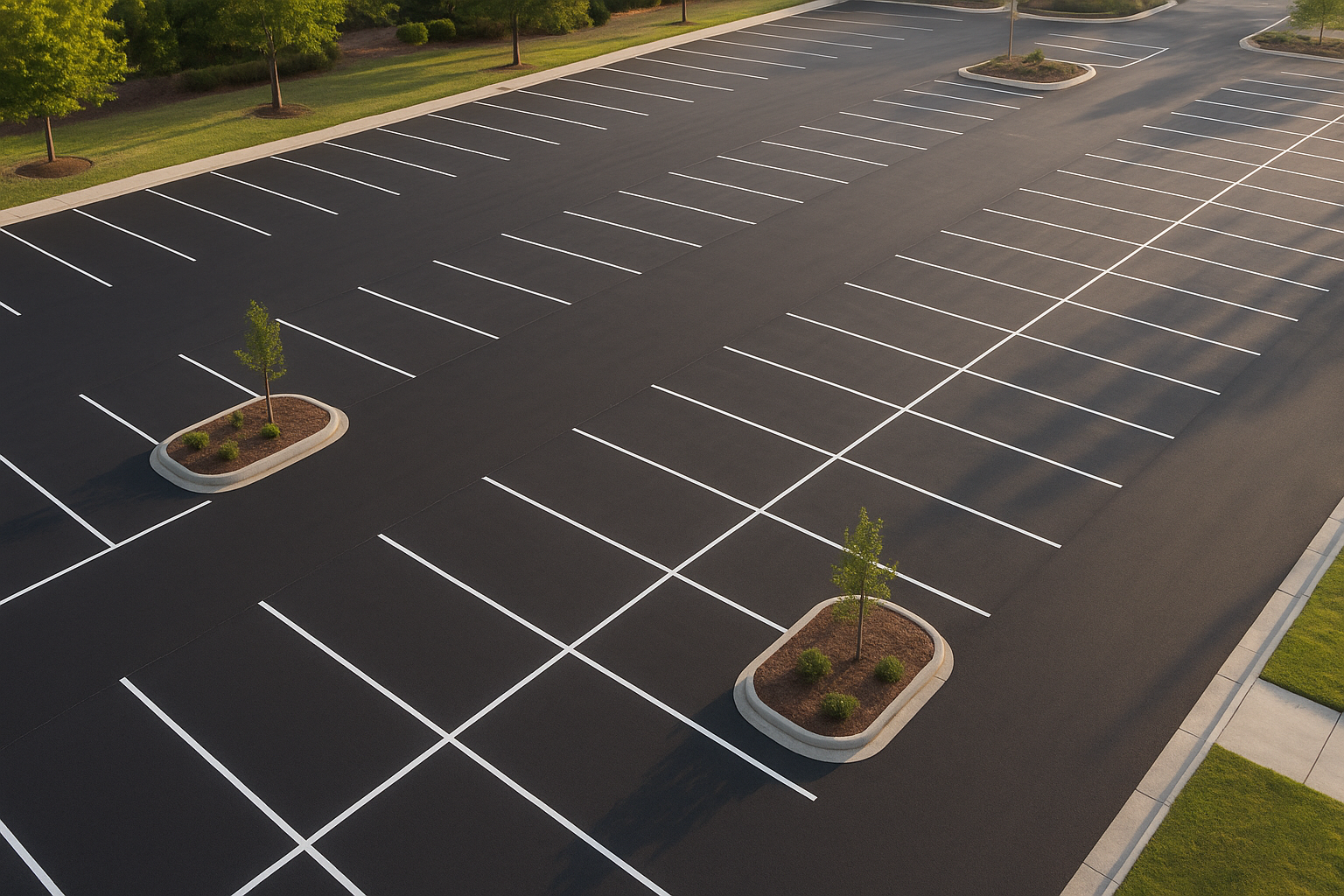
Fresh lane markings Texas property owners install help organize traffic flow and maximize usable parking capacity.
The Standard Types of Pavement Markings Used in Texas
Before hiring anyone to touch up a lot, it helps to know exactly what kind of pavement markings exist and what each one is meant to communicate. Texas properties and roadways generally use three broad categories: longitudinal markings, transverse markings, and word or symbol markings. Together, these categories cover nearly every painted element a driver encounters, whether on a state highway or a strip-mall parking lot.
Longitudinal Lane Markings: Center Lines, Lane Lines & Edge Lines
Longitudinal markings run parallel to the direction of travel. Specifically, they include center lines that separate opposing traffic, lane lines that divide same-direction travel lanes, and edge lines that mark the outer boundary of a drivable surface. In a parking lot setting, these same principles show up as the long straight lines that define drive aisles and guide vehicles toward parking stalls. Consequently, poorly spaced longitudinal lines are one of the most common causes of fender-benders in busy retail lots.
Transverse Pavement Markings: Crosswalks, Stop Bars & Word Messages
Transverse markings run perpendicular to traffic flow. Examples include crosswalks, stop bars, yield lines, and stenciled word messages like "STOP" or "ONE WAY." In commercial lots, transverse markings often show up near building entrances, drive-thru lanes, and loading zones where pedestrian and vehicle paths cross. Above all, these markings need strong contrast and reflectivity, because they typically appear at decision points where a driver must slow down or stop immediately.
Pavement Marking Colors and What Each One Means
Color carries meaning in every lane markings Texas project, and mixing them up isn’t just a design mistake — it’s a compliance problem. White markings separate lanes traveling in the same direction and mark standard parking stalls. Yellow markings separate opposing traffic flows and, in many lots, indicate no-parking zones along curbs. Red markings, meanwhile, are reserved almost exclusively for fire lanes and emergency access routes. Blue markings identify accessible parking spaces, and purple markings — a newer addition to some state standards — flag electric vehicle charging zones. In short, a striping crew that understands these color rules protects a property owner from both confusion and code violations.
MUTCD and TxDOT Standards Behind Every Texas Line Striping Project
Every state that receives federal highway funding — Texas included — must follow the Manual on Uniform Traffic Control Devices (MUTCD), the federal rulebook that governs marking colors, widths, spacing, and retroreflectivity. In Texas specifically, the Texas Department of Transportation (TxDOT) adapts these federal standards into state-specific guidance that local striping crews must follow on any roadway open to public traffic.
Private parking lots aren’t always bound by MUTCD in the strictest legal sense. However, most municipalities and fire marshals in North Texas still expect lots to follow the same color and lettering conventions, simply because drivers expect consistency wherever they park. Therefore, a striping company that treats MUTCD and TxDOT guidance as the baseline — rather than an afterthought — tends to produce layouts that pass inspection the first time.
What Is ADA-Compliant Striping and Why Does It Matter?
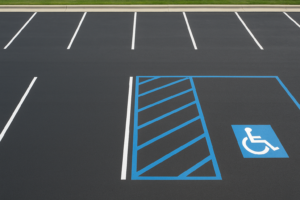
ADA striping guide refers to accessible parking stalls, access aisles, and van-accessible spaces painted according to federal accessibility standards. Above all, these markings must include the correct stall width, a properly striped access aisle, and the international symbol of accessibility painted in blue and white. Missing or incorrectly sized accessible stalls can result in fines and, more importantly, prevent people with disabilities from safely using a property.
For property managers in Denton or Plano, working with a striping company that understands both federal ADA rules and Texas-specific enforcement is essential. The guide on line marking services for parking lots explains how ADA layouts are typically measured and applied, while the high-visibility line marking guide for Texas properties breaks down how reflective paint additives improve nighttime visibility of these accessible stalls.
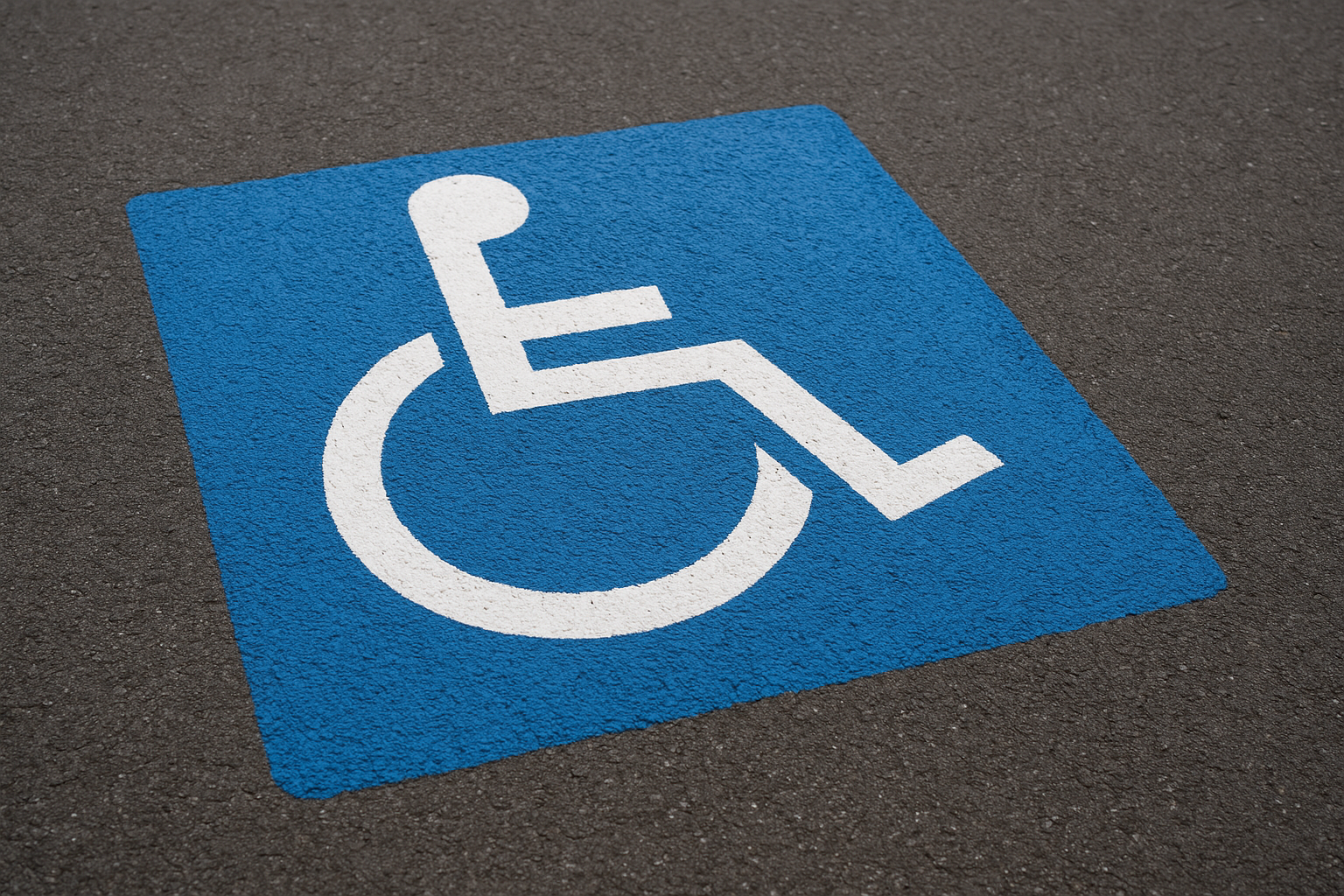
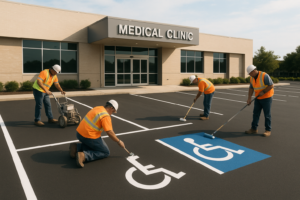
ADA-compliant symbols are a critical part of any lane markings Texas compliance project.
Fire Lane Marking Rules You Need to Know
Fire lane markings are typically painted red with white stenciled text reading "FIRE LANE – NO PARKING," and local fire marshals across North Texas enforce specific placement and lettering requirements. In particular, fire lanes must remain unobstructed at all times to allow emergency vehicle access. Consequently, properties that fail inspection may face fines or be required to repaint immediately, often on a tight deadline set by the fire marshal’s office.
A full breakdown of local fire lane codes is available in this resource on fire lane marking rules in Texas, which outlines the exact stenciling and color requirements most municipalities expect.
Materials Used for Parking Lot Striping in Texas
Not every stripe is created from the same material, and the choice matters more than most property owners realize. Three materials dominate the Texas market: water-based traffic paint, thermoplastic, and epoxy. Each behaves differently under Texas heat, and each carries a different price tag.
Traffic Paint vs. Thermoplastic vs. Epoxy
- Water-based traffic paint: The most affordable option, usually lasting 12 to 18 months in high-traffic Texas lots before fading noticeably.
- Thermoplastic: Melted and applied hot, then fused to the pavement as it cools. Thermoplastic resists Texas summer heat far better than paint and often lasts 3 to 5 years.
- Epoxy: A two-part chemical coating known for exceptional durability, frequently used in high-wear areas like drive-thru lanes and loading docks.
In addition, some contractors add reflective glass beads to any of these materials to boost nighttime visibility. The Federal Highway Administration notes that pavement markings using retroreflective materials maintain visibility far longer than basic paint, which can influence long-term cost decisions for property owners weighing durability against upfront price.
How to Get Durable Lane Striping for Your Property
Getting long-lasting results starts well before the paint ever touches the pavement. Below is the general process most professional striping companies follow when restriping a commercial lot in Texas.
- Request a site assessment. A contractor visits the property, measures the lot in full, and reviews existing layout issues, including ADA gaps, fading lines, and fire lane deficiencies that a fire marshal might flag.
- Review the layout plan and quote. Ask to see the proposed stall counts, accessible space locations, and itemized pricing before approving any work, since layout changes are far cheaper to make on paper than on pavement.
- Prepare the surface. The crew sweeps, power-washes if needed, and removes debris or old flaking paint so the new material bonds properly to the asphalt or concrete surface.
- Apply the striping. Traffic paint, thermoplastic, or epoxy is applied using layout stencils and measuring tools according to the approved plan, including all required ADA symbols and fire lane text.
- Let the paint cure. Vehicles stay off freshly painted areas for several hours, and sometimes overnight, to prevent smudging, tire tracking, and premature wear on the new markings.
Property owners considering their options can review this complete parking lot marking guide for additional context on layout planning and material choices, or explore the expert Texas parking lot striping company overview for a look at how experienced crews scope larger commercial projects.
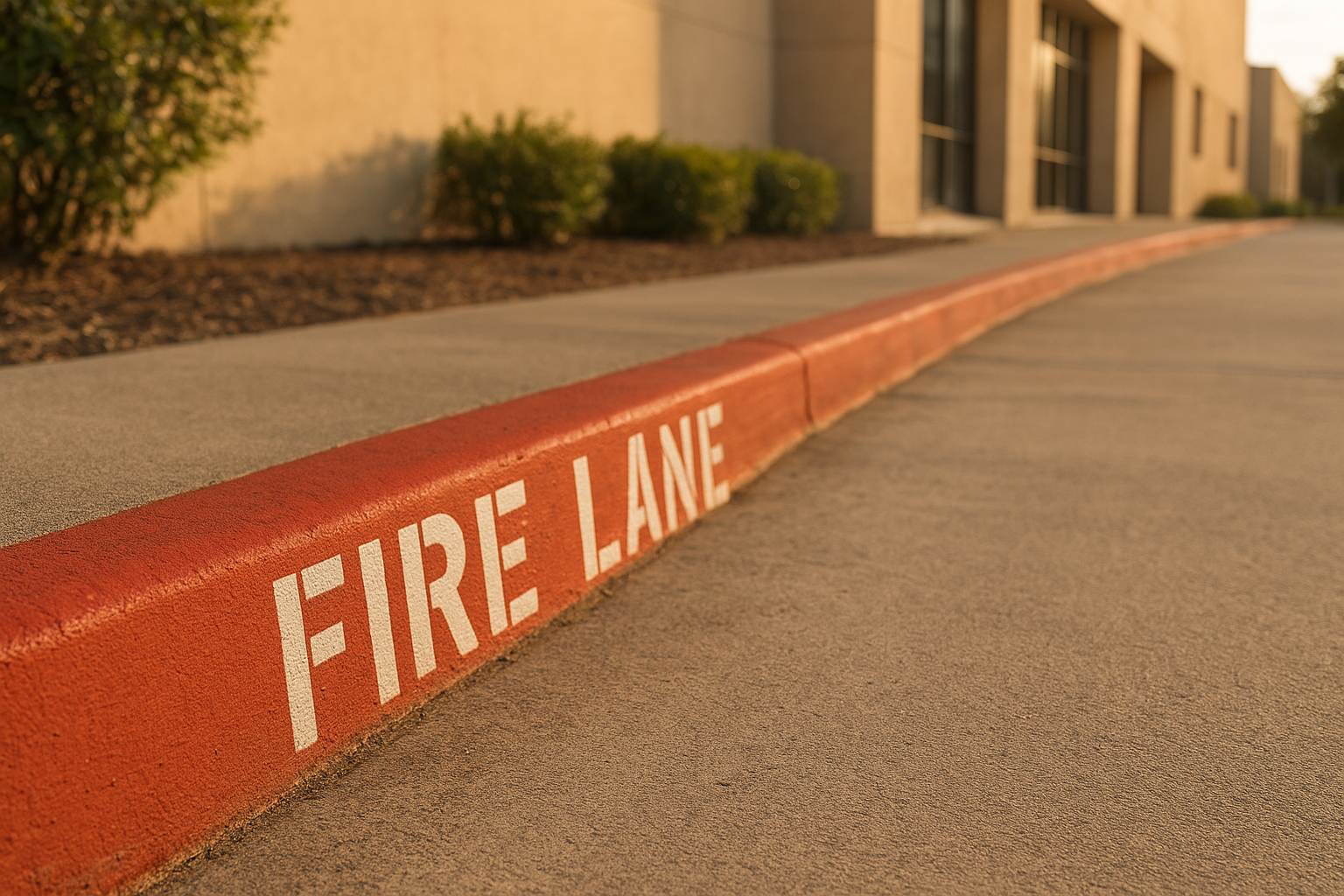
Red fire lane curbs are a required element of most commercial lane markings Texas projects.
Pavement Marking Costs in North Texas
Pricing for striping projects depends on lot size, the number of accessible stalls, and whether fire lane stenciling is included. Generally speaking, small lots cost less than sprawling retail centers with hundreds of parking spaces. In addition, thermoplastic material costs more upfront than standard traffic paint but tends to last significantly longer, which often makes it the better long-term value for high-traffic properties.
Most commercial restriping projects in North Texas range from a few hundred dollars for a small lot touch-up to several thousand dollars for a full-scale layout with ADA stalls, fire lane stenciling, and directional arrows. Consequently, requesting a free, itemized quote remains the most accurate way to budget for a specific property.
How Weather and Season Affect Texas Striping Projects
Texas weather swings hard between scorching summers and unpredictable winter cold fronts, and both extremes affect how well paint cures. Specifically, temperatures above roughly 95 degrees Fahrenheit can cause paint to dry too quickly on the surface while staying soft underneath, leading to tire tracking and early peeling. In contrast, cold or damp conditions slow curing time dramatically and can prevent proper adhesion altogether.
As a result, spring and fall generally offer the most consistent temperatures for striping projects across North Texas. These milder seasons help paint cure evenly without the extreme heat of summer or the unpredictable cold snaps of winter, which is why most experienced crews book their busiest schedules during these two windows.
Choosing a Line Striping Company You Can Trust
Not every striping contractor understands the specific mix of ADA, fire code, and municipal requirements that apply throughout Denton and Plano. Therefore, it helps to work with a locally operated team that has hands-on experience across property types, from retail centers to schools and healthcare facilities. Stripespls.com, for example, focuses specifically on the Denton and Plano service area and offers free quotes for new layouts, restriping, and fire lane designation.
Before signing a contract, it’s worth reviewing this checklist on what to consider when hiring a line marking service, which covers licensing, material choices, and warranty questions worth asking any contractor. Visitors can also learn more directly at stripespls.com to request a free property assessment.
Frequently Asked Questions About Lane Markings Texas
What are lane markings Texas properties are legally required to have?
Lane markings Texas properties need typically include parking stall lines, directional arrows, ADA-accessible stalls with access aisles, and red-curb fire lanes. The exact requirements depend on local fire codes, municipal ordinances, and the property’s intended use.
How often should parking lot striping be repainted?
Most Texas parking lots need restriping every 18 to 24 months, though high-traffic lots may fade faster. Sun exposure, heavy vehicle traffic, and lower-quality paint all shorten the lifespan of markings.
Why do fire lane markings need to be red?
Red fire lane curbs and pavement markings create instant visual recognition for drivers and emergency responders. Local fire marshals in North Texas generally require red paint with white stenciled lettering reading FIRE LANE – NO PARKING.
How much does professional line striping cost in Texas?
Costs vary based on lot size, layout complexity, and paint type, but most commercial restriping projects in North Texas range from a few hundred to several thousand dollars. Getting a free quote is the most accurate way to estimate a specific property’s cost.
What paint is used for parking lot line striping?
Most contractors use water-based traffic paint, durable thermoplastic, or epoxy coatings designed for asphalt and concrete surfaces. Thermoplastic and epoxy last longer but cost more upfront than standard traffic paint.
How long does it take for new pavement striping to dry?
Standard traffic paint typically dries to the touch within 30 minutes and can handle light traffic within a few hours. However, full curing for heavy vehicle traffic can take up to 24 to 48 hours depending on temperature and humidity.
What is the difference between longitudinal and transverse pavement markings?
Longitudinal markings run parallel to traffic, such as lane lines and edge lines, while transverse markings run across the direction of travel, such as crosswalks and stop bars. Both categories fall under the broader term pavement markings.
Are ADA parking stall requirements the same in every Texas city?
The Americans with Disabilities Act sets baseline federal requirements, but individual Texas municipalities can add stricter local codes. As a result, property owners should confirm requirements with both federal ADA guidelines and their city’s building department.
Do Texas cities require a permit before restriping a parking lot?
Some municipalities require a permit or plan review, especially when the project changes stall counts or accessible space locations. Therefore, it’s worth checking with the local building or fire department before work begins.
Can I stripe my own parking lot instead of hiring a professional?
While DIY striping kits exist, professional line striping companies use specialized equipment and layout templates that ensure code-compliant spacing and durable results. In particular, ADA stall dimensions and fire lane placement have strict legal requirements that are easy to get wrong without experience.
What common mistakes happen with parking lot striping?
Common mistakes include painting over cracked or unsealed asphalt, using incorrect ADA stall widths, and skipping proper layout measurements before painting. Consequently, these errors often lead to costly rework and compliance violations.
Does weather affect lane marking projects in Texas?
Yes, temperature and humidity significantly affect paint adhesion and drying time. Most contractors avoid striping during rain or extreme heat above 95 degrees Fahrenheit to ensure proper curing.
How do lane markings Texas businesses install improve safety?
Clear lane markings Texas businesses install reduce confusion, prevent accidents, and guide pedestrians safely through parking areas. They also help emergency vehicles access fire lanes quickly when every second counts.
Final Thoughts on Lane Markings Texas Properties Need
Keeping a property safe, organized, and legally compliant starts with clear, durable lane markings Texas inspectors and visitors can rely on. From ADA-accessible stalls to red fire lane curbs to correctly colored longitudinal and transverse markings, each element plays a specific role in protecting people and reducing liability. Ultimately, partnering with an experienced local striping team, such as the crew at stripespls.com, makes it far easier for Denton and Plano property owners to stay ahead of fading lines and shifting code requirements.