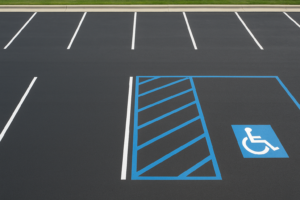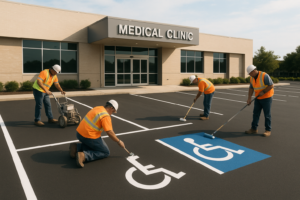

Parking lot striping for healthcare facilities Plano TX projects demands more than a fresh coat of paint — it requires ADA-compliant layouts, durable fire lane markings, and traffic patterns designed for patients, visitors, and emergency vehicles. Because hospitals, clinics, and medical offices serve people with limited mobility every day, clear and accurate pavement markings directly affect patient safety and property compliance. Below, we explain what quality healthcare parking lot striping involves, why it matters, and how property managers across North Texas can choose a contractor who understands medical property requirements.
Parking Lot Striping for Healthcare Facilities Plano TX: An Overview
Healthcare properties differ from retail centers or office parks in one major way: a much larger share of visitors have mobility challenges. Therefore, striping crews must plan layouts with extra care, accounting for wheelchairs, walkers, and stretcher access alongside standard vehicle traffic. According to the ADA Standards for Accessible Design, outpatient medical facilities must reserve at least 10 percent of total parking spaces as accessible spaces, a far higher ratio than the standard 2 to 4 percent required at typical retail properties (ADA.gov).
In addition to accessible stalls, medical parking lots typically need designated fire lanes, ambulance bays, and clear directional flow to reduce congestion near entrances. As a result, a healthcare striping project usually includes more planning and code review than a standard commercial restripe. For a closer look at how this applies specifically to North Texas medical properties, see this healthcare facility line striping resource.
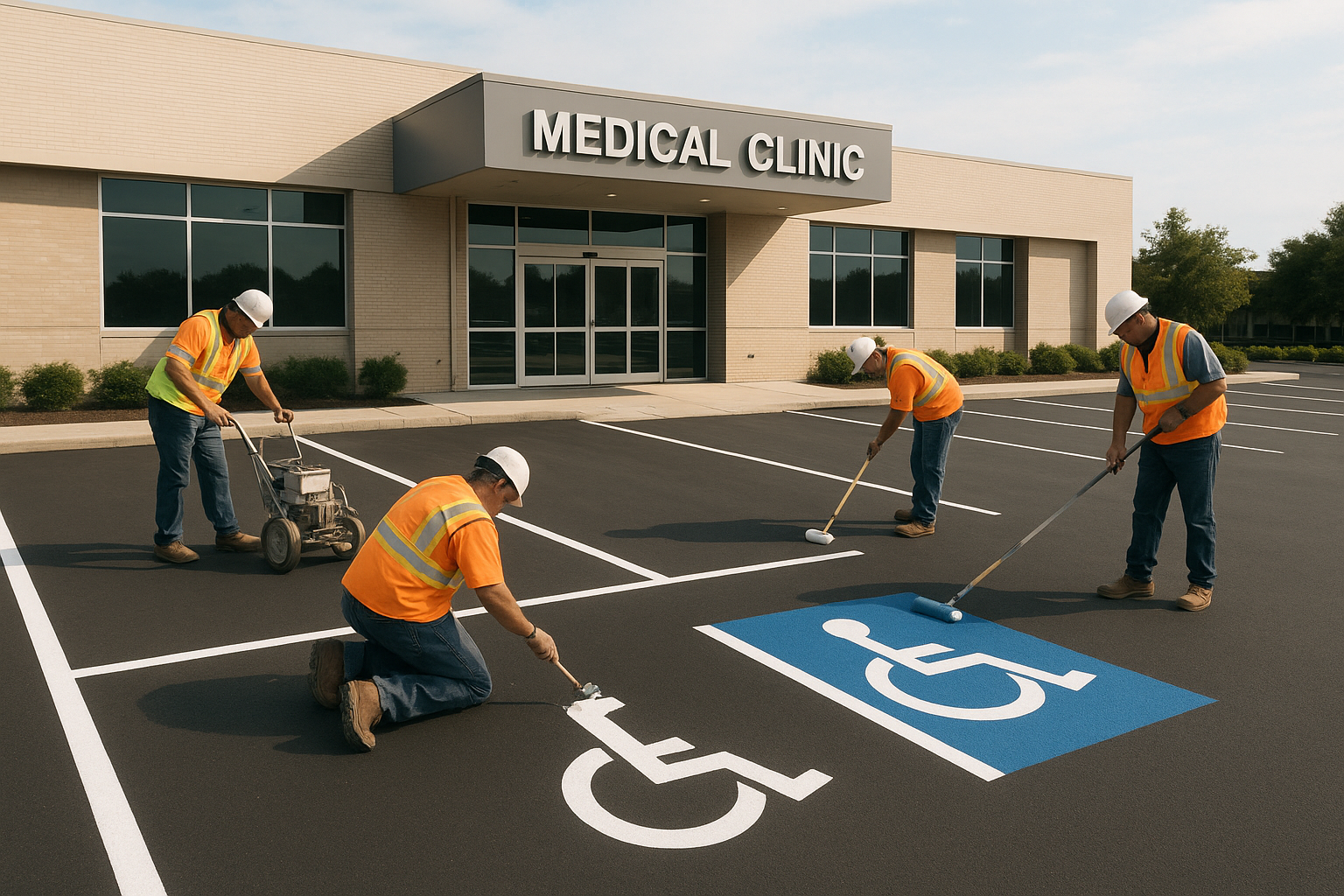
A professional crew completing parking lot striping for healthcare facilities Plano TX property managers depend on for ADA compliance.
What Is Parking Lot Striping for Healthcare Facilities in Plano TX?
Parking lot striping for healthcare facilities is the process of applying durable pavement markings — including parking stalls, ADA symbols, fire lanes, and directional arrows — specifically designed for the traffic patterns and accessibility needs of medical properties. Unlike a standard retail lot, healthcare striping must account for slower-moving patients, ambulance access, and higher accessible-stall ratios.
Specifically, this service often includes van-accessible stalls with wider access aisles, high-visibility crosswalks near entrances, and stop bars at busy intersections within the lot. Furthermore, many medical facilities also require loading zones for patient drop-off and pickup, which need their own clear markings to avoid confusion. Because of these added layers, healthcare striping projects benefit from a contractor who has handled medical properties before, rather than a general paving crew unfamiliar with these requirements.
Why ADA-Compliant Line Striping Matters for Medical Properties
ADA compliance is not optional for healthcare facilities; it is a legal requirement under the Americans with Disabilities Act. In particular, medical office parking lots are held to a higher standard because patients often arrive with limited mobility or in wheelchairs. Consequently, faded or missing accessible markings can create both a safety hazard and a compliance violation.
The U.S. Access Board provides detailed guidance on stall dimensions, access aisle widths, and signage placement. However, meeting these standards on paper is not enough — the physical paint on the ground must be accurate, visible, and properly maintained. In contrast to a minor cosmetic issue, an inaccessible parking lot can expose a facility to complaints, fines, or lawsuits, making regular restriping a practical investment rather than a discretionary expense.
Essential Elements of Hospital and Clinic Parking Lot Marking
A complete healthcare striping project typically includes the following markings, each serving a specific safety or compliance purpose:
- ADA and van-accessible stalls — wider spaces with proper access aisles positioned near entrances.
- Fire lanes — red-painted curbs or pavement with clear “no parking” text for emergency vehicle access.
- Directional arrows — guiding traffic flow to reduce congestion near busy entrances.
- Crosswalks and stop bars — helping pedestrians, including those with limited mobility, cross safely.
- Loading and drop-off zones — designated space for patient pickup without blocking traffic.
Above all, these elements work together to create a lot that functions smoothly during peak hours. For a full breakdown of standard commercial options, review this parking lot striping service overview, which explains how layouts are customized by property type.
Fire Lane Striping and Emergency Access at Healthcare Facilities
Fire lane striping is one of the most critical markings at any medical property, since blocked emergency access can delay ambulances or fire crews during a crisis. Typically, fire lanes are painted red with white lettering reading “FIRE LANE NO PARKING,” following local fire code specifications. In North Texas, fire marshals often inspect these markings during routine facility reviews, so keeping them fresh and legible is essential.
Similarly, ambulance bays near emergency entrances need distinct markings separate from general fire lanes to prevent confusion. For facilities throughout Denton and Plano, this Texas lot painting resource outlines how fire lane compliance is handled across different property types.
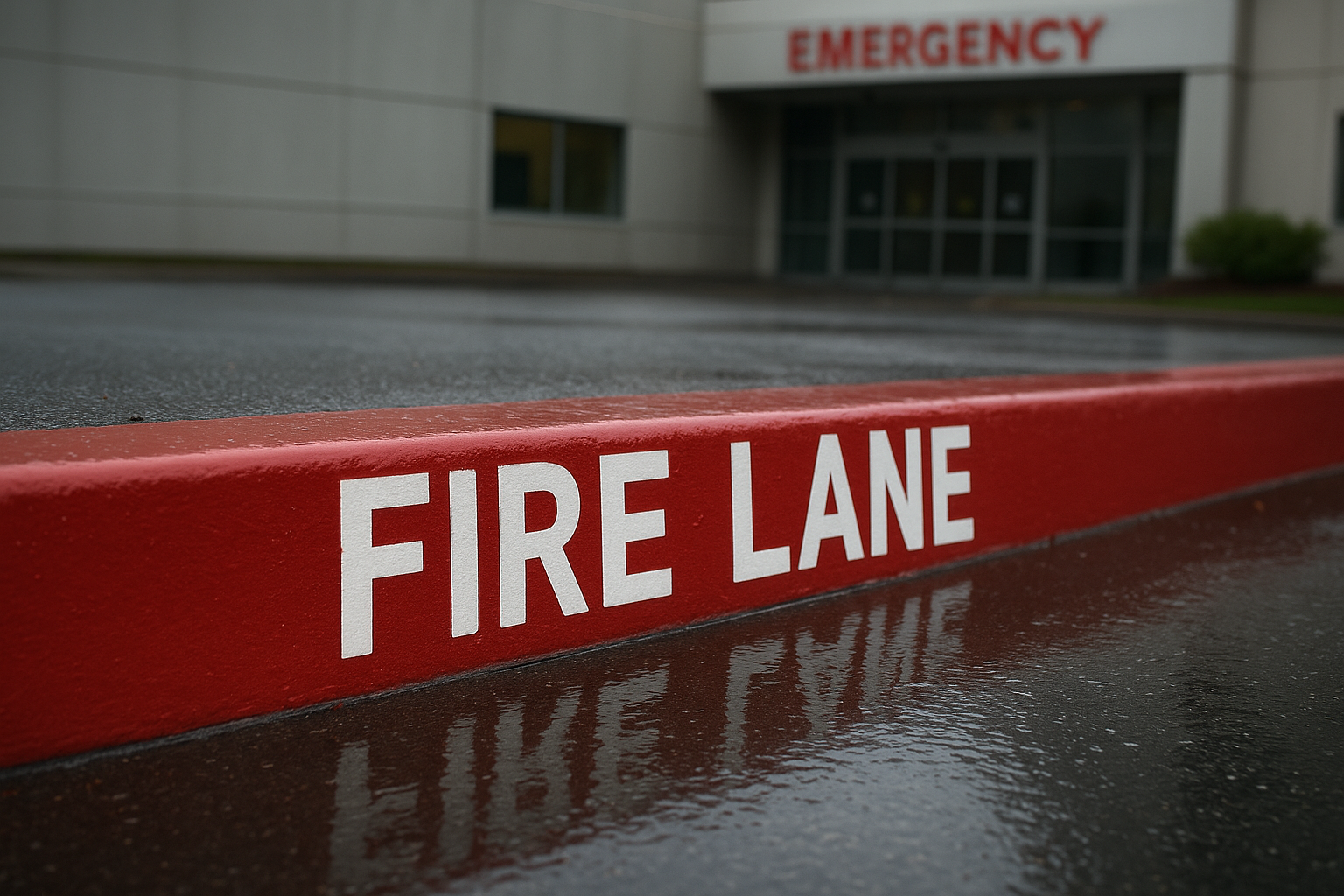
Clear fire lane striping keeps emergency vehicle access open at busy medical facilities.
Step-by-Step: How Professional Crews Restripe Healthcare Parking Lots
While every property is different, most healthcare restriping projects follow a consistent process:
- Site Assessment and ADA Review: A crew inspects the existing lot, measures total parking spaces, and calculates the required number of ADA-compliant and van-accessible stalls based on current accessibility standards.
- Surface Preparation and Cleaning: The pavement is swept, pressure washed, or scraped to remove debris, old paint residue, and oil stains so new striping adheres properly and lasts longer.
- Layout and Measurement: Crews use chalk lines, tape, or laser layout tools to mark exact stall widths, drive lanes, fire lanes, and accessible parking locations before any paint is applied.
- Applying Striping and ADA Symbols: Technicians apply durable traffic paint or thermoplastic material for parking lines, handicap symbols, directional arrows, and fire lane text using professional striping machines for clean, straight edges.
- Final Inspection and Curing: Once markings are applied, the area is barricaded to allow proper curing time, then inspected against ADA and fire code requirements before reopening the lot to patients and staff.
Choosing a Parking Lot Striping Company in Plano TX for Your Medical Facility
Choosing the right contractor matters as much as the work itself. Specifically, look for a company with documented experience on healthcare or medical office properties, since these projects carry stricter accessibility rules than typical retail lots. In addition, ask whether the crew is familiar with local fire codes in Denton and Plano, as requirements can vary slightly between municipalities.
Stripespls.com, a full-service parking lot marking company based in Texas, specializes in professional striping, ADA compliance solutions, and fire lane marking for commercial and healthcare properties throughout the Denton and Plano areas. The team works with property managers, schools, and medical facilities across greater North Texas, offering free quotes through stripespls.com. For property managers comparing local options, this professional striping overview for Denton and Plano and this Plano line marking guide outline typical services and pricing factors.
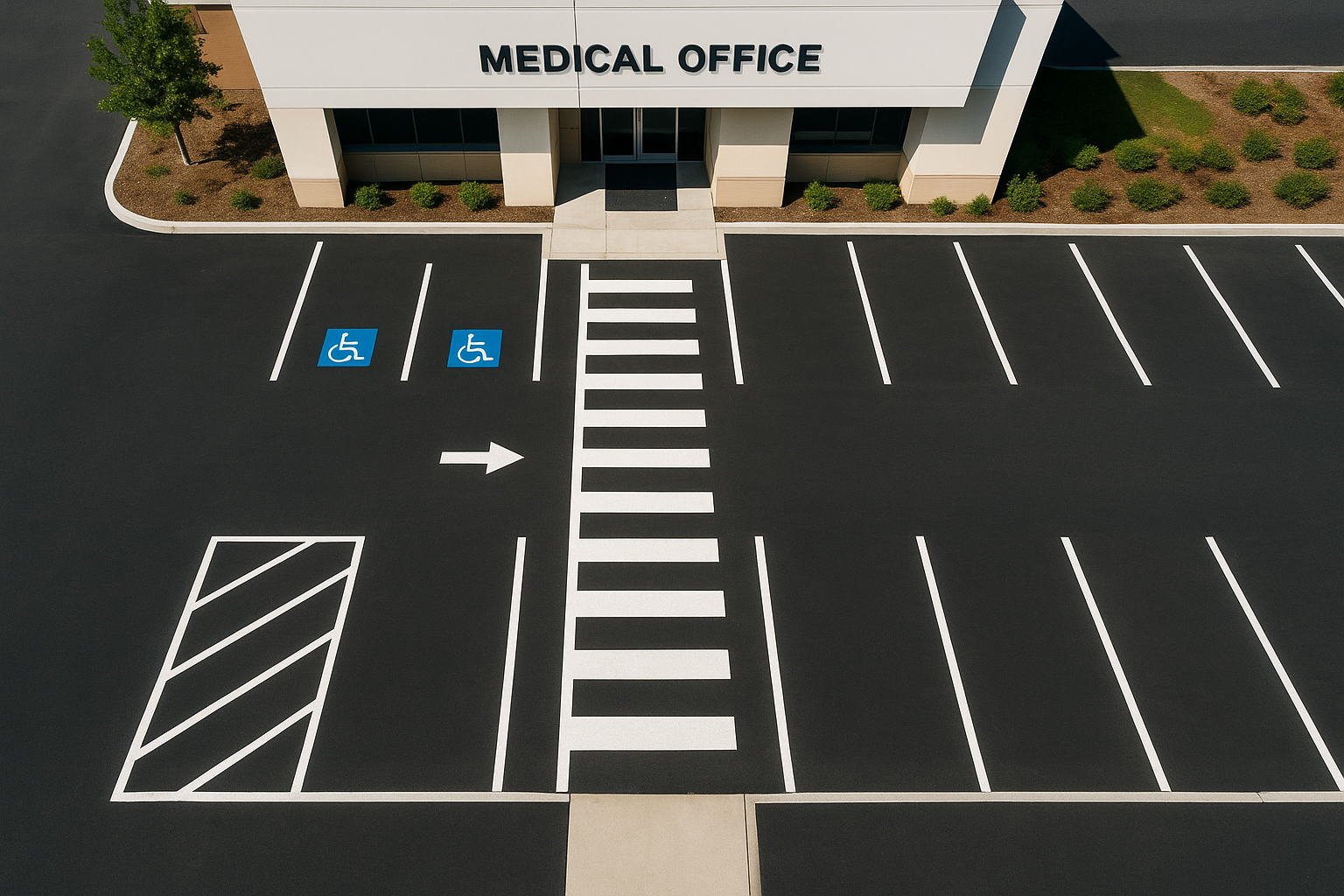
A finished parking lot layout showing ADA-compliant stalls and directional markings at a Plano medical office.
Cost, Timeline, and Maintenance Considerations
Costs for healthcare parking lot striping depend on lot size, the number of ADA stalls required, and whether fire lane painting is included. As a general guideline, most projects range from a few hundred dollars for small clinic lots to several thousand for larger hospital campuses. Therefore, requesting an on-site quote remains the most reliable way to get an accurate estimate.
Timeline-wise, most restriping projects finish within one to two days, though larger facilities may need phased work to keep sections open during business hours. Once complete, routine inspections every six months help catch fading before it becomes a compliance issue, keeping the property safe between full restriping cycles.
Frequently Asked Questions About Parking Lot Striping for Healthcare Facilities Plano TX
What is parking lot striping for healthcare facilities Plano TX?
Parking lot striping for healthcare facilities Plano TX refers to repainting and laying out parking lanes, ADA-compliant handicap stalls, fire lanes, and directional markings specifically for hospitals, clinics, and medical offices. It ensures accessibility, safety, and legal compliance for patients and staff.
Why do medical facilities need more accessible parking spaces than retail stores?
Outpatient medical facilities serve a higher percentage of patients with mobility limitations, so the ADA requires at least 10 percent of spaces to be accessible instead of the standard 2 to 4 percent. This higher ratio helps patients using wheelchairs, walkers, or crutches reach entrances safely.
How often should a healthcare facility restripe its parking lot?
Most healthcare properties should restripe every 18 to 24 months, depending on traffic volume and weather exposure. High-traffic hospital lots in North Texas often need touch-ups sooner because of sun fading and frequent vehicle turnover.
What paint or material works best for hospital parking lots?
Water-based traffic paint is common for standard lines, while thermoplastic markings are often used for high-wear areas like ambulance bays and crosswalks. Thermoplastic lasts longer and resists fading, making it ideal for busy medical facility entrances.
How much does parking lot striping for a medical facility typically cost?
Costs vary based on lot size, number of ADA stalls, and fire lane requirements, but most healthcare striping projects in the Plano and Denton area range from a few hundred to a few thousand dollars. Requesting a free on-site quote is the most accurate way to estimate cost.
What is the difference between fire lane striping and standard parking striping?
Fire lane striping uses red paint with white or contrasting lettering that reads “FIRE LANE NO PARKING,” while standard striping marks parking stalls, drive lanes, and traffic flow. Both are required for healthcare facilities to meet local fire codes and keep emergency access clear.
Can an outdated or faded parking lot put a healthcare facility at legal risk?
Yes, faded ADA markings or blocked fire lanes can lead to code violations, fines, and even liability if a patient is injured due to unclear or inaccessible parking. Regular restriping helps facilities stay compliant and reduces exposure to accessibility complaints.
How long does it take to complete parking lot striping for healthcare facilities Plano TX?
Most projects are completed within one to two days, depending on lot size, weather, and whether the lot needs to stay partially open for patients. Crews often work in phases or during off-peak hours to minimize disruption to clinic operations.
What common mistakes should property managers avoid with medical parking lot markings?
Common mistakes include using too few van-accessible spaces, placing accessible stalls too far from entrances, and letting fire lane paint fade without repainting. These issues create safety hazards and can trigger ADA compliance violations.
Do parking lots at schools, churches, and municipal buildings need the same striping as hospitals?
All commercial and public properties must meet ADA accessibility rules, but healthcare facilities generally require a higher accessible parking ratio than schools or municipal buildings. Fire lane requirements, however, apply broadly across nearly all commercial property types.
What should I look for when hiring a parking lot striping company in Plano TX?
Look for a contractor with proven ADA compliance knowledge, experience with healthcare or medical properties, and the ability to provide a clear written quote. Local experience in the Denton and Plano area also helps ensure familiarity with regional fire codes.
Can striping be done without closing the entire healthcare facility parking lot?
Yes, experienced crews often stripe healthcare lots in sections or during low-traffic hours, such as early morning or overnight, to keep patient access available. This phased approach minimizes disruption while still completing the project efficiently.
Final Thoughts
In the end, parking lot striping for healthcare facilities Plano TX is about more than curb appeal — it directly affects patient safety, accessibility, and legal compliance. From ADA-compliant stalls to fire lane markings and clear traffic flow, every element plays a role in keeping a medical property functional and code-compliant. As a result, partnering with an experienced local contractor, such as the team at stripespls.com, helps property managers throughout Denton and Plano maintain lots that serve patients, staff, and emergency responders reliably for years to come.