Parking lot striping is the single service that keeps a commercial property safe, organized, and legally compliant every single day. For property owners and managers across Denton, Plano, and the wider North Texas region, StripesPls delivers professional parking lot striping, ADA-compliant stall markings, and fire lane painting built around real code requirements — not guesswork. Because faded or missing lines create genuine liability risks for drivers, pedestrians, and business owners alike, hiring an experienced striping contractor is never just a cosmetic decision. In this guide, we go far beyond the basics to cover exactly what a professional crew does, what parking lot striping costs in Texas, which paint options actually hold up, and how to choose a contractor you can trust for years, not just one project.
Quick Answer: Parking lot striping is the process of painting stall lines, ADA-compliant accessible spaces, fire lanes, and directional arrows on commercial pavement. Most projects take one to two days, are priced between $0.15 and $0.75 per linear foot, and should be repeated every 18 to 24 months to stay safe, visible, and code-compliant.
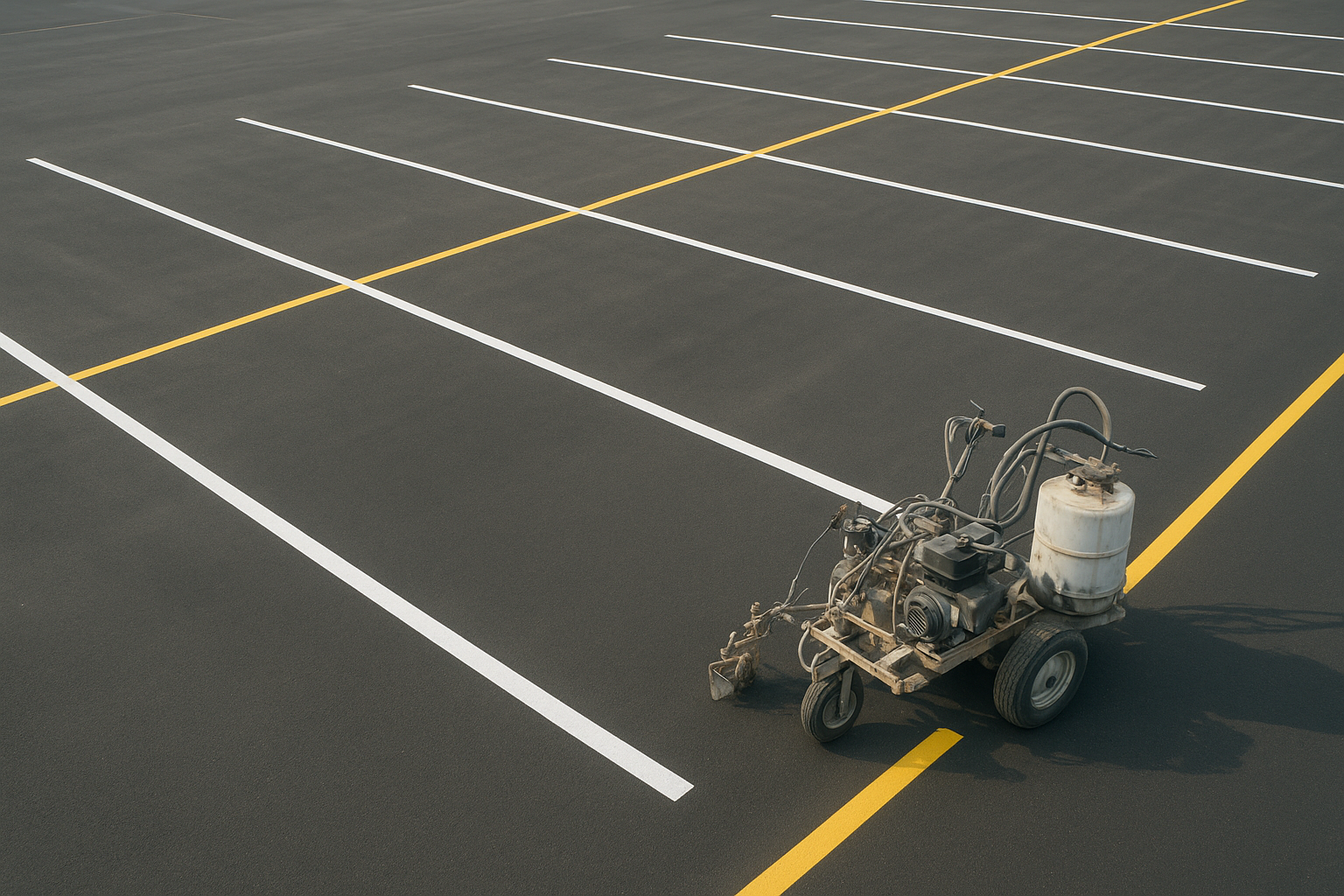
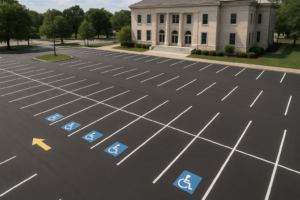
Crisp, freshly applied parking lot striping like this is the hallmark of an experienced Texas crew.
What Is Parking Lot Striping? A Complete Overview
Parking lot striping refers to the painted lines, symbols, and lettering that organize a paved lot into clearly defined stalls, drive aisles, fire lanes, and accessible parking spaces. In practice, a licensed striping contractor measures the lot, lays out the design, and applies traffic paint or thermoplastic material using specialized equipment. As a result, drivers know exactly where to park, pedestrians know where to walk, and emergency vehicles retain clear access at all times.
Beyond basic stall lines, professional parking lot striping typically includes ADA-compliant accessible spaces, red fire lane markings, directional arrows, stop bars, crosswalks, and stenciled text such as “NO PARKING” or “COMPACT ONLY.” In addition, many striping companies also handle related pavement work like sealcoating, crack filling, and wheel-stop installation, though striping itself remains the core specialty.
Because Texas weather swings from intense summer heat to occasional winter freezes, painted lines wear down faster here than in milder climates. Consequently, most property owners treat parking lot striping as recurring maintenance rather than a one-time project — a pattern we’ll unpack in detail below.
Why Denton & Plano Businesses Need Professional Line Striping
Parking lots across Denton and Plano absorb heavy daily traffic from retail centers, schools, healthcare facilities, and municipal buildings. As a result, painted lines wear down faster than many owners expect, especially in high-turnover areas like grocery store lots or hospital drop-off zones. Faded parking lot striping isn’t just unattractive — it directly contributes to confused traffic flow, fender-benders, and avoidable parking disputes.
In particular, unclear ADA markings can expose property owners to complaints or fines, while missing fire lane paint can delay emergency response by precious seconds. Consequently, many property managers schedule restriping on a proactive cycle rather than waiting until lines disappear completely.
StripesPls offers professional parking lot striping services in Denton designed specifically around this kind of proactive maintenance schedule, so lots stay compliant and visible year-round instead of only after a complaint arrives.
Core Parking Lot Striping Services in Texas
Most full-service striping contractors offer a similar core menu, though quality and attention to detail vary widely between companies. Understanding these services in advance helps property owners ask sharper questions during the quoting process. For a deeper walkthrough of everything a modern crew can offer, StripesPls has published a complete guide to parking lot striping services worth bookmarking.
ADA Compliance Striping
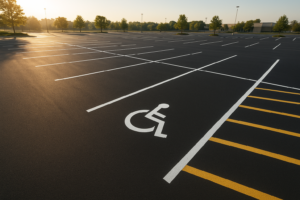
ADA-compliant striping includes properly sized accessible stalls, access aisles, and the international symbol of accessibility painted in the correct location and color. Specifically, the Americans with Disabilities Act sets minimum requirements for the number of accessible spaces based on total lot size. Above all, getting this wrong can result in complaints, fines, or costly rework, so experienced crews measure carefully before painting a single line.
Fire Lane Marking and Directional Arrows
Fire lane marking uses red paint and stenciled lettering to keep emergency access routes clear at all times. Meanwhile, directional arrows and stop bars help guide traffic flow safely through busy lots, particularly around building entrances and loading zones. Local fire codes typically dictate exact wording, color, and placement, so a knowledgeable contractor will already be familiar with North Texas requirements.
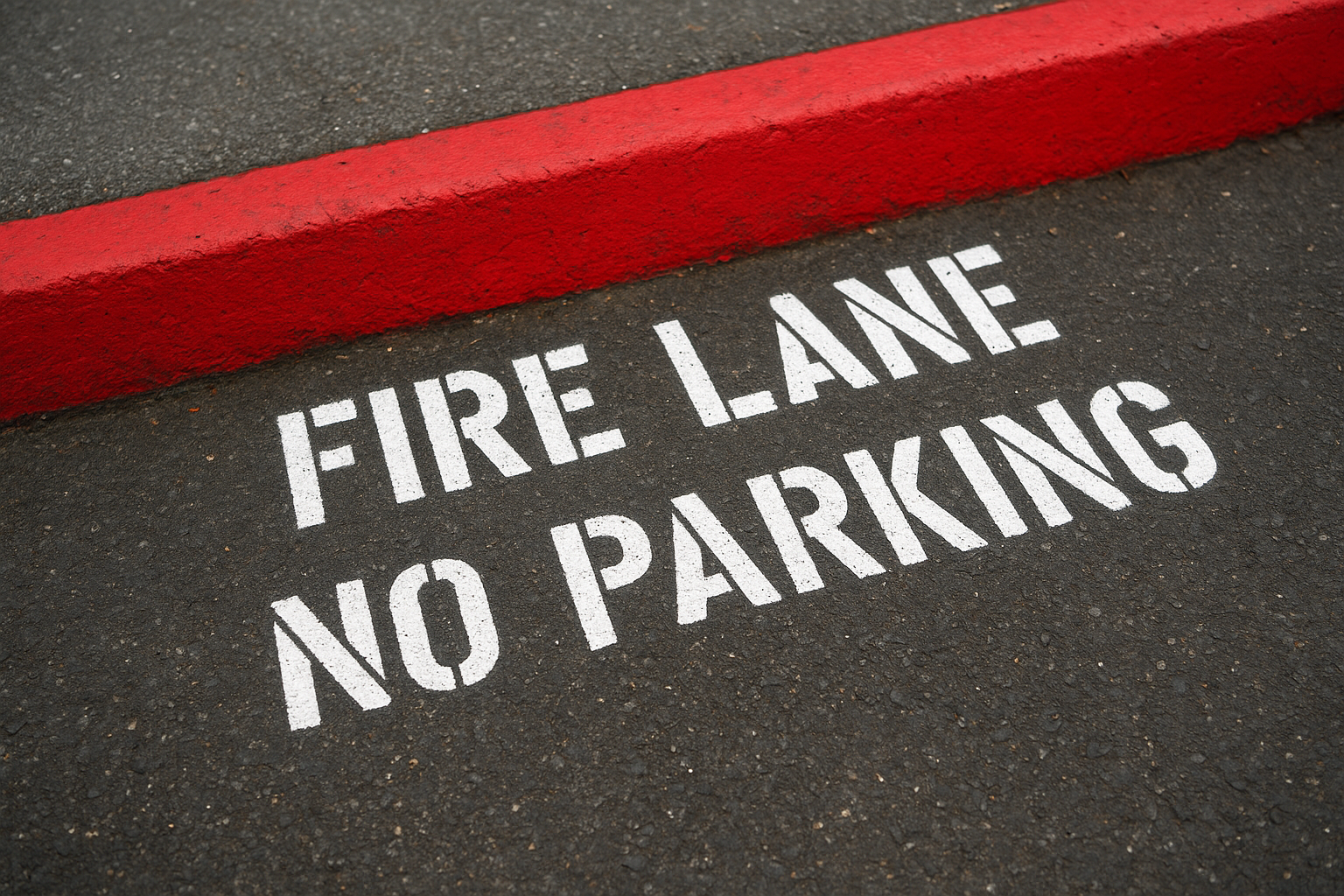
Fire lane marking remains one of the most requested safety services from any parking lot striping company.
Beyond ADA and fire lane work, most contractors also offer general restriping, new lot layout design, curb painting, and wheel-stop or bollard installation. StripesPls covers this full range through its line marking services for parking lots, tailored to whatever a property currently needs.
Parking Lot Striping Paint: Traffic Paint vs. Thermoplastic
Choosing the right material matters just as much as choosing the right contractor. Standard water-based traffic paint is the most common option for parking lot striping because it’s affordable, dries quickly, and meets code for most commercial properties. However, it typically needs reapplication every 18 to 24 months in high-traffic Texas lots.
Thermoplastic marking, by contrast, is a melted material that fuses to the pavement and can last three to five times longer than paint. Therefore, while it costs more upfront, thermoplastic often works out cheaper over the life of a busy lot, such as a grocery store or hospital entrance. For a closer look at how surface condition affects paint adhesion and longevity, see this asphalt striping guide to parking lot line marking.
Epoxy-based paint is a third, less common option, prized mainly for its durability on concrete surfaces like parking garages. In short, the right choice depends on traffic volume, budget, and how long the surface needs to stay legible between maintenance cycles.
Parking Lot Striping Cost in Texas: What to Expect
Pricing for a parking lot striping project depends primarily on lot size, layout complexity, and the type of paint used. As a general benchmark, most jobs fall somewhere between fifteen and seventy-five cents per linear foot, though small lots often carry a flat minimum fee. For a detailed breakdown, StripesPls has published a full guide on how much parking lot line painting usually costs.
Notably, thermoplastic markings cost more upfront than standard traffic paint but last significantly longer, which can make them a better long-term value for high-traffic commercial lots. Therefore, it’s worth requesting pricing on both options before deciding.
Beyond the paint itself, expect additional line items for stall count, stencil lettering (like “FIRE LANE” or “ADA”), curb painting, and any surface prep needed for oil stains or loose debris. Similarly, rush jobs or after-hours scheduling can add a modest premium, so booking a few weeks ahead usually saves money.
The Parking Lot Striping Process, Step by Step
While every property is different, most professional crews follow a consistent process from start to finish:
- Site assessment: The crew walks the property, measures the lot in full, and reviews current ADA and fire lane requirements before providing an itemized, written quote for the work.
- Surface preparation: Debris, oil stains, loose gravel, and old flaking paint are cleared away so new material bonds properly and doesn’t peel prematurely within the first season.
- Layout and chalk lines: Exact stall widths, drive aisle widths, and accessible space locations are chalked out and double-checked against code before a single drop of paint is applied.
- Striping application: A calibrated striping machine applies traffic paint or thermoplastic along the marked layout, including stall lines, symbols, arrows, and stenciled text with consistent width and spacing.
- Cure time and inspection: The paint cures fully, typically within an hour to the touch and up to 24 hours for full traffic use, while the crew inspects every line for coverage and code compliance.
According to the Federal Highway Administration’s MUTCD guidelines, consistent marking standards help reduce driver confusion and improve overall lot safety. Following a proven process like this one helps ensure those standards are met on every project, from a single restripe to a full new layout.
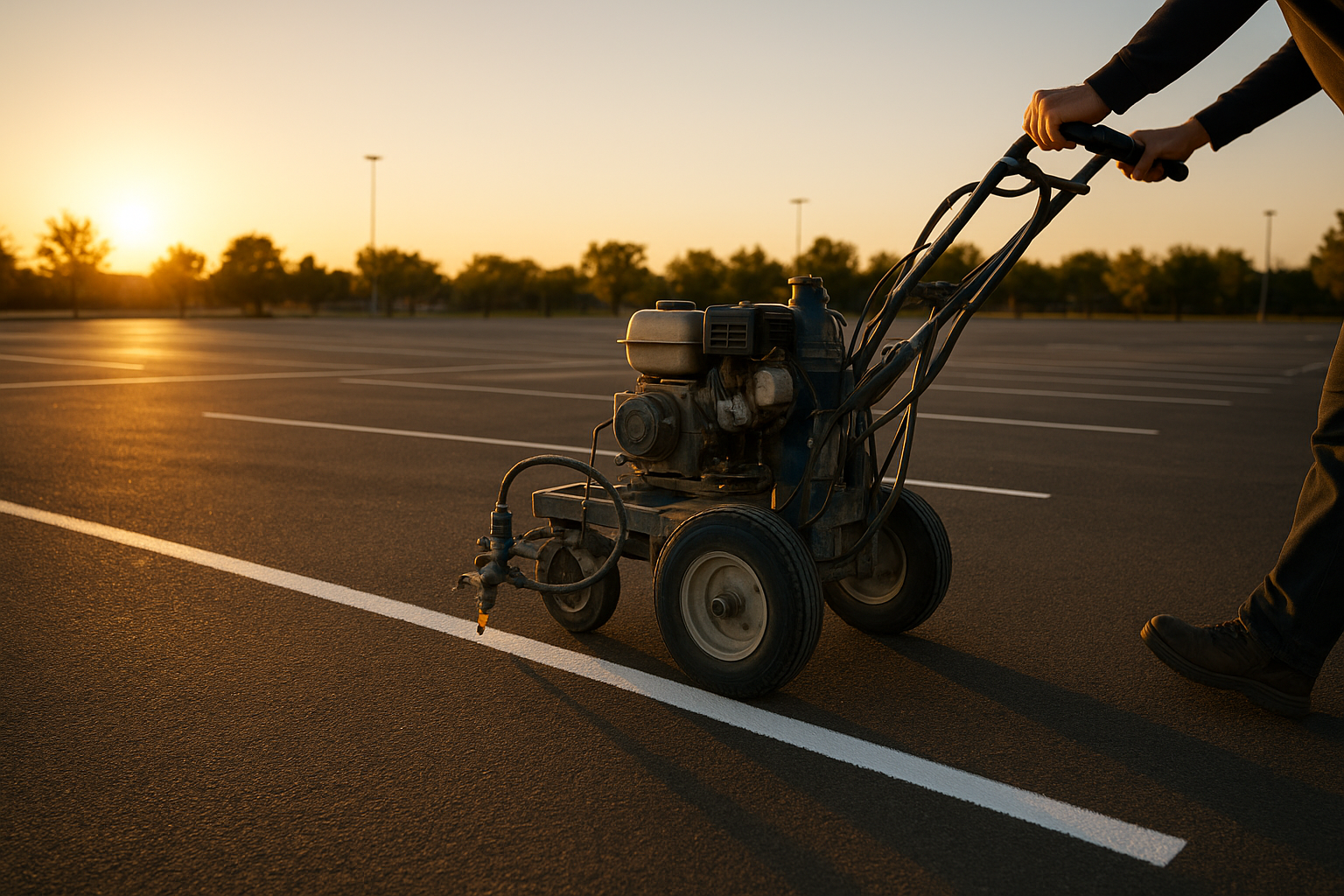
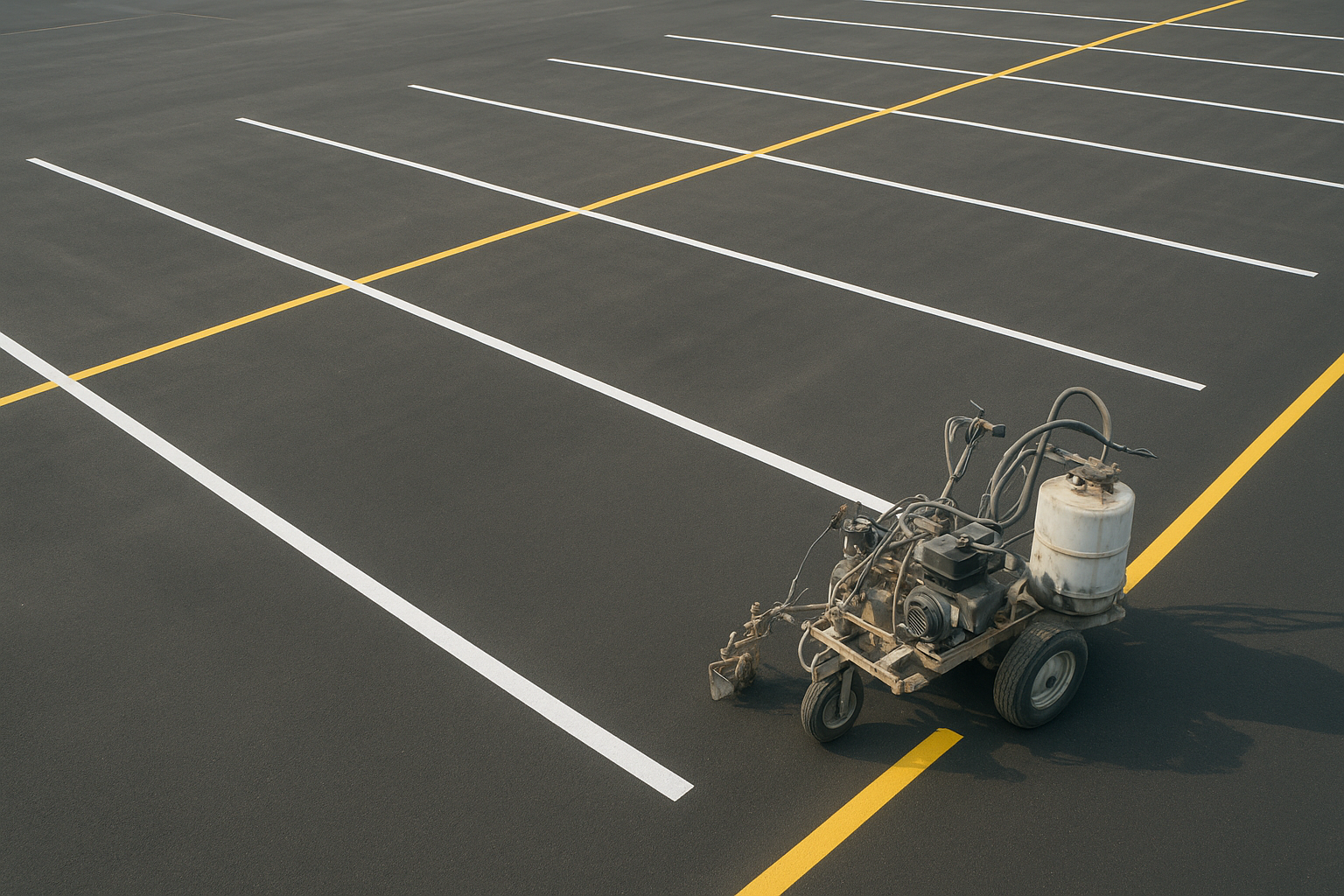
A calibrated striping machine ensures even, consistent parking lot striping across even the largest commercial lots.
Parking Lot Layout and Design Standards
Good parking lot striping starts long before the paint touches pavement — it starts with layout. Most standard stalls measure 9 feet wide by 18 feet long, though many municipalities allow slightly narrower compact spaces to maximize capacity on tight lots. Drive aisles typically need at least 24 feet of width for two-way traffic, while one-way aisles can be narrower depending on local code.
In addition, accessible stalls require extra width plus a striped access aisle, and at least one van-accessible space per ADA guidelines. For a full breakdown of stall counts, aisle widths, and traffic flow planning, StripesPls has put together a parking lot layout design planning guide that’s especially useful before a full restripe or new construction project.
Ultimately, a well-planned layout doesn’t just look organized — it reduces accidents, speeds up traffic flow during busy hours, and squeezes the maximum number of legal, usable stalls out of every available square foot.
Safety, ADA & Fire Code Compliance for Pavement Marking
Compliance isn’t optional, and it shouldn’t be an afterthought either. Parking lot striping directly affects ADA accessibility, fire code access, and general traffic safety, so cutting corners here can expose a property to fines, lawsuits, and delayed emergency response.
Above all, fire lanes must stay fully visible and unobstructed at all times, and local fire marshals frequently inspect commercial lots for exactly this reason. Similarly, ADA-compliant striping needs the correct number of accessible spaces, proper access aisle widths, and the international symbol of accessibility in the right color and location.
For a complete rundown of the codes, inspections, and best practices that keep a property protected, see this safety and compliance guide to parking lot striping. As a result, property managers who follow it tend to pass inspections on the first try instead of scrambling to fix violations after the fact.
How to Choose the Right Parking Lot Striping Company
Not every contractor delivers the same level of quality, so it pays to compare a few options before committing. In particular, look for local experience, clear written pricing, and demonstrated knowledge of ADA and fire code requirements. Reading independent reviews is also worthwhile; for example, StripesPls has published an honest breakdown of what to know before hiring a traffic services company that can help property managers ask better questions during the bidding process.
Similarly, a reputable pavement marking contractor should be willing to provide references from similar properties, such as retail centers, schools, or healthcare facilities. Above all, avoid choosing solely on the lowest bid, since rushed prep work often leads to premature fading and repeat costs within a single season.
Finally, ask about warranty terms, insurance coverage, and typical turnaround time. A contractor confident in their parking lot striping work will generally stand behind it in writing, not just in conversation.
Serving Denton, Plano & the Greater North Texas Region
StripesPls operates as a locally based parking lot striping company serving property managers, retail centers, schools, and municipal organizations throughout Denton, Plano, and the surrounding North Texas area. As a result, clients benefit from crews who already understand local code requirements and typical weather scheduling challenges. Property owners farther from the core service area sometimes look for coverage elsewhere too; for instance, this guide on whether there’s a parking lot striping service in Amarillo can help those outside the immediate Denton-Plano footprint find a suitable contractor.
For more information or to request a free quote, visit stripespls.com directly. More broadly, the concept of standardized pavement marking is well documented on Wikipedia’s road surface marking overview, which offers useful background for property owners new to the topic.
Frequently Asked Questions About Parking Lot Striping
What does a parking lot striping company actually do?
A parking lot striping company applies and maintains parking lot lines, ADA-compliant stall markings, fire lane paint, and directional arrows. Many also handle new lot layouts, curb painting, and pavement stenciling.
How much does parking lot striping cost in Texas?
Most projects cost between $0.15 and $0.75 per linear foot, depending on lot size, paint type, and layout complexity. Small lots may carry a minimum service fee, while large properties are usually quoted per project.
How long does parking lot striping paint take to dry?
Standard traffic paint usually dries to the touch within 30 to 60 minutes in warm, dry weather. Full cure before heavy traffic resumes is often recommended at around 24 hours.
How often should a parking lot be restriped?
Most commercial lots need restriping every 18 to 24 months, though high-traffic properties may need it annually. Faded, hard-to-see lines are the clearest sign it’s time for a refresh.
What type of paint do professional striping crews use?
Most contractors use water-based traffic paint or thermoplastic material rated for asphalt and concrete. Traffic paint is more affordable, while thermoplastic lasts longer but costs more upfront.
Is ADA-compliant striping legally required?
Yes, the Americans with Disabilities Act requires a specific number of accessible spaces with proper markings based on total lot size. Non-compliant lots can face fines and legal complaints.
What’s the difference between fire lane marking and regular parking lot striping?
Fire lane marking uses red paint and stenciled text to keep emergency access clear, while regular striping simply organizes stalls and traffic flow. Fire lanes are often required by local fire codes.
Can striping be done during cold or rainy weather?
Paint needs a dry surface and temperatures generally above 50°F to cure properly, so most contractors schedule around the forecast. Rescheduling due to weather is common and prevents premature peeling.
How do I choose the best parking lot striping company for my property?
Look for local experience, clear pricing, ADA knowledge, and references from similar properties. Comparing two or three quotes helps ensure fair pricing and quality work.
What is the standard size of a parking stall in Texas?
Most standard stalls measure 9 feet wide by 18 feet long, though many municipalities allow slightly narrower compact spaces. Accessible stalls require extra width plus an access aisle per ADA guidelines.
Do I need a permit to restripe my parking lot?
Simple restriping that follows the existing layout usually does not require a permit, but new layouts may need municipal approval. Checking with your local planning department first can prevent delays.
Is thermoplastic striping worth the extra cost compared to paint?
Thermoplastic can last three to five times longer than standard paint, making it a good value for high-traffic lots. Smaller or lower-budget properties still get great results from standard traffic paint.
What’s the difference between parking lot striping and general pavement marking?
Parking lot striping refers specifically to stall lines, ADA markings, and fire lanes within a lot, while pavement marking is a broader term that also covers roadway lines and crosswalks. In practice, the same crew and equipment usually handle both.
Does StripesPls offer a warranty on parking lot striping work?
Reputable striping contractors typically stand behind their work with a written warranty covering premature fading or peeling within a set period. Always ask for warranty terms in writing before signing a contract.
Can old striping be removed before a lot is restriped?
Yes, old lines can be removed using grinding, blasting, or chemical methods when a layout is changing significantly. Otherwise, most restripes simply paint over faded lines following the existing layout.
Final Thoughts: Investing in Professional Parking Lot Striping
Ultimately, choosing the right team for parking lot striping comes down to experience, clear communication, and a genuine understanding of ADA and fire code requirements. Whether a property needs a simple restripe or a full new layout, professional parking lot striping keeps parking areas safe, organized, and compliant with current regulations. In addition, regular maintenance protects property owners from liability while making a strong first impression on every visitor.
For property managers, business owners, and municipal organizations across Denton, Plano, and the wider North Texas region, working with an experienced local team like StripesPls simplifies the entire process. As a next step, request a free quote to see exactly how affordable a professional parking lot striping refresh can be.