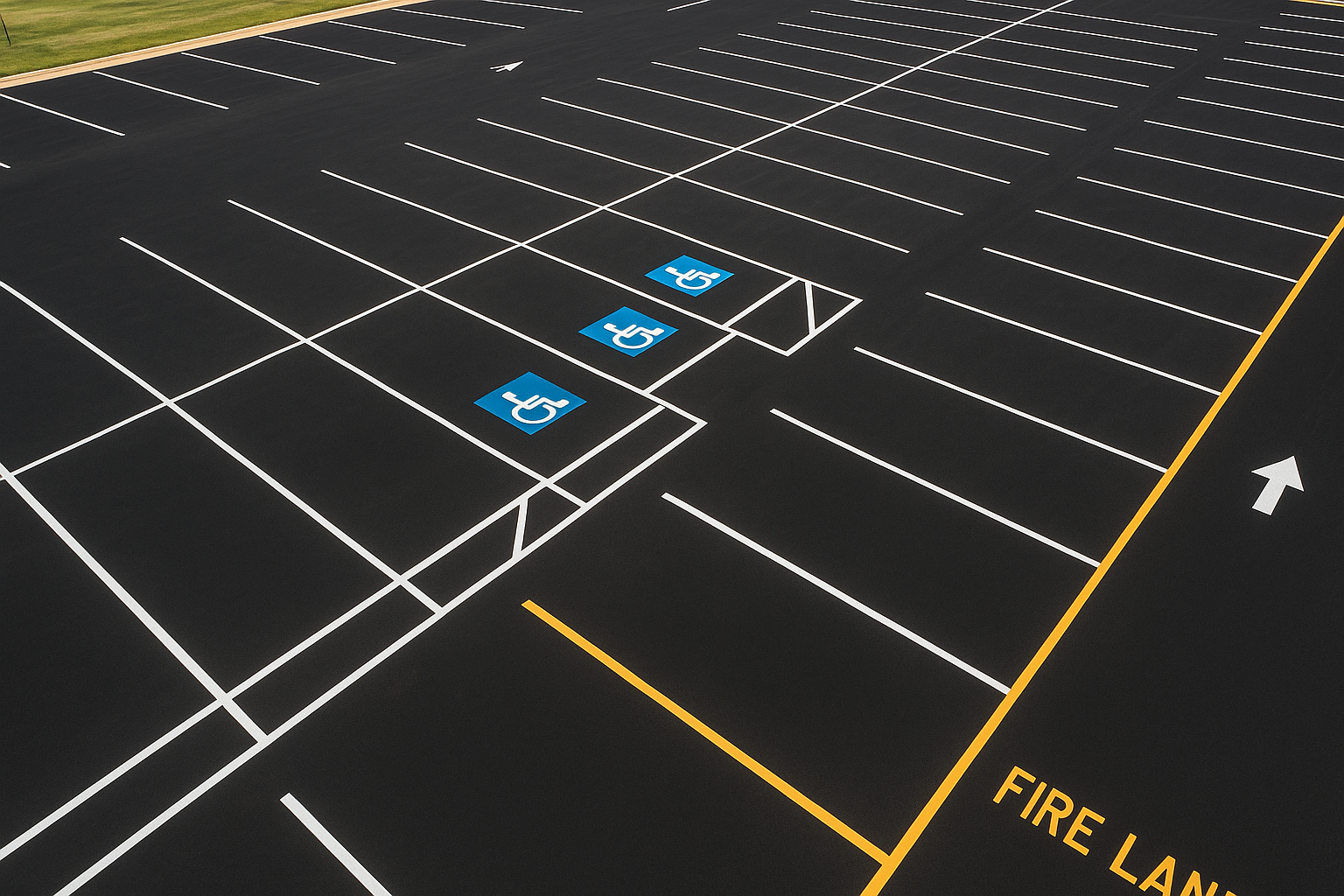
Parking lot striping services transform a plain slab of asphalt into a safe, organized, and legally compliant parking facility. From retail centers and schools to hospitals and apartment communities, every paved lot depends on clear, durable line markings to guide traffic, protect pedestrians, and meet accessibility law. This guide covers everything a property owner or facilities manager needs to know — what these services include, how much they cost, which paint lasts longest, and how to prepare a lot before the crew arrives.
Unlike a quick overview, this article digs into every layer of the process: ADA stall dimensions, fire lane codes, paint chemistry, contractor vetting, maintenance schedules, and cost breakdowns by lot size. By the end, you will know exactly what to ask for, what to expect, and how to avoid the mistakes that shorten the life of fresh striping.
Quick answer: Parking lot striping services apply traffic-grade paint or thermoplastic material to define stalls, lanes, ADA-accessible spaces, and fire lanes. Most commercial lots need restriping every 12 to 24 months, and pricing typically ranges from a few hundred dollars for small touch-ups to several thousand for full-lot layouts.
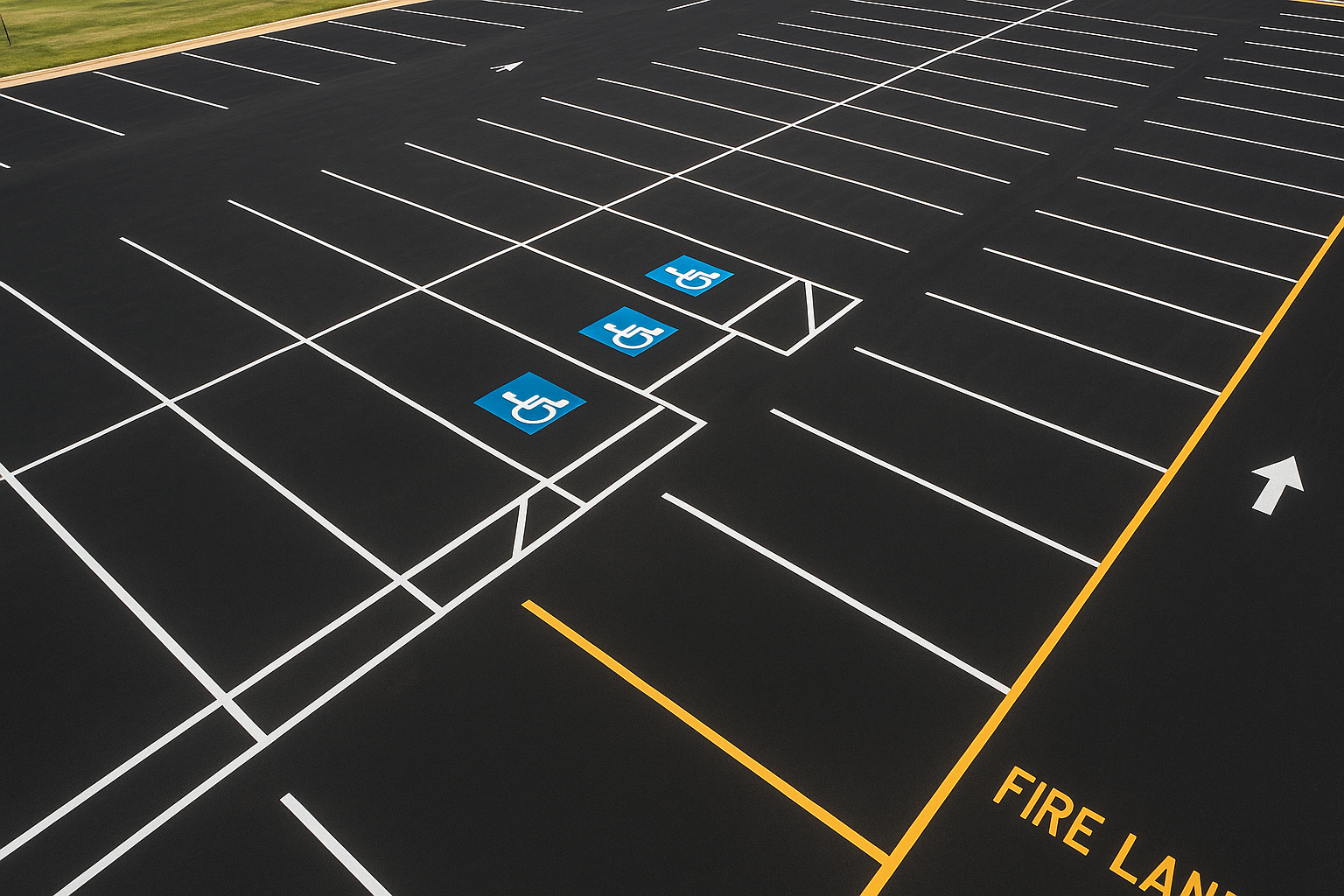
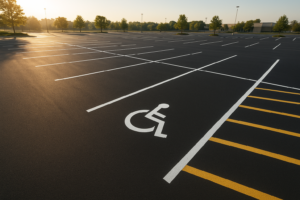
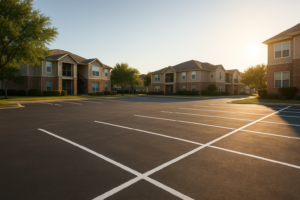
Professional parking lot striping services create organized, code-compliant layouts that improve driver safety and property appearance.
What Are Parking Lot Striping Services?
Parking lot striping services describe the professional process of applying durable, traffic-grade paint or thermoplastic markings to paved surfaces. A qualified crew uses self-propelled line-striping machines, layout stencils, and precise measurements to produce consistent, regulation-width lines across an entire property.
These services typically include standard stall lines, directional arrows, crosswalks, ADA handicap stalls with access aisles, fire lane designations, curb painting, and custom stenciling. As a result, a single project can resolve multiple safety and compliance needs in one visit.
According to pavement marking standards, line widths, colors, and symbols must meet specific guidelines depending on jurisdiction. Furthermore, the Manual on Uniform Traffic Control Devices (MUTCD), published by the Federal Highway Administration, sets the national baseline that most local codes build upon. In short, striping is not just cosmetic — it is a technical trade governed by real standards.
What’s Included in a Full-Service Striping Project
A comprehensive parking lot striping company does far more than paint straight lines. Specifically, most full-service providers offer:
- Standard stall striping for compact, standard, and oversized vehicle spaces
- ADA-compliant accessible stalls with access aisles and painted symbols
- Fire lane marking with red curb paint and required stenciling
- Directional arrows and traffic-flow markings for one-way lanes and entrances
- Crosswalk and pedestrian-safety striping near building entrances
- Curb painting for no-parking zones, loading areas, and fire lanes
- Wheel stops and bollard installation to reinforce stall boundaries
- EV charging station and reserved-space stenciling for modern parking demands
- Dumpster pad and loading zone marking for service and delivery areas
- Custom stenciling including business logos, numbers, or “Visitor Parking” text
Why Professional Line Marking Matters for Your Property
A disorganized or faded parking lot creates real problems. For example, drivers park at odd angles and block traffic lanes. Pedestrians cross in unsafe areas. Meanwhile, emergency vehicles struggle to reach buildings quickly when fire lanes are poorly marked.
Faded ADA markings can also trigger costly compliance complaints. The U.S. Department of Justice ADA Design Standards require a specific number of accessible stalls based on total lot capacity, and those stalls must be clearly marked at all times. Consequently, non-compliant properties face fines, lawsuits, and reputational damage under the Americans with Disabilities Act.
In contrast, a freshly striped lot immediately signals professionalism and care. Studies on retail environments show organized parking areas improve customer satisfaction and can even increase dwell time on-site. Therefore, hiring reliable parking lot striping services is not just maintenance — it is a measurable business investment.
Key Benefits of Hiring a Professional Striping Crew
- Accurate layout planning that maximizes stall count without sacrificing safety
- Code-compliant ADA markings including proper stall widths and access aisles
- Durable traffic-grade paint that resists UV fading, tire wear, and weather extremes
- Fast project turnaround with minimal disruption to daily operations
- Fire lane designation that meets local fire marshal requirements
- Liability reduction through documented, code-compliant markings
New Striping vs. Restriping: Which Does Your Lot Need?
Not every project requires a full layout redesign. Understanding the difference between new striping and restriping helps you budget correctly and communicate clearly with your contractor.
New striping is needed when you have a freshly paved lot with no existing markings, or when you want to completely redesign your current layout. This process involves careful measurement, layout planning, and applying all lines from scratch. It is also the right choice if you are adding new ADA spaces or reconfiguring traffic flow. Explore the full scope of parking lot striping parking lot striping Texas to understand what a new layout project involves.
Restriping, on the other hand, refreshes faded or worn lines over an existing layout. It is faster, more affordable, and ideal for lots that remain structurally sound but visually degraded. Most commercial properties need professional restriping every one to two years depending on traffic volume and weather exposure.
As a general rule, if lines are still visible but faded, restriping is sufficient. However, if the layout itself is inefficient or non-compliant, a full redesign is the smarter long-term investment.
Choose new striping if: the lot is freshly paved, the layout is inefficient, or you’re adding new ADA/EV spaces.
Choose restriping if: the layout works fine, but lines have faded, chipped, or become hard to see at night.
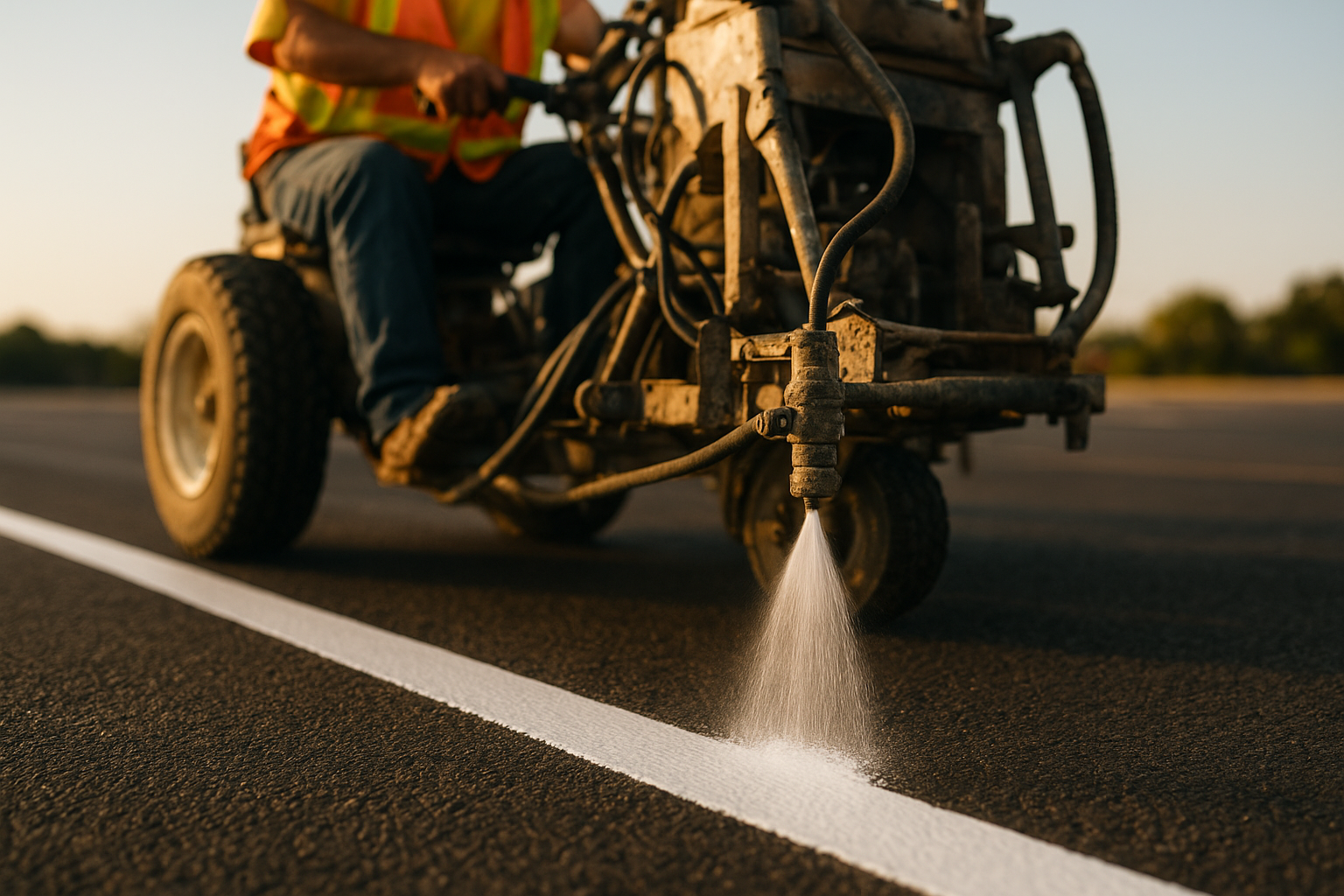
Professional striping equipment ensures consistent line widths and clean edges across the entire parking surface.
How to Prepare Your Parking Lot for Professional Striping
Proper preparation is critical for long-lasting results. Follow these six steps to get your lot ready before the crew arrives.
- Inspect and clean the surface. Walk the entire lot and identify cracks, oil stains, debris, or standing water. Sweep and pressure-wash the asphalt thoroughly so paint adheres properly and lines stay crisp.
- Repair cracks and damage. Fill visible cracks or potholes with asphalt patching compound and allow it to cure fully. Painting over damaged surfaces leads to premature peeling and poor line definition.
- Plan the layout and measure stall dimensions. Work with your striping contractor to confirm stall widths, lane widths, ADA space placement, and fire lane locations. Standard stalls are typically 8.5 to 9 feet wide and 18 feet deep.
- Mark reference lines and snap chalk lines. The crew establishes baseline reference points to ensure all stall lines are parallel, evenly spaced, and correctly angled before applying any paint.
- Apply paint with professional striping equipment. Using a self-propelled machine, the crew applies traffic-grade paint in smooth, consistent passes. Stencils are used for arrows, ADA symbols, fire lane text, and other specialized markings.
- Allow paint to dry and inspect the finished work. Keep the lot clear of vehicles for at least 30 to 60 minutes. Then conduct a final walkthrough to verify all lines, symbols, and ADA markings meet code requirements.
ADA Compliance and Fire Lane Requirements Explained
Two categories of markings carry the heaviest regulatory weight: ADA-accessible spaces and fire lanes. Both require specific dimensions, colors, and symbols that go beyond standard stall lines.
ADA Stall Dimensions and Symbol Requirements
Under federal ADA compliant striping, accessible stalls must be at least 8 feet wide with a 5-foot access aisle. Van-accessible stalls require an 8-foot aisle instead. Additionally, the International Symbol of Accessibility must be painted on the pavement surface in addition to vertical signage. Specifically, lots with 1 to 25 total spaces must provide at least one accessible stall, and the ratio increases as total capacity grows.
Fire Lane Markings and Local Code Requirements
Fire lane requirements are governed by local fire codes, which frequently reference standards from the National Fire Protection Association (NFPA). In many municipalities, fire lanes must be marked with red curb paint and “FIRE LANE – NO PARKING” stenciling at regular intervals. As a result, failure to maintain these markings can trigger violations during routine fire marshal inspections.
For more detail on thermoplastic pavement marking materials used in high-durability applications, including fire lane designations, industry references provide excellent technical background on material selection.
Serving parking lot striping Denton, Plano, and Greater North Texas
For property managers and business owners across North Texas, stripespls.com delivers full-service parking lot striping solutions tailored to each property’s specific needs. The team serves commercial properties, retail centers, schools, healthcare facilities, and municipal organizations throughout the Denton and Parking lot striping Plano areas.
From new lot layouts to restriping faded markings, every project is handled with precision and attention to detail. The company’s expertise in ADA compliance, fire lane designation, and directional marking means clients can trust that every inch of their lot meets current safety and accessibility codes. Browse the full range of parking lot services to find the right solution for your property.
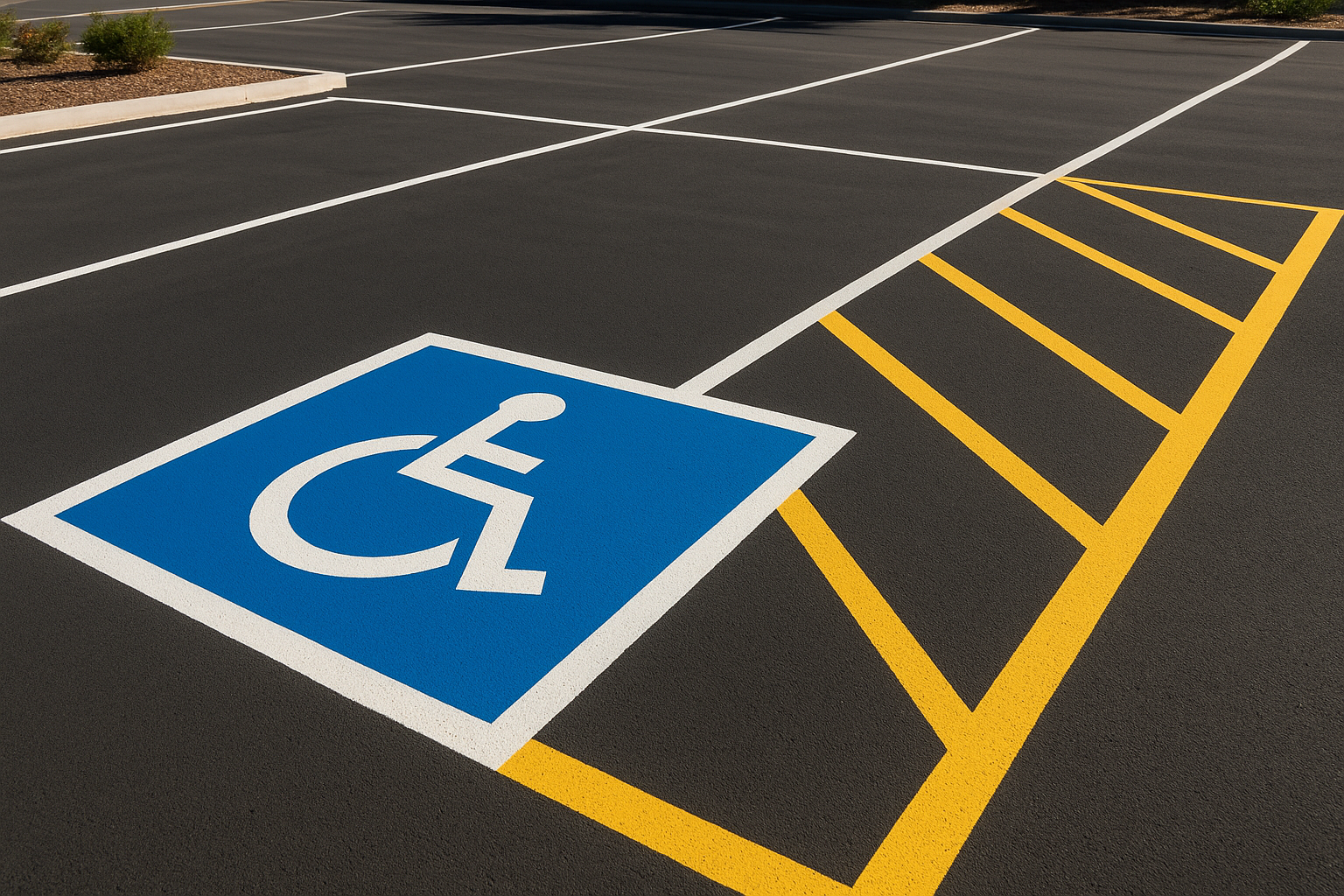
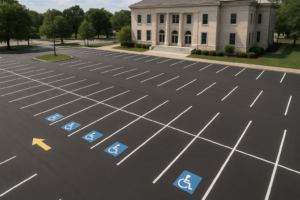
ADA-compliant handicap stall markings are a critical component of complete parking lot striping services.
Choosing the Right Paint for Long-Lasting Pavement Markings
Paint selection significantly affects how long your markings last. Therefore, it is worth understanding the asphalt striping guide before your project begins.
Water-based latex traffic paint is the most commonly used option. It dries quickly, has low VOC (volatile organic compound) emissions, and holds up well in moderate-traffic environments. Most restriping projects use this material.
Oil-based alkyd paint offers greater durability and suits high-traffic lots well. However, it takes longer to dry and requires more careful handling during application.
Thermoplastic markings are the most durable option available. They are heat-applied, creating a thick, highly reflective surface that can last five or more years in heavy-use environments. Consequently, thermoplastic is often specified for fire lanes, crosswalks, and other high-visibility areas.
Epoxy and cold-plastic coatings represent a premium tier, offering chemical resistance ideal for parking structures exposed to oil, fuel, and heavy tire traffic. Although these materials cost more upfront, they can extend the interval between restriping cycles considerably.
In hot, sunny climates, UV exposure accelerates paint degradation. As a result, choosing a higher-grade paint upfront often reduces the frequency and cost of future restriping cycles.
How Much Do Parking Lot Striping Services Cost?
Cost is one of the first questions every property owner asks. In reality, pricing depends on several variables rather than a single flat rate.
- Lot size and stall count: larger lots cost more in total but often achieve a lower price per stall
- Type of markings needed: ADA symbols, fire lane stenciling, and custom logos add labor time
- Surface condition: lots requiring crack repair or pressure washing add prep costs
- Paint type: thermoplastic and epoxy cost more upfront than water-based latex
- New layout vs. restripe: new layouts require additional measurement and planning time
As a general guideline, small lots with 20 to 30 stalls often fall in the low hundreds of dollars for a simple restripe. Mid-size commercial lots with 75 to 150 stalls typically range from the low to mid thousands, particularly when ADA and fire lane work is included. Large retail or multi-building properties can run higher, especially when a full layout redesign is involved. Because every property differs, requesting a free on-site quote remains the most accurate way to budget.
How to Choose the Best Parking Lot Striping Company
Not every provider of parking lot striping services delivers the same quality. Before signing a contract, verify the following:
- Licensing and insurance: confirm liability coverage in case of property damage or accidents
- Portfolio of completed projects: ask for before-and-after photos of similar properties
- Professional equipment: self-propelled striping machines produce cleaner, more consistent lines than handheld tools
- Knowledge of local codes: a qualified crew understands ADA rules and municipal fire lane requirements
- Written warranty: reputable companies stand behind paint adhesion and line durability
- Clear, itemized quotes: transparent pricing avoids surprise charges after the project starts
Maintenance Tips to Extend the Life of Your Pavement Markings
Fresh striping does not stay perfect forever, but a few habits can extend its lifespan considerably. Above all, routine sealcoating protects both the asphalt and the paint above it from UV damage and water infiltration.
- Sweep the lot regularly to prevent dirt and debris from grinding into painted lines
- Address oil and fuel spills quickly, since they break down paint adhesion over time
- Schedule sealcoating every two to three years to protect both asphalt and markings
- Inspect fire lanes and ADA stalls seasonally to catch fading before it becomes a compliance issue
- Repair cracks promptly so water does not undermine the base beneath painted lines
Frequently Asked Questions About Parking Lot Striping Services
What are parking lot striping services?
Parking lot striping services involve applying painted or thermoplastic line markings to asphalt or concrete surfaces to define parking stalls, traffic lanes, fire lanes, and ADA-accessible spaces. These services help organize vehicle flow, maximize capacity, and keep properties code-compliant.
How often should a parking lot be restriped?
Most parking lots need restriping every 1 to 2 years, depending on traffic volume, weather exposure, and paint type. High-traffic commercial lots may require more frequent touch-ups to maintain visibility and safety.
What is ADA-compliant parking lot striping?
ADA-compliant striping means marking handicap-accessible stalls, access aisles, and signage according to the Americans with Disabilities Act standards. Non-compliance can result in fines and significant liability for property owners.
How long does parking lot striping take to dry?
Water-based traffic paint typically dries within 30 minutes under normal conditions. However, full cure time may extend to several hours, so keeping vehicles off freshly painted areas for at least one hour is recommended.
What type of paint is used for parking lot striping services?
Professional providers of parking lot striping services commonly use water-based latex traffic paint, oil-based alkyd paint, or thermoplastic material. Water-based paint is the most widely used due to its fast drying time, low VOC content, and solid durability.
How much do parking lot striping services cost?
Costs vary based on lot size, number of stalls, type of markings, and surface condition. A basic restriping job can range from a few hundred to several thousand dollars. Requesting a free quote is the best way to get an accurate estimate for your property.
What is the difference between new striping and restriping?
New striping involves laying out a fresh parking lot layout from scratch, often on newly paved asphalt. Restriping refreshes faded or worn existing markings without changing the overall layout, making it a faster and more affordable option.
Can parking lot striping be done in hot weather?
Yes, professional striping companies routinely work in high-heat conditions. Experienced crews typically schedule work during cooler morning hours to ensure optimal paint adhesion and line quality.
What markings are required for fire lanes?
Fire lanes typically require red curb paint, “FIRE LANE – NO PARKING” stenciling on the pavement, and sometimes diagonal hash marks. Local fire codes specify exact requirements, so a knowledgeable striping company ensures full compliance.
Do I need a permit for parking lot striping?
In most cases, routine restriping does not require a permit. However, if you are redesigning the layout or adding new ADA spaces, local municipalities may require plan approval. Your striping contractor can advise you on any applicable local requirements.
What are the most common parking lot striping mistakes?
Common mistakes include using the wrong paint type, skipping surface preparation, ignoring ADA stall dimensions, and striping over wet or dirty asphalt. These errors reduce paint durability and can create compliance issues that are costly to correct.
How do I know if my parking lot needs restriping?
Signs that restriping is needed include faded or barely visible lines, driver confusion about traffic flow, difficulty identifying ADA spaces, and complaints from customers or tenants. A professional inspection can confirm whether a full restripe or spot touch-up is appropriate.
How long does a professional striping project take to complete?
Most restriping projects on small to mid-size lots finish within a single day. Larger properties or full layout redesigns with extensive ADA and fire lane work may take one to three days, depending on stall count and drying time between sections.
What should I look for when hiring a parking lot striping company?
Look for proof of insurance, a portfolio of completed projects, professional-grade equipment, familiarity with local ADA and fire codes, a written warranty, and a clear, itemized quote before committing to any contractor.
Are parking lot striping services available for small business lots?
Yes, small business lots with as few as 10 to 20 stalls can benefit from professional striping. Many contractors offer scaled pricing for smaller jobs, making code compliance and a clean appearance affordable for businesses of any size.
Conclusion: Invest in Professional Parking Lot Striping Services
In summary, parking lot striping services are a foundational element of safe, organized, and legally compliant property management. From ADA-accessible stalls to fire lane markings and directional arrows, every line on your pavement serves a purpose. Furthermore, well-maintained markings protect you from liability, improve the customer experience, and reflect positively on your business or property.
For property owners and managers in Denton, Plano, and the greater North Texas region, professional line marking is an investment that pays for itself quickly. Whether you need a complete new layout or a straightforward restripe, working with an experienced crew that understands paint chemistry, ADA law, and local fire codes ensures the job is done right the first time. Contact the team at stripespls.com today to request your free quote and take the first step toward a cleaner, safer, and fully compliant parking facility. Author: Stripes PLS — Certified pavement marking specialists. Last updated: 2026-08-11.