Blacktop striping services are professional pavement marking solutions applied to asphalt surfaces to define parking stalls, traffic lanes, fire lanes, and pedestrian walkways. Whether you manage a retail center, a school, or a medical facility, well-maintained lot markings are essential for safety, legal compliance, and a positive first impression. In fact, according to the Federal Highway Administration, clearly marked pavement significantly reduces driver confusion and pedestrian conflicts in shared-use areas.
Furthermore, faded or missing lot markings can expose property owners to liability and code violations. Therefore, understanding what goes into a quality striping job — and knowing when to call a professional — is knowledge every property manager should have.
What Are Blacktop Striping Services?
Blacktop striping services refer to the application of traffic-grade paint or thermoplastic markings onto asphalt pavement. These markings include standard parking stall lines, directional arrows, crosswalks, ADA handicap symbols, fire lane designations, and curb markings. Specifically, the term “blacktop” refers to asphalt pavement, which is the most common surface material used in commercial and residential parking lots across the United States.
According to Wikipedia’s overview of pavement marking, these markings serve critical roles in guiding drivers and pedestrians safely through shared spaces. As a result, they are governed by both federal accessibility standards and local municipal codes.
Professional contractors use specialized line striping machines to deliver precise, consistent results. Additionally, they bring knowledge of current regulations — including ADA accessibility requirements — that property owners may not be familiar with on their own.
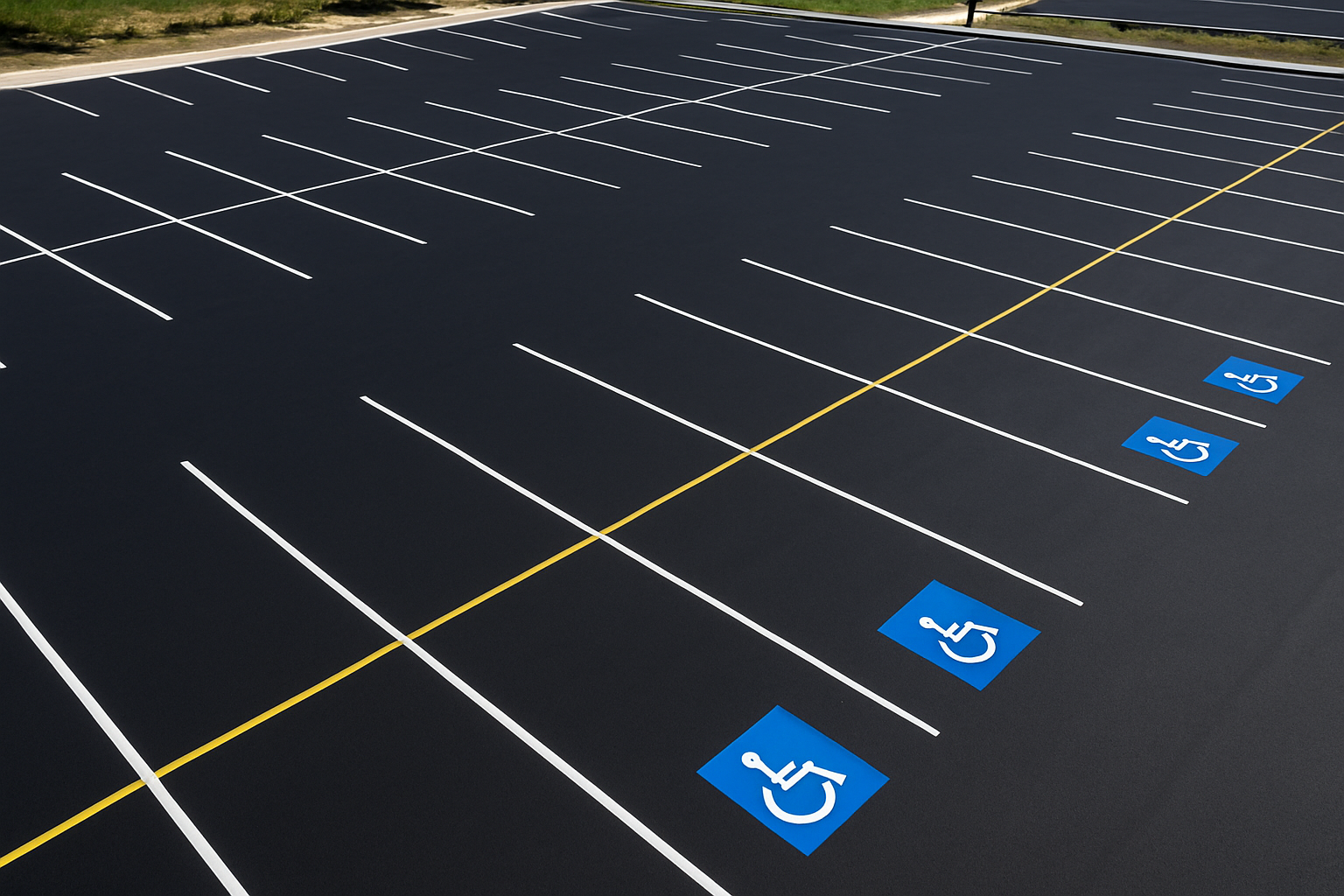
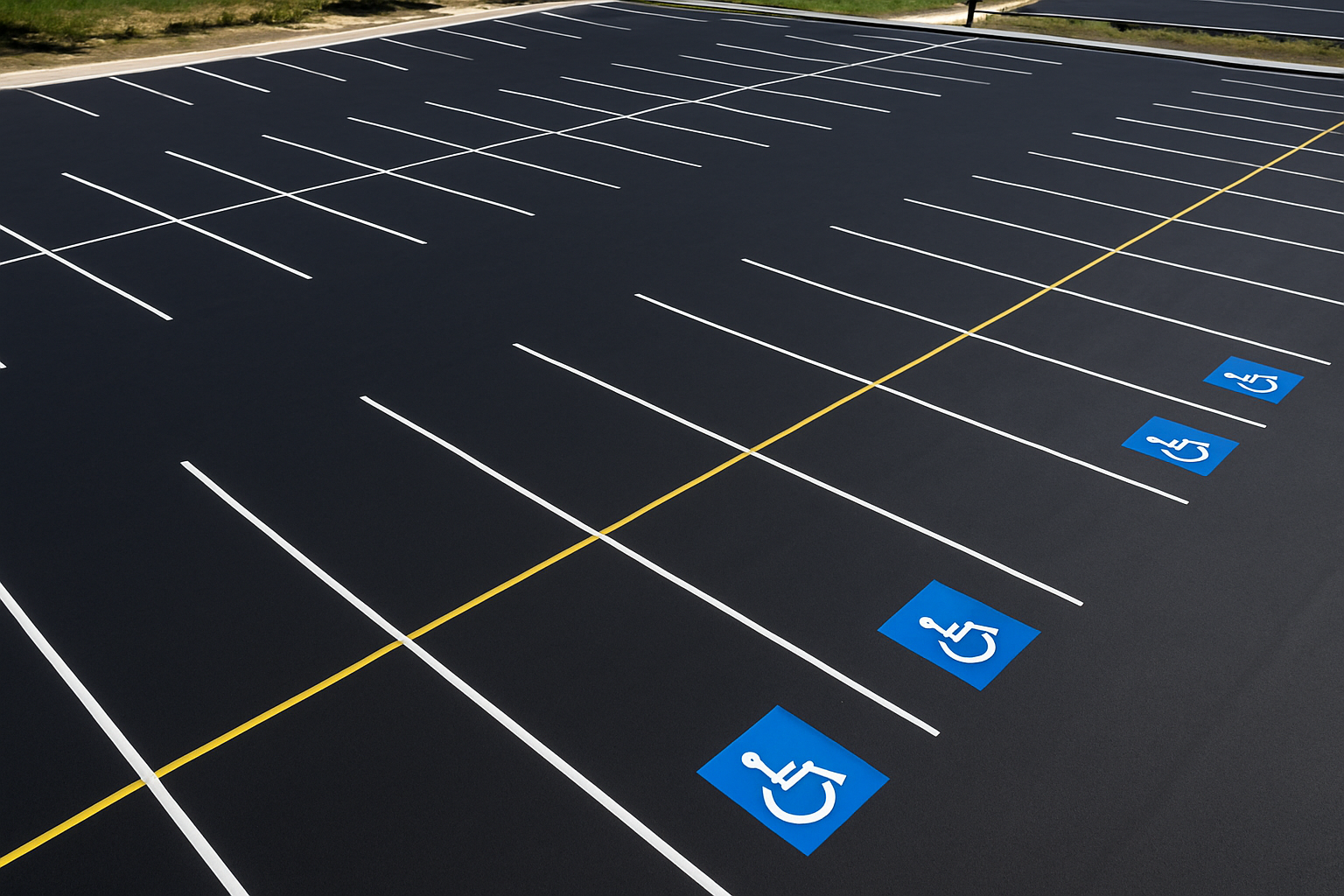
Professional blacktop striping services create clearly defined stalls, drive aisles, and ADA-compliant markings on commercial asphalt lots.
Why Parking Lot Markings Matter for Your Property
Clear, well-maintained markings do more than look professional. They directly affect how efficiently drivers navigate your lot, how many vehicles you can accommodate, and whether your property meets current legal standards. In particular, ADA compliance is non-negotiable for commercial properties — failure to maintain accessible stalls and access aisles can result in costly fines.
Similarly, fire lane markings are required by most local fire codes and the International Fire Code. Missing or faded fire lane designations can create serious safety hazards and expose property owners to liability. Therefore, staying on top of your lot’s marking condition is both a safety priority and a financial one.
Studies from the National Parking Association suggest that well-organized parking layouts can increase usable stall capacity by up to 20% compared to unmarked or poorly marked lots. Consequently, investing in professional striping often pays for itself quickly through improved space utilization alone.
Key Types of Markings Included in Professional Striping
- Standard parking stall lines — define individual spaces and drive aisles
- ADA handicap stalls and access aisles — required by federal law for commercial properties
- Fire lane markings — red curb paint and stenciled text required by fire codes
- Directional arrows — guide traffic flow and reduce congestion
- Crosswalks and pedestrian zones — improve pedestrian safety
- Reserved and specialty stalls — loading zones, EV charging, visitor parking
How to Prepare Your Lot for Asphalt Striping
Proper preparation is critical to getting the most out of any pavement marking project. Specifically, the condition of your asphalt surface directly affects how well paint adheres and how long markings last. Follow these steps to get your lot ready:
- Inspect and clean the surface. Walk the entire lot and note any cracks, oil stains, or debris. Power wash thoroughly and allow the surface to dry completely before any marking work begins.
- Measure and plan the layout. Determine stall width, drive aisle dimensions, and the location of ADA-compliant spaces and fire lanes. Use chalk lines or layout string to map out the configuration before paint is applied.
- Apply blacktop striping paint. Using a professional line striping machine, apply traffic-grade paint along the planned lines at the correct width and thickness. Ensure consistent coverage and straight lines throughout the lot. Learn more about Texas parking lot striping.
- Add specialty markings. Paint ADA handicap symbols, fire lane designations, directional arrows, and any curb markings required by local code. Verify all specialty markings meet current regulatory dimensions and color standards.
- Allow proper drying time and inspect. Keep vehicles and foot traffic off freshly painted areas for at least one hour. Once dry, inspect all lines for consistency, correct dimensions, and complete coverage before reopening the lot.

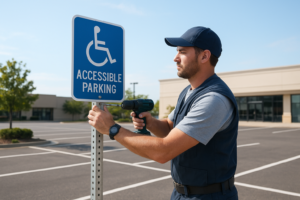
A professional-grade striping machine ensures straight, consistent lines and even paint coverage across the entire lot surface.
New Layout vs. Restriping: What’s the Difference?
Not every lot needs a full redesign. In many cases, restriping faded markings is all that’s required to restore a lot to a clean, compliant condition. Restriping follows the existing layout and simply refreshes the paint over worn lines — a faster and more affordable option for lots with a functional configuration.
However, new layout striping is necessary when a lot is being paved for the first time, when ownership changes require a reconfiguration, or when the existing layout is inefficient or non-compliant. In these situations, a contractor measures and designs the entire stall and traffic flow plan from scratch before any paint is applied.
For a deeper look at what separates a reliable contractor from a subpar one, the guide on what to look for in a reliable striping service is a valuable resource for property owners evaluating their options.
Signs Your Lot Needs Immediate Attention
It’s not always obvious when a lot has crossed the line from “worn” to “non-compliant.” However, the following warning signs typically indicate it’s time to schedule professional pavement marking work:
- Stall lines are barely visible or completely faded
- ADA symbols are worn, incorrect in size, or missing entirely
- Fire lane paint has faded or is no longer legible
- Drivers are parking inconsistently or creating their own lanes
- The lot has recently been resurfaced or seal coated
ADA Compliance and Blacktop Striping: What the Law Requires
The Americans with Disabilities Act (ADA) sets specific requirements for accessible parking spaces that every commercial property must follow. These requirements include minimum stall widths, required access aisle dimensions, proper signage placement, and the use of the International Symbol of Accessibility.
Specifically, the ADA requires that 1 in every 25 parking spaces be designated as accessible. Furthermore, van-accessible spaces require an 8-foot-wide access aisle rather than the standard 5 feet. These dimensions must be painted correctly and maintained over time — not just at initial installation.
Consequently, property owners who skip regular maintenance risk failing ADA audits and facing significant financial penalties. Professional blacktop striping contractors stay current on these requirements and ensure every accessible space meets the latest federal standards.
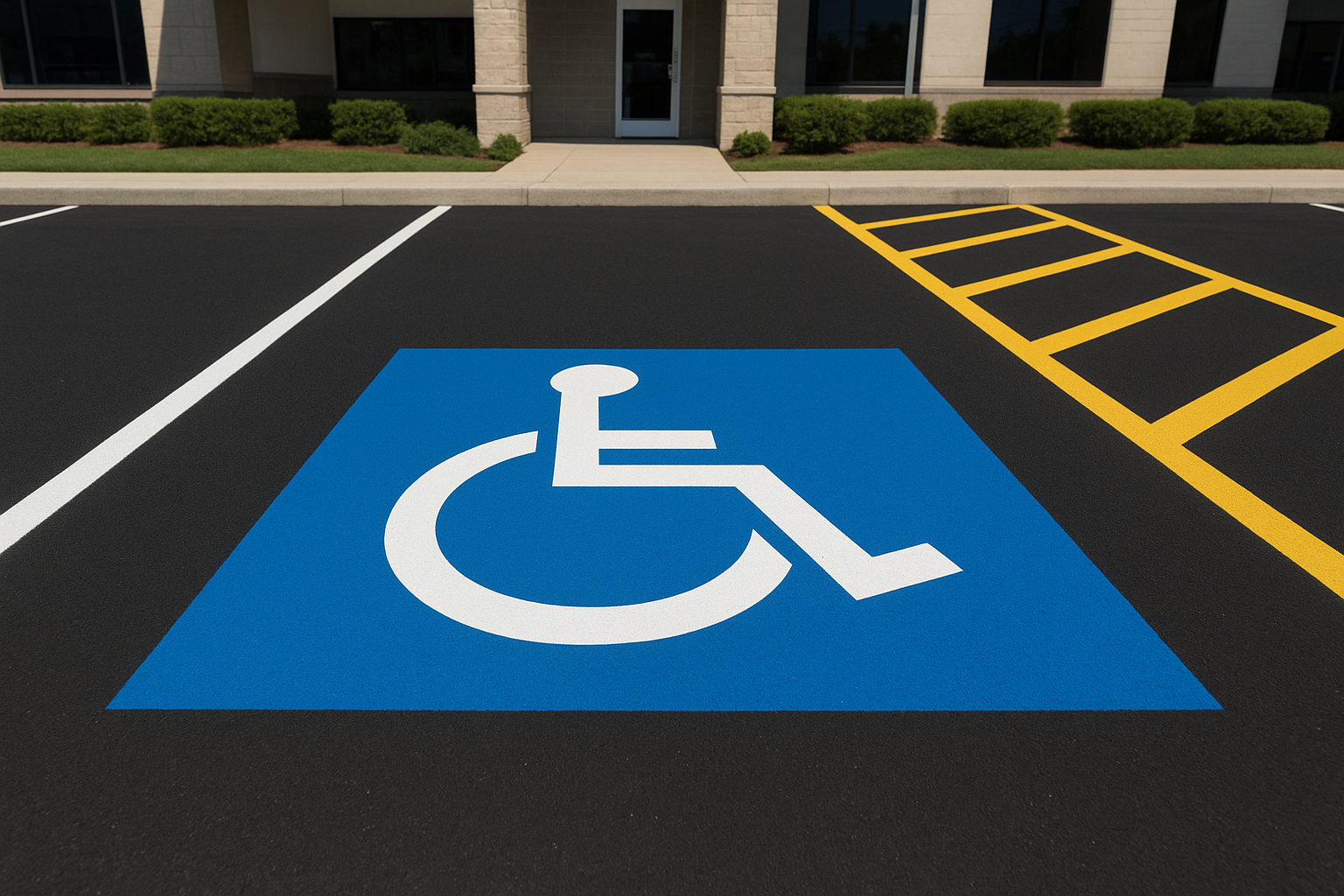
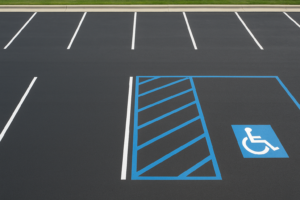
ADA-compliant handicap markings must meet precise dimensional standards and are a required element of professional blacktop striping services.
Choosing the Right Parking Lot Striping Contractor in North Texas
Not all striping contractors deliver the same quality. Therefore, property owners should evaluate several key factors before making a hiring decision. Look for contractors with demonstrated experience on lots similar in size and complexity to yours. In addition, verify that they understand current ADA standards and local fire code requirements.
For property managers, business owners, retail centers, schools, healthcare facilities, and municipal organizations throughout the Denton and Plano areas, stripespls.com offers full-service parking lot marking solutions. The company specializes in professional striping, ADA compliance solutions, and fire lane marking, bringing precision and expertise to every project across North Texas. Author: Stripes Parking Lot Services team — add a short author bio with credentials and publish a "Last updated" date on the live page to improve trust and transparency.
From new lot layouts to refreshing faded markings, the team delivers customized solutions tailored to each property’s specific needs. You can explore their complete range of work on the parking lot striping services page or contact the team directly to request a free quote.
Ready to refresh your lot? Author: Stripes PLS — licensed parking lot marking specialists serving Denton and Plano, TX.
Property owners in Denton and Plano, TX can request a free, no-obligation quote at stripespls.com. Professional blacktop striping services are available for commercial and residential properties throughout the greater North Texas region.
Frequently Asked Questions About Blacktop Striping Services
Conclusion: Invest in Professional Blacktop Striping Services
In summary, blacktop striping services are a critical investment for any property owner who wants a safe, organized, and legally compliant parking facility. From ADA-accessible stalls to fire lane designations and directional arrows, every marking plays a role in how drivers and pedestrians experience your property. Furthermore, regular maintenance prevents costly code violations and keeps your lot looking professional year-round.
Whether you need a complete new lot layout or simply want to refresh faded lines, working with an experienced local contractor makes all the difference. Property owners throughout Denton and Plano, TX can count on the team at stripespls.com for precise, durable, and code-compliant results on every project.