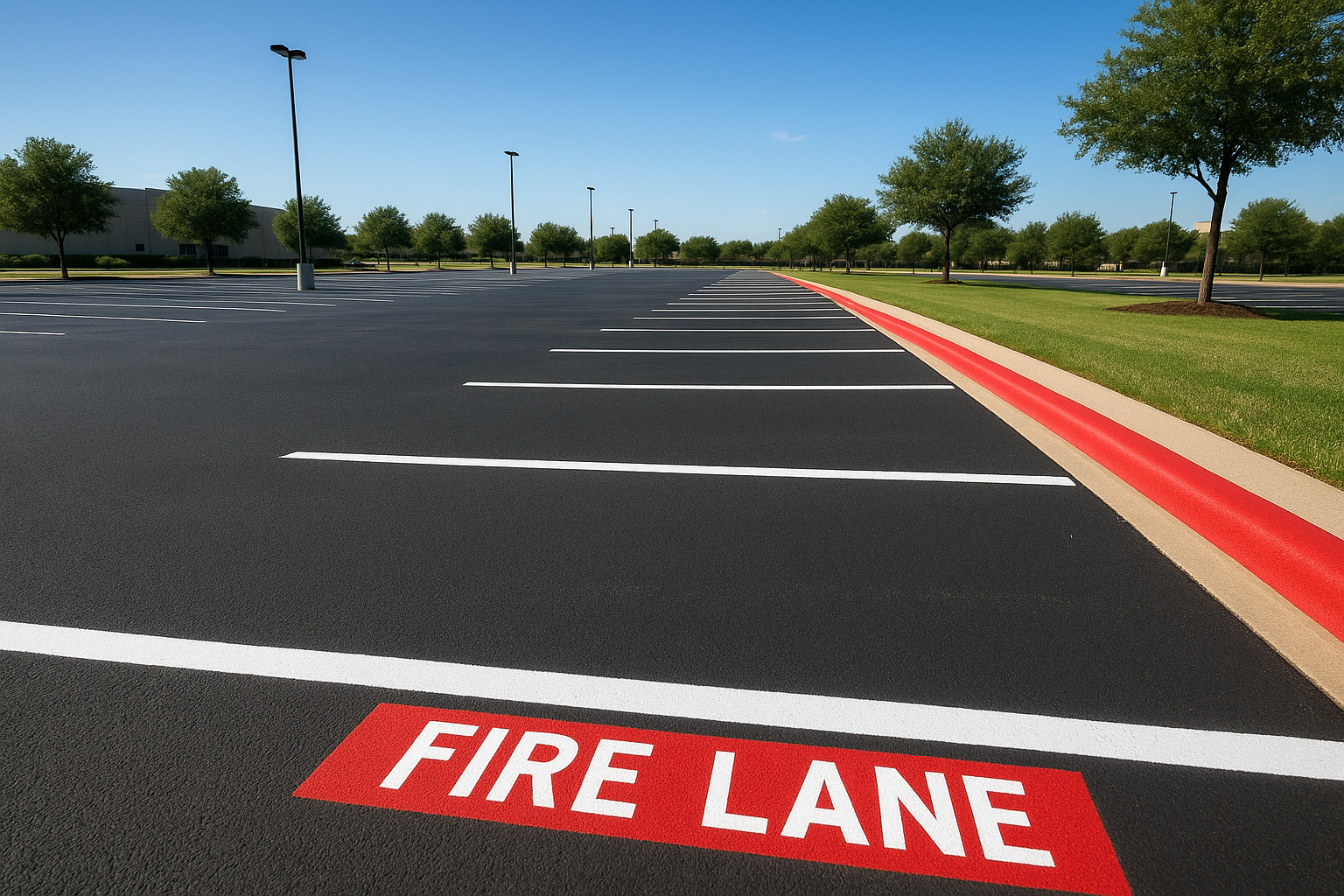
Fire lane marking services are the professional painting, stenciling, and signage work that keeps emergency vehicle access routes open on commercial properties across the country. Every parking lot, drive aisle, and building perimeter that fire trucks depend on during an emergency must stay clearly marked and completely unobstructed. When that marking fades, gets skipped, or is done incorrectly, properties fail inspections, absorb fines, and — in the worst cases — cost first responders precious seconds during a real emergency.
This guide covers everything a property owner, facilities manager, or HOA board member needs to know about hiring fire lane marking services — from code requirements and paint types to cost factors, maintenance schedules, and how to pick a contractor who won’t need to come back and redo the job in a year. In Texas, local fire codes generally follow the International Fire Code (IFC), with municipal amendments layered on top, so getting the details right matters just as much as getting the paint down.
What Are Fire Lane Marking Services, Exactly?
At its core, fire lane marking services combine three physical elements: painted curbs (usually red, sometimes yellow), stenciled pavement text reading “NO PARKING – FIRE LANE,” and posted signage at required intervals. Together, these elements create a visible, legally enforceable emergency corridor around a building.
A complete project usually includes:
- Curb painting in code-approved red or yellow traffic paint
- Pavement stenciling spelling out the fire lane designation
- Sign installation posted at the intervals your local authority having jurisdiction (AHJ) requires
- Layout verification to confirm lane width, clearance, and turning radius meet code
- Ongoing maintenance so markings stay legible between inspections
Per NFPA 1 (Fire Code), fire apparatus access roads must remain unobstructed at all times. The paint and signage are how that legal requirement becomes visible and enforceable on the ground — which is exactly why fire lane marking services are treated as a compliance necessity, not a cosmetic add-on.
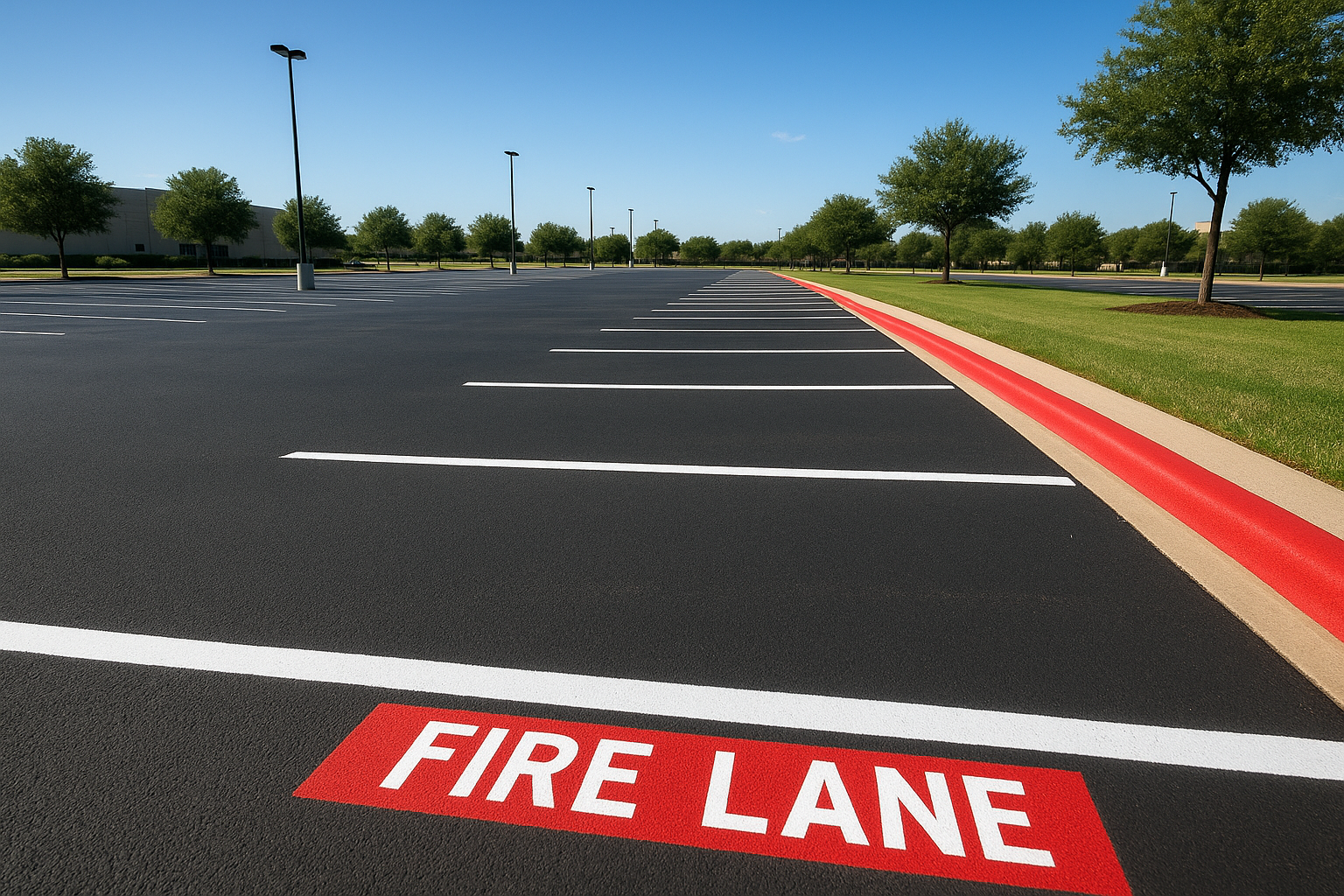
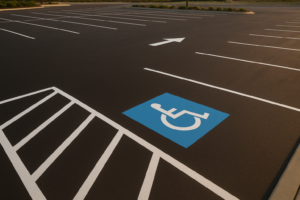
Professional fire lane marking services ensure emergency vehicle access routes stay clearly visible and code-compliant year-round.
Why Fire Lane Compliance Is Non-Negotiable
Many property owners assume faded fire lane paint is a minor cosmetic issue. In reality, it’s one of the most commonly cited violations during routine fire marshal inspections. Consequently, the financial and legal exposure adds up fast once an inspector flags it.
The Codes Behind Every Fire Lane Marking Project
Most Texas municipalities adopt the International Fire Code with local amendments layered on top. In addition, properties with accessible parking must also satisfy the ADA Standards for Accessible Design, which is why a knowledgeable contractor checks both code sets before ever loading the paint sprayer.
What Happens When Fire Lanes Aren’t Properly Marked
Penalties vary by municipality, but they typically include daily fines, mandatory reinspection fees, and — in repeat-offense cases — closure orders until violations are corrected. Furthermore, if an emergency response is delayed because a fire lane was blocked or unmarked, the property owner can face significant civil liability. Beyond the legal risk, properly marked fire lanes simply make a property safer for tenants, customers, and first responders alike.
Fire Lane Marking Requirements: Width, Clearance, Color, and Signage
While every jurisdiction has its own amendments, these baseline requirements apply across most North Texas cities:
- Minimum width: Fire lanes must generally be at least 20 feet wide to accommodate fire apparatus.
- Vertical clearance: A minimum overhead clearance of 13 feet 6 inches is typically required for fire truck height.
- Turning radius: Lanes must accommodate the wide turning radius of modern fire apparatus, which often forces wider curves at corners.
- Signage intervals: NO PARKING signs must be posted at intervals set by the local authority having jurisdiction (AHJ), often every 50 to 100 feet.
- Marking color: Red is the most commonly required curb and pavement color across North Texas; some jurisdictions permit yellow.
- Retroreflectivity: Some AHJs require reflective-grade paint so markings remain visible to headlights at night.
- ADA coordination: Fire lanes must never overlap or obstruct accessible parking spaces or routes.
Because these details vary by city, verifying requirements with your local fire marshal before any striping begins is always the smart first move.
The Fire Lane Marking Services Process: Step-by-Step
Hiring professional fire lane marking services is far simpler than most owners expect. Here’s exactly how the process typically unfolds:
- Review local fire code requirements. Contact your local fire marshal or review your municipality’s adopted version of the IFC to confirm required lane width, marking color, signage intervals, and any local amendments for your property type.
- Assess the current parking lot layout. Walk the property to identify every existing fire lane designation, noting faded markings, missing stencils, or areas that no longer meet code after resurfacing or expansion work.
- Request a free, itemized quote. Contact a licensed striping contractor experienced in fire lane compliance and request a quote covering linear footage, paint type, stenciling, and signage installation costs.
- Schedule the marking project. Coordinate work during off-peak hours — early mornings or evenings work best for busy lots — and confirm the area can be safely closed while paint cures.
- Apply markings and signage together. A qualified crew paints curbs, stencils pavement text, and installs required signage in one coordinated visit so nothing is left half-finished.
- Verify compliance after completion. Walk the lot with the contractor once paint cures, and arrange a follow-up inspection with your fire marshal if needed to confirm full compliance before reopening.
Most standard commercial fire lane marking projects wrap up in a single day. Traffic-grade paint typically dries within 30 to 60 minutes under normal Texas weather, which keeps disruption to daily operations to a minimum.
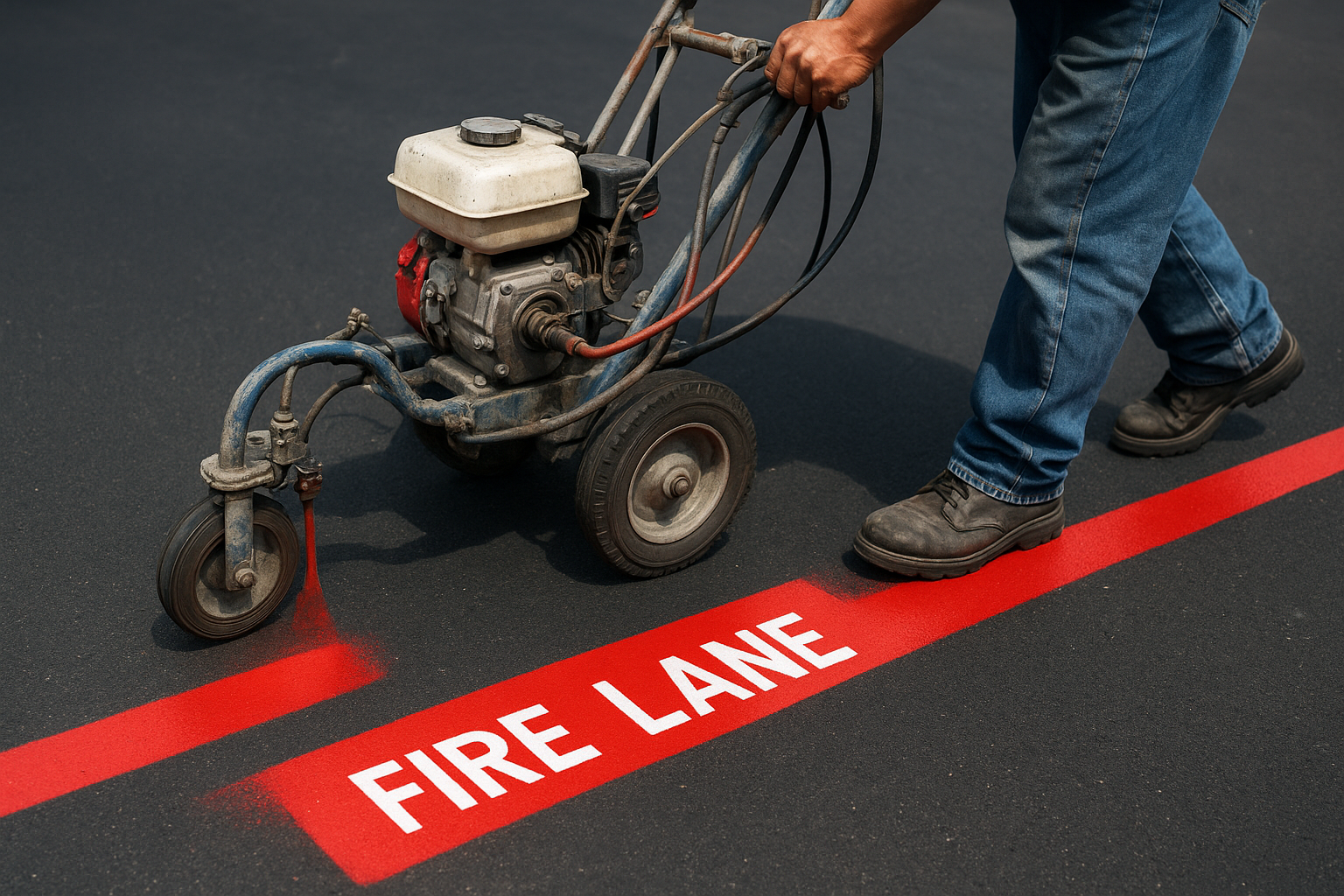
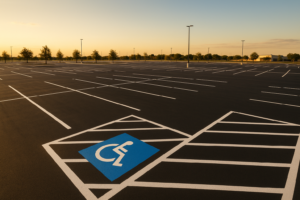
Experienced crews use traffic-grade equipment to deliver precise, long-lasting fire lane striping results.
Paint and Materials Used in Professional Fire Lane Striping
Not all paint performs the same on asphalt or concrete. Understanding the options helps property owners ask the right questions when comparing fire lane marking services quotes.
- Waterborne traffic paint: The most common choice — fast-drying, low-odor, and cost-effective for standard commercial lots.
- Chlorinated rubber paint: Highly durable and resistant to chemicals, often used on high-traffic commercial and industrial sites.
- Thermoplastic markings: Melted and applied hot, thermoplastic lasts significantly longer but costs more upfront — a good fit for lanes with heavy vehicle turnover.
- Epoxy-based paint: Extremely durable for concrete surfaces, though it requires longer cure times before reopening the lane to traffic.
In addition to paint selection, professional crews use mechanical striping machines rather than handheld rollers. As a result, lines come out straighter, edges stay crisper, and stencils read cleanly from a distance — details that matter during a fire marshal’s inspection.
DIY Fire Lane Painting vs. Professional Fire Lane Marking Services
Some property owners consider tackling fire lane painting themselves to save money. However, this approach carries real risk. Fire marshals check specific dimensions, colors, and stencil wording — mistakes here mean redoing the entire job, plus the fines that come with a failed inspection in the meantime.
Professional fire lane marking services bring code knowledge, calibrated equipment, and typically a workmanship warranty — protections a DIY paint job simply can’t match. Consequently, the modest savings from doing it yourself rarely outweigh the risk of a failed reinspection or liability exposure.
How Long Do Fire Lane Markings Last?
Lifespan depends on traffic volume, paint quality, pavement condition, and exposure to Texas heat and UV radiation. Generally, professionally applied traffic-grade paint lasts one to three years on high-traffic commercial lots.
Properties with heavy turnover — retail centers, healthcare facilities, schools — typically need restriping every 12 to 18 months. Lower-traffic lots may hold clear markings for two to three years. Regardless, annual inspection of fire lane markings is the safest habit any property manager can build.
Quick Tip: Signs Your Fire Lane Markings Need Refreshing
- Paint has faded from bright red or yellow to a dull, washed-out tone
- Stenciled text is no longer legible from 20 feet away
- Pavement cracks or resurfacing have broken up the painted area
- Drivers are regularly parking in or near the fire lane zone
- A recent fire marshal inspection cited the markings as deficient
Fire Lane Marking Services and ADA Compliance Coordination
Fire lane placement and ADA-compliant accessible parking must be coordinated carefully. The ADA Standards require accessible spaces on the shortest accessible route to the building entrance — but those spaces must never obstruct a designated fire lane.
A knowledgeable contractor accounts for both requirements at once, so your layout satisfies fire code and federal accessibility standards simultaneously. This integrated approach prevents costly layout revisions later — a detail worth confirming before any crew starts painting.
What Do Fire Lane Marking Services Cost?
Pricing varies by property, but several factors consistently drive the final quote:
- Linear footage of curb requiring paint
- Number of stenciled pavement markings needed
- Paint type — waterborne, chlorinated rubber, thermoplastic, or epoxy
- Signage quantity and post installation
- New layout design versus a straightforward restripe of existing lines
- Mobilization costs, which shrink when bundled with a full parking lot striping project
Requesting a detailed, itemized quote from a local provider is the most reliable way to get an accurate number for your specific property.
Choosing the Right Fire Lane Marking Services Provider in North Texas
Not every parking lot striping company has real experience with fire lane compliance work. When comparing providers, look for:
- Local code familiarity — requirements in Denton, Plano, and Dallas can differ in meaningful ways
- Traffic-grade paint formulated specifically for pavement durability, not standard exterior paint
- Full-service scope including stenciling, curb painting, and signage — not just basic line striping
- Documented workmanship warranty covering fading or peeling within a set timeframe
For a detailed look at fire lane compliance work in the Dallas-Fort Worth region, the fire lane striping and compliance solutions page offers guidance specific to North Texas properties. For a broader view of professional line marking across the metro, the DFW expert line marking services guide is a useful resource. When you’re ready to move forward, you can request a free quote directly through the fire lane marking page.
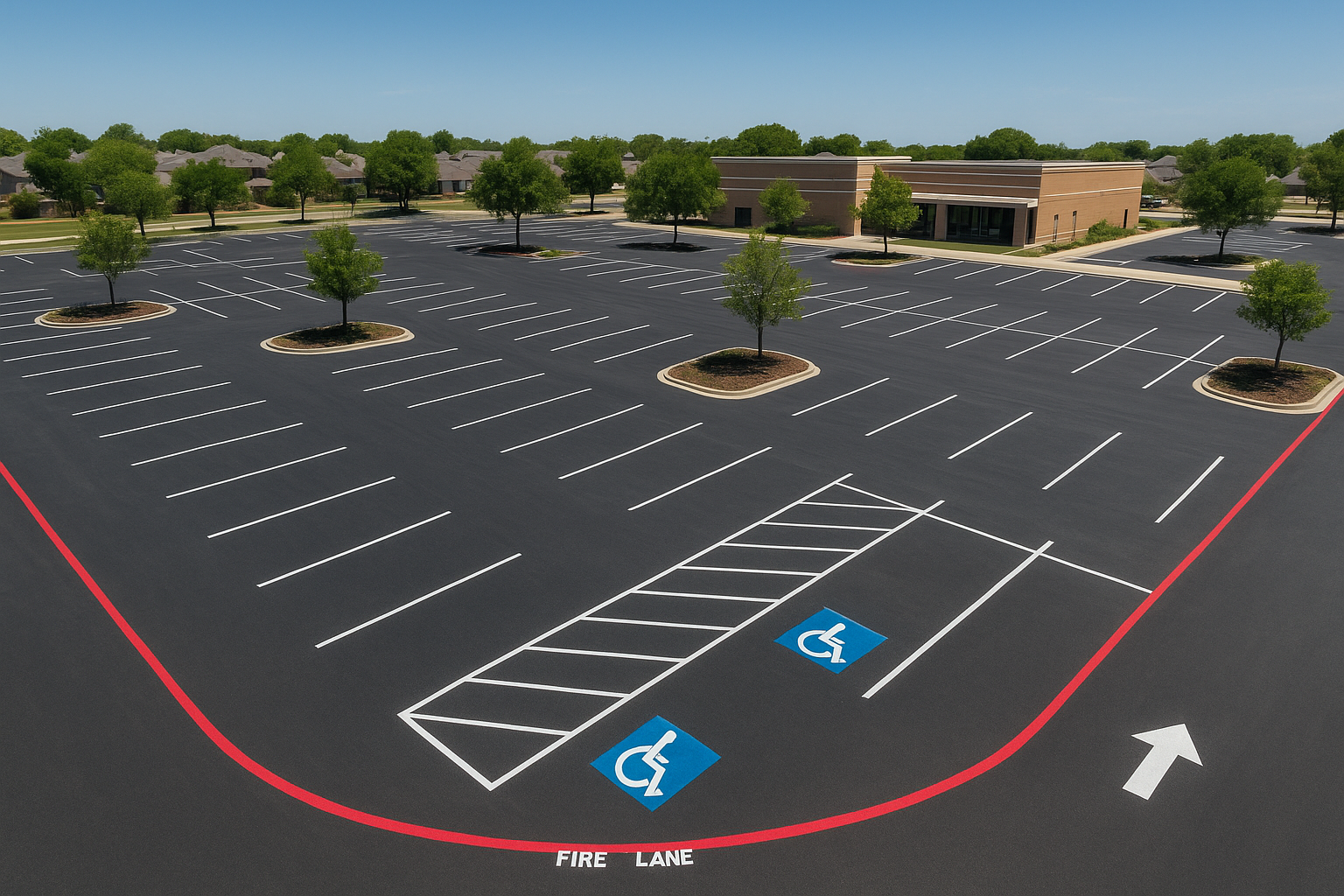
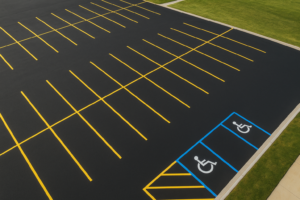
A well-marked parking lot combines fire lane designation, ADA compliance, and clear directional markings for maximum safety and organization.
Combining Fire Lane Striping with Full Parking Lot Services
Many property managers bundle fire lane marking with a broader parking lot striping project. A complete lot refresh typically adds ADA-compliant handicap stall markings, directional arrows, crosswalks, curb painting, and numbered stalls alongside the fire lane work.
Bundling reduces mobilization costs and ensures every marking on the property uses the same paint for a uniform, professional appearance. Furthermore, handling everything in one visit means fewer disruptions to tenants and customers. For property owners in the Denton and Plano areas, stripespls.com offers comprehensive marking solutions — explore the full range on the services page.
Frequently Asked Questions About Fire Lane Marking Services
What are fire lane marking services?
Fire lane marking services involve painting visible red or yellow curb markings, stenciling NO PARKING – FIRE LANE text, and installing signage along designated emergency access routes so fire trucks can reach a building without obstruction.
Are fire lanes legally required for commercial properties?
Yes. Most commercial properties must maintain clearly marked fire lanes under local fire codes and the International Fire Code. Non-compliance can trigger fines, failed inspections, and added liability.
How wide does a fire lane need to be?
The IFC typically requires a minimum of 20 feet, though local jurisdictions in Texas may add stricter requirements. Always confirm with your local fire marshal before striping begins.
What color are fire lane markings?
Red is the most common and widely recognized color, though yellow is permitted in some jurisdictions depending on local code.
How often should fire lane markings be repainted?
Most fire lane markings need refreshing every 12 to 24 months depending on traffic volume and weather exposure. Faded markings are a top violation cited during inspections.
What paint is used for fire lane striping?
Contractors typically use waterborne traffic paint, chlorinated rubber, thermoplastic, or epoxy — all engineered for pavement durability far beyond standard exterior paint.
Can I paint my own fire lane instead of hiring a contractor?
Technically yes, but DIY painting carries real risk of failing inspection due to incorrect dimensions, wording, or paint durability. Professional fire lane marking services include code knowledge and warranty protection DIY work doesn’t offer.
How much do fire lane marking services cost?
Cost depends on linear footage, stencil count, paint type, and whether it’s a new layout or restripe. Requesting an itemized quote is the most accurate way to estimate your project.
Do fire lane markings require signage too?
Yes. Most jurisdictions require NO PARKING – FIRE LANE signs posted at regular intervals alongside the painted markings to fully satisfy code.
Can fire lane marking be combined with ADA compliance work?
Yes. Many providers bundle fire lane striping with ADA-compliant handicap markings and directional arrows, reducing overall project cost and keeping the lot visually consistent.
How long does a fire lane marking project take?
Most standard commercial lots are completed in a single day, with paint drying in 30 to 60 minutes under normal Texas weather conditions.
Who is responsible for maintaining fire lane markings?
The property owner or manager is generally responsible for maintaining fire lane markings under local fire code, not tenants or local authorities.
Conclusion: Protect Your Property with Professional Fire Lane Marking Services
In summary, fire lane marking services are a legal necessity and a core part of any commercial property’s safety infrastructure — not a cosmetic upgrade. From understanding code requirements to choosing the right paint and the right contractor, every step matters. Properties across North Texas that invest in professional, code-compliant fire lane marking services protect tenants, reduce liability, and keep facilities organized and inspection-ready. Whether you need a fresh layout, routine restriping, or a full compliance review, partnering with an experienced local contractor remains the most reliable path to results that pass inspection and last.