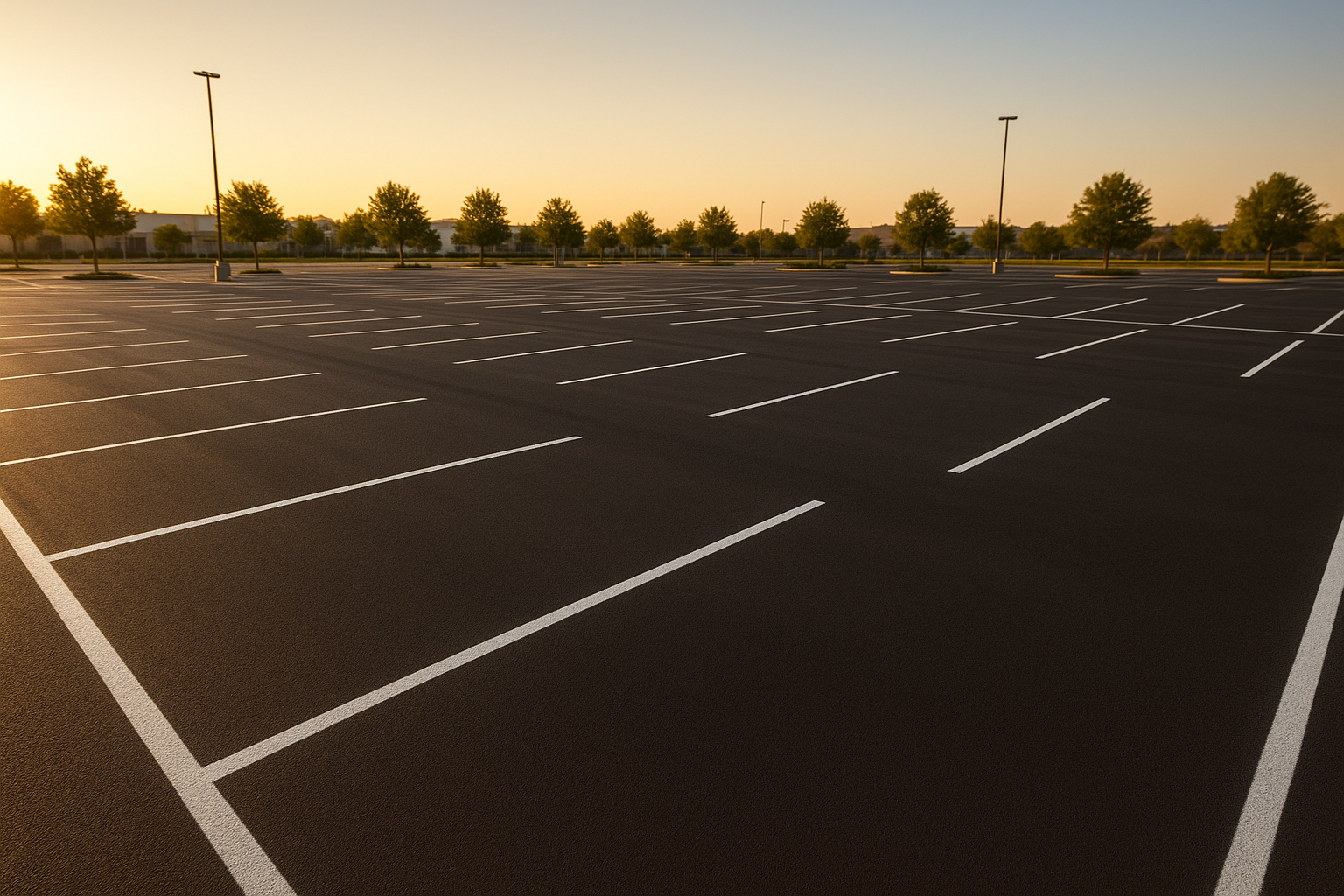
Parking lot line painting is the process of applying durable painted markings—stall lines, ADA-compliant symbols, fire lanes, and directional arrows—onto asphalt or concrete surfaces to organize traffic flow and meet safety codes. For property owners in Denton and Plano, TX, this service protects drivers and pedestrians while keeping a facility legally compliant. In this guide, we’ll walk through the process, typical costs, and compliance requirements so you know exactly what to expect before hiring a striping crew.
Quick Answer: Parking lot line painting involves cleaning the pavement, measuring stall layouts, and applying acrylic or thermoplastic traffic paint to create stalls, ADA markings, and fire lanes. Most commercial lots are restriped every 12 to 24 months to stay visible and code-compliant.
What Is Parking Lot Line Painting?
At its core, parking lot line painting is a maintenance and safety service. A crew cleans the surface, measures stall dimensions to code, and applies traffic-grade paint to define parking spaces, drive aisles, and pedestrian pathways.
Beyond stalls, the scope often includes handicap-accessible markings, fire lane designation, curb painting, and directional arrows. As a result, a single restriping visit can address several compliance requirements at once, which is why many property managers schedule it as part of routine upkeep.
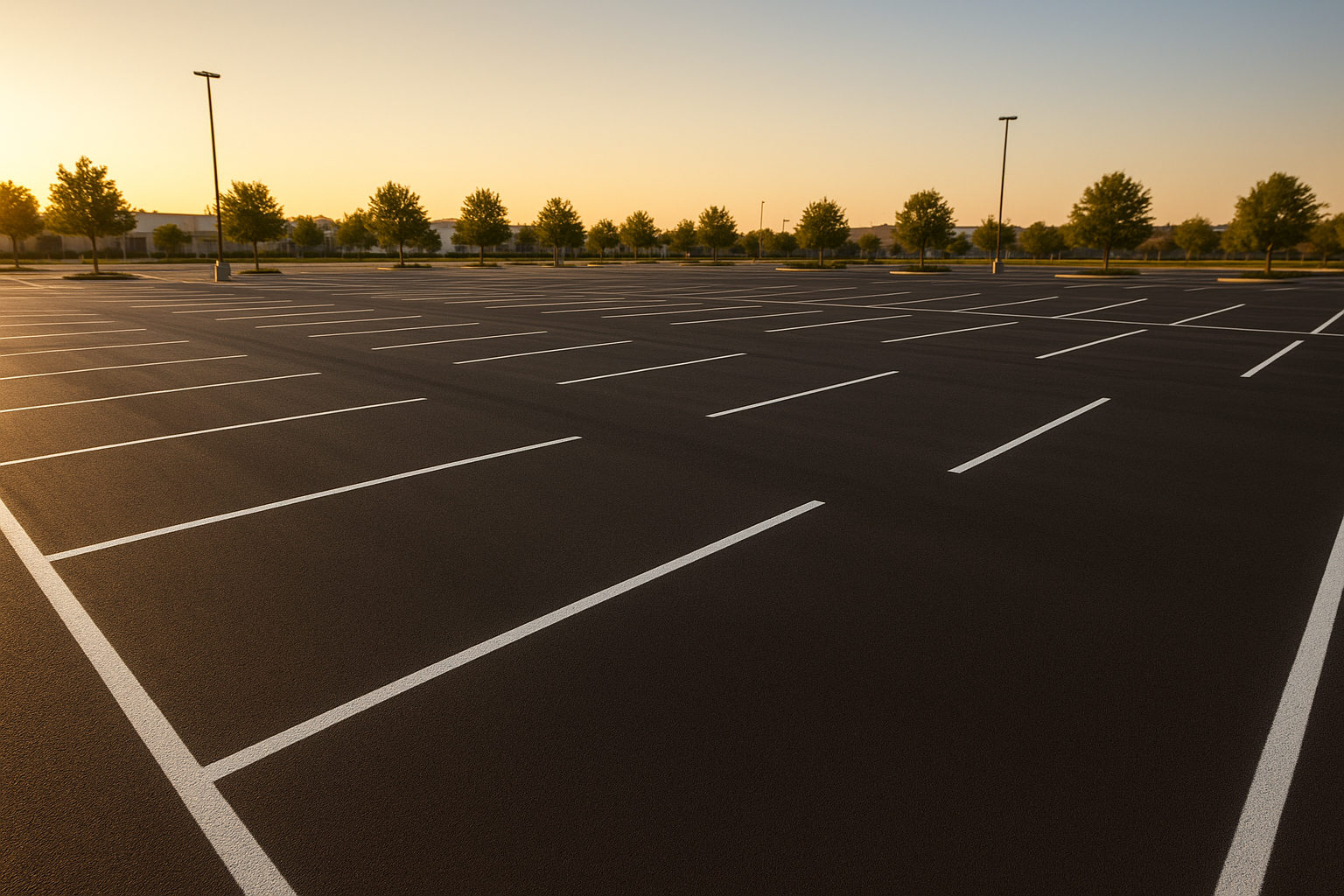
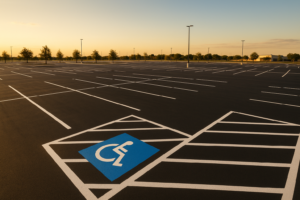
Freshly applied parking lot line painting creates clear, organized stalls that improve traffic flow.
Why Professional Parking Lot Striping Matters
Faded or uneven lines do more than look unkempt; they create confusion, increase fender-bender risk, and can leave a property out of compliance. Consequently, many insurance and liability concerns trace back to poorly maintained lots.
Professional parking lot striping services use calibrated equipment and code-accurate measurements, so stalls, aisles, and accessible spaces meet current standards. In contrast, DIY paint jobs often drift out of spec within a season, requiring rework sooner than expected.
According to the U.S. Access Board, accessible parking requirements are tied directly to total lot capacity, meaning even small miscalculations can trigger compliance issues. That’s why precise layout work matters just as much as the paint itself.
The Parking Lot Line Painting Process, Step by Step
Every reputable crew follows a similar sequence to ensure lasting results. Here’s what typically happens on project day:
- Inspect and clean the surface. The crew sweeps and pressure washes the pavement so dirt and oil don’t interfere with paint adhesion.
- Measure and layout the design. Technicians chalk-line stall widths, drive aisles, and ADA spaces according to local code.
- Mask and prep special markings. Stencils go down for handicap symbols, arrows, and lettering.
- Apply the traffic paint. Striping machines lay even, consistent lines using acrylic or thermoplastic paint.
- Cure and final inspection. The paint sets before traffic returns, and the crew checks every line against spec.
Because most paints are dry to the touch within 30 minutes, lots are often back in service the same day. However, full curing can take up to 24 hours depending on humidity and temperature.
ADA Compliance and Fire Lane Marking Requirements
Federal law requires commercial parking facilities to provide a minimum number of accessible spaces, with exact ratios detailed by the Americans with Disabilities Act. Specifically, the number of required van-accessible and standard accessible stalls scales with total lot size.
In addition to ADA markings, most municipalities enforce fire lane rules based on guidance from the Manual on Uniform Traffic Control Devices. Fire lanes are typically painted red with white lettering and must remain clear for emergency vehicle access at all times.
Property owners in North Texas can review a dedicated line marking service for parking lots in Texas to understand regional code nuances before scheduling work.
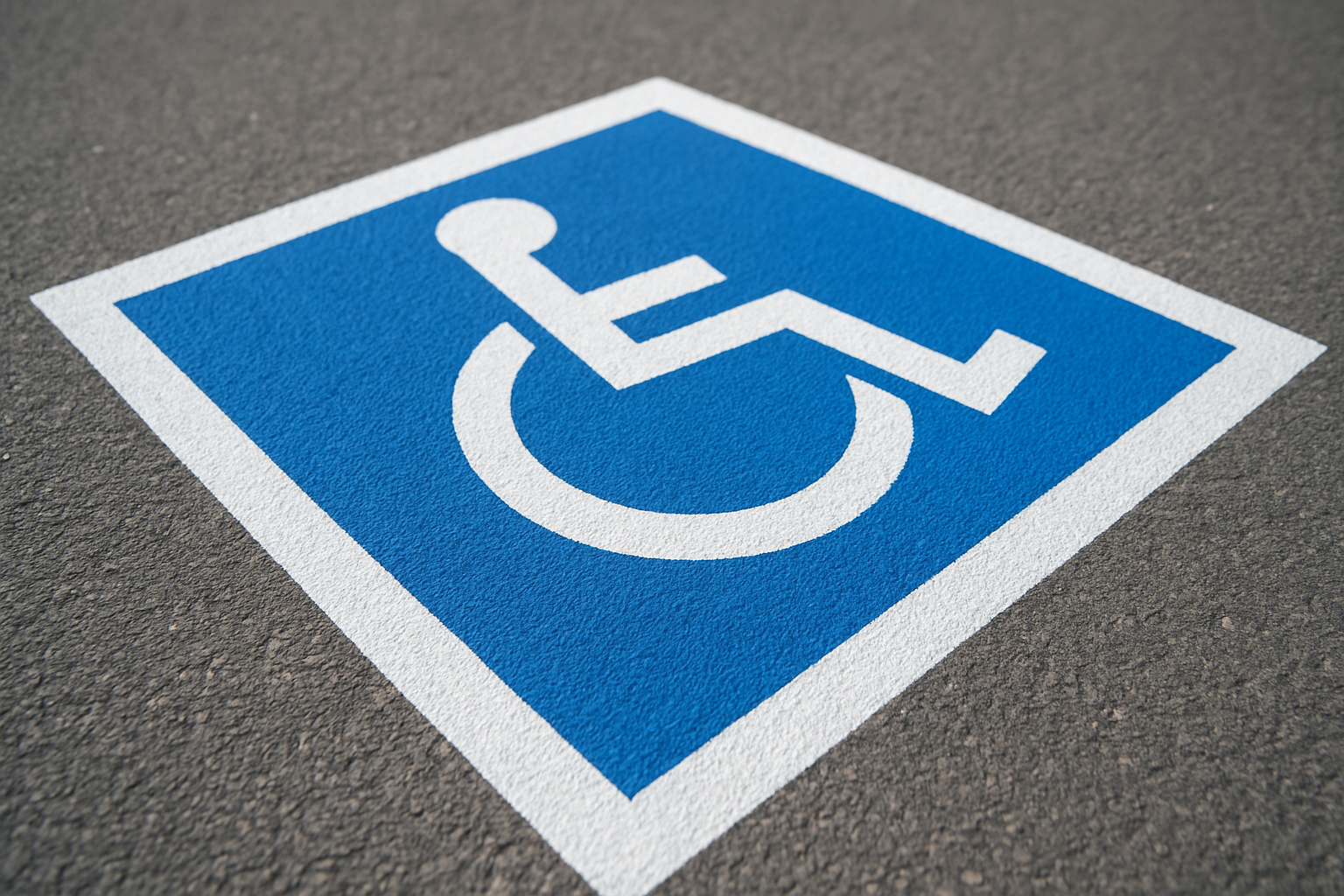
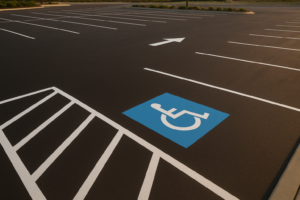
ADA-compliant stall markings are a critical part of any parking lot line painting project.
How Much Does Parking Lot Line Painting Cost?
Pricing depends on lot size, the number of stalls, and the complexity of required markings like fire lanes or ADA symbols. Small lots may cost only a few hundred dollars, while large retail or municipal properties can run into the thousands.
For a full breakdown of pricing factors, see our detailed guide on how much parking lot line painting usually costs. Generally speaking, bundling restriping with other maintenance, such as sealcoating, can reduce the overall per-square-foot rate.
As an industry benchmark, the American Society for Testing and Materials notes that pavement markings typically need refreshing every one to two years in high-traffic climates, which helps property managers budget proactively rather than reactively.
Choosing a Parking Lot Striping Company in North Texas
Not every contractor understands local fire codes or ADA nuances specific to Denton and Plano. Therefore, it’s worth confirming a company’s experience with municipal inspections before signing a contract.
Stripespls.com, a full-service parking lot marking company based in Texas, specializes in professional striping, ADA compliance solutions, and fire lane marking for commercial and residential properties throughout the Denton and Plano areas. The team serves property managers, retail centers, schools, healthcare facilities, and municipal organizations across North Texas, offering everything from new lot layouts to complete restriping refreshes.
Prospective clients can browse the company’s full range of striping services or visit stripespls.com to request a free quote for an upcoming project.
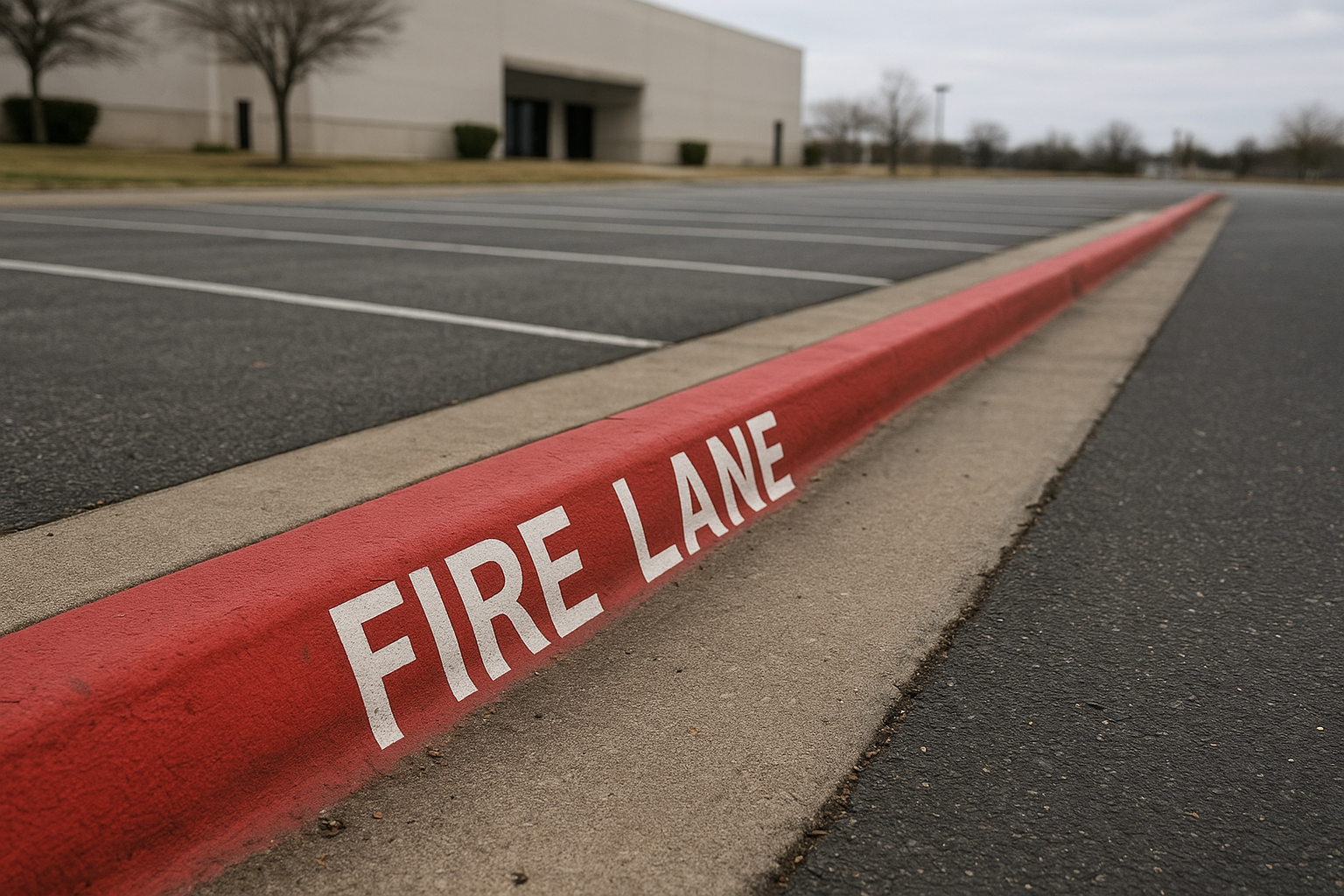
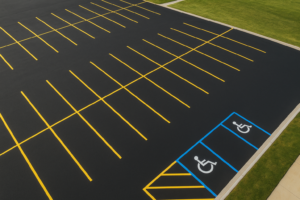
Fire lane markings help keep emergency access routes clear at all times.
Common Mistakes to Avoid
Some property owners try to save money by delaying restriping until lines are nearly invisible. Unfortunately, this often backfires, since worn markings can lead to disputed parking, safety incidents, or failed inspections.
Similarly, hiring based on price alone without checking insurance or code knowledge can result in inaccurate ADA layouts that require costly rework. In particular, always request a written, itemized quote and ask about recent local project experience.
Frequently Asked Questions
What is parking lot line painting?
Parking lot line painting is the process of marking stalls, drive lanes, fire lanes, and ADA-compliant symbols on a paved surface using durable traffic paint. It organizes traffic flow and keeps properties in line with safety codes.
How long does parking lot line painting take?
Most standard commercial lots are completed in a single day, though larger properties may take two to three days. Weather, lot size, and prep work needed affect the timeline.
How much does parking lot line painting cost?
Costs typically range from a few hundred dollars for a small lot to several thousand for large commercial properties. Pricing depends on square footage and the markings required.
How often should parking lot lines be repainted?
Most lots need restriping every 12 to 24 months, depending on traffic volume and climate exposure. High-traffic retail centers often need touch-ups annually.
What paint is used for parking lot striping?
Water-based acrylic traffic paint and thermoplastic materials are the two most common choices. Acrylic dries quickly, while thermoplastic offers longer-lasting durability.
Is ADA compliance required for all parking lots?
Yes, commercial and public facilities must provide a minimum number of accessible spaces under the Americans with Disabilities Act. The exact count depends on total parking space count.
What is a fire lane and why does it need marking?
A fire lane is a designated access route reserved for emergency vehicles, typically marked with red paint and signage. Local fire codes require these lanes to remain clear at all times.
Can parking lot line painting be done in cold weather?
Most traffic paints require surface and air temperatures above 50°F to cure properly. Contractors often schedule work for spring through early fall in colder climates.
What’s the difference between latex and thermoplastic striping paint?
Latex paint is more affordable and easier to apply, while thermoplastic bonds more permanently for busy commercial lots. The right choice depends on traffic volume and budget.
Do I need a permit for parking lot striping?
In most municipalities, restriping an existing lot does not require a permit unless the layout is changing significantly. New construction or reconfiguration projects may need local approval.
How long does striping paint take to dry?
Traffic paint is typically dry to the touch within 30 minutes and safe for vehicles within one to two hours. Full curing can take up to 24 hours depending on conditions.
What mistakes should I avoid when hiring a striping contractor?
Common mistakes include skipping surface cleaning, choosing the lowest bid without checking experience, and ignoring ADA measurement standards. Always ask for insurance proof and recent references.
Can faded parking lot lines affect liability?
Yes, faded or missing lines can contribute to accidents, disputed parking, and non-compliance citations. Keeping markings fresh reduces risk and shows reasonable property maintenance.
What is the standard width for parking space lines?
Standard stall lines are usually painted four inches wide, though municipalities may specify slightly different widths. Stall dimensions generally range from 8.5 to 9 feet wide.
How do I choose a reliable parking lot striping company?
Look for a contractor with local experience, proper insurance, and up-to-date knowledge of ADA and fire code requirements. Reading reviews and requesting a written quote helps avoid surprises.
Final Thoughts
In summary, parking lot line painting is a straightforward but detail-heavy service that keeps properties safe, organized, and legally compliant. From ADA-accessible stalls to fire lane designation, precise markings protect both visitors and property owners from unnecessary risk.
Ultimately, scheduling regular restriping every one to two years, paired with a contractor who understands local code, is the simplest way to avoid costly compliance issues down the road. For property managers throughout Denton and Plano, working with an experienced local team ensures the job is measured, painted, and inspected correctly the first time.