Non-slip parking lot markings are specially formulated line striping materials designed to reduce slip-and-fall hazards on crosswalks, ramps, and pedestrian paths within commercial parking areas. For property owners across Denton, Plano, and the greater North Texas region, these markings do more than direct traffic — they protect visitors and help facilities meet safety codes. In this guide, we’ll explain exactly what non-slip parking lot markings are, how they’re applied, and why nearly every commercial property should have them.
Whether you manage a retail center, a school campus, or a healthcare facility, understanding this simple upgrade can prevent injuries and reduce liability. Let’s start with the basics before moving into materials, cost, and the step-by-step application process.
What Are Non-Slip Parking Lot Markings?
Non-slip parking lot markings are pavement striping products — usually thermoplastic, epoxy, or paint — blended with anti-skid additives such as silica sand or ground glass beads. Unlike standard striping paint, these materials create a textured surface that grips foot traffic even when wet.
In particular, this texture matters most on crosswalks, curb ramps, and ADA-accessible paths where foot traffic is heaviest. Because the added grit sits slightly above the coating’s surface, it channels water away from shoes rather than letting it pool into a slick film, similar in concept to the road surface marking textures used on public roadways.
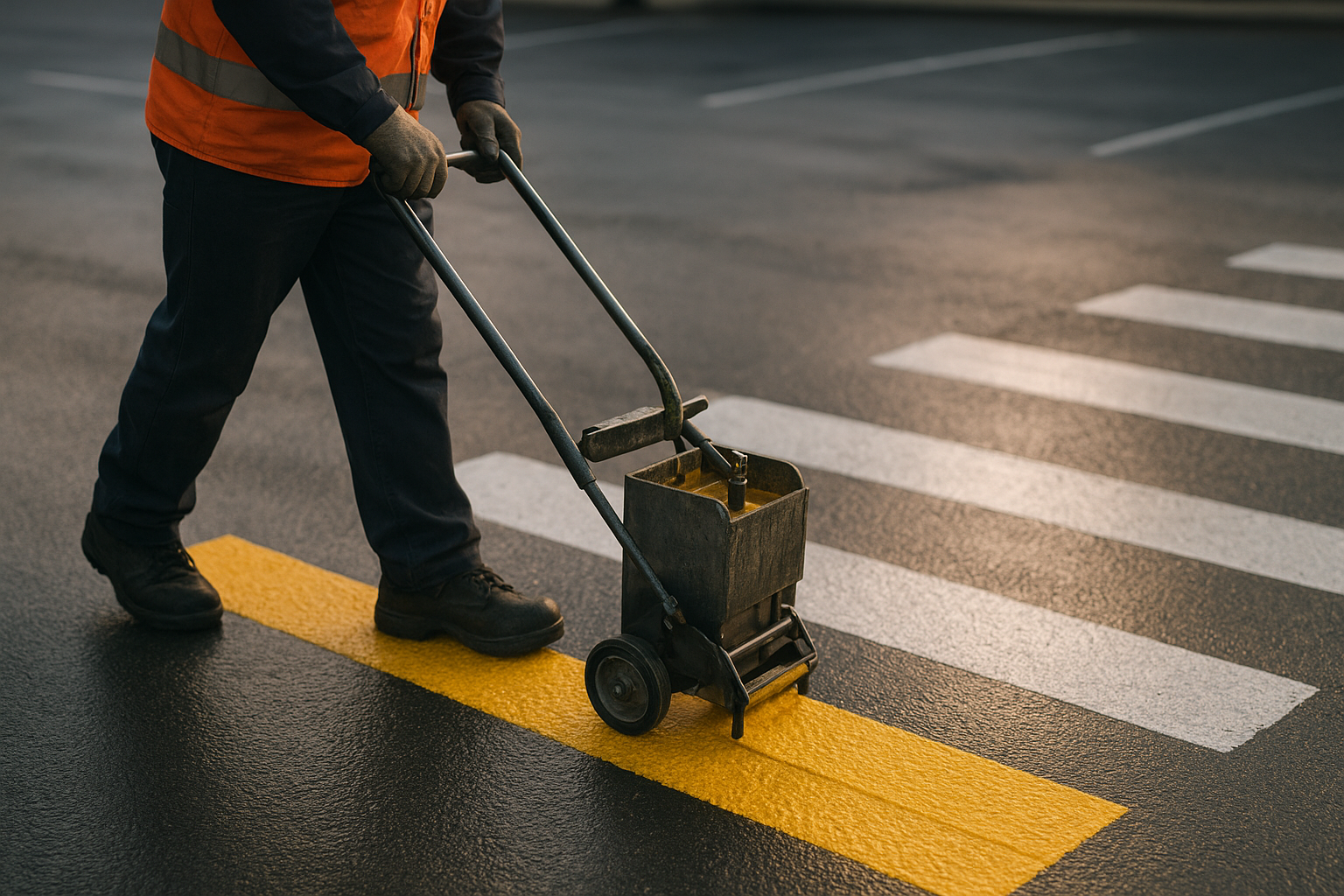
Applying non-slip parking lot markings requires a textured additive layered into the base coating.
Why Slip-Resistant Pavement Markings Matter for Property Safety
Slip-and-fall incidents remain one of the most common liability claims property owners face. According to the Occupational Safety and Health Administration (OSHA), slips, trips, and falls account for a significant share of nonfatal workplace injuries every year in the United States.
Consequently, adding slip-resistant pavement markings to high-traffic pedestrian zones is a straightforward way to reduce that risk. In addition to safety, well-maintained markings signal to visitors, inspectors, and insurance adjusters that a property is actively maintained and code-conscious.
Quick takeaway: Non-slip parking lot markings combine standard line striping paint or thermoplastic with an anti-skid aggregate, creating a textured, safer surface for pedestrians in wet or high-traffic areas.
Materials Used for Anti-Slip Line Striping
Three materials dominate this space: epoxy, thermoplastic, and traction-additive paint. Epoxy cures at ambient temperature and bonds tightly to asphalt or concrete, making it a popular mid-range choice. Thermoplastic, on the other hand, is heat-applied and generally holds up longer under heavy vehicle and foot traffic.
Standard traffic paint can also be upgraded with an anti-skid additive broadcast into the wet coating. For example, many property managers choose this route for smaller budgets since it delivers meaningful traction improvement without the higher material cost of full thermoplastic installation.
How Non-Slip Parking Lot Markings Support ADA Compliance
The Americans with Disabilities Act (ADA) requires accessible routes to be stable, firm, and slip-resistant. While the ADA doesn’t specify a particular additive, non-slip parking lot markings are a practical way to satisfy that standard on ramps, curb cuts, and van-accessible stalls.
Above all, pairing slip-resistant texture with properly sized handicap stalls and signage creates a complete, defensible compliance package. Our team’s professional parking lot striping services incorporate both elements as standard practice for Texas properties.
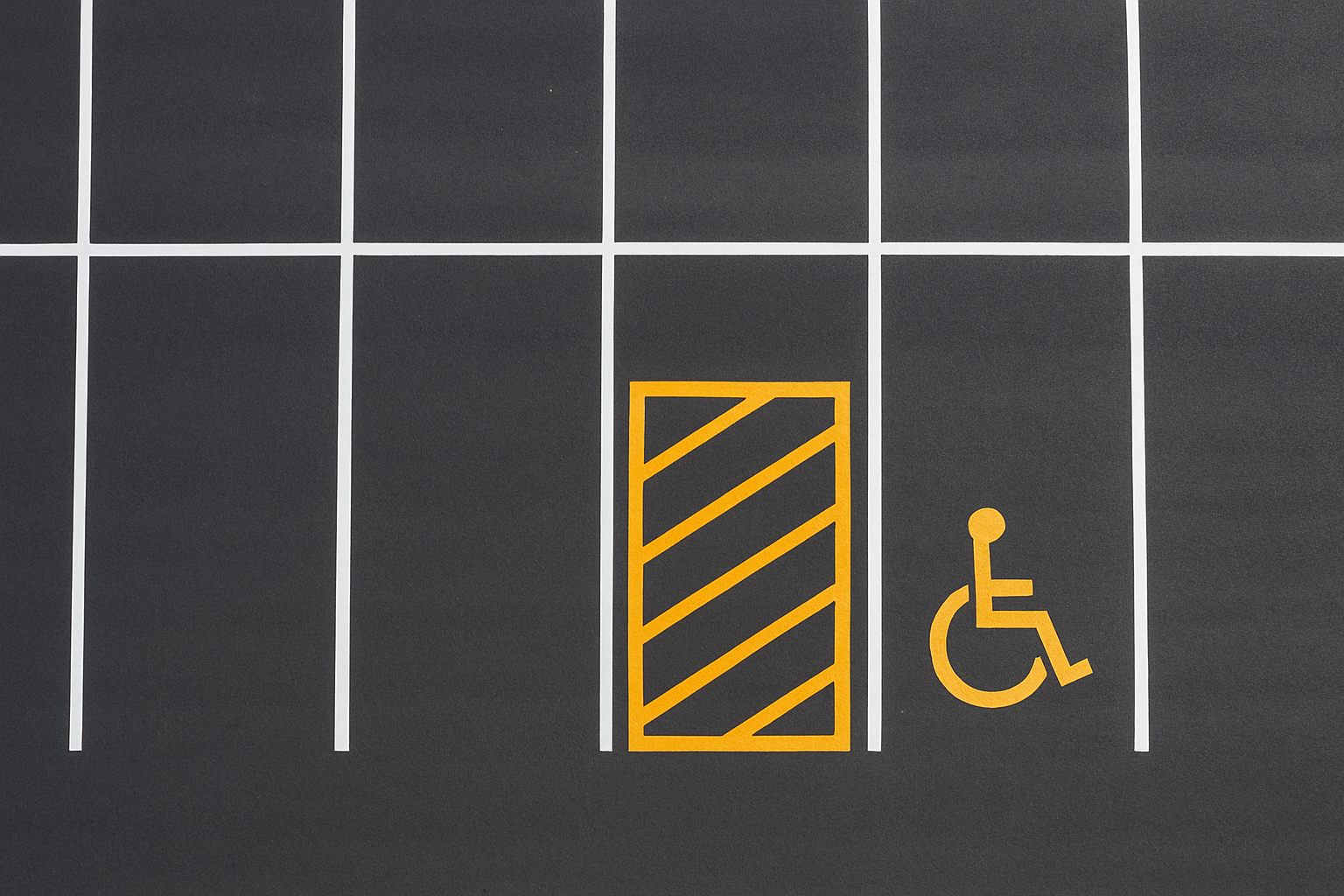
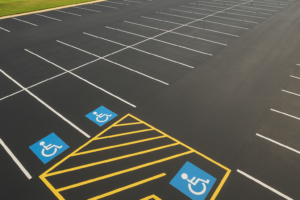
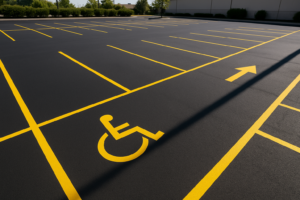
ADA-compliant stalls often pair handicap symbols with textured, slip-resistant coatings.
Step-by-Step: How Professionals Apply Non-Slip Markings
Installing non-slip parking lot markings correctly requires more than just paint and a spray gun. Here is the general process a qualified crew follows:
- Clean and prep the surface. Crews sweep, pressure wash, and degrease the pavement so the new coating bonds properly.
- Measure and lay out lines. Technicians mark stall widths, drive aisles, and ADA zones before striping begins.
- Apply the base striping material. A striping machine lays down an even coat of epoxy, paint, or thermoplastic.
- Add the anti-skid additive. While the base coat is still workable, aggregate is broadcast over the line for texture.
- Cure, inspect, and reopen the lot. The markings cure fully before the property reopens to traffic.
Similarly, fire lane marking and directional arrows are often completed during the same visit, since crews are already set up with equipment and materials on-site.
Common Mistakes to Avoid With Slip-Resistant Striping
Even experienced crews can run into trouble if they rush surface prep. In contrast to a quick paint refresh, non-slip coatings require thorough cleaning; otherwise, the additive won’t bond and will wear away within months.
Another frequent mistake is using too little aggregate, which leaves the surface only slightly textured. As a result, the markings look correct at first but fail to provide real traction once foot traffic wears them down. For a deeper look at vetting contractors, this guide on what to know before you hire a striping contractor covers red flags to watch for.
How Much Do Non-Slip Parking Lot Markings Cost?
Pricing for non-slip parking lot markings depends on lot size, material choice, and how much of the property needs the upgrade. Generally, thermoplastic with aggregate costs more upfront than epoxy or paint-based options, but it lasts significantly longer.
Therefore, the most reliable way to budget accurately is to request a site-specific quote rather than rely on a generic per-square-foot estimate. Property owners can request a free quote from stripespls.com to get exact numbers for their lot.
Choosing a Parking Lot Striping Company in Texas
Not every striping company offers slip-resistant material, so it’s worth confirming this capability before hiring. Specifically, ask whether the crew has experience matching additive ratios to your local climate, since Texas humidity and heat behave differently than a drier region.
stripespls.com serves property managers, retail centers, schools, healthcare facilities, and municipal clients throughout Denton and Plano with striping, ADA compliance solutions, and fire lane marking. For a broader overview of the full striping process, see this complete lot striping guide, and for a checklist of vetting questions, review what to consider when hiring a line marking service.
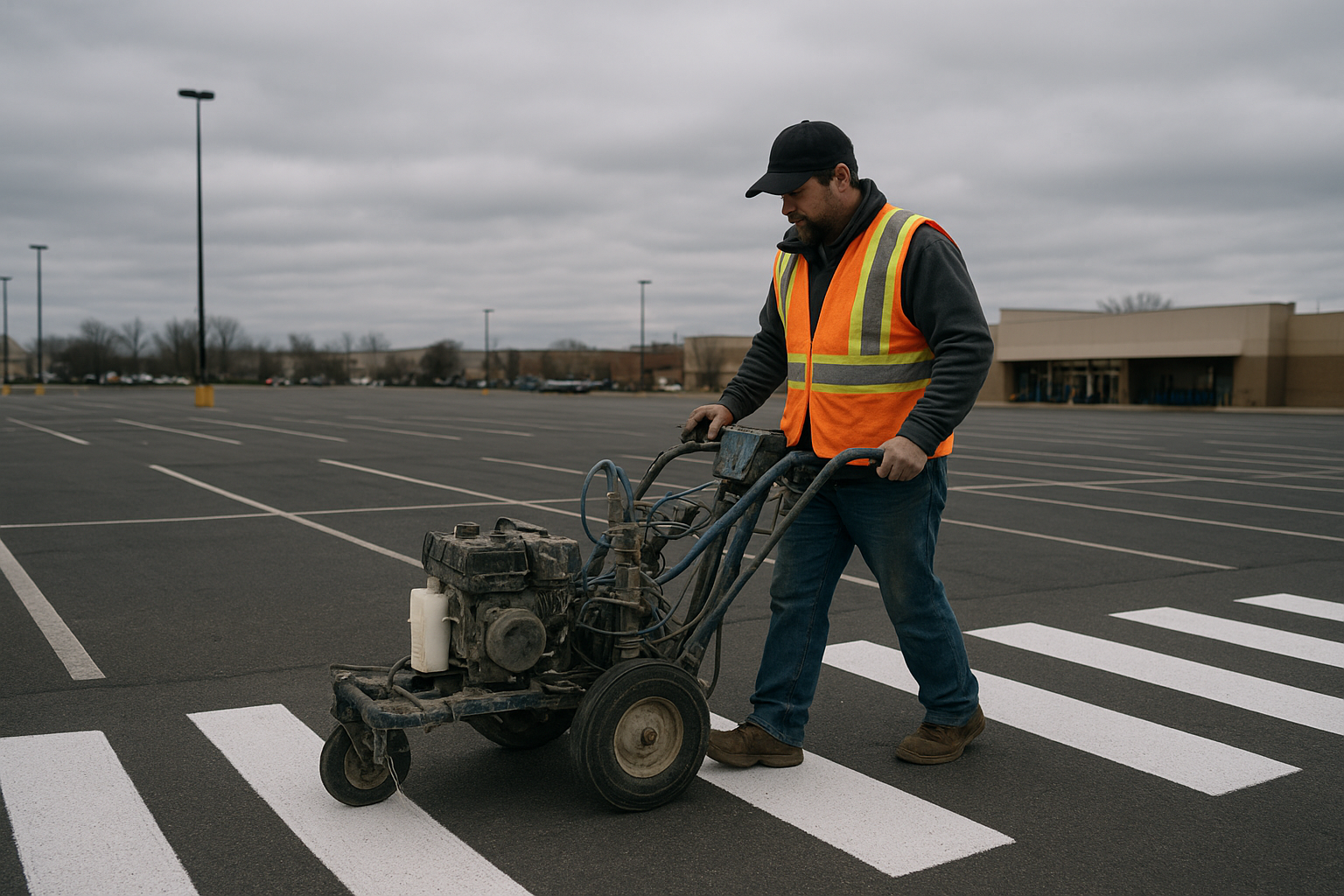
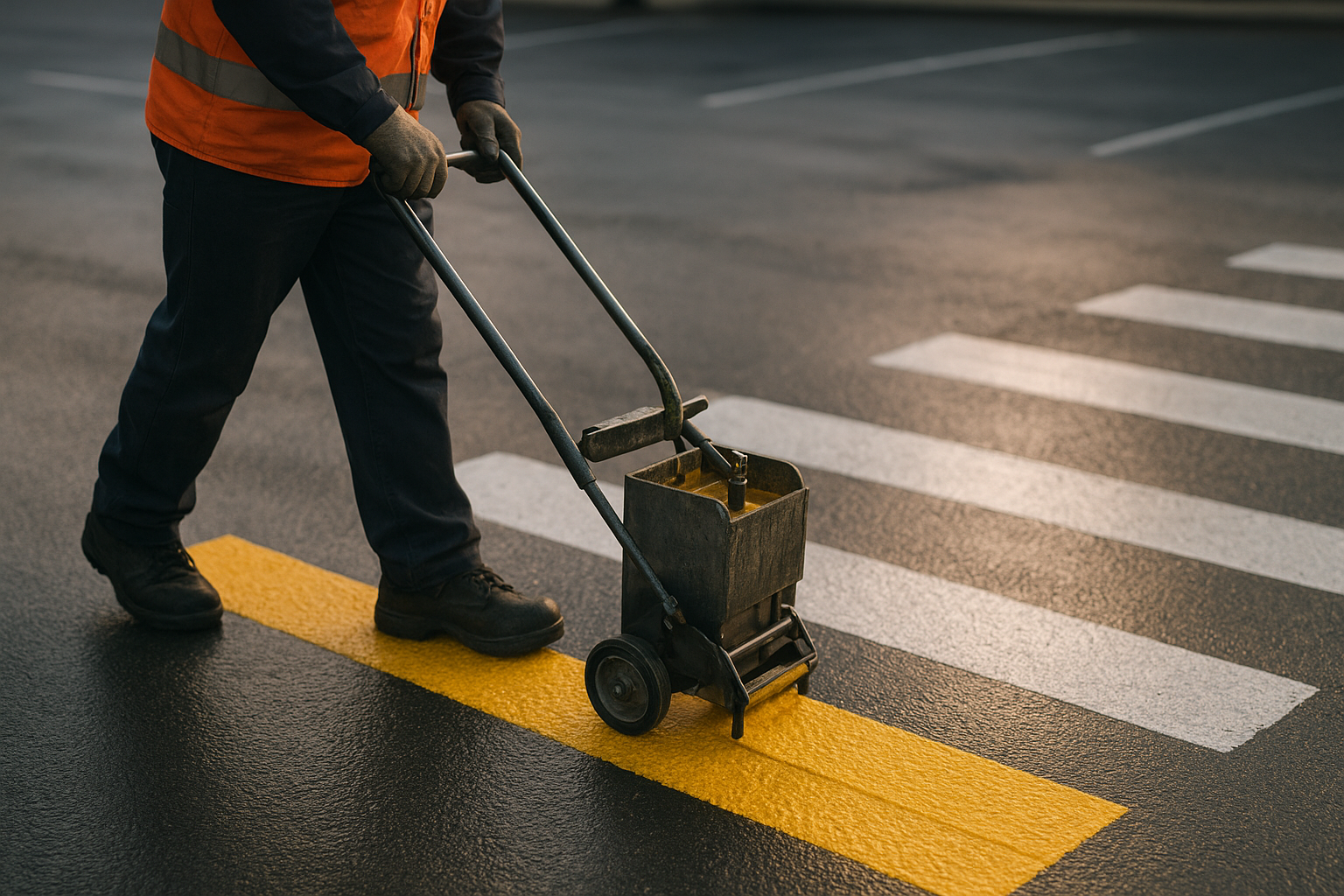
A professional striping machine ensures even coverage before the anti-skid additive is applied.
Frequently Asked Questions About Non-Slip Parking Lot Markings
What are non-slip parking lot markings?
Non-slip parking lot markings are line striping materials mixed with anti-skid additives like silica sand or glass beads that create a textured, high-traction surface. They are commonly used on crosswalks, ramps, and pedestrian walkways to reduce slip-and-fall risk.
Why do parking lots need slip-resistant pavement markings?
Slip-resistant pavement markings reduce fall hazards in high-traffic pedestrian zones, especially when surfaces are wet, icy, or covered in debris. They also lower a property owner’s liability exposure after an injury claim.
How much do non-slip parking lot markings cost?
Costs typically run higher than standard striping because of the added anti-skid material, often ranging from a modest per-linear-foot premium to a flat project fee depending on lot size. Requesting a free quote is the most reliable way to know exact pricing.
Are non-slip markings required for ADA compliance?
The ADA does not mandate a specific texture additive, but it does require accessible routes to be stable, firm, and slip-resistant. Many property owners choose non-slip parking lot markings on ramps and crosswalks to meet this standard reliably.
What materials are used to make striping slip-resistant?
Common options include thermoplastic blended with aggregate, epoxy paint with silica sand, and specialty traction additives mixed into standard striping paint. Each material offers a different balance of durability, texture, and cost.
How long do non-slip parking lot markings last?
Thermoplastic-based non-slip markings can last three to five years under normal traffic, while paint-based versions typically need reapplication every one to two years. Climate, traffic volume, and surface prep all affect longevity.
Can non-slip markings be applied to existing faded striping?
Yes, faded lines can be restriped with slip-resistant material once the old surface is cleaned and properly prepped. Skipping surface prep is one of the most common reasons anti-slip coatings fail early.
Do non-slip markings work in rain and cold weather?
Yes, that is their primary purpose. The textured surface channels water and provides traction that smooth paint cannot, which is especially valuable during North Texas storms and occasional icy mornings.
What is the difference between epoxy and thermoplastic non-slip striping?
Epoxy cures at ambient temperature and bonds well to asphalt and concrete, while thermoplastic is heat-applied and generally more durable under heavy traffic. Both can be formulated with anti-skid additives for slip resistance.
Where should non-slip parking lot markings be prioritized?
Priority areas include ADA ramps, crosswalks, curb cuts, and any pedestrian path near building entrances. These are the spots where foot traffic is heaviest and slip risk is highest.
How often should a parking lot be inspected for slip hazards?
A visual inspection every three to six months helps catch worn or faded markings before they become a liability. Property managers in high-traffic retail or healthcare settings often inspect monthly.
What common mistakes reduce the effectiveness of anti-slip striping?
The most frequent mistakes are skipping surface cleaning, applying too little aggregate, and choosing the wrong material for the climate. As a result, the coating can peel, smooth out quickly, or fail to bond properly.
Final Thoughts on Non-Slip Parking Lot Markings
In summary, non-slip parking lot markings are a practical, cost-effective way to protect pedestrians, support ADA compliance, and reduce liability across commercial properties. From material selection to proper surface prep, every step in the process affects how long the markings last and how well they perform in wet weather.
Property owners throughout Denton, Plano, and the surrounding North Texas region who want durable, code-compliant results can reach out to stripespls.com for a free, no-obligation quote on non-slip parking lot markings tailored to their property’s specific traffic patterns and layout.