Striping for event parking is the process of painting temporary, semi-permanent, or fully durable pavement markings that organize high-volume vehicle traffic during festivals, concerts, sporting events, church gatherings, and other large occasions. Because event crowds can arrive within a narrow window, a lot without clear markings turns into gridlock fast. In North Texas, where everything from Friday night football to weekend festivals draws thousands of cars, property managers in Denton and Plano increasingly hire professional striping crews to handle these sudden surges safely. This guide covers exactly how striping for event parking works, what high-traffic venues need to get right, what it costs, and how to plan it from start to finish.
Unlike a retail center that stripes once and forgets about it for years, event venues face a moving target. Therefore, a fairground, school stadium, or church campus may need a simple layout for a weekday gathering and a completely different plan for a season-opening game that draws ten times the traffic. Understanding the difference between everyday striping and event-specific striping is the first step toward avoiding a chaotic parking experience.
What Is Striping for Event Parking?
Striping for event parking is the practice of marking temporary or semi-permanent lines, arrows, and stall boundaries across a lot so it can safely absorb a short, intense burst of traffic. Unlike standard commercial striping, event striping must often flex from one occasion to the next. As a result, contractors frequently combine temporary paint, cones, or removable tape with permanent lines so the layout can be adjusted quickly between events without repaving the entire surface.
Why Professional Striping for Event Parking Matters at High-Traffic Venues
Above all, clear markings prevent the confusion that causes bottlenecks at entrances and exits. When drivers see exactly where to go, they spend less time circling and more time parked. In particular, this matters for venues near busy roadways in Denton and Plano, where backed-up traffic can spill directly onto public streets and create hazards well beyond the property line. High-traffic venues carry a heavier burden than a quiet office park, and that burden falls squarely on the quality of the striping plan.
The Safety Risks of Faded or Missing Event Parking Lines
Faded or missing lines are more than a cosmetic problem. Specifically, drivers who cannot see stall boundaries tend to park at odd angles, block drive aisles, or drift into pedestrian paths without realizing it. Consequently, worn striping is one of the leading contributors to fender-benders and pedestrian near-misses in crowded lots. During an event, when dozens of cars arrive within minutes of each other, even minor confusion multiplies quickly into a serious hazard.
Liability, Fines, and Compliance Exposure
Beyond safety, a poorly striped lot exposes venue owners to real liability. For example, missing ADA-accessible stalls or blocked fire lanes can trigger fines from local code enforcement and, worse, slow down emergency responders if something goes wrong. In contrast, a professionally striped lot documents that the property owner met accessibility and fire-code obligations, which matters if an incident is ever reviewed by an insurer or inspector.
Turning Extra Capacity Into Extra Revenue
Furthermore, well-marked lots let event staff manage flow with fewer traffic cones and less personnel. According to industry parking-design estimates from the International Parking Institute, a well-designed striping layout can increase usable parking capacity by up to 20 percent compared to an unmarked lot. That difference can mean dozens of extra vehicles fitting safely into the same footprint, which for a ticketed event translates directly into more parking revenue and fewer turned-away guests.
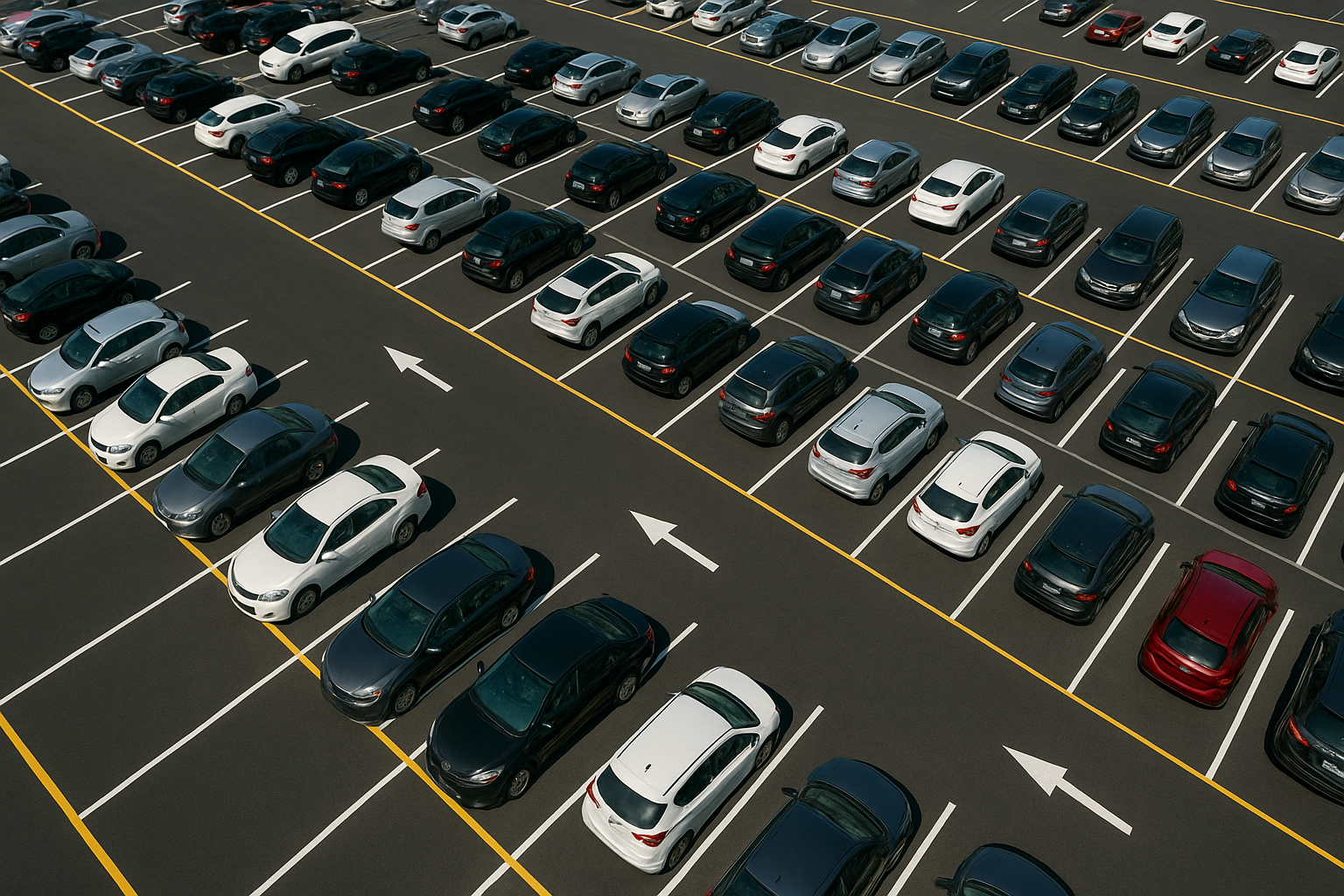
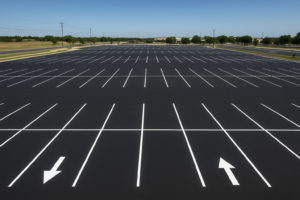
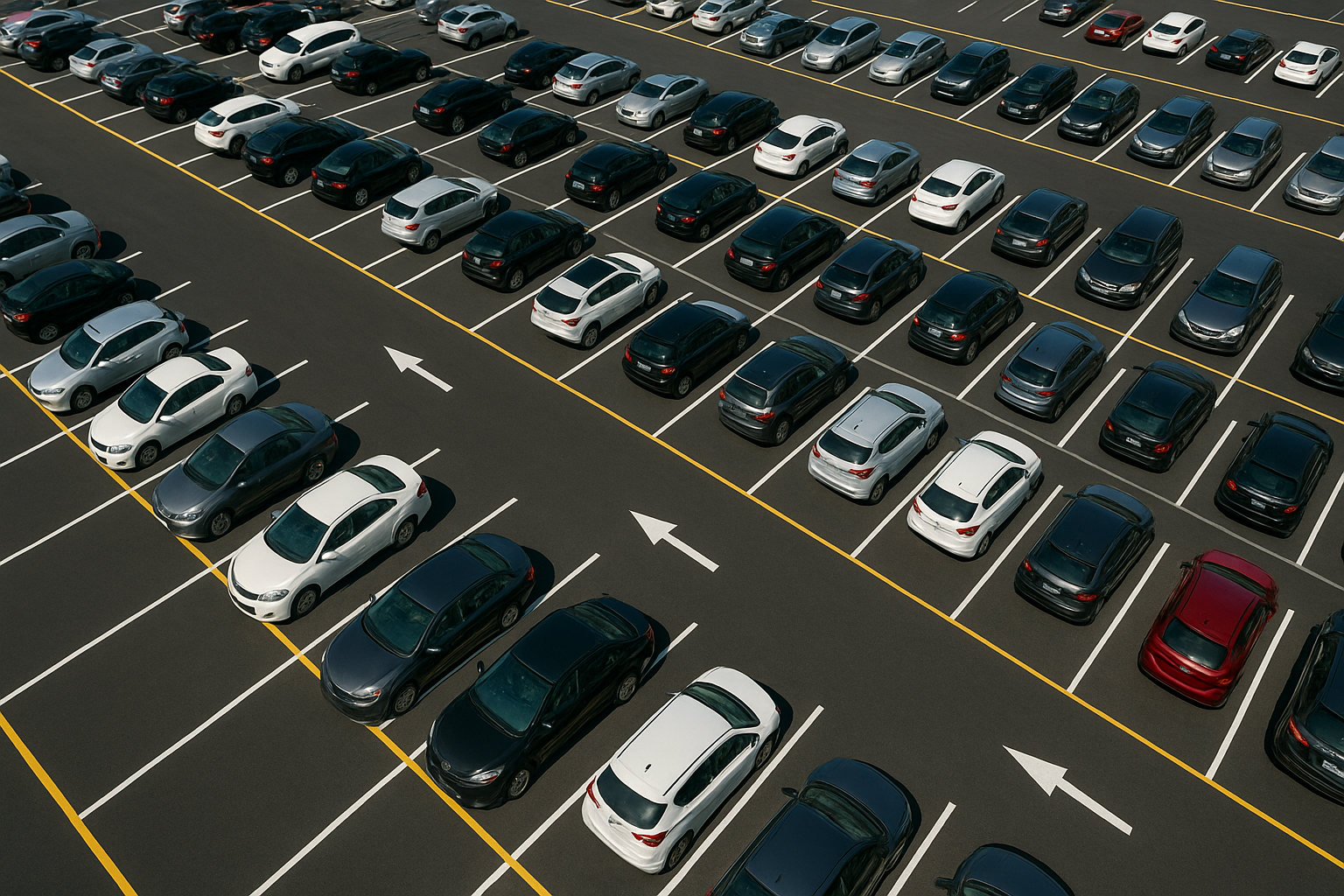
Clear striping for event parking helps large venues organize traffic without added staff or signage.
Key Elements of Temporary Parking Lot Striping for Events
Every event lot layout should account for a handful of core elements. Specifically, these include entry and exit lanes, directional arrows, standard stalls, accessible stalls, pedestrian paths, and fire lanes. Without all six, even a large lot can become disorganized once vehicles start arriving in waves. A property manager reviewing a proposed layout in the parking lot layout design planning guide can compare these elements against a professional standard before approving a plan.
Directional Arrows and One-Way Lanes
One-way lanes reduce head-on conflicts between arriving and departing vehicles. In fact, many venues stripe temporary one-way patterns specifically for event days, then remove or repaint them once the event ends. This flexibility is one of the biggest advantages of event-specific striping over a fixed, everyday layout.
Pickup, Drop-Off, and Overflow Zones
Meanwhile, dedicated drop-off zones keep rideshare and shuttle traffic separate from parked vehicles. Overflow areas, marked with temporary striping, give staff a backup plan when attendance exceeds initial estimates. This detail alone often prevents the worst congestion of the entire event.
Pedestrian Walkways and Crosswalk Markings
In addition, striped pedestrian walkways between rows keep foot traffic away from moving vehicles. This matters most at high-traffic venues, where families, elderly guests, and children often cross large lots on foot before reaching the entrance. Without a marked path, pedestrians tend to cut between parked cars in unpredictable places, which raises the risk of a collision during peak arrival and departure times.
Signs Your Venue Needs New Event Parking Lot Striping
Before booking a crew, it helps to know what to look for. In particular, watch for the following warning signs ahead of a major event:
- Faded or barely visible lines that drivers cannot see clearly from a moving vehicle, especially at dusk or during early morning events.
- Inconsistent stall widths left over from previous restriping jobs, which shrink usable capacity and confuse drivers.
- Missing or worn ADA-accessible markings near entrances, which creates both a safety issue and a compliance risk.
- No visible fire lane markings along routes that emergency vehicles would need during a large gathering.
- Cracked or patched pavement under existing lines, which suggests the surface itself may need attention before new paint is applied.
If two or more of these apply, scheduling a professional assessment before the next event is the safer path. Otherwise, the venue risks discovering these problems in real time, with cars already backing up at the gate.
How to Plan Striping for Event Parking in 5 Steps
Planning ahead makes the difference between a smooth event and a frustrating one. The following steps outline a practical process property managers can follow before booking a striping crew.
- Assess the site and expected vehicle volume. Walk the entire lot with a contractor to measure square footage, note obstacles such as light poles or drainage grates, and estimate how many vehicles the event is expected to draw based on ticket or attendance projections.
- Design a traffic flow layout. Map out entrance and exit points, one-way lanes, and pedestrian walkways so vehicles move through the lot without crossing paths or causing congestion during peak arrival times. Reference a proven layout framework such as the parking lot layout design guide when mapping the plan.
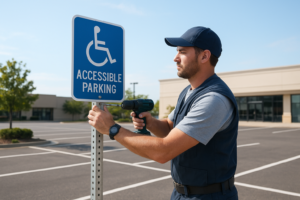
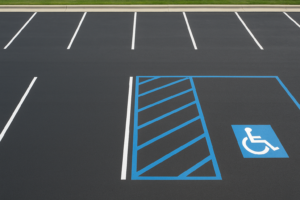
- Mark ADA-compliant accessible stalls. Reserve and paint accessible parking stalls near event entrances using the correct width, signage, and blue striping required under current accessibility guidelines, and verify van-accessible stalls are included where required.
- Add fire lanes and emergency access markings. Paint red or yellow fire lane markings along routes that emergency vehicles will need to use, keeping these paths completely clear of parked cars throughout the entire event window.
- Apply durable or temporary striping paint. Choose fast-drying temporary paint for one-time events or durable acrylic paint for recurring events, then allow adequate curing time before vehicles are allowed to enter the freshly striped lot.
Property managers can review real examples of completed layouts in the project gallery before deciding on a final design, or read the broader parking lot striping services guide for a full walkthrough of the process from quote to completion.
ADA Compliance and Fire Lanes for Event Parking
Accessibility and emergency access are not optional extras; they are requirements. Under guidance published by the Americans with Disabilities Act program, any lot serving the public should include a proportional number of accessible stalls positioned close to entrances, regardless of whether the event is temporary or recurring.
Similarly, fire lanes must remain clear so emergency vehicles can reach any point in the lot. The National Fire Protection Association outlines fire lane clearance standards that many Texas municipalities reference when inspecting event venues. In addition, line placement and stall dimensions should follow guidance from the federal Manual on Uniform Traffic Control Devices, which governs how markings and signage should look on public-facing pavement.
Property owners who want a deeper breakdown of these requirements can review this complete safety and compliance guide for additional detail on stall counts, van-accessible ratios, and signage placement.
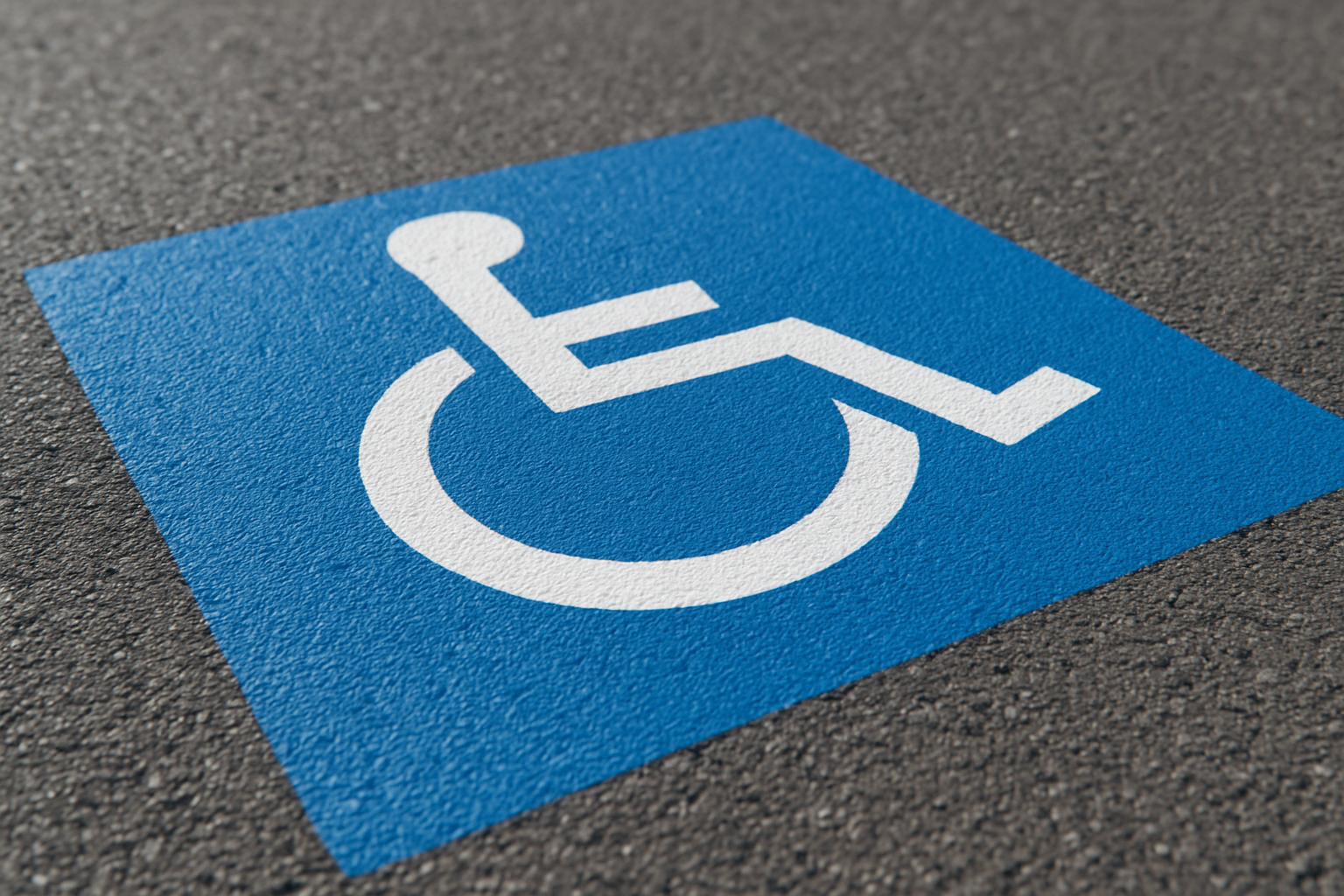
ADA-compliant stall markings are a required part of any event parking layout.
Paint and Materials Compared: Temporary vs. Durable Event Parking Striping
Not all striping paint behaves the same way, and choosing the wrong type can waste both time and money. For a one-time or seasonal event, fast-drying water-based traffic paint is usually the right call because it cures quickly and wears away naturally over the following weeks. In contrast, venues that host events every month benefit from durable acrylic or thermoplastic paint that survives repeated traffic, weather swings, and pressure washing between events.
Reflective glass beads can also be mixed into the paint for venues that run night events, since headlight visibility becomes critical once the sun goes down. For a full technical comparison of paint types, application methods, and drying times, the asphalt striping guide to parking lot line marking breaks down each option in more depth.
DIY vs. Professional Striping for Event Parking: What High-Traffic Venues Should Know
Some property managers consider handling striping in-house with rented equipment. However, this approach carries real risk for high-traffic venues. Specifically, DIY striping often lacks the precision, code knowledge, and durability that professional crews bring, which can lead to uneven lines, incorrect stall dimensions, or missed ADA and fire lane requirements.
Professional crews, by comparison, use calibrated striping machines, commercial-grade paint, and layout templates that meet local code on the first attempt. As a result, the lot is ready faster, looks more consistent, and holds up better under thousands of tires rolling through in a single afternoon. For a venue that only gets one chance to make a good impression on event day, that reliability is worth the investment.
Similarly, professionals understand how to sequence work around curing time, weather windows, and municipal inspection requirements, which is difficult for an in-house team to coordinate around a tight event calendar.
How Often High-Traffic Venues Should Restripe for Events
Maintenance frequency depends heavily on how often a lot hosts events and how much sun and traffic it absorbs. As a general rule, high-traffic venues such as stadiums, fairgrounds, and event centers should plan for a full restriping every 12 to 18 months, with touch-ups on high-wear lanes in between. Lots in sun-heavy climates like North Texas tend to fade faster than shaded lots, so a mid-season inspection is worth the extra effort.
Consequently, building a simple maintenance calendar around major events, rather than waiting for lines to disappear completely, keeps a venue from ever facing a last-minute striping emergency before a big weekend. To understand how consistent striping affects overall movement through a property, this guide on how line striping improves traffic flow in parking lots is a helpful next read.
Choosing a Contractor for Event Parking Line Striping
Not every striping company handles event work the same way. Therefore, it helps to ask potential contractors about their experience with temporary layouts, quick-turnaround scheduling, and municipal code knowledge. A crew familiar with local fire marshal expectations in Denton and Plano can move faster through inspections and avoid delays before gates open.
Before hiring, ask each candidate these questions:
- Have you striped lots for events of this size before, and can you share examples?
- What is your typical turnaround from site visit to a fully striped lot?
- Do you carry commercial insurance and know current ADA and fire lane codes?
- Can you provide overnight or early-morning scheduling to avoid disrupting event setup?
For property managers researching local options, this overview of quality parking lot striping providers in Plano is a useful starting point. Readers can also learn more about the team’s background on the company’s about page, or browse standard parking lot striping services offered year-round beyond event work.
Cost Factors for Event Parking Striping Projects
Pricing varies based on several factors. In general, larger lots, tighter timelines, and additional ADA or fire lane markings raise the overall cost of a project.
| Factor | Impact on Cost |
|---|---|
| Lot size | Larger square footage requires more paint and labor time |
| Paint type | Durable acrylic costs more than temporary water-based paint |
| Turnaround time | Rush or overnight scheduling can add to labor rates |
| Compliance features | ADA stalls and fire lanes add extra marking work |
| Pavement condition | Cracked or patched surfaces may need prep work before paint is applied |
Because every lot is different, the most reliable way to budget is to request a free, on-site quote from a local provider rather than relying on generic price estimates found online.
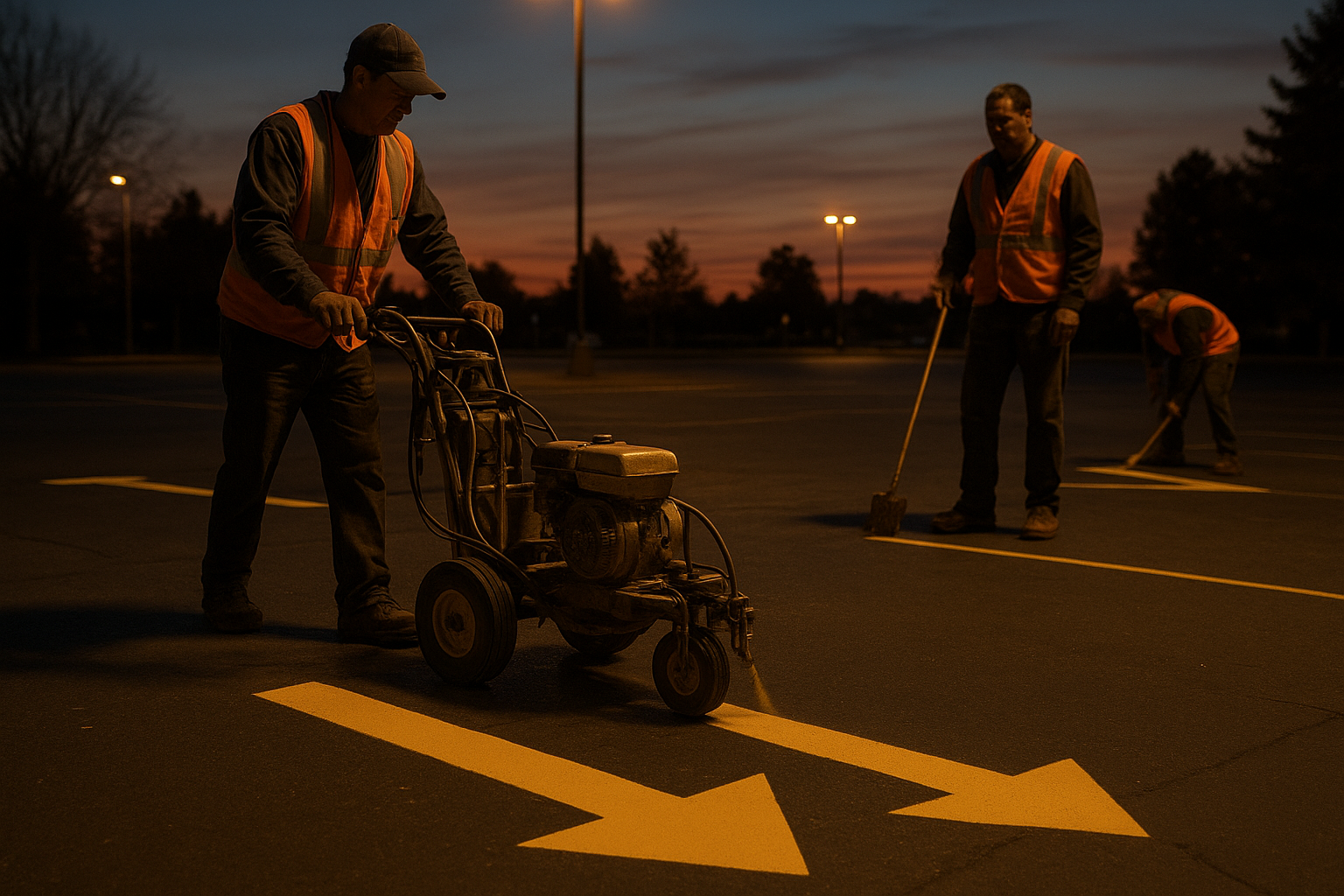
Professional crews often work early morning or overnight to finish striping for event parking before gates open.
Frequently Asked Questions About Striping for Event Parking
What is striping for event parking?
Striping for event parking is the process of painting temporary or semi-permanent lines, arrows, and stall markings on a lot to organize high volumes of vehicles during a specific occasion. It helps direct traffic flow, designate accessible stalls, and maximize how many cars a lot can hold.
Why do high-traffic venues need professional striping for event parking?
High-traffic venues need professional striping for event parking because faded or missing lines create safety hazards, liability exposure, and traffic bottlenecks once large crowds arrive. Professional crews apply code-compliant layouts using calibrated equipment, which reduces accidents and keeps emergency access lanes clear.
How much does striping for event parking cost?
Costs typically range from a few hundred dollars for a small lot to several thousand for a large venue, depending on square footage, paint type, and required markings. Getting a free on-site quote is the most accurate way to budget for a specific event.
How long does it take to stripe a lot for an event?
Most event parking striping projects take between two hours and a full day, depending on lot size and layout complexity. Crews often schedule work overnight or early morning so paint can cure before vehicles arrive.
What paint is used for temporary event parking striping?
Fast-drying water-based traffic paint is common for temporary event markings because it cures quickly and wears down naturally over time. Durable acrylic or epoxy paint is used instead when lines need to last through multiple events.
Do event parking lots need ADA-compliant markings?
Yes, any temporary or permanent lot serving the public should include ADA-compliant accessible stalls near entrances, regardless of event size. Skipping this step can create safety issues and compliance problems.
What is the difference between event striping and standard parking lot striping?
Standard striping is designed for everyday, steady traffic and typically uses long-lasting paint. Striping for event parking, in contrast, often needs to flex for higher vehicle density and temporary layouts.
How many parking spaces can striping add to a lot?
A well-designed striping layout can increase usable parking capacity by up to 20 percent compared to an unmarked or poorly organized lot. The exact gain depends on the lot’s shape and existing obstacles.
What are common mistakes when striping for event parking?
Common mistakes include ignoring fire lane requirements, skipping ADA stalls, and failing to plan pedestrian walkways between rows. These oversights can create safety hazards during peak arrival times.
Can temporary striping be removed after an event?
Yes, temporary event striping made with certain water-based paints or removable tape can be pressure-washed or worn away after the event concludes. This works well for properties needing a different daily layout.
Why do fire lanes matter for event parking?
Fire lanes keep a clear path for emergency vehicles even when a lot is packed with event traffic. Blocking these lanes can delay first responders and violate local fire code requirements.
How far in advance should I schedule event parking striping?
Property owners should schedule striping for event parking at least one to two weeks before the event to allow time for site assessment and paint curing. Larger venues may require even more lead time.
What size vehicles need extra-wide striping for events?
Buses, RVs, and oversized vehicles typically need wider stalls or dedicated zones separate from standard passenger rows. Planning for these vehicles ahead of time prevents bottlenecks near entrances.
Who should I hire for striping for event parking in Denton or Plano?
Property owners in the Denton and Plano area can work with a local, full-service striping company that understands regional codes and event traffic patterns. Choosing a crew with ADA and fire lane experience helps ensure the layout meets safety standards.
Does weather affect event parking striping?
Yes, temperature and moisture affect how quickly paint cures and adheres to pavement. Most contractors monitor forecasts closely and reschedule if rain or extreme heat is expected before an event.
What colors are used in event parking line striping?
White is standard for general parking stalls, blue marks ADA-accessible spaces, and red or yellow typically designates fire lanes and no-parking zones. Consistent color use helps drivers understand the layout quickly, even at unfamiliar venues.
How often should high-traffic venues restripe for events?
Most high-traffic venues should plan a full restripe every 12 to 18 months, with touch-ups on the most heavily used lanes in between. Venues in sunny, high-UV climates may need to inspect lines even more often.
Final Thoughts on Striping for Event Parking
In short, striping for event parking is one of the most cost-effective ways to keep a large gathering organized, safe, and compliant. From ADA stalls to fire lanes, pedestrian walkways, and directional arrows, every marking plays a role in moving vehicles smoothly and avoiding last-minute chaos. Because timing and code requirements vary by venue, planning ahead with an experienced local contractor makes a measurable difference on event day, especially for high-traffic properties that cannot afford a bottleneck at the gate.
Property managers, schools, and venues throughout Denton and Plano can request a free quote directly through stripespls.com to get a layout ready before the next big event. Add internal links from related service and ADA pages to this article to improve discovery and crawlability.