Striping services for retail centers help shopping plazas, strip malls, and commercial properties maintain safe, organized, and code-compliant parking lots. Faded lines and worn markings do more than look unprofessional; they create safety hazards and can lead to costly ADA compliance violations. As a result, property managers across Denton and Plano, TX treat clearly marked parking areas as a practical priority, not just a cosmetic one. By Stripes Pls. Last updated: 2026-08-11.
Quick Answer: Striping services for retail centers include restriping worn lines, marking ADA-compliant handicap stalls, painting fire lanes, adding directional arrows, and designing new lot layouts to maximize parking capacity and meet local safety codes.
What Are Striping Services for Retail Centers?
Striping services for retail centers is the professional process of painting, repainting, and maintaining parking lot lines, curb markings, and related traffic signage for shopping centers, strip malls, and commercial retail properties. These services cover everything from standard parking stall lines to ADA-compliant striping and fire lane markings required by local fire codes. In North Texas, professional crews use durable, reflective traffic paint designed to withstand heavy vehicle traffic, extreme heat, and seasonal storms.
Unlike a residential driveway, a retail parking lot sees constant turnover of customers, delivery trucks, and employees every day. Therefore, the markings need to be highly visible, accurately placed, and frequently maintained. Otherwise, confusion at entrances and exits can slow traffic flow and increase the risk of fender-benders in busy lots.
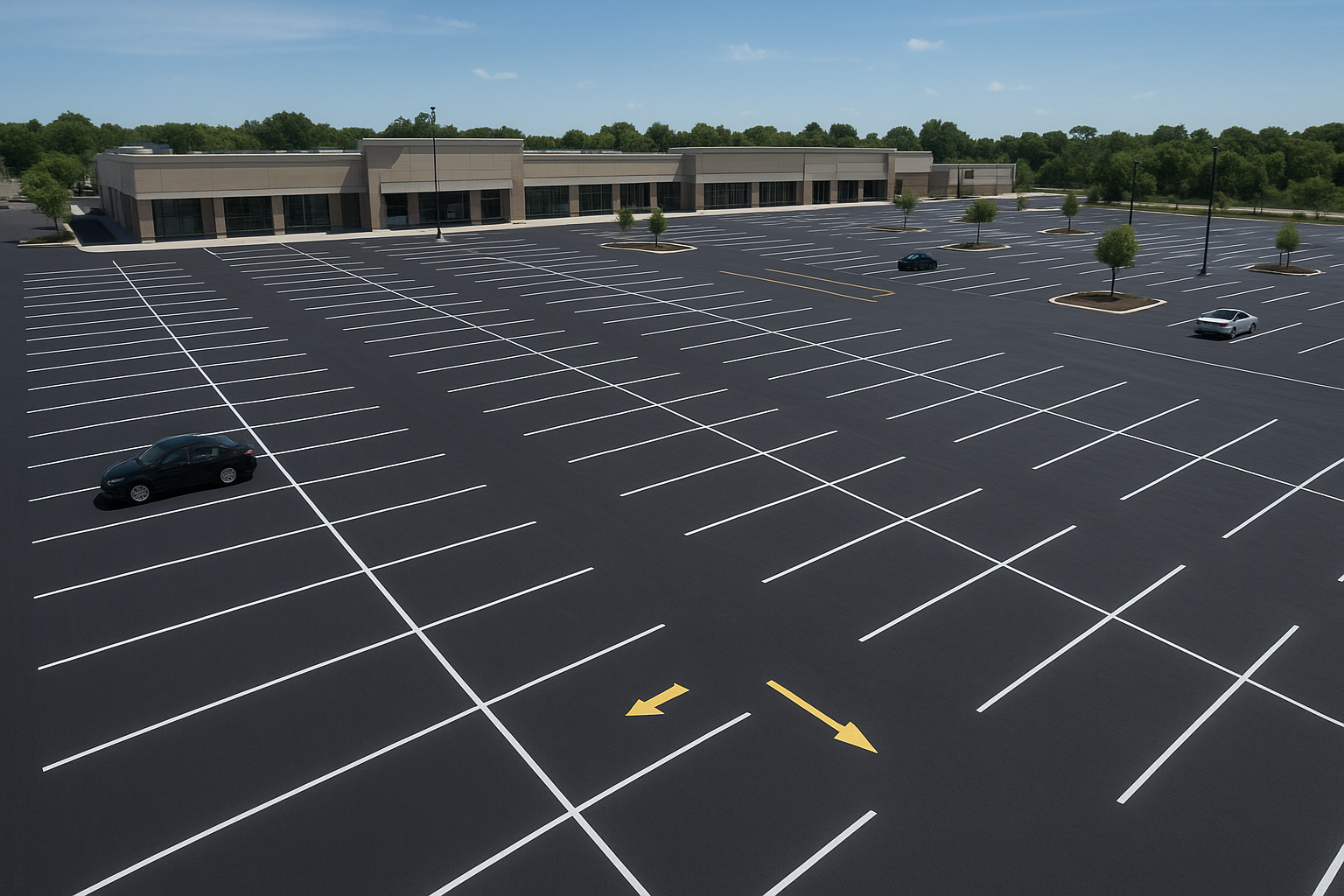
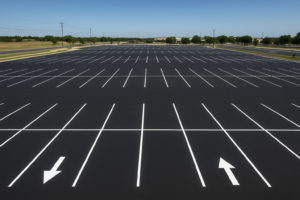
Fresh striping services for retail centers create safer, more organized parking areas for shoppers.
Why Retail Properties Need Professional Line Striping
Retail centers depend on a steady flow of customer traffic, so clear line striping directly affects both safety and business performance. In particular, well-marked lanes and stalls reduce confusion near busy entrances, loading zones, and pedestrian crossings. Consequently, shoppers can move through the lot more efficiently and with less risk of collision.
Safety statistics reinforce why this matters. According to the National Safety Council, tens of thousands of parking lot incidents occur across the United States each year, and many are linked to poor visibility, unclear lanes, or faded markings. For that reason, regular restriping is one of the simplest and most cost-effective ways a retail property can reduce liability exposure.
In addition to safety, sharp striping also improves first impressions. A newly striped lot signals that a property is well-maintained, which can influence how customers perceive the businesses inside. Similarly, organized parking helps maximize the number of vehicles a lot can hold during peak shopping hours.
ADA Compliance and Fire Lane Marking for Shopping Centers
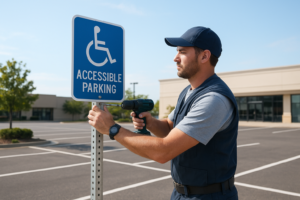
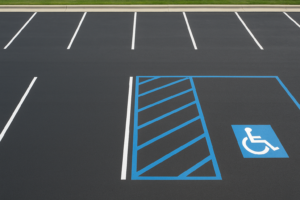
Retail centers are legally required to provide accessible parking under the Americans with Disabilities Act. Specifically, ADA guidelines call for a minimum number of accessible spaces based on total lot size, along with van-accessible stalls that meet exact width and signage requirements. Because these standards are precise, many property owners rely on experienced striping contractors to measure and paint them correctly the first time.
Fire lane marking is equally important. Local fire departments generally require designated fire lanes to remain clearly painted, typically in red, with visible signage or curb text. These lanes must stay unobstructed at all times so emergency vehicles can respond quickly. Standards published by the National Fire Protection Association often guide how municipalities enforce these requirements. As a result, retail centers that neglect fire lane upkeep risk fines or, worse, delayed emergency response during a real incident.
Because both ADA and fire code compliance carry legal weight, property managers often prefer a contractor who understands local Denton and Plano requirements rather than a generic painting service.
The Striping Process: Step-by-Step
Professional crews generally follow a consistent process when handling striping services for retail centers. Below is a typical sequence used on most commercial projects.
- Site assessment and layout planning: The contractor walks the property to measure the lot, review existing markings, and plan a layout that maximizes stalls while meeting ADA and fire code requirements.
- Surface cleaning and preparation: Crews sweep and clean the asphalt or concrete surface to remove debris, oil stains, and loose material so the new paint adheres properly and lasts longer.
- Layout marking and measuring: Technicians use chalk lines, stringlines, and measuring tools to mark the exact placement of every stall, aisle, and accessible parking space before any paint is applied.
- Applying traffic paint for stalls and symbols: Using striping machines, crews apply durable traffic paint to create straight, consistent lines, directional arrows, and ADA accessibility symbols across the lot.
- Fire lane and curb painting: Red curb paint and fire lane text are applied along designated emergency access routes to satisfy local fire marshal requirements and keep lanes clearly visible.
- Final inspection and quality check: Once the paint cures, the crew inspects every line and symbol for accuracy, touching up any imperfections before officially handing the finished lot back to the property owner.
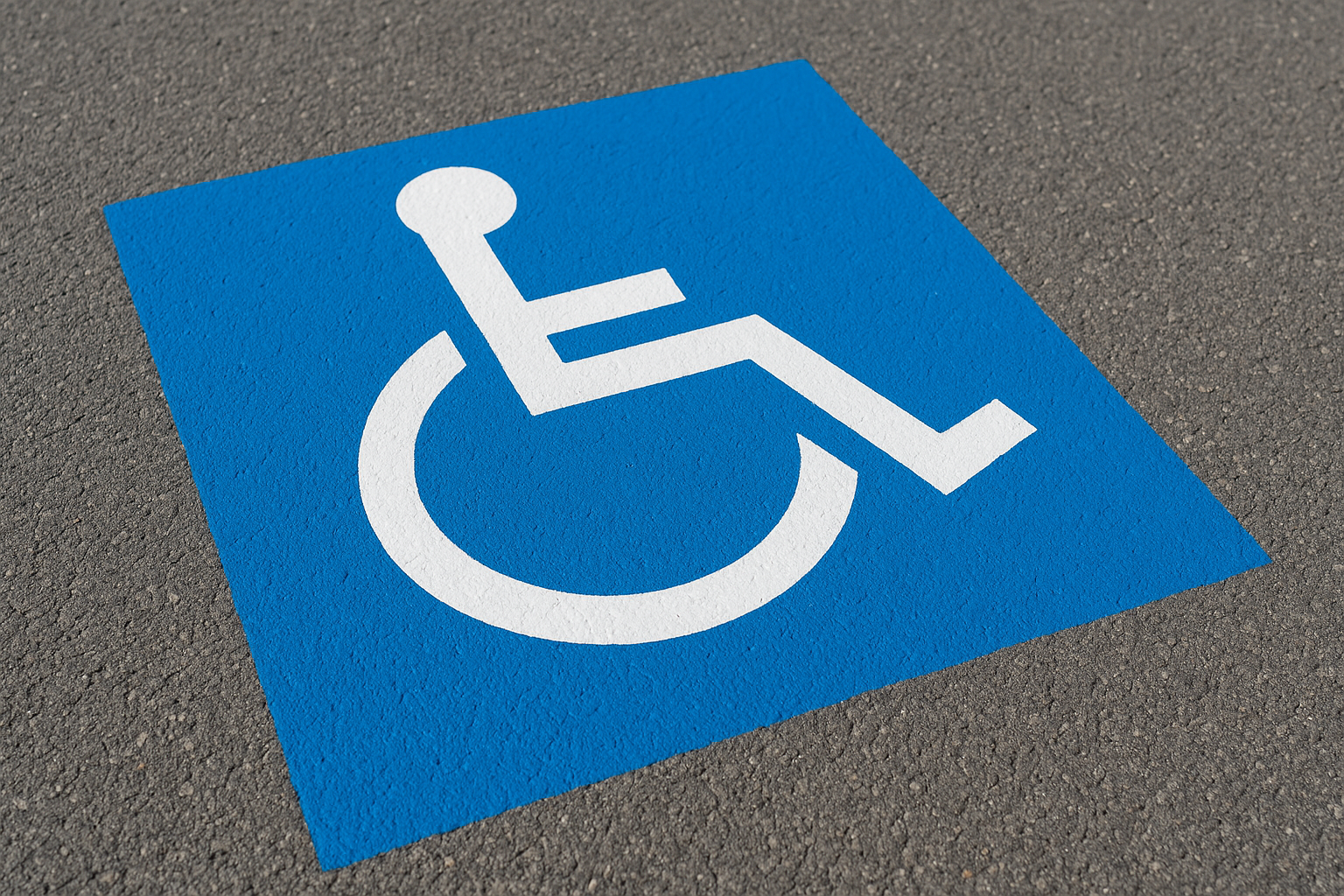
ADA-compliant markings are a core part of ADA compliant striping for retail centers.
How Often Should Retail Parking Lots Be Restriped?
Most high-traffic retail lots need restriping every 12 to 24 months. However, lots exposed to intense Texas sun or heavy delivery truck traffic may fade faster and require more frequent touch-ups. In contrast, smaller lots with lighter use might stretch closer to the two-year mark before lines become noticeably worn.
A simple visual inspection can help owners decide when it’s time. If lines look faint from a moving vehicle, dulled by tire wear, or barely visible at night, it’s usually time to schedule a refresh. Waiting too long often leads to confused traffic patterns and increased risk of accidents in busy retail lots.
Choosing the Right Parking Lot Striping Company in Denton and Plano
Selecting the right contractor matters just as much as the striping itself. A full-service parking lot striping in Denton company specializes in professional striping, ADA compliance solutions, and fire lane marking for commercial and residential properties throughout the Denton and Plano areas. This kind of local, specialized experience often makes a noticeable difference in both accuracy and turnaround time.
Before hiring anyone, it helps to review the company’s background. You can learn more about the team’s approach on the about page, or read a detailed breakdown of what to look for in a provider on the article discussing quality parking lot striping providers in Plano. Additionally, the full range of offerings, including layout design and restriping, is outlined on the parking lot striping guide.
Above all, ask any prospective contractor about their experience with retail properties specifically. Retail centers, schools, healthcare facilities, and municipal organizations each have slightly different traffic patterns and compliance needs, so a contractor familiar with your property type can plan a more effective layout.
Cost Factors for Commercial Parking Lot Striping
Pricing for commercial parking solutions depends on several variables. Lot size and total number of stalls are the biggest drivers, since larger properties require more paint and labor. Similarly, the amount of ADA signage, fire lane footage, and directional arrows needed will affect the final quote.
Paint type also plays a role. Standard water-based traffic paint tends to cost less upfront but may need more frequent reapplication, whereas Texas lot painting thermoplastic materials cost more initially but last longer under heavy traffic. For that reason, many property owners request a detailed quote that compares both options before committing to a project.
Ultimately, the most reliable way to understand cost is to request a free quote from a local provider who can inspect the property directly. You can start that process directly through the contact page or by visiting stripespls.com for a free quote request form.
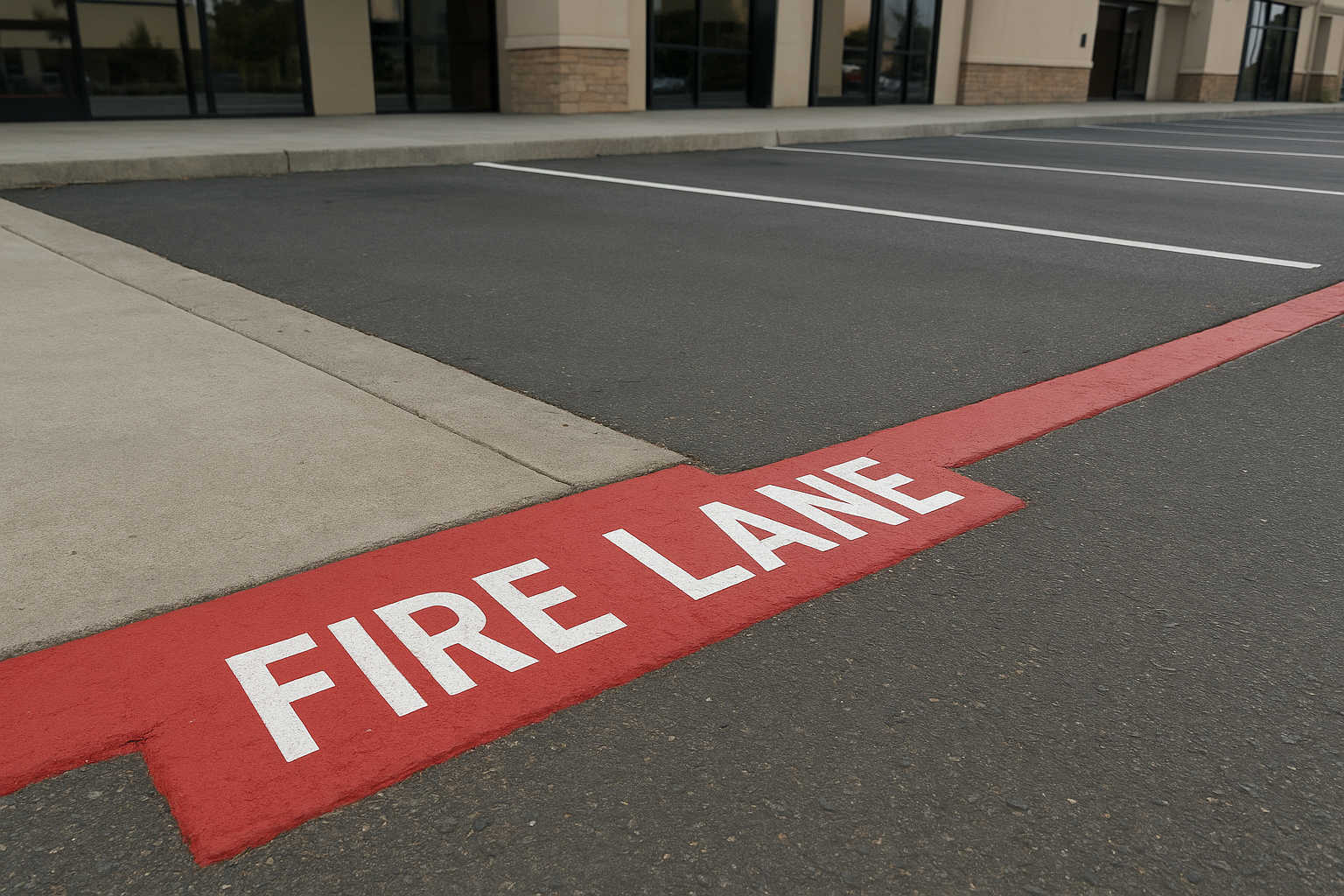
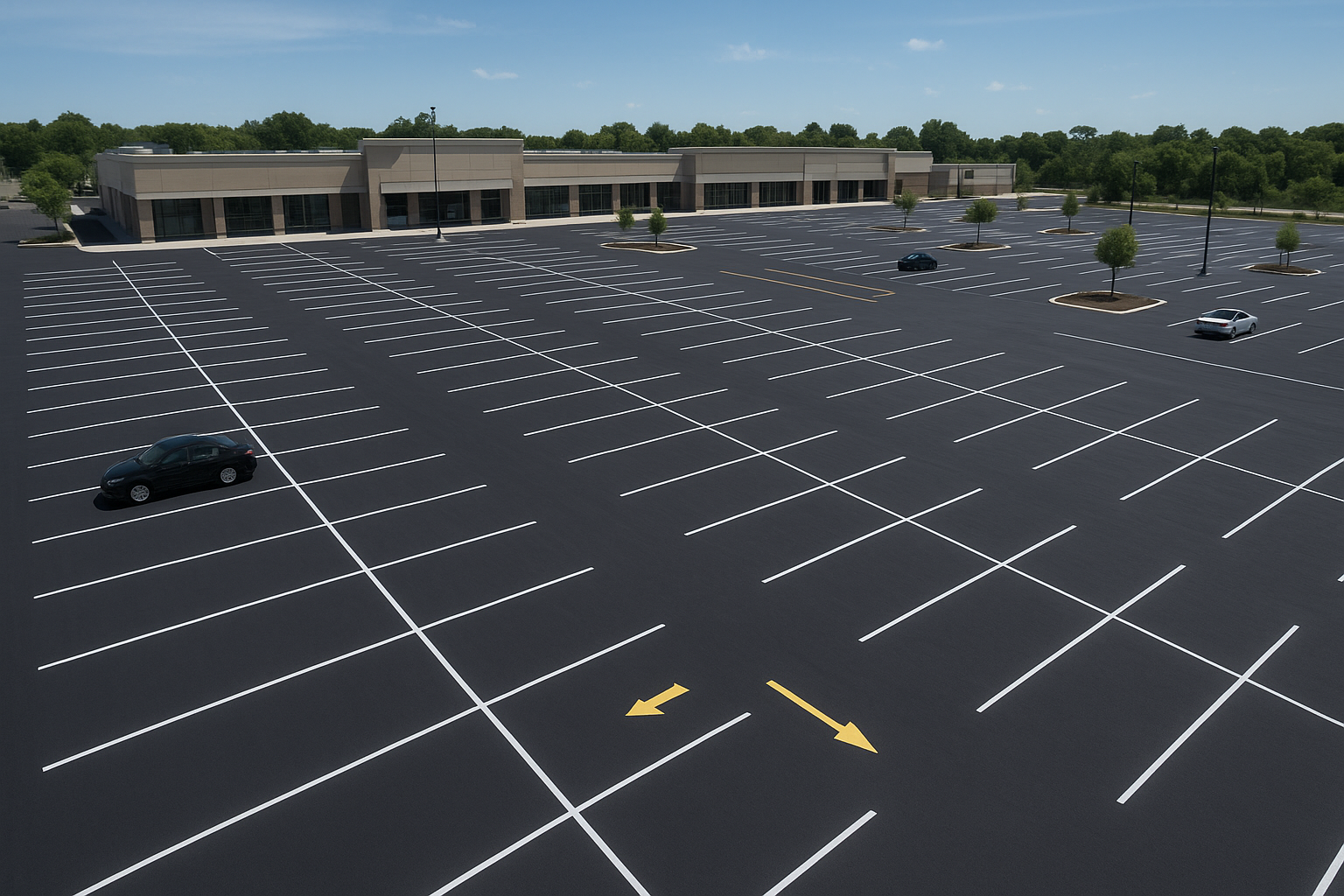
Fire lane markings are a required part of striping services for retail centers in most municipalities.
Frequently Asked Questions About Striping Services for Retail Centers
What is included in striping services for retail centers?
Striping services for retail centers typically include restriping worn parking lines, painting ADA-compliant accessible spaces, marking fire lanes, adding directional arrows, and laying out new parking configurations. Many providers also offer curb painting and signage installation as part of a complete package.
How much do striping services for retail centers typically cost?
Costs vary based on lot size, the number of stalls, and how much ADA or fire lane marking is required. Small retail lots may run a few hundred dollars, while large shopping centers with extensive fire lanes can cost several thousand.
How long does it take to restripe a retail parking lot?
Most retail parking lots can be restriped within one to two days, depending on size and weather conditions. Paint typically needs a few hours to cure before vehicles can drive over the fresh lines.
What paint is used for retail parking lot striping?
Most contractors use water-based traffic paint or durable thermoplastic materials designed for high-traffic commercial surfaces. These coatings resist fading from UV exposure and hold up under constant vehicle traffic.
Are ADA-compliant striping services required by law?
Yes, retail properties must provide a minimum number of accessible parking spaces under the Americans with Disabilities Act. Failing to maintain compliant markings can expose property owners to complaints or legal liability.
How often should a retail center repaint its parking lines?
High-traffic retail lots generally need restriping every 12 to 24 months. Lots in areas with intense sun exposure or heavy truck traffic may need more frequent touch-ups.
What is a fire lane and why does it need striping?
A fire lane is a designated access route kept clear for emergency vehicles, usually marked with red paint and posted signage. Local fire codes require these lanes to remain visible and unobstructed at all times.
Can striping improve parking capacity at a retail center?
Yes, a thoughtful restriping layout can often add several extra stalls by optimizing space between rows and adjusting stall angles. This is especially valuable for retail centers with limited lot space and high customer turnover.
What’s the difference between striping and sealcoating?
Sealcoating protects and refreshes the asphalt surface itself, while striping applies the painted lines, symbols, and markings on top. Many property owners schedule sealcoating first, followed by fresh striping.
Do retail centers need permits for parking lot restriping?
In most cases, simple restriping that follows the existing layout does not require a permit. However, redesigning the lot layout or adding fire lanes may require sign-off from local fire or planning departments.
What common mistakes do property owners make with parking lot striping?
Common mistakes include waiting too long between restriping cycles, using low-quality paint that fades quickly, and overlooking ADA measurement requirements for accessible stalls. These errors often lead to compliance issues and unhappy customers.
How do I choose a striping company for my retail property?
Look for a contractor with commercial experience, knowledge of ADA and fire code requirements, and a track record serving properties similar to yours. Requesting a free quote and reviewing past project photos can help confirm quality before you commit.
Final Thoughts
In summary, striping services for retail centers play a bigger role in property management than many owners realize. From ADA compliance to fire lane visibility, well-maintained markings protect both customers and the business owners who depend on a safe, welcoming lot. Furthermore, sharp, freshly painted lines contribute to a positive first impression that reflects well on every store in the plaza. This article was prepared by the Stripes Pls team; add a brief author bio and a "Last updated: YYYY-MM-DD" line to increase trust and transparency.
For property managers throughout Denton, Plano, and the greater North Texas region, working with an experienced local provider makes the process straightforward. Whether the project involves a full layout redesign or a simple restriping refresh, planning ahead and scheduling regular maintenance keeps a retail center safe, organized, and code-compliant for years to come.