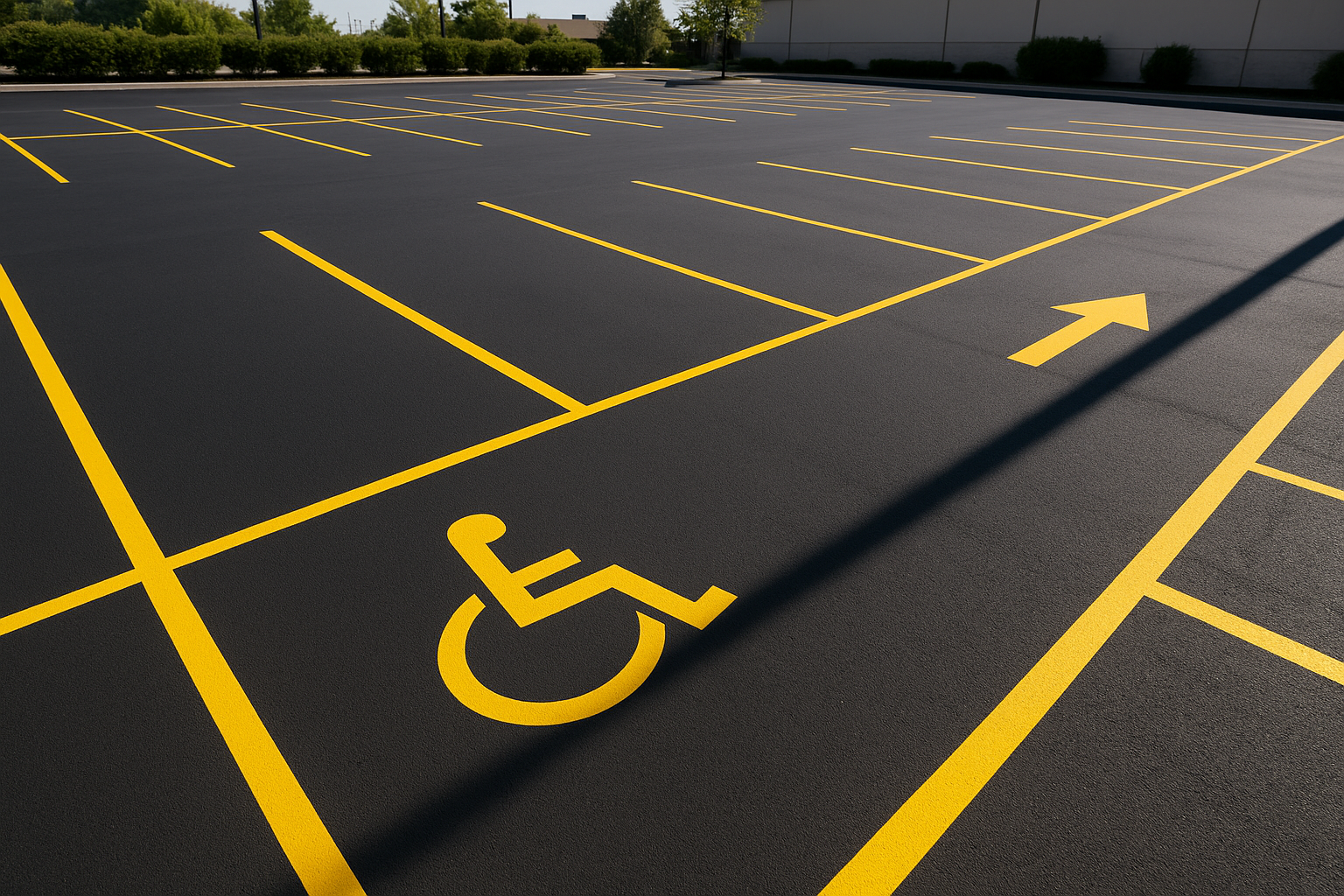
High visibility line marking is the process of painting parking lots, fire lanes, and pedestrian areas with bright, reflective, or high-contrast paint so drivers and pedestrians can read the layout clearly, even at night or in bad weather. For property owners across Denton and Plano, TX, this isn’t just about looks — it directly affects safety, traffic flow, and code compliance. In this guide, we’ll break down what high visibility line marking involves, why it matters, and how to choose a contractor who gets it right the first time.
Quick answer: High visibility line marking uses bright pigments, thicker application, or reflective additives to keep parking stalls, fire lanes, and crosswalks legible in low light. As a result, properties see fewer accidents, smoother traffic flow, and better ADA and fire code compliance.
What Is High Visibility Line Marking?
High visibility line marking is a specialized approach to pavement striping that prioritizes contrast and durability over basic appearance. Instead of standard white or yellow paint applied thinly, contractors use brighter pigments, thicker coats, or reflective glass beads that catch headlights at night. Consequently, drivers and pedestrians can identify lanes, stalls, and crosswalks even in rain, fog, or dim lighting.
In practice, this technique shows up most often in fire lanes, ADA-accessible stalls, crosswalks, and directional arrows — areas where a missed line could create real safety risk. For example, a faded fire lane marking might delay emergency responders by seconds that matter. Because of that, many municipalities across Texas require specific colors and reflectivity standards for these zones.
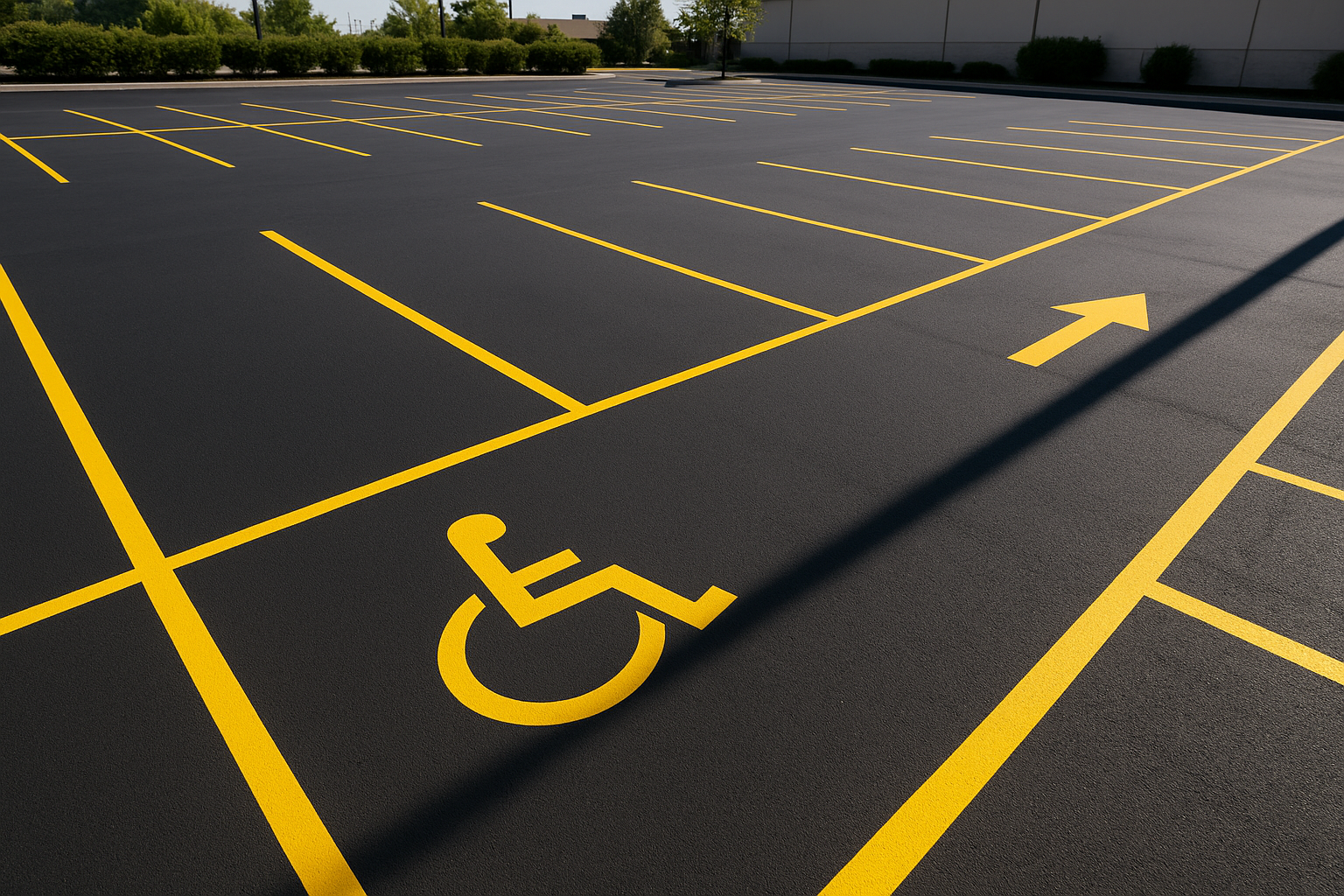
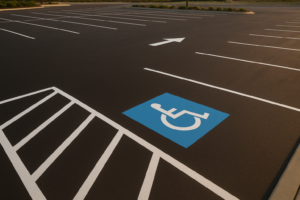
Bright, high-contrast striping like this keeps stalls and traffic lanes easy to read in any lighting condition.
Why High-Visibility Pavement Markings Improve Safety
Safety is the biggest reason property managers invest in high-visibility pavement markings. Clear, bright lines guide drivers into stalls correctly, reduce fender-benders, and help pedestrians know exactly where it’s safe to walk. In particular, retail centers, schools, and healthcare facilities benefit from this clarity because of the higher volume of foot traffic they handle daily.
According to the Federal Highway Administration, retroreflective and high-contrast pavement markings measurably improve nighttime visibility for both drivers and pedestrians, which is why the Manual on Uniform Traffic Control Devices (MUTCD) sets national standards for marking reflectivity and color. Similarly, the Americans with Disabilities Act outlines exact requirements for accessible stall markings, which you can review directly through ADA.gov. Therefore, following these standards isn’t optional for many commercial properties — it’s a legal safeguard against liability.
Beyond compliance, well-marked lots also maximize usable parking capacity. Above all, clear striping prevents drivers from parking haphazardly across two spaces, which can quietly cost a busy retail center dozens of spots during peak hours.
Where Bright Line Striping Makes the Biggest Difference
Not every square foot of pavement needs the same treatment. However, certain zones benefit disproportionately from bright line striping because the stakes for visibility are higher.
Fire Lane Marking and Emergency Access
Fire lanes must stay clear at all times, and high-contrast red or yellow curb paint with visible lettering makes that expectation obvious to every driver. Our fire lane marking services follow local Texas fire code requirements so emergency vehicles never lose precious seconds navigating a blocked or unclear lane. In addition, properly marked fire lanes reduce the risk of fines during municipal inspections.
ADA-Compliant Handicap Stall Markings
Accessible parking stalls require precise dimensions, access aisle widths, and the international symbol of accessibility painted in blue and white. Because these requirements are strict, many property owners pair striping with professional curb painting to clearly designate no-parking zones and accessible loading areas. As a result, the entire lot reads as organized and code-compliant at a glance.
The High Visibility Line Marking Process
Every quality striping project follows a similar sequence, whether it’s a small retail lot or a large municipal facility. Below is the typical process a professional crew follows from start to finish.
- Inspect and measure the lot. A technician walks the property to assess pavement condition and confirm stall counts, fire lane placement, and ADA requirements.
- Clean and prep the pavement. Sweeping and power washing remove debris and oil so new paint bonds properly to the surface.
- Layout guidelines. Chalk lines or laser-guided tools establish precise stall widths and access aisles before any paint touches the pavement.
- Apply high visibility traffic paint. A striping machine lays down fast-drying, high-contrast paint in the correct colors and thickness for each zone.
- Cure and inspect. After several hours of curing, a final walkthrough confirms straightness, color accuracy, and compliance before the lot reopens.
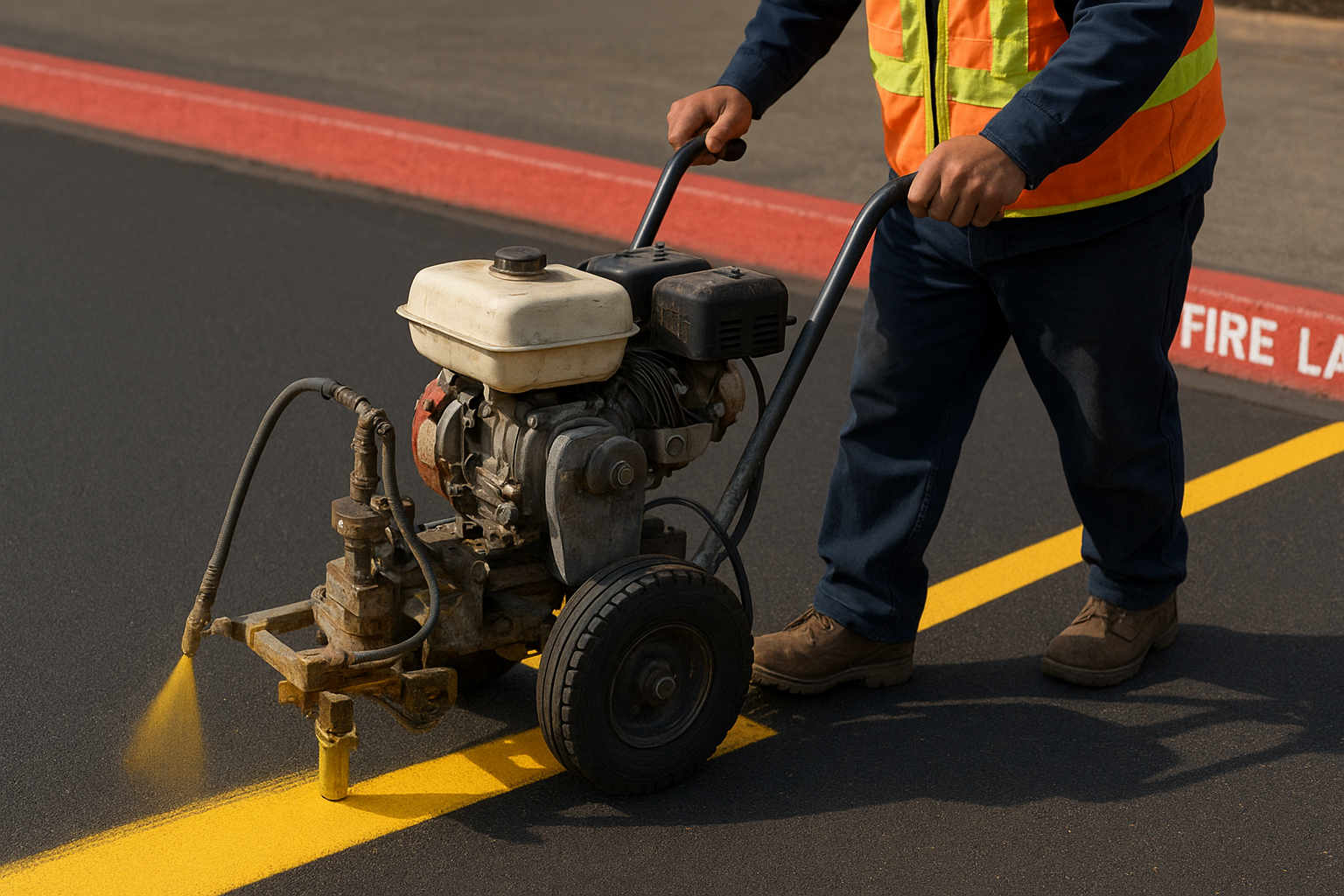
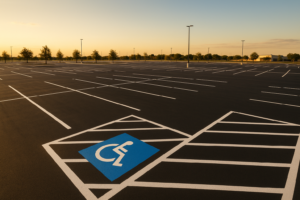
Professional-grade equipment ensures consistent thickness and coverage during a striping project.
How to Choose a High-Contrast Striping Contractor
Not every painting crew understands fire codes, ADA specifications, or the reflectivity standards required for durable results. Consequently, it’s worth vetting a contractor’s experience before signing a contract. For a broader look at red flags to watch for, this breakdown on what to know before you hire a striping company covers common pitfalls property managers run into.
In North Texas specifically, look for a team with hands-on experience across parking lot striping for retail centers, schools, and healthcare facilities. Furthermore, a contractor who offers a line marking service for parking lots in Texas will already understand regional climate factors, like extreme summer heat, that affect paint curing and longevity. Property owners in Denton and Plano can request a free, no-obligation quote directly through stripespls.com to compare pricing and scope before committing.
Cost and Maintenance of Reflective Line Marking
Pricing for high visibility line marking depends on lot size, paint type, and how many specialty markings — like ADA symbols or fire lane lettering — are needed. Generally speaking, most commercial projects range from a few hundred dollars for small lots to several thousand for large retail or municipal properties. In contrast, skipping proper prep work to save money often leads to premature fading, which ends up costing more in the long run.
Maintenance matters just as much as the initial application. Specifically, high-traffic lots should be inspected annually and restriped every 12 to 24 months to keep contrast levels strong. For further background on how pavement markings are studied and standardized, the Wikipedia entry on road surface marking offers a helpful overview of materials and reflectivity science used industry-wide.
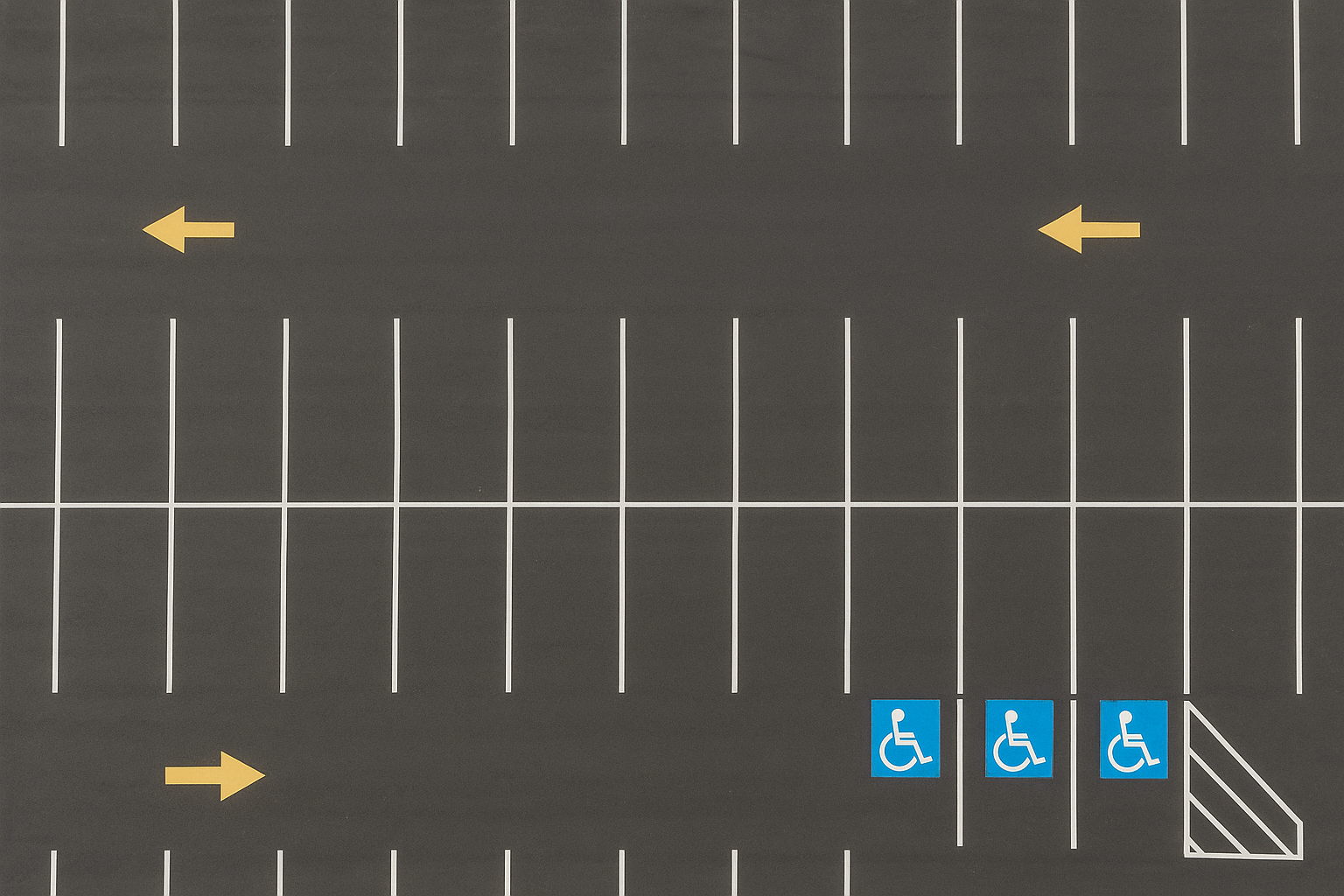
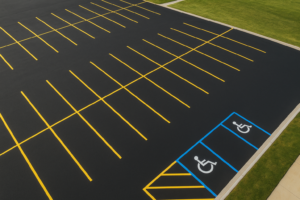
An organized, high-contrast layout helps maximize usable parking capacity across the property.
Frequently Asked Questions About High Visibility Line Marking
What is high visibility line marking?
High visibility line marking is the practice of painting parking lots, fire lanes, and walkways with bright, reflective, or high-contrast paint so markings stay clearly visible day or night. It typically uses thicker paint or reflective additives compared to standard striping.
How long does high visibility line marking last?
Most high visibility line marking lasts between one and three years, depending on traffic volume and weather exposure. High-traffic fire lanes often need touch-ups sooner than lightly used areas.
Why is high visibility line marking important for parking lots?
It reduces accidents by making stalls, lanes, and pedestrian paths easy to read at a glance. It also helps owners avoid liability tied to confusing or faded layouts.
How much does high visibility line marking cost?
Costs vary by lot size and marking type, but most commercial projects range from a few hundred to several thousand dollars. Requesting a free quote is the best way to get an accurate estimate.
What paint is used for high visibility line marking?
Contractors typically use fast-drying acrylic or thermoplastic traffic paint, sometimes mixed with reflective glass beads. The choice depends on climate, budget, and durability needs.
How often should parking lot lines be repainted?
Most lots benefit from restriping every 12 to 24 months. Heavy traffic and sun exposure can shorten that timeline.
Is high visibility line marking required by law?
ADA-accessible stalls and fire lane designations are legally required under accessibility and fire codes. General parking lines are not always mandated but are strongly recommended.
What’s the difference between standard and high visibility line marking?
Standard striping uses basic paint at typical thickness, while high visibility line marking uses brighter pigments or reflective additives for stronger contrast. The result stays legible in low light or bad weather.
Can high visibility line marking be applied in cold weather?
Most traffic paints need surface temperatures above roughly 50°F to cure properly. In North Texas, milder months typically produce the most durable results.
How long does it take to complete a parking lot striping project?
A typical commercial lot can be striped in a single day, though larger properties may take two to three days. Paint also needs several hours to cure before reopening.
What mistakes should property owners avoid with line marking?
Common mistakes include skipping surface cleaning, choosing low-grade paint, and ignoring ADA measurement requirements. These shortcuts often lead to faster fading and compliance issues.
Do fire lanes need high visibility line marking?
Yes, fire lanes require clear, high-contrast markings with visible lettering so emergency vehicles can access the area without delay. Local fire codes often specify exact color and spacing.
What colors are used in high visibility line marking?
Common colors include white for standard stalls, yellow for high-traffic zones, blue for ADA-accessible spaces, and red for no-parking or curb zones.
How does ADA compliance relate to line marking?
ADA compliance requires specific stall widths, access aisles, and the accessibility symbol painted correctly. Accurate line marking helps properties meet federal standards and avoid penalties.
Who should I hire for high visibility line marking in Texas?
Look for a licensed, experienced local contractor familiar with Texas fire codes and ADA requirements. Property owners in Denton and Plano can request a free quote through stripespls.com for a customized assessment.
Final Thoughts
High visibility line marking plays a bigger role in property safety and functionality than most owners realize. From ADA compliance to fire lane access, bright and durable striping protects both people and property while keeping a lot looking sharp. Ultimately, investing in professional high visibility line marking now helps Denton and Plano property owners avoid costly compliance issues and accidents down the road.