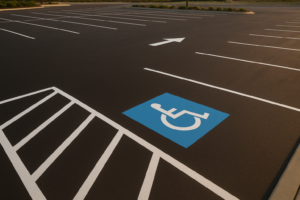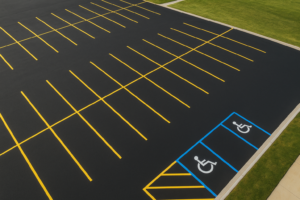
ADA compliant striping is the process of laying out and painting parking lot markings so that accessible stalls, access aisles, and signage meet the technical standards set under the Americans with Disabilities Act. For property owners across Denton and Plano, TX, getting these markings right isn’t optional — it’s a legal requirement that protects visitors, employees, and the business itself. In this guide, we’ll walk through exactly what ADA compliant striping involves, why it matters, and how to keep a property in compliance year after year.
Quick answer: ADA compliant striping requires correctly sized accessible stalls (96 inches minimum), adjacent access aisles, van-accessible spaces at the right ratio, the International Symbol of Accessibility, and posted signage. Lots must also be repainted periodically as markings fade.
What Is ADA Compliant Striping?
ADA compliant striping refers to parking lot markings that satisfy the accessibility rules published under the Americans with Disabilities Act (ADA), a federal civil rights law protecting people with disabilities. In practical terms, this means painting accessible stalls at the correct width, adding access aisles beside them, and marking each stall with the recognizable wheelchair symbol.
Beyond paint, compliance also involves signage, curb ramps, and route markings that connect the parking area to the building entrance. Consequently, a lot can look freshly striped and still fail an inspection if the stall counts, aisle widths, or signage don’t match current code. That’s why many property managers rely on a specialized parking lot striping team rather than attempting a DIY layout.
Why ADA Compliant Parking Lot Markings Matter
Accessible markings matter because they directly affect whether people with mobility limitations can safely enter a building. In addition, non-compliant lots expose property owners to real financial risk. According to the U.S. Department of Justice’s ADA guidance, thousands of accessibility complaints are filed each year, and parking lot violations remain one of the most common triggers.
Furthermore, an inaccessible lot can quietly turn away customers, patients, and employees before they ever reach the front door. For schools, healthcare facilities, and retail centers throughout North Texas, that translates into lost trust as well as legal exposure. A well-maintained lot, on the other hand, signals professionalism and care for every visitor.
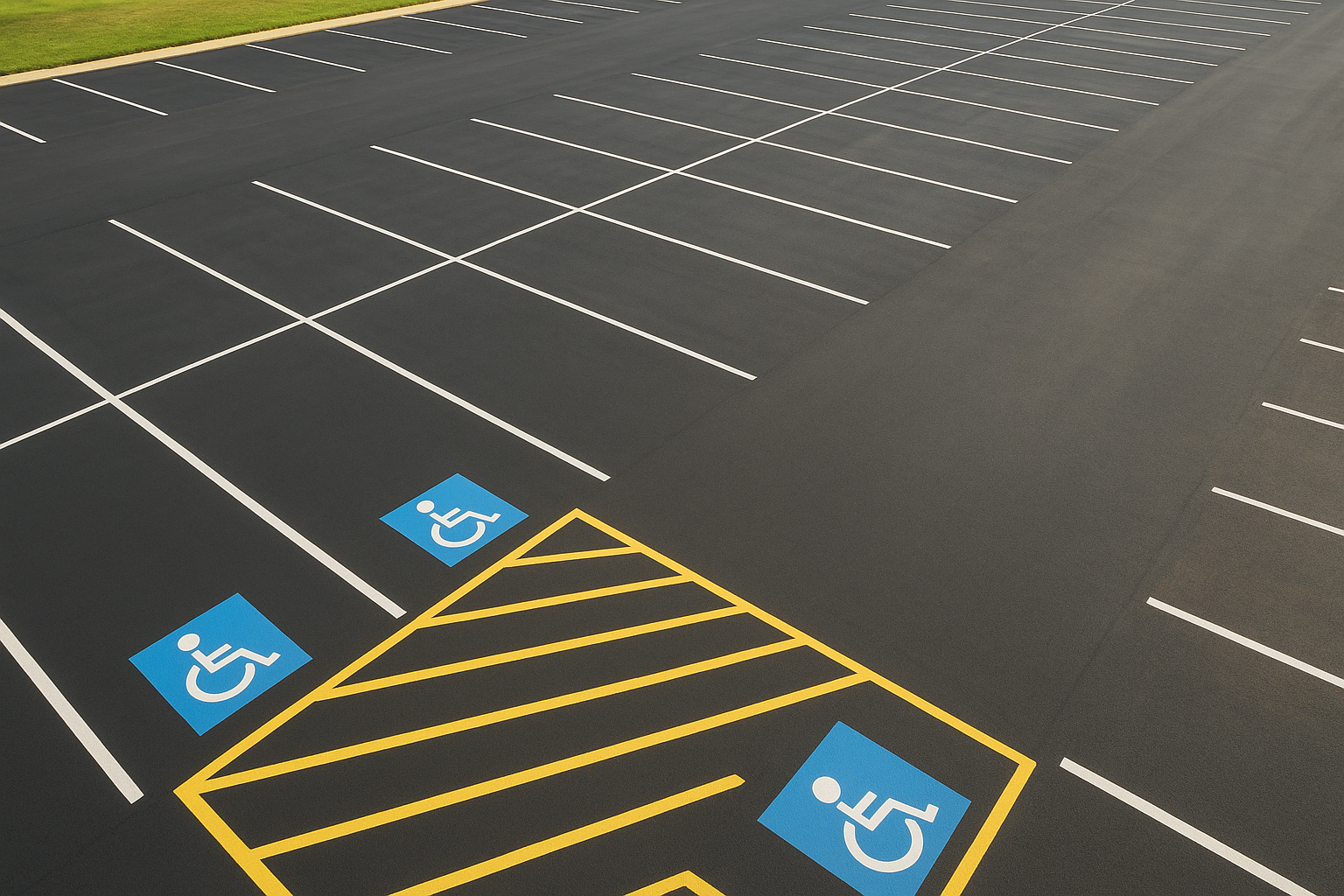
A properly striped lot makes ADA compliant striping easy to identify from the access aisle to the accessibility symbol.
Key ADA Striping Requirements for Commercial Properties
Several technical rules govern how accessible spaces must be laid out. Specifically, the U.S. Access Board’s ADA Standards for Accessible Design set the baseline dimensions and ratios that every commercial lot must follow.
- Standard accessible stalls must be at least 96 inches wide with a 60-inch access aisle beside them.
- Van-accessible stalls need either a 96-inch stall with a 96-inch aisle or a 132-inch aisle alongside a standard-width stall.
- At least one in every six accessible spaces must be van-accessible.
- Each stall requires the International Symbol of Accessibility plus a mounted sign, and van spaces need an additional “van accessible” placard.
These rules trace back to the broader Americans with Disabilities Act of 1990, which established nationwide accessibility protections. Because local jurisdictions sometimes add their own layers, it’s worth pairing this checklist with a broader parking lot safety and compliance guide before finalizing a layout.
How to Achieve ADA Compliant Striping in 6 Steps
Planning a compliant layout is easier when it’s broken into a clear process. Below is the sequence most professional crews follow when striping a lot for accessibility.
- Measure your parking lot and count total parking spaces to determine the exact number of accessible stalls required under ADA guidelines.
- Mark van-accessible spaces with a wider access aisle, ensuring at least one in every six accessible spaces meets the van-accessible width requirement.
- Paint the International Symbol of Accessibility on each accessible stall using approved traffic paint that meets reflectivity and durability standards.
- Install and stripe access aisles between accessible spaces so wheelchair users can safely transfer in and out of vehicles without crossing traffic lanes.
- Add required signage at each accessible space, including van-accessible signs where applicable, mounted at the height specified by local building codes.
- Schedule regular inspections and repainting every one to two years, since faded lines can quickly fall out of compliance and expose owners to fines.
Following this order helps avoid rework, since aisle placement depends on stall counts, and signage depends on final paint layout. For a closer look at how this applies specifically to North Texas properties, see this expert line marking guide for Texas properties.
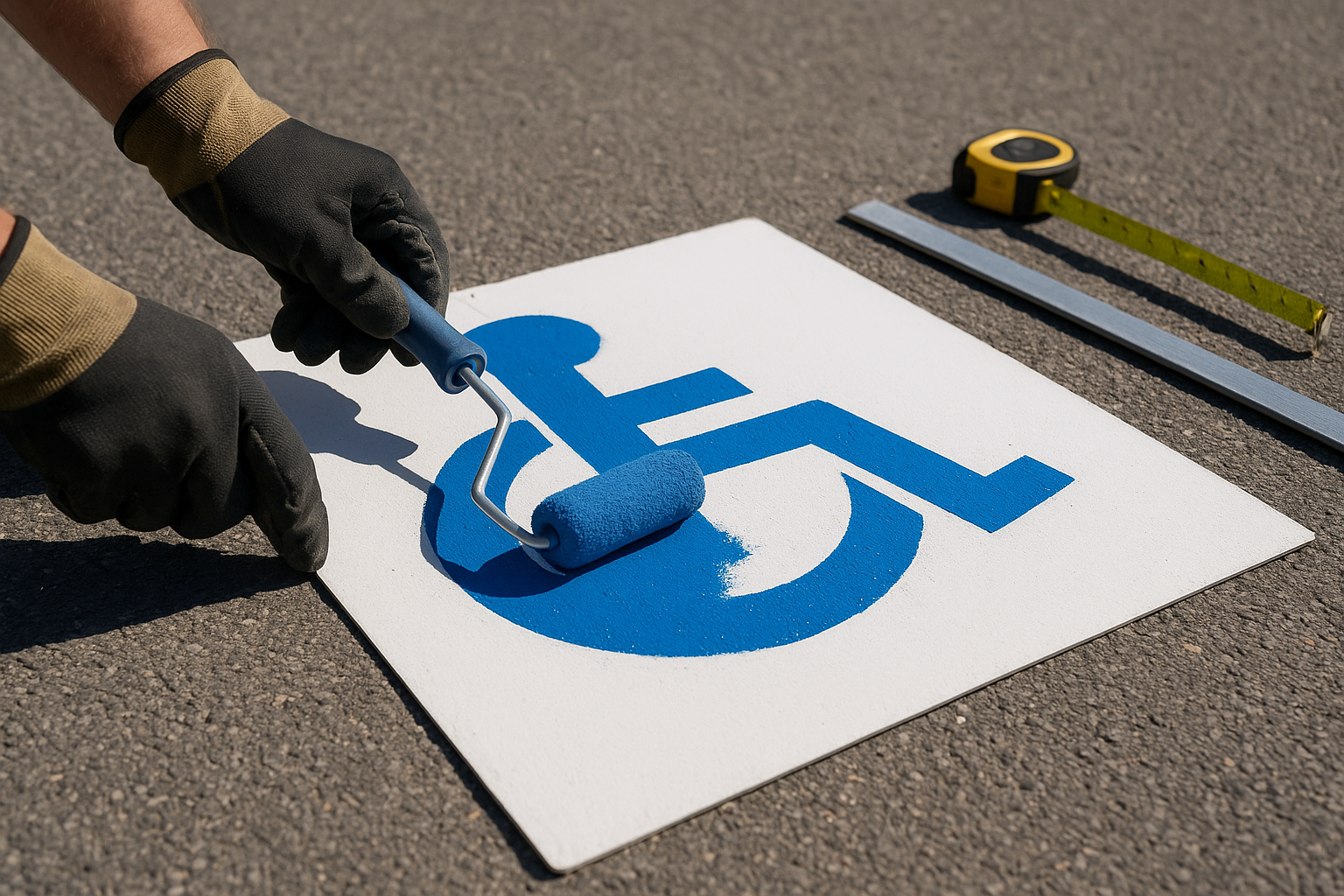
Careful stencil work keeps ADA compliant striping crisp and easy to read from a moving vehicle.
Common ADA Striping Mistakes to Avoid
Even experienced property managers run into the same handful of errors. For instance, undersized access aisles are one of the most frequent violations, since a few missing inches can make a stall unusable for a wheelchair lift.
Similarly, many lots miscalculate how many van-accessible stalls are required, or they skip signage updates after restriping. In contrast, a lot that pairs correct stall counts with fresh paint and proper signage rarely runs into compliance trouble. Above all, treating ADA compliant striping as a one-time task rather than ongoing maintenance is the mistake that causes the most repeat violations.
Cost of ADA Compliant Parking Lot Striping
Pricing varies based on lot size, the number of accessible stalls needed, and whether old markings need removal first. As a general benchmark, small commercial lots often fall in the low hundreds of dollars, while larger retail centers or municipal lots can run into the low thousands.
Because every property is different, the most reliable way to budget is a site-specific quote. Property owners in the Plano area can compare notes with this breakdown of professional line striping services in Plano, TX to see what typically factors into pricing.
Choosing a Professional ADA Striping Contractor in Denton and Plano
Because ADA compliant striping involves exact measurements and legal requirements, it’s usually worth hiring a specialist rather than a general painting crew. A qualified contractor should understand stall ratios, aisle widths, fire lane coordination, and local signage rules for North Texas municipalities.
stripespls.com is a full-service parking lot marking company based in Texas, focused on professional striping, ADA compliance solutions, and fire lane marking for commercial and residential properties throughout Denton and Plano. The team works with property managers, retail centers, schools, healthcare facilities, and municipal organizations, and property owners can learn more about what to look for in a provider through this overview of a quality parking lot striping company in Plano. Prospective clients can also request a free quote directly at stripespls.com.
Frequently Asked Questions About ADA Compliant Striping
What is ADA compliant striping?
ADA compliant striping is the painting and layout of parking lot markings that meet the technical accessibility standards set by the Americans with Disabilities Act. It covers accessible stall dimensions, access aisles, signage, and the International Symbol of Accessibility.
How wide must an ADA accessible parking space be?
A standard accessible parking space must be at least 96 inches wide, paired with an adjacent access aisle of at least 60 inches. Van-accessible spaces require a wider 132-inch access aisle or a 96-inch space with an 8-foot aisle.
How many accessible parking spaces does a parking lot need?
The number of required accessible spaces is based on total lot size, following a sliding scale from the ADA Standards for Accessible Design. For example, lots with 25 or fewer spaces need at least one accessible stall, while larger lots require a higher percentage.
What paint is used for ADA compliant striping?
Most contractors use water-based traffic paint or durable epoxy coatings designed for outdoor pavement. These products meet reflectivity and durability standards so markings stay visible through weather and heavy traffic.
How often should ADA parking lot markings be repainted?
Most properties need restriping every one to two years, depending on traffic volume and climate exposure. Faded ADA compliant striping can fall out of compliance quickly, so periodic inspection is recommended.
What is the difference between van-accessible and standard accessible stalls?
Van-accessible stalls include a wider access aisle to accommodate wheelchair lifts and ramps, along with a specific van-accessible sign. Standard accessible stalls use a narrower aisle and serve passenger vehicles without lift equipment.
How much does ADA compliant striping cost?
Cost depends on lot size, number of accessible stalls, and existing pavement condition, but most projects range from a few hundred to a few thousand dollars. Getting a free, site-specific quote is the most accurate way to budget.
What happens if a parking lot is not ADA compliant?
Non-compliant properties risk federal lawsuits, local code violations, and fines from municipal inspectors. In addition, inaccessible parking can prevent customers and employees with disabilities from safely using the property.
Can I install ADA compliant striping myself?
While small property owners sometimes attempt DIY striping, precise measurements, paint durability, and signage placement are difficult to get right without training. Professional contractors carry the equipment and knowledge to meet code on the first attempt.
How long does it take to restripe a parking lot for ADA compliance?
Most commercial lots can be restriped in a single day or overnight to avoid disrupting business hours. Larger properties with extensive accessible parking requirements may take two to three days.
What are common mistakes in ADA compliant striping?
Common mistakes include undersized access aisles, missing van-accessible signage, incorrect stall counts, and using paint that fades too quickly. Each of these issues can trigger a compliance violation even if the lot looks organized.
Do fire lanes need to be ADA compliant too?
Fire lanes follow separate fire code requirements rather than ADA standards, but they often overlap on the same property. A professional striping company typically coordinates both fire lane marking and ADA compliant striping in one project.
How do I know if my parking lot needs new ADA striping?
If accessible symbols are faded, access aisle lines are hard to see, or signage is missing, it is time for an update. A quick site walk or professional inspection can confirm whether the lot still meets current standards.
Who enforces ADA compliant striping requirements?
ADA compliance is enforced through federal civil rights law, while local building departments often check striping during permitting and inspections. Property owners remain responsible for ongoing compliance regardless of who last performed the striping.
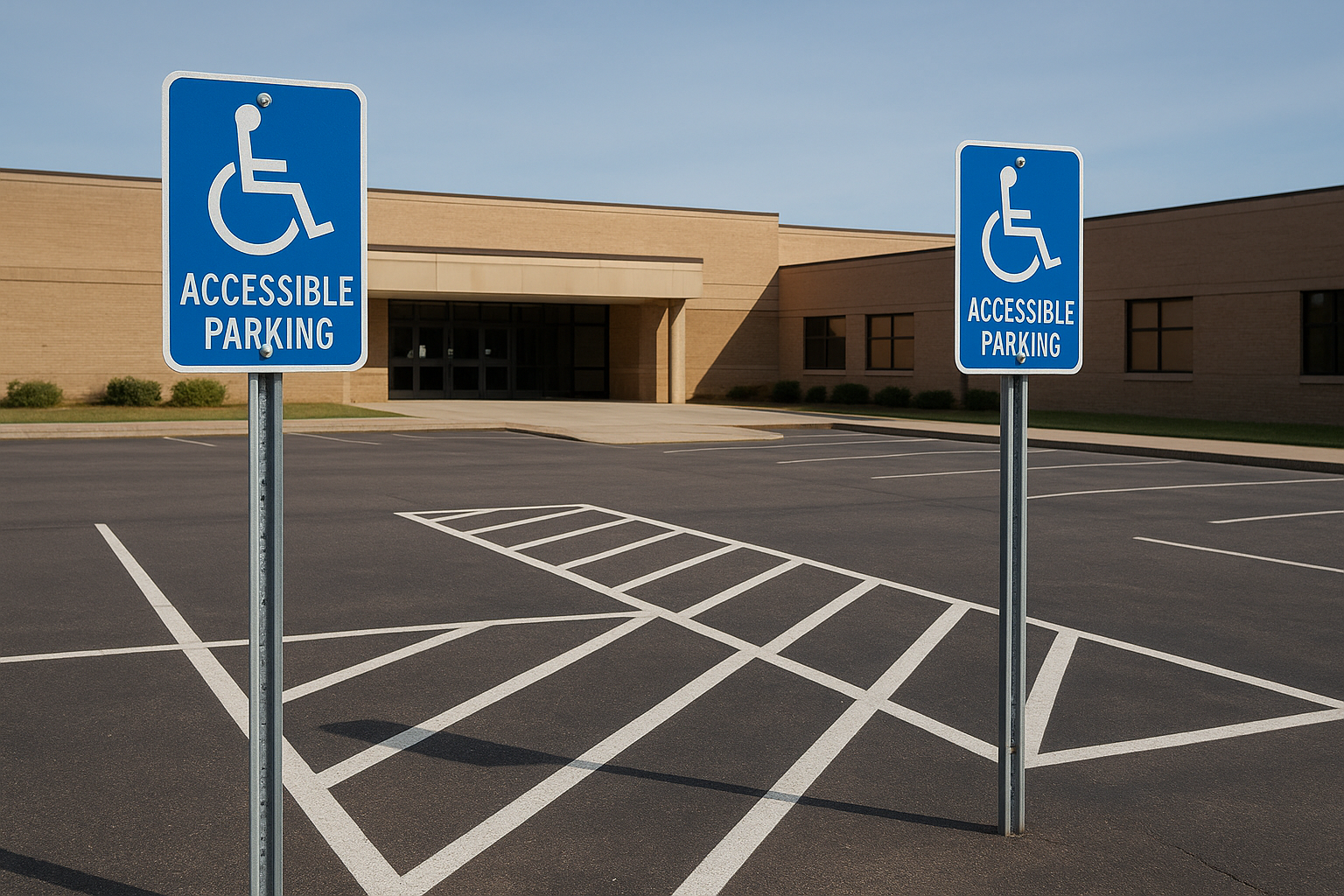
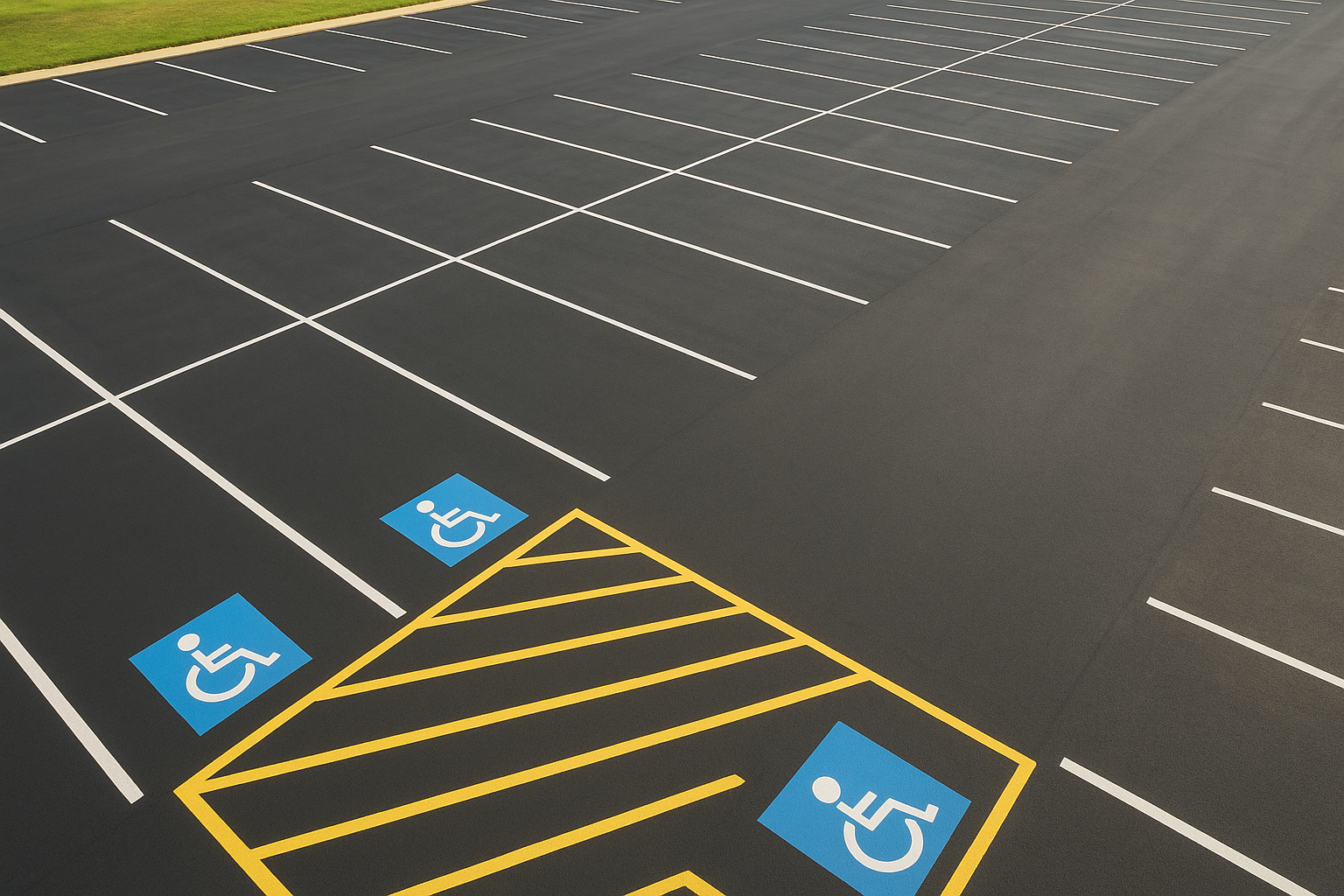
Proper signage paired with clean lines completes an ADA compliant striping layout.
Final Thoughts on ADA Compliant Striping
In short, ADA compliant striping protects people, reduces legal risk, and keeps a property looking professional. From correct stall widths to van-accessible ratios and proper signage, every detail plays a role in true compliance.
Therefore, regular inspections and timely restriping matter just as much as getting the initial layout right. Whether a property needs a brand-new layout or a simple refresh, working with an experienced local team helps ensure the lot stays safe, organized, and fully compliant for years to come.