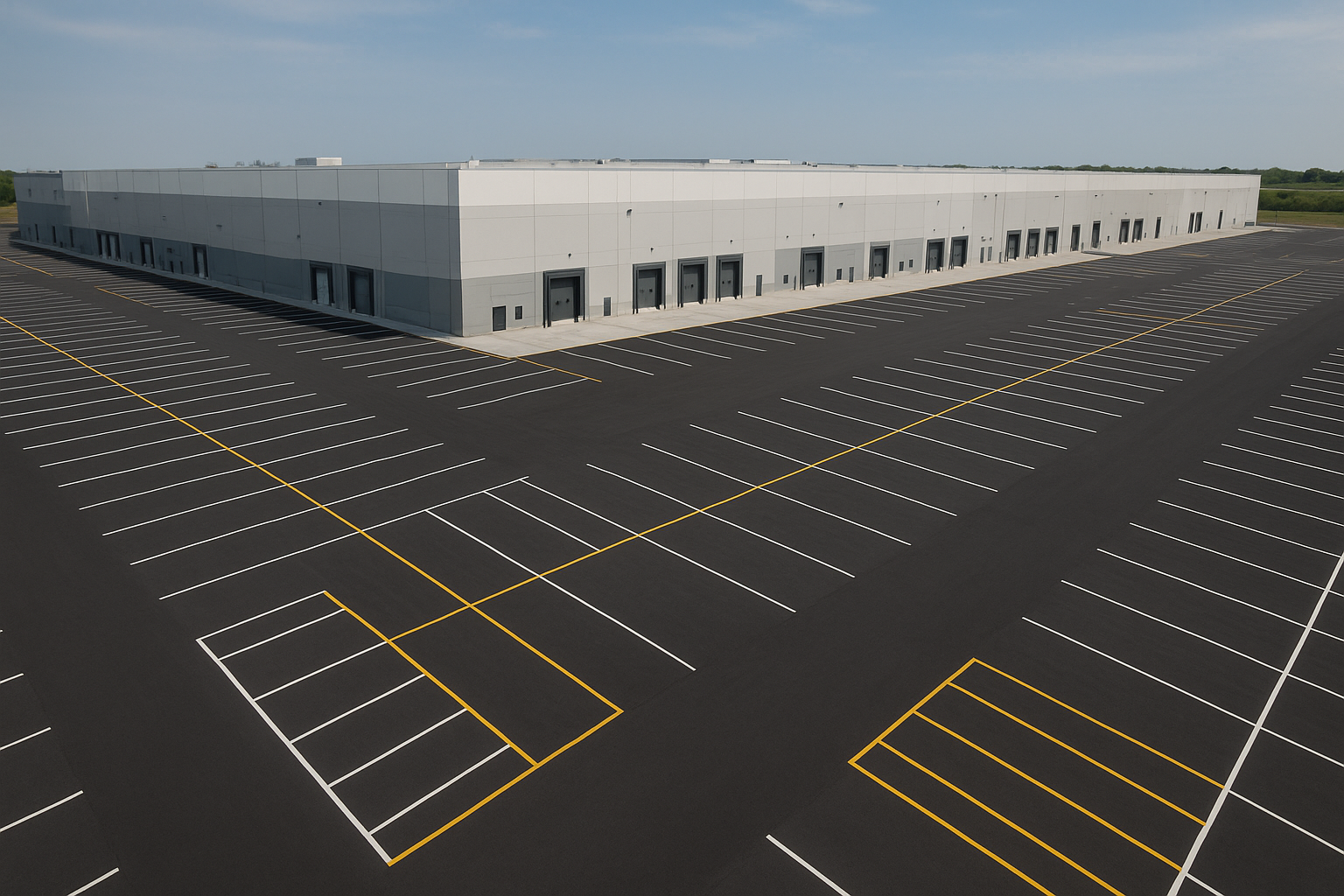
Industrial parking lot striping is the process of painting durable, code-compliant lines, symbols, and markings across large commercial properties to organize traffic, define parking stalls, and support safety compliance. Because industrial facilities often handle heavy trucks, forklifts, and constant foot traffic, precise markings matter more than they do at a small retail lot. Property managers throughout Denton and Plano, Texas increasingly ask what the process involves and how often it should happen. This guide breaks down the essentials so facility owners can plan a striping project with confidence.
Quick answer: Industrial parking lot striping uses high-durability traffic paint to mark parking stalls, drive lanes, fire lanes, and ADA-accessible spaces on large commercial properties. It typically needs to be refreshed every 12 to 24 months, depending on traffic volume and weather exposure, to stay visible and code compliant.
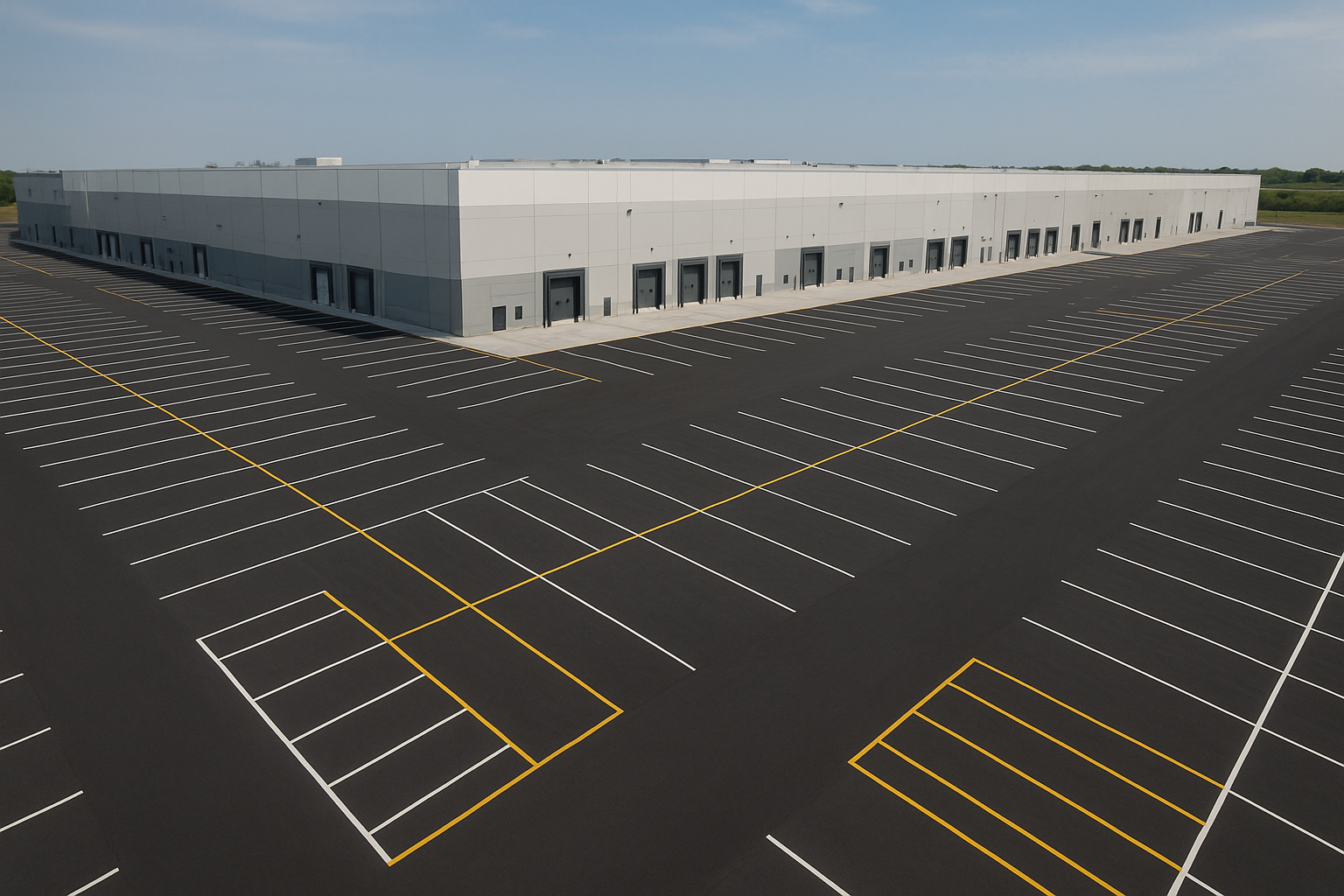
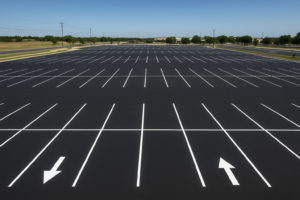
Clear industrial parking lot striping helps organize traffic flow across large commercial properties.
What Is Industrial Parking Lot Striping?
Industrial parking lot striping is the specialized application of painted lines, symbols, and text on large-scale commercial properties such as warehouses, distribution centers, manufacturing plants, and retail centers. Unlike a small office lot, industrial properties usually require wider drive lanes for trucks, clearly marked loading zones, and durable paint that can withstand heavy equipment traffic. Many sites also consult resources on parking lot layout design when planning custom layouts.
In practice, the work includes restriping faded lines, laying out new parking stalls, painting directional arrows, and marking fire lanes and ADA-accessible spaces. Furthermore, industrial sites often need striping services guide that balance maximum parking capacity with safe traffic flow. As a result, an experienced contractor typically surveys the property first, checks local code requirements, and then designs a layout before any paint touches the pavement.
Why Professional Parking Lot Line Marking Matters
Well-executed parking lot line marking does more than look tidy. In fact, it directly affects safety, liability, and daily operations at busy industrial sites.
For instance, clear striping helps drivers of forklifts, delivery trucks, and passenger vehicles navigate safely, which reduces the risk of collisions in high-traffic loading areas. Similarly, well-defined pedestrian walkways protect employees walking between buildings and parked vehicles. In addition, faded or missing markings can create legal exposure if an accident occurs and inspectors determine the lot failed to meet current safety codes.
According to the National Safety Council, roughly 20 percent of all reported vehicle accidents occur in parking lots and garages, which underscores why visibility matters. Consequently, many property managers schedule striping maintenance on a routine cycle rather than waiting until lines disappear completely. Beyond safety, crisp markings also maximize usable space. A professionally designed layout, similar to the approach outlined in this parking lot striping service overview, can often fit additional stalls into the same footprint without violating code.
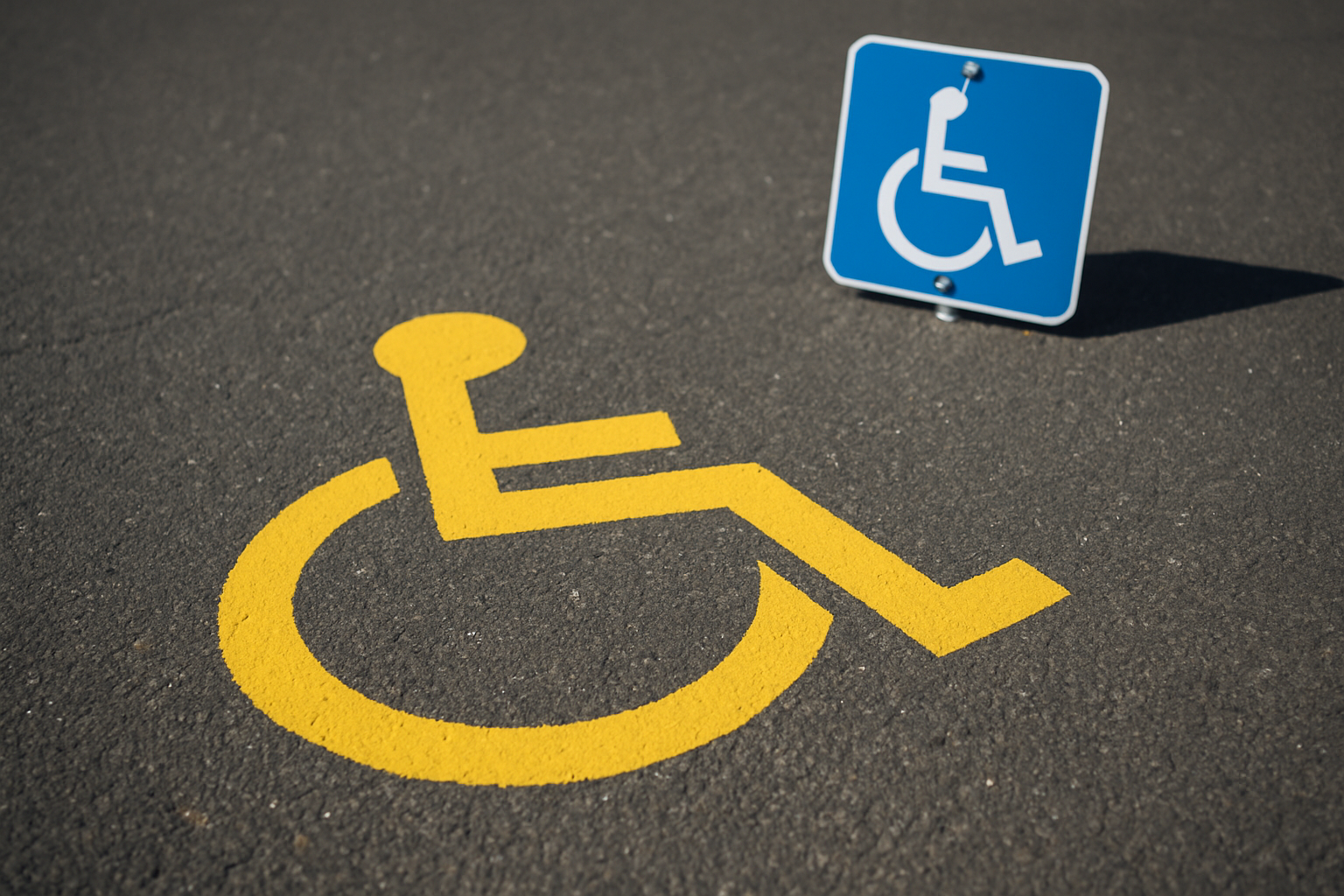
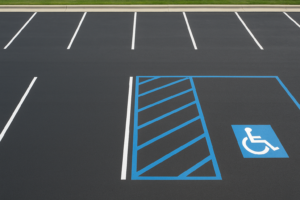
ADA-compliant markings are a required part of any commercial or industrial striping plan.
Safety and Compliance Standards for Commercial Striping
Industrial and commercial properties must follow several overlapping standards when it comes to pavement markings. Specifically, these include federal accessibility law, local fire codes, and, in some cases, guidance from the Manual on Uniform Traffic Control Devices (MUTCD), a federal reference document that standardizes traffic signs and pavement markings nationwide. Because requirements vary by city and property type, it helps to understand each standard separately before starting a project.
ADA Compliance and Accessible Parking Markings
Accessible parking spaces must meet requirements set by the Americans with Disabilities Act (ADA), a federal civil rights law that protects people with disabilities. According to ADA.gov accessibility guidelines, accessible stalls need specific dimensions, proper signage, and painted access aisles that connect safely to building entrances.
Moreover, the number of required accessible spaces typically scales with total lot size. A 500-stall industrial lot, for example, needs more accessible spaces than a 50-stall lot. Therefore, planning accessible markings early in a project avoids costly rework later. For a deeper breakdown of these rules, this safety and compliance guide covers requirements in more detail.
Fire Lane Marking Requirements
Fire lanes must stay clear at all times so emergency vehicles can reach a building quickly. Typically, local fire marshals require red curb paint or red striping paired with visible “NO PARKING – FIRE LANE” lettering.
Because fire lane rules differ by municipality, property owners in the Denton and Plano area should confirm exact wording and paint specifications with local authorities before scheduling work. In addition, fire lanes generally need periodic repainting since heavy vehicle traffic and weather wear down red paint faster than standard white or yellow lines. Facilities with forklifts and loading docks should also review OSHA guidance on workplace vehicle traffic, since clear markings support broader site safety plans.
How to Plan a Commercial Striping Project for Industrial Sites
Planning a large-scale striping project involves more steps than most property owners expect. Industrial parking lot striping projects benefit from an early layout review that accounts for truck turning radii, ADA spaces, and fire lanes. Below is a general process contractors follow from start to finish.
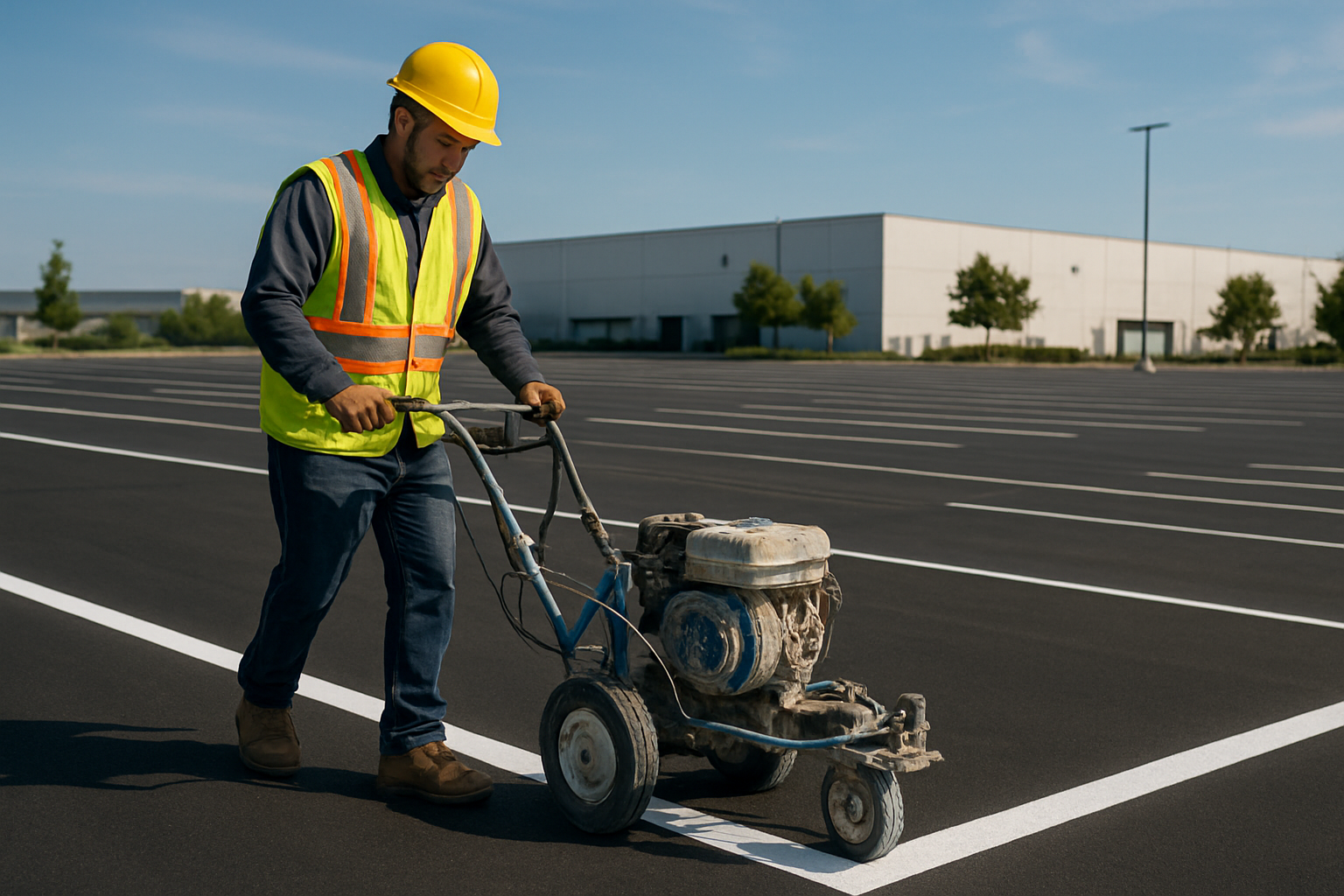
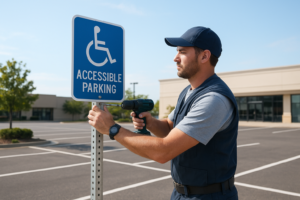
A striping crew applies fresh lines using industrial-grade equipment and traffic paint.
- Assess the current lot. A contractor measures the property, photographs existing markings, and notes drainage or pavement issues that could affect paint adhesion.
- Review local codes. The team checks ADA requirements, fire lane rules, and municipal ordinances specific to Denton, Plano, or the surrounding North Texas region.
- Design the layout. Using the assessment data, the contractor creates a striping plan that balances maximum stall count with safe traffic flow and required accessible spaces.
- Prepare the surface. Before painting, crews sweep debris, patch minor cracks, and remove old paint residue that could interfere with new lines.
- Apply layout marks. Chalk lines or laser guides mark the design on the pavement so the paint crew follows an accurate template.
- Paint the markings. Using industrial-grade traffic paint, crews apply stalls, arrows, fire lanes, and accessible symbols in the correct sequence to avoid smudging.
- Inspect and cure. Finally, the completed work is inspected for accuracy, and the lot is closed off long enough for the paint to cure, meaning the paint fully hardens and bonds to the pavement.
Consequently, following this sequence helps ensure the finished lot meets code on the first attempt rather than requiring costly touch-ups.
How Often Should Industrial Parking Lots Be Restriped?
Most industrial lots need restriping every 12 to 24 months, though heavier traffic sites may need it sooner. In particular, distribution centers with constant truck and forklift traffic often see faded lines within a single year, while lower-traffic office parks can wait longer.
Weather also plays a role. For example, intense Texas summer heat combined with UV exposure can fade paint faster than in milder climates. As a result, many North Texas property managers schedule an annual inspection to catch fading lines before they become a compliance issue. If you’re unsure whether your lot needs attention, see our maintaining parking lot striping resource for inspection tips and schedules.
Choosing the Right Striping Contractor for Your Property
Not every striping company has experience with large industrial sites. Therefore, it helps to ask a few key questions before hiring a contractor.
First, confirm the company understands ADA and fire code requirements specific to your city. Second, ask what type of paint they use, since industrial-grade traffic paint holds up better under heavy vehicle loads than standard options. Third, request references from similar commercial or industrial properties, not just small residential jobs.
For property managers in Denton and Plano, this checklist for choosing a reliable striping service outlines additional questions worth asking. In addition, a reputable contractor should be willing to provide a written quote that details layout plans, paint type, and estimated timeline before work begins. You can request a free quote directly through stripespls.com to compare options for your property.
Frequently Asked Questions About Industrial Parking Lot Striping
What is industrial parking lot striping?
Industrial parking lot striping is the process of painting durable lines, stalls, arrows, and safety markings on large commercial properties such as warehouses and distribution centers. It helps organize traffic, maximize parking capacity, and meet accessibility and fire code requirements.
How long does industrial parking lot striping take to complete?
Most industrial striping projects take one to three days, depending on lot size and layout complexity. Larger properties with fire lanes and ADA markings may take longer to plan and paint.
How much does industrial parking lot striping cost?
Costs vary widely based on square footage, paint type, and how many stalls or symbols are needed. It helps to request a detailed quote so pricing reflects the specific layout rather than a generic estimate.
What type of paint is used for industrial parking lot striping?
Contractors typically use water-based or fast-drying traffic paint designed to withstand heavy vehicle loads and UV exposure. Industrial-grade formulas resist fading longer than standard consumer paints.
How is industrial striping different from standard commercial striping?
Industrial striping usually requires wider drive lanes, loading zone markings, and paint rated for forklift and truck traffic. Standard commercial lots often see lighter vehicle loads and simpler layouts.
What are common mistakes in parking lot line marking projects?
Common mistakes include skipping surface preparation, ignoring updated ADA measurements, and using paint that is not rated for heavy traffic. These errors often lead to premature fading and costly rework.
Do industrial lots need ADA-compliant markings?
Yes, nearly all commercial and industrial properties must include a minimum number of ADA-compliant accessible spaces based on total lot size. These spaces need specific dimensions, signage, and painted access aisles.
What color are fire lane markings required to be?
Fire lanes are typically marked with red paint paired with white lettering that reads something like NO PARKING – FIRE LANE. Exact wording and shade requirements can vary by local fire marshal.
How often should faded lines be repainted?
Most industrial lots need restriping every 12 to 24 months, though high-traffic sites may fade sooner. Annual inspections help catch fading before it becomes a compliance issue.
Can parking lot striping be done without closing the lot?
Many projects are scheduled in phases or during off-hours so only part of the lot is closed at a time. This approach keeps operations running while paint cures section by section.
What is the best time of year for striping projects in Texas?
Warm, dry weather helps paint cure properly, making spring and fall ideal in North Texas. Extreme summer heat or wet conditions can affect how well paint adheres to pavement.
Why should I hire a professional for industrial parking lot striping instead of DIY?
Professional crews understand code requirements, use commercial-grade equipment, and apply industrial-grade paint that lasts far longer than DIY kits. This reduces the risk of failed inspections and premature repainting.
Final Thoughts on Industrial Parking Lot Striping
In summary, industrial parking lot striping keeps large commercial properties safe, organized, and compliant with ADA and fire code requirements. From planning and surface prep to final paint application, each step affects how long the markings last and how well the lot functions day to day. Because Texas heat and heavy vehicle traffic wear down paint faster than milder conditions, most industrial sites benefit from restriping every one to two years. Ultimately, working with an experienced contractor and scheduling regular inspections helps property owners in Denton, Plano, and across North Texas avoid compliance issues while keeping their parking facilities running smoothly.