Municipal parking lot services cover everything from ADA-compliant stall layouts to fire lane marking and full restriping for city halls, schools, courthouses, and other publicly owned properties. Because these lots serve residents, employees, and visitors every day, they must stay safe, organized, and fully compliant with federal accessibility law. In North Texas, cities and public agencies increasingly turn to specialized contractors rather than general maintenance crews to handle this work correctly the first time.
Quick answer: Municipal parking lot services are professional striping, marking, and compliance solutions designed specifically for publicly owned properties such as city buildings, schools, and municipal complexes. They typically include ADA stall layouts, fire lane marking, directional arrows, and periodic restriping to keep pavement markings visible, safe, and code-compliant.
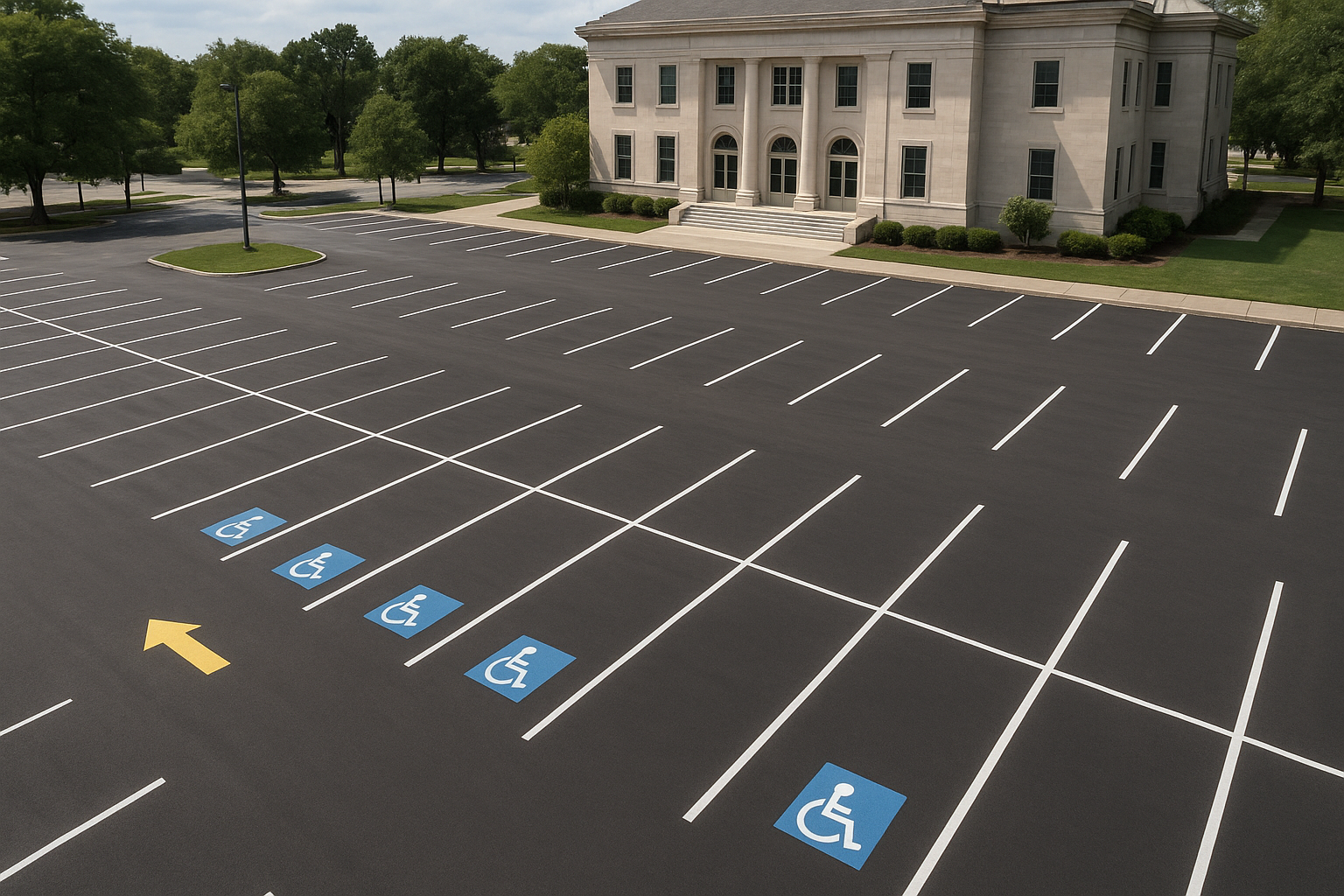
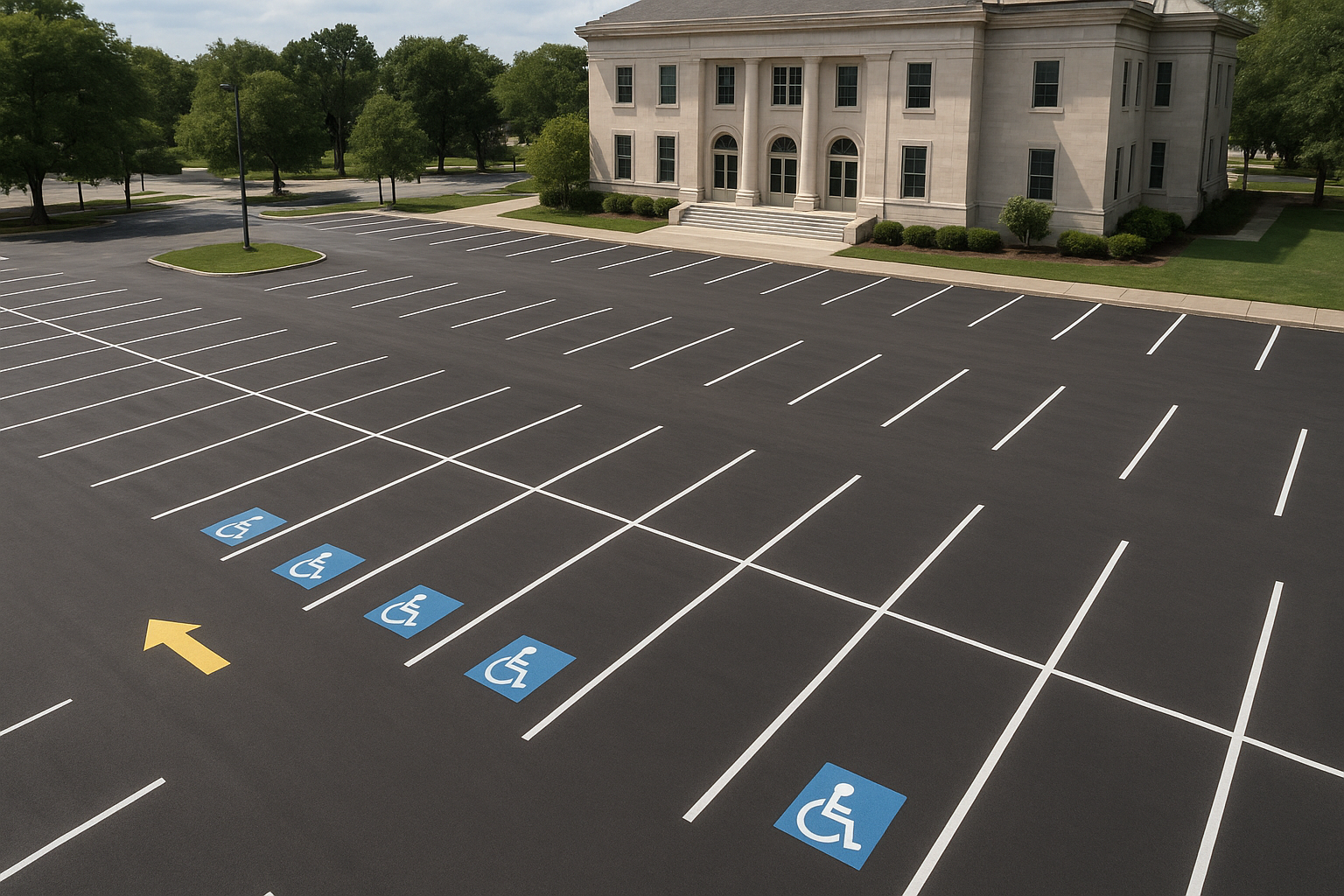
A completed municipal parking lot services project featuring ADA-compliant stalls and clear directional markings.
What Are Municipal Parking Lot Services?
Municipal parking lot services are professional striping, marking, and compliance solutions built specifically for publicly owned properties. Unlike a standard retail center, municipal lots often serve schools, courthouses, libraries, healthcare facilities, and administrative buildings, so they carry stricter accessibility and safety obligations.
In practice, this means a contractor handling municipal work must understand ADA stall ratios, fire lane placement rules, and local traffic control standards, not just basic line painting. Furthermore, many municipalities require documentation proving that a project meets current code, which makes contractor experience especially important. As a result, cities and counties across North Texas often rely on specialized striping companies rather than general pavement crews for these projects.
Why Public Agencies Need Professional Parking Lot Striping
Faded or missing pavement markings create real safety risks in public parking areas. Without clear ADA stalls, drivers may block accessible spaces without realizing it. Similarly, unmarked fire lanes can slow emergency response during a critical incident.
The Federal Highway Administration’s Manual on Uniform Traffic Control Devices sets minimum retroreflectivity standards so drivers can see pavement markings at night from a safe distance. Consequently, when markings fade below that threshold, a municipality may technically fall out of compliance even if no complaint has been filed. Professional parking lot striping addresses this proactively, using durable paint and precise layouts that meet these federal benchmarks rather than reacting only after a problem occurs.
In addition, well-marked lots improve traffic flow and reduce fender-benders in busy municipal complexes. For example, clear directional arrows near school pickup zones or courthouse entrances help prevent the confusion that often leads to minor collisions.
Key Components of Municipal Parking Lot Marking Projects
A complete municipal parking lot marking project usually involves several distinct elements working together. Each component serves a specific safety or compliance purpose, so skipping one can create gaps in accessibility or emergency access.
ADA Compliance Requirements for Public Facilities
Americans with Disabilities Act, often shortened to ADA, is the federal civil rights law that sets accessibility standards for public and commercial properties, including parking facilities. Under current guidance from ADA.gov, the number of required accessible stalls scales with total lot size, and at least one van-accessible space must be included once a lot reaches a certain threshold.
Because municipal properties are held to a high public standard, inspectors and residents alike tend to notice compliance issues quickly. Therefore, accurate stall dimensions, access aisle widths, and proper signage are non-negotiable parts of any municipal restriping project.
Fire Lane Marking and Emergency Access
Fire lane marking uses red curb paint and stenciled lettering to designate areas that must remain clear for emergency vehicles at all times. Local fire codes typically dictate the exact width, color, and signage wording required, and these rules can vary between Denton, Plano, and neighboring jurisdictions.
Because blocked fire lanes can delay emergency response by precious seconds, municipalities generally treat this marking as a top priority rather than an optional upgrade. For a deeper look at how local governments handle these obligations, see this guide on how municipalities ensure parking lot compliance.
Directional Arrows, Crosswalks, and Wayfinding
Beyond stalls and fire lanes, municipal lots often need directional arrows, pedestrian crosswalks, and stop bars to guide both vehicles and foot traffic safely. Schools and healthcare campuses in particular benefit from clear wayfinding, since these properties frequently see heavy pedestrian activity during drop-off and pickup times.
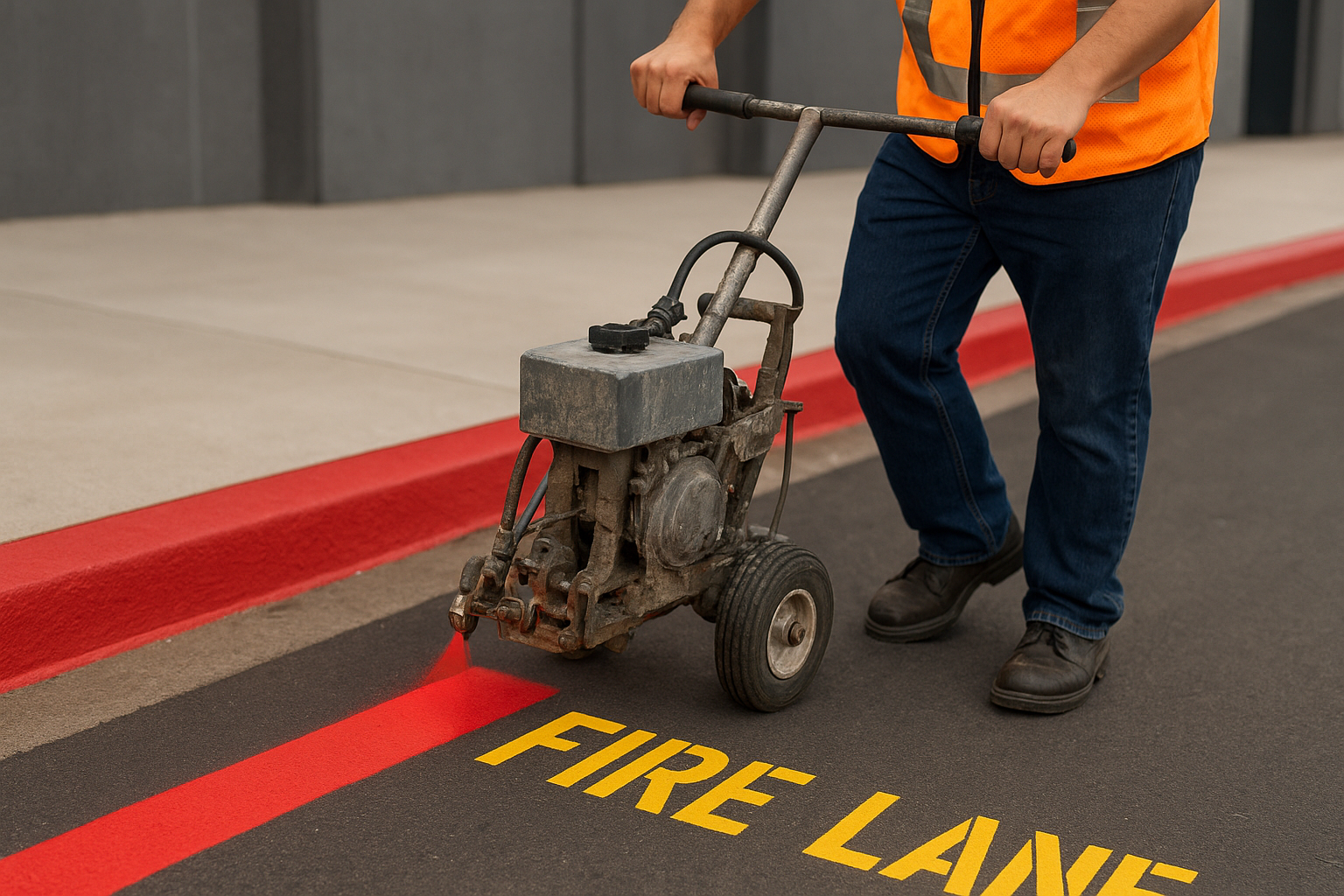
Fire lane marking is a critical safety component of most municipal parking lot projects.
How to Plan a Municipal Parking Lot Striping Project
Planning a municipal restriping project involves more coordination than a typical retail lot, since public schedules, budgets, and compliance requirements all need to align. The following steps outline a straightforward approach that most public agencies can follow.
- Assess the current lot condition. Walk the property to document faded markings, cracked pavement, and outdated ADA layouts before requesting bids.
- Review current ADA and fire code requirements. Confirm the required number of accessible stalls and fire lane placements based on the property’s size.
- Request detailed quotes from qualified contractors. Compare paint type, layout design, and estimated timelines from providers experienced with public sector work.
- Schedule the project during low-traffic periods. Weekends, evenings, or school breaks help minimize disruption while paint cures properly.
- Inspect completed work and document compliance. Verify stall dimensions and fire lane visibility, then keep records for future audits.
Following this process helps reduce surprises and keeps a project on schedule. For a closer look at general upkeep between restriping cycles, this resource on best practices for maintaining a commercial parking lot offers useful guidance that applies to municipal properties as well.
Cost Factors for Municipal Parking Lot Services
Pricing for municipal parking lot services depends on several variables, including total square footage, the number of ADA stalls required, and whether fire lanes or crosswalks need fresh paint. Thermoplastic markings, for instance, cost more upfront than standard water-based paint but tend to last significantly longer in high-traffic areas.
In addition, older lots may need crack filling or minor pavement repair before new lines can be applied, which adds to the overall budget. Because every property differs, most contractors recommend requesting a site visit and free quote rather than relying on generic per-square-foot estimates found online.
Common Mistakes Municipalities Make with Parking Lot Maintenance
One frequent mistake is waiting too long between restriping cycles, which allows markings to fade past the point of safe visibility. Similarly, some agencies overlook updated ADA guidance when a lot is resurfaced, leading to outdated stall ratios that no longer meet current requirements.
Another common issue involves hiring contractors unfamiliar with local fire codes, which can result in improperly sized or positioned fire lanes. Consequently, choosing a contractor with documented municipal or institutional experience helps avoid these costly do-overs.
Choosing the Right Municipal Parking Lot Services Provider
Selecting the right provider for municipal parking lot services starts with verifying real experience on public sector projects, not just commercial retail lots. A qualified contractor should be comfortable discussing ADA stall ratios, fire code requirements, and durable paint options without hesitation.
Locally operated companies also bring an advantage, since they understand regional weather patterns and pavement conditions specific to North Texas. For property managers, school administrators, and government facilities teams across Denton and Plano, stripespls.com provides ADA-compliant striping, fire lane marking, and full lot restriping tailored to public and commercial properties alike. Readers can also explore specific parking lot striping services across the DFW area or review the full list of striping and compliance services before requesting a quote.
For municipalities specifically weighing restriping against a full pavement overhaul, this overview of parking lot striping options breaks down the differences in materials and expected lifespan.
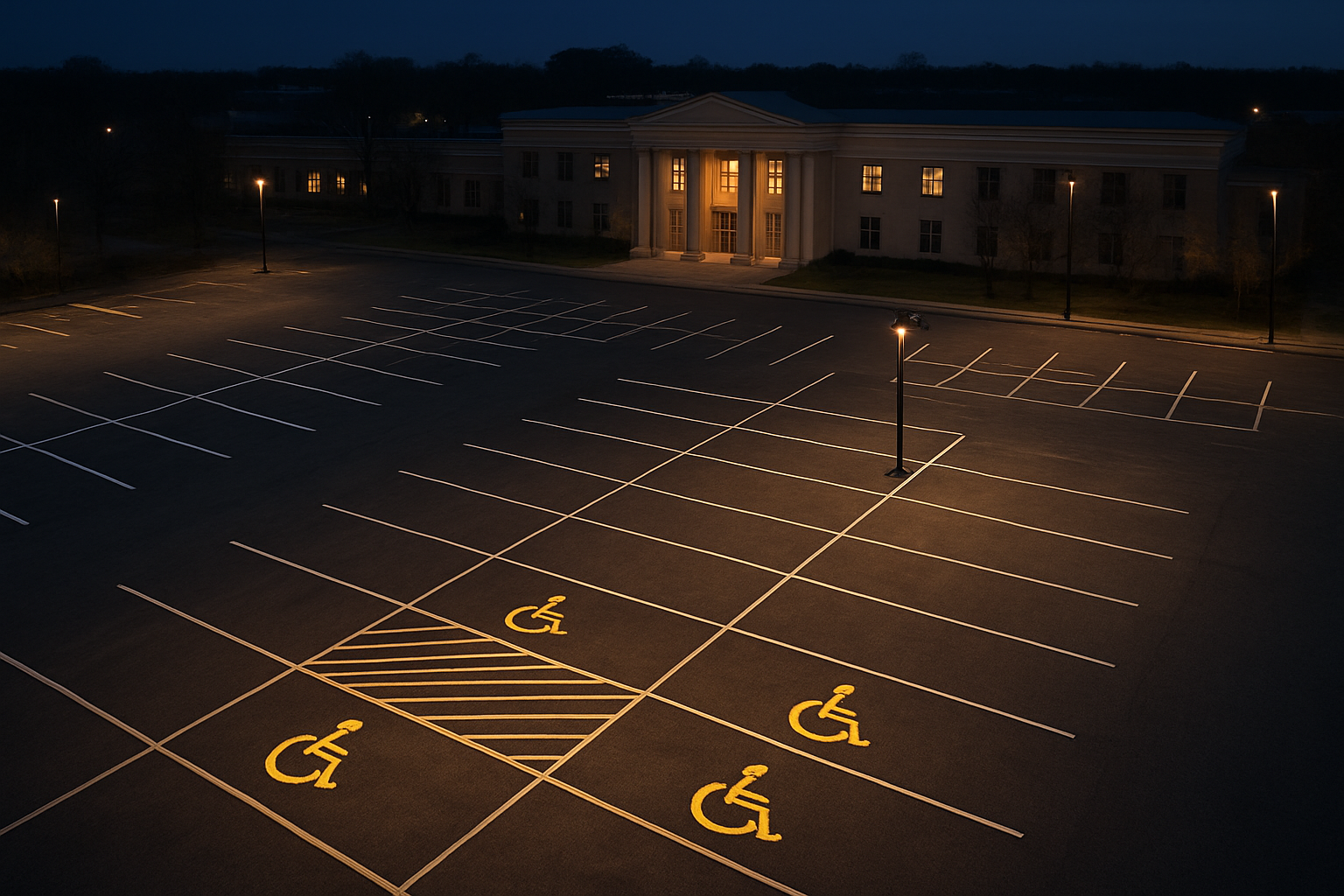
Consistent maintenance keeps municipal parking lot services projects looking sharp long after installation.
Frequently Asked Questions About Municipal Parking Lot Services
What are municipal parking lot services?
Municipal parking lot services include striping, ADA-compliant stall layouts, fire lane marking, and pavement maintenance for city, county, school, and other publicly owned lots. These services keep public parking facilities safe, organized, and compliant with federal and state regulations.
Why do municipalities need professional line striping instead of DIY marking?
Professional striping ensures accurate measurements, code-compliant paint, and proper layout of ADA stalls, fire lanes, and traffic flow markings. DIY marking often falls short on retroreflectivity standards and can expose a municipality to liability.
How often should a municipal parking lot be restriped?
Most municipal lots need restriping every 12 to 24 months, depending on traffic volume and weather exposure. High-traffic lots near schools or government buildings often need touch-ups sooner because heavy use fades paint faster.
What ADA requirements apply to public parking facilities?
The Americans with Disabilities Act requires a specific ratio of accessible stalls based on total lot size, along with van-accessible spaces, proper signage, and compliant access aisles. Municipalities that fail to meet these standards risk complaints and legal exposure.
How much do municipal parking lot services typically cost?
Costs vary by lot size, paint type, and the number of ADA stalls, fire lanes, and directional markings required, but most municipal restriping projects range from a few hundred to several thousand dollars. Requesting a free quote is the most reliable way to get an accurate number for a specific property.
What is fire lane marking and why does it matter for municipalities?
Fire lane marking uses red curb paint and stenciled signage to designate areas that must remain clear for emergency vehicle access. Municipalities are typically required to maintain these zones under local fire codes to avoid delays during emergencies.
How long does a municipal parking lot striping project take?
A typical municipal lot can be striped in one to two days, depending on size and the complexity of ADA layouts, fire lanes, and directional markings. Larger municipal complexes or multi-lot campuses may take longer to complete.
What is the difference between water-based and thermoplastic pavement markings?
Water-based paint is more affordable and dries quickly but wears faster, while thermoplastic markings are more durable and better suited for high-traffic municipal lots. Many municipalities choose thermoplastic for fire lanes and crosswalks that see constant use.
What common mistakes do municipalities make with parking lot maintenance?
Common mistakes include delaying restriping until markings are nearly invisible, ignoring ADA slope and signage requirements, and using contractors unfamiliar with local fire codes. These oversights can lead to safety hazards and compliance violations.
Can municipal parking lot services include sealcoating and crack repair?
Yes, many providers bundle pavement sealcoating and crack filling with striping to extend the life of a municipal lot. Addressing pavement damage before restriping also helps new markings adhere better and last longer.
How do I choose the right municipal parking lot services provider?
Look for a contractor with documented ADA compliance experience, knowledge of local fire codes, and references from other public sector or commercial clients. It also helps to choose a locally operated company familiar with regional weather and pavement conditions.
Do school districts and healthcare facilities count as municipal clients?
Many striping contractors classify public school districts, government buildings, and healthcare campuses under municipal or institutional services because they follow similar compliance and safety standards. These properties often require the same ADA and fire lane expertise as city-owned lots.
What happens if a municipal lot fails an ADA compliance inspection?
A failed inspection typically requires the municipality to correct stall counts, signage, or access aisle widths within a set timeframe to avoid fines or legal action. Working with an experienced striping contractor helps ensure corrections meet current standards the first time.
Final Thoughts on Municipal Parking Lot Services
In summary, municipal parking lot services play a direct role in public safety, accessibility, and legal compliance for cities, schools, and government properties. From ADA stall layouts to fire lane marking and durable restriping, each component works together to keep public lots functional and code-compliant. Because standards evolve and pavement wears down over time, ongoing maintenance matters just as much as the initial installation.
Ultimately, partnering with an experienced provider helps municipalities avoid costly compliance gaps while keeping parking facilities safe for residents, staff, and visitors. Property managers and public agencies throughout Denton and Plano can request a free quote at stripespls.com to get started on their next municipal parking lot services project.