Striping services for residential properties help homeowners associations, apartment communities, and private neighborhoods keep parking areas safe, organized, and easy to navigate. Unlike a big-box retail lot, a residential striping project often involves narrower drive lanes, marked guest parking, and fire lanes tucked close to building entrances. Consequently, precise line placement matters just as much on a quiet cul-de-sac as it does outside a shopping center. This guide walks through what residential striping involves, why it matters for property value and safety, and how to choose a dependable crew such as the team at stripespls.com.
What Are Striping Services for Residential Properties?
Striping services for residential properties refer to the professional painting of parking lines, fire lanes, handicap stalls, and directional markings across apartment complexes, HOAs, and multi-family housing developments. These services keep traffic organized, protect pedestrians, and help properties meet ADA (Americans with Disabilities Act) accessibility rules. Unlike a quick do-it-yourself paint job, professional crews use durable, reflective traffic paint built to survive North Texas heat and rain.
In practice, this work covers far more than straight parking lines. For example, a typical residential project may include repainting faded stall lines, adding new handicap-accessible spaces, marking fire lanes in red curb paint, and installing directional arrows near tight turns. In addition, many communities request speed bump markings or numbered stalls for assigned parking. Because residential lots see different traffic patterns than retail centers, an experienced striping company adjusts layout and paint choice accordingly. According to the U.S. Department of Justice’s 2010 ADA Standards for Accessible Design, accessible parking counts and placement are determined by total lot size, not just building type.
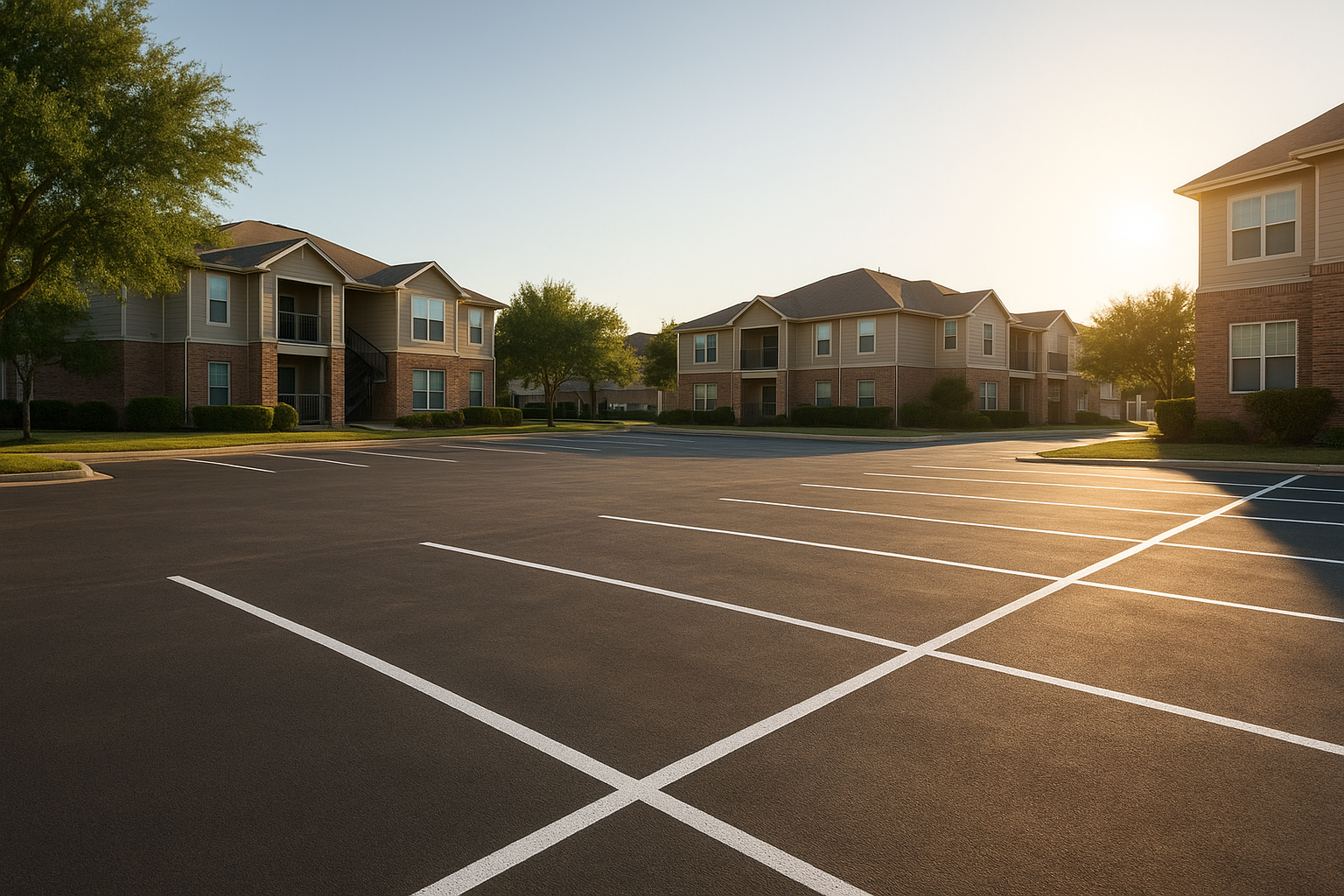
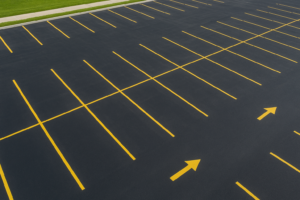
Fresh line work from striping services for residential properties keeps neighborhood parking organized and code-compliant.
Why Communities Benefit from Professional Line Painting
Faded or missing lines create real problems for residents and guests alike. Specifically, drivers struggle to find open spaces, guests park in fire lanes without realizing it, and pedestrians lose the visual cues that normally keep them out of traffic paths. As a result, property managers often see more parking disputes and safety complaints once markings wear away.
Furthermore, code compliance is not optional. Local fire departments and ADA inspectors regularly check multi-family properties, and a faded fire lane or missing accessible stall can trigger fines. In fact, industry pavement studies suggest painted markings in high-traffic, high-heat regions like North Texas typically need refreshing every 12 to 18 months to remain fully visible. Therefore, keeping markings fresh protects both residents and property owners from liability while supporting safer, more predictable traffic flow across the property.
Key Benefits of Restriping Residential Parking Areas
Refreshing worn markings delivers benefits that go beyond appearances. Consider the following advantages property managers commonly report after a restriping project:
- Improved traffic flow, since clear lines reduce confusion during peak arrival times.
- Increased curb appeal, which supports higher resale and rental values.
- Better ADA compliance, lowering the risk of complaints or fines.
- Reduced liability, because clearly marked fire lanes keep emergency access open.
- More usable parking, as optimized layouts can add spaces without new construction.
In short, a modest striping investment often pays for itself through fewer disputes and a safer property overall.
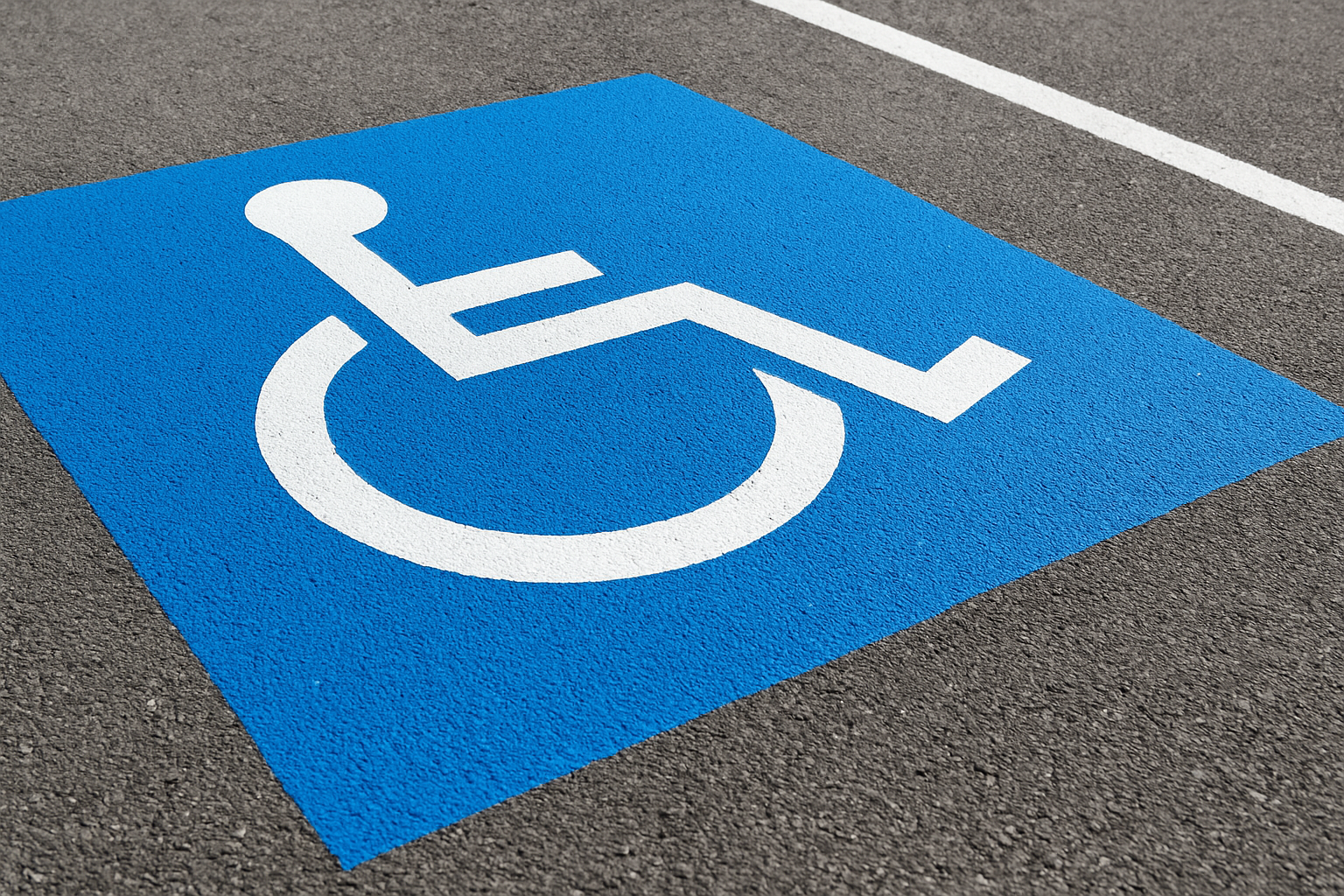
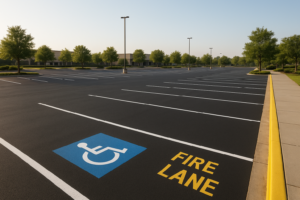
ADA-compliant handicap stall markings are a core part of most residential striping projects.
Residential vs. Commercial Parking Lot Striping: What’s Different?
Residential and commercial striping share the same basic materials, yet the layouts differ in important ways. Commercial lots typically prioritize high-volume traffic flow, wide drive aisles, and clear paths to storefronts. Residential properties, on the other hand, often need narrower drive lanes, assigned or numbered stalls, and additional fire lane marking near building entrances.
Moreover, residential communities frequently request features that commercial lots rarely need, such as speed bump striping near playgrounds or clearly marked visitor parking near leasing offices. For a deeper breakdown of these distinctions, see this comparison of commercial and residential striping services, which covers layout planning, paint selection, and timeline differences in more detail. As reference, the Federal Highway Administration’s Manual on Uniform Traffic Control Devices outlines national standards many local codes are based on.
How Long Does Residential Parking Lot Striping Take?
Most residential striping projects take one to two days, depending on lot size and the number of markings needed. Smaller HOA lots with fewer than 50 spaces are often finished within a single day, while larger apartment communities may need two or three days to complete fire lanes, handicap stalls, and directional arrows.
Weather also plays a role, since paint needs dry, mild conditions to cure properly. Because of this, many North Texas striping crews schedule projects during spring or fall when temperatures and rainfall are more predictable, though experienced teams can work in summer heat with fast-curing paint formulas.
Step-by-Step: The Residential Striping Process
A well-run residential striping project generally follows the same core steps, regardless of property size.
- Site assessment and measurement. The crew walks the property, measures stall widths, and notes fire lanes, accessible parking needs, and any drainage issues that could affect layout.
- Layout planning. Using local code requirements, the team designs a layout that maximizes usable spaces while keeping ADA-compliant stalls and fire lanes properly positioned.
- Surface cleaning and prep. Crews sweep, pressure wash, or blow debris from the pavement so new paint adheres correctly and lasts through seasonal weather changes.
- Layout marking and taping. Chalk lines or string guides mark exact placement before any paint touches the pavement, reducing errors on the final layout.
- Striping and curing. Technicians apply traffic-grade paint using specialized striping machines, then rope off the area so the paint can cure fully before vehicles return.
Once curing finishes, most properties are ready for normal traffic within a few hours, depending on paint type and weather conditions.
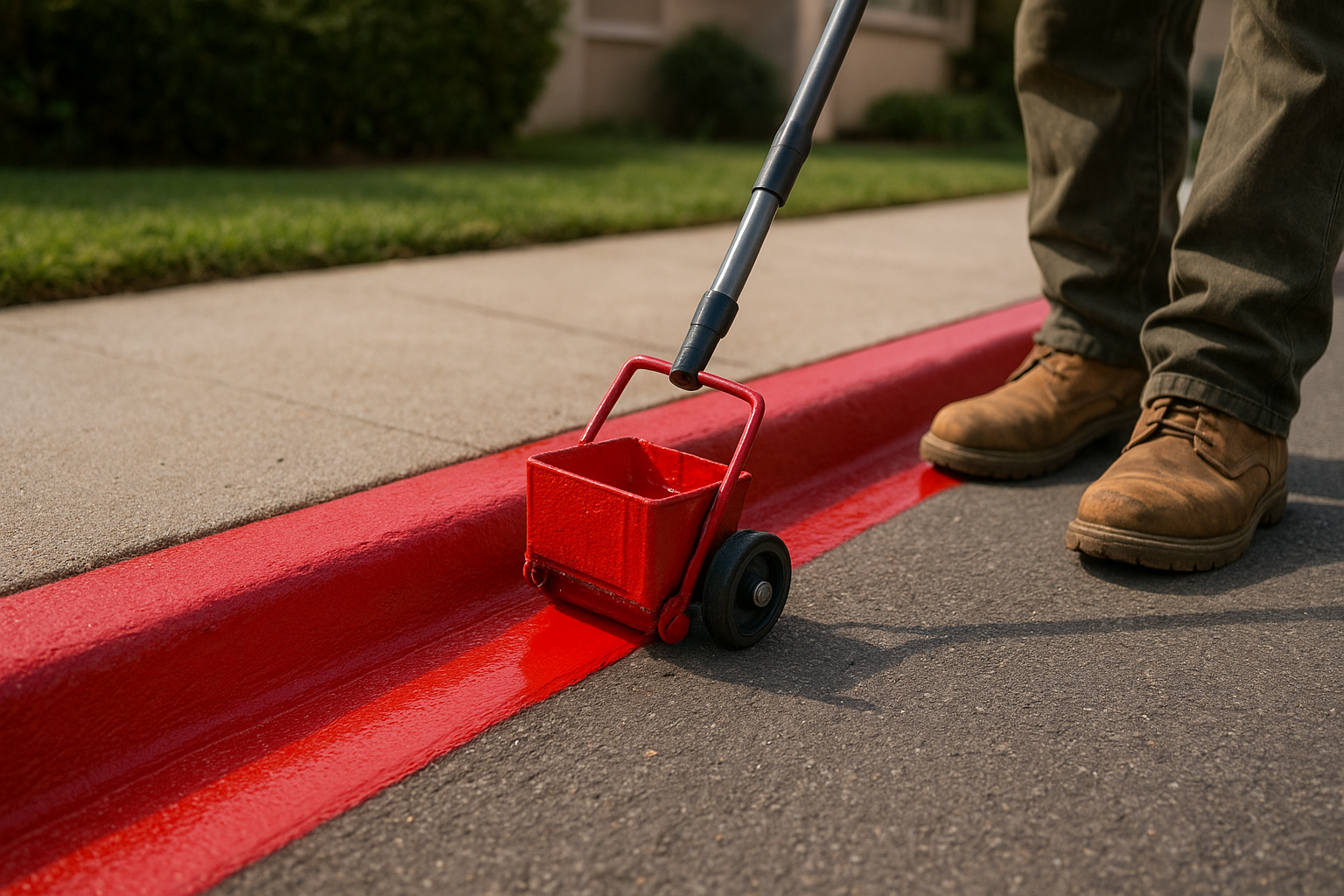
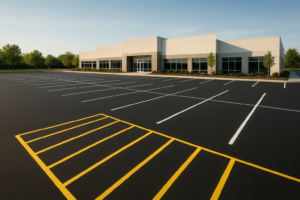
Fire lane marking is a key safety step within most striping services for residential properties, including compliant fire lane markings.
How to Choose a Reliable Residential Striping Company
Choosing the right crew matters just as much as the paint itself. Look for a company with clear pricing, proof of insurance, and experience specifically with residential properties rather than only large commercial lots.
In particular, ask potential providers how they handle ADA layout requirements, what paint products they use, and how long the cure time will be before residents can park again. For a full checklist of questions to ask before hiring, this guide on what to look for in a reliable striping service walks through insurance, warranty, and paint quality considerations in detail.
Additionally, a local company that already serves the Denton and Plano, TX region will understand regional codes and weather patterns better than an out-of-area contractor. You can learn more about one such locally operated team on the about page at stripespls.com.
Cost Factors for Striping Residential Properties
Pricing for residential striping varies based on lot size, the number of markings needed, and paint type; see our striping cost guide for detailed pricing and examples.
Other cost factors include surface condition, since cracked or oil-stained pavement may need extra prep work before painting. Similarly, projects requiring specialty markings, such as speed bump striping or numbered stalls, typically add to the total. For an accurate estimate, most property managers request a free quote so they can compare pricing against their community’s actual layout and needs. You can request one directly through the contact page at stripespls.com.
Frequently Asked Questions About Striping Services for Residential Properties
What are striping services for residential properties?
Striping services for residential properties involve professionally painting parking lines, fire lanes, handicap stalls, and directional markings across apartment complexes, HOAs, and other multi-family communities. These services keep traffic organized and help properties stay compliant with accessibility codes.
How often should a residential parking lot be restriped?
Most residential lots need restriping every 12 to 18 months; see our restriping guide for best practices. Faded lines, chipped paint, or hard-to-see fire lanes are signs it’s time for a refresh.
Why is ADA-compliant striping important for residential communities?
ADA-compliant striping ensures residents and visitors with disabilities have clearly marked, appropriately sized accessible parking spaces. Skipping this step can lead to fines and makes a property harder to navigate for people who need those spaces.
What is the difference between commercial and residential striping?
Commercial striping usually focuses on high-volume traffic and wide drive aisles, while residential striping often requires narrower lanes, assigned stalls, and additional fire lane marking near entrances. Both use similar paint and equipment, but the layout goals differ.
How long does residential parking lot striping take to complete?
Most residential projects take one to two days, depending on lot size and the number of markings required. Larger communities with extensive fire lanes or handicap stalls may need an extra day.
How much does residential striping cost?
Costs vary based on lot size, paint type, and the number of markings needed, ranging from a few hundred dollars for small lots to several thousand for larger communities. Requesting a free quote is the most reliable way to get an accurate number.
What paint is used for residential parking lot striping?
Most professional crews use water-based or solvent-based traffic paint designed for outdoor pavement, since these formulas resist fading and cracking from sun and rain. Reflective additives are sometimes included for better nighttime visibility.
Can residential striping be done in winter?
Striping is possible in winter, but cold temperatures slow paint curing time and can affect adhesion. Many contractors prefer spring or fall for the most reliable results, though experienced crews can still complete projects during milder winter days.
What common mistakes should be avoided when striping a residential lot?
Common mistakes include skipping proper surface cleaning, ignoring current ADA stall requirements, and using low-grade paint that fades within months. Hiring an experienced residential striping company helps avoid these costly errors.
Do HOAs need permits for restriping parking areas?
In most cases, simple restriping of existing layouts does not require a permit, but adding new fire lanes, changing stall counts, or altering accessible parking may require local approval. It’s best to confirm with the city or municipality before starting a project.
What is the best time of year for residential striping projects?
Spring and fall generally offer the most reliable weather for striping, since moderate temperatures help paint cure evenly. However, many companies can complete quality work throughout the year with the right paint formula.
How can property managers find a reliable striping company?
Property managers should look for insured, experienced contractors who specialize in residential properties, ask about paint warranties, and request references from similar communities. Reading a detailed guide on what to look for in a striping service can help narrow down the right choice.
Final Thoughts on Residential Striping Services
Ultimately, striping services for residential properties protect more than just paint lines on pavement. They support safer traffic flow, help communities stay ADA-compliant, and give properties a clean, well-maintained look that residents notice. Whether a lot needs a simple refresh or a full ADA-compliant redesign, working with an experienced, locally based crew makes the difference between a quick fix and a lasting result. For property managers in Denton, Plano, and across North Texas, requesting a free quote from a team like stripespls.com is a straightforward first step toward a safer, better-organized parking lot.