Quality parking lot striping in Denton, TX is the foundation of a safe, organized, and professional-looking commercial property. When lines fade or layouts become confusing, drivers slow down, pedestrians lose clear paths, and the whole site looks neglected. In this guide, you will learn what separates quality parking lot striping Denton TX property owners actually need from a quick paint job, how the process works, what it costs, and how to choose a contractor who gets it right the first time.
Quick answer: Quality parking lot striping in Denton, TX means durable, code-compliant line work applied after proper measurement, layout planning, and surface preparation. It should include clearly visible stalls, accessible parking, fire lanes, and directional markings that hold up under Texas weather and daily traffic.
What Is Quality Parking Lot Striping in Denton, TX?
Quality parking lot striping in Denton, TX is more than a fresh coat of paint on faded lines. It is a planned process that accounts for stall dimensions, traffic flow, accessibility requirements, and the specific pavement conditions found around North Texas commercial properties.
Specifically, a quality job starts with accurate measurements and a layout plan rather than simply retracing old lines. As a result, stalls end up consistent, aisles stay wide enough for two-way traffic, and markings follow the Manual on Uniform Traffic Control Devices (MUTCD), the federal standard governing colors, shapes, and placement for pavement markings.
In contrast, a rushed or low-budget job often skips measurement entirely. That shortcut tends to create uneven stalls, confusing arrows, and missing accessible spaces, which can create liability issues for the property owner down the road.
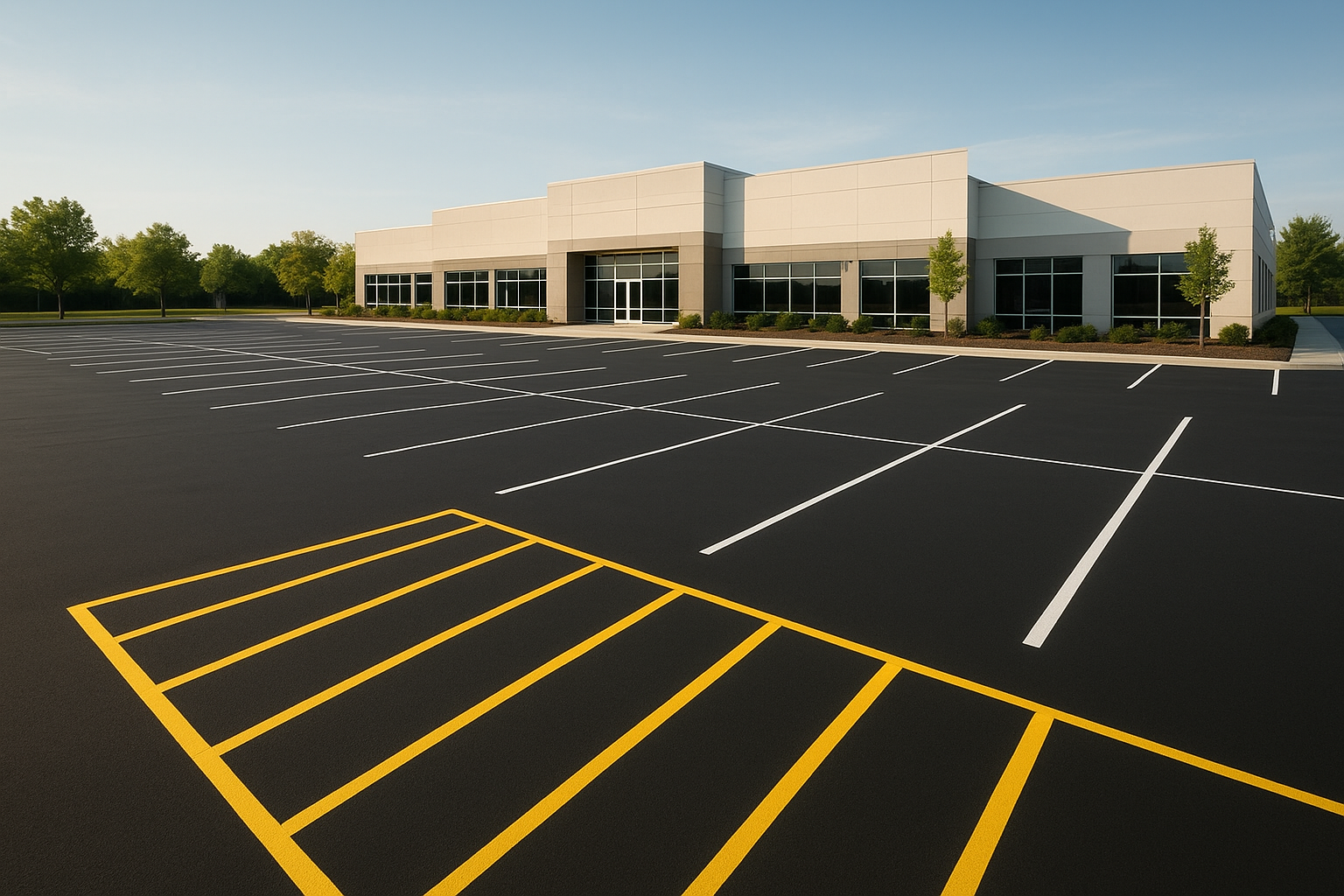
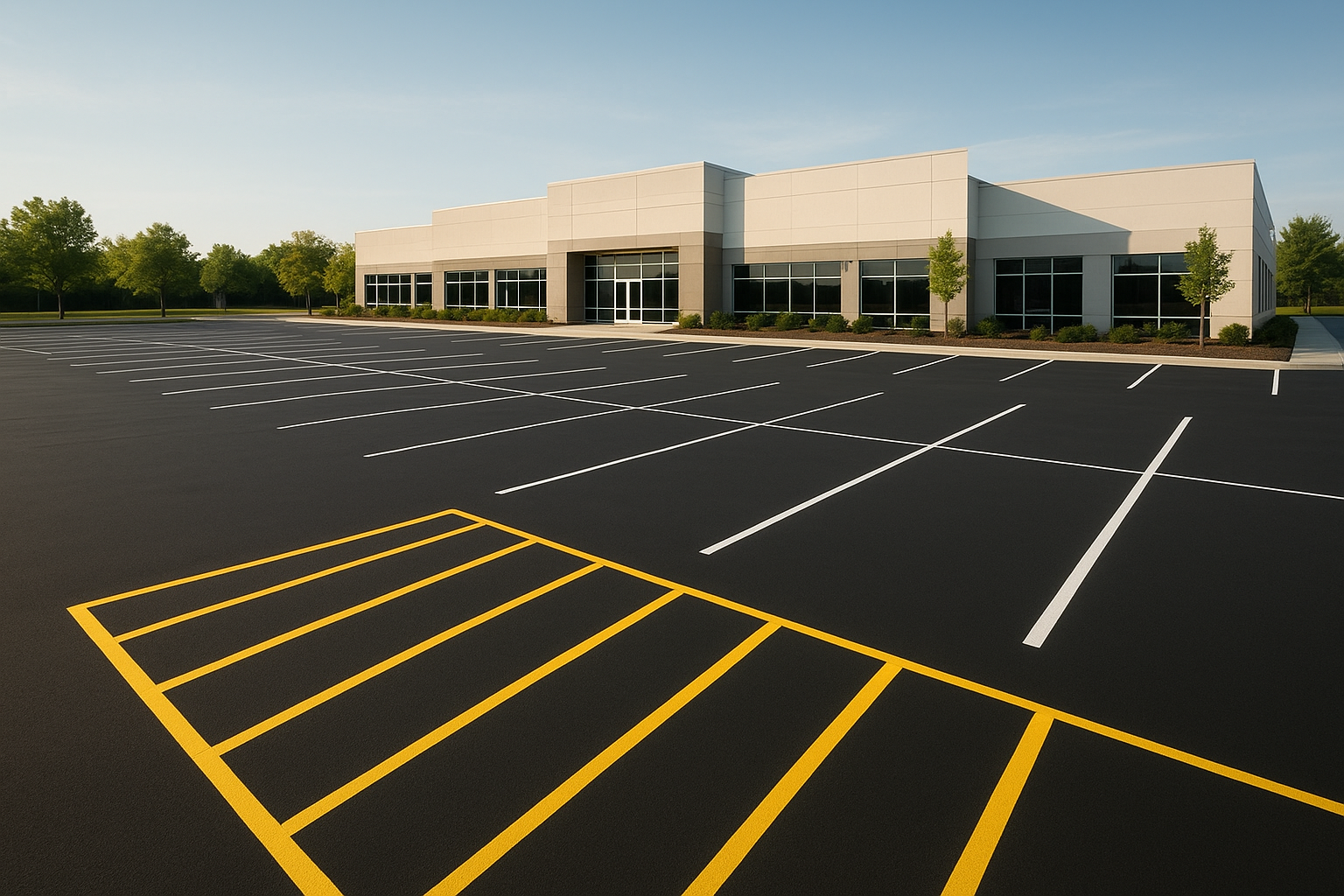
Crisp, evenly spaced lines are one of the clearest signs of quality parking lot striping Denton TX properties should expect.
Why Pavement Marking Quality Affects Safety and Curb Appeal
Pavement marking, the broader term covering all painted lines, symbols, and curb colors on a property, directly influences how safely people move through a site. Clear markings guide vehicles, protect pedestrians, and reduce fender-benders in busy lots.
Furthermore, well-maintained lines make a property look cared for. Visitors often judge a business by its parking lot before they even walk inside, so faded or missing lines can quietly undermine curb appeal. Above all, consistent striping signals that an owner takes maintenance and safety seriously, which matters for retail centers, churches, schools, and multi-tenant developments alike.
Properties that serve the Denton area with ADA markings and fire lanes often see fewer complaints and smoother day-to-day operations once markings are refreshed and properly planned.
Signs Your Parking Lot Needs Restriping
Restriping, the process of repainting an existing layout rather than designing a new one, is usually needed sooner than owners expect. Texas sun and heavy traffic wear down paint faster than many people realize.
Watch for these warning signs:
- Stall lines that are faded, patchy, or barely visible from a distance
- Accessible parking symbols or access aisles that have nearly disappeared
- Fire lane curbs with chipped or dull red paint
- Directional arrows that no longer match actual traffic patterns
- Frequent complaints about confusing navigation or unclear parking
If any of these sound familiar, it is likely time to review options for a parking lot striping refresh before markings disappear completely.
The Step-by-Step Striping Process
Understanding the process helps property owners know what to expect and why quality takes a bit more planning than a same-day paint job. Below is the typical sequence a reliable striping contractor follows.
- Site Review and Measurement: A technician visits the property to measure the lot, assess drainage, note existing layout issues, and evaluate current line conditions before planning begins.
- Layout Planning: The team plans stall counts, traffic flow patterns, ADA-compliant accessible spaces, fire lane placement, and directional arrows to match property needs and local code.
- Surface Preparation: Crews clean the pavement, remove debris, and address any patching or sealcoating needs so new paint adheres properly and lasts longer under traffic.
- Application of Markings: Using line striping equipment and stencils, the crew applies durable traffic paint for stalls, lanes, curbs, and specialty markings with consistent width and spacing.
- Final Walkthrough and Upkeep Plan: The completed layout is inspected for accuracy and compliance, then a maintenance schedule is recommended to keep markings visible for as long as possible.
Properties looking for more detail on longevity can review this complete guide to durable parking lot striping in Denton for additional context on materials and application methods.

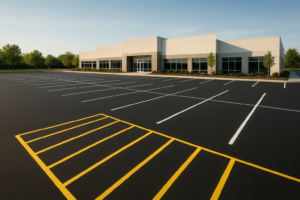
A steady, well-maintained striping machine helps keep lines straight and consistent across large commercial lots.
Accessible Parking, Fire Lanes, and Specialty Markings
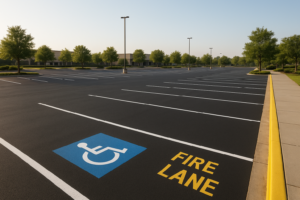
Beyond standard stalls, most commercial properties need accessible parking spaces, van access aisles, fire lanes, and sometimes warehouse floor markings. These elements are not optional extras; they are often required by code.
According to the Americans with Disabilities Act (ADA), the federal civil rights law setting accessibility standards, most lots must provide at least one accessible space for every 25 standard spaces, with additional van-accessible spaces required as lot size grows. Similarly, fire lanes must remain clearly marked, typically with red curb paint and lettering, so emergency vehicles can access the property without delay.
In addition, warehouse and industrial sites often need interior floor markings for safety zones, equipment paths, and storage boundaries. Property managers in Denton and Plano frequently request these specialty markings alongside routine lot restriping to cover every requirement in a single visit, as outlined in this overview of professional parking lot striping services in Denton, TX.
How Much Does Quality Parking Lot Striping in Denton TX Cost?
Pricing for quality parking lot striping in Denton TX depends on several factors: lot size, number of stalls, whether a new layout is needed, and how many specialty markings are included, such as accessible spaces or fire lanes.
Generally, simple restriping of an existing layout costs less than a full new layout design, since measurement and planning take less time. Consequently, small lots with straightforward layouts tend to fall on the lower end of the price range, while larger properties with ADA markings, fire lanes, and directional arrows cost more due to added materials and labor.
For a detailed breakdown of pricing factors, property owners can review this guide on how much parking lot striping costs in Denton, TX before requesting a quote.
Choosing a Striping Contractor in Denton and the DFW Metroplex
Not every striping contractor approaches a project the same way. Therefore, it helps to ask specific questions before hiring anyone for a commercial lot.
A dependable contractor should be able to explain their measurement process, the type of paint they use, and how they handle ADA and fire lane requirements. Stripes PLS, based in Denton and serving Plano and the greater Dallas–Fort Worth area, focuses on precise layout planning, consistent line work, and clear communication throughout each project, from the initial site review to final inspection.
Property owners comparing options can visit Stripes PLS to see service details and request a project quote directly.
Keeping Your Markings Visible Year-Round
Once new striping is complete, a bit of ongoing attention keeps it looking sharp. Regular sweeping, prompt pothole repair, and periodic inspections all extend the life of fresh paint.
Specifically, scheduling a visual check every six months helps catch early fading before it becomes a safety or compliance issue. As a general reference point, the general concept of parking lot design on Wikipedia notes that layout and marking quality directly influence traffic flow and user safety, which lines up with what most Denton-area property managers observe firsthand.
Above all, treating striping as ongoing maintenance rather than a one-time task keeps a property looking organized and professional for years.

Accessible parking markings and access aisles are a required part of most commercial restriping projects.
Frequently Asked Questions About Quality Parking Lot Striping Denton TX
What does quality parking lot striping in Denton, TX actually include?
Quality parking lot striping in Denton, TX includes measuring the lot, planning a compliant layout, cleaning the surface, and applying durable paint for stalls, lanes, and specialty markings. It also includes a final inspection to confirm lines are straight, visible, and code-compliant.
How often should a commercial parking lot be restriped?
Most commercial lots in the Denton area need restriping every 1 to 2 years, depending on traffic volume and sun exposure. Busy retail centers often fade faster than low-traffic office lots, so inspecting lines twice a year helps catch fading early.
Why does paint quality matter for parking lot striping?
Paint quality determines how long lines stay visible under Texas heat, rain, and constant tire traffic. Low-grade paint fades within months, while durable traffic paint or thermoplastic materials can last several seasons with proper surface preparation.
How much does quality parking lot striping in Denton TX typically cost?
Pricing for quality parking lot striping in Denton TX varies based on lot size, number of stalls, and whether new layout planning or ADA markings are needed. Most commercial projects range from a few hundred to several thousand dollars depending on scope.
How long does a typical striping project take to complete?
A standard restriping project for a mid-size commercial lot usually takes one day, including surface cleaning and paint curing time. Larger layouts with new stalls, fire lanes, and ADA markings may take one to two days.
What is the difference between standard striping and restriping?
Standard striping refers to marking a brand-new or reconfigured lot layout from scratch, while restriping refreshes existing lines that have faded. Restriping is typically faster since the layout is already established and only needs repainting.
What are the most common mistakes property owners make with parking lot markings?
Common mistakes include waiting too long to restripe, skipping surface preparation, and overlooking ADA-required access aisles. Another frequent issue is using inconsistent stall widths, which confuses drivers and reduces usable parking.
Are ADA-compliant accessible parking markings required for Denton properties?
Yes, commercial properties generally must provide a minimum number of accessible parking spaces with van access aisles based on total stall count. These requirements come from the Americans with Disabilities Act and related state accessibility codes.
What is the best time of year to schedule parking lot striping?
Warmer, drier months typically allow paint to cure faster and more evenly, which is helpful in North Texas. However, striping can be completed in most seasons as long as the surface is dry and temperatures are within the paint manufacturer’s range.
Can fire lane markings be added at the same time as restriping?
Yes, fire lane markings are commonly added or refreshed during the same visit as general restriping. Combining these tasks reduces downtime for the property and ensures consistent, code-compliant red curb or striped fire lane markings.
What type of paint is used for quality parking lot striping?
Most commercial projects use water-based or solvent-based traffic paint formulated for asphalt or concrete durability. Some high-traffic areas use thermoplastic markings, which are heated and fused to the surface for extended longevity.
How can property managers extend the life of new striping?
Scheduling periodic inspections, cleaning the lot regularly, and addressing sealcoating or pothole repairs promptly all help markings last longer. Avoiding harsh chemical cleaners directly on fresh paint also helps preserve line visibility.
Final Thoughts
Quality parking lot striping in Denton, TX comes down to planning, proper materials, and a contractor who treats measurement and compliance as seriously as the paint itself. From accessible parking and fire lanes to directional arrows and curb painting, each marking plays a role in keeping a commercial property safe, organized, and welcoming.
Ultimately, a well-striped lot protects visitors, supports compliance, and strengthens first impressions for every business on the property. Property owners and facilities teams in Denton, Plano, and the wider Dallas–Fort Worth metroplex ready to refresh or redesign their layout can request a free quote from Stripes PLS to start planning their next striping project.