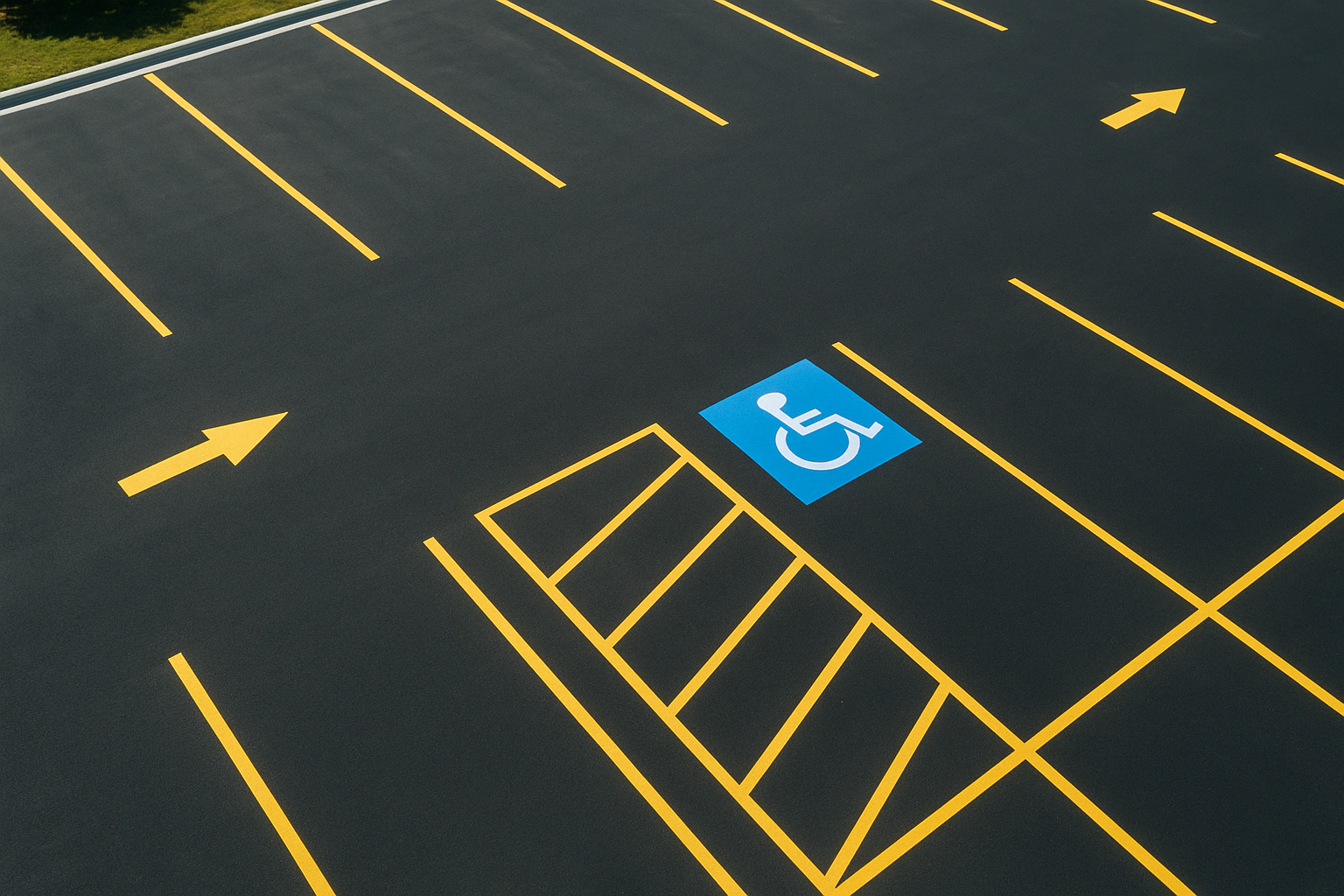
Local parking lot stripers are the difference between a lot that looks abandoned and one that reads as safe, organized, and professionally managed. Whether you own a retail plaza in Plano, manage a school lot in Denton, or oversee a warehouse yard anywhere across North Texas, faded lines and missing ADA symbols create real liability. This guide covers everything a property owner needs before hiring a striping crew — what the job actually involves, how much it costs, which paint lasts longest, and the exact questions that separate a reliable contractor from a risky one.
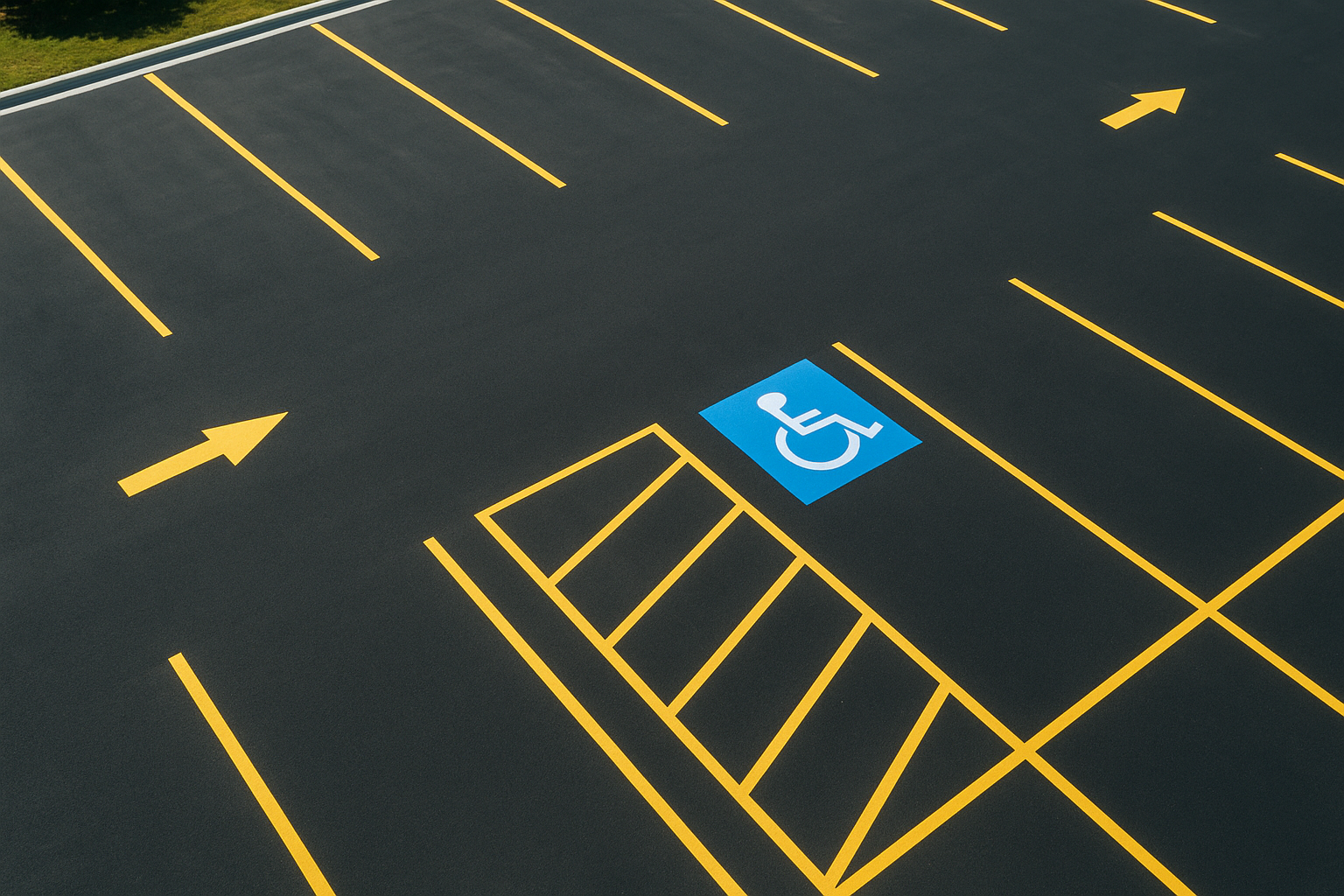
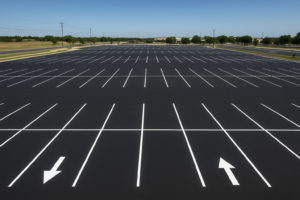
A freshly striped lot restores clarity for drivers and reduces liability for property owners.
What Are Local Parking Lot Stripers?
Local parking lot stripers are contractors who paint or repaint the lines, symbols, and markings that organize traffic flow and parking spaces on a property. Because they serve a specific region, they understand local codes, climate patterns, and enforcement habits that affect how long the paint holds up.
In practice, this work covers standard stall lines, handicap-accessible parking symbols, directional arrows, curb numbering, and fire lane lettering. According to the Wikipedia entry on road surface marking, pavement markings are classified as a formal traffic control device — not simply decorative paint. As a result, they must meet minimum visibility and placement standards to remain legally enforceable.
Consequently, hiring a crew familiar with your city’s specific requirements matters more than most property owners realize. For instance, a team based near Denton or Plano already knows which municipalities require permits for layout changes and which do not, saving you a phone call to city hall.
Why Hiring Nearby Line Striping Services Beats a National Chain
Nearby line striping services generally respond faster than out-of-area companies simply because they aren’t driving long distances between job sites. In addition, a local crew can schedule around North Texas weather patterns more reliably, since paint needs dry pavement and moderate temperatures to cure properly.
Furthermore, local teams build long-term reputations within their service area. That means they often stand behind their work with follow-up visits or touch-ups, rather than disappearing after a single job. For property managers overseeing several sites across Denton and Plano, this reliability cuts down on the hassle of juggling multiple outside vendors.
You can browse examples of completed projects in this striping project gallery to see how local crews handle everything from small retail lots to large commercial layouts.
Core Services Local Parking Lot Stripers Provide
Most professional parking lot marking teams offer a similar core lineup of services, though the exact package varies by contractor. Specifically, expect the following:
- New stall layout design and painting for lots under construction
- Restriping faded lines on existing lots
- ADA-compliant accessible stall and access aisle marking
- Fire lane painting and curb lettering
- Directional arrows, stop bars, and pedestrian crosswalks
- Numbered stalls, loading zone markings, and reserved-space stenciling
- Speed bump and wheel stop installation alongside striping work
A full breakdown of these offerings is available on the parking lot striping services page, which outlines pricing factors and project timelines. Property owners specifically in the Plano area can also review the Plano, TX professional line marking page for local service details, and the full services overview covers additional pavement maintenance options.
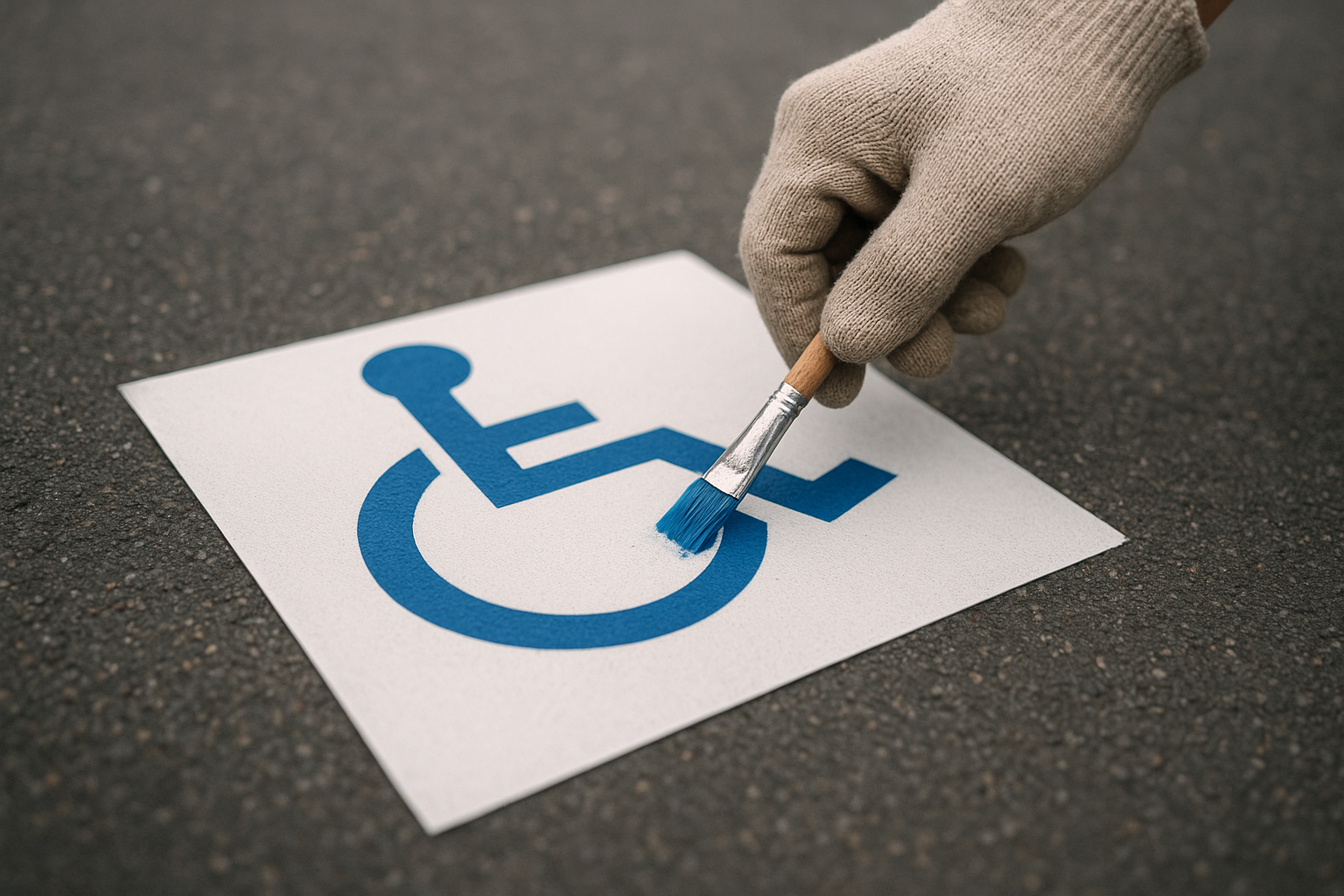
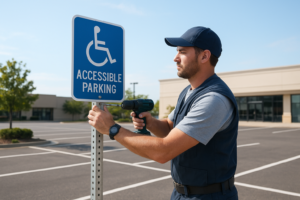
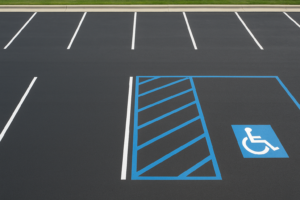
ADA-compliant stall markings are a core part of what local parking lot stripers provide.
Paint Types and Materials: What Actually Lasts Longest?
Not all striping paint performs the same way, and this is one area where many hiring guides fall short. Water-based traffic paint is the most common choice because it dries quickly, costs less, and meets most municipal code requirements. However, it typically needs reapplication every 18 to 24 months in high-traffic areas.
Epoxy coatings, by contrast, cost more upfront but resist chemical spills, oil, and heavy tire wear far better. Therefore, properties with constant vehicle turnover — grocery stores, hospitals, and distribution centers — often save money long-term by choosing epoxy despite the higher initial quote.
Thermoplastic striping, applied as a heated material that bonds directly to the asphalt, offers the longest lifespan of all three options — often five years or more — and is commonly used on high-speed roadways and airport lots. Specifications for these materials are outlined in the Manual on Uniform Traffic Control Devices, maintained by the Federal Highway Administration, which sets national standards for marking durability, color, and reflectivity.
In short: ask your contractor which material they plan to use and why. A reputable crew will explain the tradeoffs rather than defaulting to whichever paint is cheapest for them to buy in bulk.
How to Choose the Right Local Parking Lot Stripers
Choosing between competing local parking lot stripers becomes far easier with a clear checklist. Follow these five steps to compare contractors fairly and avoid costly surprises later.
- Assess your property’s current markings. Walk the entire lot and note faded lines, missing ADA symbols, and unclear fire lanes so you can describe the scope accurately when requesting quotes from local crews.
- Request quotes from local contractors. Contact two or three local parking lot stripers, provide square footage and stall counts, and ask whether ADA and fire lane work are included in each written estimate.
- Verify insurance and compliance knowledge. Confirm the contractor carries active liability insurance and can clearly explain how they meet current ADA accessibility standards and local fire code requirements for your area.
- Schedule the project around weather and traffic. Coordinate a start date during dry weather and lower traffic hours so the paint cures fully without vehicles disturbing fresh, still-tacky lines.
- Review the finished work before final payment. Walk the completed lot with the crew to check stall widths, ADA placement, and fire lane visibility before signing off on the final invoice.
To learn more about a team’s background and service area, visit the about page, or reach out directly through the contact page to request a free quote. If you’re still unsure what separates a dependable crew from a risky one, this guide on what to look for in a reliable striping service breaks it down further.
ADA Compliance and Fire Lane Marking Standards
Accessibility requirements are one of the most important reasons to work with experienced pavement striping contractors instead of a handyman crew. Under the ADA Standards for Accessible Design, properties must provide at least one accessible space for every 25 total spaces, with additional requirements as lot size increases, according to guidance published by ADA.gov.
Similarly, fire lanes must meet local fire marshal specifications for width, red paint, and lettering that clearly states the lane is reserved for emergency access. These standards often align with the national guidance mentioned earlier, so a local contractor who already works in Denton and Plano can confirm exact specifications before the project begins — rather than guessing and risking a failed inspection.
Above all, non-compliant markings expose property owners to complaint-driven audits. Consequently, it’s worth asking a prospective contractor to walk through exactly how many accessible stalls your specific lot size requires before work begins.
What Does Parking Lot Striping Cost?
Parking lot striping costs vary widely depending on lot size, paint type, and how many specialty markings are needed. Generally, small restriping jobs cost a few hundred dollars, while large commercial layouts with ADA and fire lane work can run into the thousands.
- Small lots (under 20 stalls): typically a few hundred dollars for basic restriping
- Mid-size commercial lots (20–100 stalls): usually $500–$2,000 depending on ADA and fire lane needs
- Large layouts (100+ stalls): often $2,000–$10,000+ for full new layouts with epoxy or thermoplastic paint
Above all, the cheapest bid is not always the best value. Low-cost paint fades faster, which means more frequent restriping and higher long-term expenses. For that reason, it helps to request an itemized quote that specifies paint type, coverage area, and expected lifespan before comparing prices side by side.
How Often Should a Parking Lot Be Restriped?
Most properties need restriping every 18 to 24 months, though this window shrinks for high-traffic lots exposed to constant sun, oil drips, and heavy vehicle turnover. In contrast, low-traffic lots using epoxy or thermoplastic paint can often stretch three to five years between projects.
A simple maintenance rule helps here: if lines are visible from a parked car at night but hard to see from a moving vehicle during the day, it’s time to schedule a refresh. Waiting too long doesn’t just look unprofessional — it also increases the odds of a fender-bender or an ADA complaint that a fresh coat of paint would have prevented.
DIY Striping vs. Professional Line Striping Services
Some property owners consider renting a striping machine and handling the job themselves. However, DIY striping usually creates more problems than it solves. Without a laser-guided layout tool, stall widths often end up inconsistent, which can violate local code minimums.
In addition, ADA symbol stencils, van-accessible signage placement, and fire lane lettering all have precise dimension requirements that are easy to get wrong without experience. Professional line striping services carry the right stencils, measuring tools, and code knowledge to get it right the first time — which, in the long run, costs less than redoing a botched DIY job.
Service Areas: Local Parking Lot Stripers Near Denton and Plano
Because paint curing depends heavily on regional weather, working with a crew already familiar with North Texas conditions matters more than most people expect. Local teams servicing Denton, Plano, Frisco, McKinney, and the greater Dallas-Fort Worth metro understand seasonal humidity swings and can schedule around them accordingly.
Property owners specifically searching for coverage in Plano can review the dedicated Plano parking lot striping page for city-specific details, project photos, and turnaround expectations.
Common Mistakes When Hiring Pavement Striping Contractors
Even experienced property managers make avoidable mistakes when hiring pavement striping contractors. In particular, watch for these issues:
- Choosing the lowest bid without checking paint quality or warranty terms
- Skipping ADA measurements, which can trigger compliance complaints
- Failing to confirm the contractor carries liability insurance
- Scheduling work during wet or extreme weather, which shortens paint life
- Not asking which paint type is being used before comparing quotes
Avoiding these pitfalls usually comes down to asking direct questions before signing a contract, rather than assuming every crew follows the same standards.

Regular restriping keeps lots looking sharp and helps avoid safety complaints.
Frequently Asked Questions About Local Parking Lot Stripers
What are local parking lot stripers?
Local parking lot stripers are contractors who paint or repaint the lines, symbols, and markings that organize traffic flow and parking spaces on a property. They typically serve a specific region so they understand local codes and weather conditions that affect paint durability.
Why should I hire local parking lot stripers instead of a national chain?
Local parking lot stripers usually respond faster, know regional ADA and fire code enforcement patterns, and can schedule work around local weather more reliably. Because they depend on repeat business in one area, they often deliver more personalized service and follow-up.
How much does parking lot striping cost in Texas?
Most parking lot striping projects in North Texas range from a few hundred dollars for small restriping jobs to several thousand for full layouts on large commercial lots. Final pricing depends on square footage, number of stalls, and whether ADA or fire lane markings are included.
How long does it take to stripe a parking lot?
A typical commercial lot takes one to two days to stripe, depending on size and drying time. Larger properties or projects requiring stencils and curb painting may take longer.
How often should a parking lot be restriped?
Most properties need restriping every 18 to 24 months, though high-traffic lots may fade sooner. Faded, hard-to-see lines are a common trigger for scheduling a refresh.
What is the difference between fire lane marking and standard striping?
Fire lane marking uses red paint and specific lettering required by local fire codes to keep emergency access routes clear, while standard striping organizes general parking and traffic flow. Both are usually handled by the same striping contractor during one visit.
Do local parking lot stripers handle ADA compliance?
Yes, most local parking lot stripers include ADA-compliant accessible stall markings, van-accessible signage layout, and correctly sized access aisles as part of their standard service. This helps property owners avoid fines tied to accessibility violations.
What type of paint do professional stripers use?
Most professional crews use water-based traffic paint or durable epoxy coatings designed to withstand vehicle traffic, UV exposure, and weather changes. Epoxy typically lasts longer but costs more upfront than standard traffic paint.
Can parking lot striping be done without closing the lot?
Many striping contractors work in sections or during off-hours so the lot stays partially usable during the project. However, full lots undergoing complete layout changes may need a short closure while paint cures.
What questions should I ask before hiring a striping contractor?
Ask about experience with properties similar to yours, insurance coverage, paint type, and whether ADA layout knowledge is included in the quote. It also helps to request recent project photos or references.
What common mistakes happen when hiring parking lot stripers?
Common mistakes include choosing the lowest bid without checking paint quality, skipping ADA measurements, and failing to confirm insurance coverage. These shortcuts often lead to faster fading or code violations that cost more to fix later.
Do I need a permit to restripe an existing parking lot?
Restriping existing layouts in the same pattern usually does not require a permit, but changing the layout, adding stalls, or altering fire lanes may require local approval. A reputable local contractor can confirm requirements with the municipality before starting work.
How do I request a quote from local parking lot stripers near Denton or Plano?
Most companies, including stripespls.com, offer a free quote request form where you submit property size and service needs online. A representative typically follows up to schedule a site visit or confirm pricing directly.
Is thermoplastic striping better than paint for high-traffic lots?
Thermoplastic striping generally outlasts standard traffic paint by several years because it bonds directly to the asphalt surface. However, it costs more upfront, so it makes the most financial sense for lots with heavy daily traffic rather than small, low-use spaces.
In summary, local parking lot stripers do far more than paint lines. They help property owners in Denton, Plano, and across North Texas maintain safe traffic flow, meet ADA accessibility standards, and keep fire lanes clear for emergency access. Therefore, choosing a nearby, experienced team, verifying their compliance knowledge, and comparing detailed, itemized quotes are the best ways to protect both your property and the people who use it. When you’re ready to move forward, a quick visit to stripespls.com makes it easy to request a free quote from a local team.