Traffic marking and striping is the foundation of a safe, organized, and code-compliant parking lot or roadway. Without clear markings, drivers and pedestrians face confusion, and accidents become more likely. As a result, properties risk violating accessibility law and facing costly liability. This guide explains what traffic marking and striping involves, why it matters, and how property owners across Denton and Plano, Texas can keep their lots safe and current.
Quick answer: Traffic marking and striping is the painting and layout of lines, arrows, stalls, and safety zones on pavement so vehicles and pedestrians move predictably. Professional striping improves safety, maximizes parking capacity, and keeps properties compliant with ADA and fire code rules.
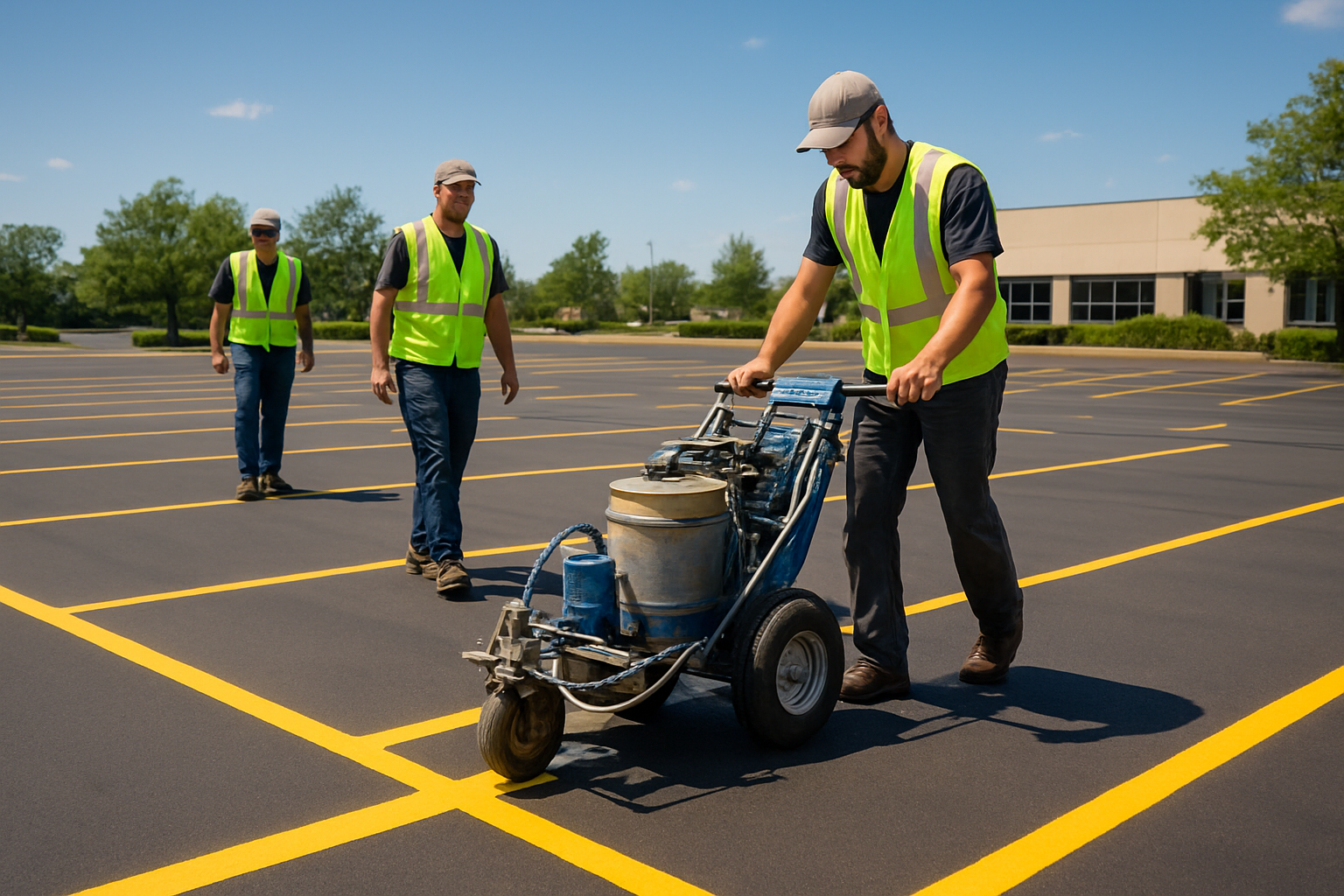
Professional traffic marking and striping keeps commercial lots safe and organized.
What Is Traffic Marking and Striping?
Traffic marking and striping refers to the painted lines, symbols, and pavement markings that guide vehicle and pedestrian movement across parking lots, roadways, and commercial properties. Specifically, it includes parking stall lines, directional arrows, fire lane borders, ADA-compliant accessible spaces, and crosswalks. These markings rely on durable, reflective paint or thermoplastic materials designed to withstand Texas heat, heavy traffic, and seasonal storms.
Furthermore, according to the Federal Highway Administration’s Manual on Uniform Traffic Control Devices, standardized markings reduce driver confusion and improve overall roadway and lot safety. In practice, this means every stripe, arrow, and symbol serves a specific navigational or regulatory purpose rather than existing for appearance alone.
Why Professional Line Striping Matters for Parking Lots
Property owners often underestimate how much line striping affects daily operations. In fact, faded or missing markings lead to disorganized parking, blocked fire lanes, and confused traffic patterns. Consequently, this raises liability risk and frustrates customers or tenants trying to find a spot.
On the other hand, a freshly striped lot signals professionalism and care. As explained in more detail on how line striping can improve traffic flow in parking lots, clear lanes and stalls reduce congestion, especially at busy retail centers, schools, and healthcare facilities. Similarly, accurate striping helps maximize available parking capacity without requiring new pavement or lot expansion.
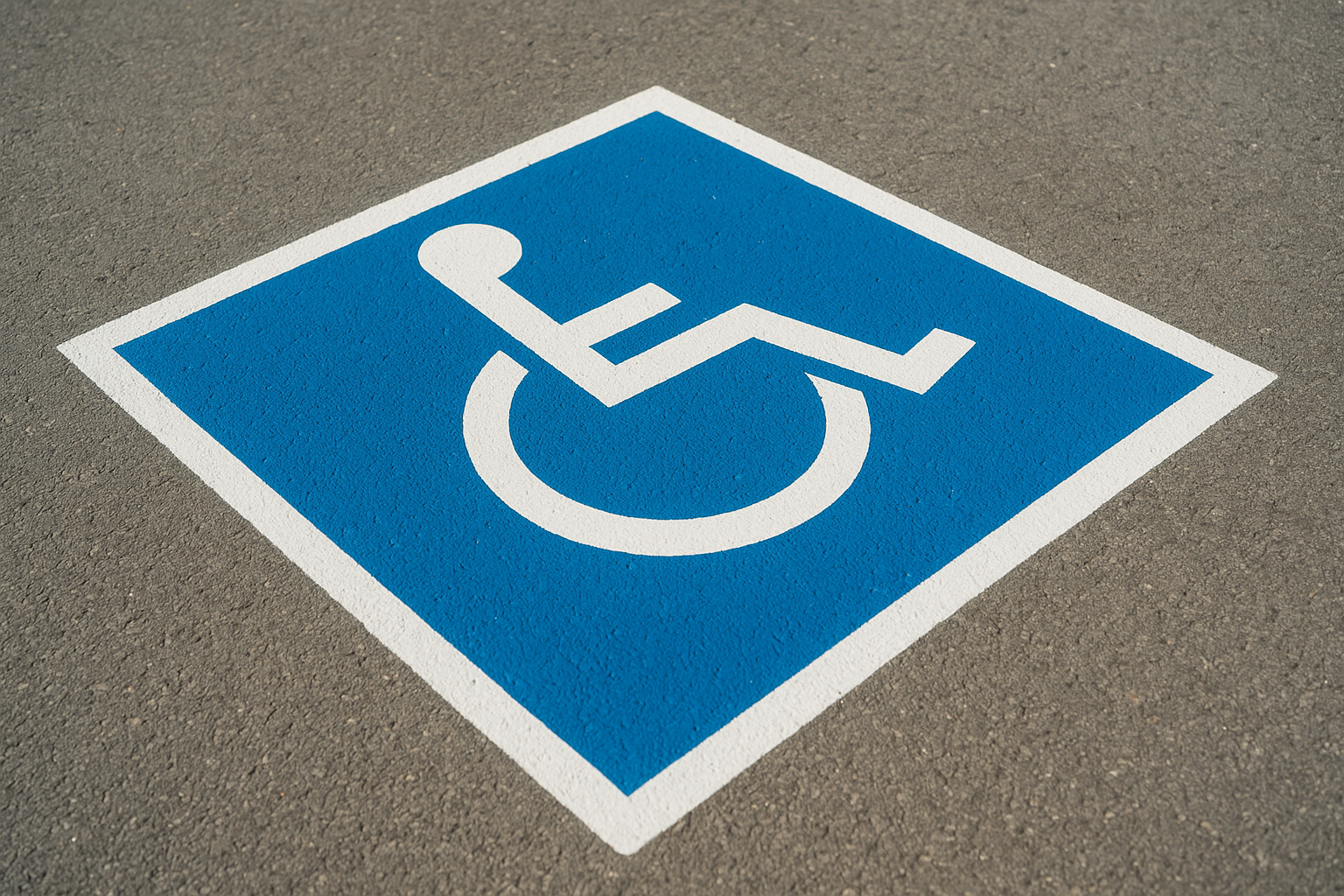
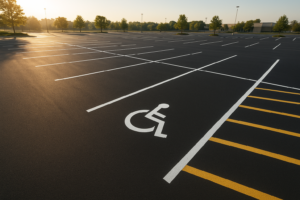
ADA-compliant markings are a critical part of any traffic marking and striping project.
Key Components of a Complete Pavement Marking Project
A complete pavement marking project covers several distinct elements, each serving a specific safety or regulatory function. Below are the three components most Texas properties need addressed during a professional visit.
ADA Compliance Markings
ADA compliance markings identify accessible parking spaces sized and positioned according to federal accessibility law. As outlined by the U.S. Access Board, these spaces must include proper width, access aisles, and the international accessibility symbol. Without them, properties risk fines and, more importantly, exclude visitors who depend on accessible parking.
Fire Lane Designation
Fire lane markings use red paint and clear signage to keep emergency access routes open at all times. Because blocked fire lanes can delay emergency response, most municipalities require regular inspection and repainting. This is a core service for schools, healthcare facilities, and retail centers where fire code enforcement is strict.
Directional Arrows and Signage
Directional arrows, stop bars, and wayfinding signage guide traffic through one-way lanes, loading zones, and drive-throughs. For a deeper look at combining these elements, see striping and signage solutions for Texas parking lots, which covers how signage and pavement markings work together to reduce confusion.
How Traffic Marking and Striping Improves Safety and Traffic Flow
Clear traffic marking and striping directly reduces collisions, near-misses, and pedestrian conflicts within parking lots. For example, well-placed stop bars and arrows prevent drivers from guessing which direction to travel. Similarly, defined crosswalks give pedestrians a predictable, protected path between vehicles.
In addition, organized striping helps properties use their space more efficiently. Above all, a lot with clearly marked stalls can safely accommodate more vehicles than one with faded or missing lines, which matters during peak retail seasons or school pickup hours.
The Striping Process: Step-by-Step
Understanding the striping process helps property owners know what to expect before, during, and after a project. Here is the typical sequence a professional crew follows. For a deeper overview of restriping best practices, see our lot restriping guide.
- Site Assessment and Layout Planning: A technician evaluates the lot, measures available space, and plans stall counts, fire lanes, and ADA spaces according to local code requirements.
- Surface Cleaning and Preparation: Crews sweep, blow debris, and remove oil stains or loose material so new paint adheres properly to the pavement surface.
- Layout Marking and Measurement: Using chalk lines or laser guides, the team lays out precise measurements for every stall, arrow, and lane before any paint is applied.
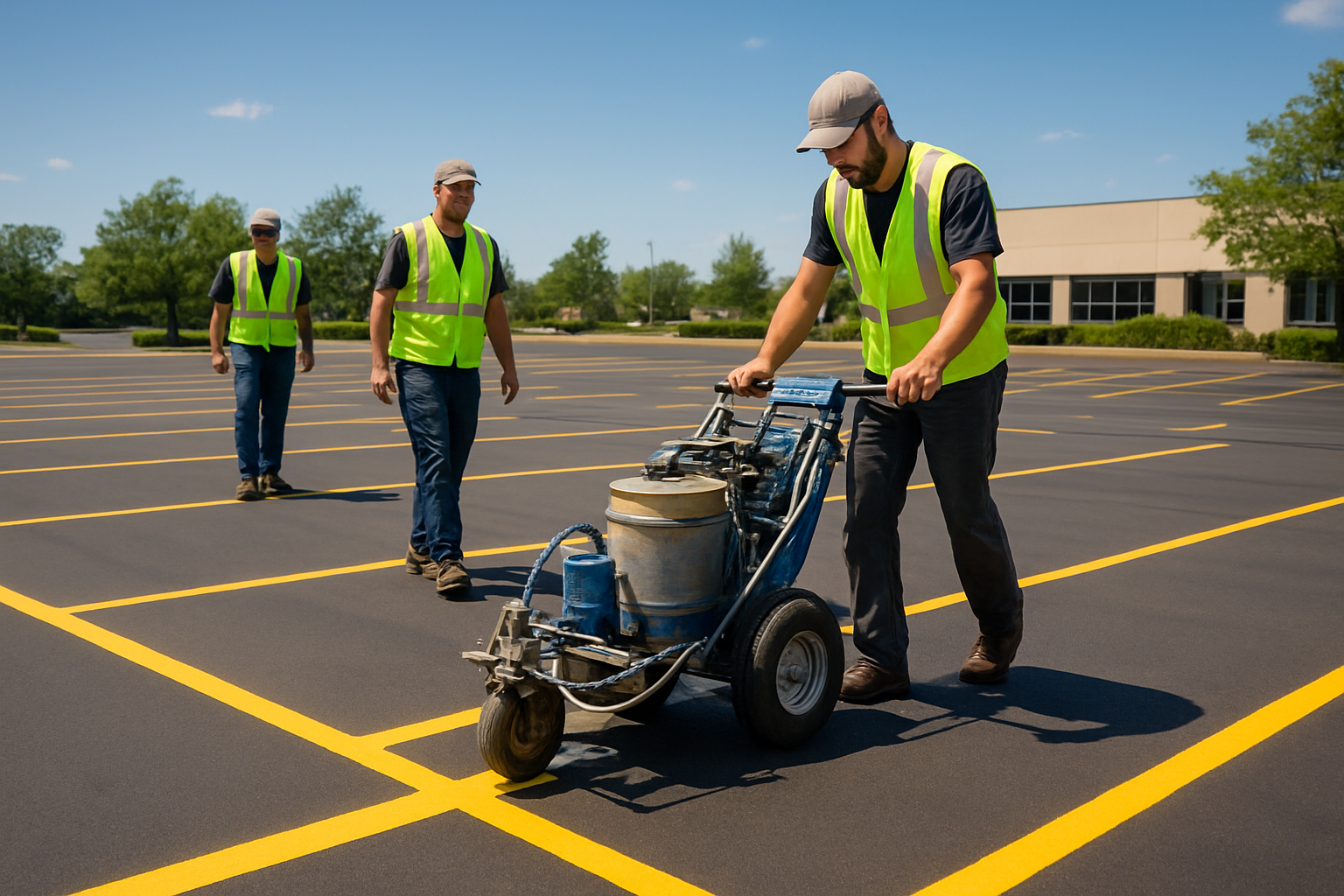
- Applying Paint or Thermoplastic Markings: Technicians apply traffic paint or heated thermoplastic material along the marked layout, ensuring consistent width and full pavement coverage.
- Curing and Final Inspection: The lot is closed off while markings cure, then inspected for accuracy, visibility, and compliance before reopening to traffic.
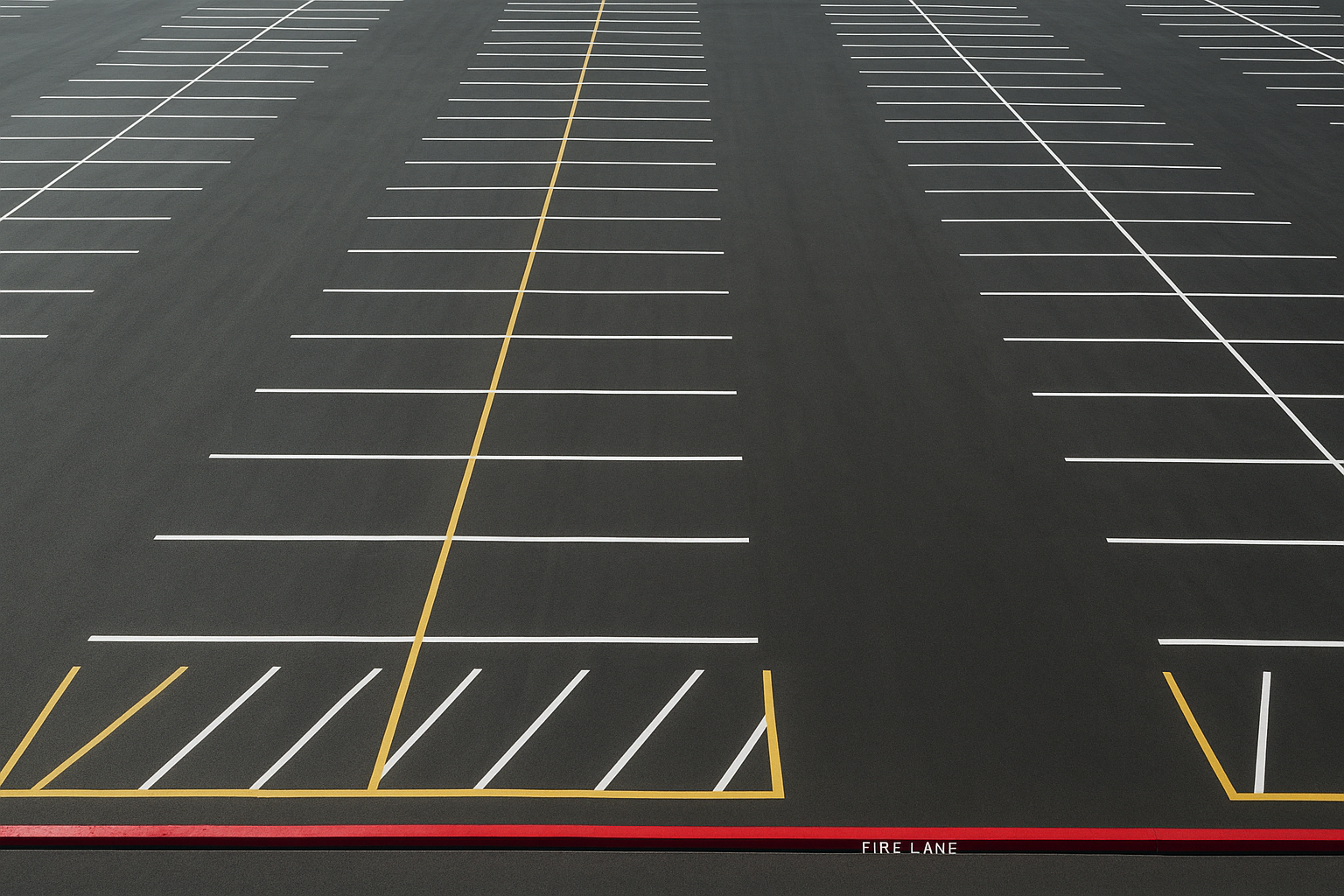
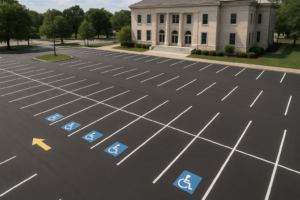
A finished lot shows how organized traffic marking and striping improves overall layout.
How Often Should You Restripe a Parking Lot?
Most commercial lots in North Texas need restriping every 18 to 24 months, though sun exposure and traffic volume can shorten that window. Therefore, regular inspection is the best way to catch fading before it becomes a compliance issue. For a detailed maintenance schedule, review what you should know about maintaining parking lot striping.
Meanwhile, properties with heavy vehicle traffic, such as retail centers or schools, may need restriping sooner. If lines look chalky, faded, or difficult to see at night, that is a strong signal it is time to schedule a restriping service before markings disappear entirely.
Choosing the Right Striping Company in Denton and Plano
Selecting a qualified contractor matters just as much as the paint used. In particular, look for a company familiar with local fire codes, ADA standards, and municipal requirements across North Texas. A locally operated crew that understands Denton and Plano regulations can often move faster and avoid costly rework. For local contractor selection tips, review our pavement marking guide for Denton and Plano.
Stripespls.com specializes in professional striping, ADA compliance solutions, and fire lane marking for commercial and residential properties throughout the Denton and Plano areas. Property managers, retail centers, schools, healthcare facilities, and municipal organizations across North Texas rely on this kind of local expertise for new layouts and restriping alike. To review the full range of offerings, visit the services page, or request a free quote directly at stripespls.com.
According to general industry guidance referenced by the Wikipedia entry on road surface marking, well-maintained pavement markings are considered a low-cost, high-impact way to improve safety across both public roads and private lots. This makes routine striping one of the more cost-effective investments a property owner can make.
Frequently Asked Questions About Traffic Marking and Striping
What is traffic marking and striping?
Traffic marking and striping is the process of painting lines, symbols, and markings on pavement to guide vehicles and pedestrians safely. It covers parking stalls, fire lanes, ADA spaces, arrows, and crosswalks.
How much does parking lot striping cost in Texas?
Costs vary based on lot size, material, and number of markings needed, typically ranging from a few hundred to several thousand dollars. A free on-site quote is the most accurate way to get pricing; for ballpark figures and cost breakdowns, see our commercial striping cost guide.
How long does a striping project usually take?
Most commercial parking lots can be fully striped within one to two days, depending on size and complexity. Larger properties with extensive fire lane or ADA markings may take slightly longer.
How often should a parking lot be restriped?
Most parking lots need restriping every 18 to 24 months, though high-traffic areas may fade sooner. Sun exposure, weather, and traffic volume all affect how quickly lines wear down.
What type of paint is used for parking lot striping?
Most contractors use water-based traffic paint or thermoplastic materials designed to withstand vehicle traffic and weather. Thermoplastic lasts longer but costs more upfront than standard paint.
What is the difference between paint and thermoplastic markings?
Paint is applied as a liquid and dries quickly, while thermoplastic is heated and fused to the pavement for a thicker, longer-lasting finish. Thermoplastic generally lasts three to five times longer than paint.
Why is ADA compliant striping required for commercial lots?
Federal law requires accessible parking spaces sized and marked according to ADA standards to ensure equal access for people with disabilities. Non-compliant lots risk fines and legal liability.
What are common mistakes in fire lane marking?
Common mistakes include incorrect lane width, missing signage, and faded red paint that no longer meets fire code visibility standards. These errors can delay emergency response and trigger code violations.
How long does striping paint need to cure before use?
Standard traffic paint typically needs 30 minutes to an hour to dry to the touch, but full curing can take up to 24 hours. Contractors usually block off freshly painted areas during this window.
Can striping be done during cold or rainy Texas weather?
Striping requires dry pavement and moderate temperatures, so rain or extreme cold can delay projects. Most Texas contractors schedule work around forecasts to ensure proper paint adhesion.
What is the best time of year for restriping in Texas?
Spring and fall are ideal because temperatures are moderate and rainfall is typically lower. Summer heat can still work but may require adjusted drying times.
How do I choose a reliable striping contractor?
Look for a contractor with local experience, proper equipment, and knowledge of ADA and fire code requirements. Checking references and requesting a detailed written quote helps avoid surprises.
Final Thoughts on Traffic Marking and Striping
In summary, traffic marking and striping is far more than a cosmetic touch-up; it is a safety, compliance, and capacity tool that every commercial property depends on. From ADA spaces to fire lanes and directional arrows, each marking plays a specific role in keeping people safe and traffic moving smoothly. As a result, regular inspection and timely restriping should be part of every property’s maintenance plan.
Ultimately, working with an experienced local crew ensures markings meet current code and hold up against Texas weather. Property owners throughout Denton, Plano, and the greater North Texas region can request a free quote to get started on a compliant, professionally striped lot.