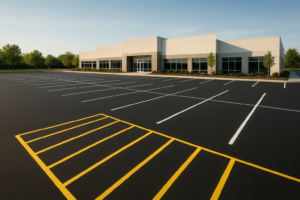

Property manager parking lot striping services give busy property managers a reliable way to keep every lot in their portfolio safe, organized, and compliant with local codes. Whether you oversee a single retail center or a wide portfolio of commercial and residential properties across North Texas, faded lines and unclear markings quickly become a liability. Fortunately, partnering with an experienced striping crew turns this recurring maintenance task into a predictable, budget-friendly line item instead of a surprise expense.
Quick answer: Property manager parking lot striping services combine stall re-lining, ADA-compliant handicap markings, fire lane painting, and directional arrows into one scheduled program, so property managers can maintain multiple lots without juggling separate vendors or missing compliance deadlines.
What Are Property Manager Parking Lot Striping Services?
Property manager parking lot striping services are professional line-painting programs built specifically around the needs of people who manage properties rather than own them outright. In addition to standard stall repainting, these services usually cover ADA-compliant accessible parking, fire lane designation, and wayfinding arrows for entrances and exits.
Unlike a one-off homeowner repaint, this type of service is designed for recurring, multi-site relationships. For example, a company overseeing a shopping center, an apartment complex, and a medical office building can request one coordinated schedule rather than three separate vendor calls. As a result, budgets, timelines, and compliance records stay far easier to track.

Consistent, well-maintained lines are the visible result of dependable property manager parking lot striping services.
Why Property Managers Need a Dedicated Striping Partner
Property managers juggle leasing, maintenance requests, and vendor coordination every single day, so pavement markings can easily slip down the priority list. However, faded lines create real problems: confused traffic flow, disputes over parking spots, and tenants who assume nobody is paying attention to safety.
Consequently, a dedicated commercial line striping partner does more than paint lines. Above all, a good partner tracks repaint schedules across every property, flags compliance issues before they become violations, and provides documentation that protects the management company if a dispute or inspection arises.
Common Pain Points Across Multi-Property Portfolios
In particular, property managers overseeing several sites report three recurring frustrations: inconsistent quality between vendors, unpredictable pricing from job to job, and scheduling conflicts with tenant business hours. Similarly, many managers struggle to keep ADA compliance records organized when each property used a different contractor in the past.
Commercial Parking Lot Line Marking: What’s Included
A thorough commercial parking lot line marking project typically includes standard stall lines, curb painting, ADA-accessible stalls with proper signage, van-accessible aisles, fire lane striping and lettering, directional arrows, and stop bars at exits. Specifically, for retail and healthcare properties, wayfinding arrows near drive-throughs or drop-off zones also matter for both safety and customer experience.
Furthermore, restriping is not only cosmetic. According to the U.S. Access Board’s accessibility guidelines referenced by ADA.gov, accessible parking stalls must meet specific width, signage, and ratio requirements based on total lot capacity. Property managers who fall out of compliance risk complaints, fines, or costly retrofits.
How to Choose Property Manager Parking Lot Striping Services
Selecting the right contractor for an entire portfolio takes more diligence than hiring for a single lot. Therefore, the following steps help property managers evaluate vendors consistently across every property they oversee.
- Assess every property’s striping needs. Walk each lot or review recent photos to note faded stalls, missing ADA symbols, and unmarked fire lanes before requesting quotes.
- Verify ADA and fire code compliance experience. Ask for examples of ADA-compliant layouts and fire lane marking completed on comparable commercial properties.
- Request itemized, portfolio-wide quotes. Collect one detailed quote broken down by property so budgets stay transparent across the entire portfolio.
- Confirm scheduling flexibility around tenant hours. Choose a crew willing to work early mornings, weekends, or phased sections so traffic is not disrupted.
- Review warranty and repaint timelines. Confirm how long markings should last and whether touch-up work is included before signing any agreement.
Property managers throughout Denton and Plano can review this process alongside the professional line marking services offered in Plano, TX to see how a locally established crew applies these steps in practice.

Trained crews use precision equipment to keep lines straight and consistent across large properties.
Budgeting and Scheduling Tips for Multi-Property Portfolios
In addition to selecting a contractor, property managers must plan striping into annual maintenance budgets. Most lots need restriping every 12 to 24 months, since sun and traffic wear paint down faster in Texas than in milder climates. Consequently, building a rotating schedule across properties prevents every site from needing service in the same month.
For example, a portfolio with six properties might stagger two restripes each quarter, spreading cost and crew availability evenly. Meanwhile, bundling quotes across sites often lowers the per-property rate compared to hiring separate contractors for each address. This approach also simplifies invoicing, since one company handles reporting for the whole portfolio.
Coordinating Around Tenants and Business Hours
Above all, minimizing disruption matters. Retail centers, in particular, benefit from early morning or overnight scheduling, while office parks may prefer weekend work. As a result, an experienced provider will offer phased striping so part of a lot stays open while another section cures.
ADA Compliance and Liability: What Property Managers Should Know
ADA compliance is not optional, and property managers carry real liability if accessible stalls are missing, mismarked, or too few for the lot’s total capacity. Specifically, federal guidance requires a set ratio of accessible spaces, proper van-accessible aisles, and correct signage height and placement.
In particular, the concept of road surface marking extends beyond aesthetics; it is a documented safety system. Similarly, fire lane requirements often follow standards referenced by fire authorities such as the National Fire Protection Association, which many municipalities adopt into local code. Property managers should keep dated photo records of every restriping project as proof of ongoing compliance.
Fire Lanes, Directional Arrows, and Signage Coordination
Fire lanes are frequently overlooked until an inspector flags them, yet they are among the most safety-critical markings on any property. Clear red curb painting and lettering keep emergency vehicles unobstructed, while directional arrows near drive lanes reduce accidents in busy retail or medical parking areas.
Property managers overseeing apartment communities can also review the striping services available for residential properties in Texas, since resident parking, guest stalls, and fire access often require the same level of attention as commercial sites.
What Does Professional Parking Lot Line Striping Cost?
Pricing depends on lot size, stall count, paint type, and how many ADA or fire lane markings are required. Latex traffic paint costs less and dries quickly, while thermoplastic markings cost more upfront but last considerably longer, which can reduce long-term maintenance frequency for high-traffic sites.
Because pricing varies so much by property, the most reliable approach is requesting a detailed quote. Property managers can review the full list of striping and pavement marking services or visit stripespls.com to compare options before committing to a single-property or portfolio-wide contract.

Clear directional arrows and organized stalls reduce confusion for tenants and visitors alike.
Frequently Asked Questions
What are property manager parking lot striping services?
Property manager parking lot striping services are professional line-painting and pavement-marking programs designed to help property managers keep parking areas safe, organized, and code-compliant across one or multiple properties. They typically include stall lines, ADA markings, fire lanes, and directional arrows.
How often should a commercial parking lot be restriped?
Most commercial parking lots need restriping every 12 to 24 months, since sun exposure and traffic wear down paint faster in Texas climates. Property managers should schedule an annual inspection to check fade levels before markings become unsafe.
Why is fire lane marking important for property managers?
Fire lane marking keeps emergency access routes clear so responders can reach a building quickly during a crisis. Unmarked or faded fire lanes can also expose property managers to code violations and liability if access is blocked.
How much does parking lot striping cost for a multi-property portfolio?
Costs vary based on lot size, stall count, and marking type, but portfolio bundling often reduces the per-property rate compared to hiring separate contractors. Requesting one itemized quote across all sites is the best way to compare pricing accurately.
What is the difference between latex paint and thermoplastic striping?
Latex traffic paint is more affordable and dries quickly, making it common for standard restriping projects. Thermoplastic markings cost more upfront but last significantly longer, which can lower long-term maintenance frequency for high-traffic lots.
How long does it take to stripe a typical parking lot?
A standard commercial lot usually takes a few hours to a full day, depending on size and the number of markings required. Larger portfolios with multiple sites are often scheduled across several days to minimize tenant disruption.
What ADA requirements must property managers follow for parking lots?
Federal ADA guidelines require a set ratio of accessible stalls based on total parking spaces, along with proper van-accessible stalls, signage, and access aisles. Property managers should confirm local Texas amendments as well, since some cities add stricter requirements.
What common mistakes do property managers make when hiring a striping contractor?
A common mistake is choosing the lowest bid without verifying ADA and fire code experience, which can lead to costly rework. Another frequent error is failing to schedule striping during low-traffic hours, disrupting tenants and customers.
Can striping be done without closing the parking lot?
In many cases, experienced crews can section off and stripe portions of a lot in phases so the rest stays open. This approach works especially well for large retail centers and multi-tenant properties that cannot afford a full closure.
What is the best time of year to schedule parking lot striping in Texas?
Spring and early fall are ideal because temperatures and humidity are moderate, allowing paint to cure properly. Extreme summer heat or winter cold can affect drying times and overall marking durability.
How do property managers budget for recurring striping maintenance?
Most property managers treat striping as an annual line item and set aside funds based on square footage and prior restriping quotes. Building a multi-year maintenance schedule with one contractor also helps stabilize pricing over time.
What documentation should a striping contractor provide for compliance audits?
A reliable contractor should provide dated before-and-after photos, an itemized scope of work, and confirmation that ADA stall counts meet current code. This paperwork is valuable if a property ever faces an accessibility complaint or inspection.
Do property managers need separate quotes for each property, or can portfolios be bundled?
Many striping companies offer bundled portfolio quotes that cover several properties under one contract, which simplifies invoicing and often lowers overall cost. This is especially useful for property managers overseeing multiple commercial or residential sites.
How can property managers tell when a lot needs restriping?
Faded or hard-to-see stall lines, inconsistent spacing, and worn ADA symbols are the clearest signs that a lot needs attention. If tenants or visitors start reporting confusion about where to park, that is usually a strong indicator as well.
Final Takeaways for Property Managers
Ultimately, property manager parking lot striping services work best when treated as an ongoing partnership rather than a one-time repair. By auditing lot conditions regularly, verifying ADA and fire code experience, and bundling quotes across a portfolio, property managers can keep every site safe, organized, and compliant without constant firefighting.
Property managers in Denton, Plano, and across North Texas can request a free, itemized quote through the contact page at StripesPls to start building a reliable, portfolio-wide striping schedule today.