Commercial fire lane striping Texas requirements can catch property owners off guard, especially when a fire marshal flags faded curbs during a routine inspection. Getting the markings right the first time saves money, prevents fines, and above all, keeps emergency access clear when it matters most. This guide walks through the costs, codes, and process behind proper fire lane marking across Denton, Plano, and the wider North Texas region.
Quick Answer: Commercial fire lane striping in Texas involves painting red curbs and pavement with white “FIRE LANE NO PARKING” lettering to satisfy local fire code. Costs typically range from $0.75 to $2.50 per linear foot, and most cities require restriping every 12 to 24 months to stay compliant.
What Is Commercial Fire Lane Striping in Texas?
Commercial fire lane striping Texas codes describe is the practice of marking designated emergency vehicle access routes on private property. Specifically, this means painting curbs red and stenciling white lettering that warns drivers the space is off-limits for parking. Because fire trucks and ambulances need unobstructed access during emergencies, cities treat these markings as a life-safety requirement rather than a cosmetic choice.
In addition to curb painting, some properties also need pavement arrows, hatching patterns, or signage depending on the layout. Consequently, a single fire lane project might combine several marking types to satisfy the local fire marshal’s specific interpretation of the fire code.
Why Texas Fire Codes Require Fire Lane Marking
Most Texas municipalities adopt some version of the International Fire Code, which sets baseline rules for fire lane width, signage, and pavement marking. Because Texas does not have a single unified statewide fire code, requirements can vary between Denton, Plano, Dallas, and surrounding jurisdictions. As a result, property managers often need to confirm specifics directly with their local fire marshal’s office rather than assuming one city’s rules apply everywhere.
Fire lane marking regulations exist for a straightforward reason: blocked access routes slow emergency response. According to the National Fire Protection Association, response time delays of even a few minutes can significantly affect outcomes in structure fires. Therefore, cities treat fire lane compliance as a serious safety matter, not simply a parking lot detail.
For a deeper breakdown of statewide expectations, this overview of Texas fire lane marking rules covers municipal variations in more detail.
How Much Does Fire Lane Striping Cost in Texas?
Pricing for commercial fire lane striping Texas contractors quote typically depends on curb length, paint type, and how much surface prep the job needs. On average, expect $0.75 to $2.50 per linear foot of curb, plus stenciling fees for lettering. A modest retail center with 300 feet of fire lane curb might land between $500 and $1,500, while larger campuses or hospitals can run several thousand dollars.
| Property Type | Typical Curb Length | Estimated Cost Range |
|---|---|---|
| Small retail strip | 150–300 ft | $300–$900 |
| Office or medical building | 300–600 ft | $700–$1,800 |
| Large retail center or school | 600–1,200 ft | $1,500–$3,600 |
Naturally, older lots with cracked pavement or heavy paint buildup may need extra surface prep, which adds to the final quote. For that reason, it helps to request an on-site assessment rather than relying on a phone estimate alone.
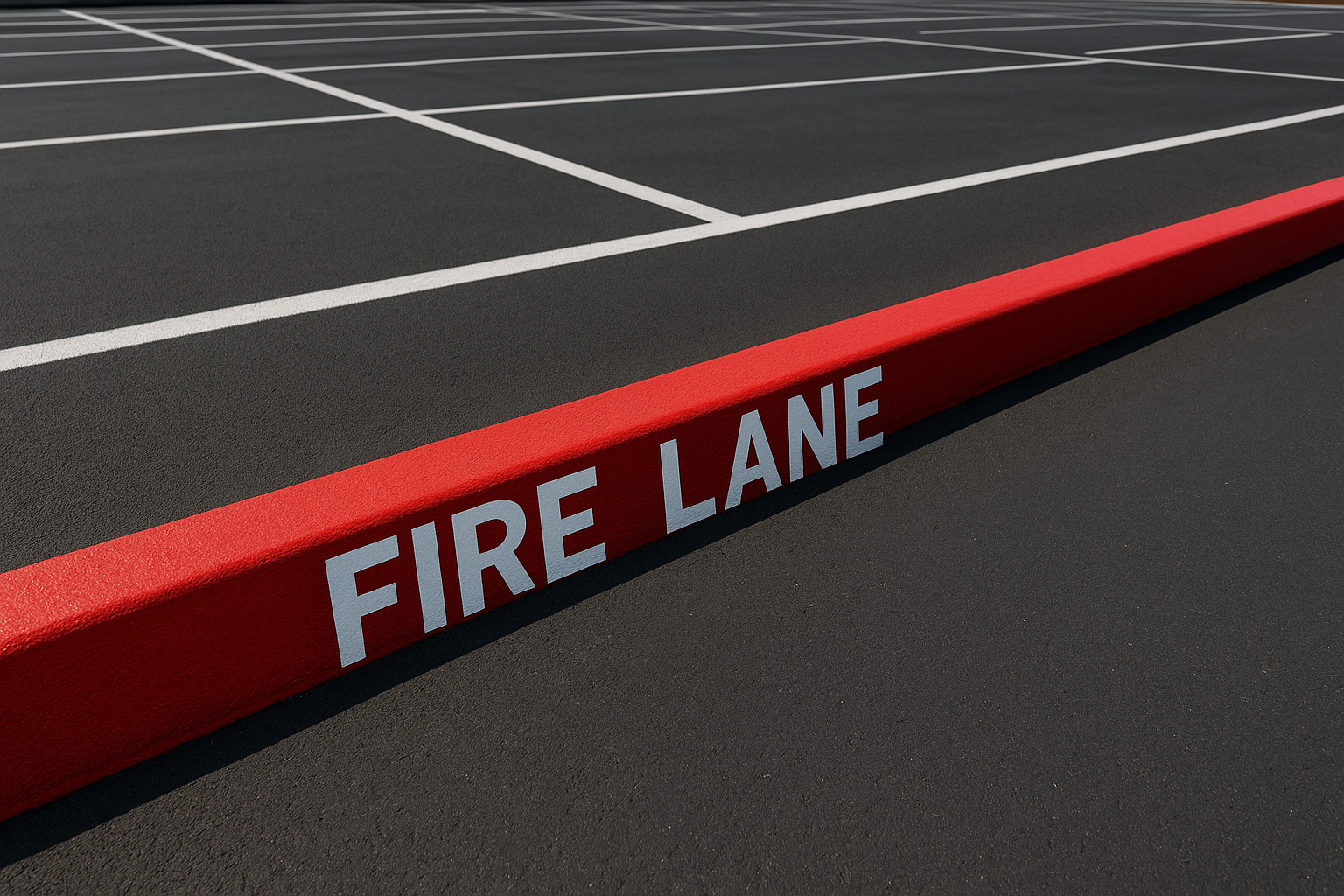
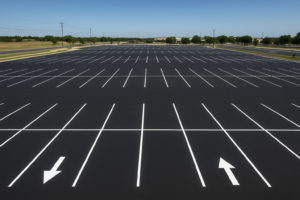
Freshly applied commercial fire lane striping Texas property owners rely on to stay code compliant.
Step-by-Step Fire Lane Striping Process
Understanding the workflow helps property managers set realistic timelines and budgets. Below is the typical sequence a professional crew follows.
- Confirm code requirements. Verify exact fire lane width, curb color, and lettering standards with the local fire marshal before scheduling any work.
- Site assessment and quote. A contractor measures curb length, checks pavement condition, and provides written pricing.
- Surface cleaning. Pressure washing removes oil, debris, and old peeling paint so new markings bond correctly.
- Layout and stenciling. Crews mark boundaries and position lettering stencils before any paint touches the surface.
- Painting and curing. Red curb paint and white lettering are applied in even coats and left to cure fully.
- Final inspection, if required. New construction projects often need fire marshal sign-off once markings are complete.
For a broader look at how this fits into a full parking lot compliance plan, see this complete striping and compliance guide.
Common Fire Lane Compliance Mistakes
Even well-intentioned property managers run into avoidable problems. In particular, these mistakes show up repeatedly during fire marshal inspections across North Texas.
- Letting curb paint fade until lettering becomes unreadable
- Marking fire lanes narrower than the local minimum width
- Skipping surface prep, which causes early peeling
- Assuming one city’s fire code applies to every location
- Forgetting to combine fire lane work with required ADA striping updates
Since fire code enforcement varies by municipality, it’s worth reviewing a resource like this Texas fire lane compliance guide before assuming last year’s markings still meet current standards.
Choosing a Fire Lane Marking Company in Denton and Plano
Selecting the right contractor matters just as much as the paint itself. Above all, look for a crew that understands local fire marshal expectations rather than a generic national vendor unfamiliar with North Texas codes. A company actively serving the Denton and Plano area, such as Stripe Specialists, typically already knows which cities require 20-foot lanes versus 26-foot lanes and how local inspectors interpret ambiguous code language.
Furthermore, ask potential contractors about paint durability ratings, warranty terms, and turnaround time. A reliable crew should also be comfortable combining fire lane work with ADA stall striping, directional arrows, or a full lot restripe in a single visit, which reduces overall downtime for tenants and customers.
Property managers handling multiple commercial sites may also benefit from reviewing this Dallas-area fire lane compliance overview for comparison, since pricing and code interpretation can shift slightly between metro submarkets.
How Often Should Fire Lanes Be Restriped?
Texas heat is unforgiving on exterior paint. Consequently, most fire lane markings need a fresh coat every 12 to 24 months, sooner for high-traffic properties or lots with heavy sun exposure. Faded curbs are one of the most common violations fire inspectors cite, so scheduling proactive restriping is usually cheaper than paying a fine after the fact.
For properties juggling several compliance deadlines at once, this Texas fire lane compliance marking guide offers a useful checklist for tracking restriping schedules alongside ADA and general lot maintenance.
Frequently Asked Questions
What is commercial fire lane striping in Texas?
Commercial fire lane striping in Texas is the process of painting red curbs and pavement markings, along with “NO PARKING FIRE LANE” text, to keep emergency access routes clear on business properties. Local fire marshals require these markings to meet fire code standards before occupancy permits are issued.
How much does commercial fire lane striping cost in Texas?
Most Texas commercial properties spend between $0.75 and $2.50 per linear foot for fire lane striping, depending on curb length, paint type, and surface condition. A typical retail center fire lane job runs $500 to $2,500 total.
Who enforces fire lane marking requirements in Texas?
Local fire marshals and city fire departments enforce fire lane marking requirements, often referencing the International Fire Code adopted statewide. Municipal inspectors can issue fines or withhold occupancy certificates for non-compliant lots.
How wide must a fire lane be in Texas?
Most Texas municipalities require fire lanes to be at least 20 feet wide, though some cities mandate 26 feet where aerial fire apparatus needs clearance. Property owners should always confirm the exact width with their local fire marshal.
What color paint is used for fire lane striping?
Fire lanes use red paint for curbs and pavement markings, paired with white stenciled lettering that reads “FIRE LANE NO PARKING.” This color combination is standardized nationally for quick emergency recognition.
How often should fire lane markings be restriped?
Most commercial properties need fire lane restriping every 12 to 24 months, since sun exposure and traffic wear down paint faster in Texas heat. Faded or peeling markings can trigger fire code violations during routine inspections.
Can a business be fined for faded fire lane paint?
Yes, cities across Texas can issue fines when fire lane markings become too faded to read clearly. Fines vary by municipality but commonly range from $200 to $1,000 per violation.
Is fire lane striping different from ADA parking striping?
Fire lane striping and ADA parking striping serve different purposes and follow separate regulations. Fire lanes protect emergency vehicle access, while ADA parking striping ensures accessible parking stalls meet federal disability access standards.
How long does commercial fire lane striping take to complete?
Most commercial fire lane striping projects take one to two days, depending on curb length and drying time between coats. Larger properties with multiple access points may need additional time for stenciling.
What is the best time of year to stripe fire lanes in Texas?
Spring and fall offer the best conditions for fire lane striping in Texas because moderate temperatures help paint cure properly. Extreme summer heat can cause paint to dry too quickly, while winter cold slows curing time.
Do property managers need a permit for fire lane striping?
Some Texas cities require a permit or fire marshal sign-off before or after fire lane striping work, especially for new construction. Established properties restriping existing lanes typically do not need a new permit.
What surface types work best for fire lane paint?
Asphalt and concrete both accept fire lane paint well when properly cleaned and primed beforehand. Contractors typically use traffic-grade acrylic or epoxy paint formulated to withstand vehicle traffic and UV exposure.
How do I choose a fire lane striping contractor in North Texas?
Look for a contractor with documented experience in Texas fire code compliance, clear pricing, and references from similar commercial properties. Companies serving Denton and Plano regularly should already understand local fire marshal expectations.
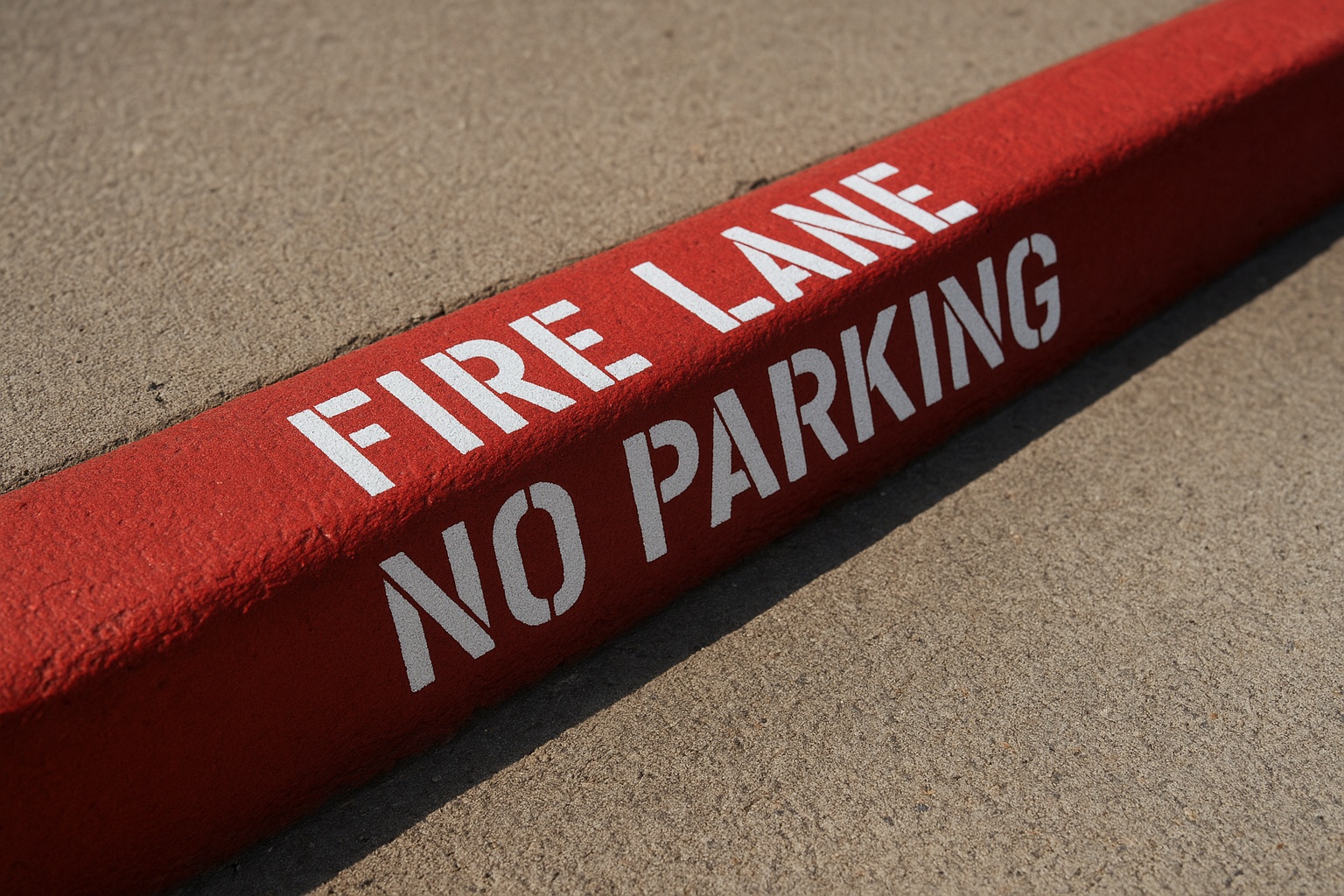
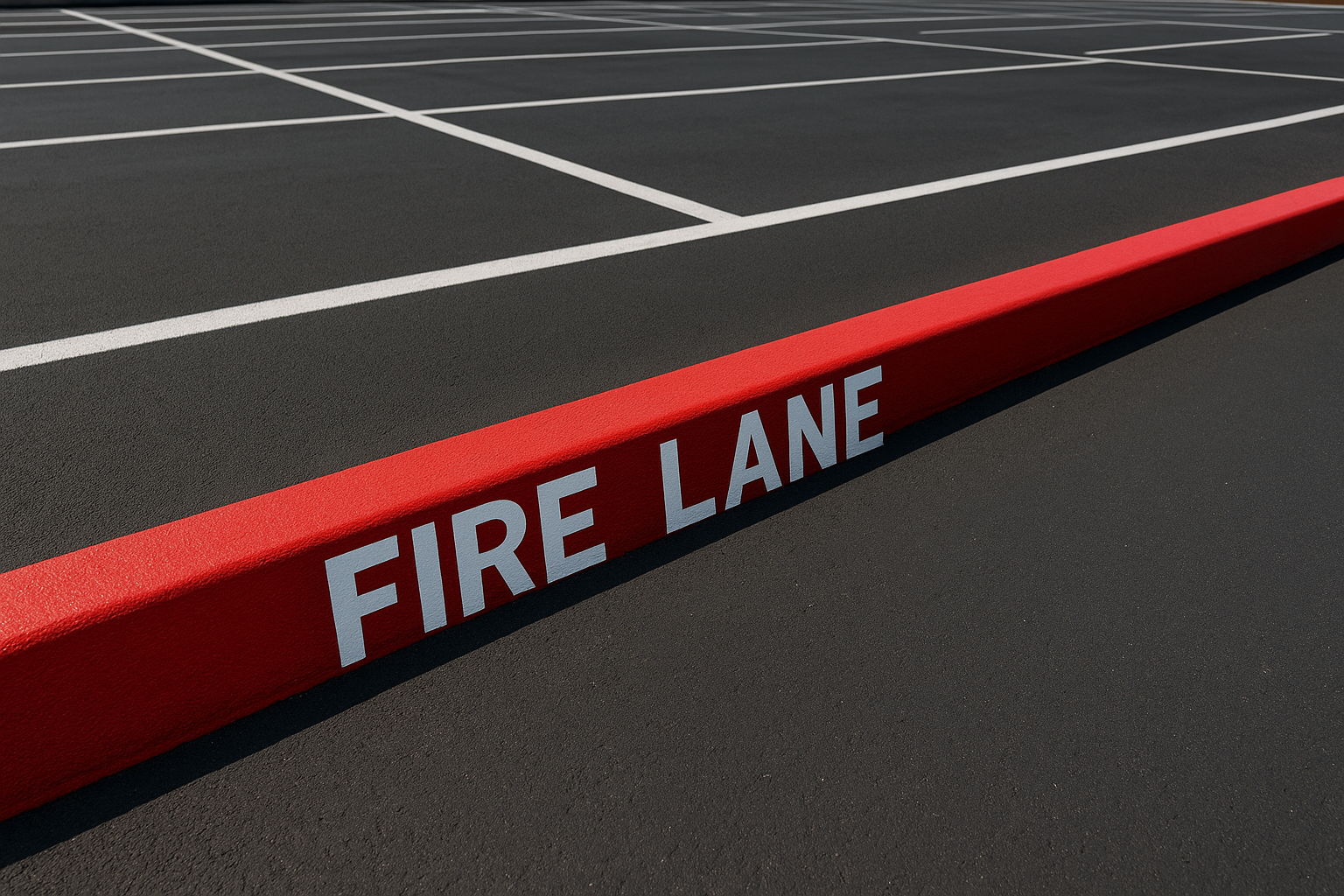
Precise stenciling is what separates code-compliant fire lane markings from a quick paint job.
Final Thoughts on Fire Lane Compliance
Ultimately, commercial fire lane striping Texas property owners invest in protects more than just an inspection checklist. It keeps emergency responders moving when seconds matter, and it shields property owners from fines tied to faded or missing markings. Whether a property needs a brand-new layout or a simple restripe, working with a contractor familiar with local Denton and Plano fire codes makes the process faster and far less stressful. Property managers who plan ahead, budget realistically, and schedule restriping before paint fades will consistently stay a step ahead of the next fire marshal walkthrough.