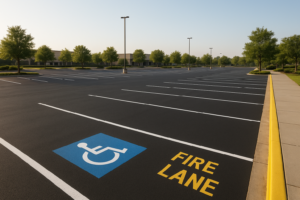
ADA parking lot signage Denton Texas requirements determine whether a commercial property passes inspection or ends up facing fines, complaints, and legal exposure. Every property owner, property manager, and business operator who opens a lot to the public needs to understand exactly what the law requires — from sign height to van-accessible ratios to Texas-specific registration steps. This guide covers every requirement, every cost, and every common mistake so a Denton property gets it right the first time, not after a complaint arrives.
Quick Answer: ADA parking lot signage Denton Texas rules require a reflective, properly mounted sign at every accessible space, with at least one in six of those spaces also marked van-accessible. Sign height (60 inches minimum), symbol design, quantity per the ADA sliding scale, and material durability are all governed by the 2010 ADA Standards for Accessible Design and reinforced locally by the Texas Accessibility Standards (TAS).
What Counts as ADA Parking Lot Signage in Denton, Texas?
ADA parking lot signage is the posted signage that identifies accessible parking spaces reserved for people with disabilities. Each sign displays the International Symbol of Accessibility and, where required, a supplemental van-accessible plate underneath. In short, this signage is the legal marker that tells drivers, visitors, and inspectors that a space meets federal accessibility law.
However, the symbol alone is not enough. Compliant signage must also meet exact specifications for mounting height, reflectivity, sign quantity, and placement relative to the accessible route. Therefore, a sign that looks accessible but sits too low, uses a non-reflective surface, or lacks a required van-accessible plate can still fail inspection — even if the symbol itself is correct.
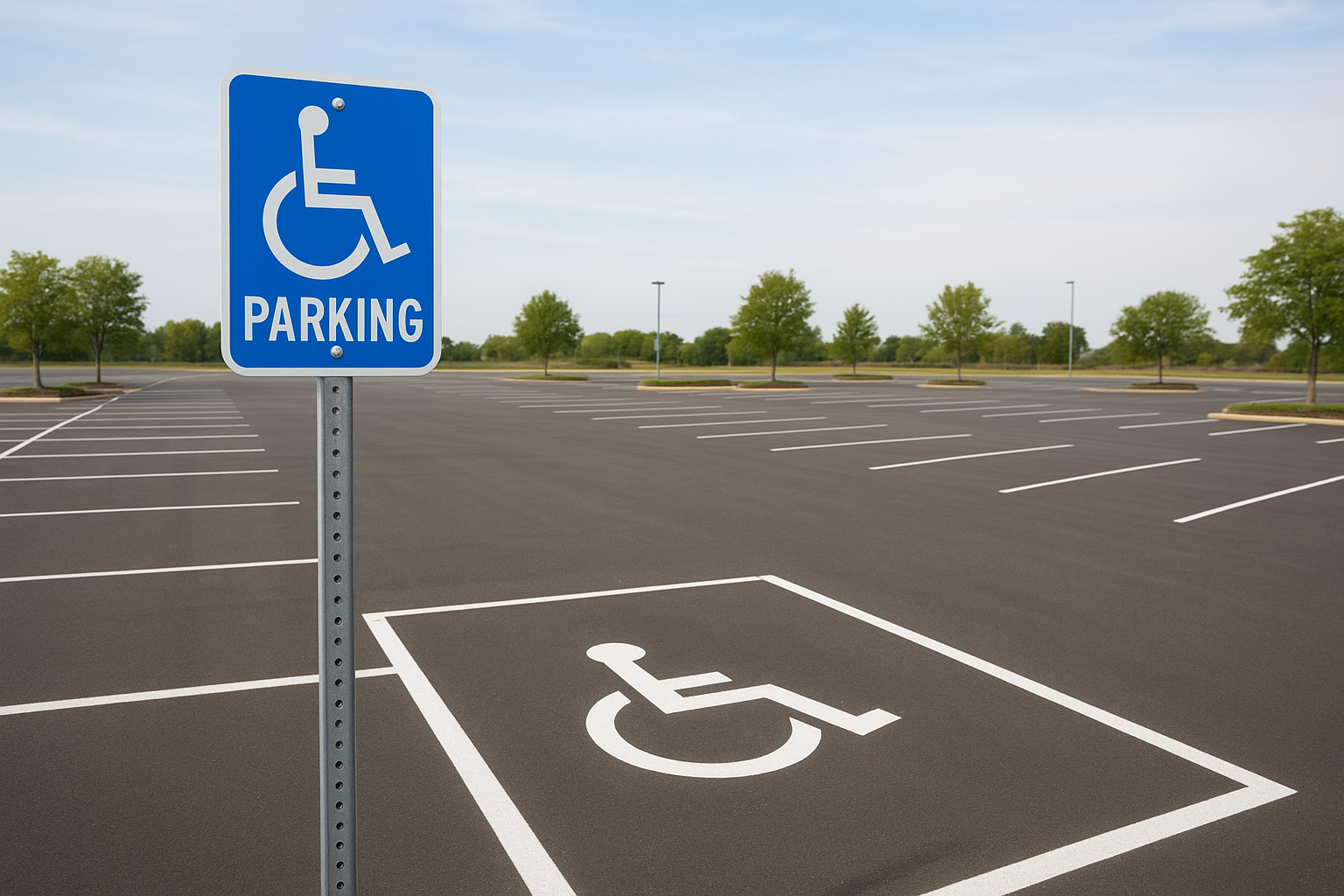
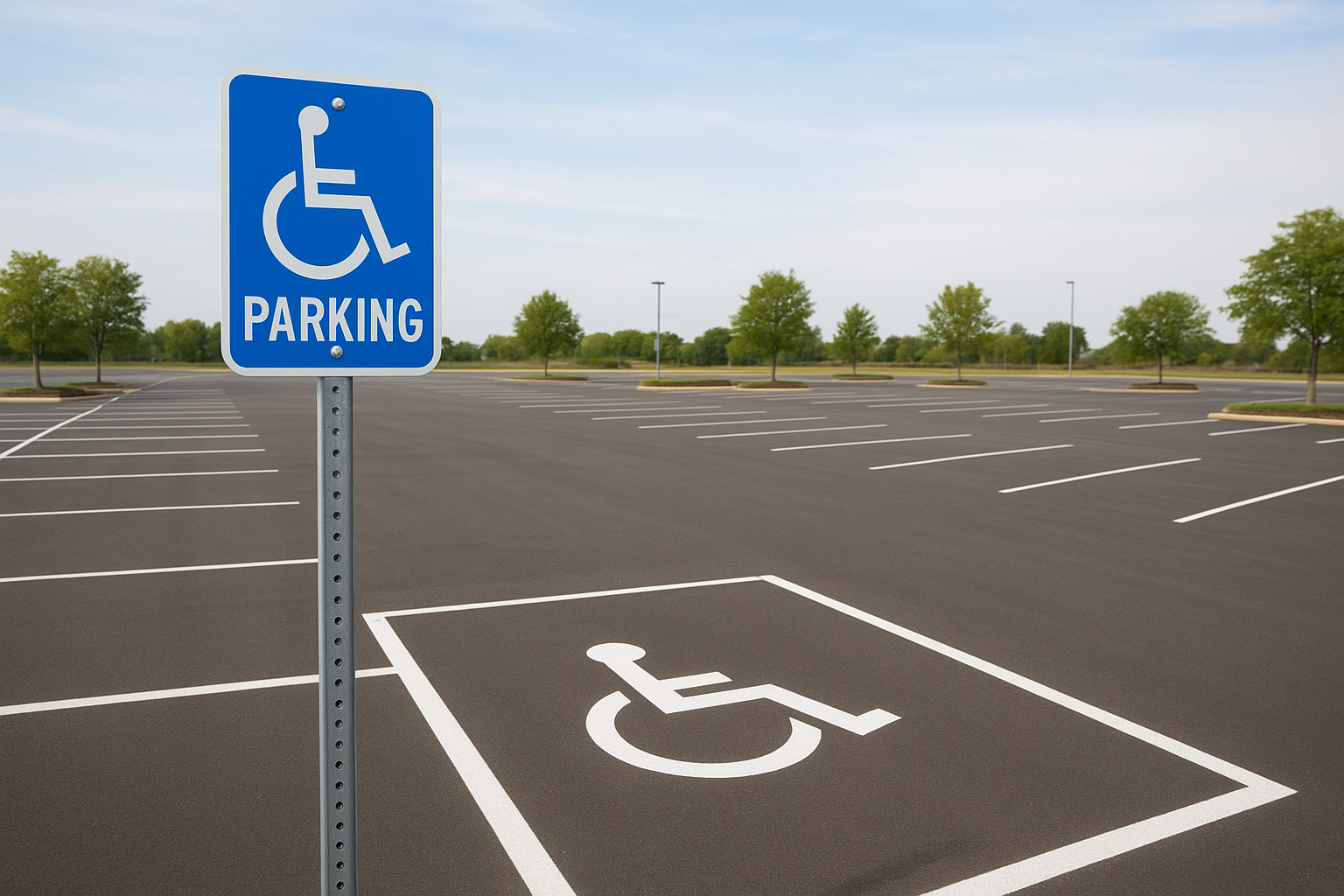
Properly mounted ADA parking lot signage Denton Texas businesses rely on to stay compliant and welcoming.
Why Accessible Parking Signage Requirements Matter Here
Denton’s commercial corridors, from retail centers along University Drive to healthcare facilities near the medical district, serve a growing population that includes seniors, veterans, and residents with mobility challenges. As a result, accessible parking is not optional — it is a civil rights requirement under the Americans with Disabilities Act (ADA), a federal law first enacted in 1990 that prohibits discrimination based on disability.
In particular, the U.S. Department of Justice’s ADA.gov resource confirms that non-compliant properties can face formal complaints, mandated corrections, and financial penalties. Consequently, staying ahead of signage requirements protects both visitors and the property owner’s bottom line — and it protects the business from bad press that follows a public complaint.
Additionally, the Texas Department of Licensing and Regulation (TDLR) enforces the Texas Accessibility Standards (TAS), which closely mirror federal rules but add state-level plan review, inspection, and registration steps for certain new construction and renovation projects. In other words, a Denton property owner is answering to two overlapping sets of rules, not just one — which is exactly why so many lots get flagged for details they didn’t know applied to them.
ADA Compliant Signage Requirements: The Full Texas Breakdown
Understanding the specific rules helps property owners avoid costly rework. Below is a complete breakdown of the requirements that apply to ADA compliant signage on commercial lots across North Texas — including details many general contractors miss.
Handicap Parking Sign Specifications
Every accessible space must display a sign featuring the International Symbol of Accessibility, mounted so the bottom edge sits at least 60 inches above the parking surface. This height matters because a lower sign can be blocked from view by a parked SUV or truck. For example, a lot with 26 to 50 total spaces must provide a minimum of two accessible spaces, each with its own sign, according to the sliding scale published in the 2010 ADA Standards.
Van-Accessible Signage Rules
At least one in every six accessible spaces must be designated van-accessible, featuring a wider access aisle and an additional “van accessible” placard beneath the main sign. Similarly, these spaces require extra pavement marking to guide drivers safely into the wider aisle, since the whole point of the wider space is to allow a wheelchair lift to deploy without blocking traffic.
How Many Accessible Spaces Does a Denton Lot Need?
The required count follows a sliding scale tied to total parking space count. Here is the breakdown most Denton commercial properties fall under:
| Total Spaces in Lot | Minimum Accessible Spaces |
| 1 to 25 | 1 |
| 26 to 50 | 2 |
| 51 to 75 | 3 |
| 76 to 100 | 4 |
| 101 to 150 | 5 |
| 151 to 200 | 6 |
For lots over 200 spaces, the requirement generally shifts to roughly 2% of total spaces, plus one van-accessible space for every six accessible spaces. Above all, property owners should recalculate this count after any lot expansion or restriping project, since adding spaces can quietly push a property into the next tier.
Texas-Specific Registration: What TAS Adds
Beyond federal ADA rules, Texas requires certain new construction and substantial renovation projects to register with the Texas Department of Licensing and Regulation and undergo a Registered Accessibility Specialist (RAS) inspection. In contrast, routine sign replacement or a restriping refresh on an existing lot typically does not trigger this registration — but property owners should confirm project scope before assuming an exemption applies.
How to Install ADA-Compliant Parking Lot Signage
Installing compliant signage is a process, not a single task. Here is the step-by-step approach experienced striping and signage crews follow on Denton-area properties:
- Assess the lot layout. Count total spaces and calculate the required number of accessible spots using the ADA sliding scale referenced above.
- Plan sign placement and height. Mark mounting locations that keep signs visible above parked vehicles at the required 60-inch minimum from the parking surface.
- Select compliant materials. Choose reflective aluminum signs and van-accessible placards for the required ratio, ensuring the sheeting meets engineering-grade reflectivity standards for nighttime visibility.
- Install posts securely. Set footings deep enough to withstand Texas wind loads and accidental vehicle contact without leaning or shifting over time.
- Schedule an inspection. Confirm compliance against both federal ADA rules and Texas Accessibility Standards, then set a recurring maintenance check for fading or damage.
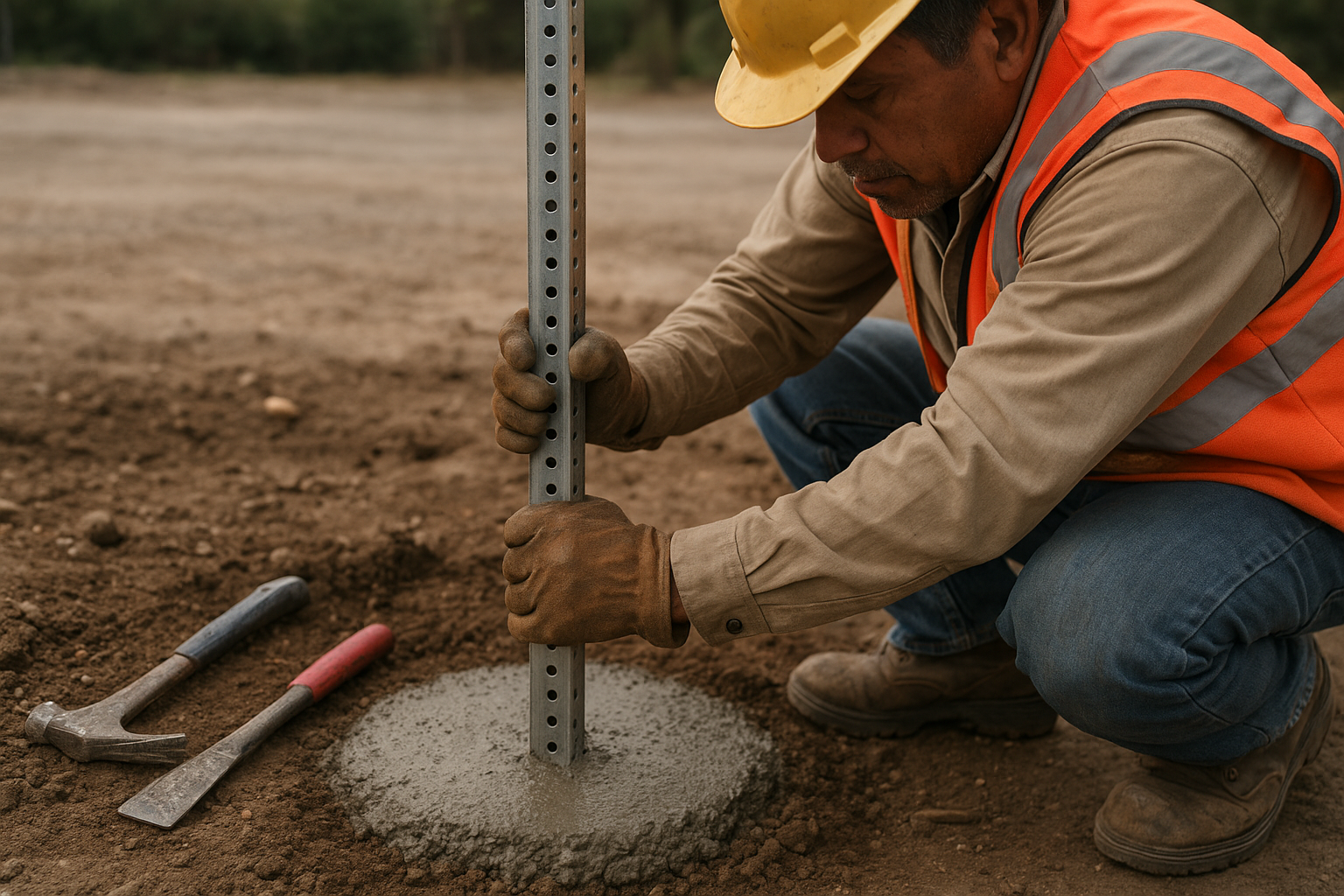
Correct post depth and mounting height keep signage stable and code compliant for years.
Materials and Mounting: What Separates Real Compliance From Compliant-Looking Signs
Not every sign that displays the accessibility symbol actually meets code. In particular, three material and mounting choices make the difference between a sign that passes inspection and one that gets flagged:
- Sheeting grade: Engineer-grade or high-intensity reflective sheeting ensures the sign is legible at night and in low light, which standard printed vinyl often fails to achieve.
- Post material: Galvanized steel or heavy-duty aluminum posts resist corrosion and impact far better than lightweight alternatives, which is important given North Texas storms.
- Footing depth: A properly set footing, typically 24 to 36 inches, prevents the leaning or tilting that causes many signs to drop below the required 60-inch height over time.
Common Mistakes With Accessible Parking Signage
Even well-intentioned property owners make avoidable errors. For instance, mounting signs below the required 60-inch minimum is one of the most frequent violations found during inspections. In addition, many lots simply have too few van-accessible spaces relative to their total accessible count, often because the ratio was calculated once and never rechecked after a lot expansion.
Furthermore, faded or peeling signage often goes unnoticed until a complaint is filed. Similarly, some properties place accessible spaces at the correct count but on the wrong route — too far from the accessible entrance to count as compliant. Above all, routine inspection prevents small issues from becoming expensive legal problems.
What Does ADA Parking Lot Signage Cost in Denton, TX?
Pricing varies based on post material, sign count, and site conditions. On average, Denton property owners pay between $75 and $250 per sign, including post installation. In contrast, bundling signage with a full parking lot restriping project often reduces the per-unit cost while improving overall curb appeal at the same time.
| Item | Typical Denton Price Range |
| Standard accessible sign with post | $75 – $150 |
| Van-accessible sign with post | $120 – $250 |
| Full-lot signage package (bundled) | 10–20% savings vs. per-sign pricing |
According to industry estimates, ADA-related non-compliance complaints can result in penalties ranging from a few hundred to several thousand dollars per violation, making upfront investment in proper signage a practical safeguard rather than an optional expense. For a broader breakdown of striping and marking costs across a full lot, this Denton parking lot marking compliance and cost guide walks through pricing for line striping, fire lanes, and signage side by side.
ADA Signage, Fire Lane Marking, and Striping: How They Work Together
ADA parking signage identifies accessible spaces for people with disabilities, while fire lane marking designates emergency vehicle access routes that must remain unobstructed at all times. Both are legally required but serve distinct safety purposes, and both are typically inspected during the same site visit. As a result, it rarely makes sense to handle them as separate projects.
For a closer look at how Denton properties coordinate signage with fire lane compliance and overall striping schedules, see this overview of Denton parking services covering striping, ADA compliance, and fire lanes.
Maintenance: Keeping Denton ADA Signage Compliant Year-Round
Compliance is not a one-time event. Sun exposure, storms, and vehicle contact all degrade signage over time, so a simple annual (or semi-annual) walk-through catches problems before an inspector or visitor does. Specifically, check for three things: fading of the reflective symbol, leaning posts that may have dropped below the 60-inch minimum, and any accessible spaces that have lost their painted access aisle markings due to normal pavement wear. Consequently, pairing a signage check with a routine restriping schedule keeps the whole lot in compliance without adding a separate maintenance task.
Choosing a Local Provider for ADA Signage Solutions
Because ADA rules involve precise measurements and Texas-specific standards, it helps to work with a contractor who understands both. StripesPls, a full-service parking lot marking company serving Denton and Plano, TX, provides ADA compliance solutions alongside striping, fire lane marking, and directional signage for property managers, retail centers, schools, and healthcare facilities.
For property owners seeking a complete overview of local striping options, this complete guide to Denton parking lot striping providers offers useful context. Similarly, the signage services page details available sign types, while the Denton striping and line marking overview explains how signage pairs with fresh pavement markings for a fully compliant lot.
Property owners across the wider region can also review the Texas parking lot striping company overview or explore professional striping services in Denton, TX to compare full-service options. Requesting a free quote through stripespls.com is typically the fastest way to get a site-specific compliance assessment.
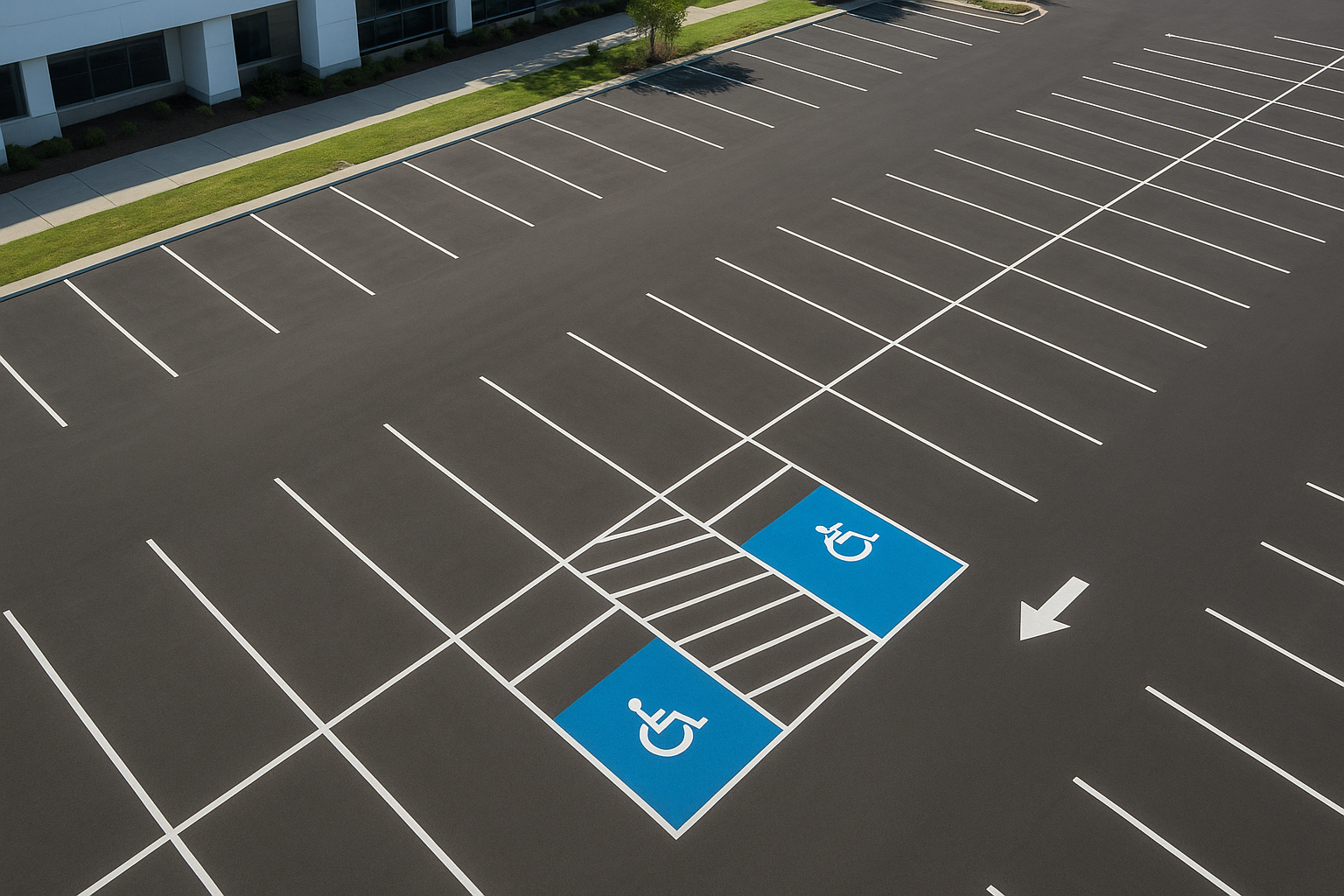
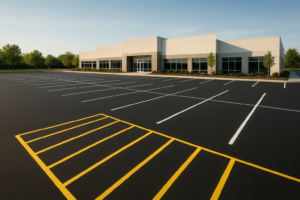
A fully striped and signed commercial lot near Denton, Texas, showing accessible spaces and directional markings.
Frequently Asked Questions
What is ADA parking lot signage in Denton, Texas?
ADA parking lot signage in Denton, Texas refers to the mandatory signs marking accessible parking spaces, including the international symbol of accessibility and van-accessible designations. These signs must meet federal ADA standards and any local Denton or Texas amendments.
How many ADA parking signs does a Denton property need?
The number depends on total parking space count, following a sliding scale set by the 2010 ADA Standards for Accessible Design. A lot with 26 to 50 spaces needs at least two accessible spaces, each requiring its own sign.
Why is ADA compliant signage required for commercial properties?
ADA compliant signage is required because federal law mandates equal access to public and commercial facilities for people with disabilities. Non-compliant properties risk fines, lawsuits, and complaints filed with the Department of Justice.
What is the difference between standard and van-accessible ADA signs?
Standard ADA signs mark regular accessible spaces, while van-accessible signs include an additional placard noting extra aisle width for wheelchair lifts. At least one in every six accessible spaces must be van-accessible under federal guidelines.
How much does ADA parking lot signage cost in Denton, Texas?
Most Denton properties pay between $75 and $250 per sign, depending on post material, mounting style, and whether new posts must be installed. Full-lot compliance packages that include striping typically cost more upfront but offer bundled savings.
How long does ADA signage installation take?
A typical commercial lot can have ADA signage installed within one business day, depending on the number of spaces and site conditions. Larger properties with multiple lots may need two to three days for full compliance work.
What mounting height is required for ADA parking signs?
The bottom edge of an ADA parking sign must be mounted at least 60 inches above the ground, measured from the parking surface to the lowest part of the sign. This height ensures visibility over parked vehicles.
What are common mistakes with ADA parking lot signage?
Common mistakes include mounting signs too low, using faded or damaged symbols, and failing to include van-accessible placards where required. Property owners also often miscalculate how many accessible spaces their lot needs after an expansion.
Does Texas have additional ADA signage requirements beyond federal law?
Yes, the Texas Department of Licensing and Regulation enforces the Texas Accessibility Standards, which align closely with federal ADA rules but include state-specific registration and inspection requirements for certain projects.
Can old or faded ADA signs result in fines?
Yes, faded, damaged, or missing ADA signage can trigger citations from local code enforcement or complaints leading to federal investigation. Regular inspection helps property owners catch problems before they become costly violations.
How does ADA parking signage compare to fire lane marking?
ADA parking signage identifies accessible spaces for people with disabilities, while fire lane marking designates emergency vehicle access routes that must remain unobstructed. Both are legally required but serve distinct safety purposes.
Who should install ADA parking lot signage in Denton?
Property owners should hire a local striping and signage contractor familiar with both federal ADA rules and Texas accessibility standards. Experienced crews can survey the lot, calculate required spaces, and install compliant signage correctly the first time.
What happens if a Denton property fails an ADA compliance review?
A failed review can result in required corrective action, fines, or civil litigation from affected individuals. Property owners typically receive a notice period to fix violations before penalties escalate.
Is a permit required to install ADA parking signs in Denton, Texas?
Generally, no separate city permit is required specifically for sign installation on an existing lot. However, new construction and major renovations often trigger Texas Department of Licensing and Regulation plan review under the Texas Accessibility Standards, so property owners should confirm project scope before work begins.
Can ADA signage installation be combined with a parking lot restriping project?
Yes, and doing so is one of the most cost-effective approaches available. Because crews are already on site with equipment, bundling both jobs typically reduces mobilization costs and ensures signage height and stall striping are coordinated for a single, unified inspection.
Final Thoughts on ADA Parking Lot Signage in Denton, Texas
In summary, ADA parking lot signage Denton Texas requirements exist to keep properties safe, accessible, and legally protected. From proper mounting height to van-accessible placards to the Texas-specific registration steps that catch so many owners off guard, every detail matters when it comes to passing inspection and serving the community well. Property owners who invest in correct signage now, rather than after a complaint arrives, consistently save money and avoid legal headaches.
Ultimately, working with a knowledgeable local provider makes the entire process easier. Whether a property needs a first-time layout or a refresh of faded markings, pairing compliant signage with quality striping ensures a lot that looks professional and meets every applicable standard. You can learn more through the U.S. Access Board, review background on the Americans with Disabilities Act, or start with a free quote at stripespls.com.