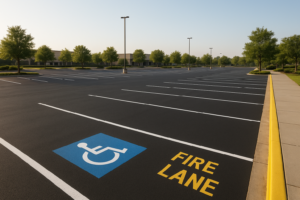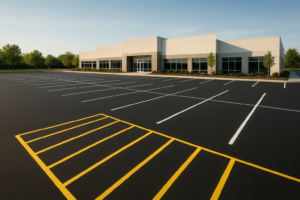
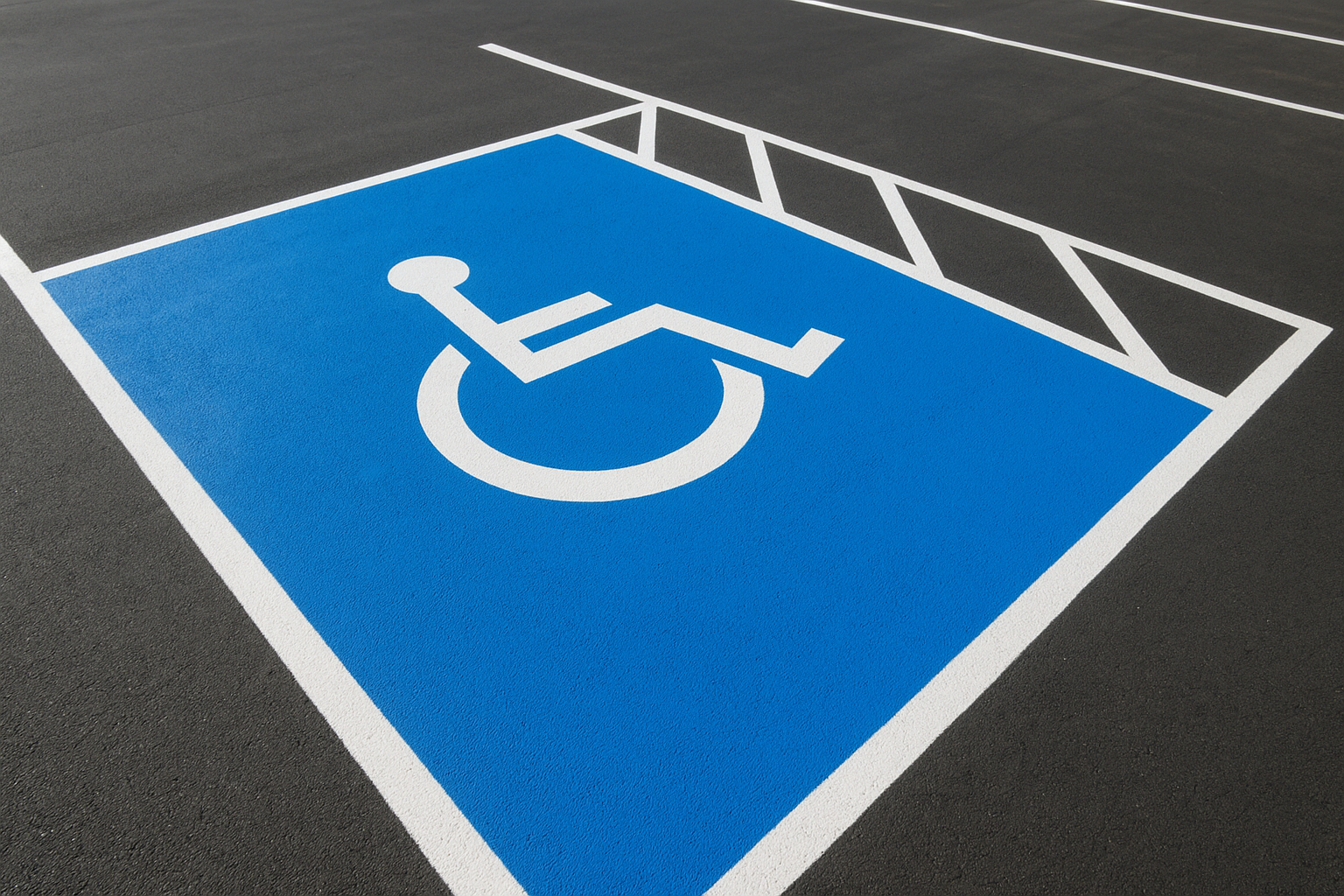
ADA handicap parking stall striping Plano services help property owners create safe, accessible, and legally compliant parking lots throughout North Texas. Every commercial property, including retail centers, medical offices, schools, and apartment complexes, must provide properly marked accessible parking spaces under federal law. However, faded lines, incorrect dimensions, or missing signage can quietly turn a fully compliant lot into a costly liability. As a result, many Plano property managers now rely on professional striping crews rather than attempting a quick DIY repaint. This guide covers what ADA-compliant striping requires, how the process works, what it costs, and why hiring an experienced local contractor matters for long-term compliance.
Quick Answer
ADA handicap parking stall striping in Plano involves painting accessible parking spaces with correct widths, access aisles, and the International Symbol of Accessibility so a property meets federal ADA and Texas Accessibility Standards. Professional crews measure stall dimensions, apply reflective traffic paint, and coordinate signage placement to keep the lot legally compliant.
What Is ADA Handicap Parking Stall Striping?
ADA handicap parking stall striping is the process of painting accessible parking spaces so they meet the width, symbol, and signage requirements set by the Americans with Disabilities Act. In short, it turns a standard parking spot into a legally usable accessible space for drivers and passengers with mobility disabilities.
Specifically, this involves a wider stall, an adjoining access aisle for wheelchair transfers, and the blue-and-white International Symbol of Accessibility painted directly on the pavement. In addition, most jurisdictions require a mounted sign at the correct height confirming the space is reserved. Because paint fades under Texas sun and heavy traffic, these markings need periodic renewal to stay code-compliant.
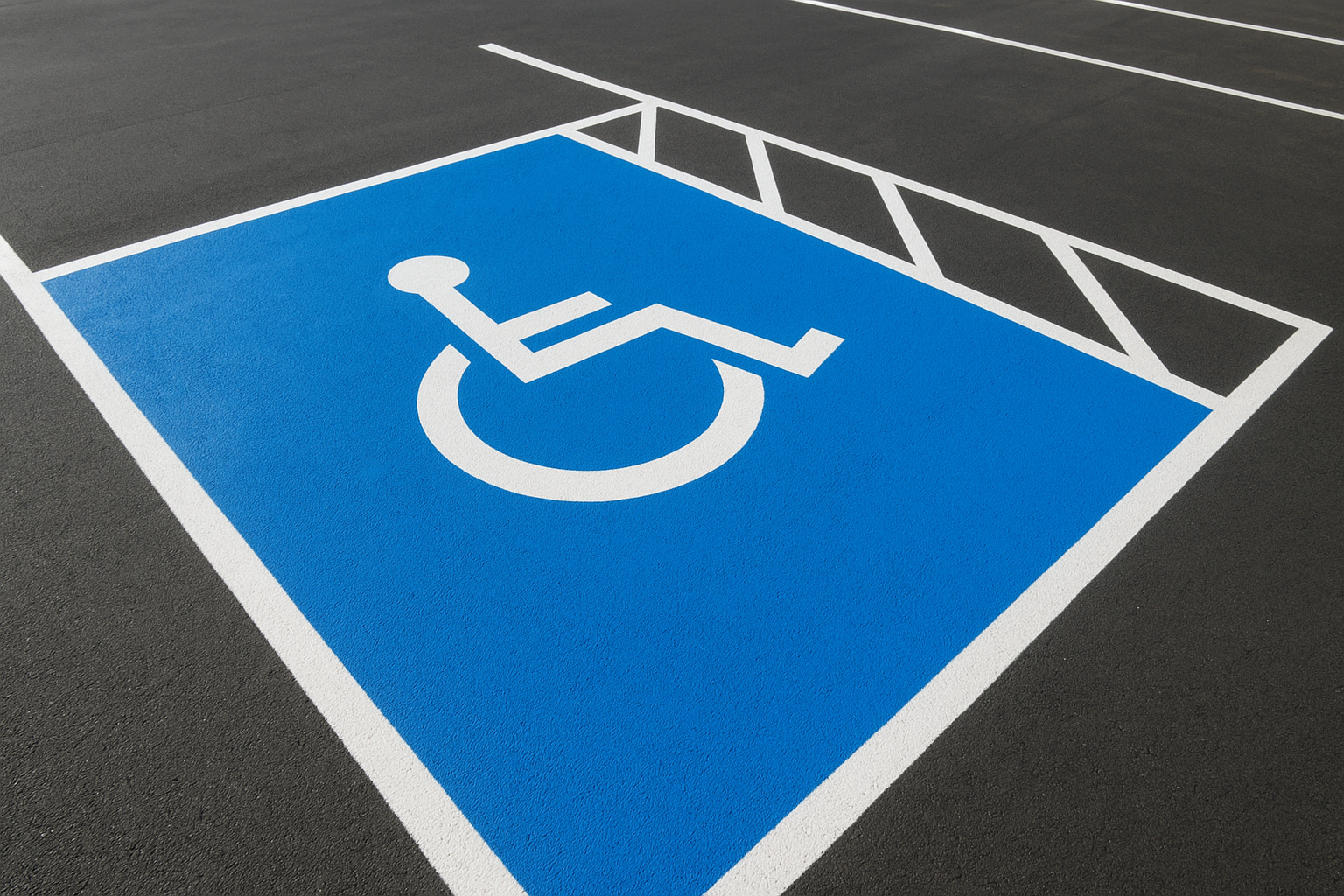
Clean, freshly applied ADA handicap parking stall striping helps Plano properties stay compliant and welcoming to every visitor.
ADA Handicap Parking Stall Striping Plano Requirements at a Glance
ADA handicap parking stall striping Plano requirements combine federal ADA design standards with Texas Accessibility Standards enforced through the Texas Department of Licensing and Regulation. Consequently, a Plano property must meet both sets of rules, not just one, to remain fully compliant.
According to the ADA Standards for Accessible Design, accessible stalls, access aisles, symbols, and vertical signage must all be present and correctly sized. Furthermore, the U.S. Access Board publishes technical guidance that many local inspectors reference when reviewing new construction and restriping projects.
Why ADA Compliant Parking Striping Matters for Plano Properties
ADA compliant parking striping matters because non-compliance carries real financial and legal risk. For example, a single complaint can trigger a Department of Justice review, and lawsuits over inaccessible parking are common across Texas retail and healthcare properties.
Beyond legal exposure, accessible striping also supports customers, patients, and employees who depend on properly sized stalls and aisles. Similarly, schools and municipal buildings in Denton and Plano must demonstrate compliance during routine inspections. Therefore, keeping markings fresh is not just a legal checkbox; it is part of running a welcoming, well-managed property.
Handicap Parking Stall Dimensions and Design Standards
Handicap parking stall dimensions are precise, and even a small measurement error can make a stall non-compliant. In particular, standard and van-accessible stalls follow different width rules, as shown below.
| Stall Type | Stall Width | Access Aisle |
|---|---|---|
| Standard accessible | 96 inches | 60 inches |
| Van-accessible | 96 or 132 inches | 96 inches (if narrower stall) |
In addition to width, the slope of an accessible stall must not exceed 2 percent in any direction. Otherwise, wheelchair users may struggle to transfer safely, which is exactly what these standards are designed to prevent.

Accurate measurement is the foundation of every compliant handicap parking stall layout.
How Professional Crews Complete ADA Parking Lot Striping in Plano
ADA parking lot striping follows a consistent process, regardless of property size. Below is the sequence a qualified Plano crew typically follows from start to finish.
- Site assessment and measurement: the crew evaluates the lot layout, counts total spaces to determine how many accessible stalls are legally required, and measures existing markings for accuracy.
- Layout marking with chalk lines: technicians measure and mark stall boundaries, access aisles, and van-accessible spaces using chalk lines before any paint is applied.
- Surface preparation: old faded lines are pressure washed or ground away, and the pavement is cleared of debris and oil residue so new paint adheres properly.
- Applying ADA traffic paint: durable traffic-grade paint defines the stall boundaries, and a blue background with the accessibility symbol is added within each space.
- Signage installation and final inspection: required signage is mounted at the correct height, and a final walkthrough confirms dimensions and symbol placement meet code.
For a deeper look at general layout planning, this guide to parking lot striping in Plano, TX walks through the full-lot process beyond accessible stalls alone.
Common Mistakes in Handicap Stall Striping to Avoid
Handicap stall striping mistakes are surprisingly common, even on properties that believe they are compliant. Undersized access aisles, missing van-accessible spaces, and faded symbols are among the most frequent issues found during inspections.
Likewise, signage mounted at the wrong height or blocked by landscaping can trigger a violation despite fresh paint on the ground. Consequently, property managers should treat striping and signage as one connected system rather than two separate tasks. A thorough ADA compliant striping review before repainting can catch these gaps early.
Cost of ADA Parking Lot Striping in Plano, TX
ADA parking lot striping in Plano generally costs between $150 and $400 per accessible stall, depending on paint quality, symbol detail, and signage needs. Full-lot restriping projects that include several ADA stalls at once often reduce the per-stall cost because mobilization and setup are shared across the whole job.
According to industry estimates, roughly one in four accessibility complaints filed with the Department of Justice involves parking access issues, which underscores why proactive maintenance is usually cheaper than reactive fixes. For a broader breakdown of pricing across an entire lot, see this expert guide to parking lot striping from a local Plano contractor.
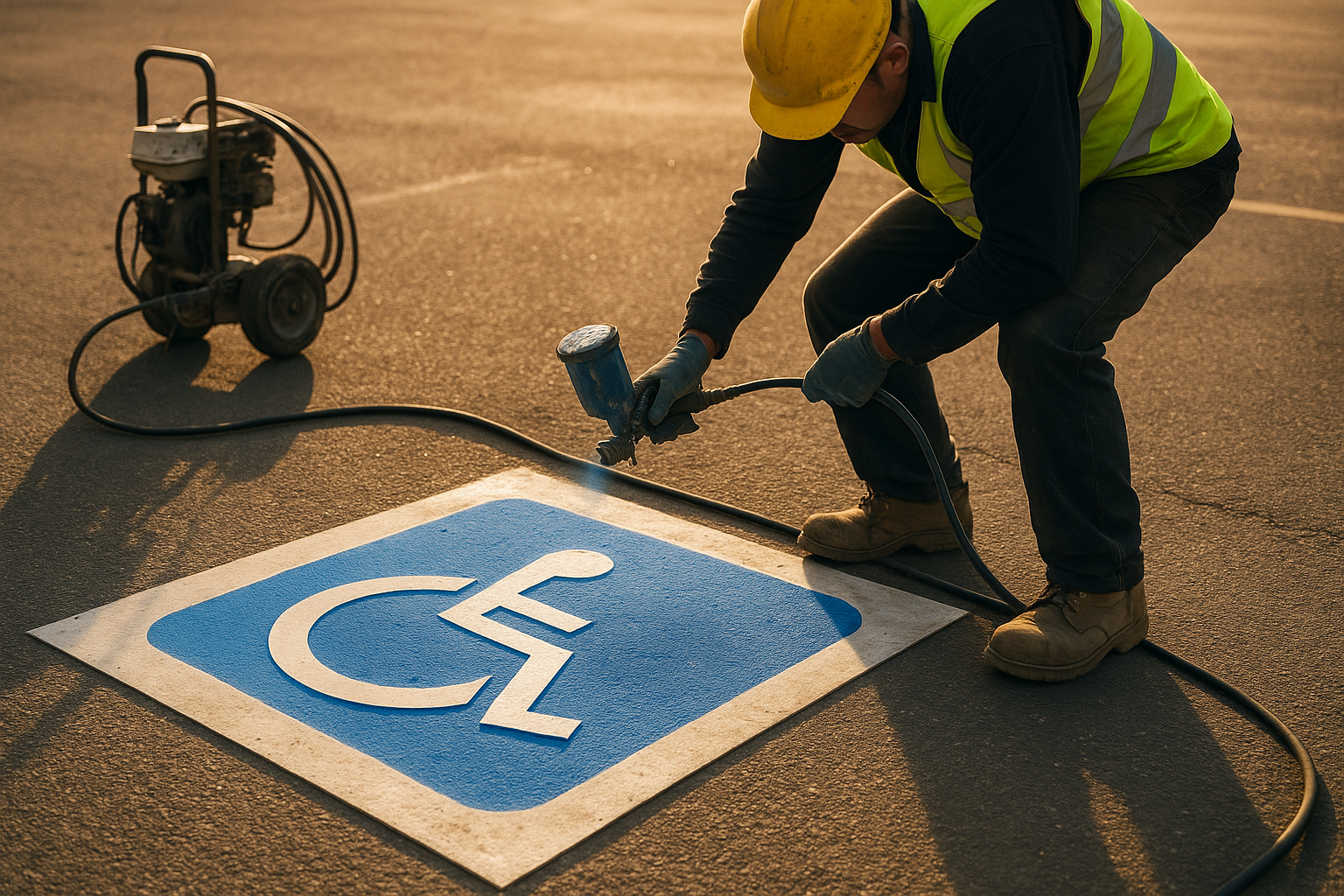
Precise stencil work ensures the accessibility symbol meets code every time.
Choosing a Trusted Striping Company in Plano and Denton
Choosing the right striping company matters just as much as the paint itself. A qualified contractor should understand both federal ADA rules and Texas-specific accessibility standards, not just general line painting.
Stripespls.com, a full-service striping company based in Texas, specializes in ADA compliance solutions, fire lane marking, and complete parking lot layouts for property managers, schools, healthcare facilities, and retail centers across Denton and Plano. Property owners can review a complete guide to ADA-compliant striping for property owners or explore professional parking lot striping services in Denton and Plano before requesting a free quote through stripespls.com.
Frequently Asked Questions
What is ADA handicap parking stall striping in Plano?
ADA handicap parking stall striping Plano refers to professionally painting accessible parking spaces, access aisles, and accessibility symbols so a property meets federal ADA and Texas Accessibility Standards. It typically includes correctly sized stalls, a blue background symbol, and properly mounted signage.
How wide does an ADA handicap parking stall need to be?
A standard accessible stall must be at least 96 inches wide with an adjacent 60-inch access aisle. Van-accessible stalls require either a wider 132-inch space or a 96-inch stall paired with a 96-inch aisle.
Why do Plano businesses need ADA-compliant parking striping?
Plano businesses need compliant striping to avoid fines, lawsuits, and complaint investigations while ensuring safe access for customers and employees with disabilities. Non-compliant lots also create liability risk for property owners and managers.
How much does ADA parking lot striping cost in Plano, TX?
Most Plano properties pay between $150 and $400 per accessible stall depending on paint type, symbol detail, and signage needs. Full-lot restriping projects that include multiple ADA stalls often cost less per stall due to shared mobilization.
How long does it take to restripe a parking lot for ADA compliance?
A typical accessible restriping project takes one to two days depending on lot size and paint curing time. Larger commercial properties with multiple entrances may need an additional day for signage installation.
What is the difference between a van-accessible stall and a standard accessible stall?
A van-accessible stall provides extra width or a wider access aisle to accommodate wheelchair lifts, while a standard accessible stall serves passenger vehicles with a narrower aisle. Both require the accessibility symbol and dedicated signage.
What color paint is required for handicap parking symbols?
The International Symbol of Accessibility is typically painted white on a blue background, though some Texas jurisdictions accept white symbols directly on the pavement. A local striping contractor can confirm the exact requirement for a given property.
What are common mistakes property owners make with handicap stall striping?
Common mistakes include undersized access aisles, missing van-accessible stalls, faded symbols, and signage mounted at the wrong height. These errors often go unnoticed until a compliance complaint or inspection occurs.
How many ADA parking spaces does a property need?
The required number of accessible spaces is based on total parking count, following a sliding scale set by ADA standards. For example, a lot with 26 to 50 total spaces generally needs at least two accessible stalls, with one being van-accessible.
What happens if a parking lot fails to meet ADA striping requirements?
Non-compliant lots can face civil complaints, Department of Justice enforcement, or private lawsuits under the ADA. Property owners may also be required to correct violations quickly, often at greater expense than proactive maintenance.
How often should ADA parking stall striping be repainted?
Most commercial lots in North Texas need restriping every 18 to 24 months due to sun exposure and traffic wear. High-traffic properties or lots with lighter paint may need touch-ups sooner.
Can property owners paint their own ADA handicap parking stalls?
While DIY painting is technically possible, most property owners hire professionals because precise measurements and code knowledge are required. A mistake in stall width or aisle placement can result in a non-compliant lot even after fresh paint is applied.
Final Thoughts on ADA Parking Compliance in Plano
ADA handicap parking stall striping Plano projects protect property owners from legal risk while making a parking lot genuinely usable for every visitor. From correct stall dimensions to durable paint and properly mounted signage, each detail plays a role in true compliance. As a result, working with an experienced local crew, rather than guessing at measurements, is the most reliable way to get it right the first time. Whether a property needs a full restriping project or a quick fix to a few faded stalls, reviewing the stripespls.com resource on accessible parking standards is a solid first step toward a safer, code-compliant Plano property.