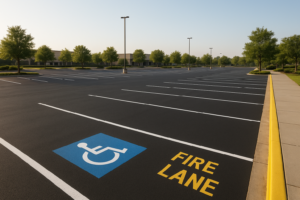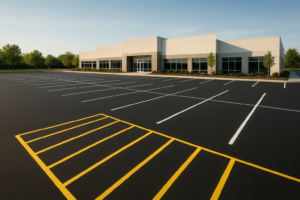

Retail center parking lot marking denton projects are becoming a top priority for property managers who want safer, more accessible shopping destinations. Faded lines, unclear fire lanes, and outdated ADA striping can quietly hurt a retail center’s curb appeal and expose owners to liability. In North Texas, where retail traffic stays busy year-round, clear pavement markings help shoppers find spaces quickly, keep emergency access lanes open, and show that a property is well maintained. Therefore, this guide from StripesPls, a Denton and Plano area striping company, explains what goes into professional retail center parking lot marking denton services and what property owners should expect before hiring a contractor.
Quick answer: Retail center parking lot marking in Denton covers professional line striping, ADA-compliant handicap stalls, and fire lane painting for shopping centers. A qualified local contractor measures the lot, follows Texas accessibility codes, and applies durable paint that typically lasts one to two years.
What Is Retail Center Parking Lot Marking in Denton?
Retail center parking lot marking denton is the professional painting and layout process that defines parking stalls, drive lanes, ADA-accessible spaces, and fire lanes across shopping center pavement. It combines accurate measurements, code-compliant paint, and durable materials to organize traffic flow and meet Texas and federal accessibility standards. For retail properties specifically, this usually covers general parking stalls, handicap-accessible spaces, directional arrows, curb markings, and fire lane striping near entrances and loading zones.
In addition, many shopping centers request specialty markings such as cart corral outlines, pedestrian crosswalks, and reserved signage areas. As a result, a well-marked lot does more than look tidy — it actively reduces confusion, prevents fender benders, and helps first responders reach an entrance quickly if needed.
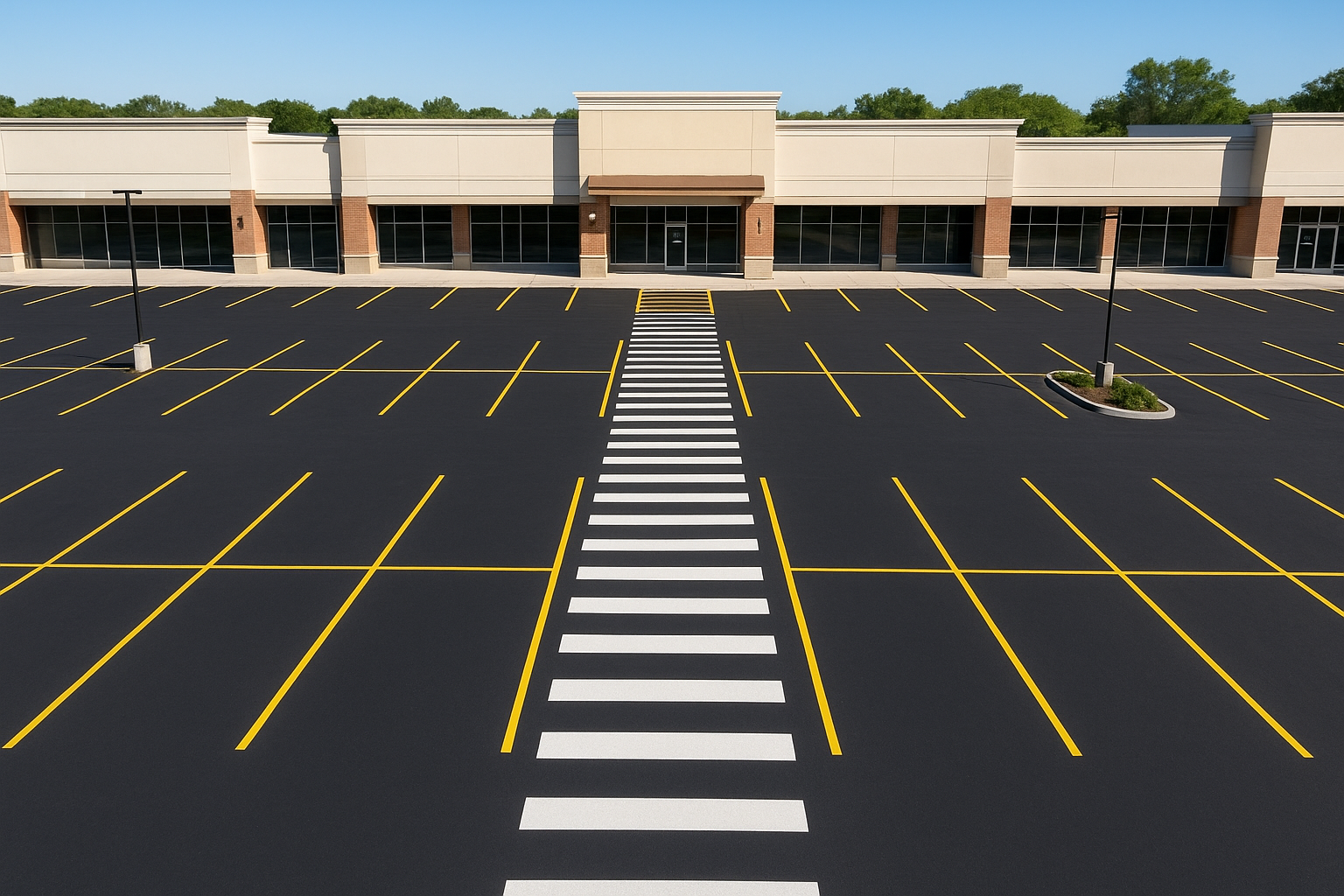
A freshly completed retail center parking lot marking denton project showing crisp lines and clear stall boundaries.
Why Retail Properties Need Professional Line Striping
Shopping centers see constant vehicle turnover, and unclear parking lines can quickly create bottlenecks near entrances. Consequently, professional line striping improves traffic flow by guiding drivers into designated lanes and stalls instead of leaving them to guess. Above all, this reduces the chance of collisions in busy drop-off zones during peak shopping hours.
Furthermore, well-maintained markings support maximum parking capacity. Specifically, an accurately measured layout can often fit more compliant stalls into the same footprint than a worn-out or outdated design. For example, older Denton retail lots striped decades ago sometimes waste usable space with oversized or misaligned stalls that a modern layout can correct.
Similarly, curb appeal matters for retail leasing and customer perception. A shopping center with crisp, bright lines signals that ownership actively maintains the property, which can influence both tenant satisfaction and shopper confidence.
ADA Compliance and Fire Lane Marking for Retail Centers
According to the U.S. Access Board, accessible parking spaces must meet minimum width and access aisle requirements so wheelchair users and shoppers with mobility devices can safely exit their vehicles. In particular, retail centers must provide a specific ratio of accessible stalls based on total parking count, and van-accessible spaces need wider aisles than standard handicap stalls.
Fire lane marking, on the other hand, focuses on keeping emergency vehicle routes open at all times. In North Texas, fire lanes are typically painted red with white “NO PARKING FIRE LANE” lettering stenciled along the curb or pavement edge. Local fire marshals often inspect these lanes, so faded or missing fire lane paint can trigger a compliance notice. The ADA.gov resource offers additional detail on federal accessibility requirements that apply to commercial parking areas nationwide.
The Retail Center Parking Lot Marking Denton Process
Understanding the process helps property managers set realistic expectations before scheduling a project. Below is the typical sequence a professional crew follows for retail center parking lot marking denton jobs.
- Site Assessment and Measurement: A technician walks the property to measure lot dimensions, count required stalls, and note existing ADA and fire lane locations before creating a layout plan.
- Layout Design and Compliance Review: The crew designs a stall and lane layout that maximizes parking capacity while meeting Texas accessibility codes and local fire marshal requirements.
- Surface Cleaning and Preparation: Old paint residue, debris, and oil stains are cleared from the pavement so new markings adhere properly and last through heavy retail traffic.
- Striping and Marking Application: Technicians apply durable traffic paint using stencils and measuring guides to create straight, code-compliant stalls, arrows, ADA symbols, and fire lane text.
- Final Inspection and Touch-Up: The finished lot is inspected for straight lines, correct spacing, and full compliance before the crew performs any needed touch-ups and leaves the site.

ADA-compliant handicap stall markings are a required part of any retail center parking lot marking denton project.
Cost Factors and Timeline for Restriping Retail Lots
Several variables influence pricing, including total lot square footage, the number of stalls, and how many ADA or fire lane markings need to be repainted. In addition, whether the crew must remove old paint layers or simply refresh existing lines can shift the final quote. Larger retail centers with multiple entrances, cart corrals, and directional arrows naturally cost more than a small strip-mall lot.
As for timing, most restriping projects wrap up within one to two business days. However, larger shopping centers sometimes need a phased schedule so sections of the lot stay open for customers while other areas are being painted. Consequently, scheduling striping work during slower business hours or overnight can minimize disruption for retail tenants and shoppers alike.
Property owners can review current striping options and request pricing through the Denton parking lot striping services page, which outlines what typically factors into a project quote.
Choosing the Right Denton Striping Contractor
Not every painting crew understands the specific codes that apply to retail properties. Therefore, property managers should look for a contractor with documented experience on commercial and retail sites, not just residential driveways. Specifically, ask whether the crew stays current on ADA standards and local Denton fire lane requirements before signing a contract.
StripesPls specializes in retail center striping across North Texas, handling everything from full lot layouts to simple restriping touch-ups. For property managers weighing options, the guide on who provides the best parking lot striping in Denton breaks down what separates a reliable crew from a rushed job.
Similarly, businesses researching broader statewide options can review the overview on the Texas parking lot striping company page, while those ready to move forward locally can explore the professional Denton striping services page for a closer look at available packages.
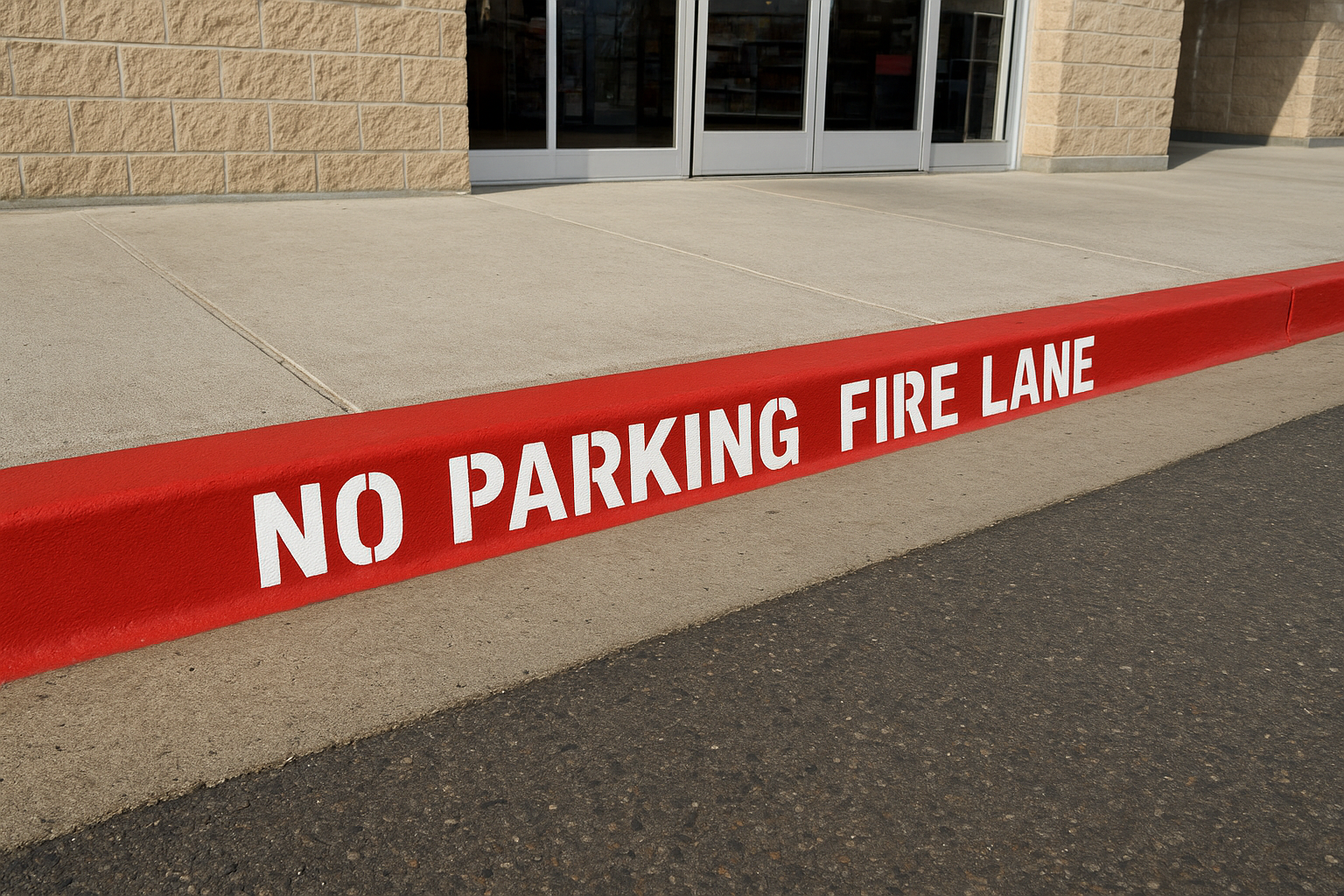
Fire lane marking near entrances is a required safety element in every retail center parking lot marking denton project.
Frequently Asked Questions About Retail Center Parking Lot Marking Denton
What is retail center parking lot marking in Denton?
Retail center parking lot marking denton refers to the professional painting of parking stalls, ADA-accessible spaces, fire lanes, and directional arrows on shopping center pavement. It ensures traffic flows smoothly and the property meets Texas and federal accessibility codes.
How often should a retail center repaint its parking lot lines?
Most retail centers in North Texas need restriping every 12 to 24 months, depending on traffic volume and sun exposure. Lots with heavy foot and vehicle traffic often fade faster and may need touch-ups sooner.
Why is ADA-compliant striping important for retail properties?
ADA-compliant striping protects retail centers from legal liability and ensures customers with disabilities can safely access the building. Non-compliant lots can face fines and complaints filed with federal agencies.
How much does retail center parking lot marking cost in Denton?
Pricing typically depends on lot size, stall count, and the number of ADA or fire lane markings needed. Smaller retail lots may cost a few hundred dollars, while larger shopping centers can run into several thousand.
How long does a typical retail lot restriping project take?
Most retail center restriping projects are completed within one to two business days. Larger centers with multiple sections may require a phased schedule to keep parking available during business hours.
What paint is used for parking lot line marking?
Contractors typically use water-based acrylic traffic paint or durable epoxy coatings designed for outdoor pavement. Epoxy generally lasts longer but costs more upfront than standard acrylic paint.
What is the difference between fire lane marking and standard parking striping?
Fire lane marking uses red paint and stenciled text to designate emergency vehicle access, while standard striping simply outlines parking stalls and drive lanes. Fire lanes must remain clear of parked vehicles at all times by law.
What common mistakes do property owners make with parking lot markings?
Common mistakes include letting ADA stalls fade past legal visibility, skipping fire lane repainting, and hiring unlicensed crews that skip proper surface prep. These shortcuts often lead to repeat work and compliance issues.
What is the best time of year to restripe a parking lot in Texas?
Spring and early fall are ideal in North Texas because moderate temperatures help paint cure properly. Extreme summer heat or winter cold can affect drying time and paint adhesion.
Do municipal codes in Denton require specific fire lane colors?
Yes, Denton fire code generally requires fire lanes to be marked with red curb paint and white lettering reading “NO PARKING FIRE LANE.” Local fire marshals may request specific placement near building entrances.
How many ADA-accessible spaces does a retail center need?
The required number scales with total parking stall count under federal ADA standards, generally starting at one accessible space per 25 total spaces. Larger retail centers need proportionally more accessible and van-accessible stalls.
What should property managers look for when hiring a striping contractor?
Look for a contractor with local experience, proper equipment, and knowledge of current ADA and fire code requirements. Checking references from other retail or commercial clients in the Denton area is also a smart step.
Can faded parking lot lines lead to liability issues?
Yes, faded lines can contribute to accidents, confused traffic flow, and ADA complaints, which may expose property owners to liability claims. Regular restriping reduces this risk significantly.
Final Thoughts
In summary, retail center parking lot marking denton is not just a cosmetic upgrade — it directly affects safety, accessibility compliance, and the overall impression a shopping center leaves on customers. From ADA-accessible stalls to red fire lane curbs, every marking serves a specific purpose backed by code requirements. Consequently, property managers who invest in regular restriping avoid liability risks while keeping their lots organized and welcoming. For North Texas property owners ready to schedule a project, requesting a free quote from a local team like StripesPls is a practical first step toward a compliant, well-marked retail parking lot.