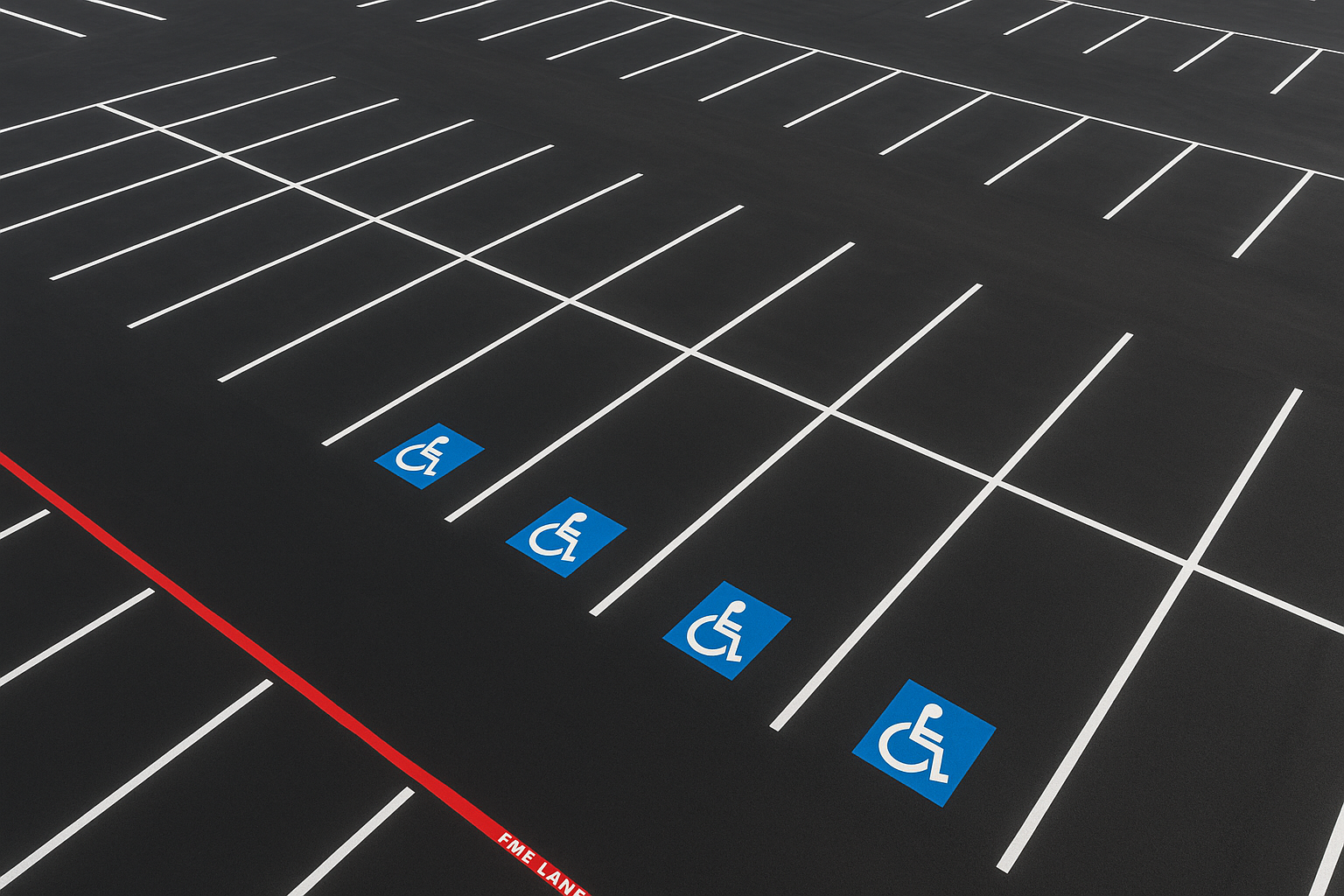
Parking lot marking is the process of painting, stenciling, and maintaining every line, symbol, and designation that guides drivers and pedestrians safely through a paved lot. From stall lines and directional arrows to ADA-compliant handicap spaces and fire lane boundaries, this work determines whether a property is safe, accessible, and legally compliant. Whether you manage a retail center, a school campus, or a medical facility, understanding how parking lot marking works — and how often it needs attention — protects both your visitors and your budget.
In fact, according to the U.S. Department of Justice ADA resources, improperly marked accessible parking spaces rank among the most common violations found during facility audits. Consequently, getting your lot marked correctly from the start saves time, money, and legal exposure — and this guide walks through every step, material, and cost consideration you need to get it right the first time.
What Is Parking Lot Marking?
At its core, parking lot marking is the systematic application of traffic-grade paint or thermoplastic material to a paved surface to define stalls, traffic lanes, pedestrian pathways, and designated zones. The full scope typically includes surface preparation, layout design, paint or thermoplastic application, and the placement of regulatory stencils and symbols.
Specifically, a complete parking lot marking project usually covers standard stall lines, handicap spaces, fire lane designations, directional arrows, stop bars, wheel stops, and curb painting. Each element serves a distinct safety or regulatory purpose, so skipping even one can create a hazard or a code violation.
Professional striping companies — like the team at stripespls.com serving Denton and Plano, Texas — bring specialized equipment and layout expertise to ensure every marking meets local municipal codes and federal ADA standards.
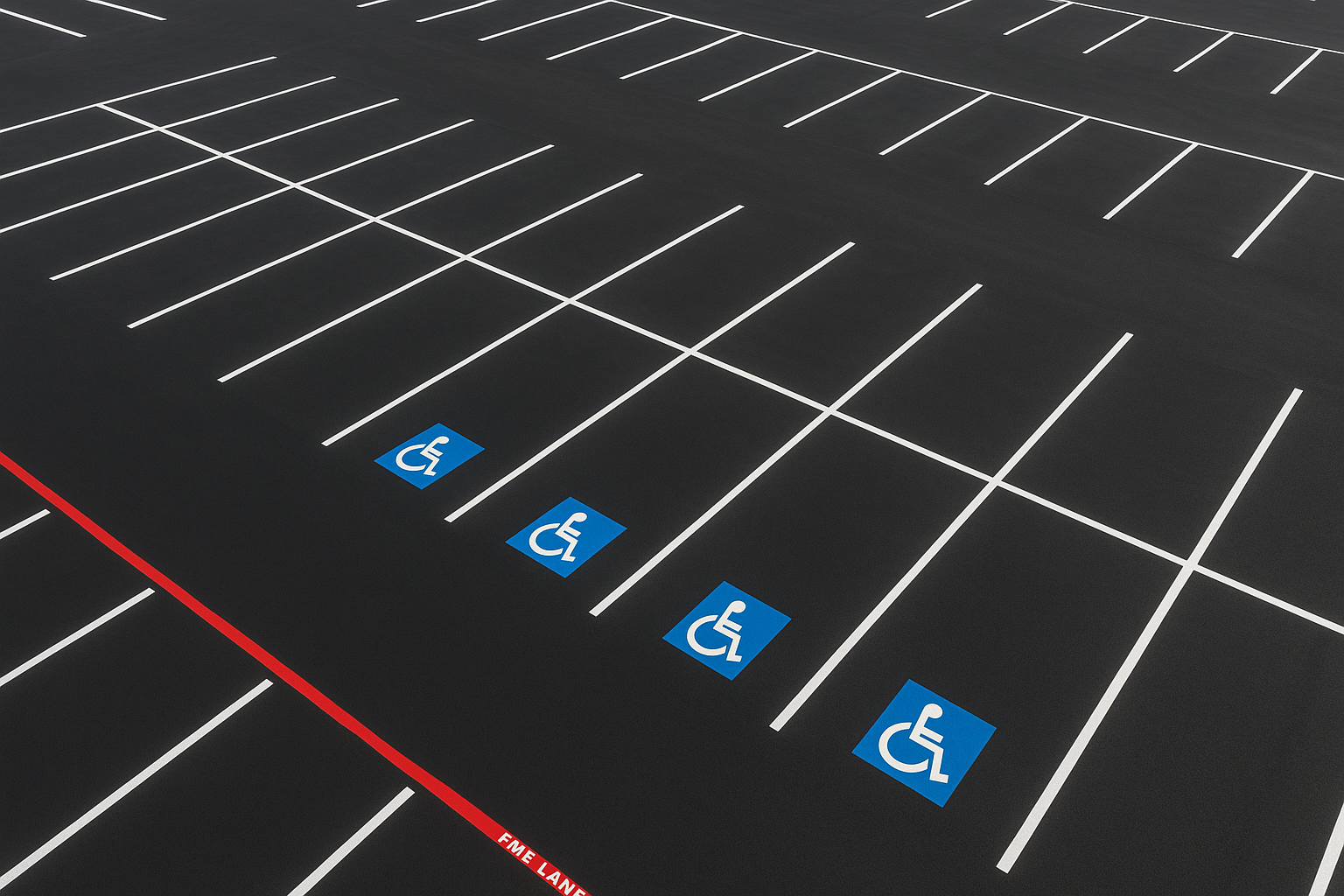
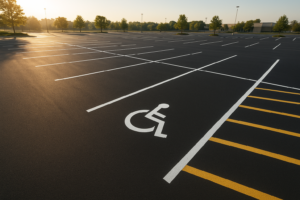
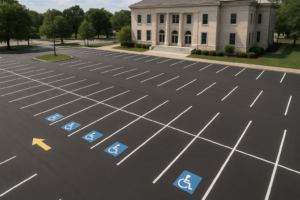
A professionally completed parking lot marking project with ADA stalls, fire lane designations, and directional flow lines. For a deeper walkthrough, see our Stripes N More: Complete Parking Lot Marking Guide.
Why Parking Lot Marking Matters for Safety and Compliance
Well-executed parking lot markings do far more than make a property look tidy. Above all, they directly shape traffic flow, pedestrian safety, and a property’s ability to maximize its available space. Studies cited by the National Safety Council show that parking lots are the site of roughly 20% of all vehicle accidents, many of which are preventable with clear, visible markings.
Furthermore, faded or missing markings create confusion, encourage improper parking, and block emergency vehicle access. As a result, property managers who neglect restriping often face complaints, liability claims, and costly ADA enforcement actions. In contrast, a freshly marked lot signals professionalism and care, which matters most for retail centers and healthcare facilities where first impressions count.
For a broader look at every safety element a modern lot should include, our complete guide to parking lot safety markings covers crosswalks, speed bumps, and wayfinding signage in far more depth than most striping contractors publish.
ADA Compliance: A Non-Negotiable Component
The Americans with Disabilities Act (ADA) sets specific requirements for accessible parking spaces, including minimum dimensions, access aisle widths, surface slopes, and signage heights. Specifically, a standard accessible stall must be at least 8 feet wide, with an adjacent 5-foot access aisle.
Additionally, van-accessible spaces require an 8-foot-wide access aisle rather than 5 feet. Non-compliance can result in federal fines starting at $75,000 for a first violation, so working with a certified striping professional is strongly advisable for any property owner.
For detailed guidance on meeting these standards, explore the ADA compliance markings services offered by the stripespls.com team, who specialize in accessible space layouts across North Texas properties.
Common Parking Lot Marking Layouts Explained
Before any paint touches pavement, a lot’s layout determines how efficiently — and how safely — vehicles move through it. In particular, three layout types dominate commercial parking design, and each fits different traffic patterns.
- 90-degree (perpendicular) stalls maximize the total number of parking spaces per square foot and work well in high-volume lots such as grocery stores.
- Angled stalls (45 to 60 degrees) improve traffic flow and make entering and exiting easier, which is why they are common in tight urban lots or single-direction drive aisles.
- Parallel stalls are typically reserved for narrow street-side spaces or areas where perpendicular parking is not physically possible.
Similarly, standard stall dimensions matter as much as the angle. Most municipalities require standard stalls to measure at least 9 feet wide by 18 feet long, while compact stalls may be slightly smaller where local codes permit them. For a full breakdown of how layout choice affects total capacity, our parking lot layout design planning guide walks through space-optimization math in detail, including how drive-aisle width interacts with stall angle.
How to Plan and Execute a Parking Lot Marking Project
Completing a successful parking lot marking project requires careful planning before a single drop of paint is applied. Below is the step-by-step process professional marking crews follow from start to finish.
- Assess the lot and measure the space. Walk the entire parking area to evaluate surface condition, existing markings, drainage patterns, and total square footage before planning any new layout.
- Design the stall layout and ADA zones. Create a scaled parking lot layout design that maximizes stall count while allocating the correct number of ADA-accessible spaces with proper access aisles and signage positions.
- Clean and prepare the pavement surface. Remove all dirt, oil stains, loose debris, and old paint residue using a power blower or pressure washer so new markings adhere properly and last longer.
- Snap chalk lines and mark reference points. Use a chalk line reel to establish straight reference lines across the lot, ensuring all stall lines are parallel, evenly spaced, and correctly angled.
- Apply striping paint or thermoplastic material. Using a professional line striping machine, apply traffic-grade paint or thermoplastic material along the chalk guides, maintaining consistent speed and spray pressure for uniform coverage.
- Add stencils, symbols, and fire lane designations. Once base lines are dry, place stencils for handicap symbols, directional arrows, reserved space labels, and fire lane text to complete the full marking scheme.
- Inspect the finished lot for compliance and quality. Conduct a final walkthrough to verify that all stall dimensions, ADA access aisles, fire lane clearances, and symbol placements meet local code requirements.

A professional striping machine ensures consistent line width and paint coverage across the entire parking surface during every parking lot marking job.
Choosing the Right Marking Material
Not all parking lot marking materials perform equally. In general, property owners choose between three primary options: water-based traffic paint, oil-based alkyd paint, and thermoplastic markings. Each option carries distinct advantages depending on traffic volume, climate, and budget.
Water-based paint is the most cost-effective option and dries quickly — typically within 30 minutes. However, it tends to fade faster in high-traffic environments. Oil-based paint, by comparison, offers better durability but requires longer drying times of 1 to 2 hours.
The Case for Thermoplastic Striping
Thermoplastic striping is a heat-applied material that bonds directly to the pavement surface, creating markings that are significantly more durable than standard paint. Specifically, thermoplastic markings can last 3 to 7 years under normal traffic conditions, compared to 1 to 2 years for painted lines.
Furthermore, thermoplastic materials can incorporate glass beads that improve nighttime reflectivity, making them ideal for school zones, hospital entrances, and high-traffic commercial lots. To learn more, visit the thermoplastic striping and decals page for detailed product and service information.
Are Robotic Marking Tools a Real Alternative?
Some property owners have asked about automated painting robots — often marketed under names like “Otto” — as a faster substitute for traditional crews. Indeed, these machines can lay a straight line quickly. However, they generally cannot read pavement irregularities, adjust for drainage slopes, or apply ADA-compliant stencils with the same nuance a trained technician brings. If you’re weighing robotic tools against a professional crew, our detailed comparison — Otto parking marking: what it is and better alternatives — breaks down the tradeoffs so you can decide with confidence before you commit to either approach.
Fire Lane Markings and Additional Safety Designations
Fire lane markings are among the most legally sensitive elements of any parking lot marking project. These red-painted curbs and stenciled pavement designations must remain clearly visible at all times so emergency vehicles can access the property without obstruction.
Local fire codes in Texas — as in most states — specify minimum fire lane widths, turning radii, and signage requirements. Consequently, property owners who allow fire lane markings to fade risk both public safety and costly citations from fire marshals.
In addition to fire lanes, directional arrows, stop bars, speed bump markings, and pedestrian crosswalk lines all contribute to a safer, more organized parking environment. Together, these elements form a complete safety marking system that no property manager should treat as optional.
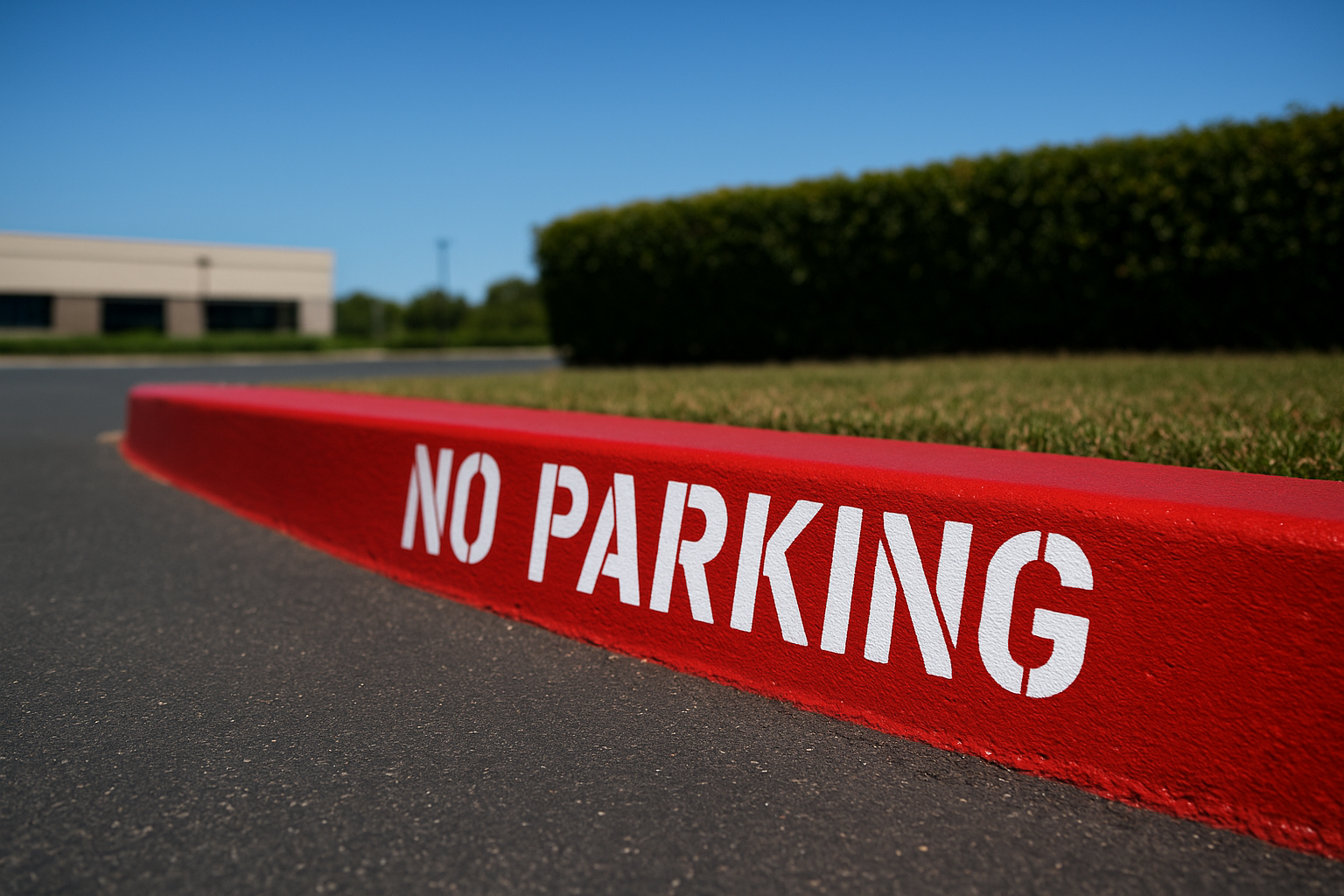
Clearly painted fire lane curbs and stenciling keep emergency access routes visible and legally compliant.
What Drives Parking Lot Marking Costs
Naturally, cost is one of the first questions property owners ask. Several factors influence the final price of a parking lot marking project, and understanding them helps you budget accurately and avoid surprise quotes.
- Total lot size and stall count — larger lots require more paint and labor hours, though per-stall pricing usually drops as volume increases.
- Surface condition — cracked or oil-stained pavement needs extra prep work, which adds time and material cost.
- Material choice — thermoplastic costs more upfront than paint but lasts several times longer, often lowering cost per year.
- Number of ADA stalls and stencils — accessible spaces require additional signage, symbols, and access aisle markings.
- Fire lane requirements — curb painting and text stenciling add labor beyond standard stall lines.
Most commercial parking lot marking projects range from a few hundred dollars for small touch-ups to several thousand dollars for full-lot layouts with ADA compliance and fire lane work. Therefore, requesting a free, itemized quote remains the most reliable way to know exactly what your property will cost.
When to Restripe vs. Start Fresh
One of the most common questions property managers ask is whether to restripe existing markings or redesign the lot layout entirely. In most cases, restriping is sufficient when the underlying pavement is in good condition and the existing layout remains functional and code-compliant.
However, a full redesign makes sense when the lot has changed in size, when ADA requirements have been updated, or when the current layout creates traffic flow problems. Similarly, newly paved or seal-coated surfaces always require a complete fresh marking application.
For most commercial properties, restriping every 18 to 24 months keeps markings crisp and compliant. High-traffic lots — such as grocery stores or medical centers — may benefit from annual touch-ups. You can browse completed projects and restriping examples in the stripespls.com gallery to see the quality difference professional work delivers.
Signs Your Lot Needs Immediate Attention
Several clear indicators suggest a parking lot is overdue for marking maintenance. Specifically, watch for lines that have faded to less than 50% visibility, missing or illegible ADA symbols, cracked or peeling thermoplastic markings, and fire lane curb paint that has chipped away significantly.
Additionally, if vehicles routinely park in non-designated areas or block access aisles, faded markings are likely the cause. Addressing these issues promptly protects both the property owner and the people who use the lot every day.
How to Choose a Professional Parking Lot Marking Company
Hiring a professional striping company eliminates the guesswork from lot marking projects. Professionals bring calibrated striping machines, industry-grade materials, and deep knowledge of local codes and ADA standards. As a result, the finished product is more accurate, more durable, and fully compliant.
Before you sign a contract, however, confirm these essentials with any parking lot marking company you consider:
- Proof of insurance and knowledge of local municipal codes, including fire lane and ADA requirements.
- A written, itemized quote that lists material type, stall count, and any stencil work separately.
- Recent, verifiable project photos or references from similar commercial properties.
- A clear timeline for surface prep, application, and dry time so you can plan around business hours.
For property owners in the Denton and Plano, Texas areas, stripespls.com offers a full range of parking lot marking services — from new lot layouts and restriping to ADA compliance solutions and fire lane designation. The company serves commercial properties, retail centers, schools, healthcare facilities, and municipal organizations across the greater North Texas region. For a deeper walkthrough, see our Line Marking Services for Parking Lots | stripespls.com.
If you’re specifically searching for local support, our article on whether there is a reliable line marking service in the Plano area answers that question directly, including what to expect from response times and pricing. Meanwhile, to explore the full scope of available services, visit the complete services page and request a free, no-obligation quote tailored to your specific property needs.
Frequently Asked Questions About Parking Lot Marking
What is parking lot marking?
Parking lot marking refers to the systematic process of painting and maintaining clear, durable lines, symbols, and designations in a parking lot. It covers everything from standard stall lines to ADA-compliant handicap spaces and fire lane markings, all with the goal of creating a safe, organized, and legally compliant parking environment.
How often should parking lot markings be repainted?
Most parking lot markings should be repainted every 18 to 24 months, depending on traffic volume and weather exposure. High-traffic commercial lots may need restriping annually to keep lines crisp and visible.
What paint is used for parking lot striping?
Water-based traffic paint and oil-based alkyd paint are the two most common options. Thermoplastic markings are also used for high-durability applications because they bond directly to the pavement surface and can last 3 to 7 years.
Why is ADA compliance important in parking lot marking?
ADA compliance ensures that people with disabilities have accessible parking spaces with proper dimensions, access aisles, and signage. Non-compliance can result in federal fines starting at $75,000 for a first violation under the Americans with Disabilities Act.
How many ADA spaces are required in a parking lot?
The ADA requires a minimum number of accessible spaces based on total lot capacity. Lots with 1 to 25 spaces need at least 1 accessible space, while lots with 26 to 50 spaces need at least 2. Larger lots have proportionally higher requirements.
What is thermoplastic striping and when should it be used?
Thermoplastic striping is a heat-applied pavement marking material that is significantly more durable than standard paint. It is ideal for high-traffic areas, school zones, and locations where long-lasting visibility is essential.
How long does parking lot striping take to dry?
Water-based traffic paint typically dries within 30 minutes under normal conditions. Oil-based paints may take 1 to 2 hours, while thermoplastic markings cool and harden within minutes of application.
Can parking lot markings be done on asphalt and concrete?
Yes, parking lot markings can be applied to both asphalt and concrete surfaces. However, the paint formulation and surface preparation steps differ between the two materials to ensure proper adhesion and longevity.
What are fire lane markings and are they required?
Fire lane markings are red-painted curbs or stenciled pavement designations that keep emergency vehicle access paths clear. They are typically required by local fire codes and must be maintained to remain legally compliant.
How much does parking lot striping cost?
Parking lot striping costs vary based on lot size, number of stalls, surface condition, and the type of markings needed. Most commercial projects range from a few hundred to several thousand dollars. Requesting a free quote is the best way to get an accurate estimate for your property.
What common mistakes should be avoided in parking lot marking?
Common mistakes include applying paint to a dirty or wet surface, using incorrect stall dimensions, skipping ADA access aisle markings, and failing to account for drainage slopes. Hiring a professional striping company helps avoid these costly errors.
Does weather affect parking lot striping quality?
Yes, temperature and humidity significantly affect paint adhesion and drying time. Most striping professionals recommend applying markings when temperatures are between 50°F and 95°F and the surface is completely dry. Applying paint in extreme heat or humidity can cause bubbling, peeling, or uneven coverage.
Is parking lot marking the same thing as parking lot striping?
The terms are often used interchangeably, but marking is technically the broader category. Striping refers specifically to the painted lines, while marking also includes stencils, symbols, curb paint, and signage placement as one complete system.
How wide should parking lot marking lines be?
Standard stall lines are typically 4 inches wide, though fire lane text and ADA stencils follow separate sizing rules set by local code. A professional crew will confirm exact widths against your municipality’s requirements before painting.
Conclusion: Making Every Parking Space Count
Parking lot marking encompasses far more than a fresh coat of paint on the pavement. In summary, it is a comprehensive system of safety, accessibility, and regulatory compliance that every commercial property owner must take seriously. From ADA-accessible stalls and fire lane designations to thermoplastic striping and directional arrows, every element plays a vital role in keeping a parking lot functional and safe.
Furthermore, working with an experienced, locally based striping company ensures the job is done right the first time. Property owners throughout the Denton and Plano, Texas areas can rely on stripespls.com for professional, durable, code-compliant parking lot marking services tailored to their specific needs. Reach out today to request your free quote and take the first step toward a cleaner, safer, and more organized parking facility. Last updated: 2026-07-12. Author: Stripes PLS, parking-marking specialists serving North Texas.