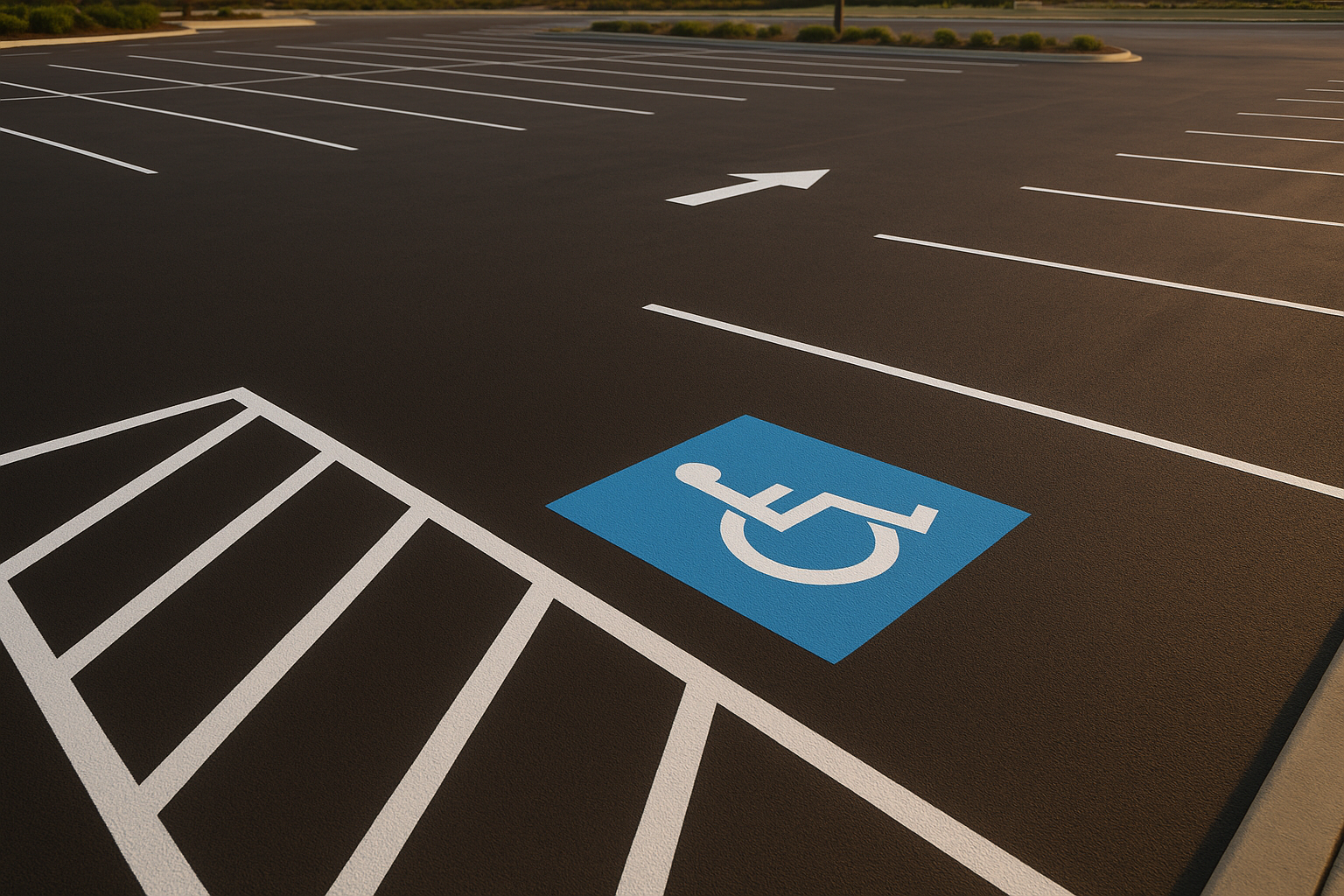
Pavement marking solutions cover everything from parking stall lines and fire lane paint to ADA-compliant handicap symbols and directional arrows on commercial properties. For property managers and business owners across Denton and Plano, TX, these solutions are the difference between a lot that looks organized and safe versus one that risks fines, accidents, or accessibility complaints. In addition, faded or missing markings can quietly cost a business money by wasting usable parking space or confusing visitors.
Direct answer: Pavement marking solutions are professional striping and layout services — including line striping, ADA symbols, fire lane paint, and directional markings — that keep commercial and residential parking lots safe, organized, and code-compliant. A qualified contractor evaluates the lot, applies durable paint or thermoplastic, and maintains markings so they remain visible year after year.
What Is Pavement Marking Solutions and Why Does It Matter?
In simple terms, pavement marking solutions is the umbrella term for the paints, materials, and layout expertise used to mark lines and symbols on asphalt or concrete surfaces. Specifically, this includes parking stall lines, ADA-compliant handicap spaces, fire lane designations, curb painting, and directional arrows. As a result, a property with well-executed markings communicates clear rules to drivers and pedestrians without a single word spoken.
Because markings fade under sun, rain, and constant tire traffic, they require periodic renewal. Consequently, most commercial properties schedule a fresh coat every 12 to 18 months to stay both visible and compliant with local codes.
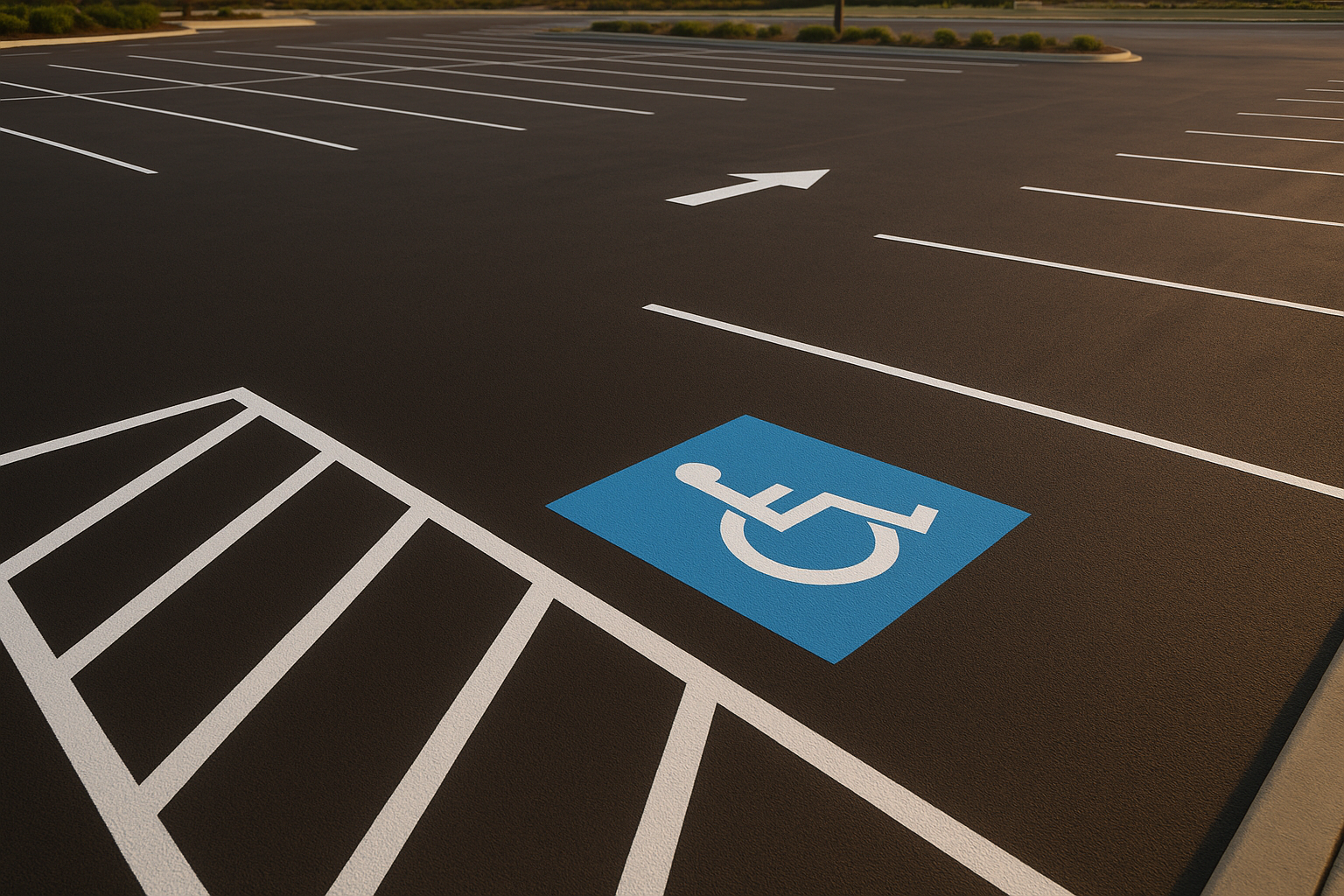
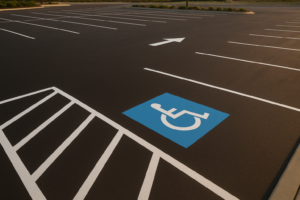
Freshly applied pavement marking solutions improve safety and organization in a busy commercial lot.
Why Professional Line Striping Services Matter for Your Property
Property owners often underestimate how much markings influence daily operations. However, poorly organized or faded striping leads to wasted parking spaces, confused traffic patterns, and even fender-bender accidents. In contrast, a well-planned layout maximizes every available square foot of pavement.
Furthermore, professional line striping services protect property owners legally. For example, the Americans with Disabilities Act (ADA) requires specific stall dimensions, signage, and van-accessible spacing. According to ADA.gov, at least one van-accessible space is required for every six accessible spaces provided, and missing this ratio can trigger costly compliance complaints.
Common Types of Commercial Pavement Markings
Most commercial pavement marking solutions fall into a few core categories. Understanding these helps property owners request the right service:
- Standard parking stall lines and space numbering
- ADA-compliant handicap symbols and van-accessible stalls
- Fire lane marking with red paint and lettering
- Directional arrows, stop bars, and crosswalks
- Curb painting for no-parking zones and loading areas
For a deeper look at safety-specific layouts, this complete guide to safety markings for parking lots breaks down each requirement in more detail.
ADA Compliance and Fire Lane Marking Requirements
ADA compliance is one of the most important reasons businesses invest in pavement marking solutions. Specifically, accessible stalls must meet minimum width requirements, include proper signage, and connect to an accessible route. Above all, van-accessible spaces need extra width for wheelchair lifts and ramps.
Similarly, fire lanes must remain clearly marked and unobstructed at all times. Local fire marshals typically require red curb paint or striping with white “FIRE LANE — NO PARKING” lettering. As a result, blocked or unmarked fire lanes can delay emergency response and lead to citations from local authorities. The Manual on Uniform Traffic Control Devices, maintained by the Federal Highway Administration, provides the federal standard many municipalities reference for lane markings, colors, and symbols.
What Happens When Markings Are Ignored?
When markings fade or codes go unaddressed, property owners face real consequences. For instance, a business could receive a citation during a routine inspection, or worse, face liability after an accident tied to confusing or missing lane markings. Therefore, scheduling regular inspections and touch-ups is far cheaper than dealing with fines or lawsuits later.
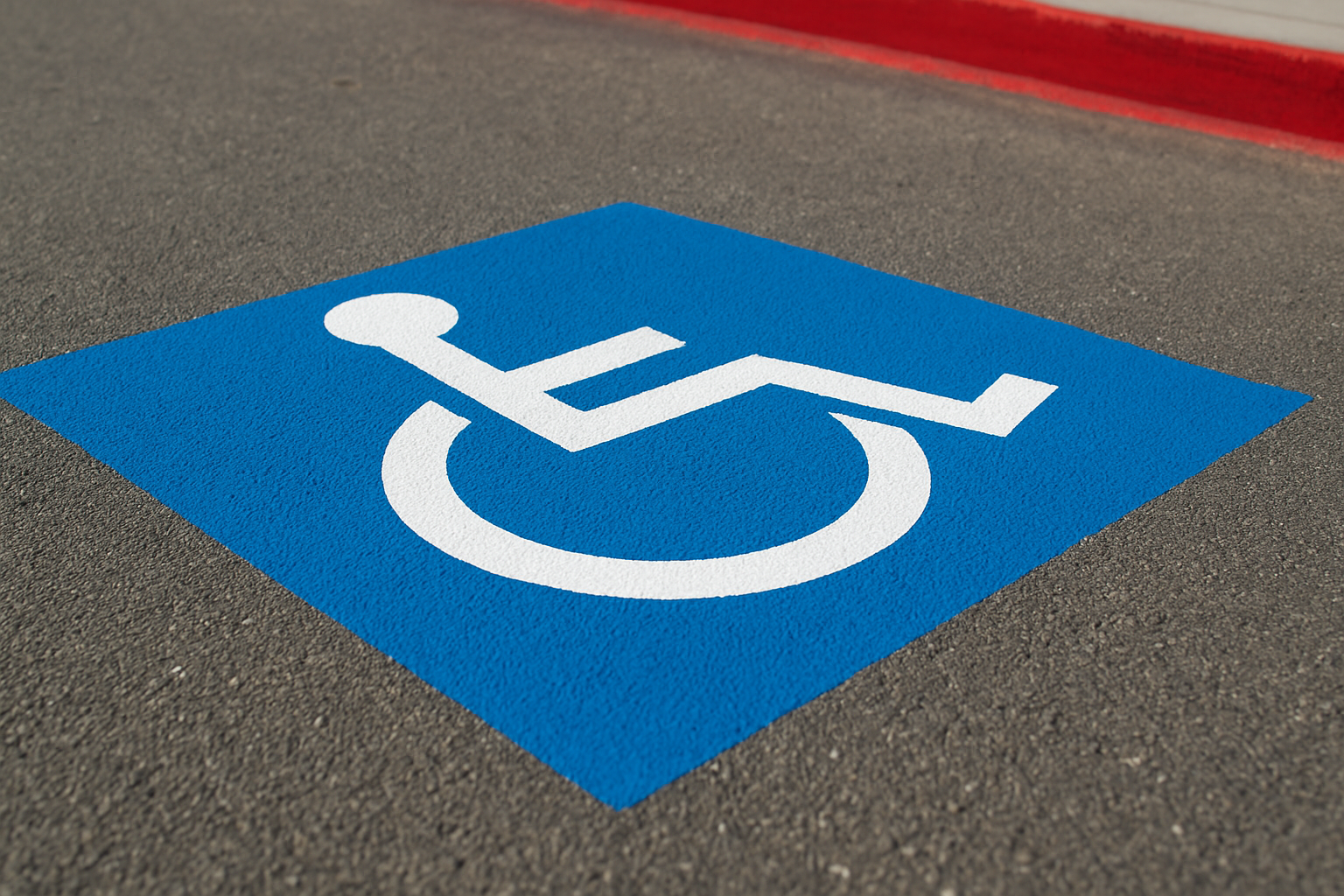
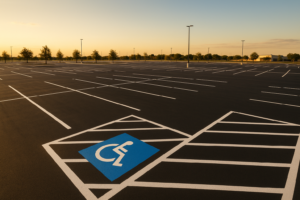
ADA symbols and fire lane curbs are essential parts of any complete pavement marking plan.
How to Choose the Right Parking Lot Striping Company
Choosing a contractor for pavement marking solutions requires more than picking the lowest bid. Instead, property owners should look for local code knowledge, quality materials, and a track record of completed projects. For example, a contractor familiar with Denton and Plano municipal codes will already know local fire lane and ADA stall requirements, which saves time and avoids rework.
In addition, ask about the materials used. Thermoplastic markings, for instance, generally last longer than standard latex paint, though they cost more upfront. This resource on what makes pavement stripes last longer explains the tradeoffs between material types in more depth.
Step-by-Step: How a Professional Restriping Project Works
Understanding the process helps property owners know what to expect from a quality contractor. Below is the typical sequence for a full parking lot restriping project.
- Inspect and clean the surface. Crews check for cracks and debris, then sweep or power wash so paint adheres properly.
- Measure and plan the layout. Technicians design stall placement to meet ADA ratios and fire code requirements before painting begins.
- Mark guide lines. Chalk lines or laser tools outline every stall, arrow, and symbol for accuracy.
- Apply paint or thermoplastic. Striping machines apply durable material along the guide lines for a clean, even finish.
- Cure and inspect. Markings cure fully, followed by a final walkthrough to confirm code compliance and quality.
Property owners considering a refresh can review this breakdown of parking lot restriping services to see what a typical project includes from start to finish.
How Long Do Pavement Markings Last?
Generally, standard traffic paint lasts one to two years depending on climate, traffic volume, and surface preparation. In contrast, thermoplastic markings can last three to five years or longer because the material bonds more deeply into the pavement surface. Above all, proper surface cleaning before application has the single biggest impact on how long any marking lasts, regardless of material.
Texas heat and seasonal storms can also accelerate fading, so North Texas properties often benefit from inspections every spring and fall. For further reading on marking durability standards, the Wikipedia overview of road surface marking provides useful background on material types used worldwide.
Maintaining Curb Paint and Directional Markings
Curb paint and directional arrows often fade faster than stall lines because they receive more direct tire contact. Therefore, many property managers schedule curb touch-ups separately from full restriping projects. For details on best practices, see this guide to professional curb painting services.
Finally, property owners evaluating a new contractor should read this checklist on what to look for in quality pavement markings before signing a contract. Together, these resources help ensure a lasting, code-compliant result.
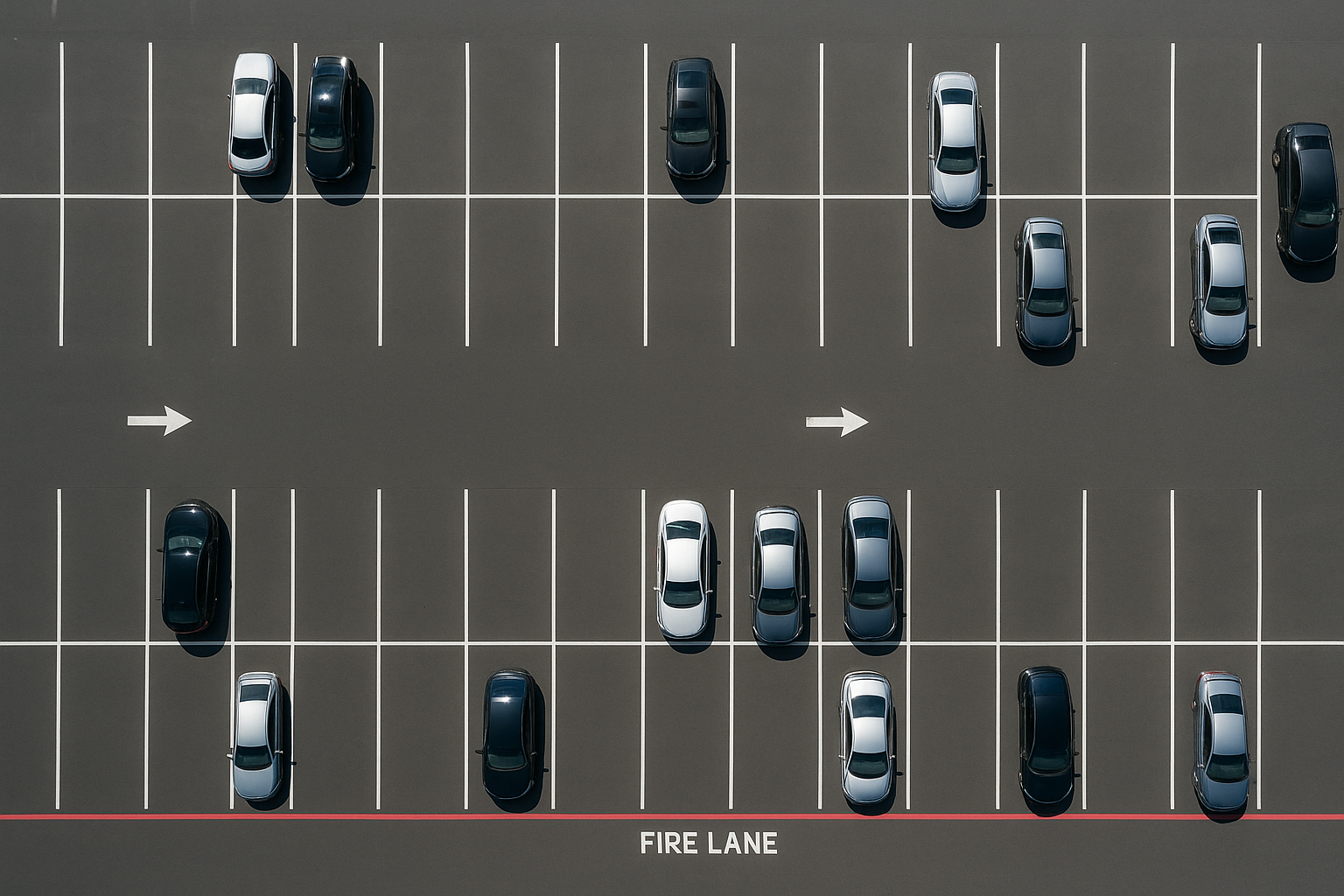
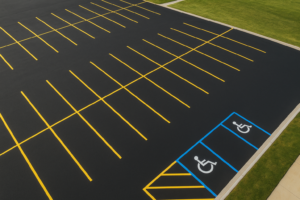
Aerial views highlight how organized pavement marking solutions improve traffic flow across a large lot.
Frequently Asked Questions About Pavement Marking Solutions
What are pavement marking solutions?
Pavement marking solutions are the paints, thermoplastics, and layout services used to create lines, symbols, and words on parking lots and roadways. They guide traffic flow, designate parking stalls, and mark accessible and fire lane zones.
How often should parking lot markings be repainted?
Most commercial parking lots need restriping every 12 to 18 months, though high-traffic areas may fade sooner. Climate, traffic volume, and paint quality all affect how long markings stay visible.
Why is ADA-compliant striping important for a property?
ADA-compliant striping ensures people with disabilities have safe, legally required access to parking and building entrances. Non-compliance can lead to fines, lawsuits, and denied insurance claims after an incident.
What is the difference between latex paint and thermoplastic markings?
Latex paint is more affordable and dries quickly but wears faster, while thermoplastic is melted onto pavement for a thicker, longer-lasting finish. Thermoplastic costs more upfront but typically outlasts paint by several years.
How much do pavement marking solutions cost?
Costs vary based on lot size, layout complexity, and material choice, but most projects range from a few hundred to several thousand dollars. Requesting a free, on-site quote is the most accurate way to budget.
How long does it take to restripe a parking lot?
A standard commercial lot can typically be restriped in one to two days, depending on size and weather conditions. Larger properties or those requiring extensive layout changes may take longer.
What are common mistakes in parking lot striping?
Common mistakes include skipping surface preparation, using low-grade paint, and misjudging ADA stall dimensions and spacing. These errors shorten the life of markings and can create compliance violations.
What is a fire lane and why does it need to be marked?
A fire lane is a designated route kept clear for emergency vehicle access, usually marked with red paint and white lettering. Local fire codes require clear, visible fire lane markings to avoid blocked emergency response routes.
Can pavement markings be applied in cold weather?
Most striping paints need surface and air temperatures above roughly 50 degrees Fahrenheit to cure properly. Scheduling work during warmer months or midday hours in cooler seasons helps ensure durable results.
What colors are used for handicap parking stalls?
Handicap stalls typically use blue paint for the symbol and stall lines, paired with a blue and white accessibility sign. Some municipalities also require a specific blue shade to meet local code.
How do I choose the right pavement marking company?
Look for a contractor with local code knowledge, proper equipment, quality materials, and verifiable experience with ADA and fire lane projects. Checking reviews and requesting references can confirm reliability before hiring.
Do faded parking lot lines violate any codes?
Yes, faded or missing ADA and fire lane markings can violate local building and accessibility codes, exposing property owners to fines. Regular inspections help catch fading before it becomes a compliance issue.
What is the best time of year for restriping in Texas?
Spring and fall are ideal in North Texas because temperatures are moderate and rainfall is typically lower, allowing paint to cure fully. Summer heat can also work but requires careful timing to avoid tackiness.
How can property owners maximize parking capacity with striping?
A professional layout redesign can reconfigure stall angles and dimensions to fit more vehicles without violating code minimums. This is often more cost-effective than expanding the physical lot.
Final Thoughts on Choosing Pavement Marking Solutions
Ultimately, pavement marking solutions protect a property in ways that go beyond appearance. They keep traffic organized, help businesses meet ADA and fire code requirements, and reduce liability risk over time. Whether a lot needs a full layout redesign or a simple touch-up, working with an experienced local team ensures the work is done right the first time.
For property managers and business owners across Denton and Plano, TX, requesting a free quote is a straightforward first step toward a safer, more compliant parking lot. You can learn more or start a project by visiting stripespls.com directly.