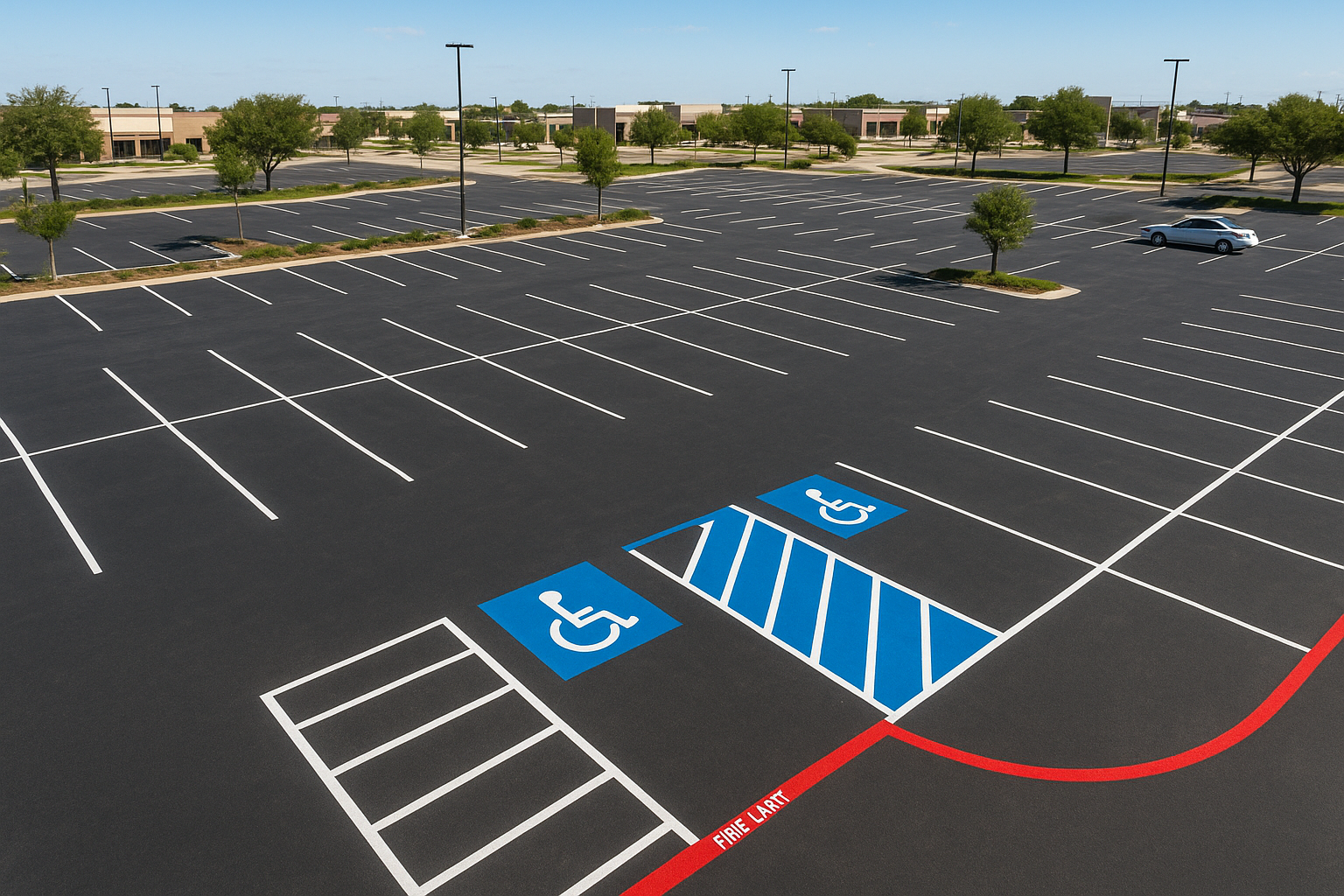
Dallas parking lot striping is the professional process of applying painted lines, symbols, and regulatory markings to asphalt or concrete surfaces to define parking stalls, traffic lanes, fire lanes, and accessible spaces. For property owners across the Dallas–Fort Worth metroplex, well-maintained striping is not just about curb appeal — it directly affects safety, liability, and code compliance. Whether you manage a retail center, office complex, school, or healthcare facility, keeping your lot clearly marked is one of the most cost-effective investments you can make.
In this guide, you will find everything you need to know about the striping process, what it costs, how to stay ADA compliant, and how to choose a reliable contractor in the North Texas region.
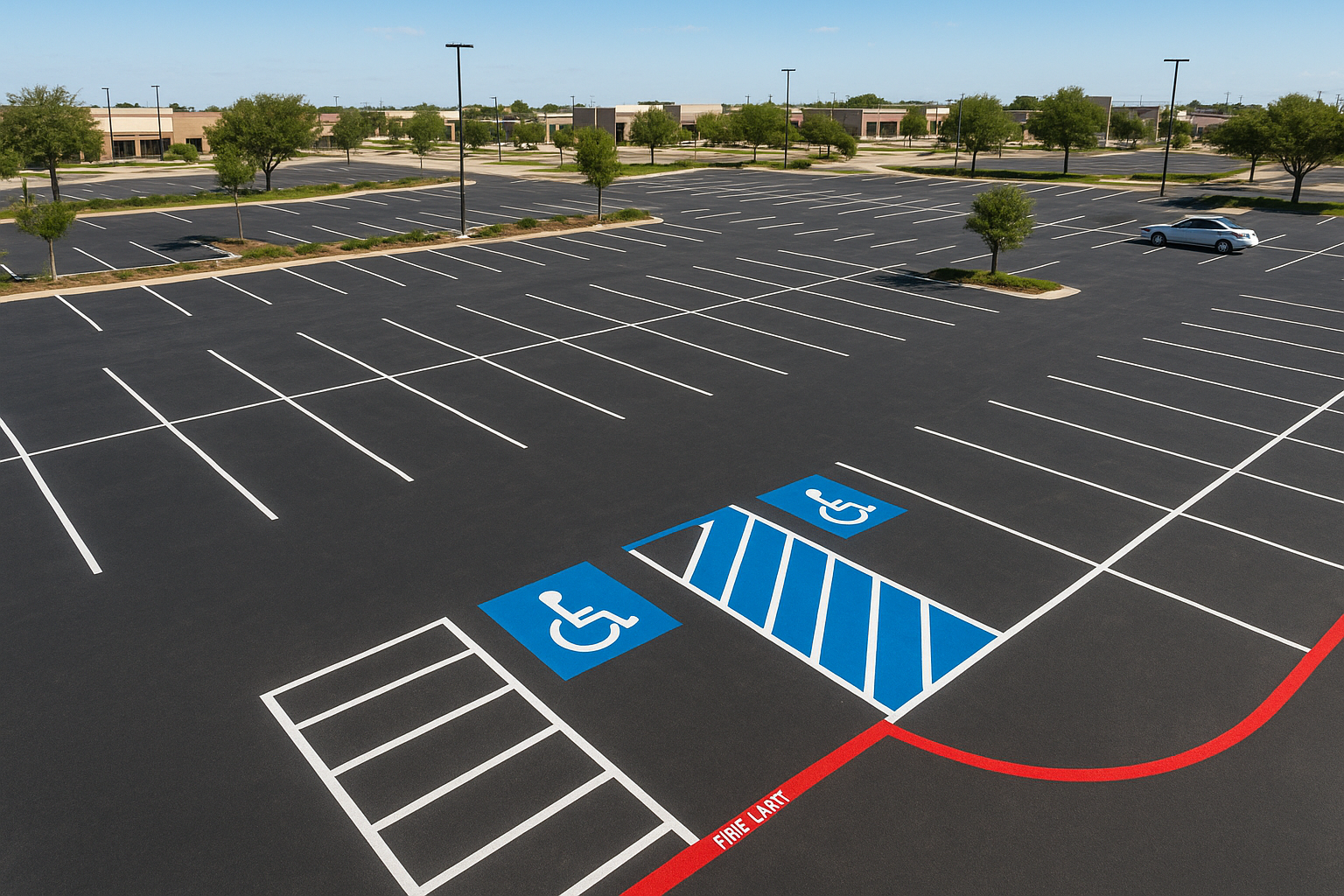
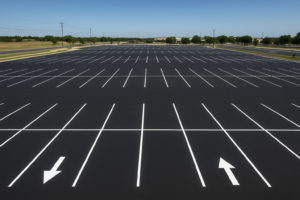
Professional dallas parking lot striping creates clear stall lines, accessible spaces, and fire lane markings that keep properties safe and organized.
What Is Dallas Parking Lot Striping?
Dallas parking lot striping is the application of traffic-grade paint or thermoplastic markings onto paved surfaces using professional line striping machines and stencils. These markings include standard parking stall lines, directional arrows, crosswalks, fire lane designations, and ADA-compliant handicap symbols with required access aisles.
According to the U.S. Department of Justice ADA portal, accessible parking requirements are federally mandated and apply to virtually all commercial properties open to the public. As a result, proper striping is not optional — it is a legal obligation for most property owners.
Furthermore, clear lot markings directly improve traffic flow, reduce fender-bender incidents, and help maximize the number of usable spaces on any given property footprint.
Why Parking Lot Markings Fade Faster in Texas
Texas weather is particularly hard on pavement markings. Intense UV radiation, extreme summer heat, and the freeze-thaw cycles that occur during North Texas winters all accelerate paint degradation. In fact, studies by the Federal Highway Administration indicate that pavement markings in high-UV environments can lose retroreflectivity and visibility up to 40% faster than in cooler climates.
Additionally, heavy vehicle traffic from delivery trucks and high daily parking turnover at commercial properties wears paint down from both abrasion and chemical exposure from vehicle fluids. Therefore, most Dallas-area parking lots benefit from parking lot striping in Dallas every one to two years to maintain safe, visible, and legally compliant markings.
Signs Your Lot Needs Restriping Now
- Stall lines are faded or barely visible from the driver’s seat
- ADA symbols are worn and no longer meet minimum contrast requirements
- Fire lane text or curb color has faded significantly
- Drivers are parking randomly or ignoring designated lanes
- You recently had your lot seal-coated or repaved
If any of these apply to your property, it is time to schedule a professional parking lot restriping service before faded markings create a liability issue.
How to Plan a Parking Lot Striping Project: Step-by-Step
Planning a striping project carefully ensures you get the most stalls, stay code-compliant, and minimize disruption to your tenants or customers. Follow these six steps in our Dallas striping guide for a smooth project from start to finish.
- Assess the current lot condition. Walk the entire parking lot to identify faded lines, cracked pavement, drainage issues, and any existing ADA or fire lane markings that need updating or removal.
- Request a professional quote. Contact a licensed striping contractor in the Dallas or North Texas area, provide lot dimensions and a description of needed markings, and request an itemized written estimate.
- Plan the layout and compliance requirements. Work with your contractor to finalize the stall layout, confirm ADA-compliant space counts and dimensions, and identify fire lane and directional arrow placement per local code.
- Prepare the pavement surface. Clean the lot thoroughly by blowing out debris, pressure washing oil stains, and allowing the surface to dry completely before any paint is applied.
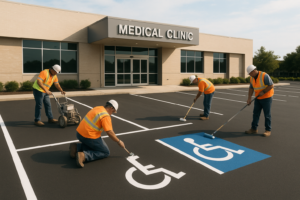
- Apply striping and specialty markings. The crew uses professional line striping machines to apply traffic paint for stall lines, then hand-stencils ADA symbols, fire lane text, arrows, and custom markings.
- Allow paint to cure and reopen the lot. Keep vehicles off freshly painted surfaces for at least one to two hours to allow full paint cure before normal traffic resumes.
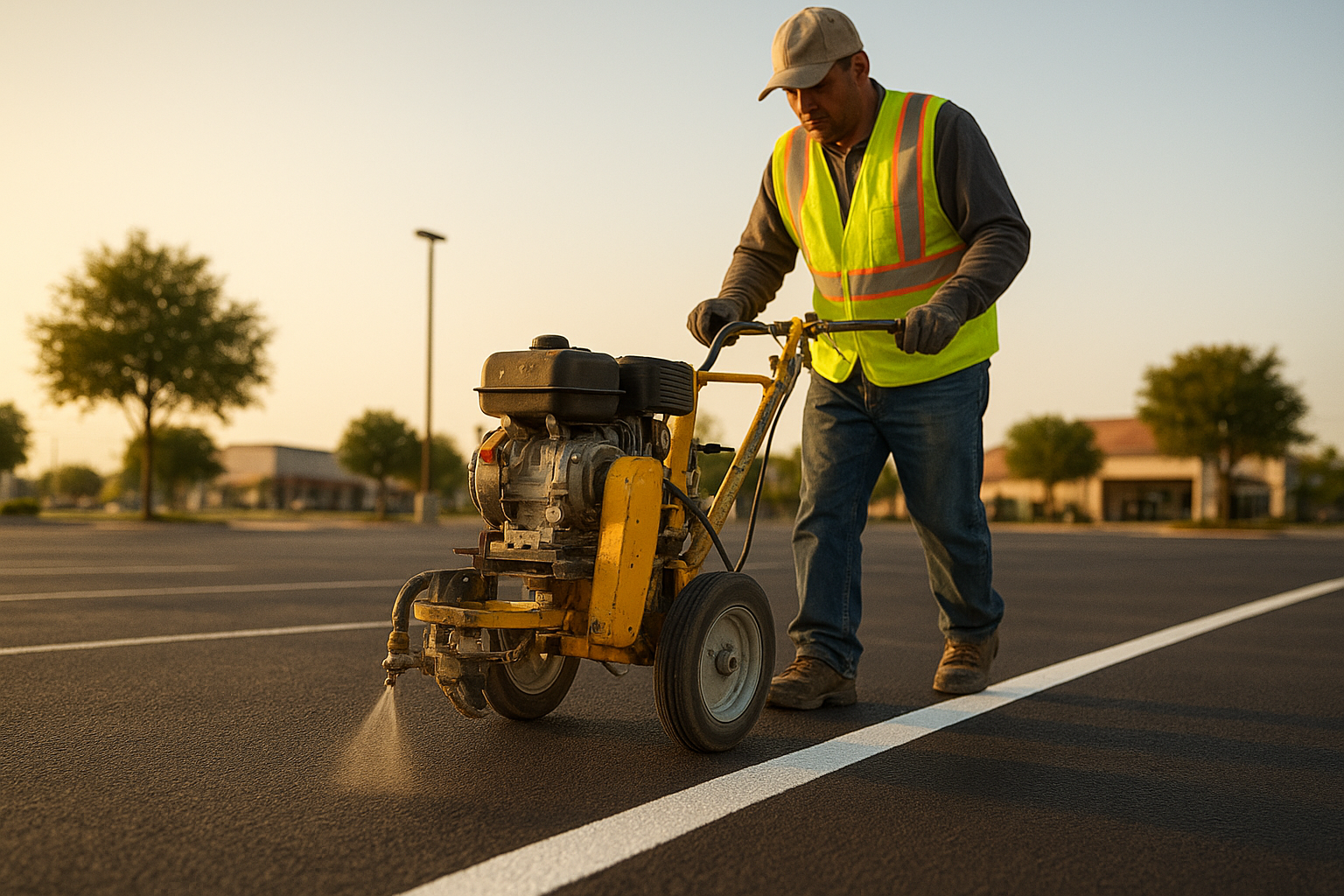
A professional striping machine delivers precise, consistent lines that last significantly longer than hand-rolled alternatives.
ADA Compliance: What Every Dallas Property Owner Must Know
The Americans with Disabilities Act (ADA) sets specific standards for accessible parking. These rules are enforced at the federal level and apply to virtually every commercial property in Dallas and across Texas. Non-compliance can result in costly fines and civil litigation.
Key ADA parking requirements include:
- Minimum space count: At least one accessible space per 25 total spaces
- Van-accessible spaces: One per every six accessible spaces, with an 8-foot access aisle
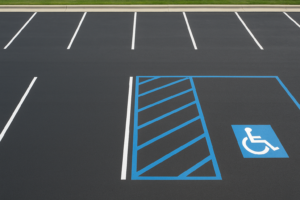
- Space dimensions: Standard accessible stalls must be at least 8 feet wide with a 5-foot access aisle
- Signage: Each accessible space must have a vertical sign with the International Symbol of Accessibility
- Surface markings: The ISA symbol must be painted on the pavement in blue
A professional contractor familiar with local Dallas codes will verify your specific requirements and ensure every accessible space meets current standards. Explore the full range of parking lot striping services available for commercial properties throughout the region.
Fire Lane Marking Requirements in the Dallas Area
Fire lanes are a critical safety feature regulated by local fire codes. In most Dallas-area municipalities, fire lanes must include red or yellow curb paint, “NO PARKING – FIRE LANE” stenciling on the pavement surface, and compliant signage at regular intervals. For complete local requirements see the fire lane marking guide. Failure to maintain visible fire lane markings can result in citations from the fire marshal and create serious liability exposure if emergency access is delayed.
Consequently, fire lane marking is one of the most frequently requested services from property managers who are preparing for annual inspections or who have recently received a compliance notice.
Parking Lot Striping Costs in the Dallas Region
Cost is one of the first questions property owners ask, and for good reason. Fortunately, professional parking lot striping is one of the most affordable property maintenance services available relative to the value it delivers.
Typical pricing in the Dallas market breaks down as follows:
| Service Type | Typical Cost Range |
|---|---|
| Standard stall line (per linear foot) | $0.15 – $0.30 |
| ADA handicap symbol (each) | $25 – $75 |
| Fire lane stenciling (per linear foot) | $1.00 – $2.50 |
| Directional arrows (each) | $15 – $40 |
| Full lot restriping (small lot, ~50 spaces) | $400 – $900 |
| Full lot restriping (large lot, 200+ spaces) | $1,500 – $4,000+ |
These figures are estimates and vary based on surface condition, layout complexity, paint type, and local market rates. In addition, seal-coating the lot before striping will add to the overall project cost but significantly extends the life of both the pavement and the new markings.
Choosing the Right Parking Lot Striping Contractor Near Dallas
Not all striping contractors deliver the same quality. Therefore, it pays to evaluate a few key factors before signing a contract.
Experience with commercial properties: Look for a contractor with a proven track record on properties similar to yours — retail centers, office parks, schools, or healthcare facilities all have unique layout demands. Learn more about our commercial striping expertise and client examples in Dallas.
ADA and fire code knowledge: A qualified contractor should be able to calculate your required accessible space count, confirm correct dimensions, and advise on fire lane requirements for your municipality without needing to be prompted.
Professional equipment: High-quality line striping machines produce sharper, more consistent lines than spray cans or rollers. Ask what equipment the crew uses and whether they use professional traffic-grade paint.
Written estimates and insurance: Always request a written, itemized quote and verify that the contractor carries general liability insurance. This protects you if something goes wrong during the project.
Serving North Texas: Denton, Plano, and the Greater Dallas Area
From new lot layouts to refreshing faded markings, Stripes PLS serves property managers, business owners, retail centers, schools, healthcare facilities, and municipal organizations. You can learn more about their full service area and approach by visiting their professional parking lot striping services in Denton, TX page or by requesting a free quote directly through the website.
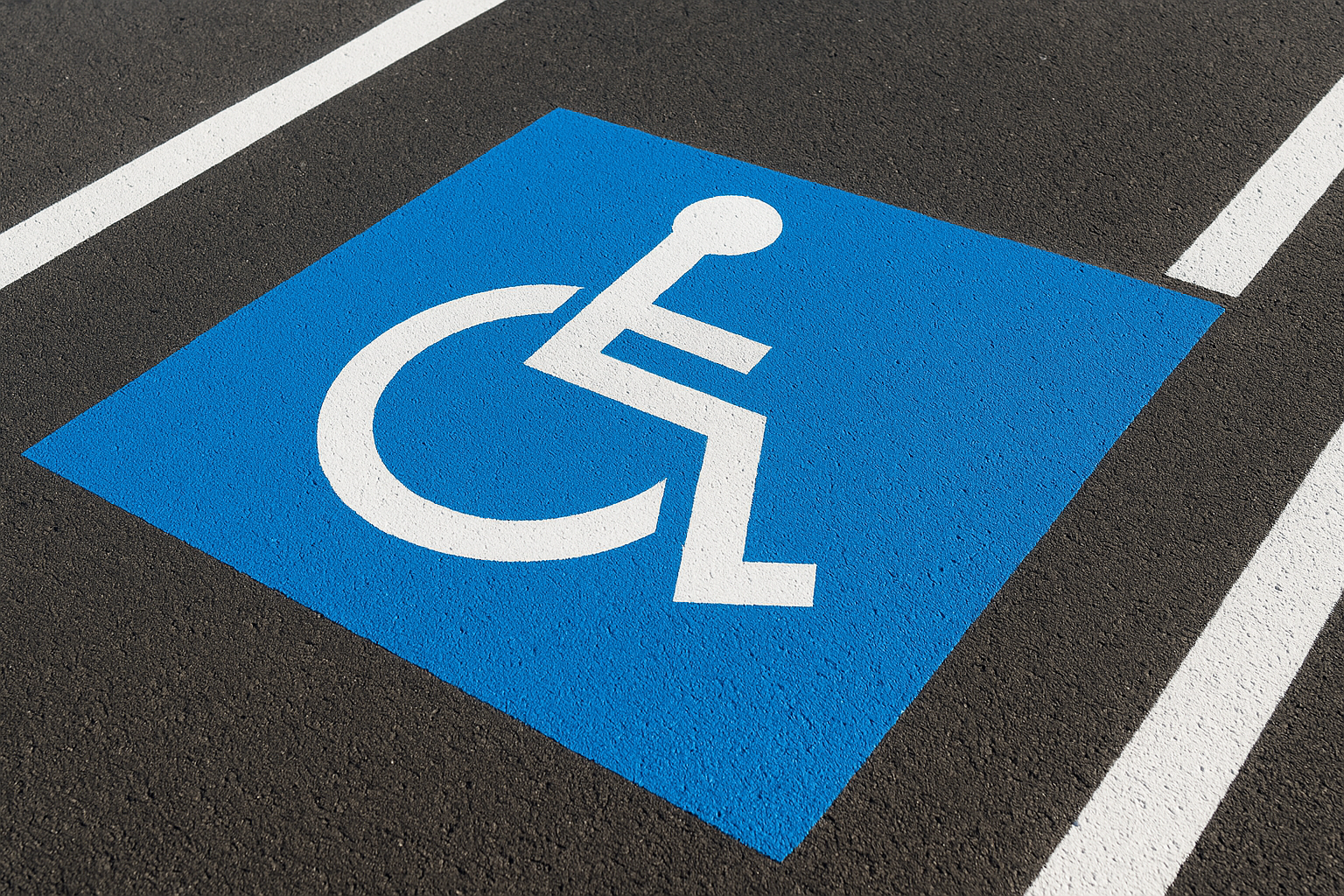
ADA-compliant handicap symbols must meet specific size, color, and placement standards to satisfy federal accessibility requirements.
Paint Types Used in Professional Parking Lot Striping
The type of paint used has a major impact on how long your markings last. Professional contractors in Texas generally choose from three main options: see our parking striping tips for material comparisons and lifecycle expectations.
- Water-based latex traffic paint: The most common choice for Dallas-area lots. It dries quickly (20–30 minutes), is environmentally friendlier, and holds up well in high-UV conditions. Ideal for most commercial restriping projects.
- Oil-based alkyd traffic paint: More durable than latex in high-traffic areas, but slower to dry and requires proper ventilation during application. Used less frequently due to environmental restrictions.
- Thermoplastic markings: A premium option applied as a heated liquid that bonds directly to the pavement. Thermoplastic is extremely durable and is commonly used for crosswalks, stop bars, and high-wear areas. It costs more upfront but lasts 3 to 7 years under normal conditions.
According to the Manual on Uniform Traffic Control Devices (MUTCD), pavement markings must meet minimum retroreflectivity standards to ensure nighttime visibility. As a result, professional contractors use traffic-grade paints that meet or exceed these federal specifications.
Frequently Asked Questions About Dallas Parking Lot Striping
What is dallas parking lot striping?
Dallas parking lot striping is the professional application of traffic-grade paint or thermoplastic markings on parking lot surfaces to define stalls, traffic lanes, fire lanes, and ADA-accessible spaces. It improves safety, organization, and regulatory compliance for commercial and residential properties throughout the Dallas area.
How often should a parking lot be restriped in Texas?
Most parking lots in Texas need restriping every one to two years. High-traffic commercial lots may require annual touch-ups due to accelerated paint wear from UV exposure, heavy vehicles, and seasonal temperature swings.
How much does parking lot striping cost in Dallas?
Standard line striping typically runs $0.15 to $0.30 per linear foot. Full lot restriping for a 50-space lot may cost $400 to $900, while larger lots with 200 or more spaces can run $1,500 to $4,000 or more, depending on complexity and specialty markings required.
What paint is used for parking lot striping?
Professional contractors most commonly use water-based latex traffic paint in Texas because it dries quickly and handles intense sunlight well. Thermoplastic is a premium option for high-wear areas that can last three to seven years before needing replacement.
Does parking lot striping need to be ADA compliant?
Yes. The ADA requires specific numbers, dimensions, and signage for accessible parking spaces at commercial properties. Non-compliance can result in federal fines and civil lawsuits, so working with a knowledgeable contractor is essential.
How long does parking lot striping take to dry?
Water-based traffic paint dries to the touch in 20 to 30 minutes under typical Texas conditions. However, contractors generally recommend keeping vehicles off the freshly painted surface for one to two hours to allow full cure.
Can parking lot striping be done in hot weather?
Yes, though most contractors schedule work in the early morning to avoid peak heat. Temperatures above 95°F can affect paint adhesion and dry time, so timing and surface temperature monitoring are important considerations for summer projects in Dallas.
What is the difference between striping and restriping a parking lot?
Striping refers to applying markings on a new or freshly sealed surface, while restriping means refreshing faded existing lines. Restriping is typically faster and less expensive because the layout is already in place and requires no layout planning from scratch.
How many handicap spaces are required by law in Texas?
The ADA requires a minimum of one accessible space per 25 total parking spaces, with at least one van-accessible space per six accessible spaces. Texas follows federal ADA standards, and local municipalities may have additional requirements.
What markings are required in a fire lane?
Fire lanes typically require red or yellow painted curbs, “NO PARKING – FIRE LANE” stenciling on the pavement, and compliant signage at intervals specified by the local fire code. Dallas-area municipalities may have specific requirements, which a professional contractor can verify.
Do I need a permit for parking lot striping in Dallas?
Standard restriping projects generally do not require a permit. However, new lot construction or major layout modifications may need city approval. Your contractor can advise on whether your specific project requires permitting before work begins.
What common mistakes should I avoid when hiring a striping contractor?
Avoid contractors who use low-quality paint, skip surface preparation, or cannot demonstrate knowledge of ADA and fire code requirements. Always request proof of insurance, a written itemized quote, and references from comparable commercial projects before committing.
Conclusion: Keep Your Dallas Lot Safe and Compliant
Dallas parking lot striping is a straightforward investment that pays dividends in safety, liability protection, and property value. From ADA-compliant handicap markings to fire lane designations and directional arrows, professional line striping keeps your lot organized, code-compliant, and welcoming to every visitor. Furthermore, given Texas’s harsh climate, staying on top of restriping schedules ensures your markings remain visible and effective year-round. Learn more about parking lot striping in Dallas for regional tips.
Whether you manage a small retail strip or a large commercial complex across the North Texas region, partnering with an experienced local contractor makes all the difference. Explore the Stripes PLS blog for more tips on parking lot maintenance, or contact the team today to request a free quote for your next striping project. Author: Stripes PLS Team, Certified Parking Specialists. Last updated: 2026-08-11. Published by Stripes PLS. Last updated: 2026-07-12.