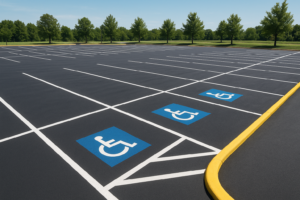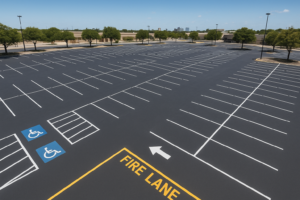

Fire lane striping detail is the precise combination of colors, dimensions, text, and curb markings that designates an emergency access zone on a commercial or residential property. Getting these details right is not optional — it is a legal requirement enforced by local fire marshals across Texas and throughout the country. Whether you manage a shopping center, a healthcare campus, or a school, understanding what proper fire lane markings require can protect your property, your tenants, and your compliance record.
What Is Fire Lane Striping Detail?
Fire lane striping detail refers to every visual element applied to a pavement or curb surface to mark a fire access zone. This includes the paint color, the width of the lane, the stenciled text, and the spacing of markings along the curb. Together, these elements communicate to drivers — and to fire apparatus operators — exactly where parking is prohibited and where emergency vehicles must have unobstructed access.
In short, a properly detailed fire lane is one that any driver can read instantly and any fire truck can navigate without hesitation. According to the National Fire Protection Association (NFPA), delayed fire apparatus access is a leading factor in fire-related property loss and injury. Consequently, clear, maintained fire lane markings are a critical safety investment.
Key Components of a Properly Detailed Fire Lane
Every fire lane marking system includes several specific components. Understanding each one helps property owners verify that their lots meet current code requirements.
Paint Color and Curb Marking
Red is the universally recognized color for fire lane designations. Most Texas municipalities require red curb paint applied to the full face of the curb within the fire lane boundary. In some cases, a red stripe is also painted on the pavement edge to reinforce the zone. The contrast between red paint and gray concrete or black asphalt ensures immediate visual recognition.
Additionally, some jurisdictions specify that boundary lines flanking the fire lane be painted in a contrasting color — typically white or yellow — to define the edges of the access corridor clearly.
Stenciled Text Requirements
The phrase “NO PARKING FIRE LANE” must appear in large, legible letters stenciled onto the pavement or curb at regular intervals. The International Fire Code (IFC), which most Texas cities have adopted, typically requires letters to be a minimum of 12 inches in height. Furthermore, stenciling must repeat at intervals no greater than 50 feet to maintain continuous visibility along the entire lane.
Therefore, a 100-foot fire lane section would require at least two full text stencils, ensuring no driver can claim they did not see the restriction.
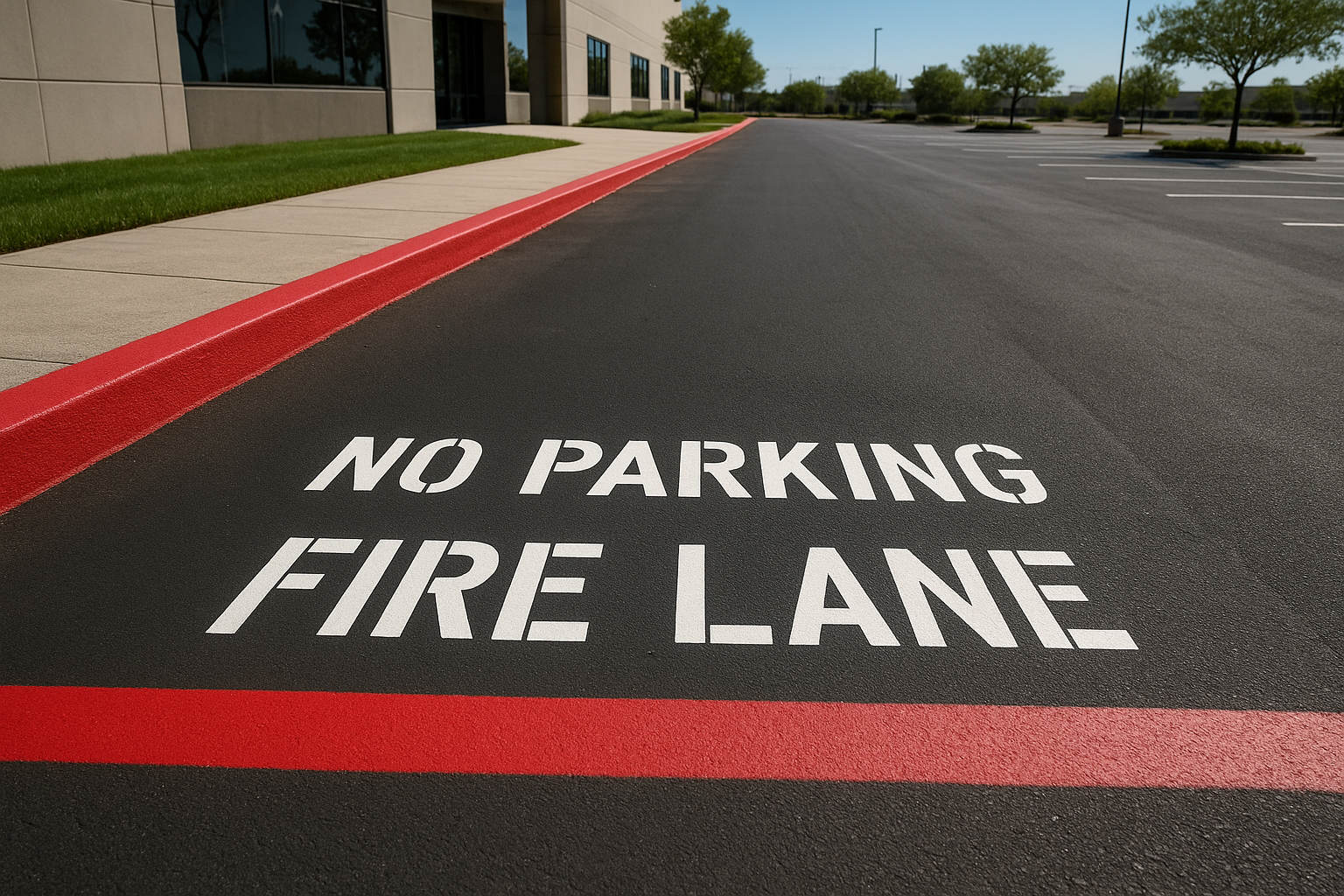
Fire lane striping detail with red curb paint and bold stenciled text keeps emergency access zones clearly visible on commercial lots.
Fire Lane Width and Dimensional Standards
Dimension is one of the most critical — and most frequently overlooked — aspects of fire lane striping detail. The IFC mandates a minimum unobstructed width of 20 feet for fire apparatus access roads. In locations where aerial ladder trucks must operate, that minimum increases to 26 feet.
In addition to width, vertical clearance matters. Fire lanes must maintain a minimum overhead clearance of 13 feet 6 inches to accommodate fire apparatus. However, this clearance requirement is typically addressed through site design rather than pavement markings alone.
For property managers in the Denton and Plano areas, it is worth confirming the specific dimensional requirements with your local fire marshal, since some municipalities adopt local amendments to the IFC that may be more stringent than the base code.
Turning Radius Considerations
Fire lanes must also accommodate the turning radius of fire apparatus. Specifically, the IFC requires a minimum inside turning radius of 25 feet and an outside turning radius of 43 feet. Consequently, when designing or restriping a fire lane that includes a curve or corner, these turning dimensions must be factored into the layout before any paint is applied.
How to Apply Fire Lane Striping Detail Step by Step
Applying fire lane markings correctly requires preparation, the right materials, and adherence to code specifications. Here is a step-by-step process that professional striping crews follow:
- Review local fire code requirements. Contact your local fire marshal or review the adopted IFC version to confirm required lane widths, colors, text specifications, and signage intervals for your jurisdiction.
- Measure and mark fire lane boundaries. Use chalk lines or temporary marking paint to outline the fire lane boundaries on the pavement, ensuring a minimum clear width of 20 feet before applying final paint.
- Prepare the pavement surface. Clean the pavement thoroughly by removing dirt, oil, and debris. Fill any cracks or damage before painting to ensure proper paint adhesion and a long-lasting finish.
- Apply red curb paint and boundary lines. Using a commercial-grade line striper, apply red traffic paint to curb faces and pavement boundary lines. Apply two coats for maximum durability in high-traffic areas.
- Stencil the NO PARKING FIRE LANE text. Position approved stencils along the fire lane at regular intervals and apply paint to create clearly legible text meeting the minimum 12-inch letter height requirement.
- Install required vertical signage. Post fire lane signs at the intervals required by your local fire code, ensuring signs are visible from all approach directions and meet reflectivity standards.
Following this sequence ensures that every element of the fire lane striping detail is applied correctly and in the right order, reducing the need for costly corrections later.
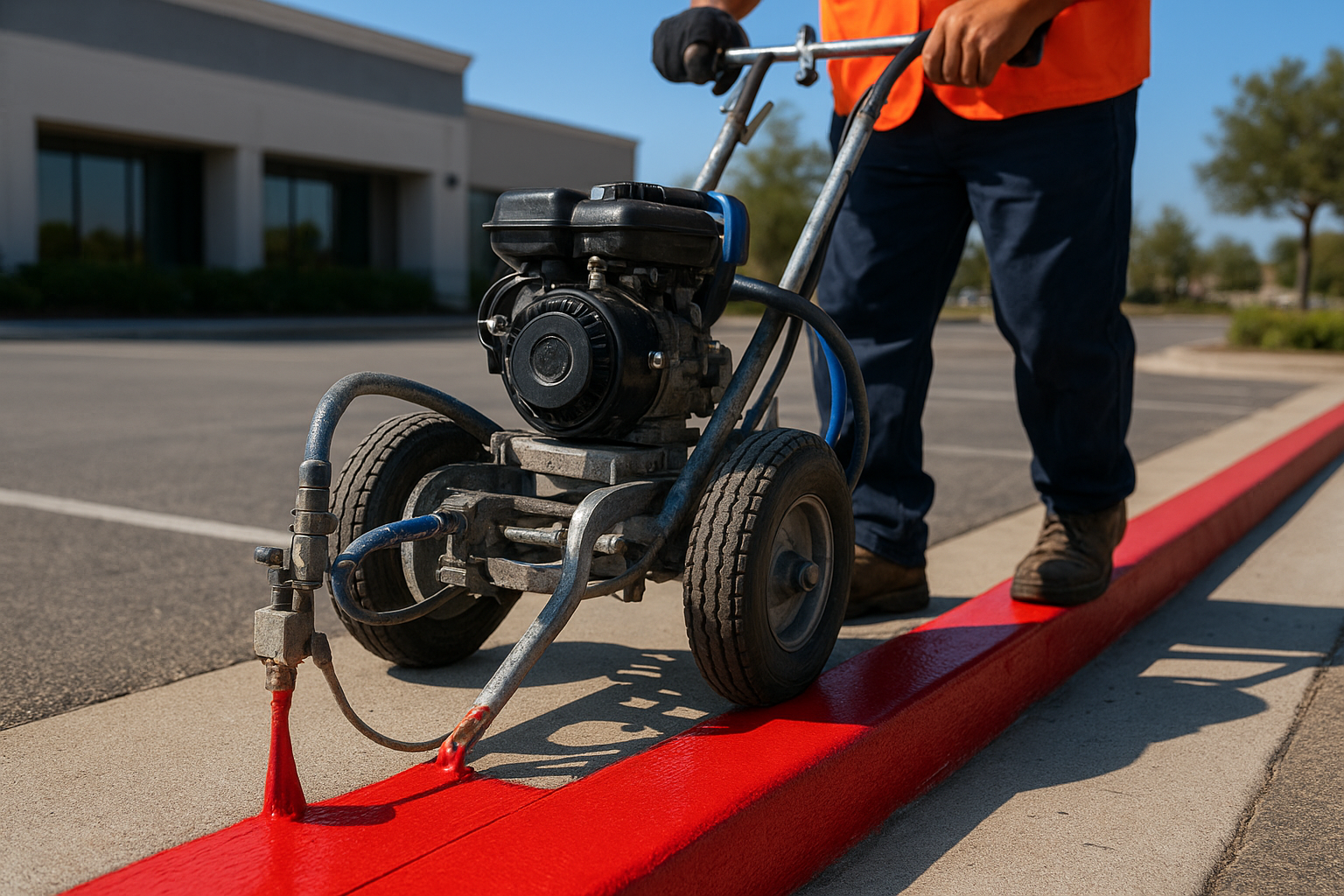
Professional application of fire lane markings requires specialized equipment and trained crews to meet code-required dimensions and paint coverage.
Texas-Specific Fire Lane Compliance Considerations
Texas municipalities generally adopt the International Fire Code with local amendments. However, cities like Denton, Plano, and Dallas may have specific requirements that go beyond the base IFC standards. For example, some cities require fire lane signs to be posted at intervals as close as 30 feet, while others mandate specific sign mounting heights.
Furthermore, the Americans with Disabilities Act (ADA) intersects with fire lane planning when accessible parking spaces are located near fire lane zones. Specifically, accessible routes must remain unobstructed, which means fire lane boundaries must be designed so they do not block or interfere with required accessible paths of travel.
Property owners in North Texas can explore the full range of fire lane marking services available from local specialists who understand the specific code landscape in the Denton and Plano areas.
Penalties for Non-Compliance
Non-compliance with fire lane marking requirements can result in significant consequences. These include failed fire inspections, monetary fines, and increased liability exposure if an emergency response is delayed because of an obstructed or unmarked lane. In some cases, insurance carriers may deny claims related to fire damage if a property is found to have been out of compliance with fire access requirements at the time of the incident.
According to the NFPA, in 2022 U.S. fire departments responded to an estimated 1.5 million fires, highlighting why unobstructed emergency access is not merely a regulatory formality — it is a life-safety necessity.
Maintenance: Keeping Fire Lane Markings Visible
Even the most precisely applied fire lane striping detail will fade over time due to UV exposure, vehicle traffic, and weather. Therefore, a regular maintenance schedule is essential for sustained compliance. Most professional striping companies recommend annual inspections and repainting every one to two years for high-traffic commercial lots.
During a maintenance inspection, crews should check for faded text, chipped curb paint, and any areas where pavement damage has compromised marking visibility. Restriping faded fire lanes is significantly less expensive than the fines and liability risks that come with non-compliance.
For property managers who want to see examples of completed fire lane projects, the project gallery at stripespls.com provides a useful visual reference for what properly detailed fire lane markings look like in practice.
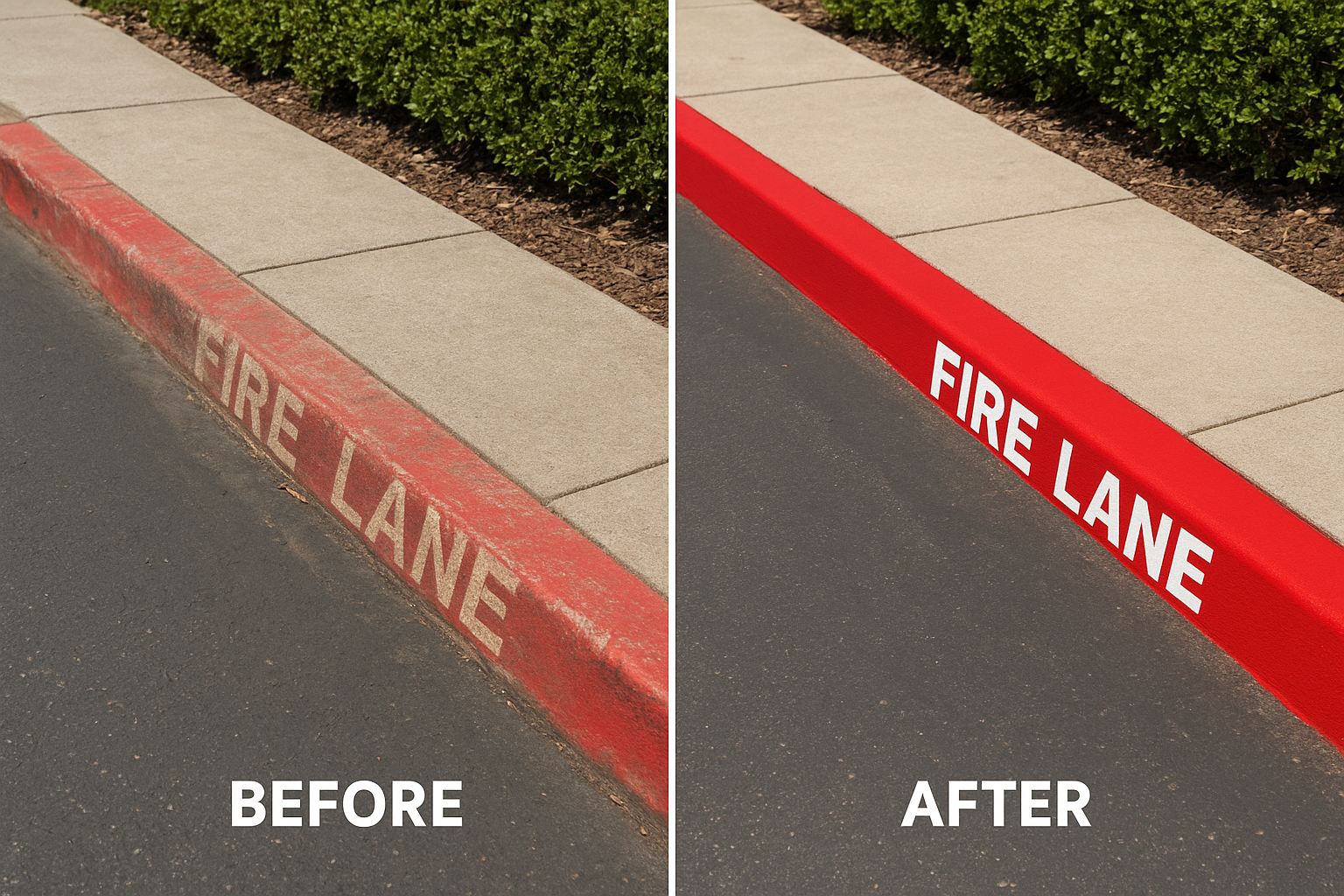
Regular restriping restores the visibility and compliance of fire lane markings that have faded due to traffic and weather exposure.
Choosing a Fire Lane Striping Specialist in North Texas
Not every parking lot striping company has experience with the specific requirements of fire lane compliance. When selecting a contractor, property owners should look for a company that understands local fire code amendments, uses commercial-grade traffic paint rated for durability, and can provide documentation of completed work for fire marshal inspections.
Stripespls.com serves commercial and residential properties throughout the Denton and Plano areas, offering specialized fire lane striping and compliance solutions tailored to North Texas code requirements. From new lot layouts to restriping faded markings, the team delivers precise, durable work designed to keep properties safe and inspection-ready.
In addition to fire lane work, the full suite of parking lot striping services includes ADA-compliant handicap stall markings, directional arrows, and complete lot refreshes — making it easy to address all pavement marking needs in a single visit. Property owners can also learn more about working with fire lane specialists who bring code expertise to every project.
Quick Reference: Fire Lane Striping Detail Standards
- Color: Red curb paint; white or yellow boundary lines
- Minimum lane width: 20 feet (26 feet for aerial operations)
- Text: “NO PARKING FIRE LANE” — minimum 12-inch letter height
- Text interval: Every 50 feet or less along the lane
- Signage: Vertical signs required at code-specified intervals
- Maintenance: Annual inspection; repaint every 1–2 years
Frequently Asked Questions About Fire Lane Striping Detail
What is fire lane striping detail?
Fire lane striping detail is the specific combination of paint colors, dimensions, stenciled text, and curb markings that designates an emergency access zone. These details include red curb paint, “NO PARKING FIRE LANE” stenciled text, and boundary lines that keep emergency access routes clear at all times.
What color is used for fire lane markings?
Red is the standard color for fire lane curb paint and pavement markings in most jurisdictions, including Texas. Some municipalities may also require yellow boundary lines or white stenciled text depending on local fire code.
How wide does a fire lane need to be?
The International Fire Code requires fire lanes to be a minimum of 20 feet wide to allow fire apparatus access. Some jurisdictions require up to 26 feet when aerial operations are anticipated.
What text must appear in a fire lane?
Most fire codes require the phrase “NO PARKING FIRE LANE” stenciled in large, high-visibility letters on the pavement or curb. The lettering height is typically a minimum of 12 inches to ensure visibility from a distance.
How often should fire lane markings be repainted?
Fire lane markings should be inspected annually and repainted whenever fading reduces visibility. In high-traffic commercial lots, repainting every 1 to 2 years is common practice to maintain compliance and clear visibility.
Are fire lane markings required by law in Texas?
Yes. Texas municipalities adopt the International Fire Code, which mandates fire lane markings for commercial properties. Local fire marshals enforce these requirements and can issue citations for non-compliance.
What happens if a property does not have proper fire lane striping?
Properties without proper fire lane markings can face fines, failed fire inspections, and increased liability. More critically, unmarked fire lanes can delay emergency response, putting lives and property at risk.
Can fire lane striping be done on any type of pavement?
Yes, fire lane markings can be applied to asphalt, concrete, and other hard pavement surfaces. The paint type and application method may vary — solvent-based or water-based traffic paint is used on asphalt, while epoxy-based paint is preferred for concrete.
How much does fire lane striping cost?
Costs vary based on linear footage of curb, the number of stencils, and surface condition. A professional fire lane striping project for a typical commercial lot in Texas may range from a few hundred to several thousand dollars depending on scope. Requesting a free quote from stripespls.com is the easiest way to get an accurate estimate for your property.
What is the difference between fire lane striping and regular parking lot striping?
Regular parking lot striping defines individual stalls and directional flow. Fire lane striping, by contrast, designates no-parking emergency access zones and must meet specific code requirements for color, text, and dimensions that standard stall markings do not require.
Do fire lanes need signage in addition to pavement markings?
Yes. Many jurisdictions require both pavement or curb markings and vertical signage for fire lanes. Signs must typically read “FIRE LANE – NO PARKING” and be posted at intervals specified by the local fire code.
Who is responsible for maintaining fire lane markings?
The property owner or manager is legally responsible for maintaining visible, code-compliant fire lane markings. Hiring a licensed parking lot striping company ensures markings meet current fire code standards and can withstand scrutiny during inspections.
Conclusion: Why Fire Lane Striping Detail Matters
Proper fire lane striping detail is far more than a cosmetic concern — it is a code-mandated safety requirement that directly affects emergency response times and property liability. From the correct shade of red curb paint to the precise spacing of stenciled text, every element of a fire lane marking system serves a specific purpose. Furthermore, maintaining these markings over time is just as important as getting them right the first time.
Property owners and managers throughout Denton, Plano, and the greater North Texas region can rely on experienced local professionals to handle every aspect of fire lane striping detail — from initial layout to ongoing restriping. Keeping your fire lanes clearly marked, properly dimensioned, and fully compliant is one of the most straightforward ways to protect your property, your tenants, and your peace of mind.