
Semper fi striping is a phrase that captures something every property owner deserves from a parking lot contractor: absolute, unwavering commitment to quality on every single job. The Latin phrase semper fidelis — always faithful — has long stood for a standard of excellence that never wavers. In the world of parking lot line marking, that same standard separates contractors who take pride in their craft from those who rush through jobs with inferior materials. Understanding what that level of dedication looks like in practice can help you make a smarter hiring decision and protect your property investment for years to come.
What Is Semper Fi Striping?
Semper fi striping is a standard of professional parking lot line marking defined by precision, durability, and strict adherence to safety codes. It means a contractor measures every stall, uses commercial-grade traffic paint or thermoplastic materials, and verifies compliance with ADA requirements and local fire lane regulations before leaving the site. In short, the work is done right the first time — no shortcuts, no faded lines within six months, no missed accessible spaces.
According to the U.S. Department of Justice ADA guidelines, parking facilities must provide a specific ratio of accessible spaces based on total lot size, with precise stall dimensions and properly marked access aisles. Contractors who skip these details expose property owners to fines and liability. A truly committed striping professional treats those requirements as the baseline, not an afterthought.
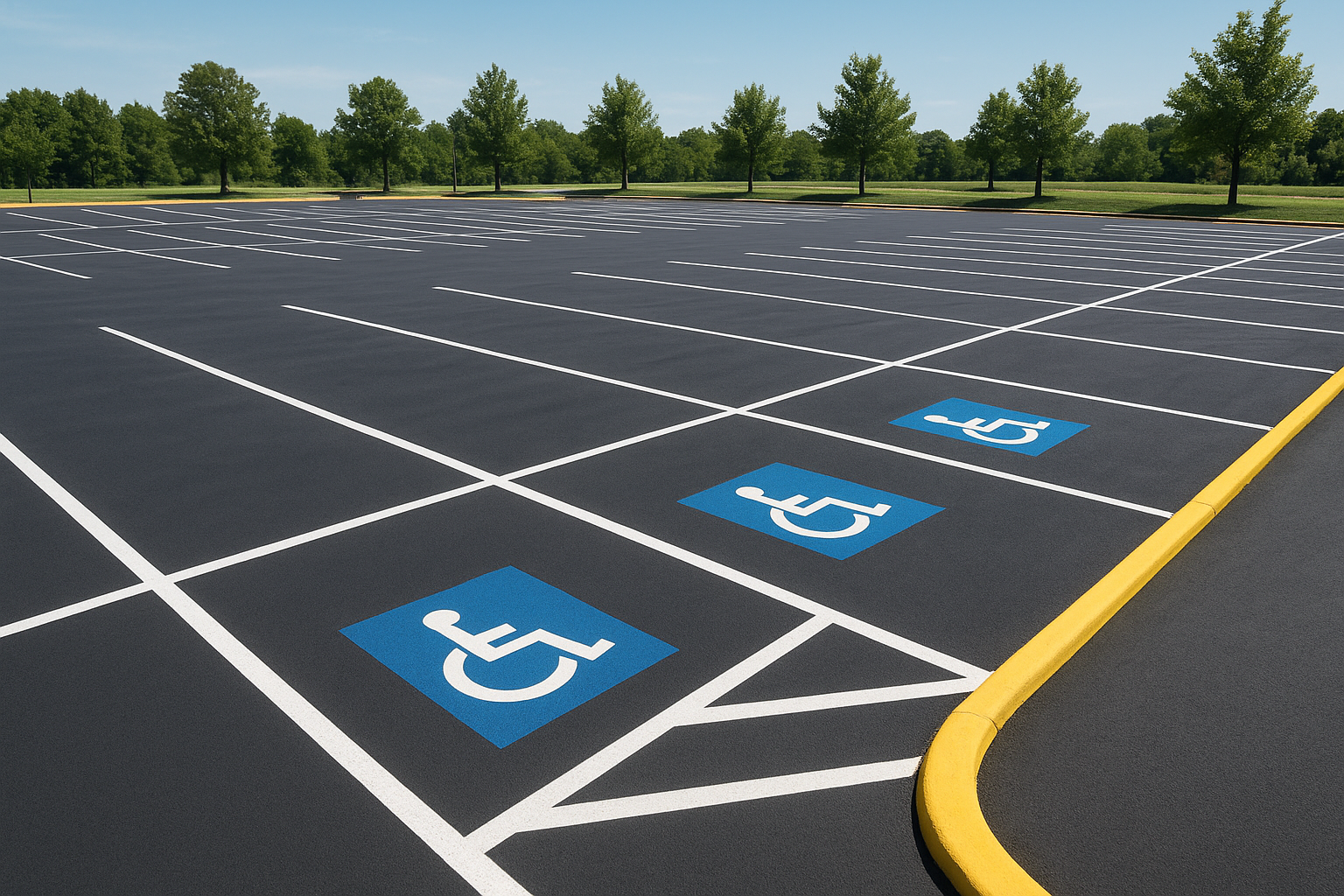
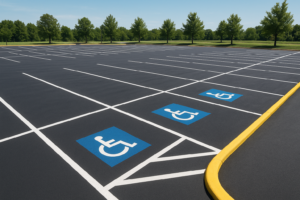
A freshly striped commercial lot demonstrates the precision and durability that define semper fi striping standards.
Why Professional Line Marking Standards Matter
A well-marked parking lot does far more than look tidy. It directly influences traffic flow, pedestrian safety, and a property’s ability to pass code inspections. Research from the National Safety Council consistently shows that poorly organized parking areas contribute to a significant share of vehicle accidents and pedestrian injuries each year. Clear, durable markings reduce confusion and keep drivers and walkers moving predictably.
Furthermore, faded or missing lines can reduce the effective capacity of a lot. When stall boundaries are unclear, drivers park carelessly, wasting space and frustrating customers. A property that maximizes its stall count through precise layout and fresh markings can accommodate more visitors without any physical expansion — a genuine return on investment.
The Real Cost of Cutting Corners on Striping
Low-cost striping contractors often use consumer-grade paint that fades within a single season. As a result, property owners end up paying for restriping far more frequently than necessary. Additionally, contractors unfamiliar with ADA stall dimensions or fire lane requirements can leave a property out of compliance — a problem that carries real financial consequences.
Under the Americans with Disabilities Act, non-compliant parking facilities can face civil complaints and costly remediation orders. Specifically, a parking lot with 26 to 50 total spaces must include at least two accessible stalls, one of which must be van-accessible. Contractors who don’t know these rules — or who ignore them — put clients at risk.
How to Evaluate a Striping Contractor for Your Parking Lot
Finding a contractor who embodies a semper fi striping philosophy requires asking the right questions upfront. The following steps will help you assess any provider before committing to a project.
- Define your project scope. Walk your lot and document the number of stalls, ADA spaces required, fire lane zones, directional arrows, and any faded or damaged markings that need attention.
- Research local striping contractors. Search for licensed, insured companies in your area and review their portfolios and customer testimonials. A company’s project gallery can reveal the quality of their finished work at a glance.
- Request detailed written quotes. Ask for itemized proposals that specify paint type, stall count, ADA compliance markings, fire lane work, and estimated completion time. Vague quotes often hide hidden costs.
- Confirm ADA and fire code knowledge. Ask contractors directly how they handle stall dimensions, access aisle widths, and fire lane designation. Their answers will reveal whether they truly understand current regulatory requirements.
- Schedule work during optimal conditions. Coordinate with your contractor to plan the job during dry weather with temperatures above 50°F. This ensures proper paint adhesion, curing, and long-lasting results.

Professional-grade striping equipment ensures straight, consistent lines that meet commercial durability standards.
Key Services That Define a High-Quality Striping Company
A contractor committed to top-tier parking lot line marking typically offers a full range of services beyond basic stall painting. Understanding what those services include helps you gauge whether a company has the depth of expertise your property needs.
ADA-Compliant Handicap Stall Markings
Properly dimensioned accessible stalls with van-accessible designations, the International Symbol of Accessibility, and correctly sized access aisles are non-negotiable for any commercial property. A skilled contractor lays these out with precision, not guesswork. You can explore the full range of professional striping services available for commercial and residential properties in North Texas.
Fire Lane Designation
Fire lanes must be clearly marked with red curbing and “No Parking – Fire Lane” lettering in accordance with local fire codes. Consequently, a contractor who understands municipal requirements can ensure your property stays compliant without repeated corrections.
Thermoplastic and Durable Marking Options
For high-traffic areas, thermoplastic markings offer a significant durability advantage. According to industry data on pavement marking, thermoplastic materials can last three to seven times longer than standard traffic paint. If your lot sees heavy daily use, this option often delivers a lower total cost over time. Learn more about thermoplastic striping and decal options for commercial properties.
Finding Reliable Parking Lot Striping in North Texas
Property managers, business owners, and municipal organizations across the Denton and Plano areas have a strong local option when it comes to professional line marking. Stripes PLS is a full-service parking lot marking company serving the greater North Texas region. The company handles everything from new lot layouts and complete restriping projects to ADA compliance solutions and fire lane marking.
What sets a locally operated company apart is accountability. When a contractor is based in your region, they depend on local reputation and repeat business. That dynamic naturally encourages the kind of careful, detail-oriented work that defines the semper fi striping standard. Furthermore, local contractors understand the specific weather patterns, pavement conditions, and municipal codes that apply to properties in the area.
Whether your property needs a fresh layout for a newly paved lot or a full refresh of faded markings, you can request a free quote directly through the Stripes PLS website. Getting a written estimate is always the right first step before any striping project begins.
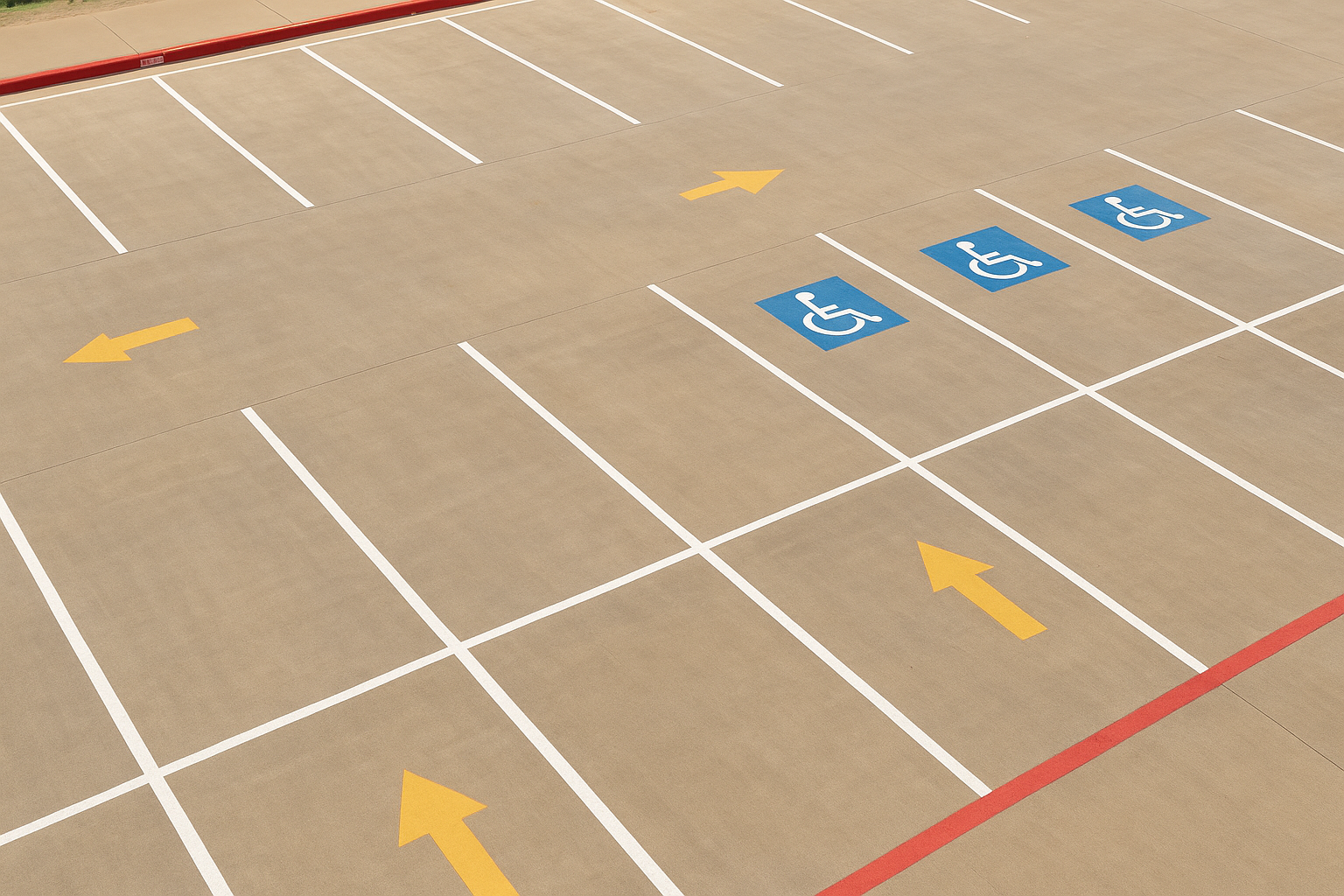
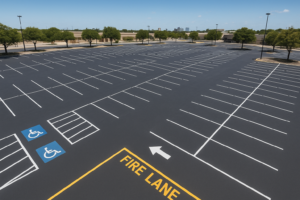
A complete parking lot layout with ADA markings, fire lanes, and directional arrows reflects the full scope of professional striping work.
Frequently Asked Questions About Semper Fi Striping
What does semper fi striping mean in the context of parking lot services?
Semper fi striping refers to a commitment to unwavering quality and precision in parking lot line marking — work done right the first time, every time. The phrase borrows from the Marine Corps motto Semper Fidelis, meaning “always faithful,” to describe contractors who never cut corners on materials, layout accuracy, or code compliance.
How often should a parking lot be restriped?
Most parking lots need restriping every one to two years, depending on traffic volume, sun exposure, and weather conditions. High-traffic commercial lots may require annual touch-ups to keep markings visible and code-compliant.
What paint is used for professional parking lot striping?
Professional stripers typically use water-based traffic paint or oil-based alkyd paint for standard lines. Thermoplastic markings are also common for high-durability applications because they last significantly longer than conventional paint.
How long does parking lot striping take to dry?
Water-based traffic paint dries in as little as 30 minutes under normal temperature and humidity conditions. Oil-based paints and thermoplastic markings may take longer but offer greater durability once cured.
What ADA requirements apply to parking lot striping?
Under the Americans with Disabilities Act, parking lots must include a minimum number of accessible spaces based on total lot size, with proper dimensions, access aisles, and the International Symbol of Accessibility. Non-compliance can result in significant fines and civil complaints.
Why are fire lane markings required in parking lots?
Fire lane markings ensure emergency vehicles can access a building quickly and without obstruction. Local fire codes typically mandate red curbing and “No Parking – Fire Lane” lettering in designated zones, and failure to maintain these markings can result in code violations.
How much does professional parking lot striping cost?
Costs vary widely based on lot size, number of stalls, type of paint, and additional markings like ADA symbols or fire lanes. Requesting a free quote from a local provider is the best way to get an accurate, itemized estimate for your specific property.
Can striping be done on a newly paved parking lot?
Yes, but new asphalt should cure for at least 30 days before striping is applied so the surface oils have fully dissipated. Applying paint too early can cause poor adhesion and premature fading, requiring costly early restriping.
What is the difference between standard striping and thermoplastic striping?
Standard striping uses liquid traffic paint applied with a spray machine, while thermoplastic striping involves a heat-applied plastic compound that bonds deeply to the pavement. Thermoplastic markings typically last three to seven times longer than paint, making them ideal for high-traffic lots.
How do I choose a reliable parking lot striping company?
Look for a company with verifiable experience, proper equipment, knowledge of ADA and local fire codes, and a portfolio of completed projects. Reading reviews and requesting a detailed written quote also helps you compare providers fairly and avoid surprises.
What common mistakes should property owners avoid when hiring a striping contractor?
Avoid hiring based solely on price, as low-cost contractors often use inferior paint or skip layout measurements. Also confirm the contractor understands ADA stall dimensions and local fire lane requirements before work begins to prevent compliance issues later.
Does weather affect parking lot striping quality?
Yes. Striping should be applied in dry conditions with temperatures above 50°F for proper adhesion and curing. Rain, extreme heat, or humidity can cause bubbling, peeling, or uneven coverage that shortens the life of the markings significantly.
Conclusion: Holding Every Job to the Highest Standard
Semper fi striping is ultimately about accountability — the kind of professional commitment that shows up in every straight line, every properly dimensioned ADA stall, and every correctly marked fire lane. Property owners who demand that standard get parking lots that stay organized, safe, and compliant for years rather than months. Furthermore, they avoid the recurring cost of premature restriping and the legal exposure of non-compliant markings. Whether you manage a retail center, a healthcare facility, a school, or a municipal property in the Denton or Plano area, the right striping contractor makes a measurable difference. Start by defining your project needs, asking the right questions, and partnering with a company that treats every job as a reflection of their reputation.