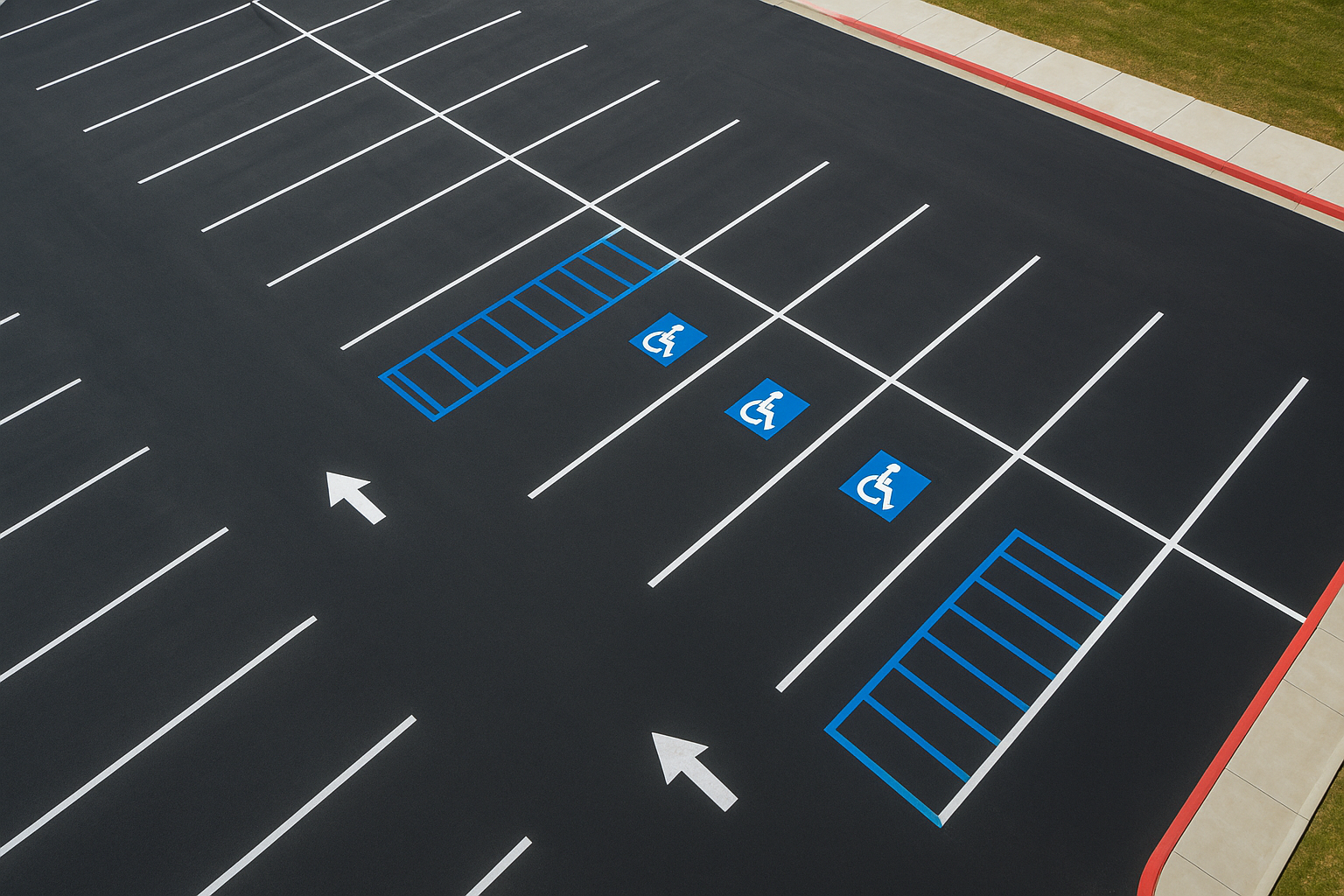
Highmark Traffic Services and other traffic marking services keep parking lots, roadways, and pedestrian walkways safe by clearly defining where vehicles and people should go. Property managers, facility owners, and municipal planners search for this term when they need professional pavement striping, ADA-compliant markings, fire lane designation, or full traffic control support. This guide explains exactly what traffic marking services include, how much they typically cost, which materials contractors use, and how to choose a provider who gets the job done right the first time.
Whether you manage a retail center, a healthcare facility, a school campus, or a stretch of municipal roadway, well-maintained markings are not optional. In fact, according to the U.S. Department of Justice ADA portal, improper accessible parking configurations remain among the most frequently cited compliance violations for commercial properties. Similarly, the Manual on Uniform Traffic Control Devices (MUTCD), published by the Federal Highway Administration, sets the national baseline for how every line, arrow, and symbol on a paved surface should look. Therefore, getting your markings right is not just good practice — it is a legal and safety necessity.
What Are Traffic Marking Services?
Traffic marking services are professional pavement striping and signage solutions that guide vehicle and pedestrian movement safely across a property or roadway. These services typically cover parking stall layout, ADA-compliant accessible space markings, fire lane designation, directional arrows, crosswalks, curb painting, road striping, and supporting traffic signage, and vendors vary — see compare Highmark services. In short, the goal is a clear, organized, and code-compliant surface environment from the first painted line to the last.
A full-service traffic marking provider handles everything from the initial site assessment through final inspection. Furthermore, experienced contractors understand local municipal codes, state DOT specifications, and federal MUTCD standards, which helps property owners and public agencies avoid costly fines or liability tied to non-compliant markings.
Traffic Marking Services vs. Traffic Control Services: What Is the Difference?
These two terms are related, yet they are not identical, and understanding the difference helps you request the right scope of work. Traffic marking services focus on permanent or semi-permanent pavement markings — stripes, symbols, and curb painting — that remain in place for months or years. Traffic control services, in contrast, refer to temporary measures used during construction or events, such as cones, barricades, flaggers, and portable signage that direct traffic around a work zone. Learn more about the differences at commercial vs residential striping.
Many contractors offer both. As a result, when you request a quote, specify whether you need long-term pavement markings, short-term work zone protection, or a combination of the two so the estimate accurately reflects the scope.
Why Pavement Markings Matter More Than You Think
Clear markings do more than look neat. They actively reduce accidents, improve traffic flow, and help maximize usable parking or roadway capacity. According to the Federal Highway Administration, pavement markings are a critical layer of any roadway or parking facility safety system. Consequently, neglecting faded or missing markings creates real liability exposure for property owners and municipalities alike.
In addition, professionally marked lots and roads project a well-managed image to customers, tenants, drivers, and visitors. A clean, organized surface signals that a property is cared for — an impression that matters most for retail centers, healthcare facilities, and schools where first impressions carry real weight.
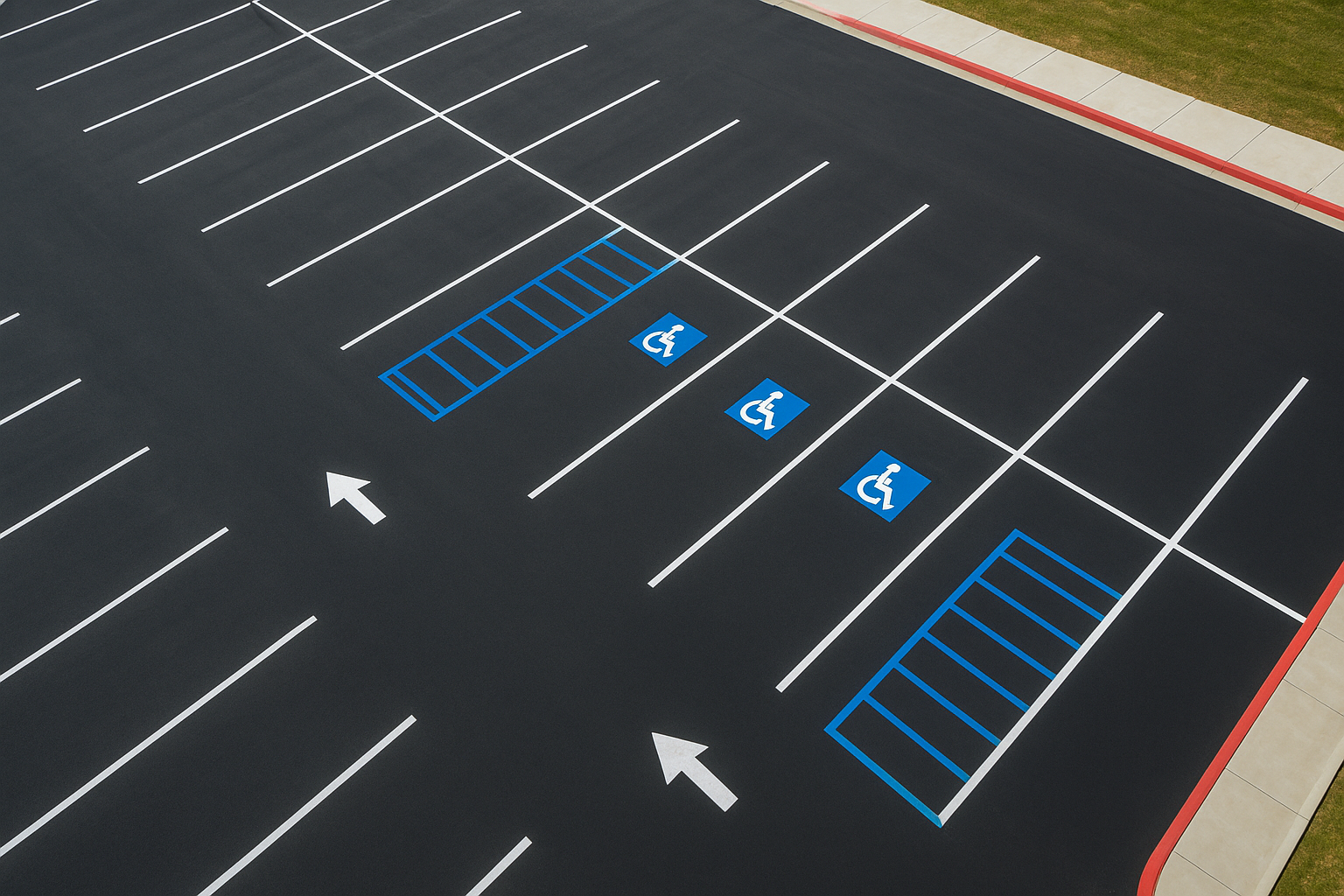
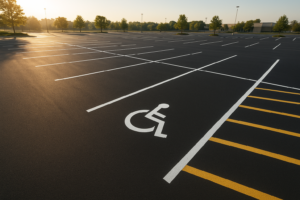
A well-executed pavement striping project improves safety, ADA compliance, and overall property appearance.
Core Traffic Marking Services Explained
Professional traffic marking companies typically offer a full menu of services tailored to each property or roadway, including DFW parking lot striping. Below is every major category you should expect from a qualified provider, explained in depth.
Parking Lot Striping and Layout Design
Parking lot striping is the foundation of any traffic marking project. This involves laying out individual stalls, drive lanes, and pedestrian pathways in a configuration that maximizes space while maintaining safe circulation. Experienced contractors use precision striping machines and traffic-grade paint so lines stay straight, uniform, and durable. For Texas-specific services see Texas parking lot striping company.
For new lots, contractors start with a layout plan that accounts for total lot dimensions, required ADA stall counts, fire lane positions, and property-specific traffic flow needs. Consequently, the finished product is functional and compliant from day one.
Road and Highway Line Striping
Beyond parking facilities, traffic marking services also cover roadway striping — center lines, lane dividers, edge lines, turn arrows, and stop bars. Road markings must meet strict retroreflectivity standards so they remain visible at night and in wet conditions. Specifically, the MUTCD sets minimum retroreflectivity values, and many states layer their own DOT specifications on top of that federal baseline.
In Texas, for example, the Texas Department of Transportation maintains its own pavement marking standards that contractors must follow on public roadways and, in many municipalities, on private developments that connect to public streets.
ADA Compliance and Accessible Parking Markings
ADA compliance is one of the most important aspects of any parking lot project. The Americans with Disabilities Act requires a specific number of accessible spaces based on total lot capacity, along with precise stall dimensions, access aisle widths, and the International Symbol of Accessibility painted clearly on each space. For local expertise, see local ADA striping experts.
Non-compliance can trigger significant fines and legal exposure. Therefore, working with a contractor who understands current ADA standards is critical. The ADA Standards for Accessible Design provide detailed guidance on parking requirements that every property owner should review before a striping project begins.
Fire Lane Marking and Curb Painting
Fire lane markings are required by local fire codes to keep emergency access routes clear at all times. These typically include red-painted curbs, “No Parking – Fire Lane” text on the pavement, and, in some jurisdictions, diagonal striping patterns. Proper fire lane designation protects both occupants and first responders in an emergency.
Because requirements vary by municipality, it is important to hire a contractor familiar with regional codes rather than relying on generic national standards alone. A locally experienced provider will confirm exact wording, spacing, and curb color before applying any paint.

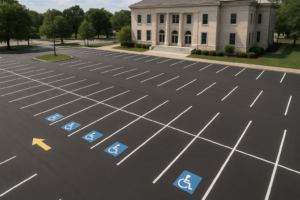
Professional striping equipment ensures precise, durable lines that meet traffic marking service standards.
Thermoplastic, Epoxy, and Paint: Choosing the Right Marking Material
Not every job calls for the same material. Water-based traffic paint is affordable and dries quickly, which makes it a common choice for standard parking lots. Thermoplastic markings, on the other hand, are heat-applied and bonded directly into the pavement surface, offering far greater durability for high-traffic roadways and crosswalks.
Epoxy coatings sit between the two, providing strong chemical resistance for industrial lots and loading areas. In particular, a knowledgeable contractor will recommend the material based on traffic volume, climate, and budget rather than defaulting to whatever is cheapest to apply.
Traffic Signs and Wayfinding Markings
Full-scope traffic marking services often extend beyond paint alone. Stop signs, directional signage, speed limit postings, and wayfinding markers work together with pavement lines to create a complete traffic management system. Above all, signage and striping must agree with each other — mismatched signs and lines confuse drivers and undermine the safety benefits of either measure alone.
How to Plan a Traffic Marking Services Project
Planning a striping project does not have to be complicated. However, skipping key steps can lead to subpar results or compliance issues. Follow this process for a smooth, successful outcome.
- Assess the current lot or roadway condition. Walk the entire surface and document faded markings, damaged pavement, and any ADA stalls that may be out of compliance with current standards.
- Determine scope and layout requirements. Decide whether the project requires full new striping, restriping of existing lines, or a redesigned layout to improve traffic flow and maximize capacity.
- Request a quote from a licensed traffic marking contractor. Contact a qualified provider to assess the site in person, review local code requirements, and provide a detailed written estimate for the work.
- Schedule the work and prepare the surface. Coordinate with the contractor to clear vehicles, sweep the surface clean, and schedule the job during favorable weather for optimal paint adhesion.
- Review completed work and inspect for compliance. After striping is complete, inspect all markings for accuracy, verify ADA stall counts and dimensions meet code, and confirm fire lane designations are clearly visible.
Restriping: When Refreshing Faded Lines Is Enough
Restriping refreshes faded or worn markings on an existing lot without redesigning the entire layout. This is often the most cost-effective option when the current configuration is sound but the paint has degraded from weather, UV exposure, or heavy traffic.
Most commercial lots need restriping every one to two years. High-traffic properties — such as shopping centers, hospitals, and schools — may require annual attention. Specifically, early restriping prevents the gradual confusion and safety risks that come with barely visible lines.
Signs Your Lot Needs Immediate Attention
Several clear indicators signal that a restriping project should not wait. If drivers regularly park outside designated stalls, that is a strong sign. Similarly, if ADA symbols are no longer legible, or fire lane text has faded past readability, the lot needs immediate service.
Furthermore, if your property has recently been repaved or seal-coated, new striping is essential before reopening it to traffic. Fresh sealcoat covers all existing markings completely, requiring a full restripe from scratch.

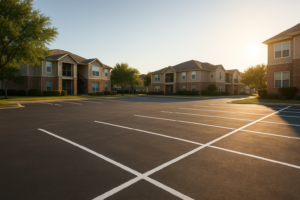
Restriping dramatically improves visibility, safety, and the professional appearance of any parking facility.
Traffic Control and Work Zone Safety During Marking Projects
Any time a crew is applying traffic marking services on an active lot or roadway, temporary traffic control becomes part of the job. Cones, barricades, and advance warning signs protect both the crew and the public while paint cures. In particular, the Occupational Safety and Health Administration outlines work zone safety requirements that responsible contractors follow on every project, regardless of size.
Consequently, ask any prospective contractor how they plan to manage traffic during the project. A clear, written traffic control plan is a strong sign of professionalism, especially for larger commercial or municipal jobs.
Industry Standards and Certifications to Look For
Not all traffic marking companies operate at the same standard. Above all, look for contractors whose crews hold certifications from the American Traffic Safety Services Association (ATSSA), a recognized industry body focused on pavement marking and work zone safety training.
- MUTCD familiarity: the contractor should reference federal marking standards without hesitation.
- State DOT prequalification: required for any work touching public roadways.
- Insurance and licensing: protects your property if something goes wrong mid-project.
- A documented safety record: especially important for high-traffic or roadway-adjacent work.
Why Local Expertise Beats a Generic National Provider
When evaluating traffic marking services — including large multi-state operators and regional specialists — local expertise consistently delivers better outcomes for property owners. A locally operated company understands municipal code nuances, regional weather patterns, and the specific needs of the communities it serves, whereas a national call center often relies on subcontractors unfamiliar with your city’s exact requirements.
For property managers in North Texas, stripespls.com offers exactly this kind of localized, full-service expertise. Serving the Denton and Plano areas, the company specializes in professional striping, ADA compliance solutions, and fire lane marking for commercial and residential properties. From new lot layouts to refreshing faded markings, the team brings precision and craftsmanship to every project.
In addition, working with a local provider means faster response times, easier communication, and a contractor genuinely invested in the community. That accountability matters when you need a project completed on schedule and within budget.
Who Benefits From Professional Traffic Marking Services?
A wide range of clients benefit from professional pavement marking. Property managers overseeing multi-tenant buildings need clearly organized lots to serve tenants and visitors. Retail centers depend on efficient parking layouts to maximize customer access. Schools require safe pedestrian crossings and clearly marked drop-off zones. Healthcare facilities must maintain strict ADA compliance at all times.
Municipal organizations and government facilities also rely on professional striping to keep public parking areas and roadways safe and accessible. In short, any property or roadway used by vehicles and pedestrians can benefit from expert traffic marking services.
How Much Do Traffic Marking Services Cost?
Costs vary based on surface size, number of stalls or lane miles, material choice, and the services included. Generally speaking, basic restriping for a small commercial lot can start at a few hundred dollars, while full-service layouts with ADA markings, fire lanes, and directional signage may run into the thousands.
Thermoplastic road markings typically cost more per linear foot than standard paint, though they last considerably longer. As a result, the best way to get an accurate number is to request a free, on-site quote rather than rely on generic national averages.
Ready to improve your parking lot or roadway markings?
Property owners in the Denton and Plano, TX area can request a free quote directly from the stripespls.com team. Whether you need a full new striping layout, a quick restripe, or ADA compliance updates, the team is ready to help. You can also learn more about the company and its approach to quality traffic marking services. Last updated: 2026-07-27. Author: Stripes PLS.
Frequently Asked Questions About Traffic Marking Services
What are traffic marking services?
Traffic marking services refer to professional pavement striping and signage solutions that include parking lot layout, ADA compliance markings, fire lane designation, directional arrows, road striping, and other surface markings that guide vehicle and pedestrian movement safely. These services are essential for commercial properties, municipalities, and any organization that needs organized, code-compliant surfaces.
How often should a parking lot be restriped?
Most parking lots should be restriped every one to two years, depending on traffic volume, weather exposure, and paint quality. High-traffic commercial lots may need restriping annually to maintain visibility and code compliance.
What is ADA compliance in parking lot striping?
ADA compliance means meeting standards set by the Americans with Disabilities Act, which requires a specific number of accessible parking spaces, proper dimensions, access aisles, and the International Symbol of Accessibility painted on each stall. Failure to comply can result in fines and legal liability.
Why are fire lane markings required?
Fire lane markings are required by local fire codes to ensure emergency vehicles can access buildings quickly. These typically include red-painted curbs and “No Parking – Fire Lane” text on the pavement. Blocking fire lanes can result in vehicle towing and fines for property owners.
How do I choose a reliable traffic marking company?
Choose a company with experience in local code requirements, proper equipment, and a portfolio of completed projects. Look for contractors who offer free quotes, clear timelines, and durable traffic-grade paint. Local companies often provide faster service and better accountability than distant call centers.
What types of paint are used in professional parking lot striping?
Professional striping companies typically use water-based latex traffic paint or oil-based alkyd paint. Water-based paint dries faster and is more environmentally friendly, while oil-based paint offers greater durability in high-traffic areas. Your contractor can recommend the best option for your surface.
How long does parking lot striping take to dry?
Water-based traffic paint typically dries within 30 minutes under normal conditions. Oil-based paint may take one to four hours. Full curing, however, can take up to 24 hours depending on temperature and humidity, so plan surface access accordingly.
Can parking lot striping be done in hot weather?
Yes, striping can be completed in hot weather, though experienced contractors schedule work during cooler morning hours to prevent paint from drying too quickly and to ensure proper adhesion. Extreme heat can affect paint flow and drying time if not managed carefully.
What is the difference between new striping and restriping?
New striping involves laying out a fresh design on a newly paved or unmarked surface. Restriping means refreshing faded or worn markings on an existing lot, following the original layout or updating it to meet current codes. Both require professional equipment and expertise for best results.
How much do traffic marking services cost?
Costs vary based on surface size, number of stalls, and services needed. Basic restriping can start at a few hundred dollars for small lots, while full-service layouts with ADA markings and fire lanes may cost several thousand dollars. Requesting a free quote is the best way to get an accurate estimate.
Do local striping companies serve schools and healthcare facilities?
Yes, many professional striping companies serve schools, hospitals, clinics, and other institutional properties. These facilities often require specialized markings including accessible parking, drop-off zones, and pedestrian crosswalks. Experienced contractors understand the unique compliance requirements for these property types.
What common mistakes should property owners avoid with parking lot markings?
Common mistakes include delaying restriping until markings are completely faded, failing to update layouts to current ADA standards, using low-quality paint, and not accounting for proper stall dimensions. Regular inspections help avoid compliance issues and keep properties safe for all users.
What is the difference between traffic marking services and traffic control services? For a deeper walkthrough, see our High Visibility Line Marking: A Texas Property Guide.
Traffic marking services involve permanent or semi-permanent pavement markings like stripes and symbols, while traffic control services refer to temporary measures such as cones, barricades, and flaggers used during construction or events. Many contractors offer both, so it helps to specify which one you need when requesting a quote.
What certifications should a traffic marking contractor have?
Look for ATSSA-certified crews, familiarity with MUTCD standards, state DOT prequalification for roadway work, and proper insurance and licensing. These credentials indicate a contractor follows recognized safety and quality benchmarks rather than cutting corners.
DFW parking lot striping guide
Understanding traffic marking services — and what professional pavement marking truly involves — helps property owners and municipal managers make smarter decisions about their parking lots and roadways. From ADA compliance and fire lane designation to full layout design, thermoplastic road striping, and work zone safety, these services directly impact safety, legal compliance, and the professional image of any property. For property managers across the Denton and Plano, TX area, working with a trusted local specialist like stripespls.com ensures every project is completed with precision, durability, and full attention to local code requirements. Do not wait until your markings fade completely — proactive traffic marking services always cost less than reactive repairs.