Parking lot striping is the professional process of painting precise, durable line markings — including stall lines, ADA-accessible spaces, fire lanes, and directional arrows — onto commercial and residential parking surfaces. For property owners in Denton, Plano, and across North Texas, sharp parking lot striping protects drivers and pedestrians, keeps your property legally compliant, and creates a polished first impression the moment someone pulls into your lot.
In fact, according to the U.S. Department of Justice, the Americans with Disabilities Act (ADA) requires a specific number of accessible parking spaces based on total lot capacity, and each of those spaces must meet strict dimensional and signage standards. As a result, property owners who ignore these requirements risk fines, complaints, and legal liability.
Beyond compliance, however, faded or missing markings create real operational headaches. Drivers park inconsistently, fire lanes get blocked, and usable parking capacity shrinks. Therefore, this guide covers everything you need to know about parking lot striping — what it is, why it matters, how much it costs, which materials work best, and how to choose the right contractor — so you never have to search for another resource again.
What Is Parking Lot Striping, Exactly?
At its core, parking lot striping refers to painting clearly defined lines, symbols, and designations onto asphalt or concrete using professional-grade equipment and traffic-rated paint. Specifically, a complete project may include standard stall lines, ADA-compliant accessible spaces marked with the International Symbol of Access, fire lane designations, crosswalks, directional arrows, no-parking zones, curb painting, and custom stenciling.
Each of these elements serves a distinct safety or organizational purpose. For example, white lines typically define standard parking stalls, while yellow lines mark no-parking zones, fire lanes, and traffic boundaries. According to Wikipedia’s overview of road surface marking, standardized colors and widths help drivers navigate any facility predictably, which reduces accidents and confusion.
In short, parking lot striping is not just a cosmetic touch-up. Rather, it is a functional system that governs how vehicles and pedestrians move through a property safely and efficiently.
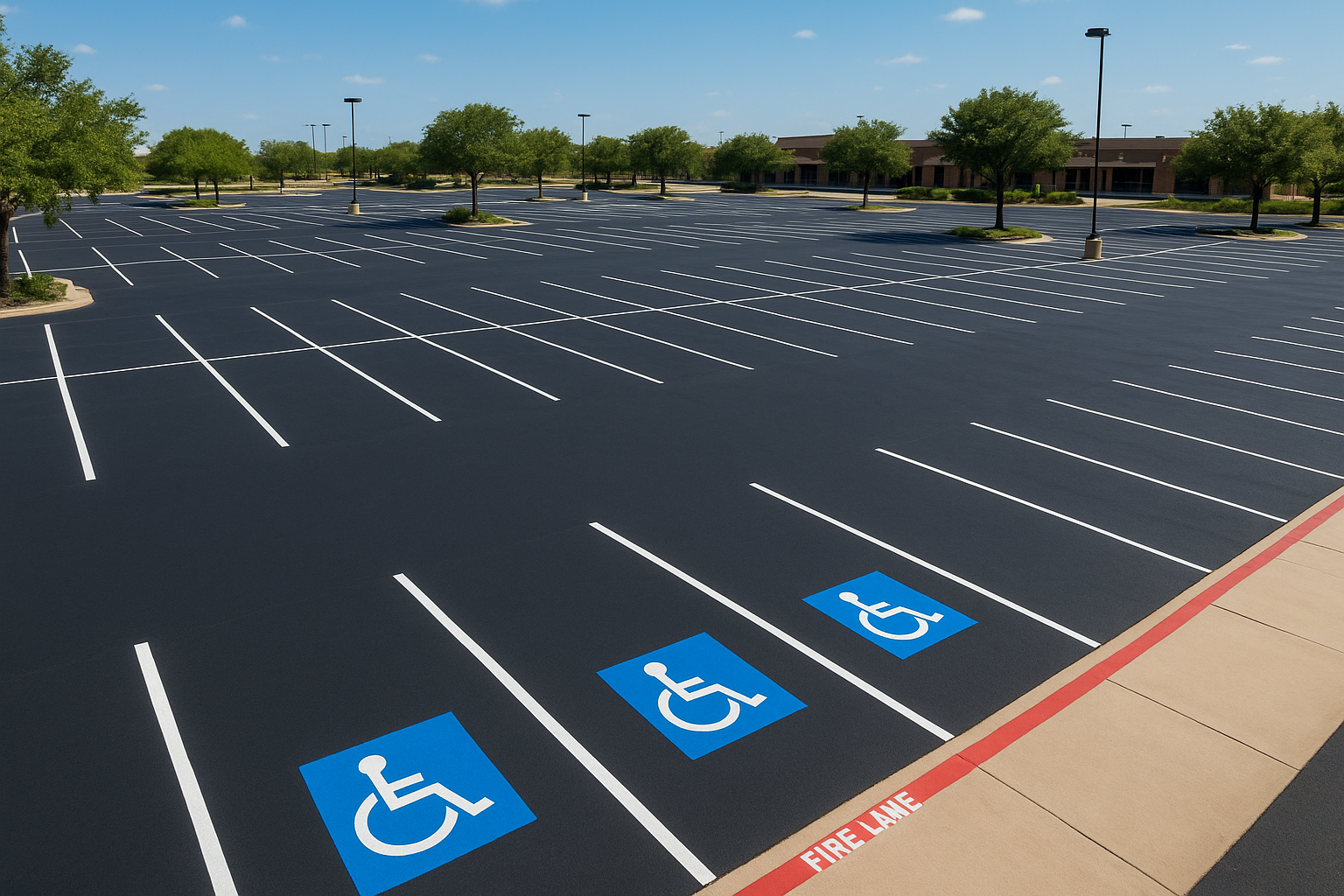
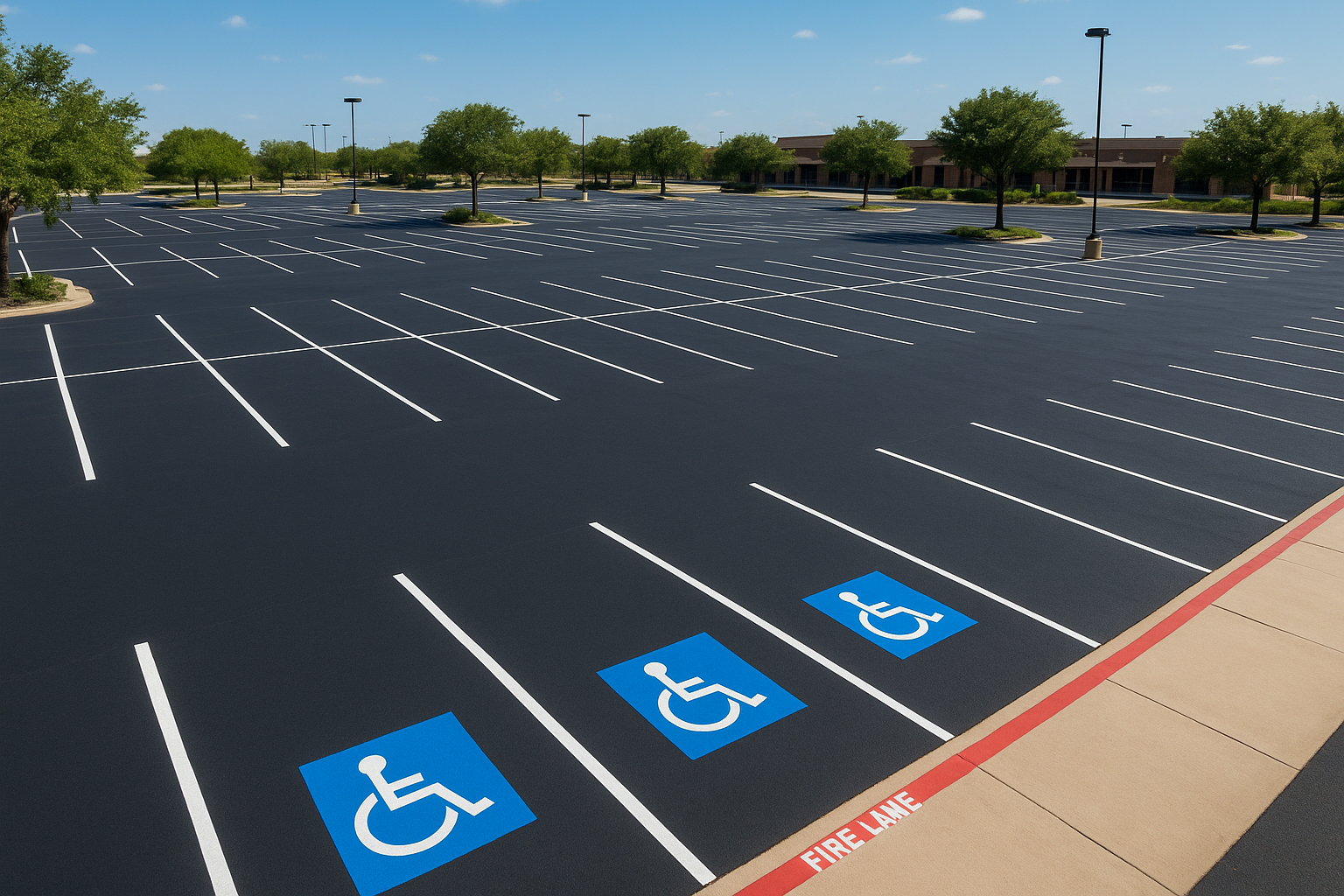
A professionally completed parking lot striping project shows crisp white stall lines, ADA-compliant blue handicap spaces, and clearly marked fire lanes on Texas asphalt.
Why Professional Line Marking Matters for Texas Properties
Texas commercial properties face intense sun exposure, heavy seasonal rainfall, and high traffic volumes — all of which accelerate the fading of parking lot markings. Consequently, lines that look sharp after initial application can become barely visible within 12 to 24 months without proper maintenance.
Beyond aesthetics, faded markings create real operational problems. Drivers park inconsistently, blocking fire lanes or reducing the number of usable stalls. Additionally, unclear ADA spaces put property owners at risk of ADA accessibility violations, which can trigger complaints, audits, and costly remediation.
For property managers overseeing retail centers, healthcare facilities, schools, or municipal lots, maintaining sharp markings is therefore both a legal obligation and a practical necessity. Above all, professional striping contractors bring the equipment, materials, and code knowledge to handle every requirement correctly the first time.
ADA Compliance: A Non-Negotiable Requirement
The ADA mandates a minimum number of accessible spaces based on total lot capacity. For example, a lot with 1 to 25 spaces must include at least one accessible stall, while lots with 26 to 50 spaces require two. Furthermore, at least one in every six accessible spaces must be van-accessible, with an 8-foot-wide access aisle.
Striping these spaces correctly — with proper width, access aisle dimensions, and the International Symbol of Access — requires precision and current regulatory knowledge. This is precisely why working with an experienced parking lot striping specialist matters for any Texas commercial property.
Fire Lane Marking: A Critical Safety Requirement
Fire lane markings are among the most legally significant elements of any commercial lot. These red-painted curbs and stenciled designations must stay clearly visible at all times so emergency vehicles can access the property without obstruction. Local fire codes in Texas specify exactly where fire lanes must sit and how they must be marked.
Neglecting fire lane maintenance can result in citations from local fire marshals and, more critically, could delay emergency response during an actual incident. Therefore, including fire lane refresh in your regular striping schedule is not just a code requirement — it is a fundamental safety responsibility.
Types of Parking Lot Striping Services
A comprehensive parking lot striping project can include far more than basic stall lines. Specifically, most professional contractors offer the following services:
- Standard stall striping — parallel or angled lines defining individual parking spaces.
- ADA-compliant accessible spaces — including access aisles and the International Symbol of Access.
- Fire lane marking — red curb paint and stenciled “No Parking Fire Lane” text.
- Directional arrows and traffic flow markings — guiding vehicles safely through the property.
- Crosswalks and pedestrian pathways — improving safety near entrances and sidewalks.
- Curb painting and wheel stops — reinforcing lot boundaries and preventing overhang.
- Custom stenciling and signage — including “Reserved,” “Visitor,” “Loading Zone,” and compliance signage installation.
- Speed bump painting — high-visibility markings for traffic-calming features.
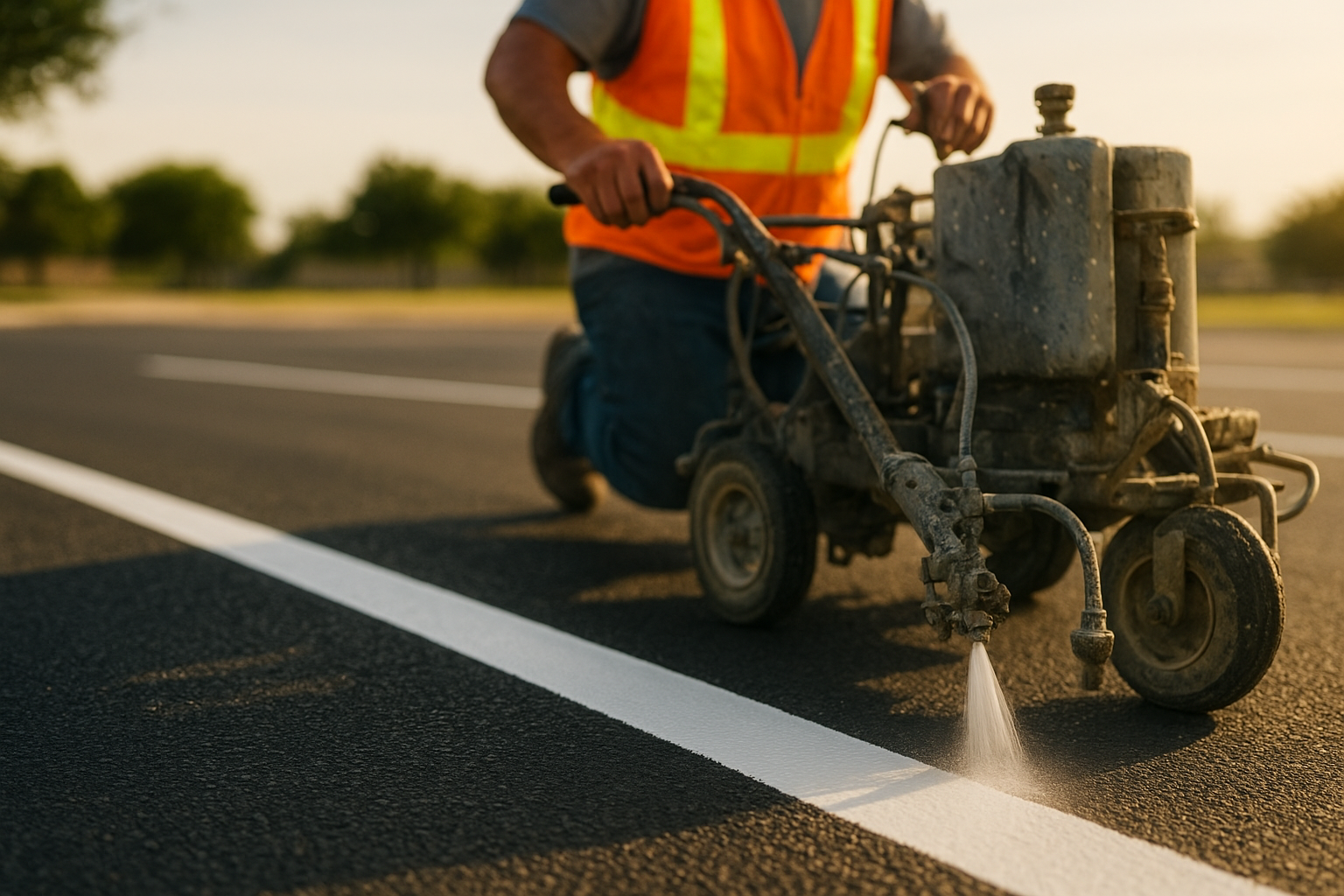
A professional-grade striping machine produces straight, consistent lines — a key advantage of hiring an experienced crew over DIY methods.
Pavement Striping Materials Compared: Which Paint Lasts Longest?
Not all striping paint performs the same way, so choosing the right material matters just as much as the layout itself. Below is a comparison of the most common options used in commercial parking lot striping today:
- Water-based traffic paint — dries quickly (around 30 minutes), is environmentally friendly, and works well for standard-traffic lots. However, it typically lasts only 1 to 2 years.
- Oil-based alkyd paint — offers stronger durability and better adhesion in high-traffic areas, though it takes longer to cure and emits more VOCs.
- Thermoplastic markings — melted and applied as a thick, reflective coating that can last 5 years or more, making it ideal for high-traffic municipal lots and crosswalks.
- Epoxy-based paint — extremely durable and chemical-resistant, often used in parking garages and industrial facilities where oil spills and heavy tire wear are common.
In particular, the Manual on Uniform Traffic Control Devices (MUTCD), published by the Federal Highway Administration, sets national standards for pavement marking materials, colors, and retroreflectivity — a helpful reference when comparing contractor proposals.
How Much Does Parking Lot Striping Cost?
Cost naturally varies based on lot size, number of stalls, paint type, and required compliance features. As a general guideline, a basic restriping job for a small lot can start around $200 to $500, while larger commercial projects with ADA markings, fire lanes, and custom stenciling may run several thousand dollars.
Many contractors also price per stall, which typically ranges from $5 to $15 per space depending on paint type and layout complexity. In contrast, thermoplastic and epoxy applications cost more upfront but reduce restriping frequency, which can lower long-term costs.
Ultimately, the most accurate way to budget for parking lot striping is to request an itemized quote based on your specific lot dimensions and compliance needs, rather than relying on generic per-square-foot estimates.
How to Get Professional Parking Lot Striping: A Step-by-Step Process
Getting your lot professionally striped is straightforward once you understand the process. Here is how most projects unfold from start to finish:
- Assess your lot’s current condition. Walk the property and document faded lines, missing ADA markings, unclear fire lanes, and confusing traffic patterns. Photos help your contractor scope the project accurately and quickly.
- Request a free quote from a professional striping company. Provide lot dimensions, condition photos, and specific requirements such as ADA compliance or fire lane marking so the estimate reflects the true scope of work.
- Review the layout plan and confirm code compliance. Work with your contractor to verify the proposed stall layout meets ADA requirements and that fire lane designations align with local fire code standards.
- Prepare the surface and schedule the work. Ensure the lot is clean, dry, and clear of vehicles on the scheduled date, and coordinate with tenants or employees ahead of time to prevent delays.
- Inspect the finished work and allow proper cure time. Review all lines and symbols against the agreed plan, wait at least 30 minutes before reopening the lot, and avoid heavy vehicle traffic for 24 hours to protect adhesion.
New Lot Layout vs. Restriping: Which Do You Need?
Understanding the difference between a new lot layout and restriping helps you choose the right service. In short, new lot layout striping involves designing and painting a complete parking configuration from scratch, typically after fresh asphalt has been poured or an existing lot fully resurfaced.
Restriping, on the other hand, refreshes faded or worn markings on a lot that already has an established layout. This is the most common service for commercial properties since it restores visibility without a full redesign. However, restriping is also a great opportunity to correct outdated ADA configurations or adjust stall angles to improve capacity.
For a deeper look at how line marking decisions affect your property long-term, the asphalt striping guide to parking lot line marking covers material choices, layout strategies, and maintenance best practices in more detail.
How Often Should You Restripe a Parking Lot?
Most lots need restriping every 1 to 2 years, although this depends heavily on traffic volume, sun exposure, and paint type. For instance, a busy retail lot in a sun-intense climate will fade faster than a low-traffic office lot with shade coverage.
Similarly, thermoplastic and epoxy markings can extend that window to 4 or 5 years, which may offset their higher upfront cost. Above all, a simple annual walkthrough helps you catch fading before it becomes a compliance or safety issue.
DIY Parking Lot Striping vs. Hiring a Professional
Some property owners consider striping a lot themselves to save money. However, DIY striping rarely accounts for ADA dimensional standards, fire code placement, or proper paint curing conditions — mistakes that can trigger costly compliance violations later.
In contrast, professional crews use mechanized striping equipment, laser-guided layout tools, and traffic-rated paint that outperforms consumer-grade products. Consequently, the upfront cost of hiring a professional is usually offset by longer-lasting results and reduced legal risk.
Choosing the Right Parking Lot Line Marking Company in Denton and Plano, TX
Not all striping contractors deliver the same quality and compliance knowledge. When evaluating providers, look for demonstrated experience on commercial properties, familiarity with current ADA standards, and the professional equipment needed to produce straight, consistent lines at scale.
Stripespls.com is a full-service parking lot marking company based in Texas, serving property managers, business owners, retail centers, schools, healthcare facilities, and municipal organizations across the greater North Texas region. The company specializes in professional striping, ADA compliance solutions, and fire lane marking for commercial and residential properties throughout Denton and Plano.
From new lot layouts to restriping faded markings, the team brings precision and attention to detail to every project. Prospective clients can explore the full range of available services at the stripespls.com services page and request a free, no-obligation quote directly through the website.
Additionally, referencing authoritative guidance from sources like the Federal Highway Administration’s pavement marking resources can help property owners understand best practices for long-lasting, high-visibility markings.
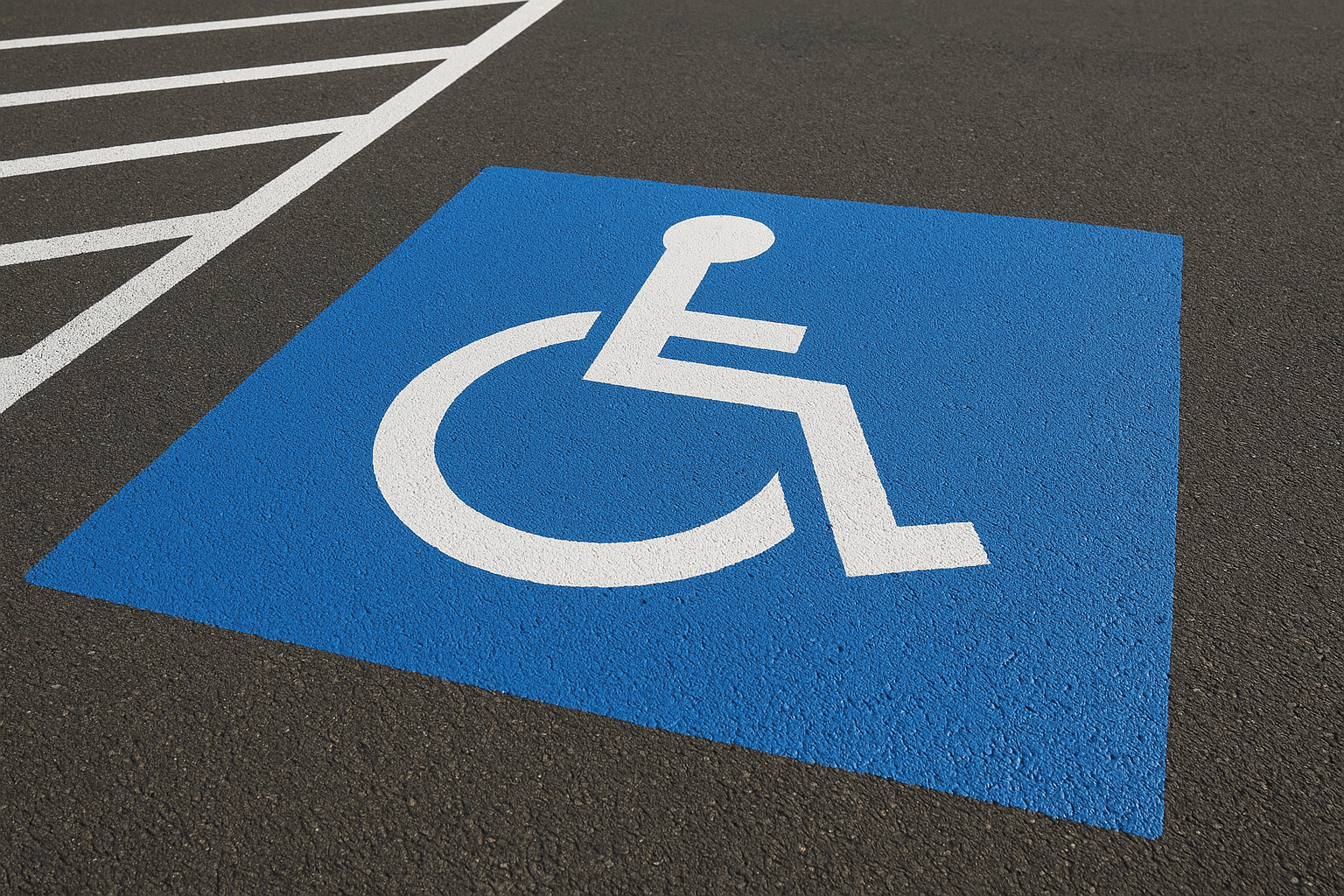
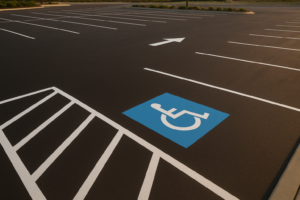
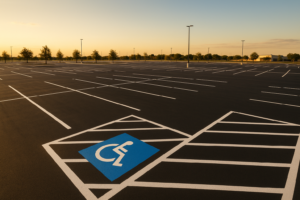
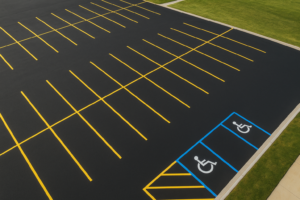
ADA-compliant handicap stall markings must meet strict federal dimensional standards — a core component of any professional parking lot striping project.
Quick Reference: Key Parking Lot Striping Facts
- Most lots need restriping every 1 to 2 years, depending on traffic and weather exposure.
- ADA requires at least 1 accessible space for lots with 1 to 25 total stalls.
- Water-based traffic paint typically dries in 30 minutes under normal conditions.
- Thermoplastic markings can last 5 years or more in high-traffic lots.
- Fire lane markings are mandated by local fire codes and must be maintained continuously.
- Van-accessible spaces require an 8-foot-wide access aisle adjacent to the stall.
Frequently Asked Questions About Parking Lot Striping
What is parking lot striping?
Parking lot striping is a professional line marking service that applies precise, durable paint markings to parking surfaces. It covers stall lines, ADA handicap spaces, fire lanes, directional arrows, and more, all aimed at improving traffic flow, safety, and code compliance.
How often should a parking lot be restriped?
Most lots need restriping every one to two years, depending on traffic volume, weather exposure, and paint type. High-traffic commercial lots often require more frequent touch-ups to remain visible and compliant.
Does parking lot striping have to meet ADA requirements?
Yes. The Americans with Disabilities Act mandates specific dimensions, quantities, and signage for accessible parking stalls. Failure to comply can result in fines and legal liability, making ADA-compliant striping non-negotiable.
What type of paint is used for parking lot striping?
Professionals typically use water-based traffic paint, oil-based alkyd paint, thermoplastic, or epoxy, depending on traffic levels and climate. Water-based paint dries fastest, while thermoplastic and epoxy offer greater long-term durability.
How long does parking lot striping take to dry?
Water-based traffic paint typically dries within 30 minutes under normal weather conditions. However, full cure time can take up to 24 hours, so limiting traffic on freshly painted areas is strongly recommended.
What is the cost of parking lot striping in Texas?
Costs vary based on lot size, stall count, and required services. A basic restriping job for a small lot can start around $200 to $500, while larger commercial projects with ADA markings and fire lanes may run several thousand dollars. Requesting a free quote is the best way to get an accurate estimate.
Can striping be done on both asphalt and concrete surfaces?
Yes. Parking lot striping can be applied to both asphalt and concrete using appropriate paint formulations for each material. The surface should be clean and completely dry before application to ensure proper adhesion.
What services are included in a full parking lot striping project?
A full project typically includes stall line painting, ADA-compliant handicap space marking, fire lane designation, directional arrows, curb painting, wheel stops, and custom symbols or text, depending on local code requirements.
How do I know if my parking lot needs restriping?
Faded, chipped, or barely visible lines are clear signs restriping is overdue. Additionally, recent resurfacing or complaints about traffic confusion or hard-to-find ADA spaces both signal that fresh striping is needed.
What are fire lane markings and why are they required?
Fire lane markings are red-painted curbs or stenciled designations that keep emergency vehicle access routes clear at all times. Local fire codes require them, and they must be maintained continuously to avoid citations.
What is the difference between new lot layout striping and restriping?
New lot layout striping designs and paints a complete parking configuration from scratch on a fresh or recently paved surface. Restriping, by contrast, refreshes existing faded markings on an already-configured lot. For a deeper walkthrough, see our School Parking Lot Striping: Complete Safety Guide for TX.
Is a permit required for parking lot striping?
Generally, restriping an existing layout does not require a permit. However, new lot layouts, ADA reconfigurations, or fire lane changes may need local approval, so it is wise to confirm requirements with your city or county planning office beforehand.
What is the best time of year for parking lot striping in Texas?
Mild, dry weather with temperatures above 50°F offers the best results, since paint adheres and cures more reliably. In Texas, spring and fall typically provide the most consistent striping conditions, though most reputable contractors can work efficiently in summer as well.
How can I make parking lot striping last longer?
Choosing durable materials like thermoplastic or epoxy, sealcoating the surrounding asphalt regularly, and scheduling routine inspections all extend the life of your markings. Consequently, proactive maintenance costs less over time than reactive, emergency restriping.
Does stripespls.com serve areas outside Denton and Plano?
Stripespls.com primarily serves Denton, Plano, and the broader North Texas region. Property owners in surrounding communities should contact the company directly to confirm service availability for their specific location.
Conclusion: Keep Your Lot Safe, Compliant, and Professional
In summary, parking lot striping is one of the most practical and impactful investments a Texas property owner can make. Clear, durable markings improve safety, maximize usable parking capacity, satisfy ADA requirements, and project a professional image to every visitor who arrives at your property.
Whether your lot needs a complete new layout or simply a fresh coat of paint over faded lines, working with a knowledgeable, experienced striping company makes all the difference. As a result, you avoid compliance risks, reduce driver confusion, and maintain a well-organized facility year-round.
For property owners throughout Denton, Plano, and the greater North Texas area, stripespls.com offers free quotes, customized solutions, and the professional expertise needed to keep your parking lot striping sharp and fully code-compliant. Contact the team today and take the first step toward a cleaner, safer parking facility.