Parking lot line repainting is the fastest, most cost-effective way to turn a faded, confusing commercial lot back into a safe, organized, and fully code-compliant space. Sun exposure, rain, and thousands of tire passes wear down even premium traffic paint within a year or two. As a result, stalls become hard to see, ADA symbols disappear, and fire lanes lose their red curb color — all of which raise liability and invite code violations. This guide covers everything a property owner, facility manager, or business owner needs to know about parking lot line repainting, including the exact process, paint options, real cost ranges, compliance rules, and how to pick a contractor who won’t cut corners.
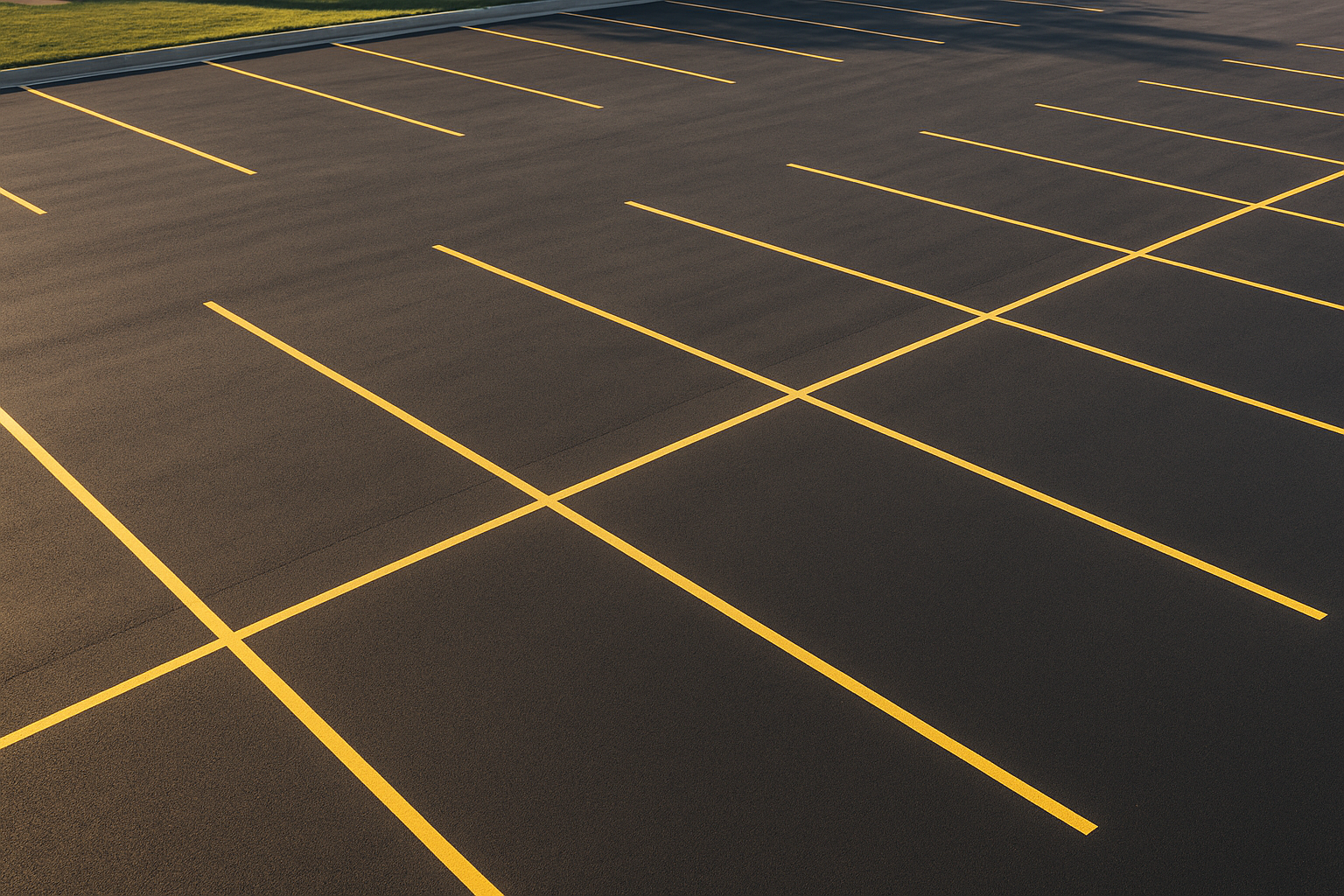
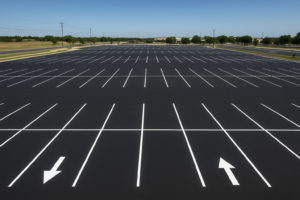
Freshly completed parking lot line repainting restores clarity to worn stall markings almost overnight.
Quick answer: Most commercial lots need parking lot line repainting every 18 to 24 months, with hot, high-UV climates like North Texas often requiring touch-ups closer to the 12 to 18 month mark. Pricing typically runs from a few hundred dollars for a small lot to several thousand for a large, multi-zone property with ADA stalls and fire lanes.
What Is Parking Lot Line Repainting, Exactly?
Parking lot line repainting is a professional maintenance service that restores faded stall lines, directional arrows, and accessibility markings back to a clear, durable condition. In short, a trained crew cleans the pavement, remaps the existing layout, and applies fresh traffic paint over every worn section.
Specifically, this service covers far more than straight stall boundaries. For example, it often includes fire lane marking, curb painting, directional arrows, wheel stops, loading-zone stencils, and ADA-compliant handicap symbols. Consequently, a single visit can resolve several safety and compliance issues at once, rather than requiring separate contractors for each task.
In addition, many property managers now schedule full restriping or targeted repainting on a routine calendar rather than waiting for tenant complaints. This proactive approach limits liability exposure while keeping the lot looking professional year-round — something a reactive, complaint-driven maintenance plan simply can’t match.
Why Faded Lines Cost More Than They Look Like They Should
Faded lines are not merely a cosmetic issue. Rather, they create genuine safety and legal risk for property owners. When stall boundaries become hard to see, drivers park inconsistently, which reduces usable spaces and increases the odds of a fender-bender in a crowded lot.
Furthermore, faded fire lanes can delay emergency vehicle access during a genuine crisis. Municipal codes across most jurisdictions require visible fire lane marking at all times, and violations routinely result in fines. Similarly, worn ADA symbols can put a property out of step with federal accessibility law, exposing owners to complaints and legal action.
Above all, unclear pavement markings send a message about how well a property is managed. Therefore, tenants, customers, and visitors often judge a business — fairly or not — by how well its parking area is maintained. A cracked, unstriped lot suggests neglect long before a visitor ever walks through the front door.
9 Signs Your Lot Needs Parking Lot Line Repainting Now
Several warning signs suggest it is time to schedule professional parking lot striping before minor fading becomes a larger safety and compliance problem.
- Stall lines are difficult to see from a distance, especially at dusk or in rain.
- ADA handicap symbols have faded to the point of being unrecognizable.
- Fire lane curbs show little to no visible red or yellow paint remaining.
- Directional arrows guiding traffic flow have worn away completely.
- The lot has recently been resealed or repaved without new markings applied.
- Tenants or customers regularly ask “where am I supposed to park?”
- A city or fire marshal inspection flagged faded markings on a recent visit.
- An insurance audit noted unclear traffic flow as a liability concern.
- Wheel stops, loading zones, or crosswalk stencils are barely visible from a moving vehicle.
If any of these apply, it is worth requesting an inspection soon. Otherwise, small fading issues quickly compound into a bigger safety and compliance headache.
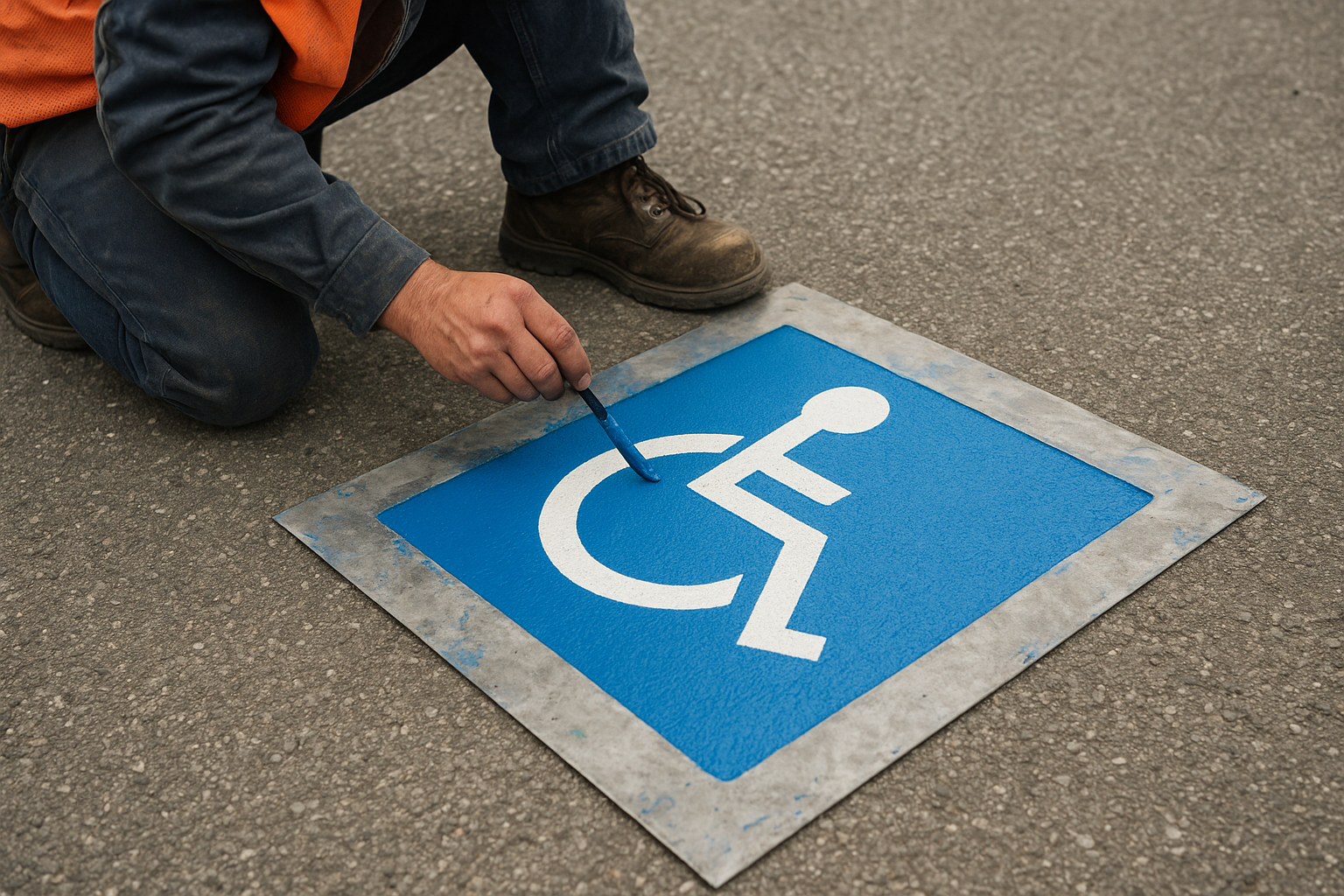
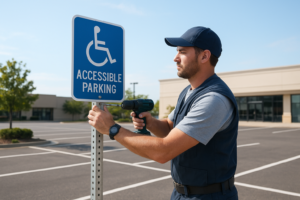
ADA-compliant markings are a core deliverable of any parking lot line repainting project.
The Parking Lot Line Repainting Process, Step by Step
A professional crew follows a consistent, repeatable process to guarantee durable, code-compliant results. Understanding these steps helps property owners know exactly what to expect from the first walkthrough to the final inspection.
- Inspect the lot: A technician walks the entire property to review existing markings, pavement condition, drainage issues, and any layout changes needed before quoting the job.
- Clean the surface: The crew sweeps debris and pressure washes the asphalt so oil, dirt, and old paint residue don’t prevent new paint from bonding properly.
- Remove or grind old paint: Where buildup is heavy, crews shot-blast or grind stubborn old lines so the new coat sits flush and doesn’t create a raised ridge underfoot.
- Mark the layout: Chalk lines or laser-guided templates map out stall widths, ADA spaces, arrows, and fire lanes according to local code before any paint touches pavement.
- Apply traffic paint: Walk-behind or truck-mounted striping machines lay down durable, reflective paint in clean, consistent lines with sharp, professional edges.
- Cure and inspect: Lines are barricaded and left to dry fully, followed by a final quality walkthrough to confirm every stall, symbol, and lane meets spec.
According to industry data, well-applied traffic paint on asphalt can last between one and two years depending on climate and traffic volume, which is precisely why routine reinspection matters (Federal Highway Administration).
ADA Compliance and Fire Lane Marking Requirements
Accessibility and fire safety are two of the most important reasons to keep parking lot markings current. Under the Americans with Disabilities Act, commercial properties must provide clearly marked accessible stalls with correct dimensions, signage, and van-accessible spacing — and repainting is how those markings stay legible year after year.
Meanwhile, fire lane marking must follow local fire code requirements, which often specify red curb paint with white lettering reading “Fire Lane – No Parking.” In many municipalities, including across North Texas, code enforcement officers routinely check for these markings during property inspections, and a faded curb is treated the same as no curb marking at all.
Consequently, working with an experienced team like the Texas parking lot striping company familiar with regional codes reduces the risk of violations. This is particularly important for schools, healthcare facilities, and municipal properties that face stricter compliance scrutiny than typical retail lots.
Paint Types Compared: Which Traffic Paint Lasts Longest?
Not all traffic paint performs the same, and the right choice depends heavily on climate, budget, and how often the lot can tolerate closures for maintenance. Understanding the standard road surface marking categories helps property owners ask the right questions before signing a contract.
- Water-based acrylic: The most common and budget-friendly option; dries fast, meets most environmental regulations, and typically lasts 12 to 24 months.
- Solvent-based/chlorinated rubber: More durable in wet climates but increasingly restricted by air-quality regulations in many states.
- Epoxy: A hard, chemical-resistant coating well suited for warehouse floors and heavy-forklift traffic, though it costs more per square foot than standard paint.
- Thermoplastic: Melted and applied hot, this option can last 5+ years and is often reserved for high-traffic municipal roads rather than typical parking lots due to cost.
In particular, reflective glass-bead additives can be mixed into any of these paint types to improve nighttime visibility — a detail worth requesting for lots with limited overhead lighting.
How Much Does Parking Lot Line Repainting Cost?
Pricing for parking lot line repainting varies based on several factors. Lot size is the biggest driver, since larger properties require more paint and labor hours. In addition, layout complexity — such as angled stalls, multiple ADA zones, or extensive fire lane marking — can increase the time and materials needed.
- Small lots (under 25 stalls): Often a few hundred dollars for a straightforward re-stripe.
- Mid-size commercial lots: Typically fall in the low-to-mid thousands depending on ADA and fire lane scope.
- Large retail centers or campuses: Can run into the higher thousands, especially when full removal of old paint is required first.
Similarly, paint type affects cost. Standard water-based traffic paint is more budget-friendly, while reflective or high-solids formulas cost more upfront but last longer between repainting cycles. Therefore, many property owners find that investing in higher-quality paint actually reduces long-term maintenance expenses rather than increasing them.
For a detailed breakdown of pricing and compliance factors, this parking lot line painting cost and compliance guide offers helpful context before requesting quotes. You can also review a line-item breakdown of what parking lot line painting usually costs to compare estimates against your own lot’s size and complexity.
DIY vs. Professional Line Repainting: What’s the Real Difference?
Some property owners consider a DIY approach using rented equipment and box-store paint. However, this rarely holds up. Consumer-grade paint fades within months, layout spacing often misses code requirements, and any ADA measurement error can trigger a compliance complaint that costs far more than the repainting job itself.
In contrast, professional crews bring commercial-grade striping machines, laser layout tools, and paint formulated specifically for high-traffic pavement. As a result, professional striping services are worth the investment for nearly every commercial property, since the lines simply last longer and meet code the first time.
That said, if your existing layout is outdated, undersized, or was never ADA-compliant to begin with, repainting alone won’t fix it. In that case, a full restriping project that redesigns the entire layout is the better long-term move.
How Often Should You Repaint? Maintenance Schedules by Climate
Most commercial lots need repainting every 18 to 24 months, though high-traffic lots may fade sooner. Climate, sun exposure, and traffic volume all affect how long painted lines stay visible. Intense UV exposure, summer heat, and heavy vehicle traffic accelerate wear throughout hot regions, so lots in Texas and similar climates often need touch-ups closer to the 12 to 18 month mark rather than the full two years.
Above all, a common mistake property owners make is waiting until lines are almost invisible before scheduling repainting. This increases safety risk and compliance violations. Proactive maintenance, scheduled on a calendar rather than triggered by complaints, is far more cost-effective than emergency restriping after a fire marshal citation.
Weather and Timing Considerations for Repainting Projects
Dry, moderate weather is ideal for repainting because paint needs uninterrupted time to cure without rain or excessive humidity interfering. As a result, most professional crews schedule projects around clear forecasts and avoid extreme heat windows that can cause paint to skin over too quickly.
Small to mid-sized lots are often completed within a single day, while larger commercial properties may take two to three days. Weather and paint curing time can also affect the overall schedule, so building in a buffer day is smart for larger projects.
Choosing a Professional Parking Lot Line Repainting Company
Selecting the right contractor matters just as much as the paint itself. Above all, look for a company with proven experience in ADA compliance, fire lane marking, and commercial-scale projects in your region.
StripesPLS, based locally in Texas, specializes in exactly these services for property managers, retail centers, schools, and healthcare facilities. Their team handles everything from new lot layouts to full restriping projects, as outlined on their Denton and Plano striping services page.
For property owners specifically searching for professional line marking in Plano, TX, requesting a free quote directly through stripespls.com is often the fastest way to get an accurate project estimate before lines fade any further.
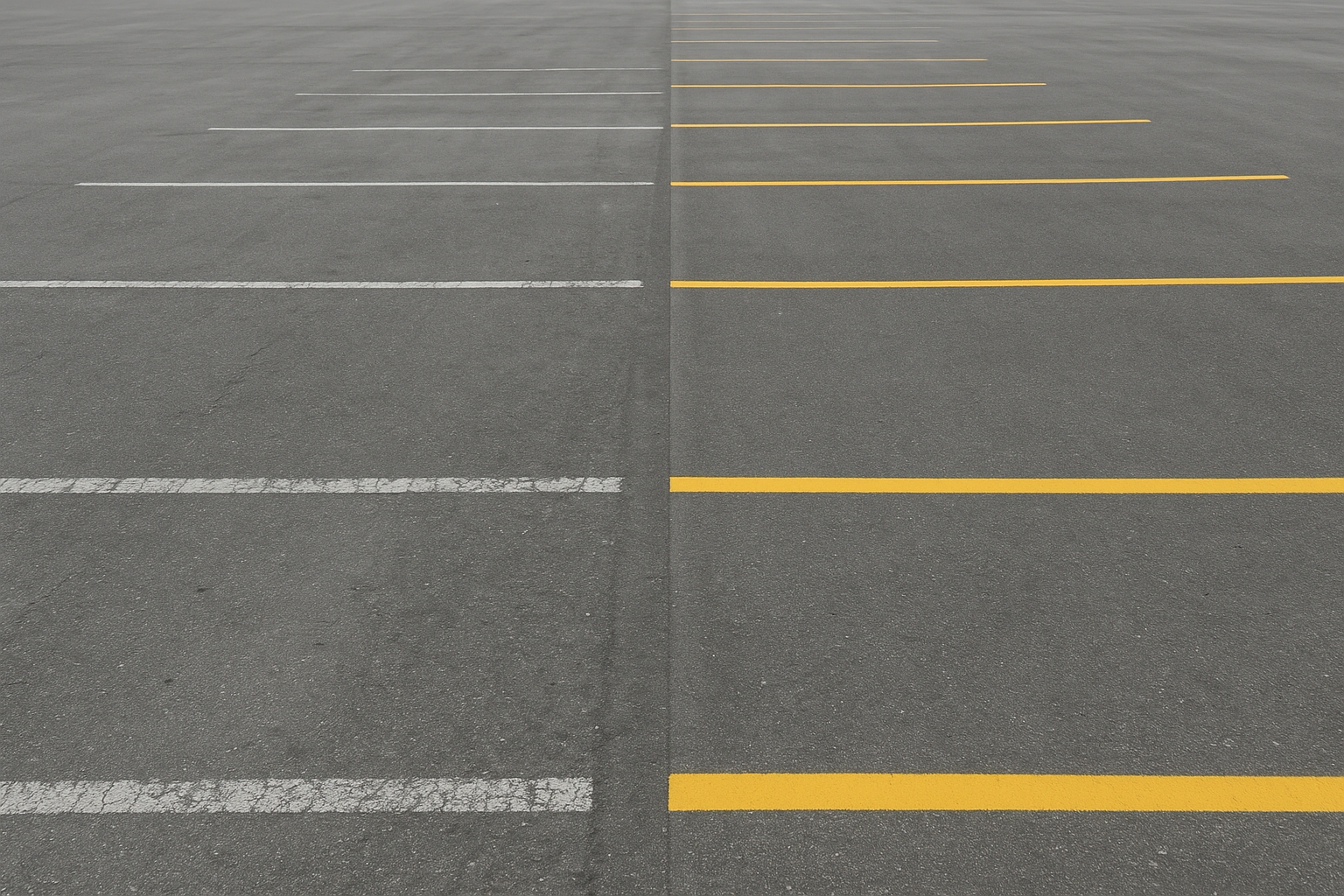
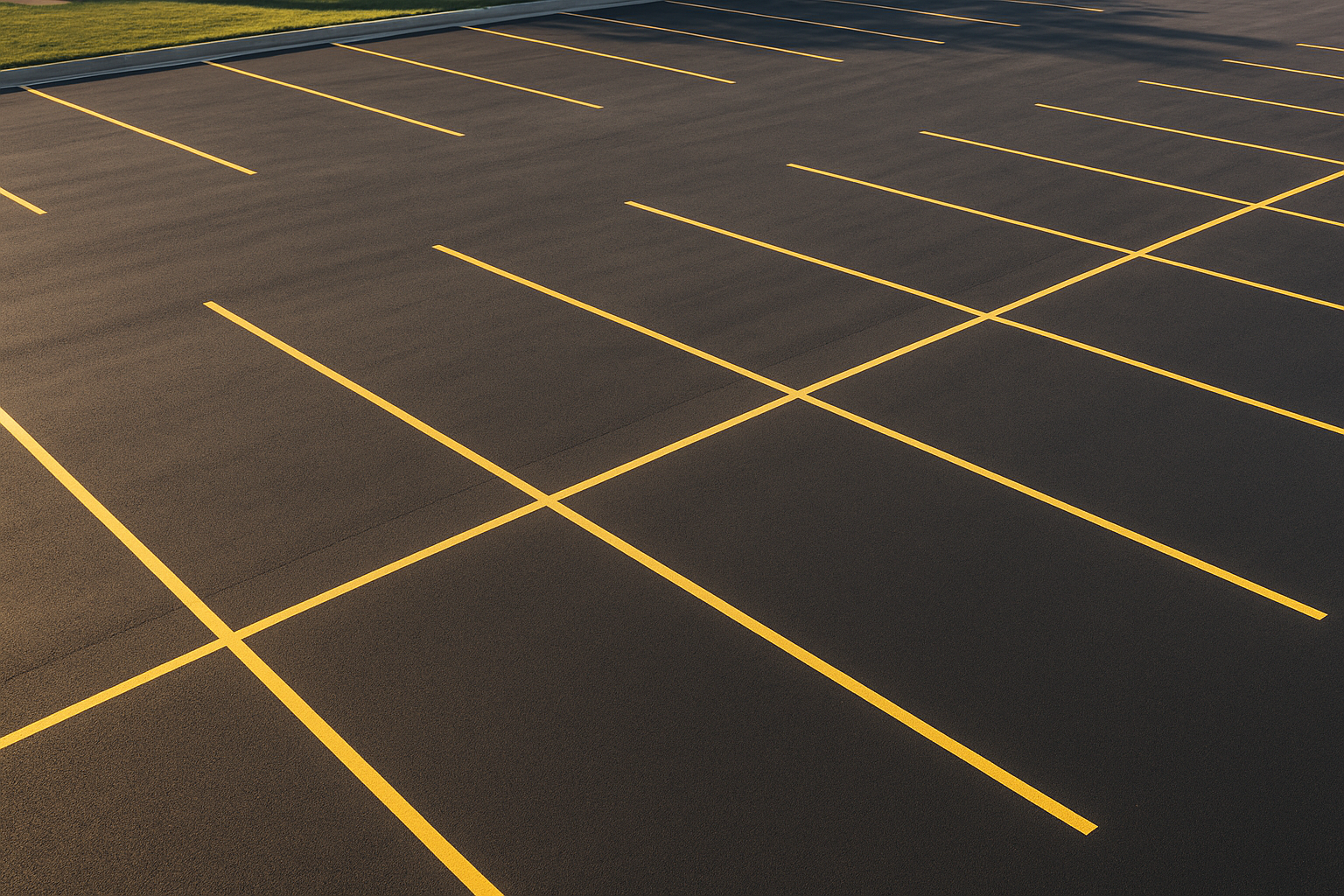
A clear before-and-after comparison highlights exactly why timely parking lot line repainting matters.
Frequently Asked Questions About Parking Lot Line Repainting
What does parking lot line repainting typically include?
Parking lot line repainting typically includes restriping faded parking stalls, refreshing directional arrows, and repainting ADA-compliant handicap symbols. These services restore visibility, improve traffic flow, and help properties stay code-compliant in one visit.
How often should a parking lot be restriped?
Most commercial parking lots need restriping every 18 to 24 months, though high-traffic lots may fade sooner. Climate, sun exposure, and traffic volume all affect how long painted lines stay visible.
Why does parking lot paint fade so quickly in hot climates?
Intense UV exposure, summer heat, and heavy vehicle traffic accelerate wear on painted lines throughout hot regions. Consequently, lots in warmer climates often need more frequent touch-ups than properties in milder areas.
How much does parking lot line repainting cost?
Pricing typically depends on lot size, layout complexity, and paint type, with most commercial projects ranging from a few hundred to several thousand dollars. A free on-site quote is the most accurate way to get exact pricing.
How long does a parking lot line repainting project take?
Small to mid-sized lots are often completed within a single day, while larger commercial properties may take two to three days. Weather and paint curing time can also affect the overall schedule.
What is the difference between parking lot striping and repainting?
Striping usually refers to creating brand-new line layouts on fresh asphalt, while repainting restores existing faded lines to their original layout. Both processes use similar equipment and paint, but repainting focuses on maintaining an established design.
Do parking lots need to be ADA compliant?
Yes, most commercial and public parking lots must meet ADA accessibility standards, including properly sized and marked accessible stalls. Non-compliant lots can face fines and accessibility complaints, so regular inspections matter.
What paint is best for parking lot lines in hot climates?
Water-based traffic paint and durable acrylic formulas hold up well against heat and UV exposure. In particular, reflective or high-solids paints tend to last longer between repainting cycles.
Can fire lane markings be repainted along with parking lines?
Yes, fire lane marking is typically bundled with general parking lot line repainting since both use similar equipment and scheduling. Combining these services in one visit also reduces overall labor costs.
Does weather affect parking lot line repainting projects?
Dry, moderate weather is ideal for repainting because paint needs time to cure without rain or excessive humidity interfering. As a result, most professional crews schedule projects around clear forecasts.
Can new paint be applied directly over old, faded lines?
In most cases, yes, provided the surface is properly cleaned first; however, heavy paint buildup from years of layering may need grinding before a fresh coat is applied for a clean, flush finish.
Should schools and healthcare facilities prioritize line repainting?
Absolutely, since these properties see frequent pedestrian traffic and require clear, compliant markings for safety. Faded lines near drop-off zones or accessible entrances can create serious liability concerns.
Final Thoughts on Parking Lot Line Repainting
In summary, parking lot line repainting does far more than improve appearance. It protects accessibility compliance, supports fire safety requirements, and keeps traffic moving smoothly across busy commercial lots. Ultimately, scheduling parking lot line repainting before lines fade completely saves money and reduces liability over time. For properties throughout Texas and beyond, partnering with an experienced local team ensures every stall, symbol, and fire lane meets current standards — so you never have to wonder whether your lot is safe or compliant again.