Residential parking lot striping is quickly becoming a top priority for homeowners associations, apartment complexes, gated communities, and condominium properties across North Texas — and for good reason. Faded or missing lines create confusion, wasted space, and real safety hazards for residents, visitors, and even emergency crews. As a result, more property managers are turning to professional striping companies to restore crisp, durable pavement markings before small problems turn into costly liabilities.
In fact, according to industry pavement studies, standard traffic paint on asphalt begins visibly fading within 18 to 24 months under heavy Texas sun exposure. Therefore, regular restriping isn’t just a cosmetic choice — it’s a maintenance necessity for any shared parking area. Below, you’ll find the most complete guide available anywhere on residential parking lot striping, covering everything from process and pricing to ADA compliance, paint selection, and the exact mistakes that shorten the life of a freshly painted lot.
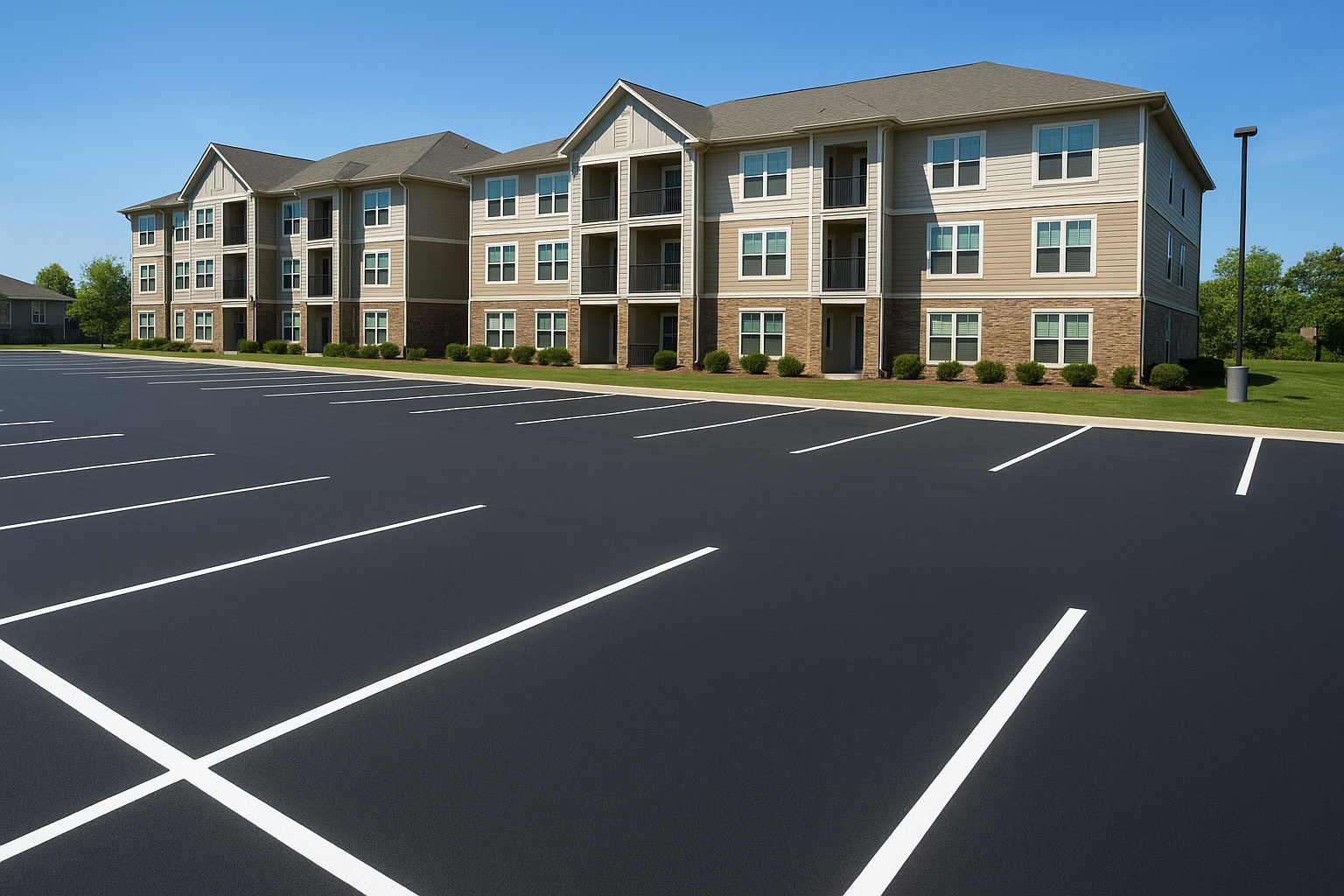
Freshly striped residential parking lot showing clean, well-defined stalls.
What Is Residential Parking Lot Striping?
Residential parking lot striping is the painting of parking stalls, drive lanes, ADA-accessible spaces, and directional markings on shared pavement at HOA communities, apartment complexes, condominiums, and gated neighborhoods. It organizes traffic flow and ensures each property meets local accessibility and fire code rules.
Specifically, this service covers everything from full lot layouts on new construction to simple restriping of faded lines on existing pavement. Because residential lots often serve dozens — sometimes hundreds — of households, clear markings reduce parking disputes, prevent blocked fire lanes, and improve overall curb appeal. Unlike a purely commercial retail lot, a residential lot has to balance resident convenience, guest parking, and strict accessibility rules all in one design.
Why Denton and Plano, TX Communities Need Professional Line Striping
Denton’s growing population has placed added pressure on shared parking spaces throughout HOA neighborhoods and multifamily properties. Consequently, lots that once had plenty of clearly marked stalls now struggle with overflow parking and unmarked zones during peak hours.
In particular, older communities built years ago often have striping that has faded past the point of usefulness. Similarly, newer developments sometimes need their first professional layout completed correctly from day one. Either way, a locally experienced crew familiar with North Texas weather patterns and city codes can deliver a longer-lasting result than a generic, out-of-state provider that treats every city page the same way.
Furthermore, well-maintained striping supports safer emergency vehicle access, which matters greatly for gated communities and senior living properties. As a result, many property managers now schedule residential parking lot striping on a recurring basis rather than waiting for resident complaints to pile up.
Types of Residential Properties That Need Parking Lot Striping
Not every residential property has identical striping needs. Below are the property types that most commonly require professional line striping services:
- HOA neighborhoods: Shared guest lots and clubhouse parking areas that need clear stall boundaries.
- Apartment complexes: High-turnover lots with assigned, reserved, and visitor stalls requiring frequent maintenance.
- Gated communities: Properties where fire lane access and controlled traffic flow are especially critical.
- Condominium associations: Compact lots where every square foot of parking capacity counts.
- Senior living communities: Properties needing extra ADA stalls and slower, clearly marked drive lanes.
- Townhome developments: Mixed private-and-shared lots that require careful boundary marking.
Key Benefits of Residential Parking Lot Striping Services
Above all, professional striping delivers measurable improvements to safety, organization, and property value. Consider the following benefits:
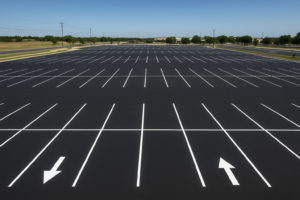
- Improved traffic flow through clearly marked drive lanes and directional arrows.
- Maximized parking capacity by optimizing stall placement within existing space — see this breakdown of how striping maximizes parking capacity for a deeper look.
- Reduced liability through ADA-compliant accessible stalls and signage.
- Enhanced curb appeal that supports property values and resident satisfaction.
- Faster emergency response thanks to properly marked fire lanes and directional flow — learn more in this traffic flow optimization guide.
Signs Your Residential Parking Lot Needs Restriping
Wondering whether your community is overdue? In particular, watch for these warning signs before residents start complaining:
- Stall lines that have faded to a light gray or disappeared entirely.
- Residents parking diagonally or outside marked boundaries because lines are unclear.
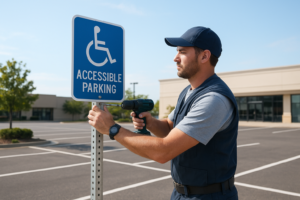
- ADA symbols or access aisles that are cracked, chipped, or barely visible.
- Fire lane lettering that has worn away, risking code violations.
- Frequent parking disputes or complaints submitted to the HOA board.
The Residential Parking Lot Striping Process
Understanding the process helps property managers set realistic timelines. Below is the typical sequence a professional striping crew follows:
- Assess the lot: A technician inspects pavement condition, measures the area, and notes ADA and fire lane needs before any paint is applied.
- Clean the surface: The lot is swept and power washed thoroughly so the new paint adheres properly and lasts far longer.
- Layout the design: Stall widths, drive aisles, and accessible spaces are mapped using laser-guided tools for precise, code-compliant spacing.
- Apply traffic paint: Fast-drying, commercial-grade traffic paint is applied in clean, consistent lines using calibrated striping machines.
- Add signage and cure time: Fire lane lettering and handicap symbols are finished, and the lot cures fully before reopening to traffic.
For a closer look at how local crews handle these projects, this professional parking lot striping guide for Denton, TX breaks down each phase in more detail. In addition, this asphalt striping guide to parking lot line marking explains how surface condition affects the finished result.

A striping machine applies precise, durable traffic paint to a residential lot.
Paint and Material Options for Residential Line Striping
Not all striping paint performs the same under Texas heat. Consequently, choosing the right material matters just as much as the layout itself.
- Water-based traffic paint: The most common choice for residential lots, offering good durability at a lower cost.
- Fast-drying acrylic paint: Cures quickly, which minimizes lot closure time — ideal for busy apartment communities.
- Epoxy-based paint: More expensive, but offers exceptional longevity for high-traffic drive lanes.
- Thermoplastic markings: Rarely needed for residential lots but sometimes used for high-durability crosswalks or speed bumps.
ADA Compliance and Fire Lane Marking for Residential Properties
ADA compliance means meeting accessibility standards set by the Americans with Disabilities Act, which requires properly sized accessible stalls, access aisles, and signage in shared parking areas. Most residential communities with common-use lots fall under these requirements. For specific stall dimensions and slope tolerances, the U.S. Access Board’s ADA accessibility guidelines provide the exact technical standards inspectors reference.
In addition, fire lane marking designates areas that must remain clear for emergency vehicle access, typically using red curb paint and lettering per local fire code. Municipal fire departments, including those serving Denton and Plano, often inspect these markings during routine property reviews. Consequently, keeping fire lanes clearly painted helps avoid citations and, more importantly, keeps emergency access unobstructed when it matters most.
For general background on how pavement markings function across different property types, the Wikipedia overview on road surface marking offers useful context on how markings are standardized nationwide.
How Often Should You Restripe a Residential Parking Lot?
Generally speaking, most residential lots need restriping every 18 to 24 months. However, the right interval depends heavily on property type and traffic volume:
- HOA guest lots: Typically every 24 months due to lighter, less frequent traffic.
- Apartment complexes: Often every 12 to 18 months because of constant vehicle turnover.
- Gated communities: Every 18 to 24 months, with fire lanes checked more frequently.
- Senior living properties: Every 12 to 18 months to keep ADA stalls highly visible.
How Much Does Residential Parking Lot Striping Cost?
Cost depends primarily on lot size, the number of stalls, and whether ADA or fire lane work is included. Generally speaking, smaller HOA lots cost less than large multifamily complexes with hundreds of spaces.
Similarly, restriping existing lines usually costs less than a full new layout, since less measuring and planning time is required. For an accurate estimate, property managers can review pricing factors through this parking lot striping services overview or request a free, no-obligation quote directly.
Choosing a Reliable Residential Parking Lot Striping Company
When selecting a contractor, look for a company with documented experience serving residential communities, not just commercial retail centers. Specifically, ask about paint quality, ADA knowledge, and turnaround time for the size of your lot.
Stripespls.com, based in Texas, specializes in professional residential parking lot striping, ADA compliance solutions, and fire lane marking for both commercial and residential properties throughout Denton and Plano. The company works with HOAs, apartment communities, schools, and healthcare facilities, tailoring each project to the property’s specific layout and compliance needs. Property owners can compare local options further through this breakdown of top Denton striping providers or this complete striping company guide.
Ultimately, choosing a locally operated team familiar with North Texas pavement conditions tends to produce longer-lasting results than hiring an out-of-area provider unfamiliar with regional climate demands.
Common Mistakes to Avoid When Restriping a Residential Lot
Even well-intentioned property managers sometimes make avoidable errors during a restriping project. For instance, skipping proper surface cleaning before painting often causes lines to peel within months.
Likewise, using inferior paint not rated for pavement use leads to premature fading, especially under intense Texas sun. Another common mistake is ignoring correct ADA stall dimensions, which can trigger compliance complaints from residents or inspectors. Finally, scheduling striping during rainy or extremely hot periods often results in uneven curing and shortened lifespan. Working with an experienced crew, such as those detailed in this Texas lot painting company overview, helps property managers avoid these pitfalls entirely.
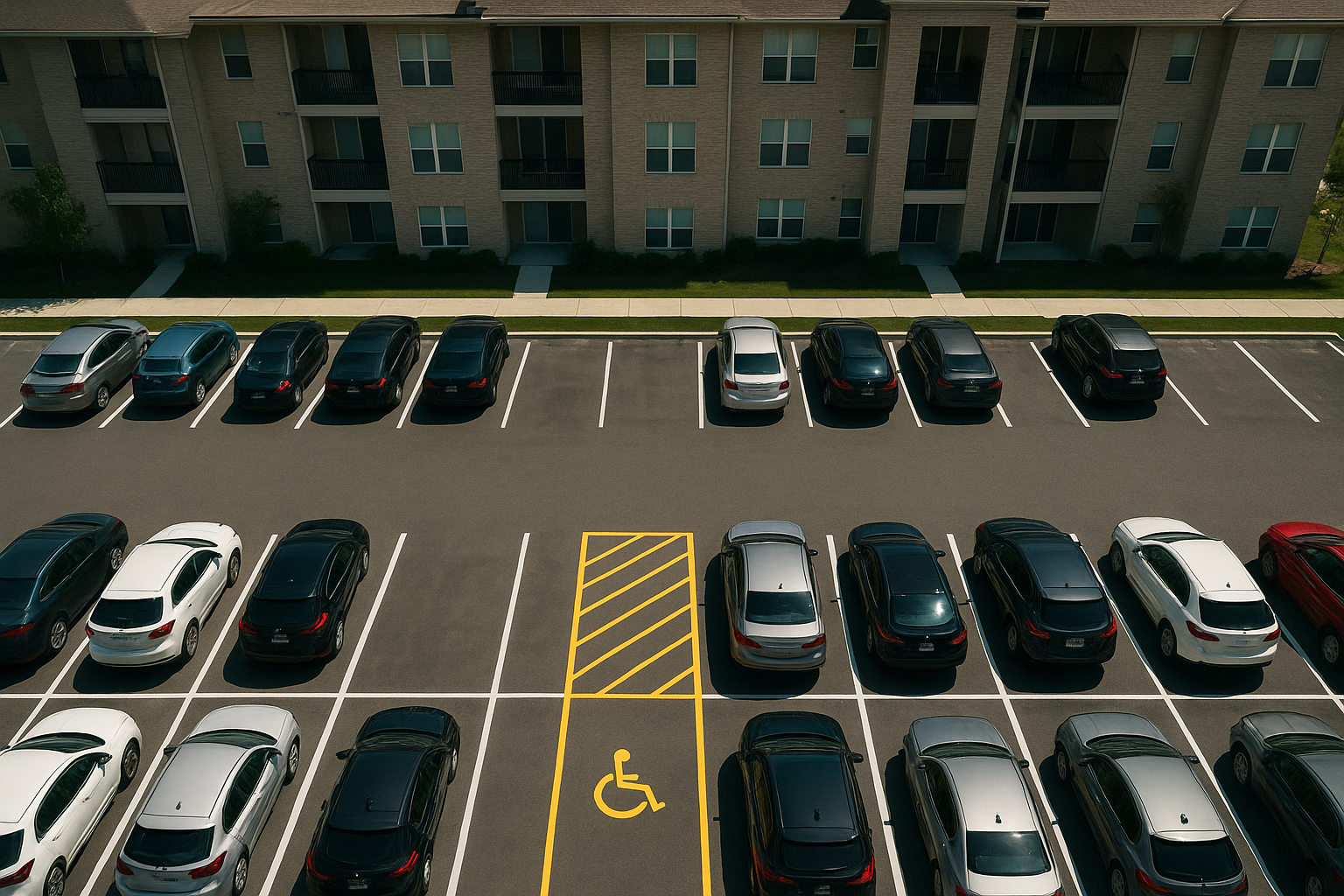
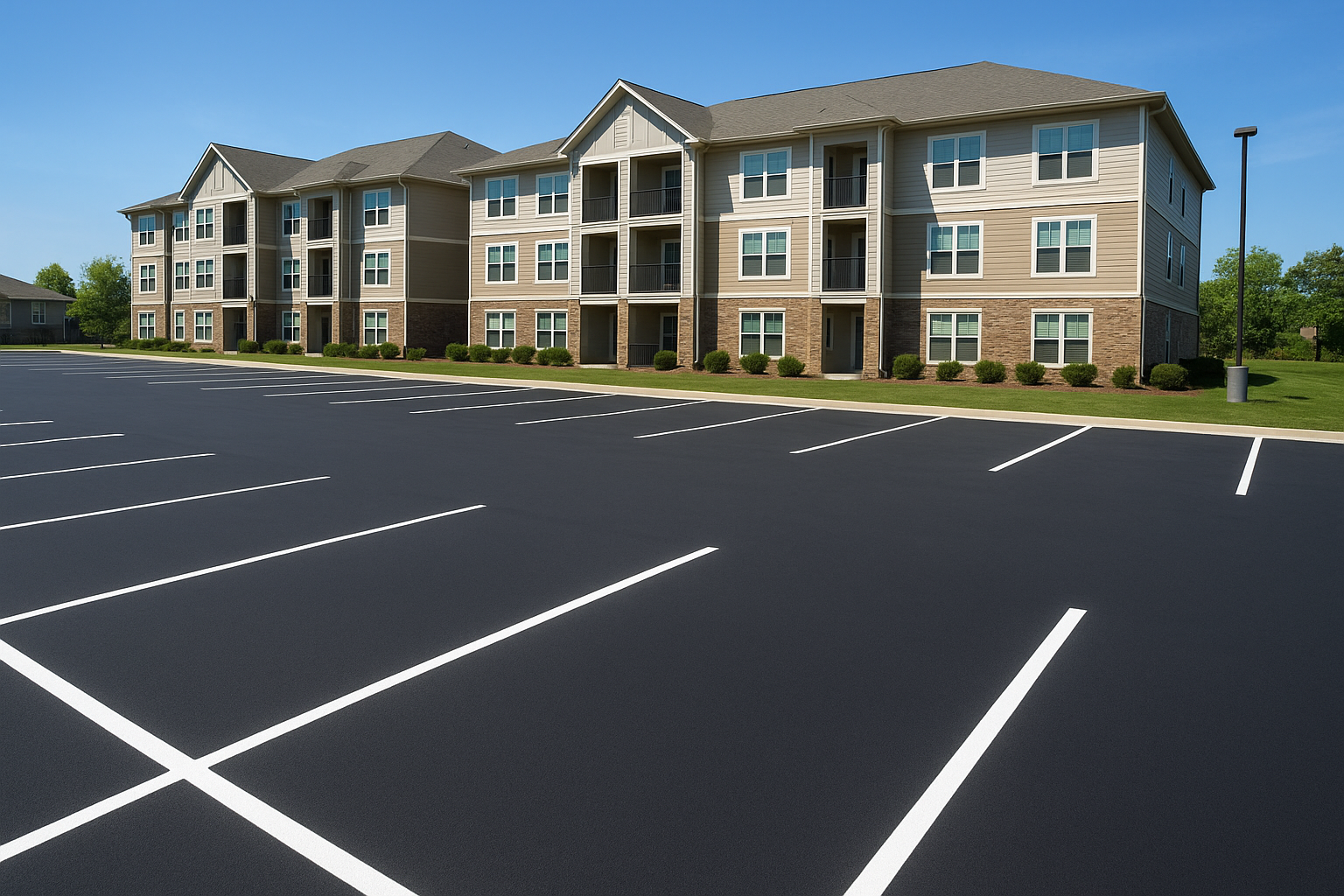
An aerial view highlights organized stalls and ADA-compliant markings after restriping.
Frequently Asked Questions About Residential Parking Lot Striping
What is residential parking lot striping?
Residential parking lot striping refers to professional line painting services for HOA lots, apartment complexes, and gated communities. It includes parking stalls, ADA stalls, curbs, and directional markings designed to organize traffic and maximize space, and it’s especially common in growing areas like Denton and Plano, Texas.
How often should a residential parking lot be restriped?
Most residential lots need restriping every 18 to 24 months, though heavy sun exposure and traffic can shorten that window. A simple visual fade test is the easiest way to check if lines need refreshing.
Why do HOAs need professional line striping instead of DIY paint?
Professional striping uses commercial-grade traffic paint and precise layout tools that DIY kits simply cannot match. This ensures durability, straight lines, and compliance with local code requirements.
How much does residential parking lot striping cost?
Pricing typically depends on lot size, number of stalls, and whether ADA or fire lane markings are needed. Most residential projects range from a few hundred to a few thousand dollars, with exact costs confirmed through a free on-site quote.
What is the difference between commercial and residential parking lot striping?
Commercial striping often involves larger lots with heavier traffic patterns, while residential striping focuses on HOA communities, apartment complexes, and smaller shared lots. Both, however, require the same attention to compliance and durability.
Is ADA compliant striping required for residential communities?
Yes, most shared residential parking areas serving the public or common amenities must meet ADA accessibility guidelines. This includes properly sized accessible stalls, access aisles, and signage.
How long does it take to restripe a residential parking lot?
Small to mid-sized residential lots are usually completed within a single day. Larger communities with multiple lots, in contrast, may require two to three days depending on drying time.
What paint is used for residential parking lot striping?
Most contractors use water-based traffic paint or fast-drying acrylic paint rated for pavement use. These products resist fading, weathering, and heavy vehicle traffic far better than standard exterior paint.
Can fire lanes be added during a residential restriping project?
Yes, fire lane marking is commonly added alongside standard striping to meet local fire code requirements. Red curb paint and lettering are typically used to designate these zones clearly.
What common mistakes should property managers avoid with parking lot striping?
Common mistakes include skipping surface cleaning before painting, using low-grade paint, and ignoring ADA stall dimensions. These errors shorten the lifespan of markings and can create compliance issues.
Does weather affect residential parking lot striping schedules?
Yes, striping requires dry pavement and moderate temperatures for paint to cure properly. Most Denton, TX projects are scheduled outside of extreme heat or rain to ensure a clean, lasting finish.
What size crew and equipment are needed for a residential restriping project?
Most residential jobs only require a small crew of two to four technicians along with a striping machine, measuring wheels, and stencils. Larger complexes may add a second crew to finish within one day.
Can residential parking lot striping increase property value?
Absolutely. Sharp, well-organized striping improves first impressions for prospective buyers and renters, which in turn supports higher perceived property value and stronger resident retention over time.
Who provides residential parking lot striping in Denton and Plano, TX?
Local companies specializing in striping, ADA compliance, and fire lane marking serve the Denton and Plano areas. Property owners can request a free quote directly through a company website, such as stripespls.com, to compare services and pricing.
Final Thoughts on Residential Parking Lot Striping
In summary, residential parking lot striping plays a bigger role in community safety and organization than many property managers realize. From ADA compliance to fire lane visibility, clear pavement markings protect residents while supporting smoother day-to-day traffic flow across HOA neighborhoods, apartment complexes, and gated communities alike.
Therefore, whether your community needs a full new layout or a simple restriping refresh, working with an experienced local crew makes a measurable difference in durability and code compliance. Property owners throughout Denton and Plano can request a free quote or visit stripespls.com to get started on a cleaner, safer, and more organized parking lot today.