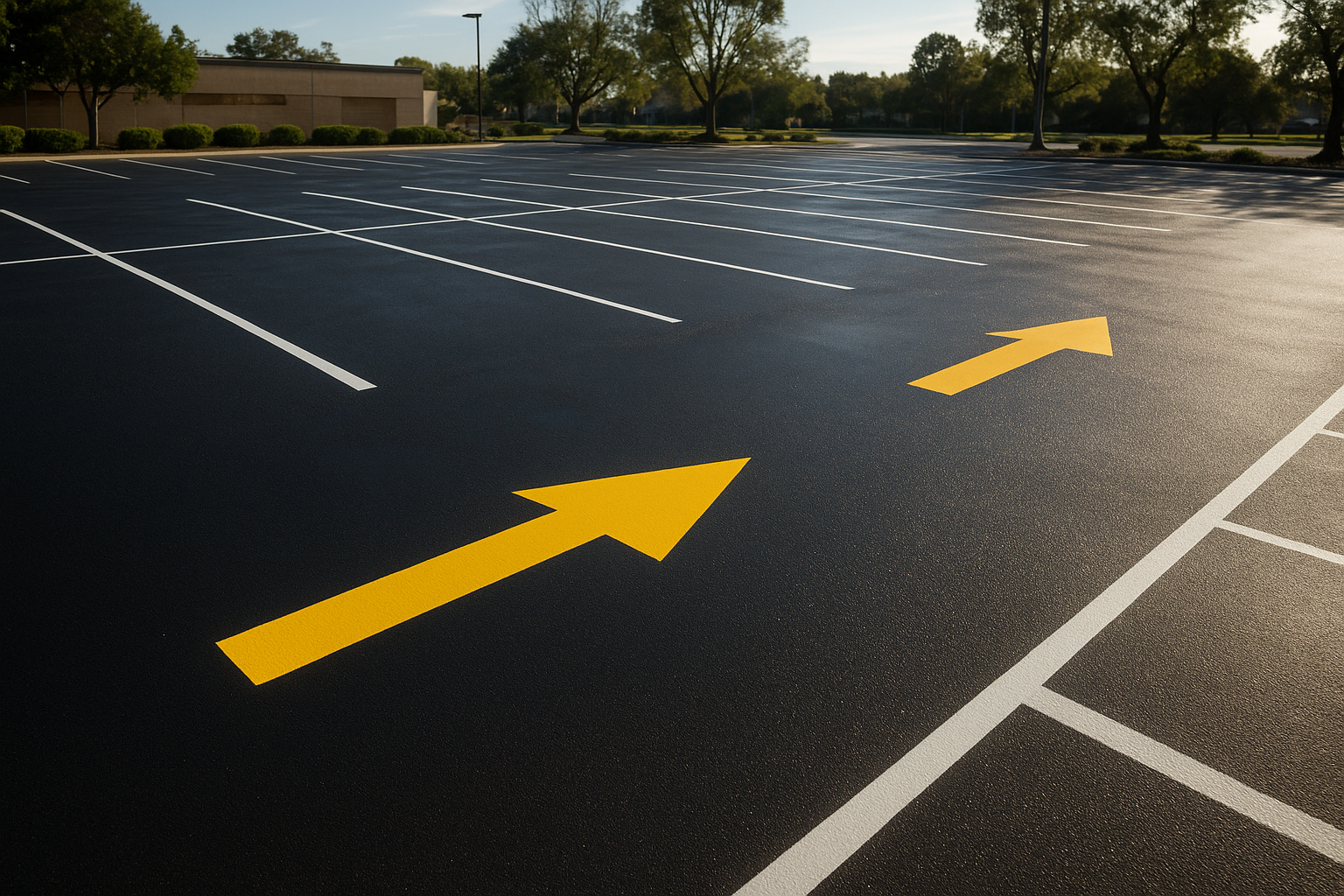
Professional lot restriping transforms a faded, confusing parking lot into a safe, organized space that meets today’s accessibility and fire safety codes. As pavement ages, sun exposure and heavy traffic wear down painted lines until stalls, arrows, and ADA symbols become nearly invisible. For property owners across Denton and Plano, TX, this isn’t just a cosmetic issue — it’s a liability risk. In this guide, you’ll learn what professional lot restriping involves, how the process works, and how to choose a reliable striping company that gets the job done right the first time.
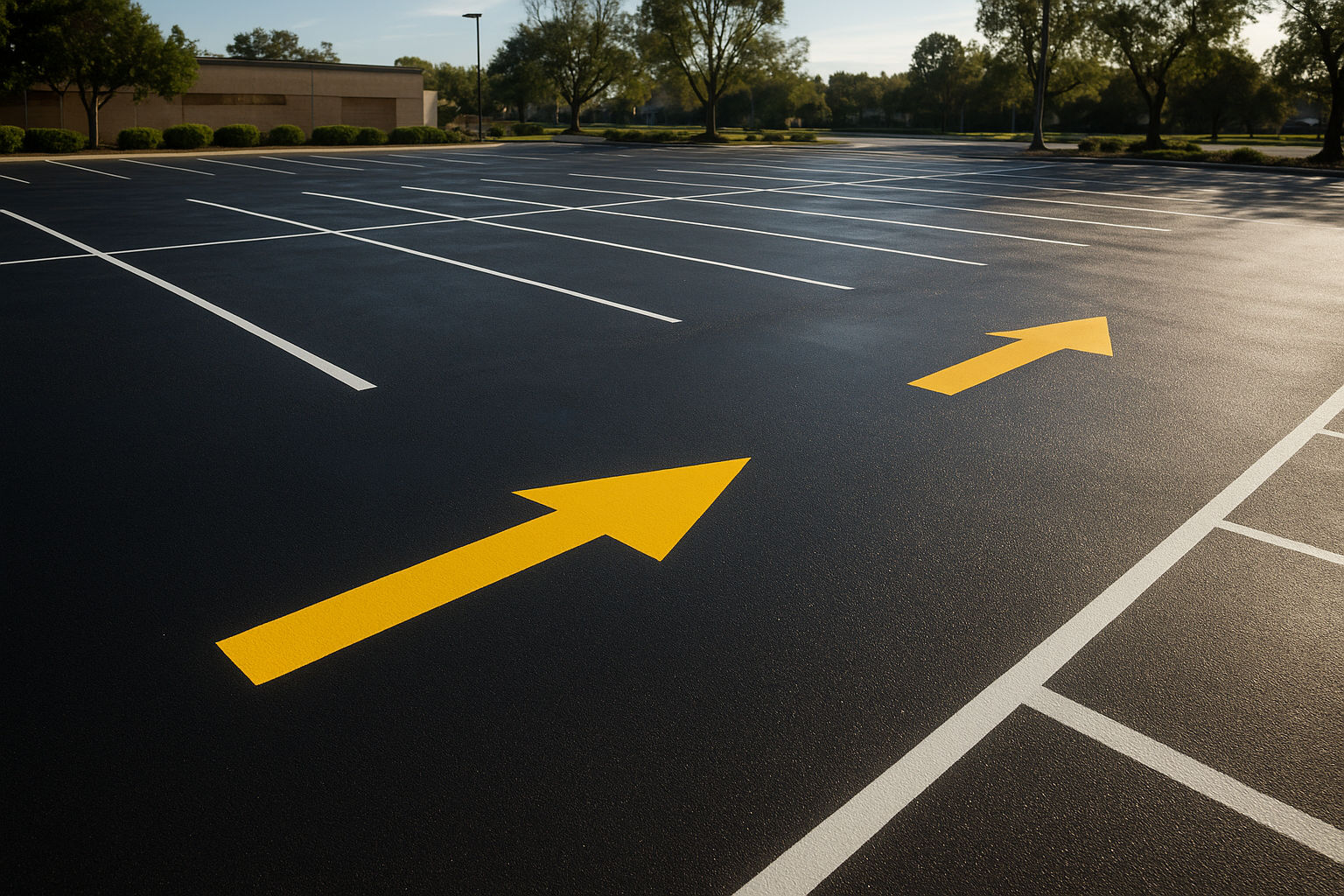
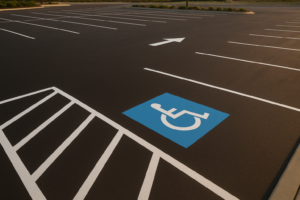
Fresh, bright lines are one of the clearest signs of quality professional lot restriping.
What Is Professional Lot Restriping?
Professional lot restriping is the practice of repainting parking lot lines, ADA symbols, directional arrows, and fire lane markings using commercial-grade paint and precise layout tools. Unlike a quick do-it-yourself touch-up, it follows local code requirements and manufacturer specifications for line width, color, and reflectivity. As a result, the finished lot looks new, functions efficiently, and passes municipal inspection.
Restriping differs from a first-time layout because the crew often has to remove or paint over old, mismatched lines before laying out a cleaner design. Consequently, an experienced team measures twice, checks current ADA and fire code standards, and confirms the layout maximizes usable parking spaces before a single drop of paint goes down.
Why Lot Line Striping Matters for Your Business
Faded lines do more than look worn. In fact, unclear parking lot striping creates confusion for drivers, slows traffic flow, and increases the odds of fender-benders. According to the National Safety Council, parking facilities account for a notable share of reported vehicle crashes each year, and many of these incidents trace back to poor visibility of lane markings and stalls.
Beyond safety, first impressions matter. A property with crisp, professionally painted lines signals that management cares about maintenance and detail. In contrast, faded or crooked lines can quietly damage a business’s reputation before a single customer walks through the door. Similarly, well-marked ADA spaces and fire lanes reduce legal exposure, since both are governed by federal and local codes.
How the Professional Lot Restriping Process Works
Understanding the workflow helps property owners know what to expect and how to evaluate a contractor’s quality. Below is the typical sequence a qualified crew follows.
- Initial Site Assessment and Measurement: A technician walks the entire lot, measures stall dimensions, and notes existing traffic patterns before drawing up a fresh layout plan.
- Pavement Cleaning and Preparation: Crews sweep away debris, remove loose paint, and pressure wash oil stains so new markings bond properly to the asphalt surface.
- Layout and Chalk-Lining: Using laser-guided tools and measuring wheels, the team chalks precise lines for every stall, arrow, and ADA symbol before any paint is applied.
- Applying Commercial-Grade Striping Paint: Technicians apply fast-drying, reflective traffic paint in code-compliant colors and widths, ensuring lines remain visible day and night for years.
- Adding ADA Symbols, Arrows, and Fire Lane Markings: Handicap symbols, directional arrows, curb numbers, and red fire lane markings are added last to meet accessibility and safety code requirements.
- Final Inspection and Cure Time: The crew reviews every line against the layout plan, then allows paint to cure fully before reopening the lot to regular traffic.
For a deeper look at this workflow, property managers can review professional restriping services that follow this exact sequence on commercial properties throughout North Texas.
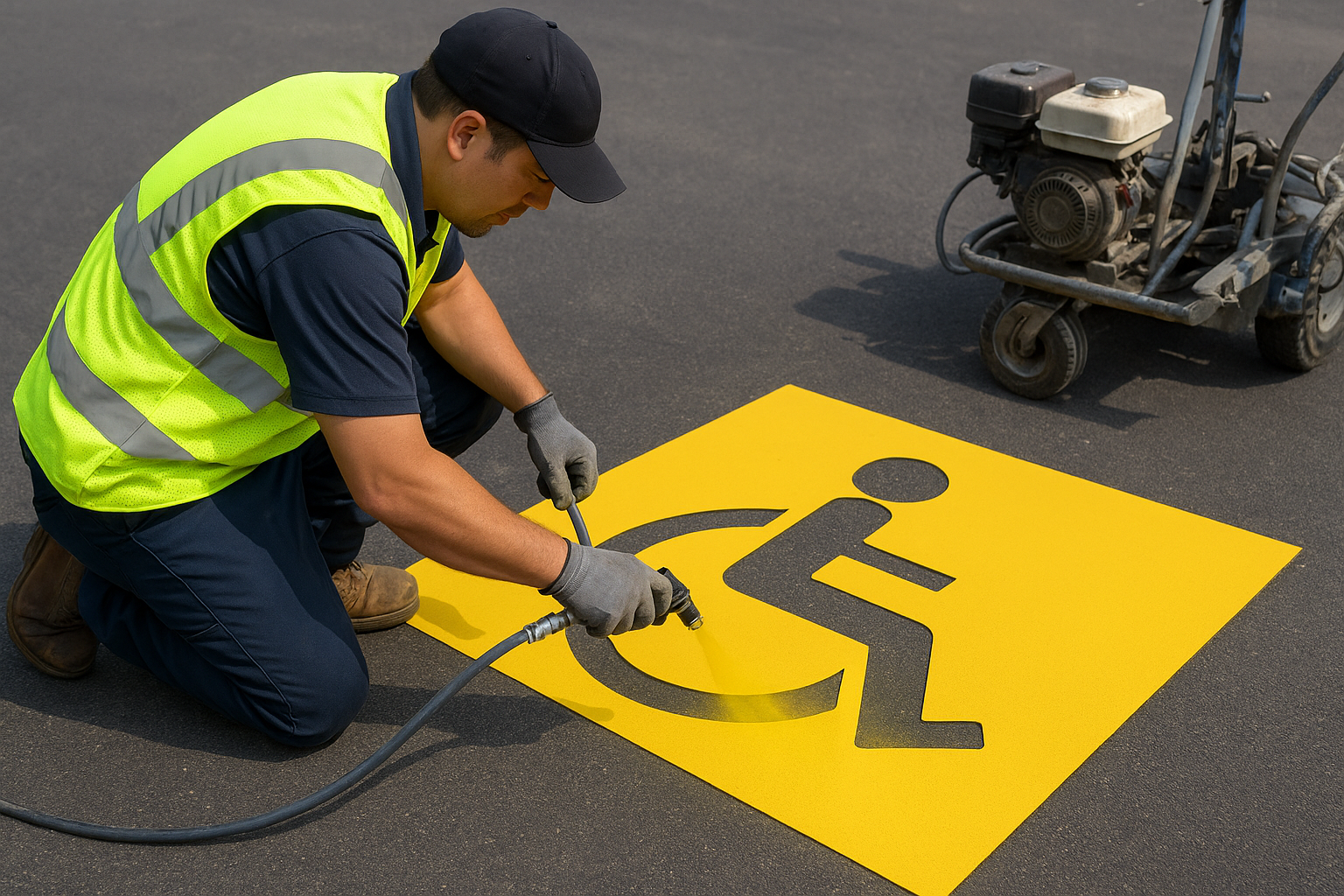
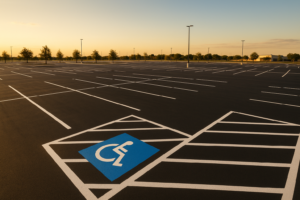
ADA symbols and stall lines are painted using stencils for consistent, code-compliant results.
Signs Your Parking Lot Needs Restriping
Not sure whether it’s time to schedule work? Here are the most common indicators property owners notice first.
- Stall lines are faded, chalky, or barely visible from a driver’s seat.
- Drivers frequently park crooked or straddle two spaces.
- ADA symbols and handicap stall borders have worn away.
- Fire lane markings are patchy, making enforcement difficult.
- The lot was recently repaved or sealcoated and needs a first layout.
If any of these apply, it’s worth requesting an inspection sooner rather than later. Otherwise, faded markings can quietly turn into a liability issue during a fire marshal visit or accessibility audit.
ADA Compliance and Fire Lane Marking Requirements
ADA-compliant striping is defined by specific stall widths, van-accessible aisle dimensions, and signage requirements outlined by the Americans with Disabilities Act. Properties that fail to meet these standards risk complaints, fines, and reduced access for visitors who need accessible parking.
Fire lanes, meanwhile, are typically marked in red paint with clear “No Parking Fire Lane” lettering so emergency vehicles have unobstructed access at all times. Line colors, widths, and symbol placement generally follow standards set by the Manual on Uniform Traffic Control Devices, though local fire marshals may add specific requirements. Property owners in Denton and Plano can request a free quote to confirm their lot meets current code before an inspection catches an issue.
How to Choose a Reliable Parking Lot Striping Company
Not every contractor delivers the same quality. Above all, look for a crew with local experience, proper insurance, and up-to-date knowledge of ADA and fire code standards. A detailed guide on what to look for in a reliable striping service can help property managers compare bids more confidently.
Furthermore, ask potential contractors about paint type, cure time, and whether they include layout consulting as part of the quote. Property managers throughout Denton, Plano, and the wider DFW region can also review guidance on who to contact for parking lot striping in DFW before committing to a vendor. A company that answers these questions clearly is usually one worth hiring.
What Does Professional Lot Restriping Cost?
Pricing varies based on lot size, number of stalls, and how many ADA symbols or fire lane sections need marking. Small lots may cost a few hundred dollars, while large retail or municipal properties can run into the thousands. In addition, paint type — standard water-based versus longer-lasting epoxy — affects the total price.
Because every property is different, the most reliable way to budget is an on-site measurement rather than a rough online estimate. As noted on stripespls.com, requesting a free, no-obligation quote is typically the fastest way to get an accurate number for a specific lot.
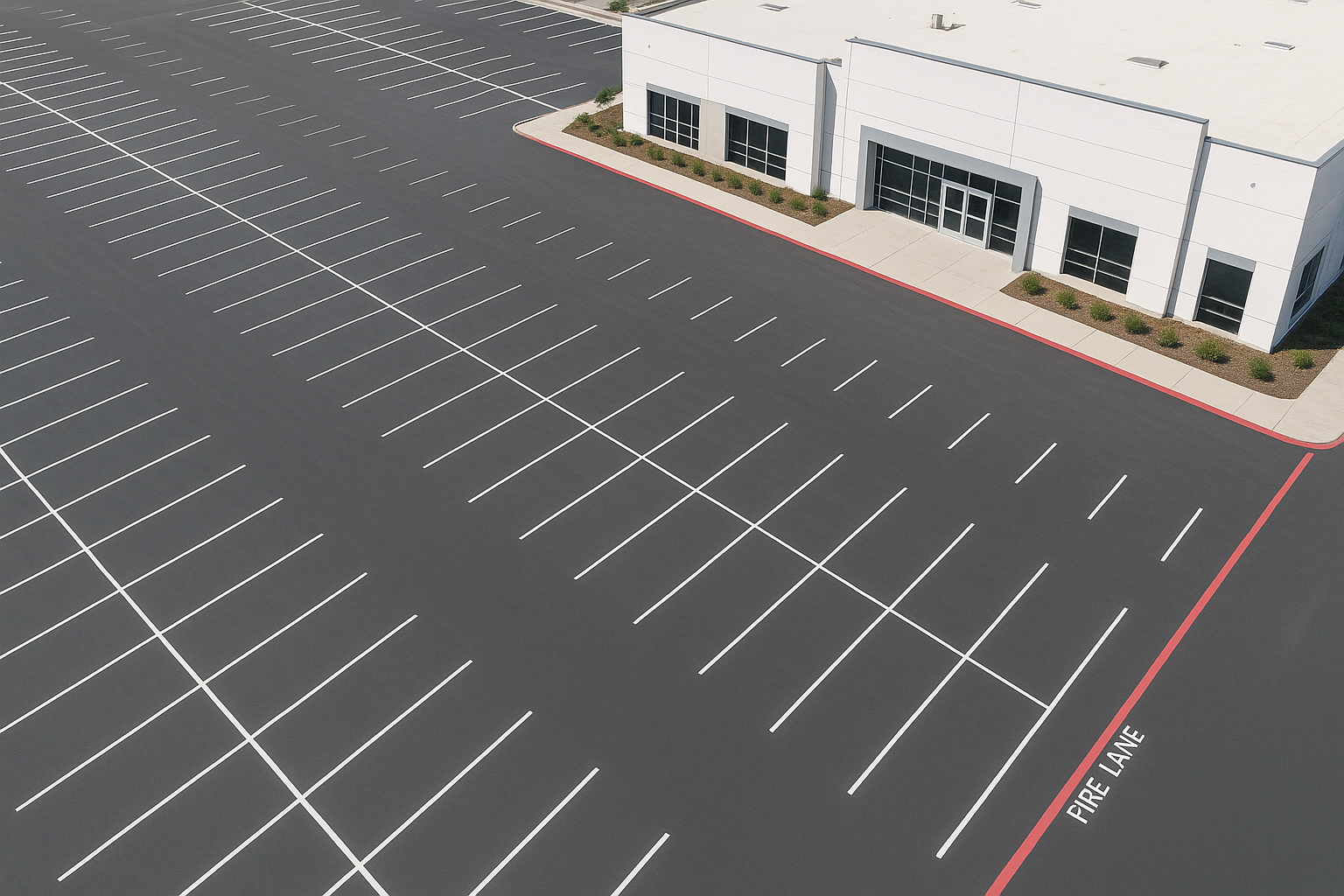
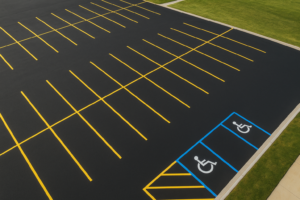
A completed project shows how professional lot restriping improves organization across an entire property.
Frequently Asked Questions About Professional Lot Restriping
What is professional lot restriping?
Professional lot restriping is the process of repainting faded or damaged parking lot lines, ADA symbols, arrows, and fire lane markings using commercial-grade paint and precise layout tools. It restores safety, organization, and code compliance to a parking facility.
How often should a parking lot be restriped?
Most commercial parking lots need restriping every 18 to 24 months, though high-traffic properties may require it annually. Sun exposure, heavy vehicle traffic, and weather all speed up fading.
How much does professional lot restriping cost?
Pricing typically ranges from a few hundred dollars for small lots to several thousand for large commercial properties, depending on square footage and required symbols. Getting a free on-site quote is the most accurate way to budget.
What paint is used for parking lot striping?
Most contractors use fast-drying, water-based traffic paint or durable epoxy paint designed to withstand vehicle traffic and weather exposure. Reflective additives are sometimes included to improve nighttime visibility.
How long does it take to restripe a parking lot?
A standard commercial lot can usually be restriped in a single day, though larger properties may take two to three days. Cure time before reopening the lot typically adds a few extra hours.
Why is ADA-compliant striping important?
ADA-compliant striping ensures accessible parking spaces meet required dimensions, signage, and van-accessible aisle widths mandated by federal law. Non-compliance can lead to fines, legal complaints, and reduced access for disabled visitors.
What is a fire lane and why does it need to be marked?
A fire lane is a designated roadway kept clear for emergency vehicle access, usually marked with red paint and “No Parking Fire Lane” lettering. Local fire codes require these lanes to remain visible and unobstructed at all times.
Can you restripe a parking lot without repaving it?
Yes, restriping does not require repaving as long as the underlying asphalt or concrete is structurally sound. Cracks and potholes should be repaired first so new lines have a stable, even surface.
What’s the difference between striping and restriping?
Striping refers to painting lines on a brand-new or freshly paved lot for the first time, while restriping means repainting existing markings that have faded. Professional lot restriping often includes removing old lines that no longer match the desired layout.
What time of year is best for lot restriping?
Warm, dry weather with low humidity offers the best paint adhesion and curing conditions, making spring through early fall ideal in North Texas. Extreme heat or rain can delay projects or affect paint quality.
How do I know if my parking lot needs restriping?
Watch for faded or barely visible lines, confused traffic patterns, customer complaints, or ADA symbols that are hard to see. If stalls are difficult to distinguish from a distance, it is time to schedule restriping.
What mistakes should I avoid when hiring a striping company?
Avoid contractors who skip pavement cleaning, use low-grade paint, or lack knowledge of current ADA and fire code requirements. Always ask for references, proof of insurance, and a written scope of work before signing.
Do I need a permit for parking lot restriping?
Most routine restriping projects do not require a permit since the layout stays the same. However, changing the number of stalls, ADA spaces, or fire lanes may require municipal approval, so it’s worth checking local requirements.
How long does new striping last?
Quality commercial paint generally lasts 12 to 24 months before noticeable fading begins, depending on traffic volume and sun exposure. Epoxy-based paints tend to last longer than standard water-based options.
Who should I contact for parking lot striping in DFW?
Property owners in Denton, Plano, and the greater DFW area can contact a local, experienced striping company for a free on-site quote and code-compliant layout plan. Choosing a locally operated crew ensures familiarity with regional fire codes and parking lot accessibility requirements.
Final Thoughts on Professional Lot Restriping
In summary, professional lot restriping is more than a fresh coat of paint — it’s a practical way to improve safety, meet ADA and fire code requirements, and present a well-maintained property to every visitor. From assessing the current layout to applying durable, reflective paint, each step in the process matters for long-term results. Property managers in Denton, Plano, and across DFW who notice faded lines, unclear traffic flow, or worn ADA symbols shouldn’t wait for a complaint or inspection to act. Instead, scheduling professional lot restriping now protects both drivers and the business behind the lot.