Quality pavement markings are the foundation of a parking lot or roadway that functions safely, meets legal requirements, and still looks sharp years after installation. Whether you manage a shopping center, hospital campus, warehouse yard, or municipal street, the way lines, symbols, and curb markings are applied determines how well drivers, pedestrians, and emergency responders move through your property. In this guide, we break down exactly what quality pavement markings look like in practice, the materials and standards that separate professional work from a rushed paint job, and the questions you should ask before hiring any striping contractor. Author: Stripes PLS. Last updated: 2026-07-27.
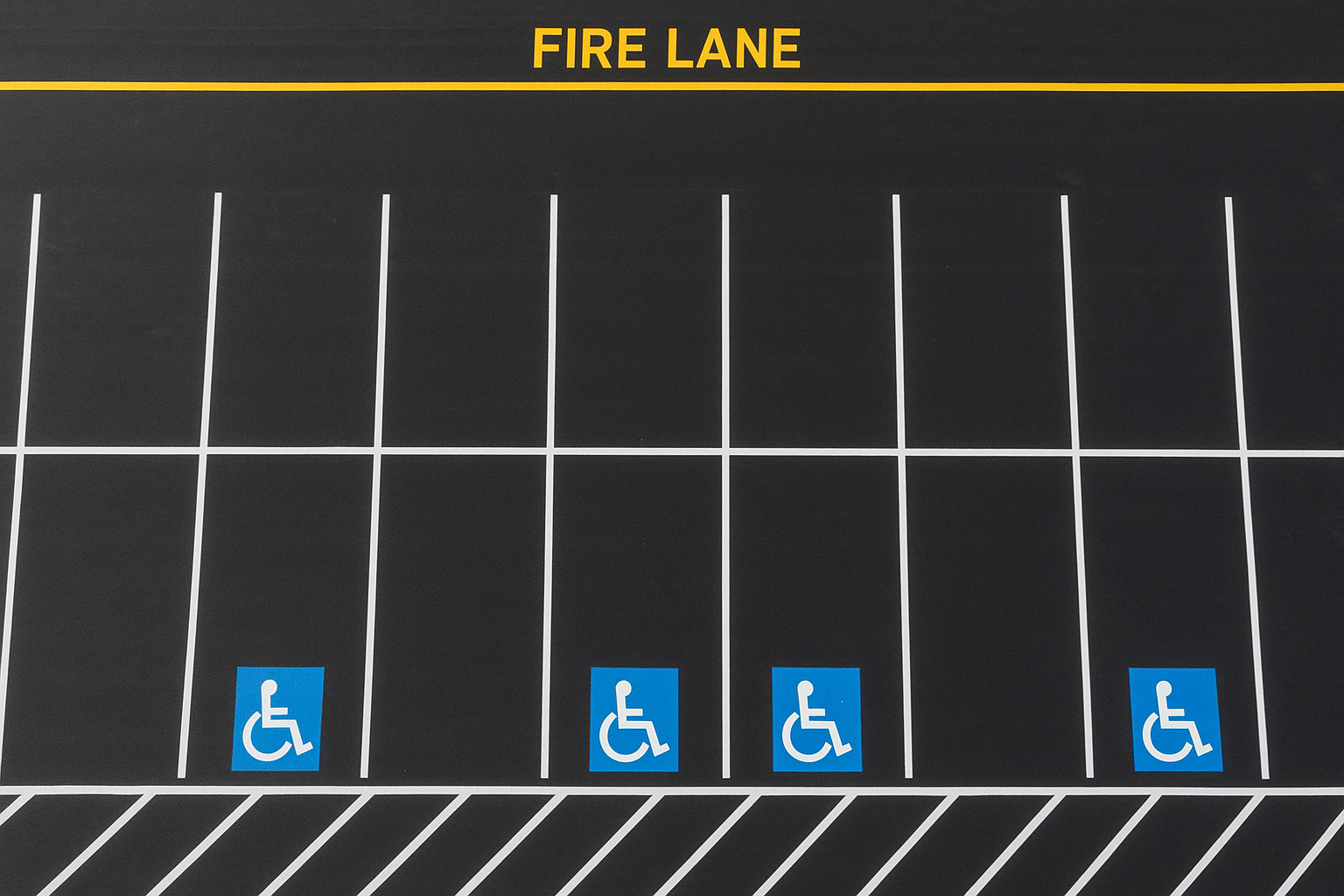
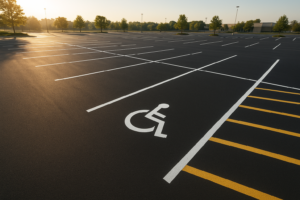
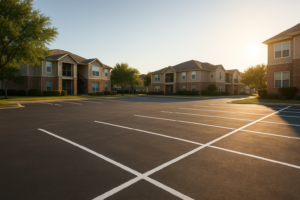
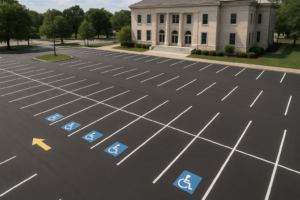
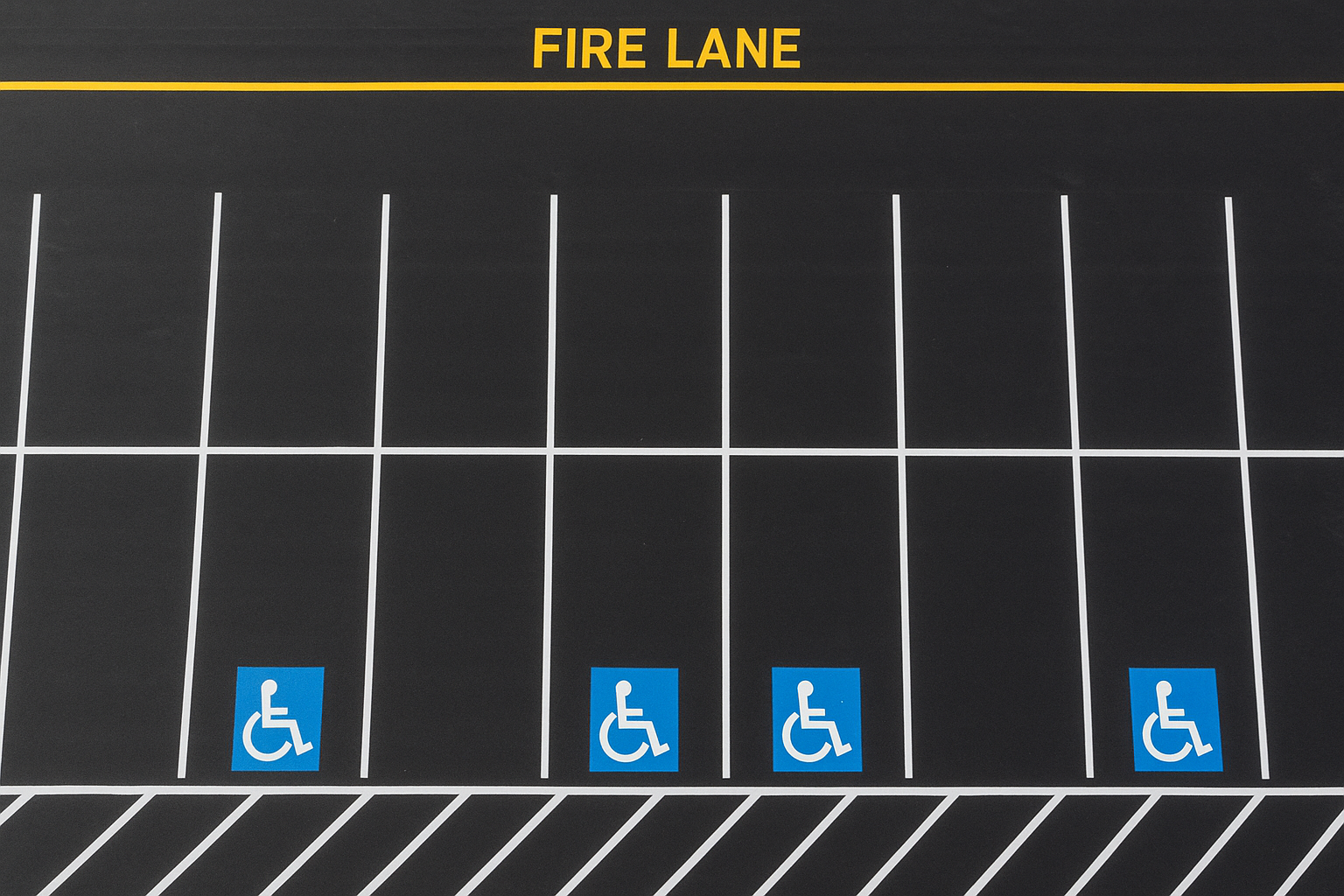
A well-striped commercial parking lot reflects quality pavement markings standards — crisp lines, ADA symbols, and clearly defined fire lanes.
What Do Quality Pavement Markings Actually Look Like?
In practical terms, quality pavement markings describe the full package of professional standards applied when striping a parking lot or roadway surface. Specifically, this includes material selection, layout accuracy, regulatory compliance, and long-term durability. In short, it is the difference between lines that fade within six months and markings that stay crisp and visible for two years or longer.
According to the Federal Highway Administration, pavement markings play a critical role in guiding drivers and reducing accidents on both public roadways and private lots. As a result, the quality of those markings is never just an aesthetic detail — it is a safety and liability issue that directly affects your bottom line.
Furthermore, the Manual on Uniform Traffic Control Devices (MUTCD) establishes the national standard for line widths, colors, and symbol placement that professional crews follow. A provider who understands and applies these federal guidelines is delivering quality pavement markings by definition — not just paint on asphalt.
Why Pavement Marking Quality Matters More Than Most Owners Realize
Faded or poorly applied markings create real, avoidable problems. Drivers struggle to identify stall boundaries, pedestrians face unclear crosswalk paths, and emergency vehicles can be blocked by cars parked in unmarked fire lanes. In addition, properties with non-compliant ADA markings risk costly penalties under federal accessibility law.
The Americans with Disabilities Act (ADA) mandates specific requirements for accessible parking spaces, including minimum stall dimensions, access aisle widths, and the International Symbol of Accessibility. Notably, van-accessible spaces require an 8-foot-wide access aisle. Consequently, failure to meet these standards can trigger complaints, inspections, and fines that far outweigh the cost of doing the job right the first time.
Similarly, fire lane markings are regulated by local fire codes and must remain clearly visible at all times. A provider committed to quality pavement markings understands these requirements and applies them correctly, so your property stays in full compliance year-round.
The Real Cost of Low-Quality Striping
Choosing the cheapest provider — one who skips surface preparation or uses inferior paint — is a false economy. Research within the pavement marking industry shows that markings applied to unprepared or wet surfaces can fail within weeks. As a result, you end up paying for a full restripe far sooner than expected, effectively paying twice for the same job.
Moreover, poor-quality markings reflect badly on your business. Customers notice faded lines, missing handicap symbols, and confusing traffic patterns. Consequently, the visible condition of your pavement markings shapes how professional your entire property feels — before a customer ever walks through your door.
The Core Standards Behind Quality Pavement Markings
Not all striping companies operate at the same level. Specifically, quality providers distinguish themselves through material science, equipment precision, and process discipline. Below are the standards that separate true professionals from amateurs with a paint sprayer.
Material Science: Paint, Thermoplastic, Epoxy & MMA
Water-based latex paint is the most common material for parking lot striping. It dries quickly, applies cleanly, and remains cost-effective for standard commercial lots. However, thermoplastic — a heat-applied material that fuses to the pavement — offers significantly greater durability and is preferred for crosswalks, intersections, and other high-traffic areas.
In addition, two-component epoxy and methyl methacrylate (MMA) coatings offer long-lasting line striping for airports, industrial facilities, and heavy-truck traffic zones, though they carry a higher upfront cost. A provider committed to quality pavement markings will recommend the right material for your lot’s traffic volume, climate, and budget — not simply default to whatever is cheapest on the truck that day.
Equipment, Layout Accuracy & Surface Preparation
Professional-grade striping machines apply material at consistent pressure and speed, producing lines with sharp edges and uniform width. In addition, quality providers use layout tools and measuring equipment to confirm stall spacing, aisle widths, and ADA dimensions before a single line goes down. See our pro lot striping guide for equipment and technique examples.
Surface preparation matters just as much as the paint itself. Specifically, pavement must be clean, dry, and free of oil, dirt, and loose debris before application. Skipping this step is the single most common cause of poor adhesion and premature fading — even with premium materials.
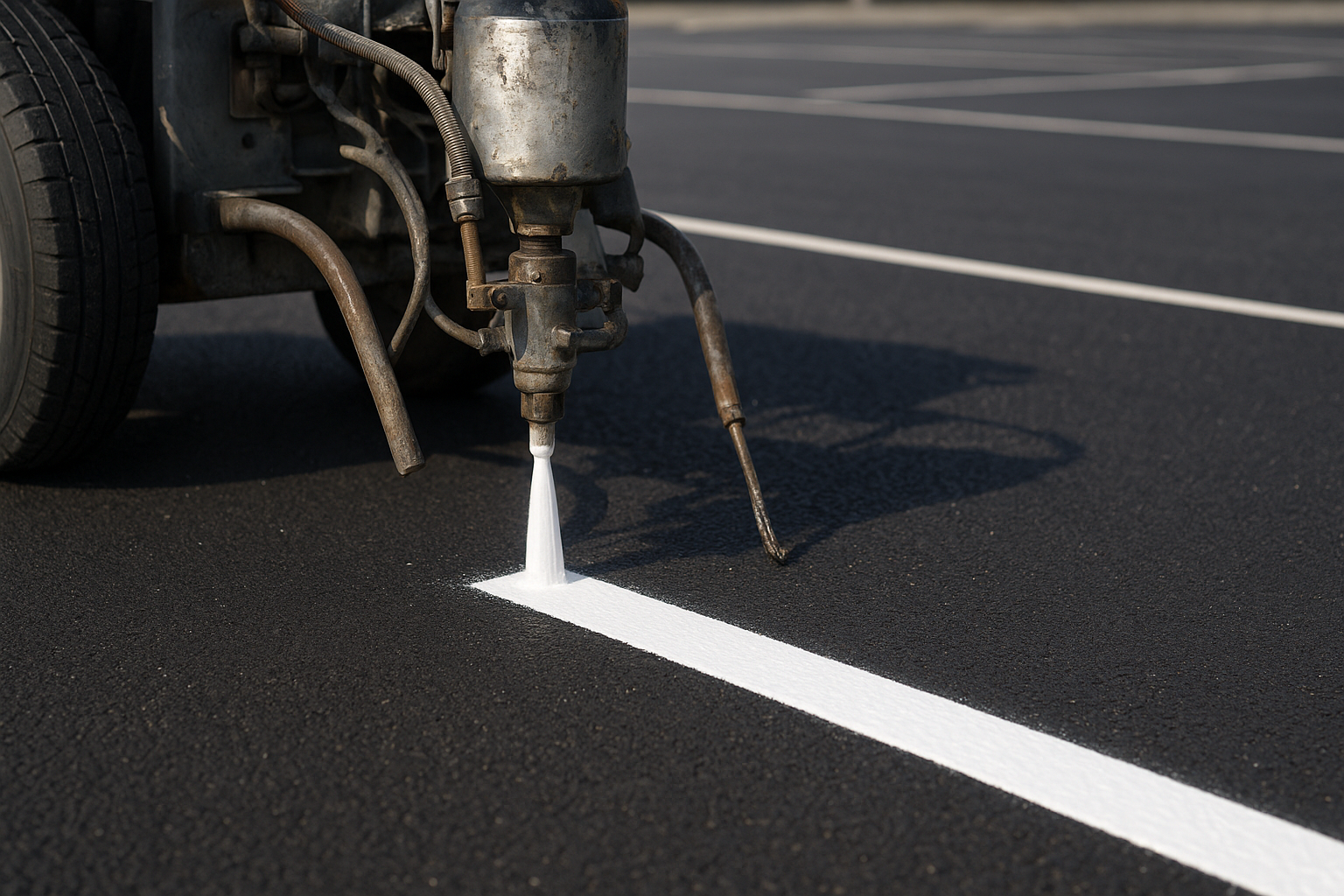
Professional equipment is essential for achieving the crisp, even lines that define quality pavement markings in commercial parking lots.
The Full Range of Pavement Marking Services You Should Expect
A truly comprehensive provider does far more than paint straight lines. Below is the full scope of work you should be able to request from a single contractor delivering quality pavement markings.
Parking Lot & Commercial Striping
This covers line marking service for stall lines, directional arrows, stop bars, and numbering for retail centers, offices, apartment complexes, and schools. Above all, consistent stall width and clean edges are what customers notice first.
Road, Highway & Municipal Marking
Centerlines, lane dividers, crosswalks, and bike lane markings fall under this category. These typically require road marking services using thermoplastic or epoxy materials to withstand constant vehicle traffic and weather exposure over multiple years.
ADA & Accessibility Markings
This includes accessible stall striping, the International Symbol of Accessibility, van-accessible access aisles, and route-to-entrance signage. Because these markings carry federal legal weight, they should always be handled by a contractor who documents compliance in writing.
Fire Lanes & Safety Markings
Red curb paint, “No Parking – Fire Lane” stenciling, speed bump markings, and pedestrian crosswalks all fall here. Local fire marshals typically inspect these markings, so accuracy is non-negotiable.
Warehouse & Industrial Floor Marking
Aisle boundaries, forklift lanes, safety zones, and OSHA-recommended floor marking colors help prevent workplace accidents. Epoxy coatings are frequently used here because they resist heavy equipment traffic and chemical spills.
Specialty Surfaces: Courts, Playgrounds & Bike Lanes
Tennis and basketball courts, playground game markings, and dedicated bike lanes all require specific paint formulations and stencil work. A provider offering these specialty services demonstrates breadth beyond basic striping.
How to Evaluate a Quality Pavement Markings Provider
Finding the right striping company requires more than comparing quotes. Follow this step-by-step process to find asphalt striping to make sure you hire a provider who meets professional standards from day one.
- Verify ADA and local code knowledge. Confirm the company understands current ADA parking requirements and local fire lane regulations before you sign anything. A knowledgeable provider references specific code sections and explains exactly how your lot will be brought into compliance.
- Review past project examples. Ask for photos or references from similar commercial or residential striping projects. Specifically, look for consistent line width, clean edges, and properly spaced ADA stalls in their completed work.
- Confirm material and equipment quality. Ask what paint, thermoplastic, or epoxy will be used and verify the company operates professional-grade striping machines. Avoid providers who cannot clearly explain their materials or process from start to finish.
- Request a detailed written quote. Obtain an estimate that itemizes the scope of work, materials, number of stalls, and any ADA or fire lane markings included. Transparency in pricing is a strong signal of overall professionalism.
- Schedule during optimal weather conditions. Coordinate the work for dry weather with temperatures between 50°F and 90°F. This ensures proper adhesion and curing, which directly determines how long your markings will last.
ADA Compliance and Fire Lane Marking: Non-Negotiable Elements
Two categories of pavement markings carry the most legal weight: ADA-compliant handicap stalls and fire lane designations. Therefore, these should always be prioritized when planning a new striping project or scheduling a restripe.
ADA guidelines require that accessible spaces sit on the shortest accessible route to the building entrance. Furthermore, the number of required accessible spaces scales with total lot capacity — for example, a lot with 26 to 50 total spaces must include at least two accessible stalls. Providers who understand these ratios protect you from compliance failures before they happen.
Fire lane markings — typically red curb paint combined with “No Parking – Fire Lane” stenciling — must meet local fire marshal specifications. Because these requirements vary by municipality, working with an experienced local contractor is especially valuable for staying compliant.
The team at stripespls.com/services handles both ADA and fire lane markings as part of comprehensive parking lot striping packages, backed by documented compliance for every project.
For a deeper walkthrough, see our School Parking Lot Striping: Complete Safety Guide for TX.
New Striping vs. Restriping: Which Does Your Lot Need?
Understanding whether your property needs new striping or a restripe helps you budget accurately and set the right expectations. New striping involves designing and painting a complete lot layout from scratch — ideal for newly paved surfaces or lots undergoing a redesign. In contrast, restriping refreshes faded markings on an existing layout without changing the stall configuration.
Most commercial lots benefit from restriping every one to two years. However, high-traffic properties — retail centers, schools, and healthcare facilities — often need attention annually. Regular maintenance keeps markings visible, reduces liability, and preserves a professional appearance year-round.
If you are unsure which service your property needs, visiting stripespls.com/parking-lot-striping provides a helpful overview of both options along with guidance on scheduling an assessment.
Signs Your Lot Needs Immediate Attention
Several visual cues indicate that your parking lot markings have degraded beyond acceptable limits. Specifically, watch for these warning signs:
- Stall lines that are barely visible from a standing position
- Missing or severely faded ADA symbols and access aisle markings
- Fire lane designations that are no longer legible
- Directional arrows that have worn away, causing traffic confusion
- Cracking or peeling paint that leaves uneven, patchy markings
- Dull, chalky lines that no longer reflect headlights clearly at night
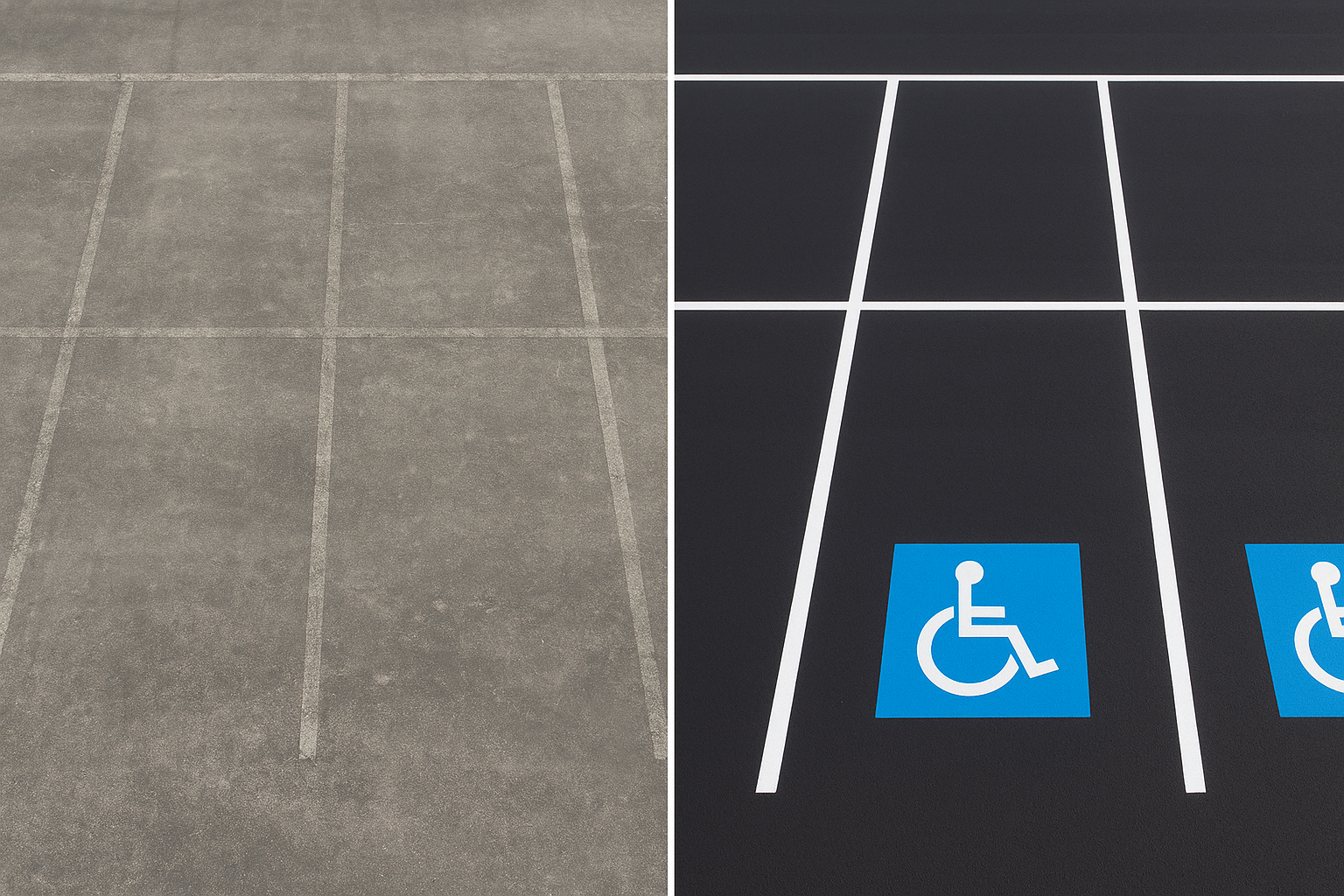
The difference between faded and freshly applied pavement markings is immediately visible — and the impact on safety and compliance is even greater.
Maximizing Parking Capacity Through Smart Layout Design
One underappreciated benefit of working with a quality pavement markings provider is the chance to optimize your entire lot layout. In many cases, a professional redesign adds 10% to 20% more usable parking spaces simply by adjusting stall angles, drive aisle widths, and traffic flow patterns. See our parking lot marking guide for layout examples and case studies.
For example, switching from 90-degree perpendicular stalls to angled stalls can improve traffic flow and reduce congestion in smaller lots. Similarly, repositioning ADA spaces closer to building entrances can free up standard stalls in high-demand areas. These are the kinds of insights experienced striping professionals bring to every project.
Retroreflectivity, Glass Beads & Nighttime Visibility
A detail many property owners overlook is how markings perform after dark. Specifically, quality pavement markings incorporate reflective glass beads embedded into wet paint or thermoplastic, allowing headlights to bounce light back to the driver’s eyes.
Without this retroreflectivity, lines that look fine in daylight can become nearly invisible at night or in rain. Therefore, ask any prospective contractor whether glass beads are applied as a standard part of their process — not as an optional upgrade. This single detail has a measurable impact on nighttime accident rates in parking lots and on roadways alike.
Sustainability and Low-VOC Marking Materials
Environmental impact is increasingly part of the quality conversation. Water-based, low-VOC (volatile organic compound) paints have become the industry norm for good reason — they reduce air pollution during application and shorten wait times before a lot can reopen to traffic.
In contrast, older solvent-based formulations release higher emissions and are now restricted in many states. Consequently, a provider who defaults to low-VOC materials is not only protecting the environment but also delivering a more modern, compliant service overall.
Warranties, Certifications & Quality Control to Demand in Writing
Above all, a written warranty separates confident professionals from fly-by-night operators. Specifically, ask whether the contractor guarantees line visibility and adhesion for a set period, and get that commitment in writing before work begins.
In addition, verify general liability insurance, applicable state contractor licensing, and any manufacturer certifications for the specific paint or thermoplastic systems being used. Reputable providers of quality pavement markings will produce this documentation without hesitation.
Quick checklist: written quote, dated warranty, proof of insurance, ADA code references, sample photos, and clear material specifications. If a provider hesitates on any of these five items, keep looking.
Finding Quality Pavement Marking Services Near You
Working with a locally experienced provider makes a significant difference, wherever your property is located. Local companies understand regional weather patterns, municipal fire code variations, and the specific needs of the properties they serve. Furthermore, they can respond quickly when scheduling is time-sensitive.
For property owners in the Denton and Plano, Texas areas specifically, stripespls.com serves retail centers, schools, healthcare facilities, and municipal organizations across the greater North Texas region. The company offers customized solutions for every project — from complete new lot layouts to targeted restriping and ADA upgrades. You can request a free quote directly through their contact page.
Above all, the right provider treats your property as a priority — not just another job on the schedule. That commitment to quality pavement markings is what sets professional companies apart from low-cost alternatives.
Ready to upgrade your parking lot markings?
Get a free, no-obligation quote from North Texas’s trusted striping specialists.
Frequently Asked Questions About Quality Pavement Markings
What are quality pavement markings?
Quality pavement markings are professionally applied, durable, and code-compliant line striping that improves safety, traffic flow, and ADA accessibility. They use premium paint, thermoplastic, or epoxy applied with precision equipment for crisp, long-lasting results.
How often should parking lot markings be restriped?
Most parking lots need restriping every one to two years, depending on traffic volume and weather exposure. High-traffic commercial lots may require more frequent attention to maintain visibility and compliance.
What are ADA requirements for parking lot striping?
The ADA requires a specific number of accessible parking spaces based on total lot size, with at least one van-accessible space per accessible cluster. Spaces must be a minimum of 8 feet wide with an adjacent 5-foot access aisle, marked with the International Symbol of Accessibility.
What types of paint are used for pavement markings?
Water-based latex, oil-based alkyd paint, thermoplastic, epoxy, and MMA coatings are the most common materials. Thermoplastic and epoxy offer the longest lifespan, while latex paint remains cost-effective for standard parking lot striping.
How long does parking lot striping take to dry?
Water-based latex markings typically dry within 20 to 30 minutes under normal conditions. However, full cure time can take up to 24 hours, so it is best to keep traffic off freshly painted lines for at least an hour.
Why are fire lane markings required in parking lots?
Fire lane markings are required by local fire codes to ensure emergency vehicles can reach buildings quickly and without obstruction. Improperly marked or missing fire lanes can result in fines and create serious safety hazards during emergencies.
What is the difference between new striping and restriping?
New striping involves laying out and painting a parking lot from scratch, including stall lines, arrows, and ADA markings. Restriping refreshes faded existing markings on a lot that already has an established layout.
How much does professional parking lot striping cost?
Costs vary depending on lot size, number of stalls, type of markings, and materials used. Most commercial restriping projects range from a few hundred to several thousand dollars; requesting a free quote is the best way to get an accurate estimate.
Can pavement markings improve parking lot capacity?
Yes, a well-designed striping layout can significantly increase usable parking spaces by optimizing stall width, drive aisle dimensions, and traffic flow patterns while still meeting code requirements.
What is retroreflectivity and why does it matter?
Retroreflectivity refers to embedded glass beads that reflect headlight beams back toward drivers, keeping markings visible at night and in rain. Quality pavement markings always include this feature as standard practice, not an optional add-on.
What should I look for when hiring a pavement marking company?
Look for commercial experience, knowledge of ADA and local fire codes, professional-grade equipment, a written warranty, proof of insurance, and clear pricing. A reputable company should also offer a free quote and references from completed projects.
Does weather affect the quality of pavement markings?
Yes, temperature and humidity significantly affect paint adhesion and drying time. Most professional striping companies schedule work between 50°F and 90°F and avoid application during rain or high humidity.
Are directional arrows required in parking lots?
While not always legally mandated, directional arrows are strongly recommended and often required by local ordinance in larger commercial lots. They reduce confusion, prevent accidents, and improve traffic flow efficiency.
Conclusion: Investing in Quality Pavement Markings Protects Your Property
Understanding what quality pavement markings truly require — precise application, durable materials, ADA compliance, retroreflectivity, and fire lane accuracy — empowers property owners to make better decisions when hiring a striping provider. In summary, the condition of your pavement markings affects safety, legal compliance, traffic flow, and the overall impression your property makes on every visitor.
Therefore, investing in professional striping is never just about paint on asphalt. It is about protecting your property, your tenants, and your reputation. For property owners throughout Denton and Plano, TX, partnering with an experienced local provider like stripespls.com ensures every marking meets the highest standard of quality pavement markings — from the first stall line to the last fire lane designation. Authored by Stripes PLS.