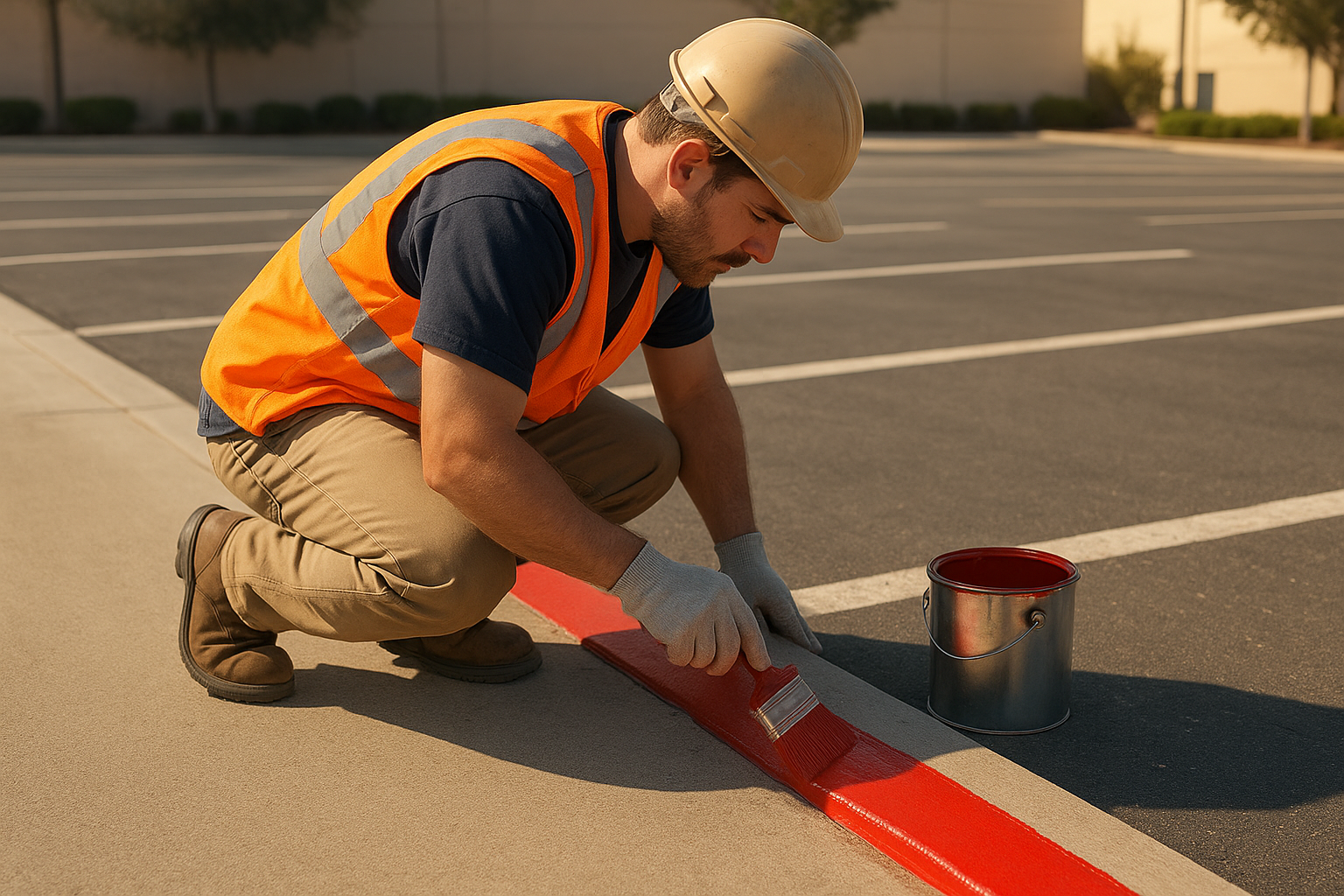
Fire lane painting denton tx is one of the first things property managers ask about when a fire marshal flags a faded or missing curb marking. Because emergency vehicles need clear, unobstructed access at every commercial site, cities across North Texas require these red curb markings to stay bright, legible, and properly placed. In this guide, you will learn what the work involves, what Texas fire code demands, and how to plan a compliant project for a Denton or Plano property.
Quick Answer: Fire lane painting denton tx is the process of applying red curb striping and white “FIRE LANE NO PARKING” lettering to designated emergency access routes on commercial property, following widths and colors set by local fire code. Professional crews typically complete a standard lot in a single day.
What Is Fire Lane Painting in Denton, TX?
Fire lane painting in Denton, TX is the practice of marking curbs or pavement edges with red paint and stenciled lettering to identify a route reserved for emergency vehicles. Specifically, these markings tell drivers where parking or stopping is prohibited so fire trucks, ambulances, and police vehicles can move freely.
In addition to the red color, most local codes require white lettering that clearly states the lane’s purpose. As a result, any vehicle owner who parks in the zone risks a citation, and property owners who fail to maintain the markings risk a code violation.
Why Fire Lane Marking Matters for Denton Properties
Fire lane marking matters because seconds count during an emergency response. According to the National Fire Protection Association, a U.S. fire department responds to a fire somewhere in the country every 24 seconds, which highlights how often quick vehicle access truly matters (NFPA).
Beyond safety, clear fire lanes also protect property owners from liability. If a blocked lane delays emergency responders, the property owner may face legal exposure in addition to code fines. Consequently, keeping lines bright and legible is not just a compliance box to check, it is a genuine safety investment for tenants, customers, and staff.
Retail centers, schools, healthcare facilities, and apartment complexes across Denton and Plano all face this same requirement, regardless of size. For that reason, many property managers pair fire lane work with a broader professional parking lot striping service to refresh the entire lot at once.
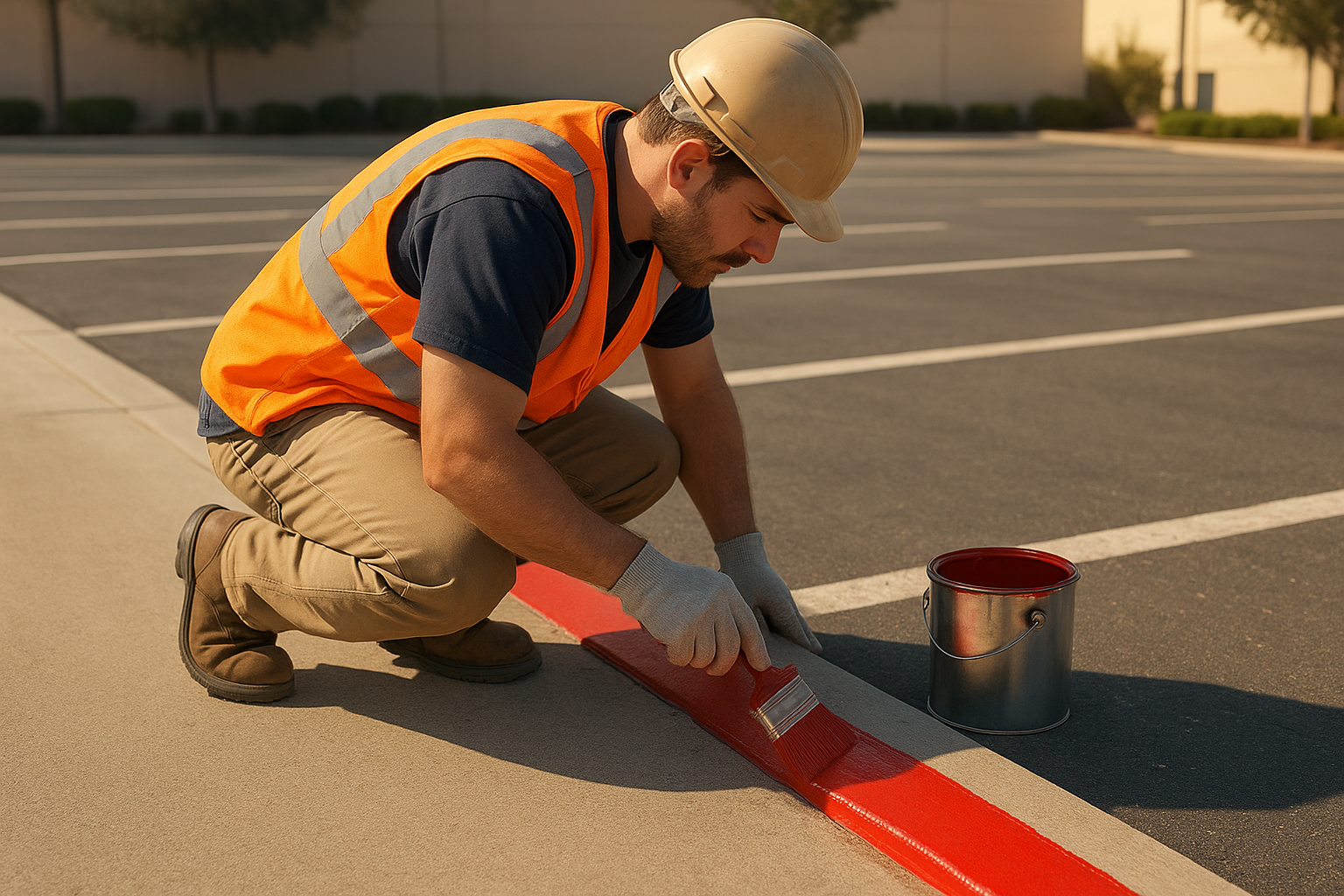
Careful, code-compliant fire lane painting denton tx keeps emergency routes clear year-round.
Texas Fire Code Requirements for Fire Lane Striping
Texas fire code generally follows the International Fire Code, which most Denton-area jurisdictions have adopted with local amendments. Under this code, fire lanes must remain at least 20 feet wide to allow full-size emergency apparatus to pass or park (International Code Council).
Local fire marshals also review lane placement during site plan approval for new construction. Therefore, any change to a lot’s layout, such as adding parking spaces or reconfiguring drive aisles, should be checked against the current approved fire lane plan before striping begins.
Colors, Dimensions, and Signage Rules
Standard fire lane striping uses red paint with white block lettering reading “FIRE LANE NO PARKING.” In most cases, lettering must repeat at set intervals so it remains visible from multiple approach angles.
Signage often supplements the paint, particularly at entrances and corners where visibility is limited. Because requirements vary slightly by city, confirming the current specification with the Denton fire marshal’s office before work begins is always a smart step.
How Professional Fire Lane Painting Denton TX Services Work
Professional fire lane painting denton tx crews follow a consistent process to ensure every project passes inspection on the first try. Below is the typical sequence from start to finish.
- Site assessment and code review to confirm required lane widths and lettering.
- Surface preparation, including sweeping, pressure washing, or scraping old paint.
- Layout marking using measuring tools to guarantee accurate, straight lines.
- Application of traffic-grade red paint followed by stenciled white lettering.
- Final inspection and photo documentation for the property’s compliance records.
Because paint needs time to cure, most crews schedule work early in the day or overnight to minimize disruption to tenants and customers. This process pairs well with a full parking lot striping project when a property is also refreshing standard stall lines.
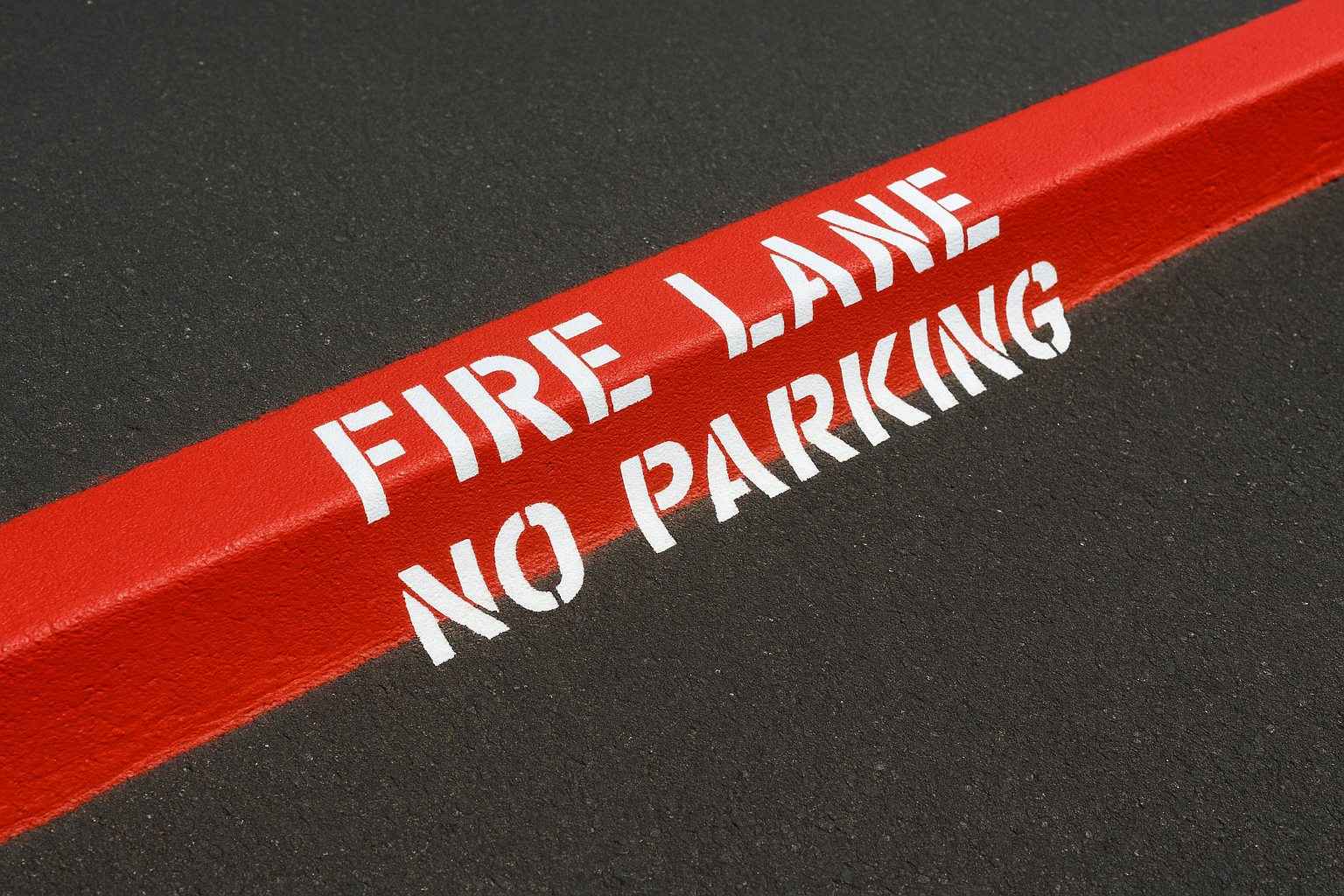
Crisp lettering and bright red curb paint are hallmarks of a properly finished fire lane.
Cost Factors for Fire Lane Painting in Denton and Plano
Several factors influence the final cost of a fire lane project. Lot size and the total linear footage of curb needing paint are the biggest drivers, since most contractors price by the foot rather than a flat rate.
Surface condition also matters. For example, a lot with heavy oil staining or old paint buildup may need extra prep time, which can raise the price compared to a clean, freshly paved surface. Similarly, properties requiring extensive lettering repeats or custom signage will see a slightly higher total than a simple, short lane.
Because pricing varies by property, requesting a free, on-site quote remains the most accurate way to budget for the work. Property owners throughout Denton and Plano can request one directly through stripespls.com.
Choosing a Fire Lane Marking Contractor in North Texas
Not every striping company understands the specific fire lane marking rules that apply in North Texas. Consequently, it helps to ask potential contractors about their experience with local fire marshal inspections and whether they carry proper liability insurance.
A reliable contractor should also be comfortable coordinating with property managers, schools, healthcare facilities, and municipal clients, since each site type may have slightly different scheduling needs. For a broader look at full-service options, this Texas lot painting company overview outlines what a complete service package typically includes.
Finally, ask for references from similar properties. A contractor with a track record on comparable retail centers or apartment complexes is more likely to deliver markings that pass inspection the first time.
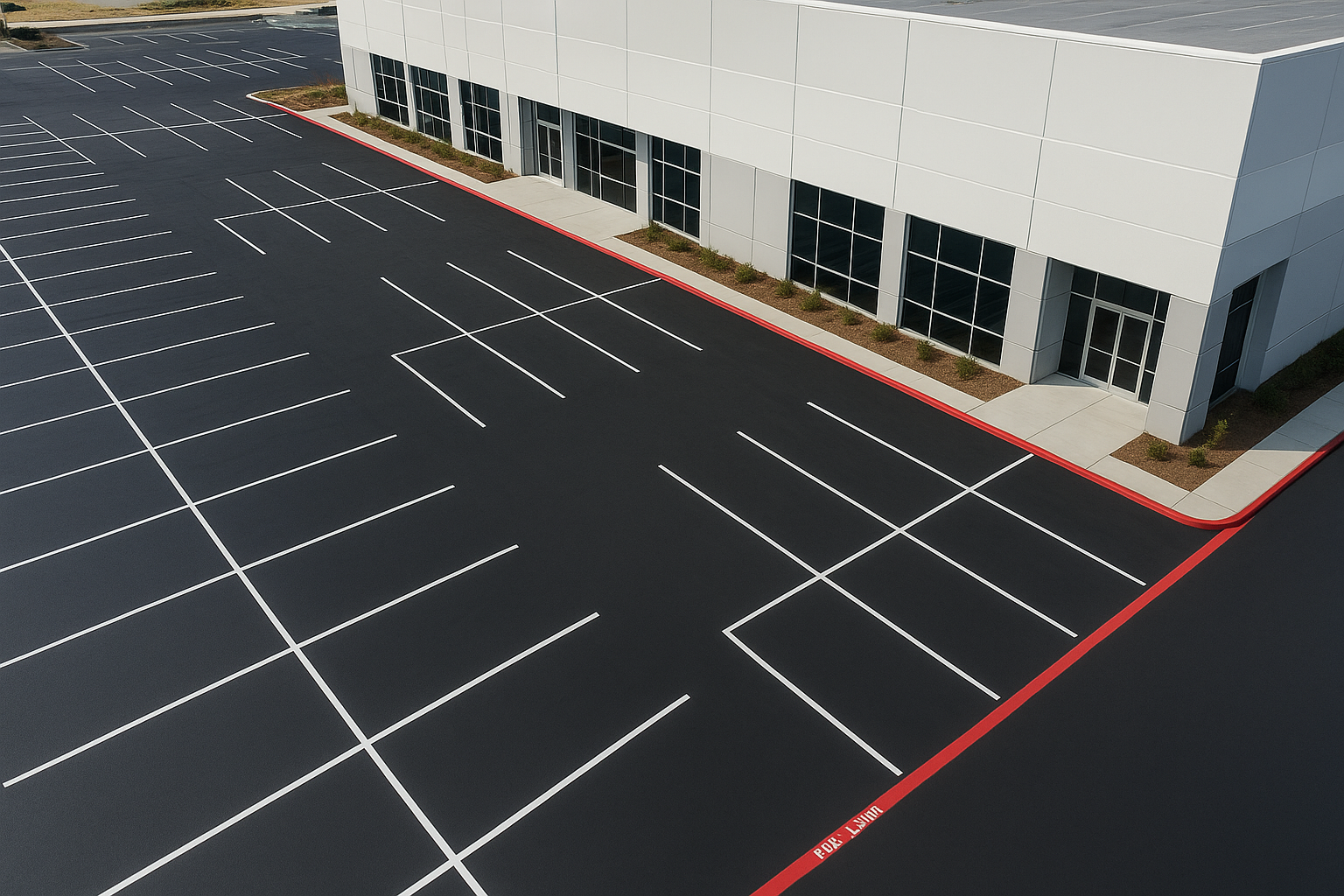
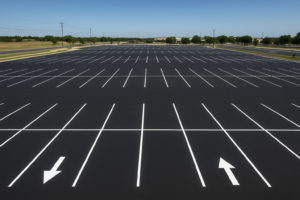
A completed layout combining standard striping with a clearly marked fire lane.
Common Mistakes to Avoid With Fire Lane Painting
One frequent mistake is delaying repainting until markings are almost invisible. Faded lines are one of the most common reasons properties fail a routine fire inspection, so scheduling maintenance proactively avoids last-minute scrambling.
Another mistake involves using standard exterior paint instead of traffic-grade material. Regular paint wears down quickly under vehicle traffic and Texas heat, which means it needs replacing far sooner than a proper striping paint would.
Finally, some property owners overlook signage requirements, assuming paint alone is sufficient. However, many cities require both, so pairing markings with correct signage helps avoid a failed inspection over a simple oversight. Coordinating fire lane work with related pavement marking solutions can help catch these gaps early.
Frequently Asked Questions About Fire Lane Painting Denton TX
What is fire lane painting denton tx and why is it required?
Fire lane painting denton tx refers to the red curb striping and lettering required by local fire code to keep emergency access routes clear on commercial properties. It is required because blocked fire lanes can delay emergency vehicles and result in code violations or fines.
How wide must a fire lane be under Texas fire code?
Most Texas jurisdictions, including Denton, follow the International Fire Code standard requiring fire lanes to be at least 20 feet wide. Some properties with taller buildings may need wider lanes depending on the local fire marshal’s review.
What color paint is used for fire lane striping?
Fire lanes are almost always marked with bright red paint, often paired with white lettering that reads “FIRE LANE NO PARKING.” This high-contrast combination ensures visibility for drivers and emergency crews alike.
How often should fire lanes be repainted?
Most commercial lots need fire lane repainting every 12 to 18 months, though heavy traffic or harsh Texas sun can shorten that timeline. Property managers should schedule a visual inspection at least twice a year.
Who enforces fire lane compliance in Denton, TX?
Local fire marshals and city inspectors enforce fire lane compliance in Denton and throughout North Texas. They typically review markings during routine inspections or after a complaint is filed.
How much does fire lane painting cost in Denton and Plano?
Pricing depends on lot size, current condition, and lettering requirements, but most Denton and Plano properties pay a per-linear-foot rate for professional striping. Requesting a free on-site quote is the most accurate way to get exact pricing.
Can property owners paint their own fire lanes?
Technically yes, but self-applied markings often fail inspection because they do not meet exact width, color, or lettering specifications. Hiring a professional crew reduces the risk of a failed inspection and repeat costs.
What is the difference between fire lane painting and ADA striping?
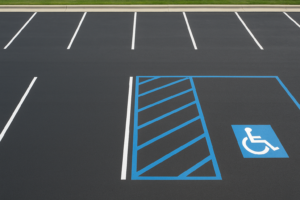
Fire lane painting marks emergency vehicle access routes, while ADA striping designates accessible parking stalls and access aisles for people with disabilities. Both are legally required but serve entirely different safety and accessibility purposes.
How long does a typical fire lane painting project take?
Most fire lane striping projects on standard commercial lots are completed within a single day. Larger properties with extensive lane systems may require a full day plus a curing period before reopening to traffic.
What happens if a property fails a fire lane inspection?
A failed inspection usually results in a correction notice with a deadline to repaint or repair the markings. Continued noncompliance can lead to fines or, in rare cases, occupancy restrictions.
Do fire lanes need signage in addition to painted markings?
Many jurisdictions require both painted curbs and posted signage stating “Fire Lane No Parking” along with towing information. Checking with the Denton fire marshal’s office confirms exact signage requirements for a specific property.
What is the best time of year for fire lane painting in North Texas?
Spring and fall offer the most reliable weather for paint curing in North Texas, avoiding both summer heat and winter cold. However, professional crews can often work around temperature windows year-round.
How do I choose a reliable fire lane marking contractor?
Look for a contractor with local Denton and Plano experience, proper insurance, and knowledge of current fire code specifications. Checking references from similar commercial or municipal clients also helps confirm reliability, as does reviewing a company’s line marking portfolio.
What type of paint is used for fire lane striping?
Most contractors use durable traffic-grade acrylic or waterborne paint formulated to withstand vehicle traffic and UV exposure. This paint type resists fading faster than standard exterior paint used on buildings.
Is fire lane painting required for residential properties?
Fire lane requirements typically apply to multi-family complexes, gated communities, and HOAs with shared access roads rather than single-family homes. Property managers of apartment complexes should confirm requirements with the local fire marshal.
Final Thoughts on Fire Lane Painting Denton TX
In summary, fire lane painting denton tx is a straightforward project with real safety and legal stakes for property owners. From understanding the 20-foot width standard to choosing the right red paint and lettering, getting the details right the first time saves both money and inspection headaches down the road.
Whether a property needs a full repaint, new lane layout, or a quick touch-up before an inspection, working with an experienced local crew makes the process simple. Property managers throughout Denton and Plano can request a free quote through stripespls.com to get started on a compliant, long-lasting fire lane.