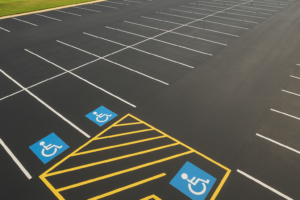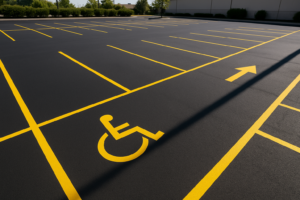
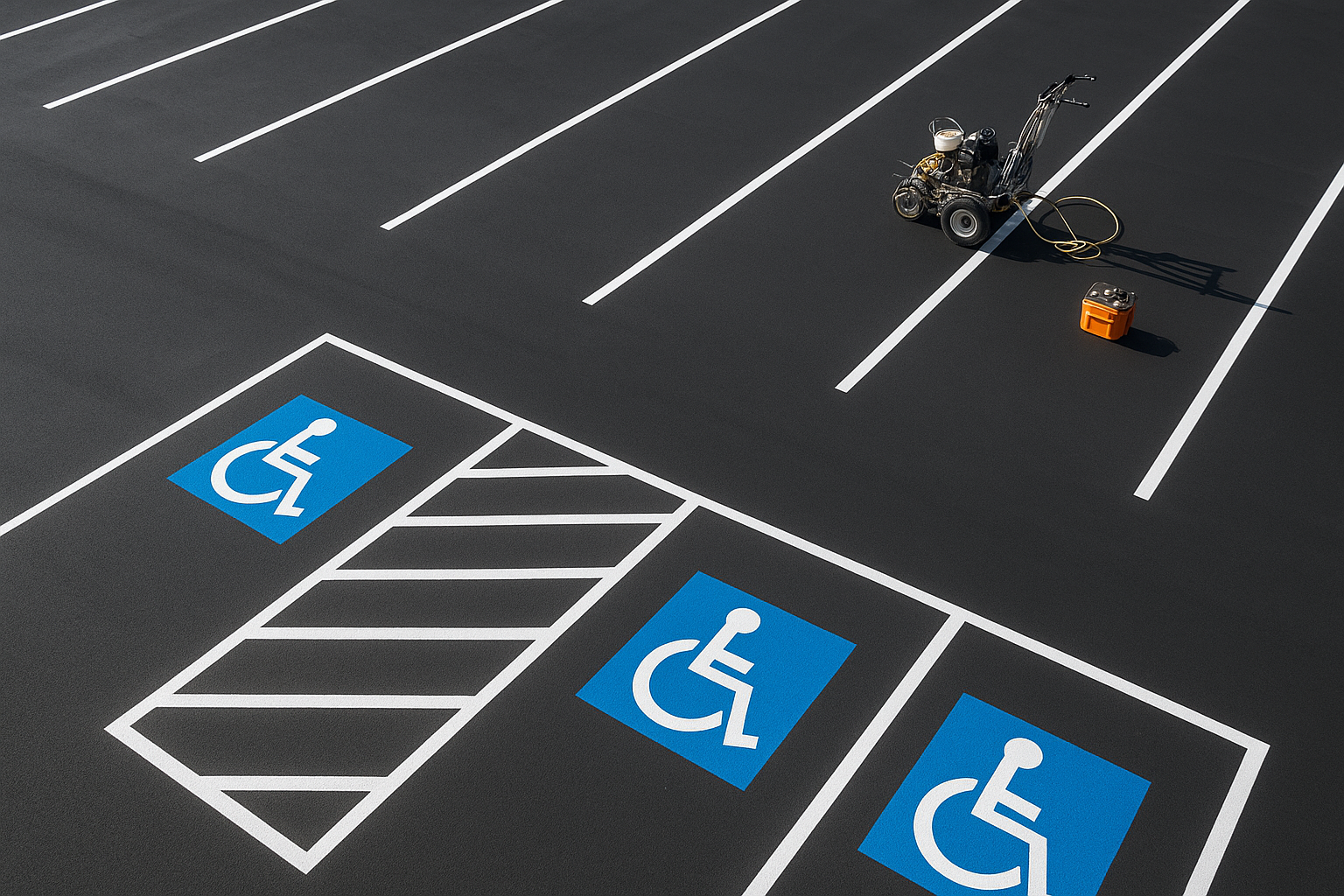
Accessible parking marking is the painted layout of ADA-compliant stalls, access aisles, and symbols that tell drivers and pedestrians exactly where reserved handicap spaces are located. For property owners across Denton and Plano, TX, getting this layout right is not optional — it is a legal requirement tied directly to federal accessibility law. In this guide, we break down what accessible parking marking involves, why it matters, and how professional striping keeps a property compliant year after year.
Quick Answer: Accessible parking marking refers to the ADA-required stall widths, access aisles, painted symbols, and signage that designate handicap parking. Properties must meet minimum dimensions and ratios, and faded or incorrect markings can lead to fines or ADA complaints.
What Is Accessible Parking Marking?
Accessible parking marking is the combination of painted stall lines, access aisles, the International Symbol of Accessibility, and posted signage that identifies ADA-reserved parking spaces. Specifically, these markings must follow dimension standards set by the Americans with Disabilities Act as well as any additional Texas building codes.
Because these spaces serve people who use wheelchairs, walkers, or have limited mobility, precision matters. A misaligned stall or an aisle that is a few inches too narrow can make a space effectively unusable, even though it looks compliant at a glance.
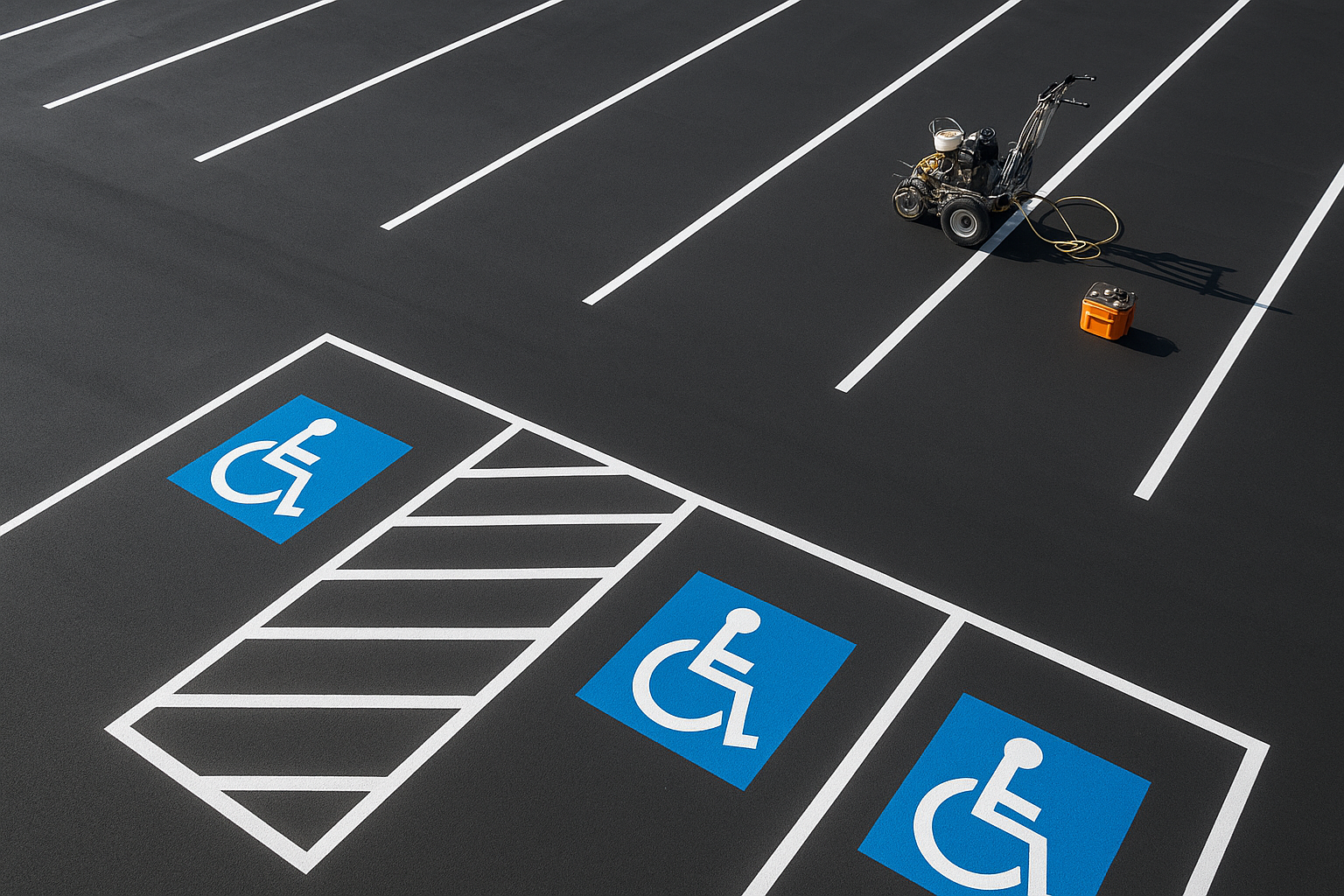
Clear accessible parking marking helps drivers identify ADA stalls at a glance.
Why Accessible Parking Marking Matters for Texas Properties
In particular, Texas commercial properties face scrutiny from both state regulators and federal enforcement. As a result, outdated or faded ADA parking markings are one of the most common triggers for accessibility complaints filed against retail centers, healthcare facilities, and municipal buildings.
Furthermore, well-executed accessible parking marking improves traffic flow and reduces liability. For example, clearly defined stalls and aisles reduce the risk of vehicle-to-vehicle contact and help drivers with mobility devices exit safely. Consequently, properties that invest in quality striping tend to see fewer complaints and smoother day-to-day operations.
According to guidance published by the U.S. Access Board, roughly one in four adults in the United States lives with some form of disability. That statistic alone underscores why accurate accessible parking marking is not a minor detail — it directly affects a large share of visitors and employees.
How ADA Parking Markings Differ From Standard Stalls
Standard parking stalls only need to meet basic width and length guidelines. ADA parking markings, on the other hand, require specific access aisles, van-accessible ratios, and visible symbols that standard stalls do not need.
Key ADA Requirements for Handicap Parking Stripe Markings
Handicap parking stripe markings must follow several dimensional rules. Below are the core requirements most Texas commercial properties need to meet:
- Standard accessible stalls: minimum 96 inches wide with a 60-inch access aisle.
- Van-accessible stalls: 96-inch aisle or an 11-foot-wide stall, required at a ratio of roughly one in every six accessible spaces.
- International Symbol of Accessibility painted in a contrasting, durable color within the stall.
- Accessible route connecting stalls to the building entrance without curbs or obstructions.
- Signage mounted at a specified height, visible even when a vehicle is parked in the space.
Similarly, the number of required accessible stalls scales with total lot size. A lot with 500 to 1,000 spaces, for instance, typically needs at least 2% of its stalls to be accessible, per federal accessibility tables.
Step-by-Step Process for Accessible Parking Marking Installation
Above all, a consistent process helps ensure every stall meets code the first time. Here is how a professional striping crew typically approaches an accessible parking marking project:
- Survey the lot and review code requirements. A technician measures the property and checks local and ADA rules to determine the required number of accessible and van-accessible stalls.
- Calculate stall counts and placement. The crew positions accessible stalls as close as possible to accessible building entrances, following required ratios.
- Lay out chalk lines for approval. Before any paint goes down, the layout is marked in chalk so property managers can confirm placement.
- Prepare and clean the surface. Old paint, debris, and oil residue are removed so new markings adhere properly and resist fading.
- Paint stalls, symbols, and signage. Durable traffic paint forms the stall borders, access aisles, and wheelchair symbols, followed by proper signage installation.
- Conduct a final compliance walkthrough. A last inspection confirms every dimension and symbol meets ADA and local accessibility standards before the project wraps up.
Common Mistakes in Accessible Parking Space Markings
Even well-intentioned property owners run into trouble with accessible parking space markings. In particular, watch for these frequent issues:
First, undersized access aisles are one of the most cited violations, since a few missing inches can render a stall noncompliant. Second, many older lots lack the required ratio of van-accessible spaces, especially after expansions or remodels. Third, faded blue paint and worn symbols often go unnoticed until an inspection or complaint brings them to light.
Therefore, routine inspection paired with a restriping schedule helps catch these problems before they become liabilities.
Choosing a Professional Striping Company in Denton and Plano
When it comes to accessible parking marking, precision and local code knowledge matter just as much as paint quality. Stripespls.com, based in Texas, specializes in professional striping, ADA compliance markings, and fire lane marking for commercial and residential properties throughout the Denton and Plano areas.
The company works with property managers, retail centers, schools, healthcare facilities, and municipal organizations across North Texas. Whether a property needs a brand-new layout through parking lot striping services or a refresh of faded lines, requesting a free quote through the stripespls.com website is the fastest way to get an accurate assessment.
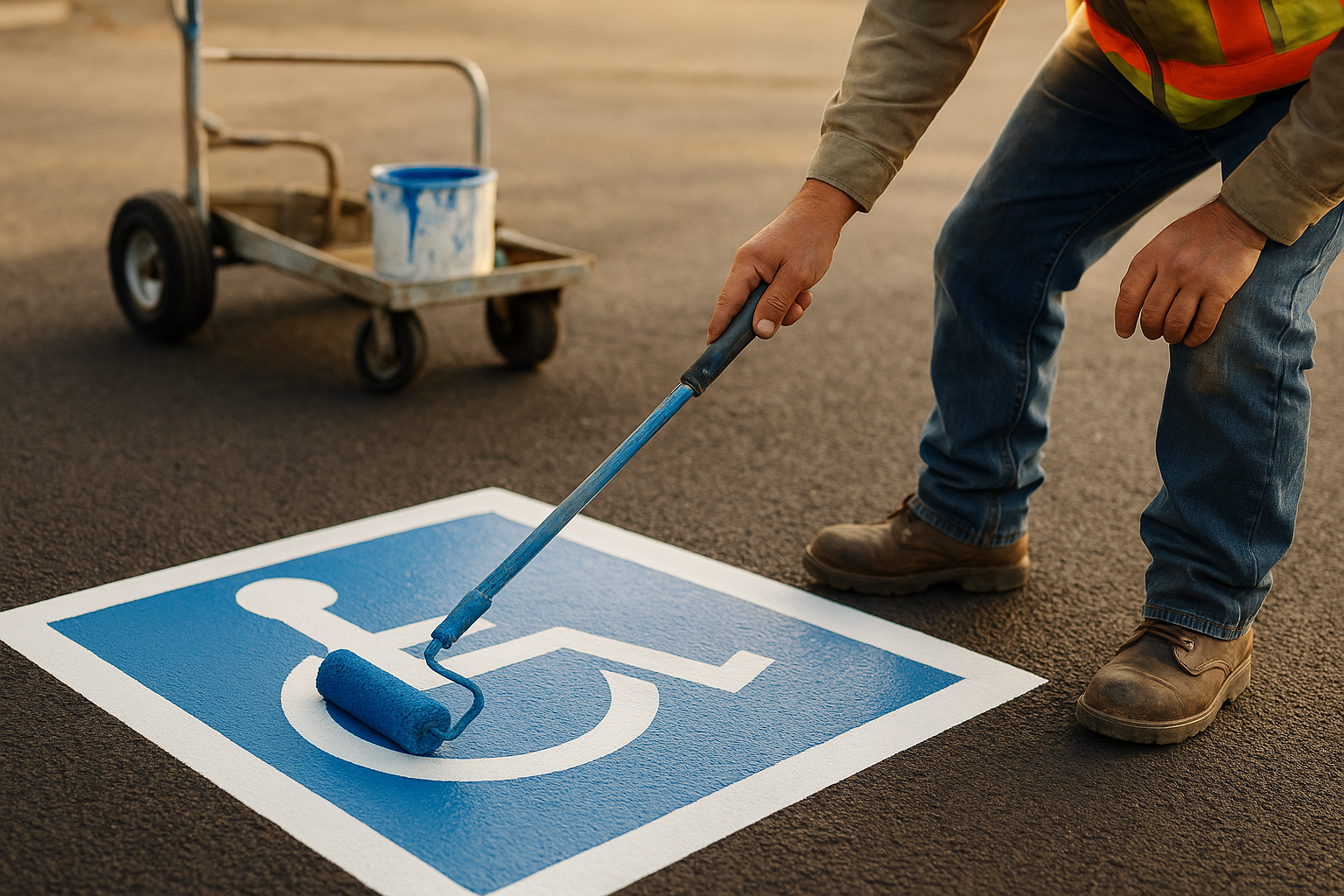
Professional crews follow strict dimension and color standards for every accessible parking marking project.
Maintaining Accessible Parking Markings Over Time
Texas heat and UV exposure fade paint faster than in cooler climates. As a result, most commercial lots need touch-ups or full restriping every 18 to 24 months to keep accessible parking markings clearly visible and compliant.
In addition, regular sweeping and periodic inspections help property owners catch fading or damage early, well before it becomes a compliance issue during an audit or complaint.
Frequently Asked Questions
What is accessible parking marking?
Accessible parking marking is the painted layout of handicap stalls, access aisles, and symbols that comply with ADA and local building codes. It identifies reserved spaces for people with disabilities and directs safe pedestrian movement.
Why is accessible parking marking required by law?
Federal and Texas state codes require accessible parking marking so properties remain compliant with the Americans with Disabilities Act. Noncompliant lots risk fines, lawsuits, and denied occupancy permits.
How wide must an ADA accessible parking space be?
A standard accessible stall must be at least 96 inches wide, paired with a 60-inch access aisle. Van-accessible spaces need a wider 96-inch access aisle or an 11-foot stall.
What color paint is used for accessible parking markings?
International Symbol of Accessibility markings are typically blue, while stall borders are often blue or white depending on local code. Texas municipalities may specify exact shades in their accessibility ordinances.
How much does accessible parking marking cost?
Costs vary by lot size, number of stalls, and paint type, but most Texas properties pay between $75 and $250 per stall for full ADA marking. A free on-site quote gives the most accurate estimate.
How long does it take to install accessible parking markings?
Most commercial lots finish accessible parking marking within one day, though larger properties may take two. Weather and paint cure time also affect the final schedule.
What’s the difference between accessible parking marking and fire lane marking?
Accessible parking marking designates ADA stalls for people with disabilities, while fire lane marking keeps emergency access routes clear. Both are required separately and use different colors and signage.
How often should accessible parking markings be repainted?
Most parking lots need restriping every 18 to 24 months, though high-traffic Texas lots may fade sooner due to heat and UV exposure. Faded ADA lines should be refreshed immediately to avoid violations.
What are common mistakes in accessible parking space markings?
Common errors include undersized access aisles, missing van-accessible stalls, incorrect stall-to-total-space ratios, and faded symbols. These mistakes often surface during accessibility audits or complaints.
Do residential properties need accessible parking markings?
Multi-family residential properties, HOAs, and apartment complexes generally must provide accessible parking marking if they offer designated parking. Single-family homes typically are not required to comply.
Can faded accessible parking markings result in fines?
Yes, faded or missing ADA markings can trigger citations, civil complaints, and even lawsuits under the Americans with Disabilities Act. Regular inspection and prompt restriping help property owners avoid these penalties.
What is the van-accessible parking space requirement?
Van-accessible spaces require extra width or a wider access aisle to accommodate wheelchair lifts. Building codes typically require at least one van-accessible stall for every six accessible spaces.
Who enforces ADA parking marking compliance in Texas?
The Texas Department of Licensing and Regulation oversees accessibility compliance for public and commercial buildings statewide. Local municipalities and the U.S. Department of Justice may also enforce federal ADA standards, as outlined by the Texas Department of Licensing and Regulation. For a deeper walkthrough, see our ADA Parking Lot Compliance Texas: Complete Guide.
How do I request an accessible parking marking quote in Denton or Plano?
Property owners in Denton and Plano can request a free quote directly through the stripespls.com website. A site assessment typically follows within a few business days.
Final Thoughts on Accessible Parking Marking
Ultimately, accessible parking marking protects both property owners and the people who rely on ADA-designated stalls every day. From correct stall widths to visible symbols and signage, every detail plays a role in keeping a lot compliant and safe.
Consequently, routine inspections and timely restriping are the simplest ways to avoid fines and accessibility complaints. For property managers, retail centers, schools, and healthcare facilities across Denton and Plano, partnering with an experienced local striping team makes accessible parking marking one less thing to worry about. Above all, a clean, code-compliant lot reflects well on any property and supports every visitor who depends on those marked spaces.