Safety markings for parking lots are the painted lines, symbols, and colors that guide drivers, protect pedestrians, and keep a property compliant with accessibility and fire codes. Whether it is a retail center in Plano or a school campus in Denton, clear and durable markings reduce accidents and help property owners avoid costly violations. This guide walks through the types of markings every commercial lot needs, how they are installed, and what to budget for the work.
Quick answer: Safety markings for parking lots include ADA-compliant handicap stalls, fire lane striping, directional arrows, crosswalks, and stall lines. Together they organize traffic flow, protect pedestrians, and satisfy legal accessibility and fire-code requirements.
What Are Safety Markings for Parking Lots?
Safety markings for parking lots refer to the full set of painted elements that control how vehicles and pedestrians move through a property. This includes standard parking stalls, ADA-compliant accessible spaces, fire lane striping, directional arrows, stop bars, and pedestrian crosswalks. Each element serves a specific safety purpose beyond simple aesthetics.
In addition, these markings are not optional decoration. Municipal codes, fire departments, and the Americans with Disabilities Act all set specific requirements for color, placement, and dimensions. As a result, property owners who neglect this maintenance risk fines, liability claims, and denied insurance coverage after an incident.
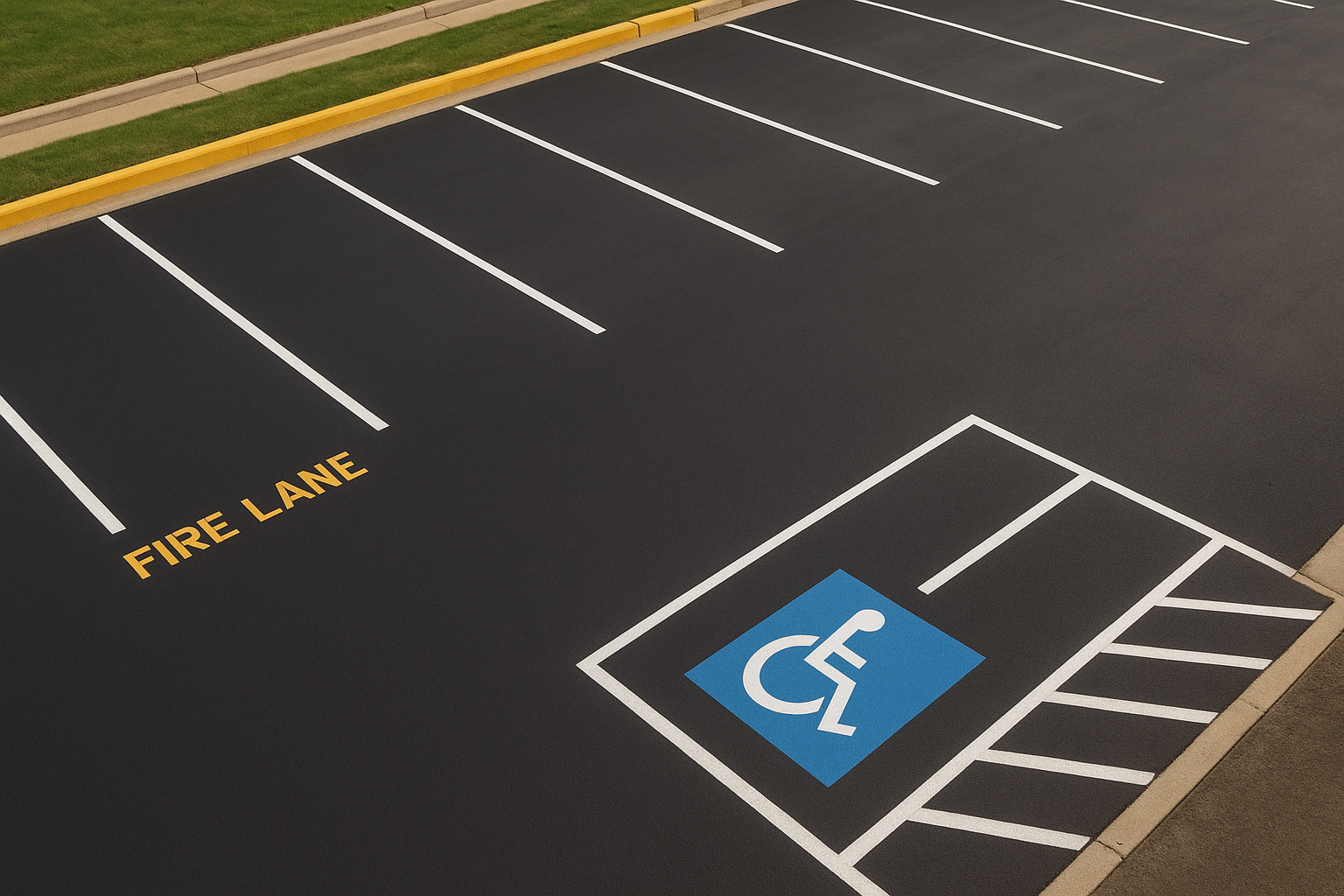
Clear safety markings for parking lots keep traffic organized and properties code-compliant.
Types of Parking Lot Line Striping and Symbols
A well-planned lot combines several categories of parking lot line striping, each addressing a different safety concern. For example, standard stall lines maximize capacity, while accent colors flag restricted or hazardous zones. For a deeper walkthrough, see our Parking Lot Striping Texas: Expert Line Marking Guide.
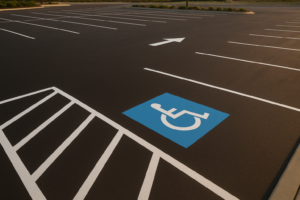
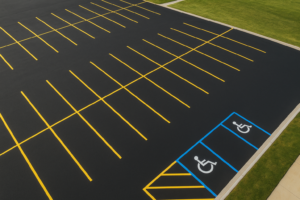
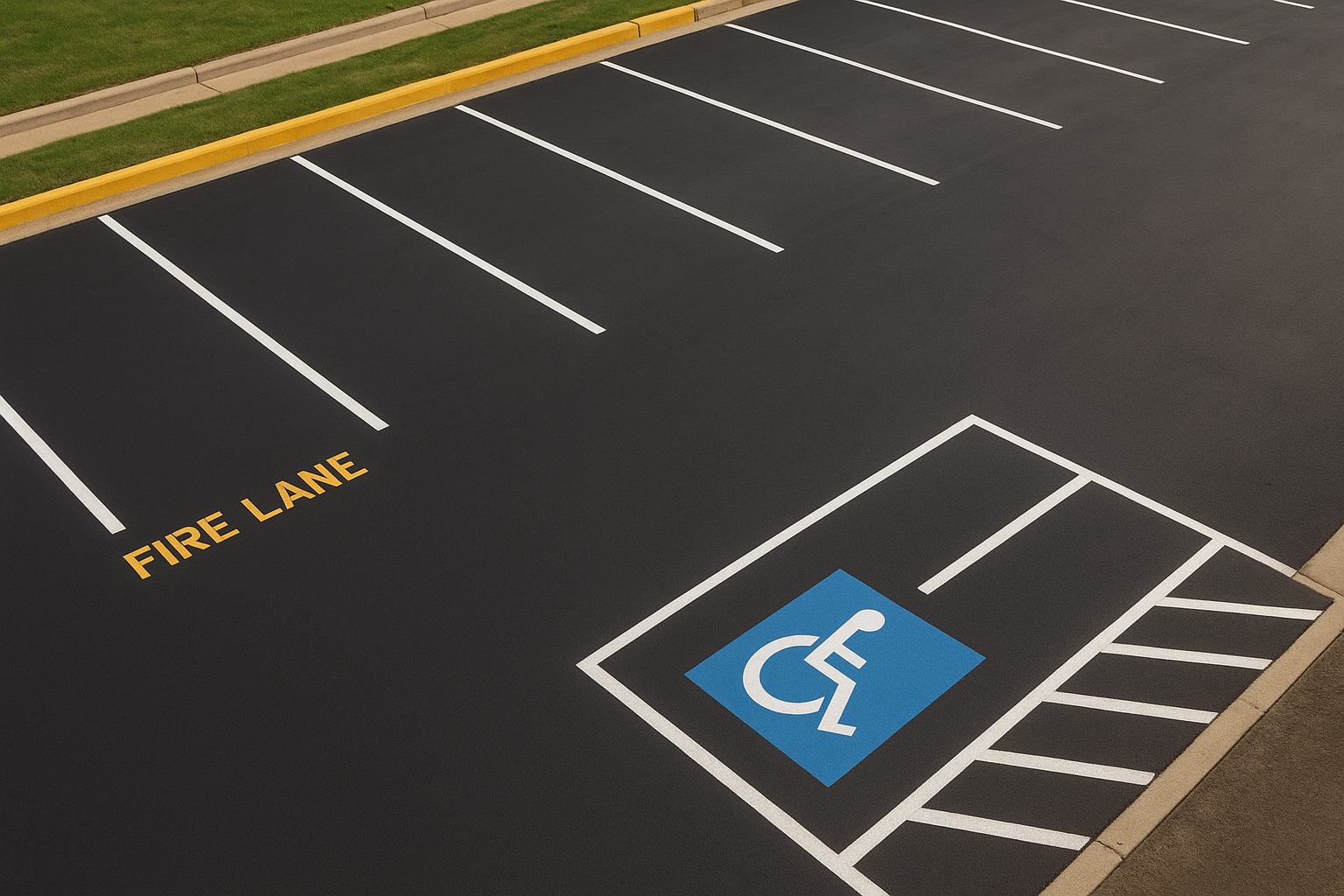
- ADA accessible stalls: Blue-outlined spaces with the international symbol of accessibility, paired with a striped access aisle.
- Fire lane markings: Red or yellow curb paint and lettered striping that identifies no-parking emergency access routes. For a deeper walkthrough, see our Why Fresh Parking Lot Striping Matters for Your Property.
- Directional arrows: Guide one-way traffic and prevent head-on conflicts in tight aisles.
- Crosswalks and stop bars: Separate pedestrian paths from vehicle lanes near entrances and building fronts.
- Loading zones and curb marking: Identify delivery areas and hazards like curbs or speed bumps.
For a deeper breakdown of arrow placement and traffic flow design, the complete guide to navigational arrows in parking lots covers layout best practices in detail.
Why ADA Compliance Matters for Parking Lot Markings
ADA compliance is one of the most legally sensitive aspects of parking lot markings. According to the U.S. Access Board, facilities must provide at least one accessible space for every 25 total spaces, with additional van-accessible stalls required as lot size increases. Consequently, incorrect striping or missing signage is a common source of complaint filings against property owners.
Furthermore, accessible aisle widths, symbol placement, and slope requirements are all defined by federal guidelines. Therefore, working with a contractor familiar with local Texas code, such as the team at stripespls.com, helps ensure every stall meets current standards the first time. Readers can review the full requirements in the safety and compliance guide to parking lot striping.
Fire Lane Markings: A Critical Safety Layer
Fire lane markings deserve special attention because they directly affect emergency response time. Local fire marshals typically require red curb paint with white “FIRE LANE – NO PARKING” lettering spaced at regular intervals along the entire restricted route.
In particular, blocked or faded fire lanes can delay first responders by critical minutes. As a result, many municipalities conduct routine inspections and issue fines for noncompliant properties. Property managers in Denton and Plano should schedule fire lane touch-ups whenever paint begins to fade, rather than waiting for a formal citation.
How Professional Crews Apply Safety Markings
Above all, consistent results come from following a proven process. Here is how most professional striping crews approach a project from start to finish:
- Inspect and clean the surface: Crews sweep, power-wash, and inspect the asphalt to remove debris and oil stains that could weaken paint adhesion.
- Measure and layout markings: Technicians chalk out stall widths, fire lanes, and ADA spaces using laser tools to guarantee code-compliant dimensions.
- Mask and stencil symbols: Handicap icons, arrows, and lettering are stenciled into place before paint touches the surface.
- Apply traffic-grade paint: Striping machines lay down durable, weather-resistant paint in the correct widths and colors.
- Cure and final inspection: The lot is barricaded during curing, then walked to confirm every marking is straight, legible, and compliant.
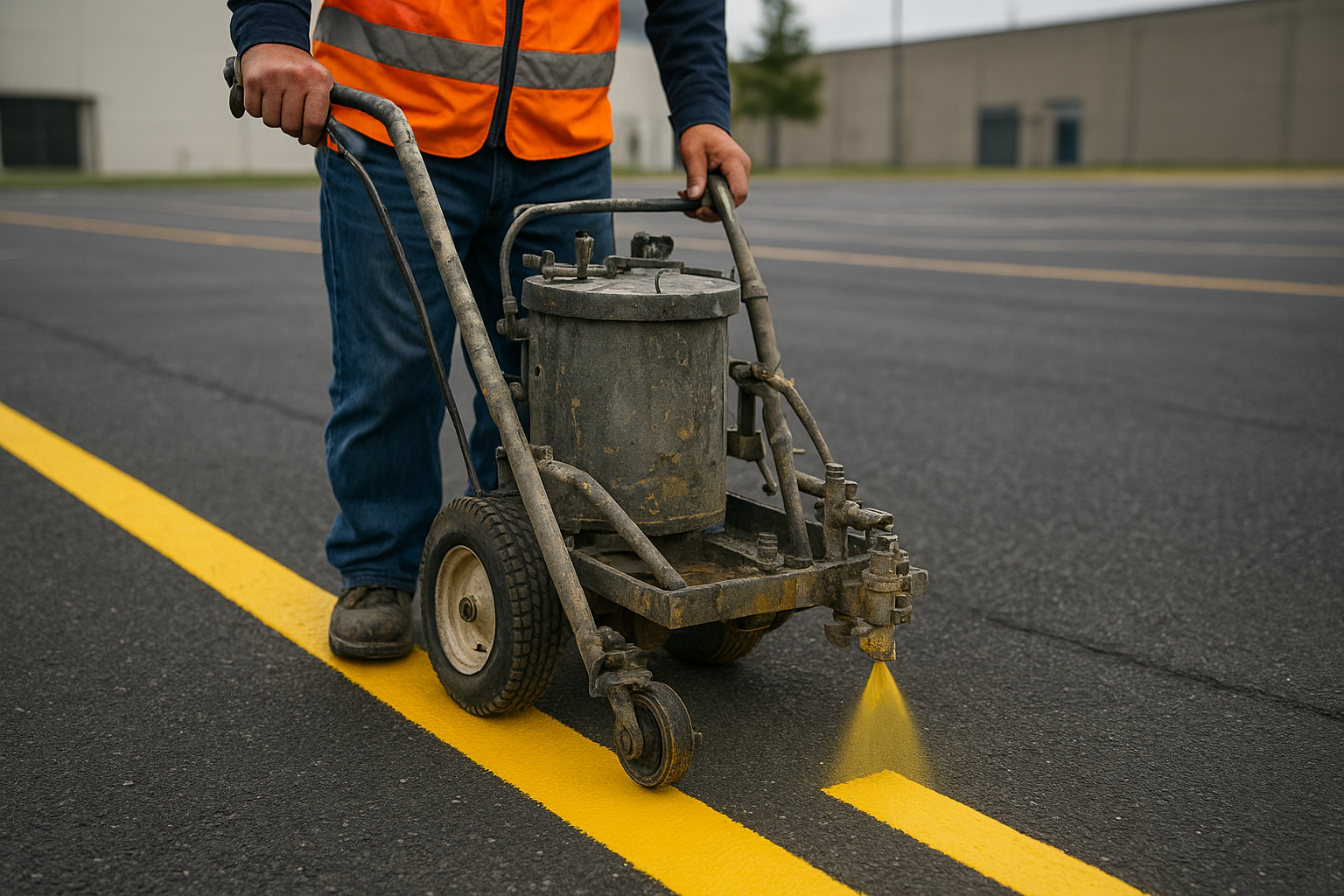
Professional equipment ensures crisp, durable lines when installing safety markings for parking lots.
Durability, Slip Resistance, and Cost Factors
Paint quality has a direct effect on how long parking lot safety markings last. Standard water-based traffic paint typically holds up for 18 to 24 months under normal North Texas weather, while thermoplastic materials can extend that lifespan in high-traffic crosswalks.
Similarly, slip resistance matters in areas near entrances, ramps, and crosswalks where rain or foot traffic increases risk. For properties seeking added texture and grip, the non-slip parking lot markings guide explains additive options that improve traction without sacrificing visibility.
Regarding budget, most contractors price striping between $0.10 and $0.35 per linear foot, with ADA symbols and fire lane lettering charged separately due to added labor. Consequently, a full-service parking lot striping project for a mid-sized retail center often runs a few hundred to a few thousand dollars depending on scope.
Common Mistakes Property Owners Should Avoid
Even well-intentioned property managers make avoidable errors. In particular, letting markings fade until they are barely visible is one of the most frequent issues, since faded lines confuse drivers and pedestrians alike.
Another common mistake involves relying on outdated robotic or automated marking systems that may not meet current code requirements. The article on Otto parking marking and better alternatives explains why many properties are shifting back to professionally applied paint for reliability. Finally, skipping annual inspections often means fire lane or ADA violations go unnoticed until a citation or complaint arrives.
Frequently Asked Questions About Safety Markings for Parking Lots
What are safety markings for parking lots?
Safety markings for parking lots are painted lines, symbols, and colors that guide traffic, designate accessible parking, mark fire lanes, and separate pedestrian paths from vehicle lanes. They exist to reduce accidents and keep properties code-compliant.
How much do parking lot safety markings cost?
Costs typically range from $0.10 to $0.35 per linear foot depending on paint type, lot size, and the number of ADA symbols or fire lane letters required. Larger commercial lots often receive volume-based pricing.
Why are fire lane markings important?
Fire lane markings keep emergency access routes clear so fire trucks and ambulances can reach a building without delay. Blocked fire lanes can result in fines and put occupants at serious risk during an emergency.
How often should parking lot markings be repainted?
Most commercial lots need restriping every 18 to 24 months, though high-traffic areas may fade sooner. Regular inspections help property owners catch fading before it becomes a compliance issue.
What paint is used for parking lot safety markings?
Most contractors use water-based traffic paint or durable acrylic striping paint designed for asphalt and concrete. Thermoplastic materials offer longer-lasting results in high-wear zones like crosswalks.
Are ADA parking markings required by law?
Yes, the Americans with Disabilities Act requires a specific ratio of accessible parking spaces with proper markings, signage, and access aisles. Noncompliance can lead to legal complaints and civil penalties.
What is the difference between line striping and safety markings?
Line striping generally refers to the parking stall lines themselves, while safety markings cover a broader category including fire lanes, directional arrows, crosswalks, and ADA symbols. Both are usually installed together during a striping project.
How long does parking lot striping take to dry?
Water-based traffic paint typically dries to the touch within 30 minutes but should not be driven over for at least an hour. Full curing can take up to 24 hours depending on temperature and humidity.
Can I install safety markings myself?
While small touch-ups are possible with DIY kits, professional installation ensures accurate measurements, code-compliant symbols, and durable results. Incorrect ADA or fire lane markings can expose property owners to liability.
What colors are required for parking lot safety markings?
White is standard for regular parking stalls, blue is required for ADA accessible spaces, yellow marks fire lanes and no-parking zones, and red is often used for curb hazards. Local fire codes may specify exact color requirements.
What mistakes should property owners avoid with parking lot markings?
Common mistakes include letting markings fade past legibility, using incorrect ADA stall dimensions, and skipping fire lane signage requirements. Working with an experienced striping contractor helps avoid costly compliance violations.
How do safety markings improve parking lot traffic flow?
Directional arrows, clearly marked lanes, and crosswalks guide drivers and pedestrians in predictable patterns, reducing congestion and near-miss incidents. Well-planned markings also maximize the number of usable parking spaces.
What is the best time of year to restripe a parking lot?
Warm, dry weather with low humidity provides the best conditions for paint adhesion and curing, making spring and early fall ideal in North Texas. Extreme heat or rain can affect drying time and finish quality.
Final Thoughts on Parking Lot Safety Markings
In summary, safety markings for parking lots are far more than a coat of paint. They organize traffic, protect pedestrians, and keep a property aligned with ADA and fire code requirements that carry real legal weight. From accessible stalls to fire lane lettering, every element plays a role in preventing accidents and liability.
Ultimately, property managers in Denton, Plano, and across North Texas benefit most from partnering with an experienced local crew that understands both the design and the code side of striping. To get a tailored plan and pricing, request a free quote through stripespls.com and keep your lot organized, compliant, and safe for everyone who parks there.