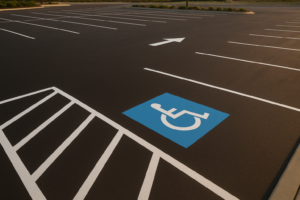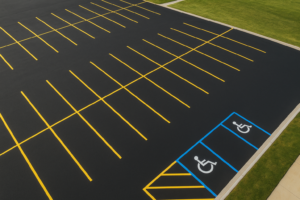
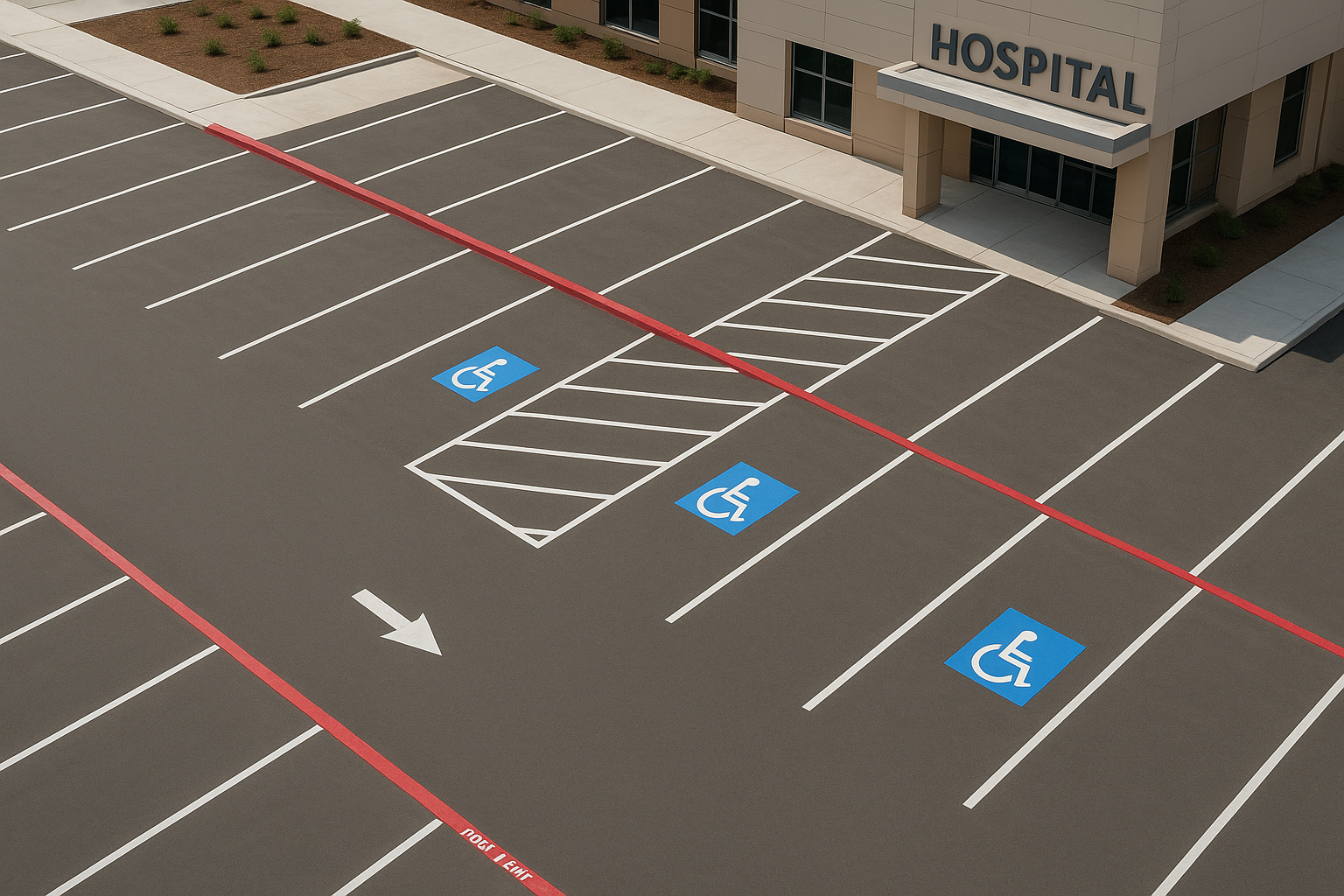
Line striping for healthcare facilities is a specialized pavement marking service that keeps hospital, clinic, and medical office parking lots safe, organized, and ADA-compliant. Because patients often arrive stressed, injured, or mobility-limited, clear markings for accessible parking, fire lanes, and walkways aren’t just a nice touch — they’re essential for safety. In this guide, we’ll explain what healthcare facility striping involves, why it matters more than standard commercial striping, and how property managers throughout Denton and Plano, TX can plan a project that meets code and protects patients.
What Is Line Striping for Healthcare Facilities?
Line striping for healthcare facilities is the process of painting and maintaining parking lot markings — including ADA-accessible stalls, fire lanes, directional arrows, and crosswalks — specifically tailored to medical properties. Unlike a standard retail lot, healthcare striping must account for higher volumes of disabled visitors, emergency vehicle access, and strict code enforcement. This makes accuracy and durability especially important.
Hospitals, urgent care centers, dental offices, and outpatient clinics all rely on this service to reduce liability and improve patient flow. For example, properly marked handicap stalls with correct striping width and signage help visitors with mobility devices park closer to entrances. Meanwhile, fire lane markings in red paint with white lettering keep emergency access routes clear at all times. Because healthcare facilities are inspected more frequently than typical commercial properties, faded or non-compliant markings can trigger citations or affect accreditation. As a result, many property managers schedule striping maintenance on a proactive schedule rather than waiting for complaints to appear.
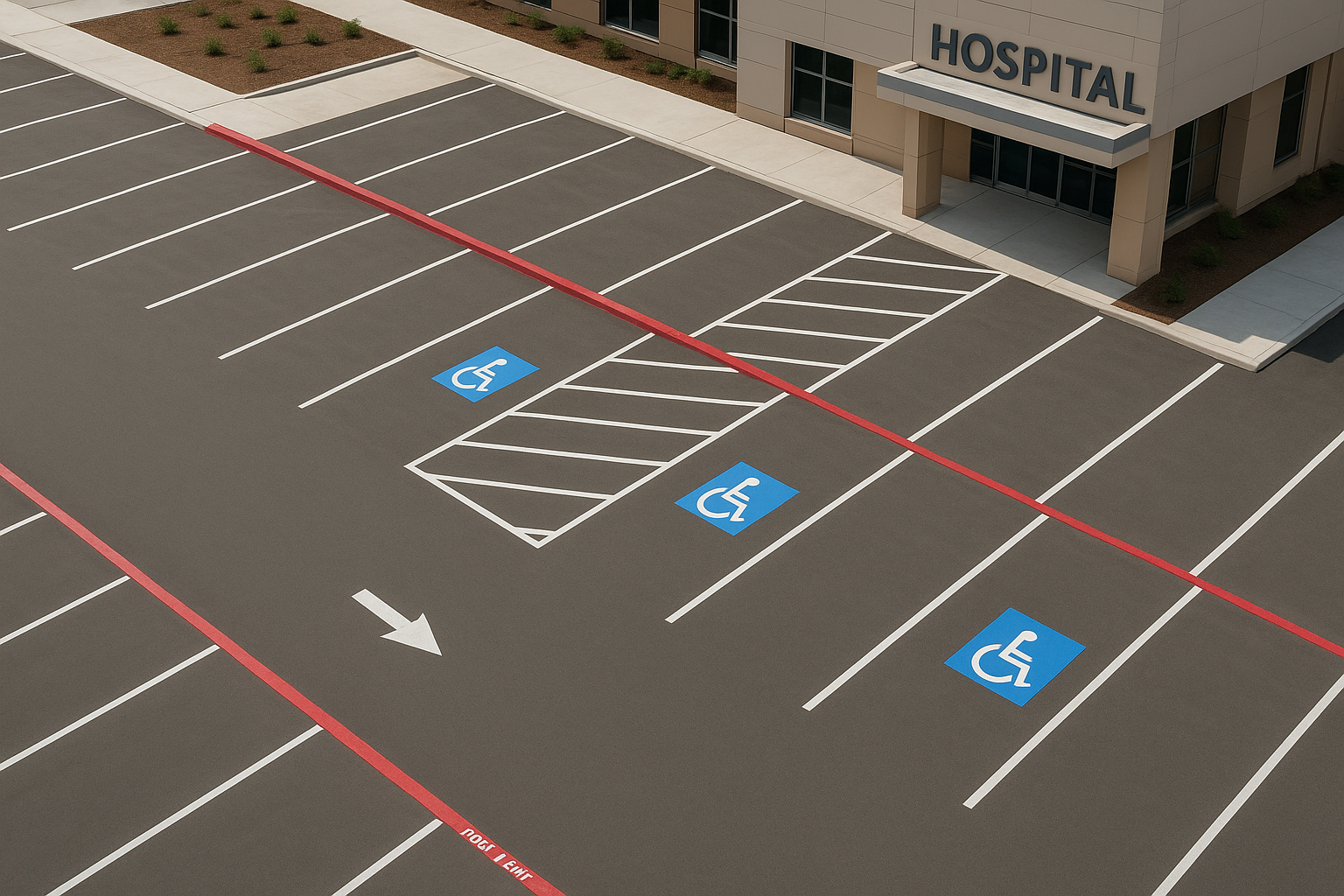
Clear, code-compliant line striping for healthcare facilities helps patients and staff navigate parking lots safely.
Why Healthcare Facility Striping Matters for Patient Safety
Healthcare facility striping matters because it directly affects how quickly patients receive care. Consequently, a poorly marked lot can slow ambulance access, confuse visitors, or leave disabled patients struggling to find a legal parking spot. According to the Centers for Disease Control and Prevention, roughly one in four adults in the United States lives with some type of disability, which means healthcare properties see a higher share of visitors who depend on accessible parking than most other commercial sites.
In addition, hospitals and clinics face unique traffic patterns, including drop-off zones, ambulance bays, and staff-only areas that all need distinct markings. Without clear separation, vehicles can block emergency lanes or wander into restricted zones during high-stress moments. Furthermore, faded or missing striping increases the risk of accidents between pedestrians and vehicles in already busy lots. For these reasons, healthcare properties typically require more frequent inspections than a standard office building, and property managers who invest in professional striping reduce liability while showing a genuine commitment to visitor safety.
ADA Compliance Requirements for Medical Parking Lots
ADA compliance is one of the most important parts of any healthcare parking lot project. Under the Americans with Disabilities Act, medical facilities must provide a minimum number of accessible parking spaces based on total lot size — generally one accessible space for every 25 total spaces, with additional van-accessible stalls required at larger properties. For example, a lot with 100 total spaces needs at least four accessible stalls, and at least one must be van-accessible with extra aisle width.
Beyond stall counts, striping crews must also mark access aisles, use the International Symbol of Accessibility, and ensure signage height and placement meet federal guidelines. Because non-compliance can result in fines or accreditation issues, many healthcare property managers schedule a compliance review as part of their striping maintenance plan. Similarly, local Texas municipalities may add requirements on top of federal ADA rules, so it’s worth confirming both sets of standards before a restriping project begins. A qualified contractor familiar with healthcare properties will typically handle this research as part of the project scope.
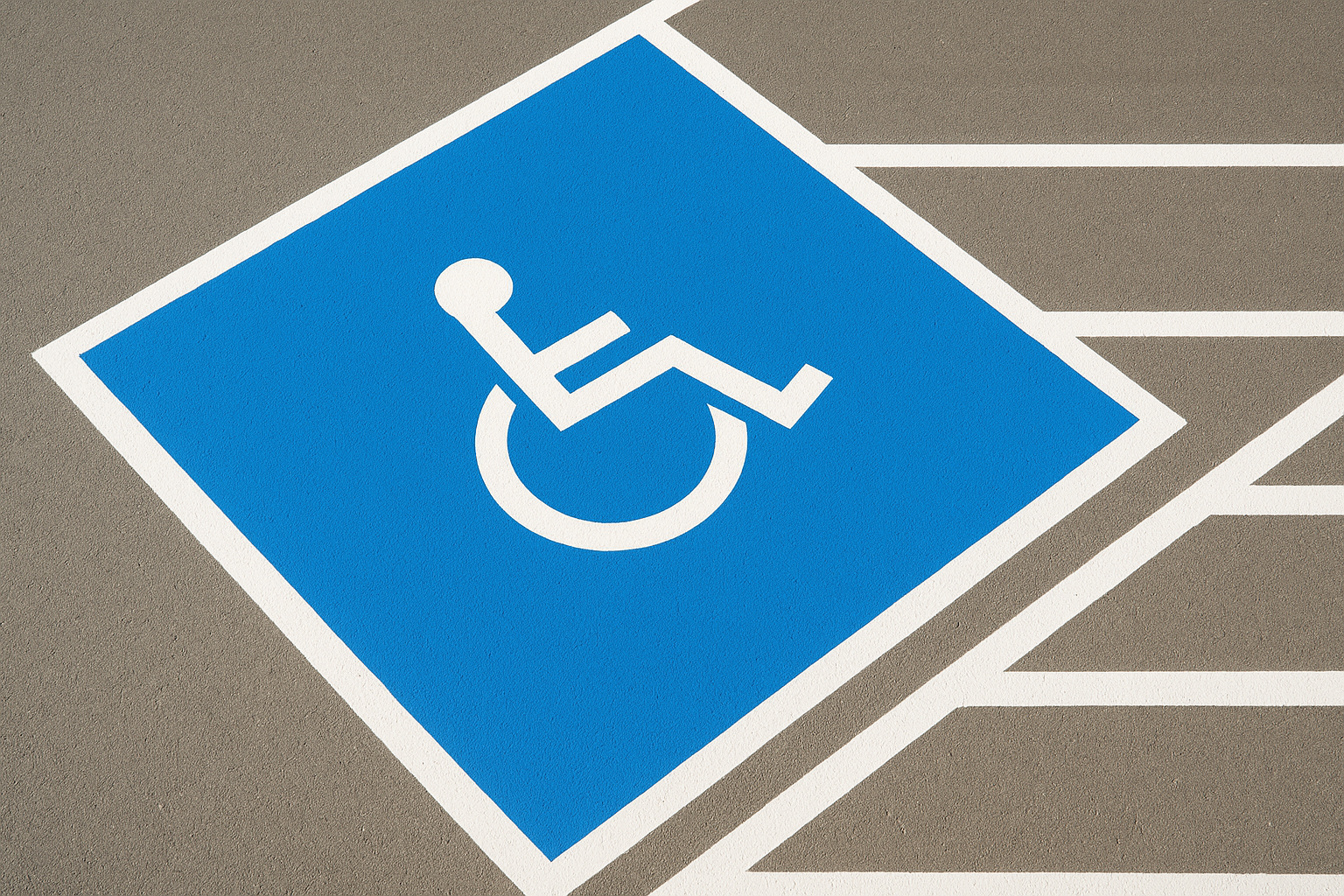
ADA-compliant stall markings are a core part of accessibility at medical clinics and hospitals.
Key Elements of Hospital Parking Lot Striping
Every healthcare parking lot striping project includes several core elements, each serving a specific safety or compliance purpose:
- ADA-accessible stalls — correctly sized, marked, and paired with access aisles and signage.
- Fire lane markings — red paint with white lettering that keeps emergency access clear, in line with NFPA guidance.
- Directional arrows — guide traffic flow and reduce confusion near entrances and drop-off zones.
- Crosswalks — highlight pedestrian paths between parking areas and building entrances.
- Curb painting — marks no-parking zones, loading areas, and ambulance bays.
Together, these markings create a lot that functions safely under pressure. If you’re curious how these elements affect overall circulation, this guide on how line striping can improve traffic flow in parking lots breaks down the traffic engineering side of the process in more detail.
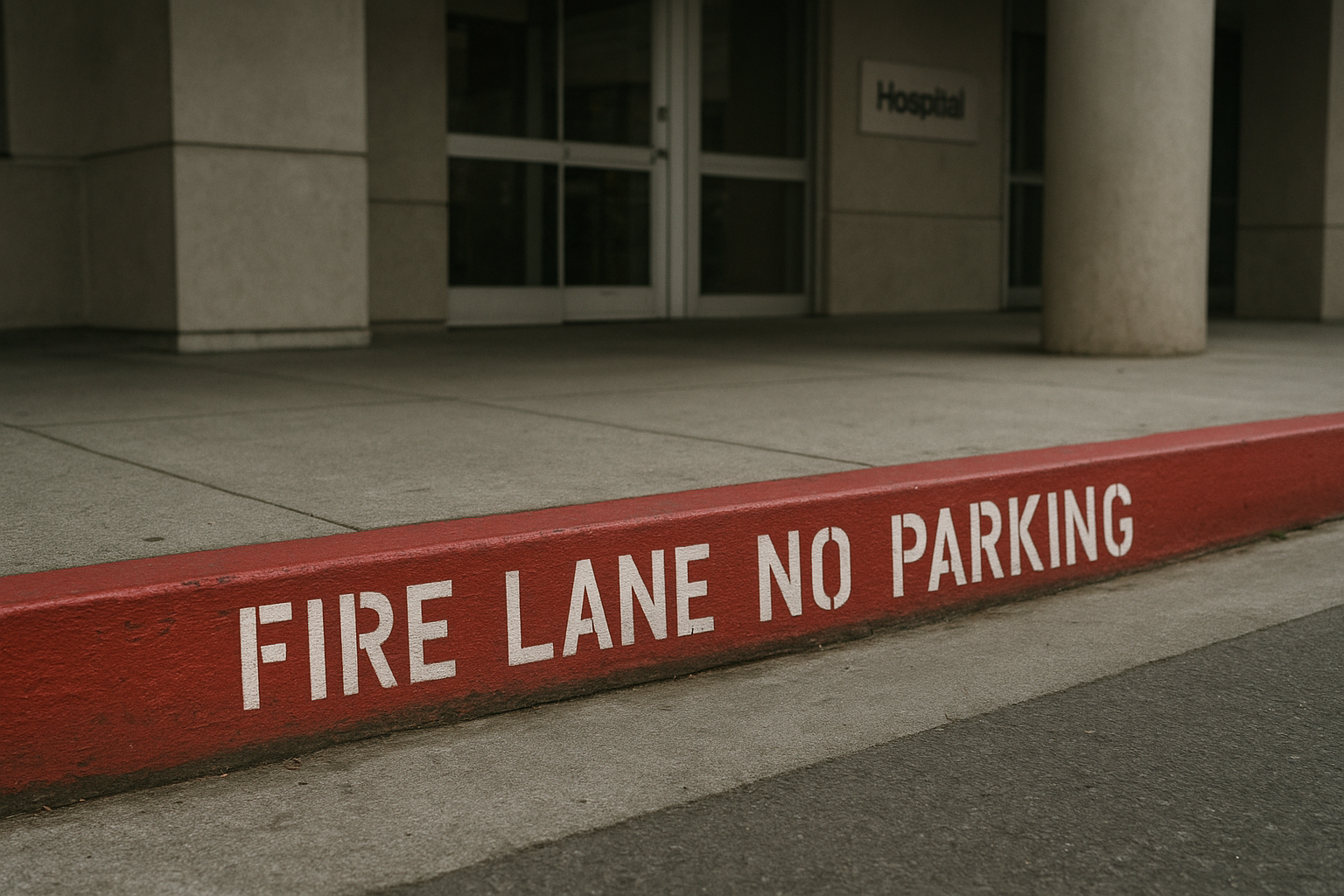
Fire lane markings keep emergency vehicle access clear at hospitals and clinics.
How to Plan a Line Striping Project for Healthcare Facilities
Planning a striping project at an active healthcare facility takes more coordination than a typical commercial lot. Here’s a straightforward process property managers can follow:
- Schedule a site assessment. A professional crew should walk the property to measure stall counts, review existing ADA compliance, and note fire lane and drop-off zone locations before any paint goes down.
- Review ADA and local code requirements. Confirm current federal ADA ratios alongside any Texas or municipal rules that apply specifically to medical properties in your service area.
- Choose durable striping materials. Decide between water-based traffic paint and thermoplastic striping based on traffic volume, climate, and budget, since healthcare lots see heavy daily use.
- Schedule work during low-traffic hours. Most healthcare facilities stripe overnight or on weekends to avoid disrupting patient drop-offs, staff shifts, and emergency vehicle access during the project.
- Conduct a post-project walkthrough. Inspect new markings for accuracy, confirm ADA symbols and signage are properly placed, and document the completed work for compliance records.
Choosing a Professional Line Striping Company in Texas
Not every striping contractor has experience with healthcare properties. Therefore, it’s worth asking specific questions before hiring a crew for a hospital, clinic, or medical office lot. For instance, ask whether the company understands current ADA requirements, has handled fire lane marking projects, and can work around active patient traffic.
Property owners in North Texas can review this breakdown of who does line striping for healthcare facilities in Texas to compare local options and see what sets an experienced crew apart. If you manage a broader commercial property, this overview of parking lot striping services covers everything from new layouts to full restriping. Companies with additional experience nearby, such as this look at woodland striping services and expert parking lot marking, can offer useful comparison points for what a thorough project should include. For a free quote on a healthcare facility striping project in Denton or Plano, TX, visit stripespls.com directly.
How Often Should Healthcare Facilities Restripe Their Parking Lots?
Most healthcare facilities should plan to restripe every 12 to 24 months, though exact timing depends on traffic volume, climate, and paint type. High-traffic hospital lots in hot Texas summers tend to fade faster than a quiet clinic lot with less daily use. Similarly, thermoplastic markings generally last longer than standard water-based paint, though they cost more upfront.
As a result, many property managers combine an annual visual inspection with a more thorough restriping every one to two years. This routine approach helps catch fading fire lane paint or worn ADA symbols before they become compliance issues. For a closer look at how material choice affects longevity, this article on the benefit of long-lasting line striping compares options in more depth.
Frequently Asked Questions About Line Striping for Healthcare Facilities
What is line striping for healthcare facilities?
Line striping for healthcare facilities is the professional marking of parking lots at hospitals, clinics, and medical offices, including ADA stalls, fire lanes, and directional arrows. It’s designed to meet stricter accessibility and safety standards than typical commercial properties.
Why do hospitals need more accessible parking spaces than other businesses?
Hospitals and clinics serve a higher percentage of visitors with mobility challenges, so ADA ratios and van-accessible stalls matter more here than at many other commercial sites. In addition, patients often arrive during emergencies, when quick access to entrances is critical.
How often should a medical facility restripe its parking lot?
Most medical facilities restripe every 12 to 24 months, though high-traffic hospital lots may need touch-ups sooner. Climate, paint type, and traffic volume all affect how quickly markings fade.
What color should fire lane markings be at a healthcare facility?
Fire lanes are typically painted red with white lettering that reads “FIRE LANE — NO PARKING,” following widely recognized fire code standards. Local fire marshals may require specific wording or curb painting details, so it’s worth confirming local rules before painting.
How much does line striping for healthcare facilities typically cost?
Costs vary based on lot size, material choice, and the number of ADA stalls or fire lanes needed, but most healthcare properties can expect a project quote after a site walkthrough. Requesting a free quote from a local contractor is the most accurate way to budget for the work.
What’s the difference between water-based paint and thermoplastic striping?
Water-based paint costs less upfront but wears faster under heavy traffic, while thermoplastic striping lasts longer and holds up better in hot climates. Many healthcare facilities choose thermoplastic for fire lanes and high-traffic areas despite the higher initial cost.
How long does a typical healthcare facility striping project take?
Most projects take one to three days depending on lot size, though larger hospital campuses may take longer. Crews often schedule the work overnight or on weekends to avoid disrupting patient traffic.
What are common mistakes in medical facility parking lot striping?
Common mistakes include incorrect ADA stall dimensions, missing van-accessible spaces, and fire lanes that don’t meet local fire code wording requirements. Skipping a compliance review before painting is one of the most frequent — and costly — errors.
Can a healthcare facility stripe its own parking lot instead of hiring a professional?
While it’s technically possible, DIY striping often leads to inaccurate ADA measurements and non-compliant fire lanes that can trigger fines. Professional crews understand current codes and use durable materials designed for high-traffic healthcare properties.
What ADA parking requirements apply specifically to medical offices?
Medical offices must follow the same federal ADA ratio of accessible spaces to total spaces as other commercial properties, generally one accessible stall per 25 total spaces. However, some local jurisdictions add extra requirements for healthcare-specific properties, so it’s worth checking both sets of rules.
Do fire lanes at hospitals require a special permit in Texas?
In many Texas municipalities, fire lane markings must be approved by the local fire marshal before or after painting. Requirements can vary by city, so it’s best to confirm with local authorities during the planning stage.
How can property managers extend the life of parking lot striping?
Regular cleaning, prompt repair of cracks and potholes, and choosing durable materials like thermoplastic all help striping last longer. Scheduling routine inspections also catches fading before it becomes a compliance problem.
What does a professional line striping service for healthcare facilities typically include?
A full-service project usually includes a site assessment, ADA compliance review, fire lane marking, directional arrows, and a final walkthrough to confirm accuracy. Many companies, such as those serving the Denton and Plano, TX area, also offer free quotes before work begins.
Final Thoughts
Line striping for healthcare facilities plays a bigger role in patient safety than many property owners realize. From ADA-compliant stalls to clearly marked fire lanes, every line on a hospital or clinic parking lot serves a purpose beyond appearance. As we’ve covered, staying proactive with inspections, choosing durable materials, and working with an experienced contractor all help healthcare properties stay compliant and welcoming. Ultimately, whether you’re planning a new layout or refreshing faded markings, investing in professional line striping for healthcare facilities protects patients, reduces liability, and keeps your property running smoothly. If you manage a medical property in Denton, Plano, or the surrounding North Texas region, requesting a free quote from stripespls.com is a simple first step toward a safer, more compliant parking lot.