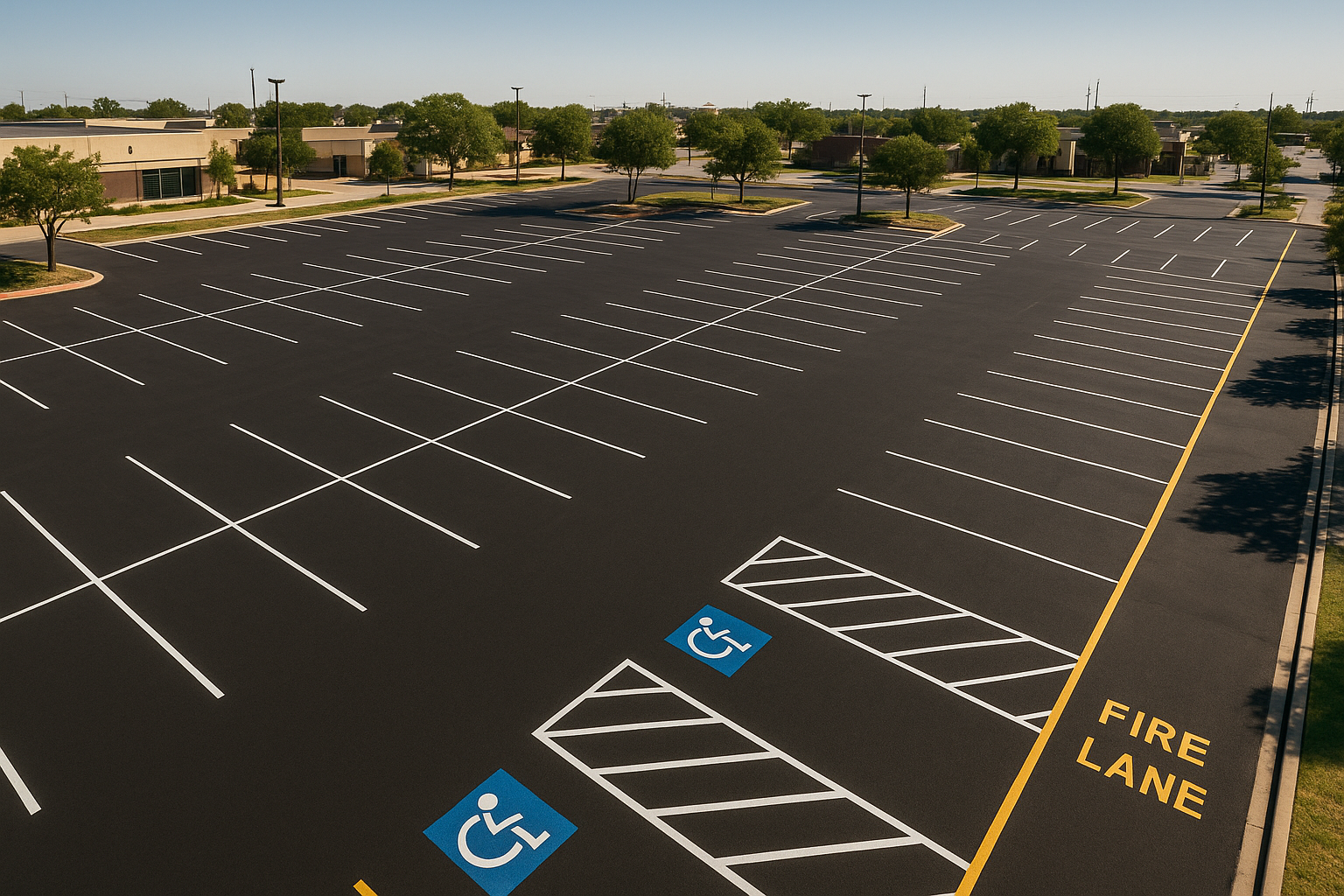
Parking lot striping in Dallas is one of the most impactful — and most overlooked — investments a commercial property owner can make. Fresh, precise markings do more than look professional: they protect you from ADA violations, keep emergency lanes clear for fire marshals, and guide thousands of drivers safely through your lot every year. According to the U.S. Department of Justice ADA portal, improperly marked accessible parking spaces rank among the most frequently cited ADA violations at commercial properties nationwide — making compliance a genuine financial risk, not just a formality.
Furthermore, the Dallas–Fort Worth climate accelerates paint fading faster than almost anywhere else in the country. As a result, North Texas property owners face striping timelines and material decisions that differ meaningfully from cooler regions. This guide covers everything you need — from ADA stall counts and fire lane specs to paint types, pricing, scheduling tips, and how to choose the right contractor near Dallas.
What Is Parking Lot Striping in Dallas?
Parking lot striping in Dallas is the professional process of applying traffic paint or thermoplastic markings to a paved surface. These markings designate parking stalls, traffic lanes, pedestrian crossings, ADA-accessible spaces, fire lanes, stop bars, and directional arrows. Each line serves a specific legal and functional purpose — and every marking must meet both federal accessibility standards and local municipal codes.
In the Dallas area specifically, intense UV radiation breaks down paint binders significantly faster than in northern states. Therefore, commercial lots here typically require restriping more often than the national average. A freshly striped lot also signals to visitors that the property is professionally managed — and that first impression happens before anyone even reaches the front door.
Consequently, understanding what goes into a quality striping project — and what separates a competent contractor from a mediocre one — is essential knowledge for every DFW property manager.
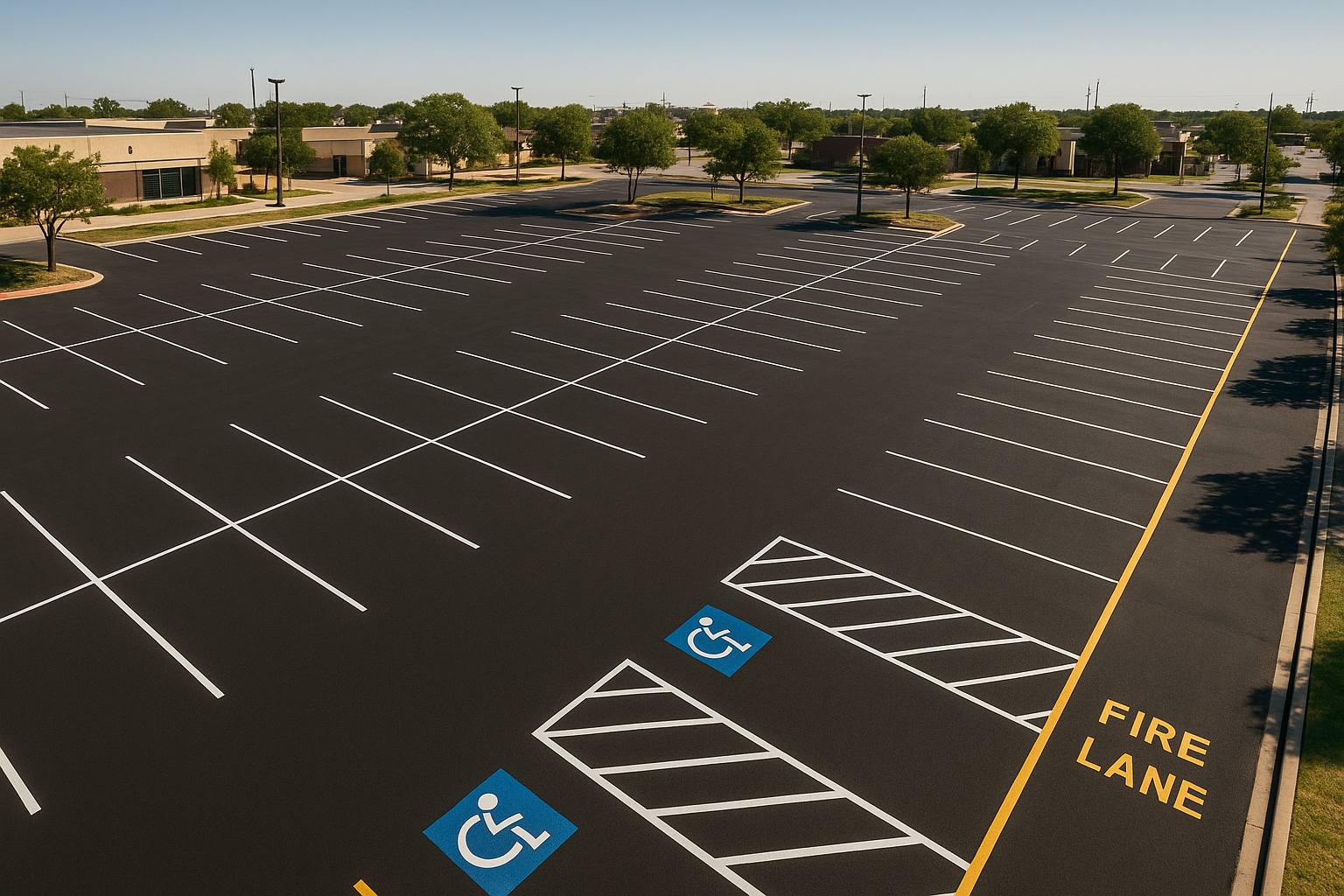
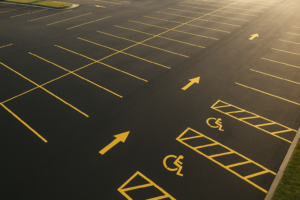
A professionally striped commercial parking lot in the Dallas–Fort Worth area — crisp white stall lines, ADA-compliant markings, and clearly defined fire lane designations.
Why Dallas Property Owners Prioritize Lot Markings
The Dallas–Fort Worth metroplex is one of the fastest-growing commercial real estate markets in the United States. As a result, competition for customers and tenants is intense — and a clean, well-organized parking lot is often the very first impression a visitor receives. In contrast, a lot with faded, missing, or confusing markings communicates neglect before anyone steps inside.
Beyond aesthetics, the legal stakes are significant. The Americans with Disabilities Act (ADA) mandates that parking lots serving the public provide a minimum number of accessible stalls, each meeting exact dimensional and marking standards. Non-compliance can result in federal fines and costly private litigation — risks no property owner should accept.
Similarly, fire lane markings are required by local fire codes and must remain clearly visible at all times. Faded or absent fire lane paint can trigger citations during fire marshal inspections — and more critically, can delay emergency response when seconds matter.
Key Benefits of Professional Line Striping in DFW
- Improved traffic flow: Directional arrows and defined lanes eliminate driver confusion and reduce fender-bender risk in busy lots.
- Maximized parking capacity: Precisely laid stall lines ensure every square foot of pavement is used efficiently — often adding 10–15% more usable spaces compared to poorly planned layouts.
- ADA compliance: Correctly marked accessible stalls and access aisles protect your business from federal penalties and disability discrimination claims.
- Fire code adherence: Visible, code-compliant fire lanes keep emergency access routes clear and your property ready for marshal inspections.
- Enhanced curb appeal: A freshly striped lot signals professionalism, encourages repeat visits, and supports higher lease rates for commercial tenants.
- Liability reduction: Industry data suggests that regularly restriped lots experience up to 30% fewer minor vehicle incidents than lots with faded or missing markings.
ADA Compliance Requirements for Dallas Parking Lots
Understanding ADA requirements is essential before scheduling any parking lot striping project in Dallas. According to the U.S. Access Board’s ADA Accessibility Guidelines, the required number of accessible stalls scales with total lot capacity. Specifically, here is how the ratios work:
- 1–25 total spaces: Minimum 1 accessible stall required
- 26–50 total spaces: Minimum 2 accessible stalls required
- 51–75 total spaces: Minimum 3 accessible stalls required
- 76–100 total spaces: Minimum 4 accessible stalls required
- 101–150 total spaces: Minimum 5 accessible stalls required
- 151–200 total spaces: Minimum 6 accessible stalls required
- 201–300 total spaces: Minimum 7 accessible stalls required
- 301–400 total spaces: Minimum 8 accessible stalls required
Additionally, every accessible stall must be at least 8 feet wide with a 5-foot access aisle adjacent to it. Van-accessible spaces require an expanded 8-foot access aisle. Each stall must display the International Symbol of Accessibility (the wheelchair icon) on the pavement surface, and a sign mounted at a height visible from inside a parked vehicle.
Consequently, many Dallas property owners discover during a restriping consultation that their current layout falls short of these requirements — either because lot usage has grown since original construction, or because code revisions have added new obligations. Working with an experienced Dallas striping contractor who knows these rules prevents costly retrofits and ADA complaints down the road.
Van-Accessible Spaces: What Dallas Lots Often Get Wrong
One of the most commonly missed ADA requirements in North Texas parking lots is the van-accessible designation. At minimum, one in every six accessible stalls must be van-accessible — meaning it requires a full 8-foot access aisle rather than the standard 5-foot aisle. Additionally, these spaces must have at least 98 inches of vertical clearance along the vehicle’s entire route from the entrance to the space.
In practice, this means that a lot with six accessible stalls needs at least one of them configured as a van-accessible bay — a detail that a qualified striping contractor in Dallas will identify and address proactively.
Paint Types Used in Dallas Parking Lot Striping
Choosing the right paint type is one of the most consequential decisions in any Dallas parking lot striping project. The Texas climate — extreme UV exposure, high summer temperatures, and periodic heavy rain — puts paint systems under severe stress. Specifically, here are the four main options and how each performs in North Texas conditions:
Water-Based Traffic Paint
Water-based traffic paint — also called latex paint — is the most widely used option for standard commercial lot striping in DFW. It dries quickly (typically 30 minutes in normal Texas weather), is low in volatile organic compounds (VOCs), and is environmentally compliant. However, it tends to fade faster under intense UV exposure, typically lasting one to two years before restriping is needed.
Oil-Based Alkyd Paint
Oil-based alkyd paint offers better adhesion and slightly longer durability than water-based formulations. In contrast, it takes longer to dry and produces higher VOC emissions. Some Dallas municipalities have restrictions on its use due to air quality regulations — so always confirm with your contractor before specifying this product.
Thermoplastic Markings
Thermoplastic is a heat-applied, plastic-based material that bonds directly to the pavement surface. It is significantly more durable than any paint product — typically lasting three to seven years even in high-traffic Dallas conditions. Furthermore, thermoplastic can incorporate glass beads for retroreflectivity, improving nighttime visibility. The tradeoff is a higher upfront cost, but for high-traffic lots, the extended service life generally makes it the more cost-effective choice over time.
Epoxy and Polyurea Coatings
For specialty applications such as parking garages, warehouse floors, or high-wear pedestrian zones, epoxy and polyurea coatings offer exceptional chemical and abrasion resistance. These are generally applied in structured, climate-controlled environments and are less common in standard outdoor Dallas parking lots — but they represent a premium option for specific use cases.
How to Prepare Your Lot for Professional Parking Lot Striping in Dallas
Proper preparation is the single biggest factor in how long your new markings last. Follow these five steps before your contractor arrives to ensure the best possible result:
- Assess the current condition of your lot. Walk every aisle and note areas where markings are faded, cracked, or missing. Specifically document ADA stalls, fire lane areas, crosswalks, and directional arrows that need attention. Photographing problem areas helps your contractor provide an accurate quote.
- Clean the pavement surface thoroughly. Sweep or pressure-wash the entire lot to remove dirt, oil, debris, and loose aggregate. Paint and thermoplastic both adhere best to a clean, dry surface. Therefore, schedule cleaning at least 24 hours before striping when possible, especially after pressure washing.
- Request a free quote and layout review. Contact a licensed Dallas parking lot striping contractor for an on-site measurement and layout consultation. Discuss any changes to stall configuration, ADA requirements, fire lane placement, or new markings before work begins — changes made after paint is applied are expensive.
- Schedule the striping during low-traffic hours. Coordinate with your contractor to plan the job during overnight hours, early mornings, or weekends. This minimizes disruption to customers and tenants while giving paint adequate time to dry before vehicle traffic resumes.
- Inspect the finished markings before reopening. Once paint has fully cured, walk the lot with the contractor. Verify that all stall lines, ADA symbols, fire lane markings, directional arrows, and stop bars are accurate, clearly visible, and meet current code. Address any corrections before removing cones and reopening the lot to traffic.
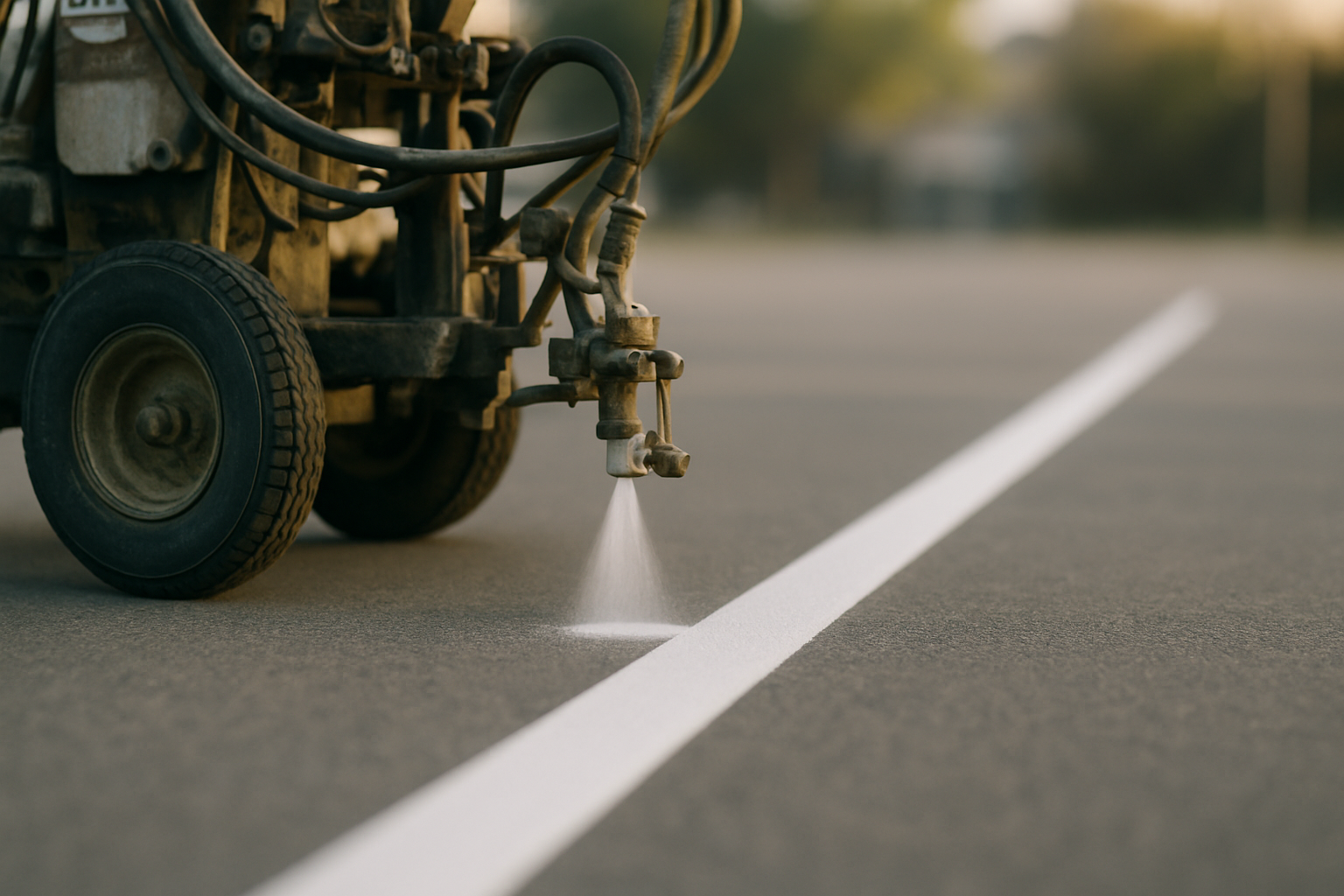
A professional striping machine lays precise, even lines during a Dallas commercial restriping project — the equipment quality directly affects line consistency and longevity.
What Does Parking Lot Striping Cost in the Dallas Area?
Cost is naturally one of the first questions property managers ask. In the Dallas–Fort Worth region, pricing varies based on project scope, lot size, and the type of markings required. Here is a practical breakdown of what to expect:
- Standard stall lines (restriping): $0.15–$0.35 per linear foot
- New layout striping (from scratch): $0.25–$0.50+ per linear foot, due to additional layout time
- ADA handicap symbol (painted): $25–$75 per symbol
- Fire lane marking (paint + text): $1.00–$2.50 per linear foot
- Directional arrows: $15–$40 per arrow stencil
- Crosswalk (standard): $75–$200 depending on width and paint type
- Thermoplastic markings: 2x–4x the cost of paint, but with 3–7x the service life
Therefore, the total cost for a typical 50-stall commercial lot restriping project in Dallas might range from roughly $400 to $900 for basic line striping, with ADA symbols, fire lanes, and arrows adding to the total. Larger lots — 150 stalls or more — can run $1,500 to $4,000+ depending on scope and paint type selected.
Above all, the most accurate way to budget is to request a free on-site quote. Reputable Dallas striping contractors will measure your lot, assess scope, and provide a detailed estimate at no charge — so there is no reason to guess.
How Often Should You Restripe a Dallas Parking Lot?
Most commercial parking lots in the Dallas area need restriping services every one to two years. However, high-traffic properties — such as grocery stores, hospitals, and shopping centers — may need annual touch-ups due to the sheer volume of vehicles driving over painted surfaces every day.
The Texas climate compounds the challenge significantly. UV radiation from the intense Dallas sun degrades paint binders at a rate roughly 40% faster than in northern states, according to pavement maintenance industry estimates. As a result, property owners in this region should inspect lot markings at least twice per year — ideally in spring before peak traffic season and again in early fall — and schedule restriping before markings reach a dangerously faded state.
In contrast, thermoplastic markings installed by a qualified Dallas striping contractor can extend that interval to three to five years, reducing long-term maintenance costs substantially. This makes thermoplastic particularly attractive for high-volume retail and medical campus lots where downtime during restriping is costly.
Common Parking Lot Markings Explained
A complete Dallas parking lot striping project involves several distinct marking types, each serving a specific purpose. Understanding what each marking does helps you communicate clearly with your contractor about scope — and ensures nothing gets missed. For a deeper walkthrough, see our Blacktop Striping Services: What You Need to Know.
- Stall lines: Standard white lines defining individual parking spaces. Line thickness typically runs 4 inches for standard commercial lots.
- Directional arrows: Guide drivers through one-way lanes and prevent head-on conflicts in narrower aisles.
- ADA handicap symbols: Blue painted ISA (International Symbol of Accessibility) icons with access aisle hash marks, required at each accessible stall.
- Fire lane markings: Red paint and “FIRE LANE – NO PARKING” text applied along curbs and travel lanes near building entrances, per local fire code.
- Stop bars: Thick white lines (typically 12–24 inches wide) at internal lot intersections indicating where vehicles must yield before proceeding.
- Crosswalks: Parallel white stripes connecting building entrances to parking areas, designating safe pedestrian crossing zones.
- Curb markings: Yellow paint on curbs indicating no-parking zones, loading areas, or restricted access points.
- Reserved / visitor stalls: Custom stenciled text such as “RESERVED,” “VISITOR,” “COMPACT ONLY,” or “EV CHARGING” for specialized stall designations.
- Speed bumps and speed limit markings: Painted warnings near speed-reduction devices to improve driver awareness and reduce lot accidents.
In addition, properties with EV charging stations increasingly require dedicated stall markings and signage. A knowledgeable Dallas striping contractor can handle all of these needs using professional stencils and precision striping equipment.
Choosing the Right Parking Lot Striping Contractor Near Dallas
Not all striping contractors deliver the same quality — and in the competitive DFW commercial real estate market, the difference matters. When evaluating providers for your parking lot striping project, specifically look for these qualifications: For a deeper walkthrough, see our Parking Lot Striping DFW: Expert Line Marking Services.
- Proven commercial experience: Look for a contractor with a verifiable portfolio of commercial and municipal lot projects across the DFW area — not just residential driveways.
- ADA and fire code expertise: Your contractor should know federal ADA stall count requirements, Texas-specific accessible parking rules, and local fire lane specifications by municipality.
- Professional-grade equipment: Self-propelled line striping machines with precise speed controls deliver consistent line widths. Hand-rolled equipment or inexperienced operators produce wavy, uneven lines.
- Flexible scheduling: The best Dallas contractors offer overnight, early-morning, and weekend scheduling to minimize business disruption — especially important for retail centers and medical campuses.
- Transparent pricing: Reputable contractors provide free on-site quotes with itemized breakdowns — no vague lump-sum bids that balloon after work begins.
- Verifiable references: Ask for photos of recent comparable projects and check Google or BBB reviews from other DFW property owners and property management companies.
For property owners in greater North Texas, stripespls.com offers full-service parking lot marking solutions — including new striping, restriping, ADA compliance work, and fire lane marking — throughout the Denton, Plano, and greater Dallas service areas. You can explore their parking lot striping services or review their work on professional striping services in Denton, TX to evaluate their capabilities before reaching out.
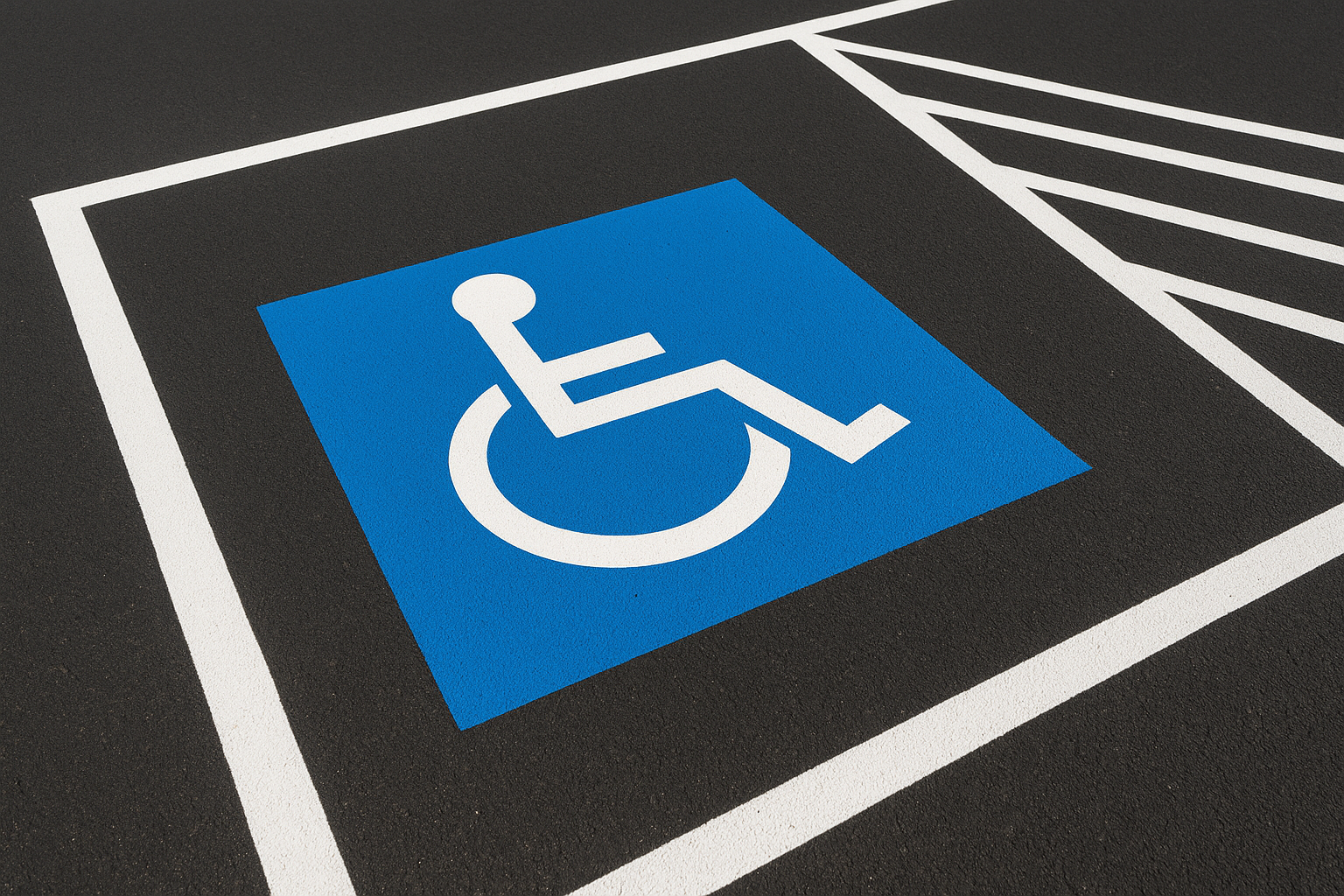
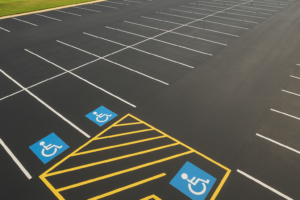
ADA-compliant handicap stall markings require precise dimensions, correct symbol placement, and access aisle hash lines — details a professional Dallas striping contractor handles correctly on every project.
Dallas-Specific Considerations: Weather, Seasons, and Scheduling
The DFW climate creates unique challenges for parking lot striping that property owners in other regions simply do not face. Specifically, North Texas summers push pavement surface temperatures well above 100°F — sometimes reaching 150°F+ on dark asphalt. At these temperatures, water-based paint can dry too quickly, creating adhesion problems and uneven texture.
Therefore, experienced Dallas striping contractors typically recommend the following seasonal scheduling strategy:
- Best seasons for striping: Spring (March–May) and Fall (September–November), when surface temperatures are moderate and humidity is manageable.
- Summer scheduling: If summer striping is necessary, schedule for very early morning (before 8 AM) when pavement temperatures are lowest. Avoid mid-afternoon work entirely.
- Avoid striping in rain: Wet pavement prevents paint adhesion. Most contractors require surfaces to be dry for at least 24 hours before application.
- Minimum temperature threshold: Most traffic paints should not be applied when air temperatures fall below 50°F — a relevant constraint during Dallas cold snaps from November through February.
In addition, North Texas occasionally experiences sudden weather shifts. A qualified striping contractor will monitor forecasts and reschedule if conditions threaten the quality of the application — protecting your investment rather than rushing the job.
How Long Does Parking Lot Striping Take to Dry?
Water-based traffic paint in normal Dallas weather conditions typically dries to the touch within 20–30 minutes. However, contractors generally recommend keeping vehicle traffic off freshly painted surfaces for at least one full hour to ensure complete adhesion and clean, sharp line edges. For thermoplastic markings, the material cools and hardens within minutes of application, making it ready for traffic faster than painted alternatives.
Parking Lot Striping for Specific Property Types in DFW
Different property types have distinct striping needs. A medical campus has different priorities than a retail strip center, and a warehouse complex requires different markings than a school parking lot. Understanding these differences helps you ask the right questions when requesting a quote from a Dallas striping contractor.
Retail Centers and Shopping Plazas
Retail lots in the DFW area tend to be large, high-turnover environments. As a result, they need frequent restriping, prominent directional arrows to manage traffic flow, clearly marked fire lanes near store entrances, and generous ADA-accessible stall counts. Cart return area markings and loading zone designations are also common additions.
Medical Campuses and Healthcare Facilities
Medical facilities often require a higher ratio of accessible stalls than standard commercial lots, given their patient population. Additionally, patient drop-off zones, ambulance lanes, and employee-designated areas need clear, durable markings. Above all, ADA compliance is paramount — non-compliance at a healthcare property carries particularly high legal exposure.
Office Parks and Corporate Campuses
Corporate campus lots benefit from reserved stall designations, numbered spaces for permit systems, and clear visitor versus employee separation. EV charging station markings are increasingly requested as DFW corporate campuses modernize their facilities to attract and retain talent.
Warehouses and Industrial Facilities
Industrial lots typically require heavy-duty markings capable of withstanding truck traffic and forklift use near loading docks. Thermoplastic is often the preferred choice here due to its durability. Furthermore, interior floor striping — lanes, safety zones, forklift paths — may also be part of a comprehensive marking project at warehouse properties.
Schools, Universities, and Municipal Facilities
School and municipal lots must meet the same ADA standards as private commercial properties. In addition, school bus lanes, parent drop-off zones, staff parking areas, and pedestrian crosswalk markings are all critical safety elements. These properties often schedule striping during summer breaks to avoid student disruption.
Frequently Asked Questions About Parking Lot Striping in Dallas
What is parking lot striping in Dallas and why does it matter?
Parking lot striping in Dallas is the professional application of painted lines, symbols, and markings on parking surfaces to organize traffic flow, designate stalls, and satisfy local safety codes. It matters because clear markings reduce accidents, maximize parking capacity, and keep properties ADA-compliant — protecting owners from fines and liability.
How often should a Dallas parking lot be restriped?
Most commercial parking lots in the Dallas area need restriping every one to two years. High-traffic lots or those exposed to intense Texas UV radiation may fade faster and require annual touch-ups. Thermoplastic markings can extend restriping intervals to three to five years.
How much does parking lot striping cost in the Dallas–Fort Worth area?
Standard restriping runs $0.15–$0.35 per linear foot. A typical 50-stall lot restrip ranges from $400 to $900; larger lots of 150 stalls or more can cost $1,500–$4,000+ depending on scope, paint type, and additional markings like ADA symbols or fire lanes. Request a free on-site quote for an accurate figure.
What ADA requirements apply to parking lots in Texas?
Under the Americans with Disabilities Act, parking lots must provide a scaled number of accessible stalls based on total lot capacity, with at least one van-accessible space per accessible cluster. Each accessible stall must be at least 8 feet wide with a 5-foot access aisle and marked with the International Symbol of Accessibility. Van-accessible spaces require an 8-foot access aisle and 98 inches of vertical clearance.
What type of paint is best for parking lot striping in Dallas?
Water-based latex traffic paint is the most common and affordable choice, drying in 20–30 minutes. Thermoplastic is superior in durability — lasting 3–7 years — and is the better long-term value for high-traffic Dallas lots. Oil-based alkyd paint offers moderate durability but is restricted in some DFW municipalities due to VOC regulations.
What is the best time of year for parking lot striping in Dallas?
Spring (March–May) and fall (September–November) offer the most favorable conditions — moderate pavement temperatures, lower humidity, and less risk of sudden rain. Summer striping should be scheduled for early morning hours before pavement temperatures climb. Winter striping is possible but should be avoided when air temperatures drop below 50°F.
How long does parking lot striping take to dry?
Water-based traffic paint dries to the touch in 20–30 minutes under normal North Texas conditions. Contractors recommend keeping vehicles off fresh markings for at least one hour for full adhesion. Thermoplastic markings harden within minutes of application and are typically ready for traffic faster.
Can parking lot striping be done at night in Dallas?
Yes. Many professional striping contractors in the Dallas area offer overnight and early-morning scheduling specifically to minimize business disruption. Night striping is especially common for retail centers, hospitals, and other high-traffic commercial properties where daytime closure is impractical.
What is the difference between new striping and restriping a parking lot?
New striping involves laying out and painting a parking lot from scratch — including measurement, layout design, and stenciling. Restriping refreshes existing faded markings by painting over the current layout. Restriping is generally faster and less expensive, while new layout projects require additional planning time and expertise.
Do fire lane markings require special specifications in Dallas?
Yes. Fire lane markings must use red paint and meet local fire code specifications regarding line width, placement distance from the building, and accompanying signage. Requirements can vary by specific municipality within the DFW area, so working with a knowledgeable local contractor is essential for full compliance.
Does weather affect parking lot striping in Texas?
Significantly. Temperature, humidity, and surface conditions all affect paint adhesion and curing quality. Most contractors avoid striping when surfaces are wet, when air temperatures fall below 50°F, or when pavement temperatures exceed 100°F. Dallas summers require early-morning scheduling to stay within acceptable application windows.
How do I choose a reliable parking lot striping contractor near Dallas?
Look for demonstrated commercial experience in DFW, knowledge of ADA and local fire codes, professional-grade striping equipment, flexible scheduling, transparent itemized pricing, and verifiable references or reviews from other North Texas property owners. A contractor offering free on-site quotes with no pressure is a strong indicator of professionalism.
Ready to Get Your Lot Striped? Here’s Your Next Step
Getting started is straightforward. First, assess your lot’s current condition and photograph any markings that are faded, damaged, or missing. Then, reach out to a qualified contractor to schedule a free on-site evaluation. Most reputable companies in the North Texas area can deliver a quote within 24 to 48 hours of the site visit.
For property owners near Denton, Plano, and the broader Dallas region, you can contact the team at stripespls.com to request a free quote. Additionally, you can browse more helpful resources on the stripespls.com blog for tips on maintaining your commercial parking facility year-round — from sealcoating schedules to ADA compliance checklists.
Industry insight: Parking lots restriped on a consistent schedule experience up to 30% fewer minor vehicle incidents compared to lots with faded or missing markings, according to pavement maintenance industry data. Furthermore, properties with crisp, ADA-compliant markings consistently command higher lease rates and lower insurance premiums. Regular striping maintenance is a measurable safety and financial investment — not just a cosmetic one.
Conclusion: Make Parking Lot Striping in Dallas a Priority
Parking lot striping in Dallas is far more than a cosmetic upgrade — it is a fundamental component of safe, efficient, and legally compliant property management. From ADA-accessible stall dimensions to fire lane designations, thermoplastic durability choices, and seasonal scheduling strategy, every decision you make about your lot markings has a direct impact on safety, compliance, and business performance.
In summary, the key takeaways are: restripe your Dallas parking lot every one to two years — or invest in thermoplastic for a longer cycle; ensure full ADA compliance with every project including van-accessible stall requirements; choose a contractor who knows DFW-specific municipal codes; account for the Texas climate when scheduling; and never underestimate how much a clean, well-organized parking lot contributes to your property’s value and your customers’ experience.
With the right professional partner and a proactive maintenance schedule, your parking lot will remain a genuine asset — not a liability — for years to come. For comprehensive parking lot striping services throughout the Dallas–Fort Worth area, reach out to a qualified local contractor and schedule your free on-site assessment today.